Somewhere this season, in a Texas field, an Oregon high tunnel, and a Michigan greenhouse, twenty growers are watching the same ten lilies come up. They are the participants in a North American variety trial run by the Association of Specialty Cut Flower Growers (ASCFG) together with Flowerbulb.eu, and by mid-October each of them hands in a verdict on stem quality, vase life, and one question that outranks the rest. Steven Crone, the ASCFG's Executive Director, put it in a single sentence when the trial was announced: "Bottom line, was this worth my investment of time, money, and space?"
That is the question this piece is about. Not whether cut lilies are beautiful; every florist knows they are. Whether growing cut lilies pays for a flower farmer with a few raised beds, a cooler, and a Saturday market. Well, the honest answer is that it depends on your arithmetic, and lilies happen to be a crop where the arithmetic is short.
Does Growing Cut Lilies Pay?
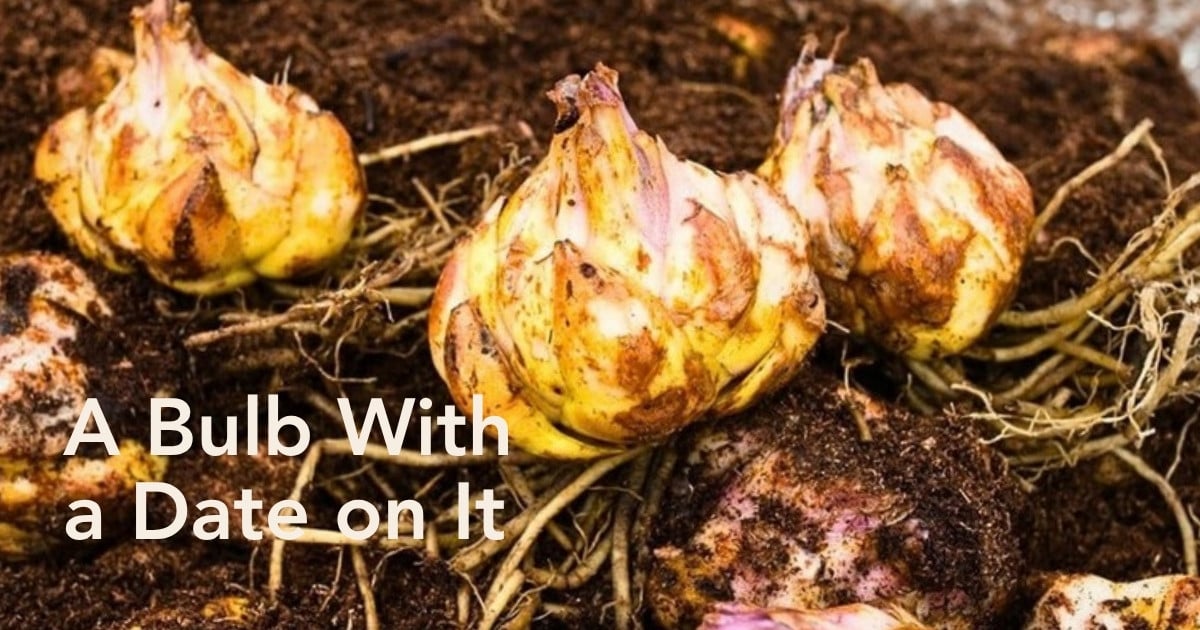
Start with what a lily is, commercially: one bulb, one stem. There is no picking window that runs for weeks, as with Zinnias or Dahlias; the bulb you plant is the stem you sell, and it comes out of the ground with three to eight buds on it depending on the type and the size of the bulb. The University of Maryland Extension's production guide puts LA hybrids of size 14/16 at three to six buds per stem and OT bulbs of size 18/20 at three to eight. That makes the sum unusually simple. Bulbs per crate, times the share you bring to harvest, times your stem price, minus the crate, the labor, and the cooler. Everything else is detail.

The crate is where the numbers begin. Flowerbulb.eu's Grower's Guide to Lilies lists the standard packs: 400 bulbs at size 12/14, 300 at 14/16, 200 at 16/18, and 150 at 18/20, the size being the circumference of the bulb in centimeters. Bigger bulb, fewer per crate, more buds per stem. Planted at the density the Mississippi State University Extension recommends for LA hybrids, 27 to 36 bulbs per square yard (roughly 32 to 43 per square meter), one crate of 400 covers about 10 to 12 square meters (110 to 130 square feet) of bed. A small footprint for four hundred focal stems, you'd agree!
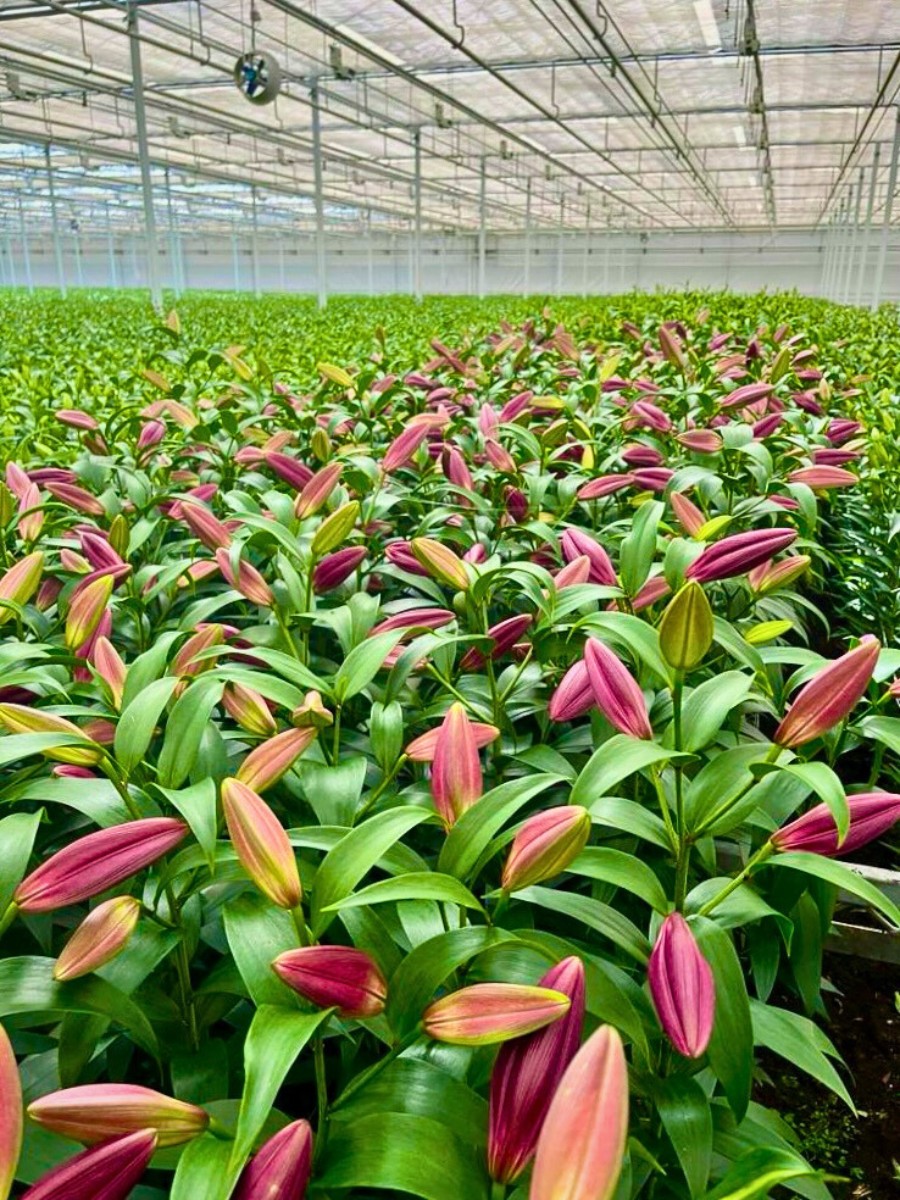
What a guide cannot give you is the stem price, because that is set at your market and nowhere else. What the trial can give you is the part a price list never shows. Crone again: "Market appreciation is the big one: would customers actually buy it?" Twenty growers are answering exactly that this season, farm by farm, and so are their customers.
Sarah Head is one of them. At Eda Creek Farm in Oregon City, Oregon, she grows on about 0.3 hectares (three-quarters of an acre) plus four rented greenhouses of about 185 square meters (2,000 square feet) each, unheated and unlit, and she sells wholesale, from her booth at the Oregon Flower Growers Association in Portland. Does growing cut lilies pay? "I think it does," she says, and on a farm her size, the reason is how the crop fits. "Lilies have filled this role for me that I can insert them into these gaps, and not just gaps in time, but gaps in bed feet. A lot of times I'll grow them in crates." Nothing on her farm stands idle for long. "I do a lot of rotations. Everything's in production almost all the time. Everything gets two flips."
Whether it pays is settled before a bulb goes in. "My clientele are high-end designers in town and florists, and the variety selection is the thing that determines whether or not they're profitable." At her market, one long-established greenhouse grower sells barrels of lilies, the same varieties all season long, which makes the classic lily a hard market to break into for a small farm. So she hunts for what they do not grow. "If I can find something that I know will look impressive and is unique enough that they're not growing it, I have florists who will buy it." Those stems, she says, never see the market floor: "They all go to pre-orders." It pays, then, when the grower gets it right. "If you don't, it doesn't."
Marie Fowler faces the same question from the other side of the country, and she answers it without putting a single bulb in the ground. At Little Pond Flower Farm in Belchertown, Massachusetts, she and her husband grow for the farmers market, and every lily goes into a bulb crate. They grew lilies that way for some 20 years, then took a break, and the trial was, in her words, "a good excuse to get back to it." The crates started with a pest. "In our area we have the dreaded lily leaf beetle. It devastates the lilies and is very difficult to control." It reached her customers too: many had the beetle on lilies in their own gardens, and that "caused distaste for lilies in general."
The crate turns out to be the cheap way in. "Crates are a very easy, controlled, and economical way to grow lilies," Fowler says. "They are easy to plant and water, you don't have to weed them, no fertilizer needed, and they don't take up valuable garden space." A bag of 25 bulbs goes into a crate in about 15 minutes, and the bulbs are not reused: soil and bulbs go onto the compost pile after the harvest. The stem then earns its keep in the bouquet rather than the bucket. A few customers buy lilies by the stem every week, "but mostly I use a single lily stem in a mixed bouquet to elevate the value."
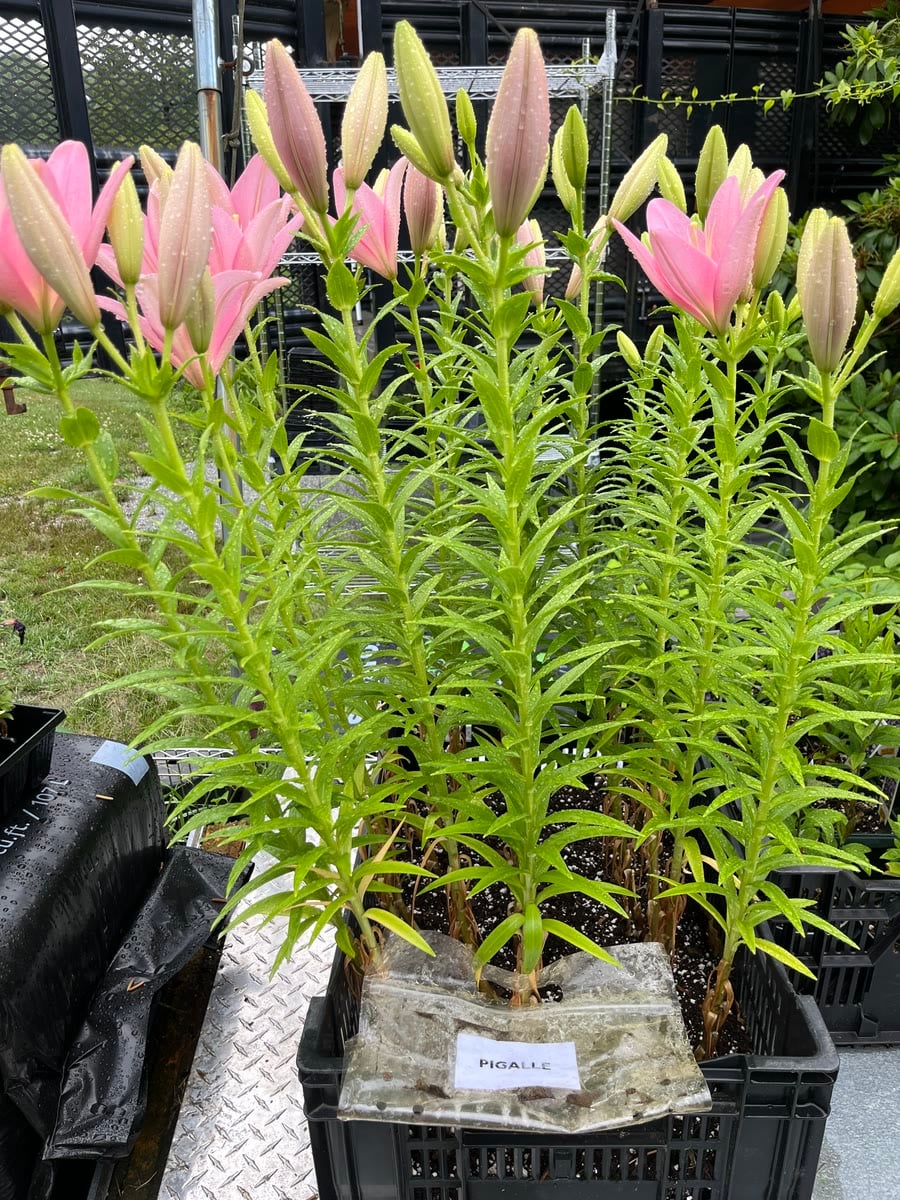
Her one wish for the bulb trade is about scale. "I find the required minimums to be too high for us to absorb," she says. The trial sent her 200 bulbs, "a lot to be blooming all at the same time" for a two-person farm, so she staggered them into three plantings. "That did work pretty well, but there was a lot of pressure to get them all sold." That is the case for the assorted units and the succession planting further down this page, in miniature.
Halfway between them, Mimo Davis took the crate indoors. At Urban Buds in St. Louis, Missouri, the trial bulbs never saw a field. "I grew them in a crate under lights in my basement," she says. "They did really well for us. I was able to use every single one that we were able to cut." She sells mostly at the farmers market, plus subscriptions and weddings, and a lily can go into any of the three. In the bouquet, she says, lilies "add a different class." Then the arithmetic: "They bulk up the bouquets, and the customer is getting a real value."
Her advice to a first-time grower is Fowler's lesson in one line. "Don't overorder," Davis says, and the reason is the bulb: "It's an expensive bulb, and you need to be able to sell every lily that you grow." It has not put her off. "I'm about to order lilies again."
The same question came up about Kenya in August, where lilies grow well and have stayed a niche crop because the ecosystem around the crop is thin. A grower deciding what to plant is not asking whether a flower will grow. The real questions are what it costs to establish, who buys it, at what price, and how reliably it can be produced. Bridget Langan of Garden Media Group, the agency running the campaign for Flowerbulb.eu, is open about the answer the program hopes for: "Ultimately, we want to showcase lilies as a high-impact, profitable specialty cut flower that deserves a place on more farms." The word 'profitable' is doing the work in that sentence, and it is the word the trial has to earn.
Why Is a Lily Such a Plannable Crop?
This is the part that persuades the growers who already grow them. A lily bulb arrives with its winter behind it. Dutch suppliers store the bulbs frozen and ship them frozen, which the Flowerbulb.eu guide sums up in a line every bulb rep seems to know by heart: we fake winter, you fake spring. Once planted, the bulb wants a cool, slow start under heavy shade cloth for the first four to five weeks, so the stem roots just below the surface can develop before the top takes off. Get that right, and the rest of the crop runs to a timetable.
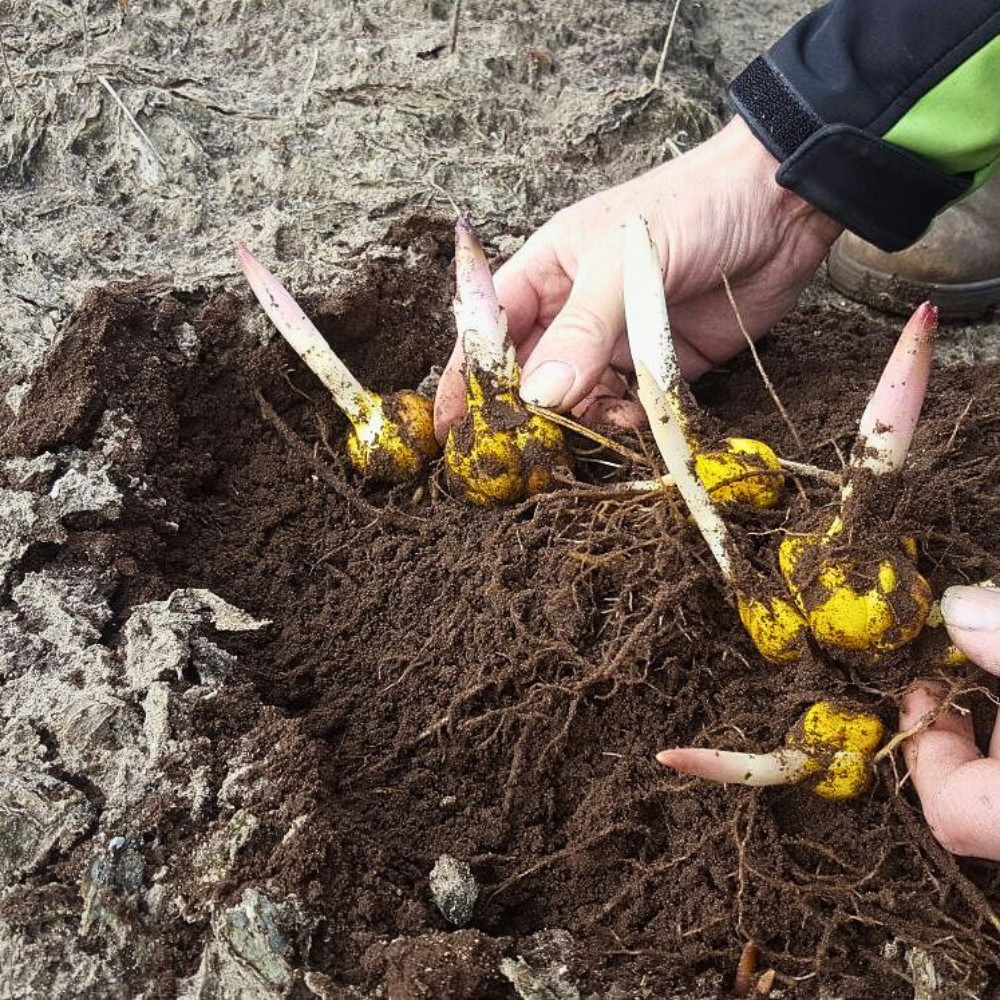
Just how tight a timetable? The Maryland guide gives crop times under greenhouse conditions: LA hybrids 85 to 100 days for most cultivars at night temperatures of 10 to 13 degrees Celsius (50 to 55 Fahrenheit), OT hybrids 90 to 105 days, and Oriental hybrids 100 to 125 days at warmer nights of 14 to 17 degrees Celsius (58 to 62 Fahrenheit). Outdoors, the season stretches those numbers, but the order holds: LA fast, OT slower, Oriental slowest.
Because the bulbs are frozen, the grower picks the planting date, not the calendar. Mississippi State's farmer-florist guide recommends succession plantings seven to fourteen days apart for a continuous supply. Flowerbulb.eu adds that many suppliers sell assorted units of 400 bulbs in twelve or more varieties chosen to bloom one after the other, plus pre-chilled assortments that flower over three to four weeks, and specialty bulbs that bring a crop in early, in time for Mother's Day. A farm with a cooler can go one step further and pre-root boxed bulbs at 10 to 11 degrees Celsius (50 to 52 Fahrenheit), where roots grow faster than sprouts, then move the boxes out as bed space frees up. Quite a piece of scheduling for a bulb!
A frozen bulb is patient, but only up to a point. "They are not seeds, and they're time-sensitive too," Head says. "I have been guilty of letting lilies languish in the cooler longer than they want to."
Which Lily Should a First-Time Grower Plant?
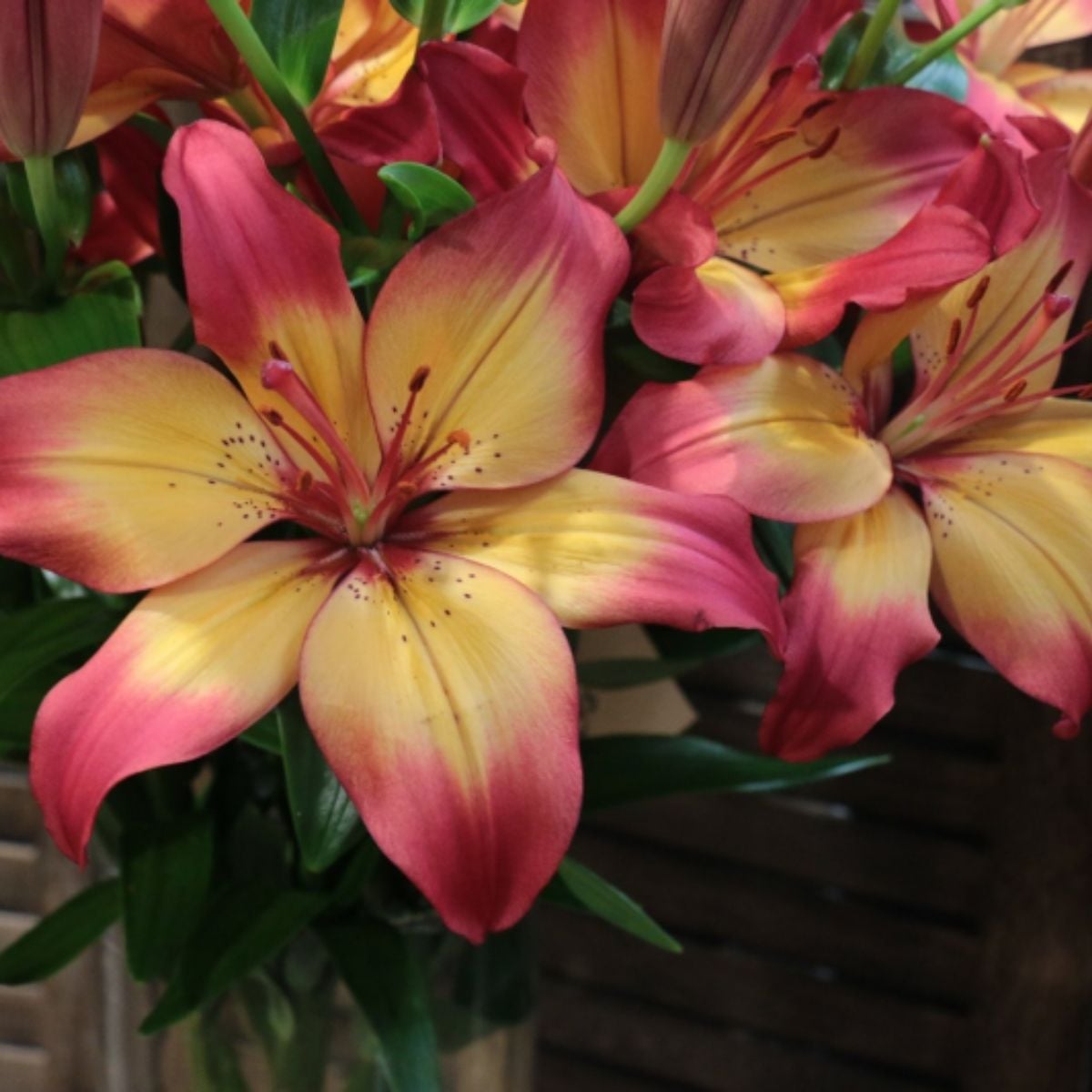
LA hybrids, on almost every count. They are crosses of Asiatic lilies with Lilium longiflorum, and they have pushed their Asiatic parent almost out of commercial cut lily growing. "The LA-hybrids have pretty much replaced the Asiatics in the cut flower marketplace," the Maryland guide says, and only a handful of Asiatic varieties are still grown for the cut flower trade. The reasons are the ones a grower counts: unscented, upward-facing, a long vase life, and the least winter chill of any group, which is why they perennialize in some southern states. They are also the forgiving ones outdoors. Plant size 12/14 bulbs about 13 centimeters (5 inches) apart and 10 centimeters (4 inches) deep in raised beds; Orientals and OTs at size 16/18 want 15 centimeters (6 inches) between them. Finish the harvest before average temperatures settle below 11 degrees Celsius (52 Fahrenheit) for Oriental and OT lilies, and below about 6 degrees Celsius (42 Fahrenheit) for LAs.
When Do You Cut, and What Happens After?
When the first, lowest bud shows full color and looks puffy but has not opened. Strip the leaves from the bottom 10 centimeters (4 inches) of the stem, and get the bunches into water in a cooler at 2 to 5 degrees Celsius (35 to 41 Fahrenheit) at once. Freshly cut lilies then have a vase life of nine to fourteen days depending on the cultivar, per the Maryland figures, and that is the number that brings a wedding client and a market customer back. The Dutch lily growers at Bredefleur argue for cutting as ripe as the chain allows, because the longer the flower stays on the plant, the higher the quality. A farmer selling within a day of harvest, at a market or to a florist across town, has that luxury; an importer shipping across an ocean does not. At a market, the pressure runs the other way: Fowler's customers want to see at least one open lily, preferably more, and open lilies travel badly. Her bunches go to market in Korean wrap, so the petals do not shatter on the way. Just so that you know, the care tips Chrysal wrote for florists apply on the farm too: clean water, a cool room, and no leaves under the waterline.

What Changed About the Lily Itself?
Most of the objections a farmer hears at the stall are two decades out of date. The funeral flower; the scent that fills a room; the pollen on the tablecloth. Breeders have been answering each one. Unscented LA hybrids cover the scent. Pollen-free varieties now exist among the Orientals, and the double Oriental lilies carry no pollen at all: where the pollen would be, they grow an extra layer of petals, and their scent is softer too. How that breeding works, and why a new lily takes years to reach a bulb crate, Thursd described earlier. Upward-facing flowers, sturdier stems, and that nine-to-fourteen-day vase life came with it.
Davis still hears the first of them, and one more the list leaves out. "It's the whole issue here about cats," she says. "People are really finicky about lilies." Cats and the funeral flower: "Those are the two big things that I get." Her customers were leery at first, "but we put them in mixed bouquets, and they sold wonderfully." And they would rather have the lily without the perfume: "They like the scentless," which is the LA hybrid's case in four words.
The cats are the one objection breeding has not answered. True lilies are toxic to cats, and the FDA counts the entire plant: the stem, leaves, flowers, pollen, and even the water in a vase. A pollen-free double is no exception, so the honest move at the stall is to say so.

Then there is color. A supermarket lily comes in a standard mix, the white, pink, and yellow that sell in any store in any week, and that is the lily most customers think they know. The new introductions go the other way: designer colors and shades, two-tone flowers, doubles, and pollen-free forms. The Maryland guide's table of LA hybrids alone lists fifteen cultivars in pink, yellow, red, white, salmon, orange, and lime green, plus white-and-pink and pink-and-yellow bicolors. For a flower farm, that range is where the business case sits. The standard mix is the wholesaler's game. The shade a florist cannot find in the supermarket bucket is the one that gets pre-ordered from a farm.
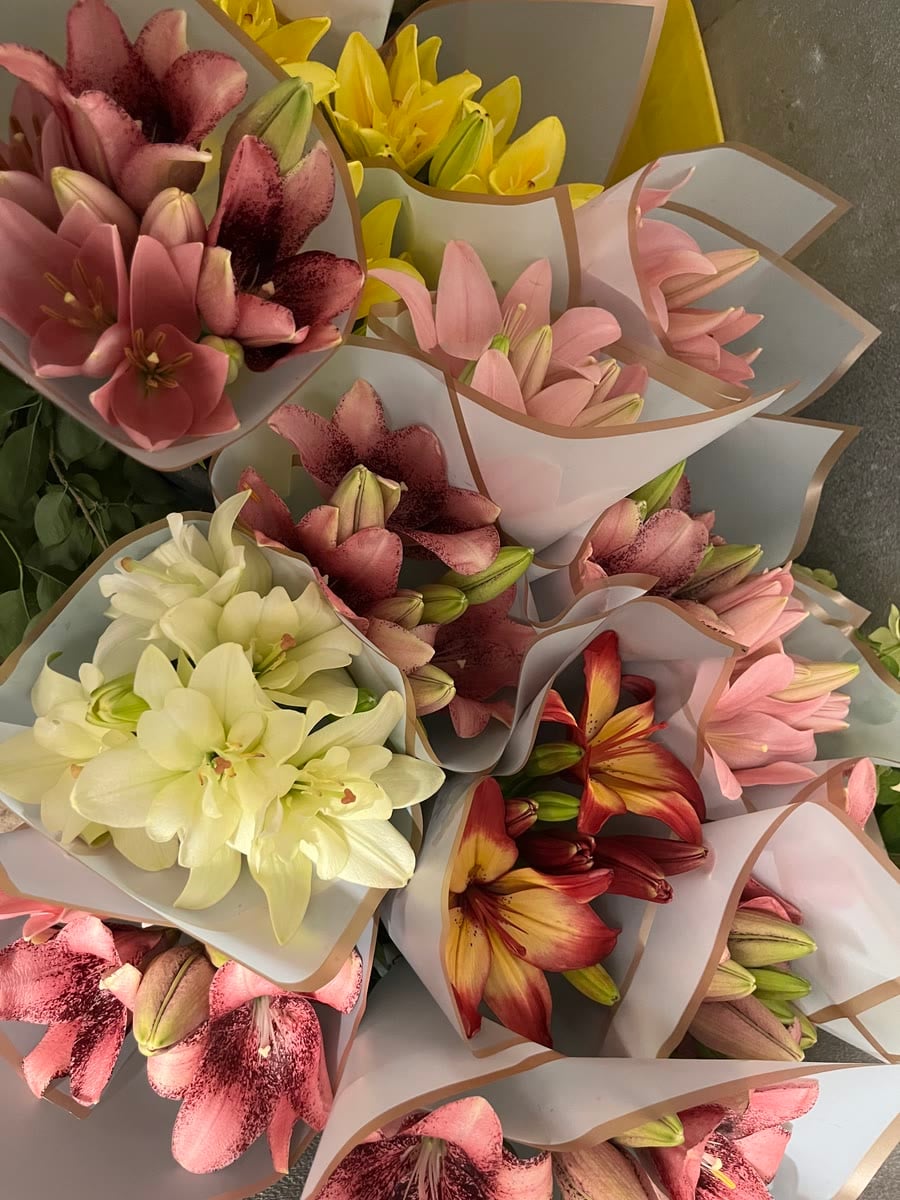
The demand side has moved too. Only about 22 percent of the flowers and foliage sold in the United States are grown domestically, as reported on Thursd in May, and that gap is precisely where a locally grown lily fits: a focal stem, cut riper than any import can afford to be, with a farm behind it that the customer can name. In a mixed bouquet, one lily anchors the design on its own, which is a quiet argument for the price a farmer can ask for it.
What Will the ASCFG Trial Tell Us?
The ten European cultivars in the trial include Menton, Forehand, Amberwaves, and Down Force. When the trial was announced, Steven Crone put the direction of the crop in one phrase: "the productive LA hybrids that have revolutionized lily production." The bulbs shipped in mid-March, planting ran through April, and the final evaluations are due in mid-October. The twenty participants stretch from USDA zone 3 to zone 10, from Oregon to Oklahoma, and grow in fields, raised beds, high tunnels, and heated greenhouses. Dr. John Dole of North Carolina State University compiles the data, and his report lands in The Cut Flower Quarterly in the winter or spring of 2027.
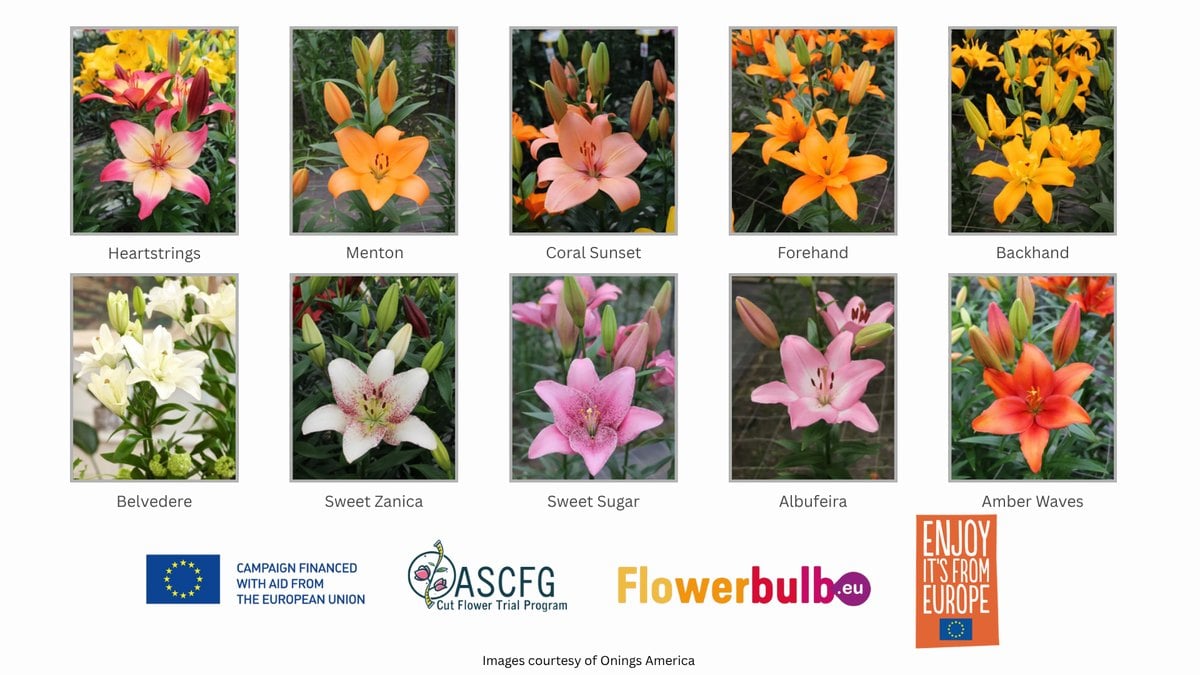
Crone is careful about what a Dutch catalog can and cannot promise: "A variety that excels in the Netherlands won't necessarily perform the same way in a Texas field, an Oregon high tunnel, or a Michigan greenhouse." Which is, indubitably, the point of running the trial here rather than reading about it there. The growers score customer demand, ease of cultivation, stem length, vase life, reliability, and, tellingly, whether they would plant the variety again. Between now and 2027, this series stays with the campaign: this piece on the business case, a second on why a new generation of florists is putting lilies back in the shop, and a third on the growers themselves.
Where Does a Farmer Start?
With one crate, two planting dates, and the free Grower's Guide to Lilies from Flowerbulb.eu, which exists in English, Spanish, and Hmong, because that is who grows flowers in the United States today. Plant LAs, fake spring with shade cloth, cut at the first colored bud, and count what you sold against what the crate cost. That is the whole business case. The trial will tell you which ten names to put in the crate.
A lily crop is not a bet on the weather; it is a bulb with a date on it.
Sources: Flowerbulb.eu, Grower's Guide: Lilies 2.0 (August 2025), also available in Spanish and Hmong on the Flowerbulb.eu lily page. University of Maryland Extension, Production of Hybrid Lilies for Cut Flowers (Gill et al., 2022). Mississippi State University Extension, LA Hybrid Lilies for the Farmer Florist, publication P3818 (2022). Steven Crone and Bridget Langan quoted in ASCFG Encourages Growers to Choose Lily Cultivars With Trial, Florists' Review, 19 July 2026. ASCFG press release, ASCFG Partners with Flowerbulb.eu for Innovative 2026 Variety Trial Program, 1 May 2026.
Featured image by @dejongleliesholland. Header image by @royalvanzanten_flowerbulbs.
This article is part of a three-part series produced with the support of Flowerbulb.eu, the promotional and educational platform of Royal Anthos.
Royal Anthos is a Dutch trade organization that represents the trade companies in flower bulbs and nursery stock products worldwide. For more information, visit www.anthos.org.
Flowerbulb.eu is a promotional agency for the flower bulb sector. Their goal is to educate and inspire new and experienced gardeners. They do not sell flower bulbs; they encourage consumers to visit their local retailer. High-resolution images are available royalty-free when citing FlowerBulbs.com as the source. Visit www.flowerbulb.eu for more information.

Disclaimer: Funded by the European Union. Views and opinions expressed are, however, those of the author(s) only and do not necessarily reflect those of the European Union or the European Research Executive Agency (REA). Neither the European Union nor the granting authority can be held responsible for them.