Most lists of winter flowers are really lists of Christmas decorations. Useful for two weeks in December, useless in late January when a florist still has a shop to fill and a customer still wants something alive. This one is built the other way round: what is genuinely in season between November and March, where it comes from, and what each crop needs so it does not collapse in the bucket.
If you specifically want the December set, Thursd already covers Christmas flowers and plants separately. What follows is the wider winter season.
The Winter Flowers Worth Building a Season On
Helleborus
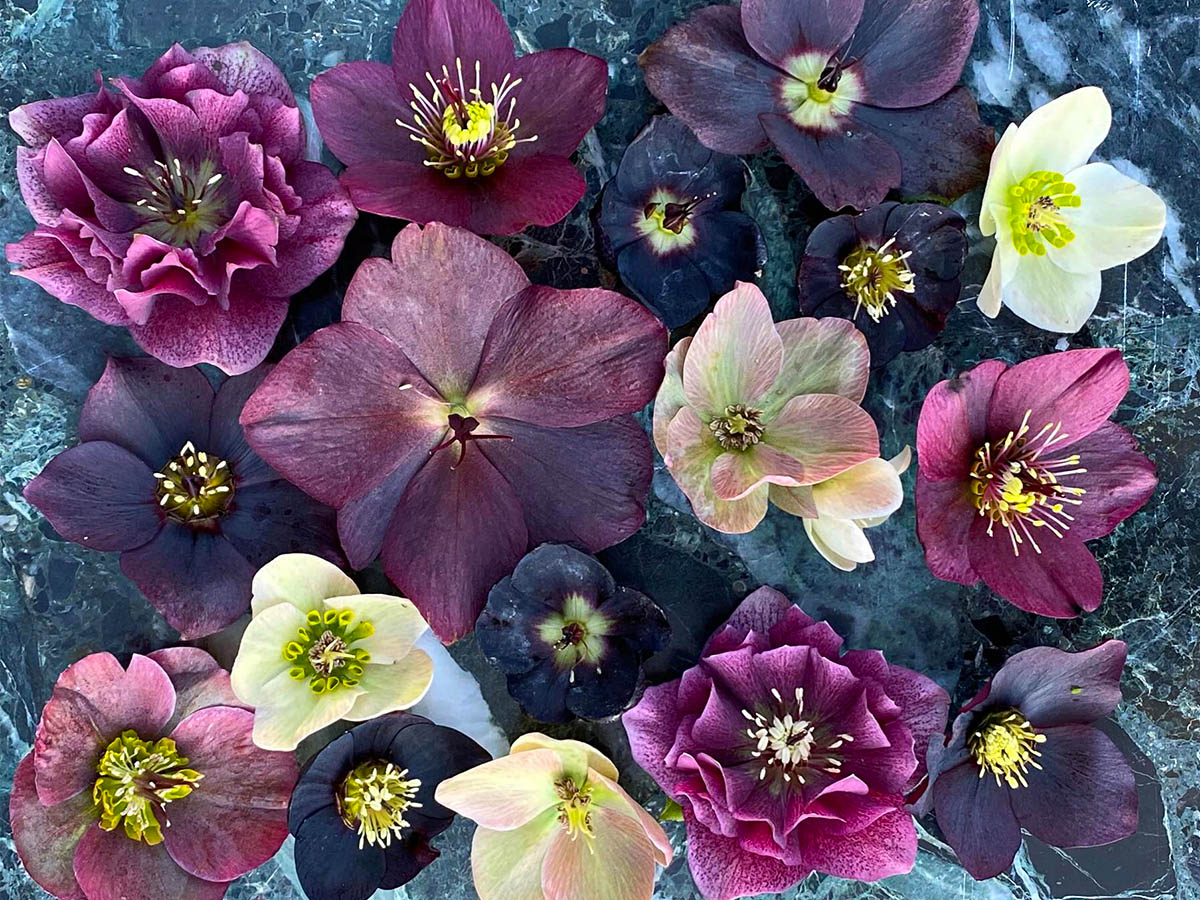
The Christmas rose and Lenten rose are the defining winter cut flower, and the one most often handled wrong. The clue is in the nickname: florists treat it like a rose, and it is not one.
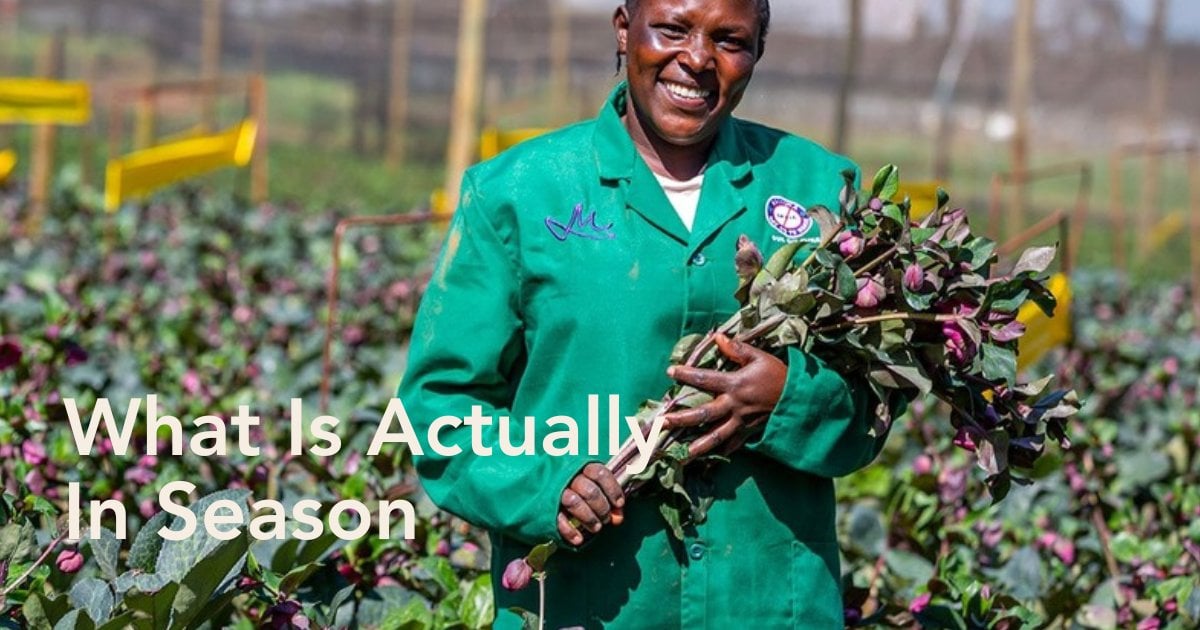
Two things about hellebore surprise people. First, the season is long, running from Helleborus niger around Christmas through Helleborus orientalis deep into Lent. Second, a good share of the stems on the European market in winter are not European at all. Specialist grower Marginpar produces Helleborus in Kenya and Ethiopia, including the variety Mammoth Red, and points to three things that decide quality and vase life: breeding and selection, a moderate climate with cooler nights, and harvesting at the right cutting stage.
That last point has a direct buying consequence. Riper stems cut at the Classic stage look slightly duller in the bucket, but they are noticeably stronger on vase life. For an event or a long shop display, duller and tougher is the better order.
In the Netherlands the crop is a specialism in its own right: Westendorp pairs Helleborus with Delphinium.
Handling, in short: deep clean buckets, a fresh cut with clean tools, flower food with sugars and a bacteria inhibitor, and storage at 6 to 10°C rather than near freezing. Hellebore is ethylene sensitive and prone to Botrytis, so keep it away from ripening fruit and out of damp storage. Cool and dry beats cold and wet. The full routine is in Thursd's Helleborus care guide. And design with the nodding heads rather than fighting them, because that droop is the flower, not a fault. Varieties to know: Anna's Red, Kissi Royal Maroon and Magnificent Bells.
Amaryllis
Hippeastrum, sold everywhere as Amaryllis, is the flower that owns the northern European winter. One thick hollow stem, four huge flowers opening in sequence, and a transformation over about a week that no other winter crop matches. Thursd has covered it as the metamorphosis flower for exactly that reason.
Two practical notes that make the difference between a good Amaryllis and a disappointing one. The stem is hollow and will split and curl at the base, so many growers and florists put a cane inside the stem or tie the base. And it drinks a lot: shallow water in a heavy vase, changed often, beats a deep vase that fouls. Boers Amaryllis is one of the Dutch specialist growers behind the winter supply, and Thursd's product listing for Amaryllis Ferrari shows the deep red end of the range that carries the December trade.
Tulip and the Forced Bulb Crops
The tulip is a winter flower in commercial terms even though everyone files it under spring. Dutch forcing puts tulips on the market from December, well ahead of anything in a garden, and the same applies to hyacinth, Narcissus and iris. W.F. Leenen in Sassenheim is one of the Dutch bulb specialists behind that supply, forcing daffodils, tulips and ixias.
Forced bulbs are the reason a January shop can look like spring. They are also the cheapest winter color per stem, which matters when the rest of the season is specialty product.
Anemone and Ranunculus
These two carry late winter. Anemone comes in from autumn and runs through to spring, Ranunculus starts a little later and peaks in February and March. Both want cool conditions and both are worth buying tight, because they open a great deal in the vase. A Ranunculus bought fully open is a Ranunculus with two days left.
Berried and Flowering Branches
The structural layer of winter work. Ilex with its red berries, skimmia, Viburnum, and the flowering branches that come into their own once the leaves are gone. Thursd's guide to flowering winter branches covers the forcing side, where cut branches are brought into warmth to break bud early. Branches are also the cheapest way to give a winter arrangement scale, which is why they matter more in December than in June.
What Winter Flowers Need That Summer Flowers Do Not
Three things change in winter, and all three catch people out.
Temperature swing. Winter stems move from a cold van into a heated shop into a heated house. Every one of those steps costs vase life. The single most useful habit is a slow, cool start: unpack, recut, and let stems drink somewhere cool before they go anywhere warm.
Dry transport. Much of the winter specialty product travels dry, some of it from East Africa. That means the flower arrives thirsty and has to recover fast, which is why flower food with sugars matters more in winter than it does in a summer bucket of sunflowers.
Ethylene and Botrytis. Closed, heated, humid rooms are exactly the conditions both like. Keep fruit out of the workspace and keep the air moving. Botrytis on a hellebore or a Ranunculus shows up as brown spotting on the petal and there is no fixing it after the fact.
Building a Winter Range That Holds Up
A workable winter range is roughly: one structural element (branches or berry), one specialty focal (hellebore, Amaryllis or Anemone), one volume crop (forced bulbs), and one long-lasting filler. That mix survives the whole season, not just the Christmas fortnight, and it lets you rotate the focal flower as the season moves from Amaryllis in December to Ranunculus in February.
The other half of the job is the customer. Winter flowers want a cooler spot at home, away from radiators and away from the fruit bowl, and saying so at the counter prevents most complaints. For the autumn run-up to all of this, Thursd's autumn flowers guide picks up where the summer season ends.
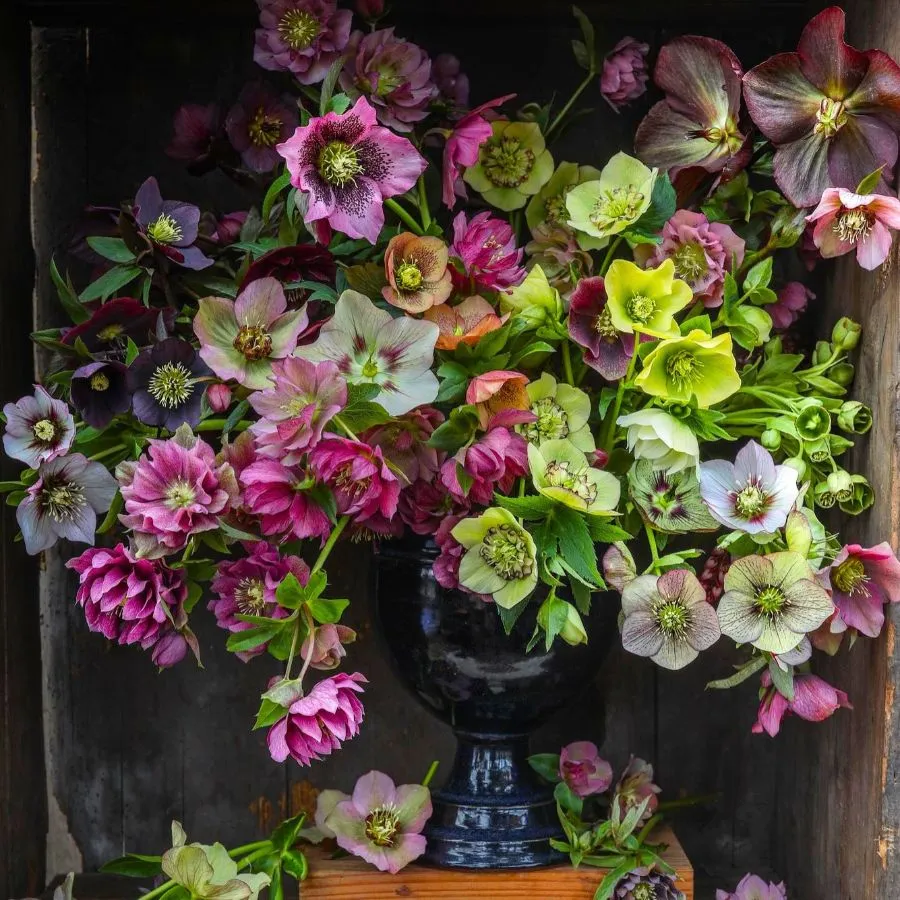
Featured image: a selection of Helleborus flowers, photo by Tina Brok Hansen (@tinabrokhansen). Header image: Helleborus Mammoth Red, grown by Marginpar in Kenya and Ethiopia.
About the author: Melissa Maingot has been a Senior Content Editor at Thursd since 2022, writing flower and plant stories worldwide, including on-the-ground reporting from flower farms. Connect with Melissa on LinkedIn.