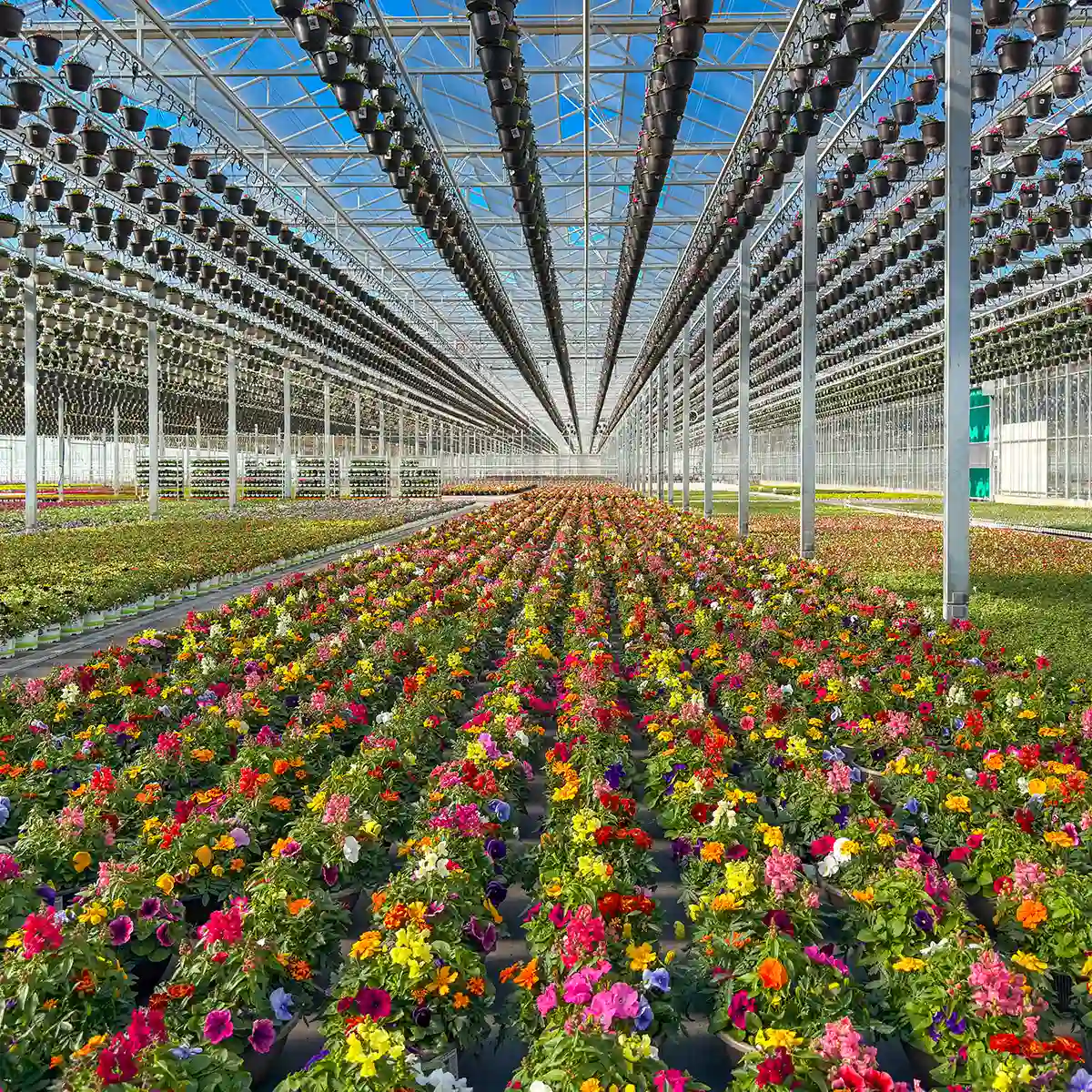
Look at the plant table in a supermarket or a DIY store. Every plant on it sits at a price point the shopper has seen there before and expects to see again next year. That price was fixed long before the plant was potted, before the grower even ordered the plug. Everything in the chain has to fit under it: the store, the transport, the pot, the grower, and at the very bottom, the young plant we deliver. That shelf price is the real reason behind greenhouse automation at Evanthia.
I work in 's-Gravenzande, where we produce young tropical plants and seeds for growers. In my last piece, I wrote about how we got seed germination to a number we can plan on. This one is about the robots that came after it, and about why we put them there.
Labor Got More Expensive, the Shelf Price Did Not
The hourly cost of labor in our greenhouses has risen sharply over the last few years. In most businesses, you would pass that on to the customer. We can barely do that. Our customers are growers, and they are squeezed from the other side by the parties that sell to the consumer: garden centers, and more and more, supermarkets and DIY stores.
Those stores are becoming the place where Europeans buy their flowers and plants, and their share keeps growing. At the same time, inflation in Europe is high, higher than we are used to. Consumers have less to spend, and they think harder about where their money goes. A price point that creeps up is a plant that stays on the table.
So the grower cannot raise the price on the shelf. And I cannot raise mine to the grower without pushing that grower out of a retail program they worked hard to win.
Who Pays for a Young Plant
A young plant is a small part of what the shopper pays at the register. But it is the first cost in the chain, and everything else is built on top of it. When our price goes up, the grower either swallows it and earns less, or loses the program to someone cheaper. Neither is good for us. Our customers are the growers. If they lose their place on the shelf, we lose ours.
The way I see our job, it is to keep our growers in a good position in the market. That rests on two things. A young plant or seed of good quality, one that grows evenly. And a price that lets the grower, and everyone after the grower, stay within the price points the market knows, with every party in that chain still earning enough to keep going.
What we make adds a small piece of happiness to someone's home. To keep that up, we have to keep our own costs in hand. The robots are there for that.
Where the Robots Work
We use robots in two places. In our tissue culture, a sticking robot sets the small plantlets from the lab into plugs, one by one, a job that was always done by hand.
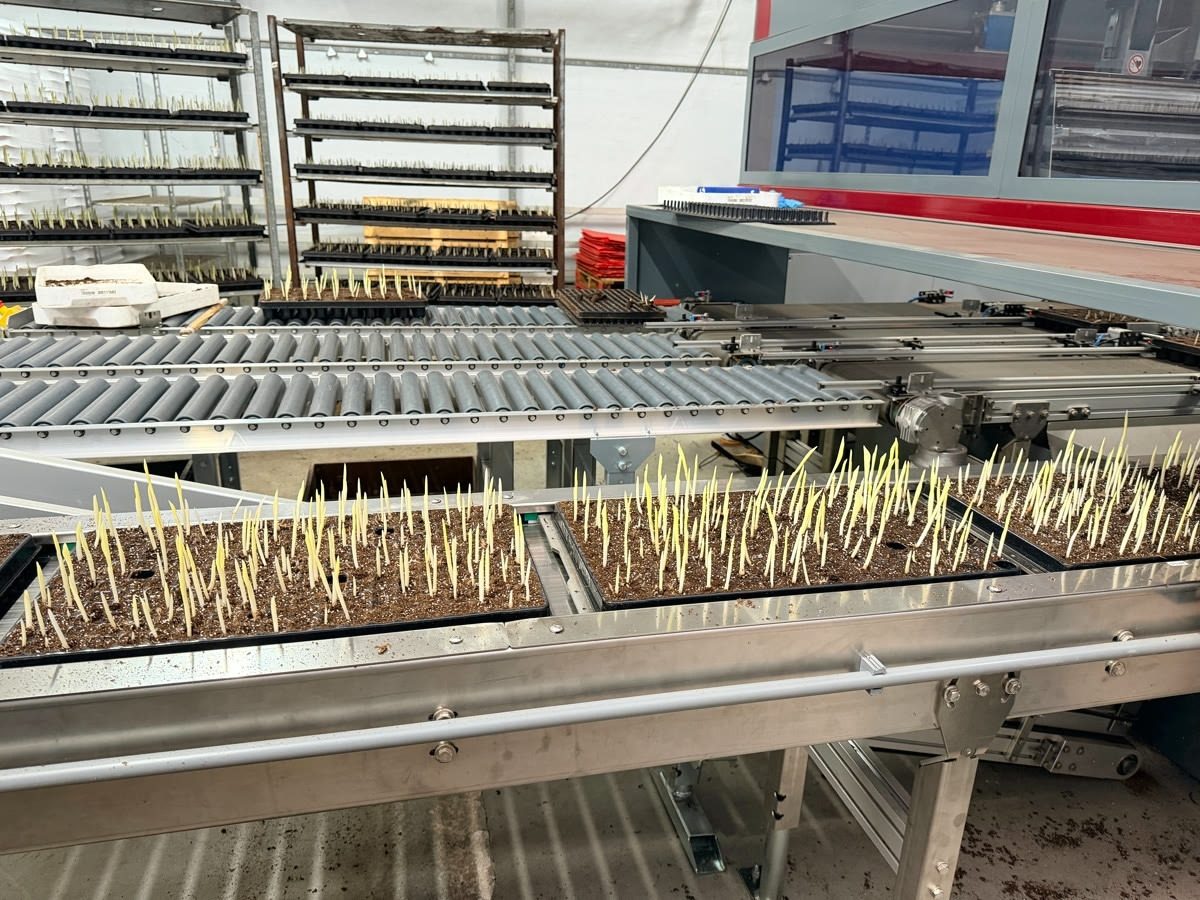
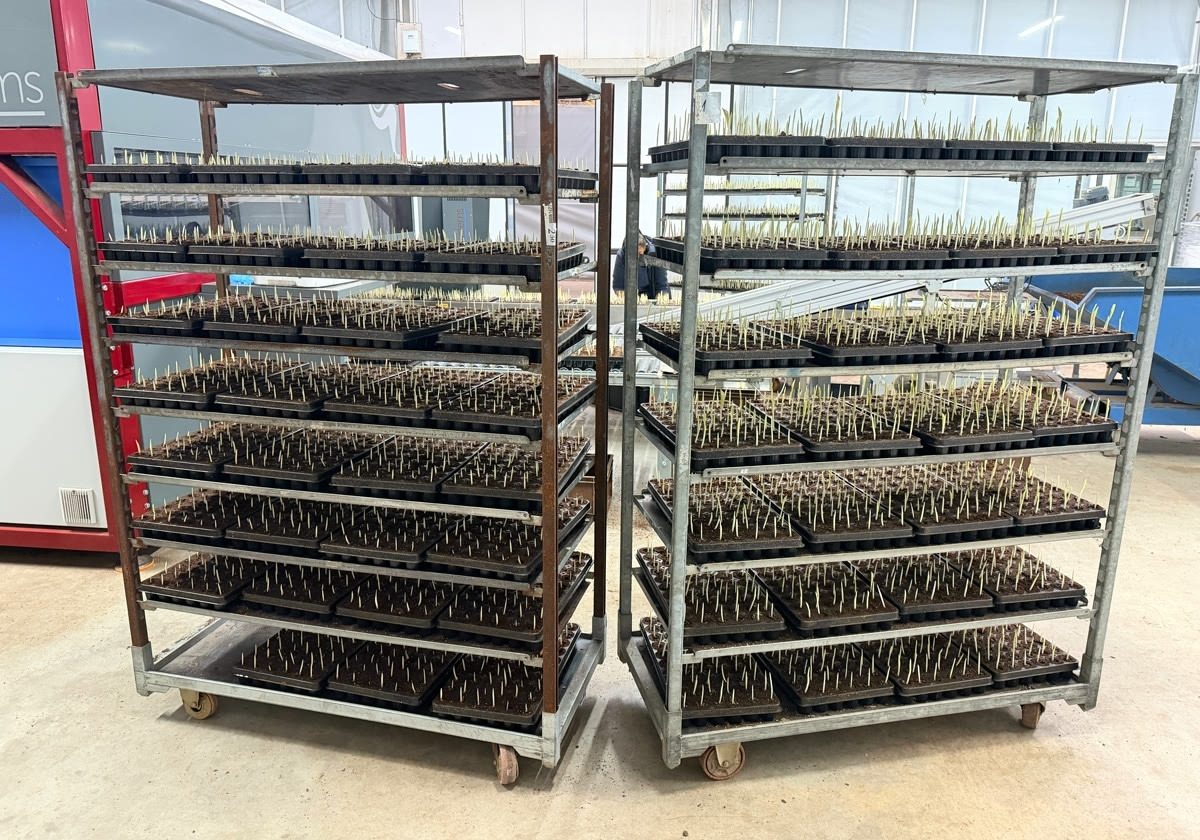
On the seed side, a transplant robot takes over right after germination. We sow one seed per mini plug, and the robot lifts each germinated mini plug, seedling and all, into a larger plug. That used to be handwork too. We are automating it to keep our competitive position, because labor is getting scarcer as well as more expensive.
The hours are the obvious gain. The less obvious one is uniformity. A robot sets every plug the same way, at the first hour of the day and at the eighth, so what comes out is a batch of plugs at the same stage.
That matters more every year, because growers increasingly produce to order instead of growing first and seeing whether it sells. For a grower working to order, delivery reliability is about quality and quantity, but above all about timing. A batch that can be potted in one go is a retail order delivered on the date it was promised.
Keeping the Cost Price in Hand
Further automation lets us keep our cost price under control, to some extent. Labor gets more expensive every year, and the robots and better germination absorb part of that, so less of it lands on the grower.
Automation buys time. It does not take the pressure away. Ready-made plugs from China already land in Europe at a cost level close to ours, and the price pressure in this chain only goes one way. So we keep moving the steps that are measuring and repeating to machines, and we keep people where a plant needs someone to look at it and decide.
In the end, this story is about the price on that supermarket table. Every cent we keep out of the young plant is a cent the grower keeps, and one more reason for that plant to be back on the shelf next season. More about our young plants and seeds at Evanthia.
Header image, featured image, photos, and videos: Evanthia.