What happens when you take the elegance of Dutch Golden Age still life paintings and infuse them with an unsettling contemporary edge? New York-based Sabrina Bockler shows exactly that. Her work may pull you in with gorgeous peonies and carefully arranged compositions, only to surprise you with hidden eyes, two-headed swans, and scenes of barely contained chaos. It is botanical art for those who appreciate beauty but also crave a little mystery and a layered influence in what they see.
A Fresh Take on Classic Floral Traditions
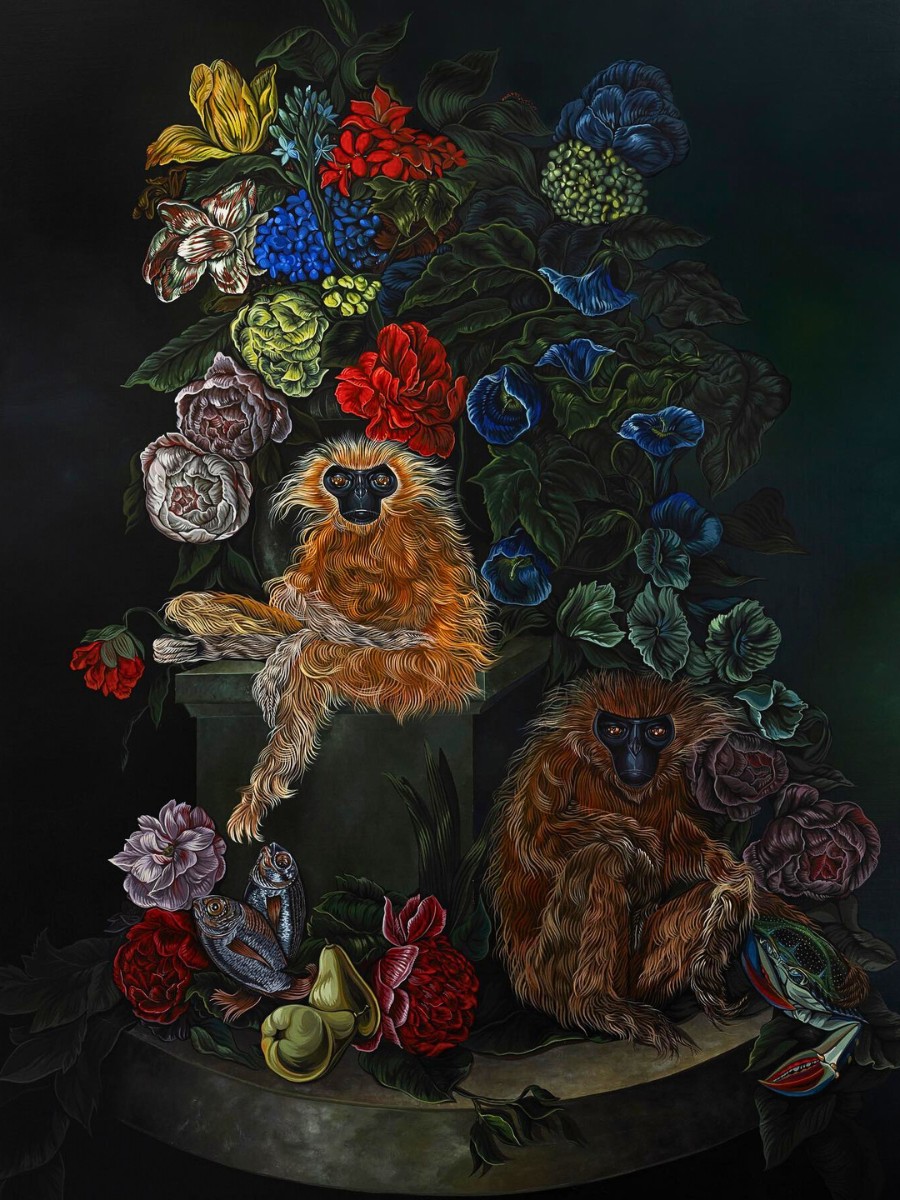
Sabrina's paintings feel like they could hang comfortably in a museum alongside 17th-century Dutch masters, yet they are unmistakably modern in their strange, contemporary twists. She draws heavily from historical traditions in which artists celebrated abundance through flowers, fruit, and game laid out in lavish displays. But where those old masters were content to let wilting petals symbolize mortality, she adds layers that make you look twice and question what you really see.
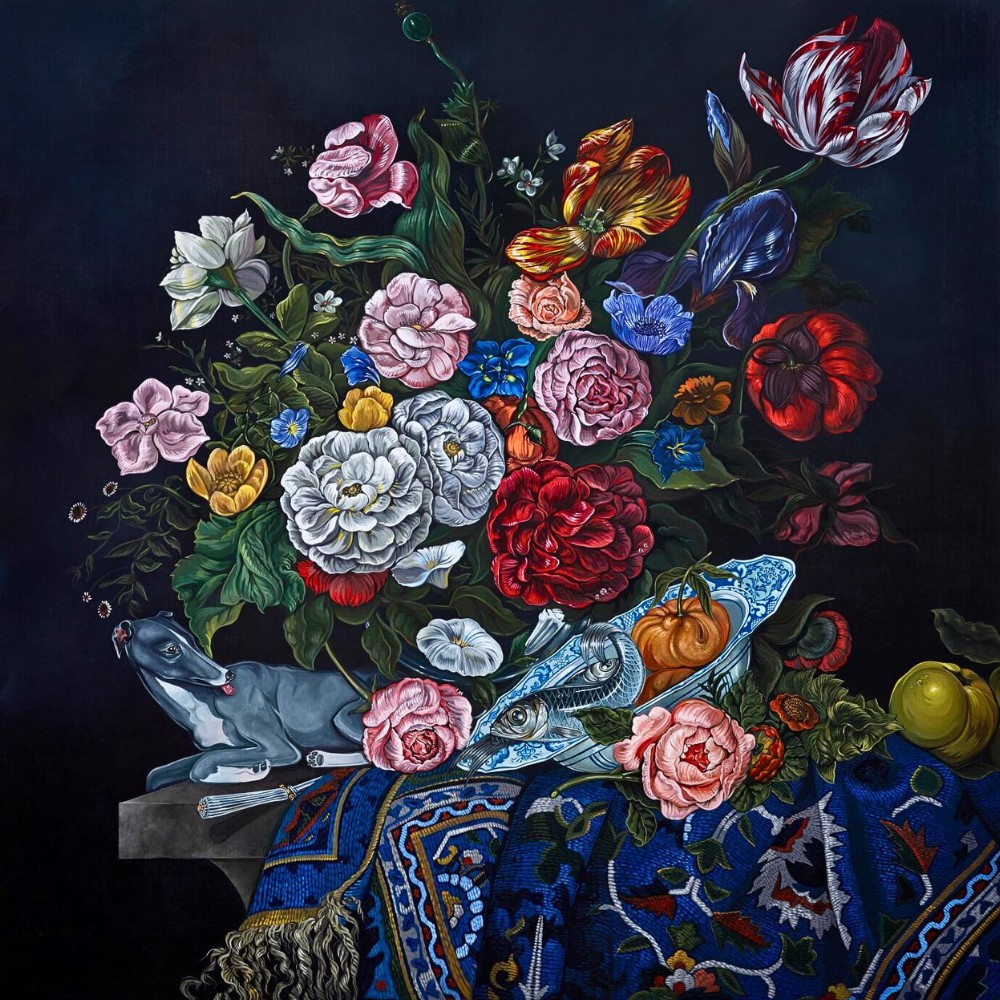
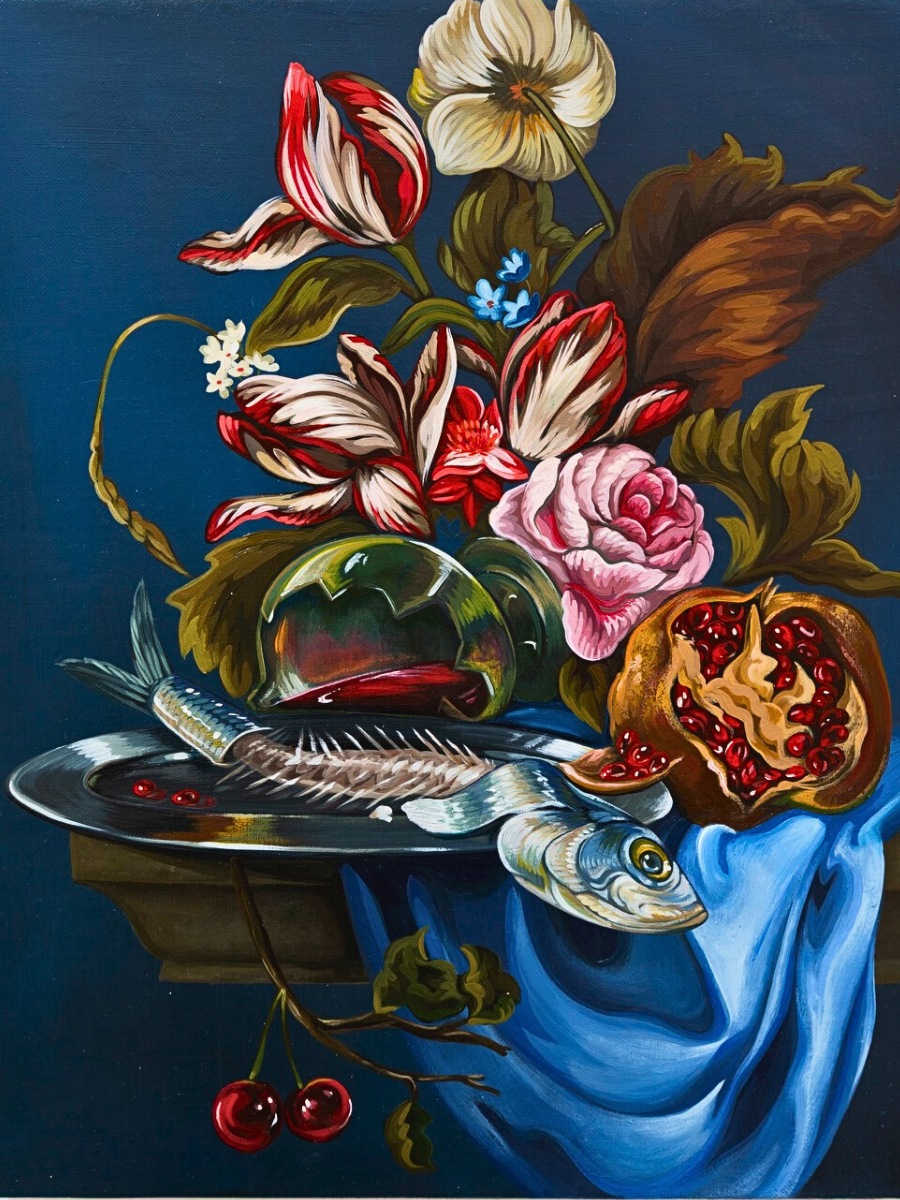
Her work from the ‘Shallow Water’ exhibition perfectly captures this approach. In ‘Through the Glass Darkly', what first appears as a classic floral arrangement with peonies and vessels quickly reveals something more peculiar. Fish stare directly at viewers, and disembodied eyes peer through wine glasses tucked among the flowers. It is as if the painting itself watches you back, a quiet reversal that makes the experience of viewing her art feel participatory rather than passive.
Flowers as Characters in a Larger Story
A graduate of Parsons School of Design in 2011, Sabrina's floral art is particularly fascinating in how she uses flowers as active participants in narrative scenes, not just as decorative elements. In her ‘Symphony’ painting, flowers surround a composition in which eyes and faces are hidden within the natural elements, including a crooked Cheshire smile on a melon. The flowers are just as much part of an environment where the ordinary and surreal mingle freely, not just passive subjects.
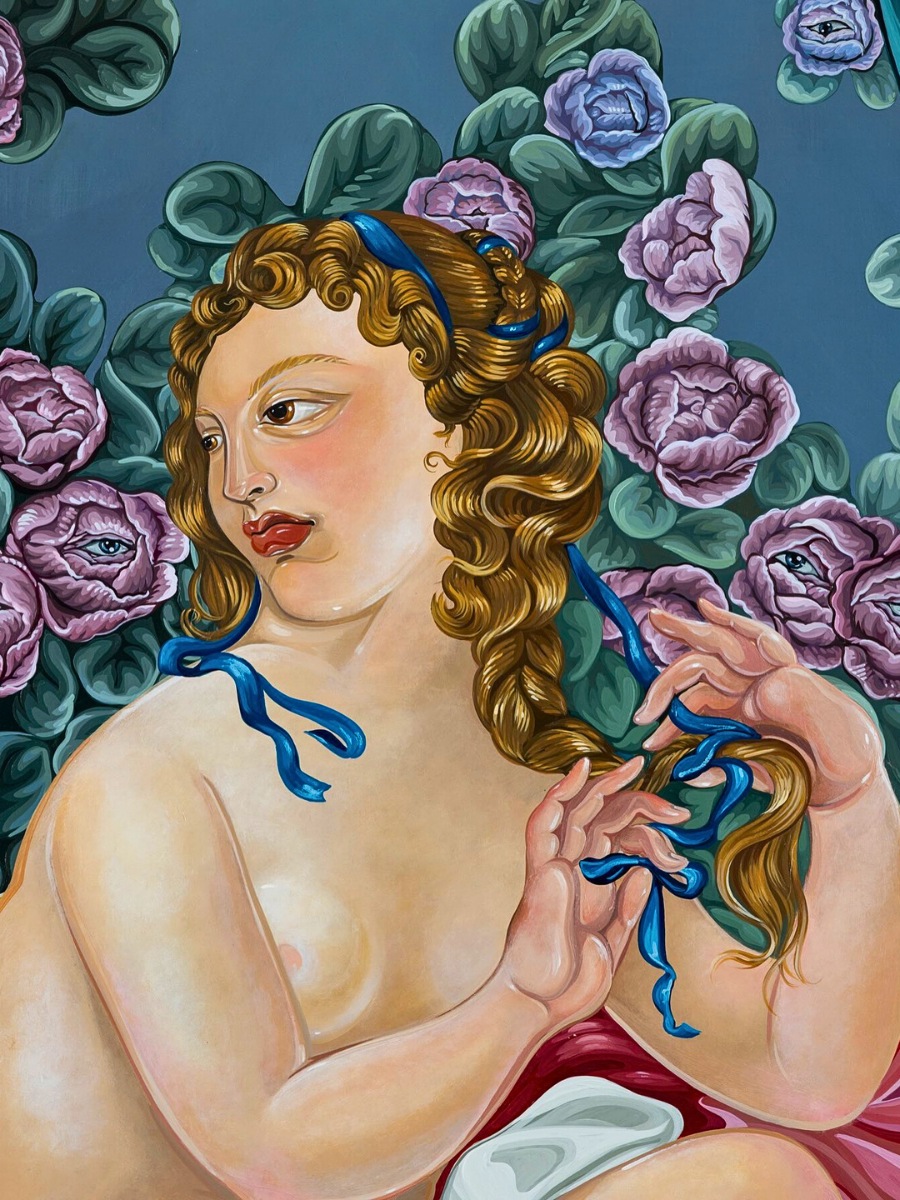
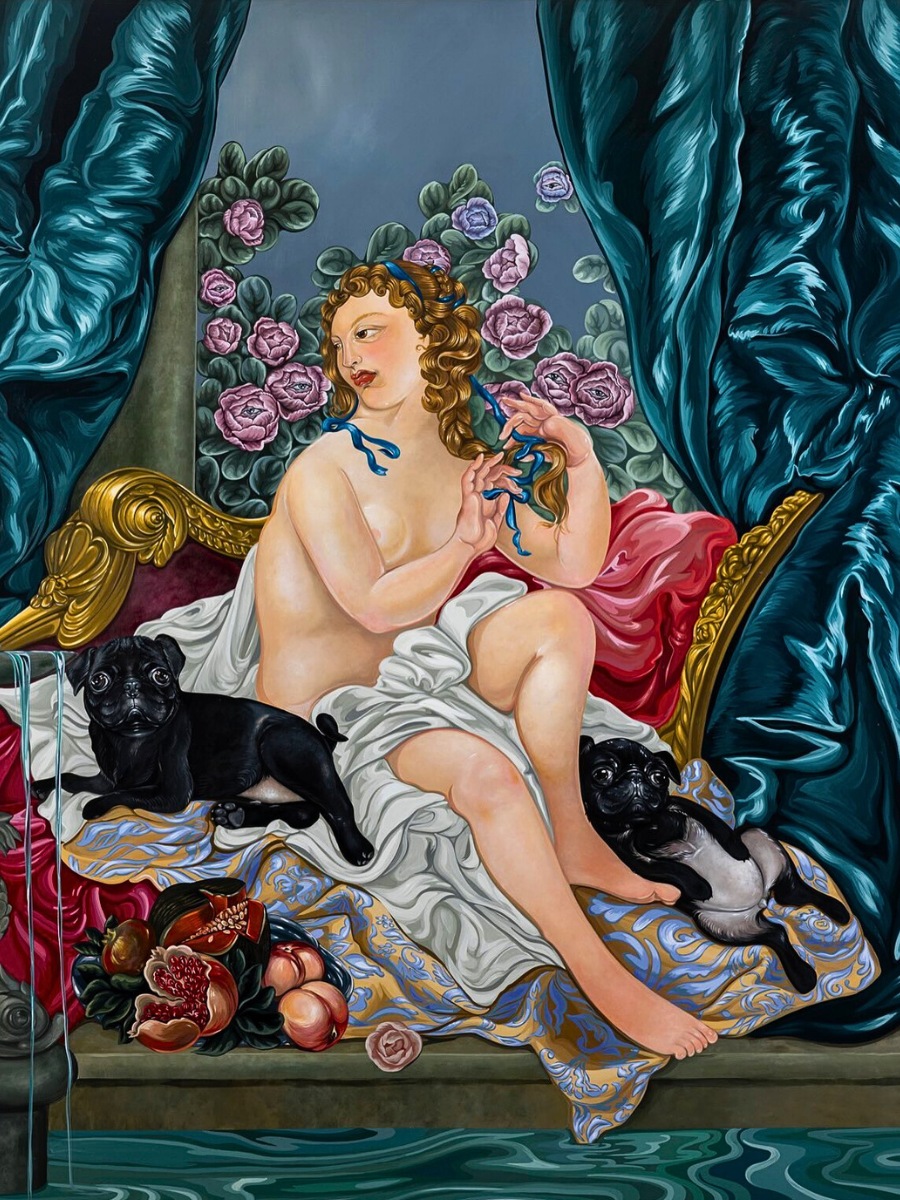
This narrative quality comes through most clearly in pieces inspired by the myth of Diana and Actaeon, a story about boundaries, intrusion, and consequence, in which she translates this ancient tale into a visual language where flowers create both concealment and revelation. In ‘Private Eyes', Diana bathes surrounded by lush botanicals while being observed. The flowers are part of the tension between privacy and violation. The peonies and other flora create the very atmosphere of the scene.
Sabrina:
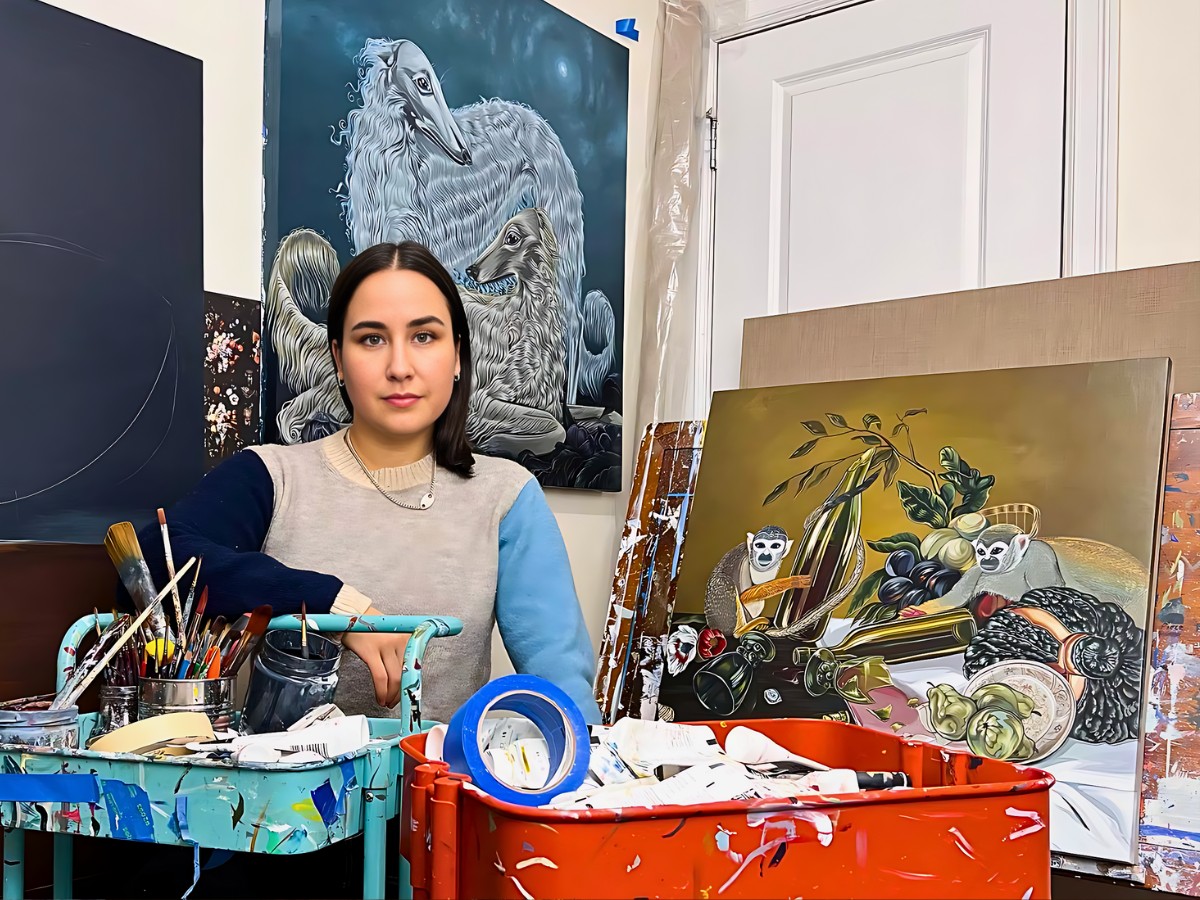
“A key element I wanted to convey in the work is the tension between the gazes within the scenes. These gazes activate the narrative, hiding within the natural elements, disguised among the flowers, or veiled in shadow. They are not aggressive but quietly observe, inviting reflection on the nature of looking and being looked at. The figures in the paintings react – shock, ambivalence, or contemplation.”
The Language of Color and Composition
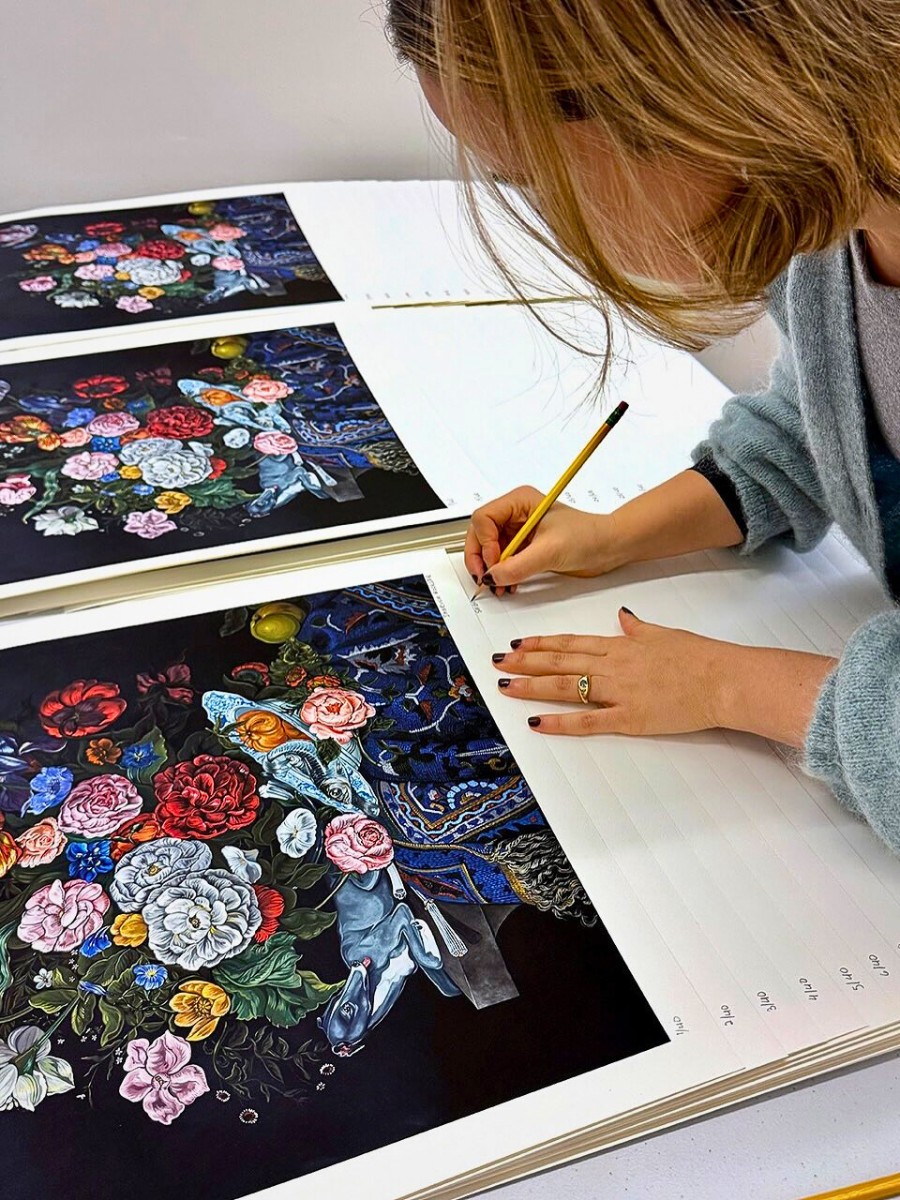
Anyone who loves working with flowers understands the challenge of capturing their full glory, their texture, their way of catching light. But Sabrina does this technical skill so well while also using color to create an emotional atmosphere.
Her palette draws on Rococo painting, a light, ornate style characterized by soft pastel colors, graceful curves, asymmetry, and themes of love, leisure, and nature, emerging in reaction to Baroque grandeur. She applies its luminous quality and sophisticated color relationships to scenes that feel decidedly less serene.
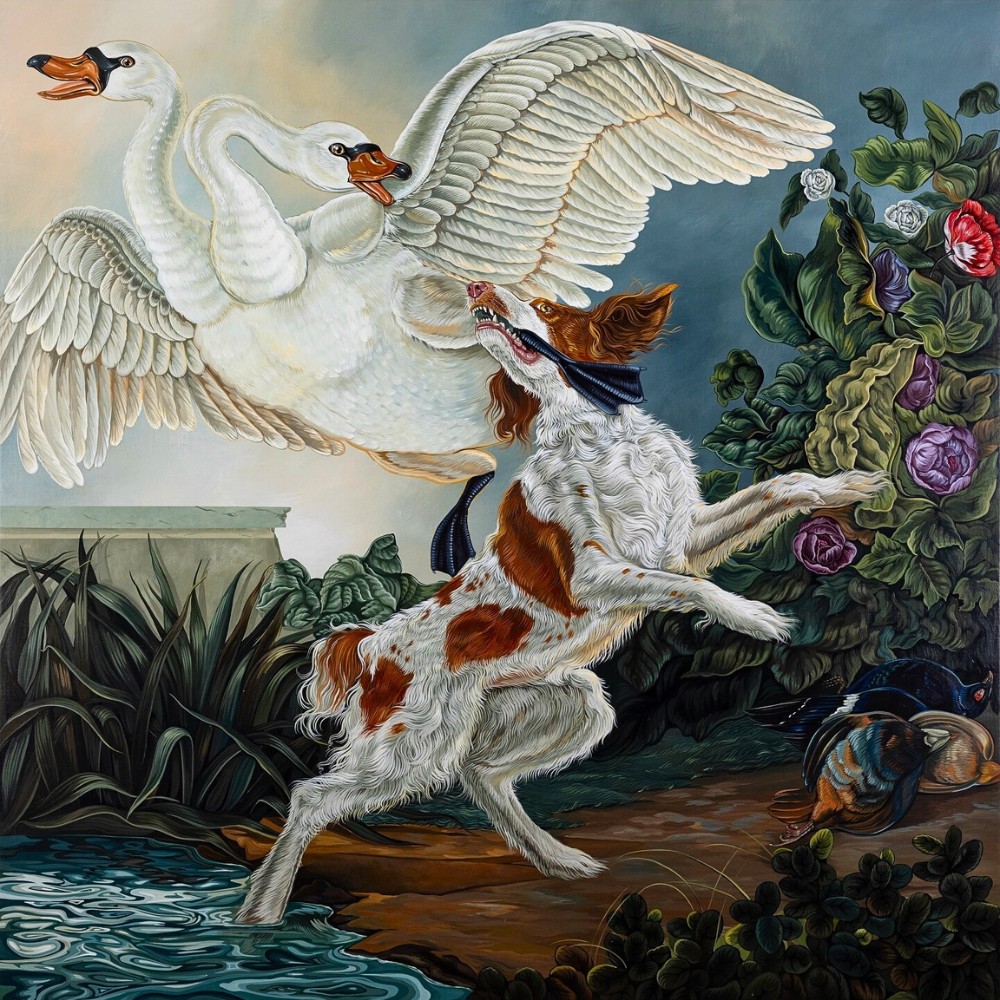
Look at ‘The Hunt,’ for instance, where a hunting dog catches a two-headed swan amid an explosion of flowers. The flowers there are not just to soften the drama but to heighten it, creating contrast between natural beauty and the violent action taking place. The flowers seem almost too perfect. A bit too abundant, which adds to the feeling that something isn't quite right in this world. It's a technique that speaks to anyone who's ever arranged flowers, knowing they will soon wilt; that tension between perfection and decay.
Of Hidden Gazes and Subtle Surveillance
One of Sabrina's signature techniques involves hiding faces and eyes throughout her compositions, often nestled within floral arrangements or partially obscured by petals and leaves. In ‘Trophy', a painting of a hanging two-headed swan, moth wings reveal eye patterns that seem to watch viewers. They are not aggressive or obviously threatening, but create awareness that observation goes both ways.
This approach makes the traditional still life something more psychological. When you look at her florals, you are never quite alone with them. There is always the possibility of something looking back, of consciousness existing where it shouldn't. It is an uncomfortable feeling in the best possible way, one that makes her botanical paintings feel alive in a way that is beyond technical skill.
Water, Flowers, and Feminine Power
The recurring presence of water in Sabrina's work adds another element to her floral compositions. She describes shallow water as suggesting a false sense of safety, a surface calm hiding deeper complexities. This metaphor works beautifully with flowers themselves, which offer immediate visual pleasure while often carrying complex symbolic meanings.
Sabrina:
“In both 'Diana and Actaeon' and ‘The Virgin Spring', water plays a key role, almost as a character in itself. Its presence reflects both the purity and complexity of nature, shaping the narrative and the forces at play within each scene. In these works, water becomes a metaphor for boundaries – those we create and those we encounter, both natural and self-imposed – and for the tension that arises when they are crossed.”
Her recent work explores themes of feminine autonomy and boundaries through the lens of Diana, the goddess who fiercely protected her sacred space. Flowers in these paintings are part of that protected world, natural elements that beautify and defend. They create spaces where power exists alongside vulnerability, and where beauty doesn't imply weakness. This is a refreshing perspective in floral art, where botanical subjects have sometimes been relegated to the merely decorative.
The Maximalist Approach to Abundance
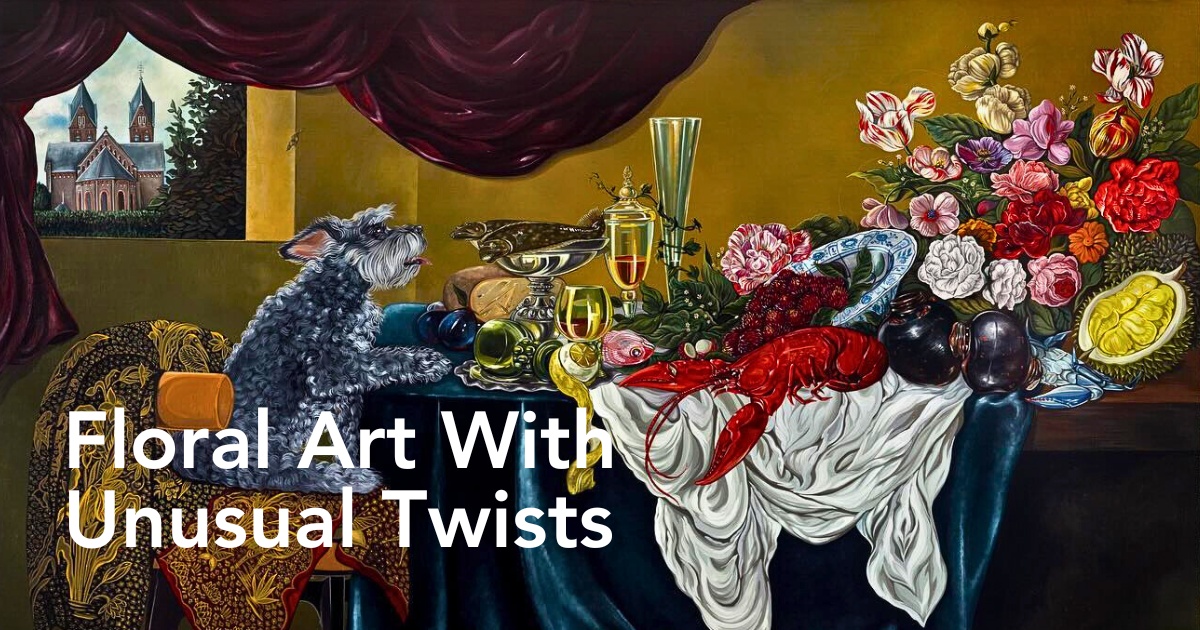
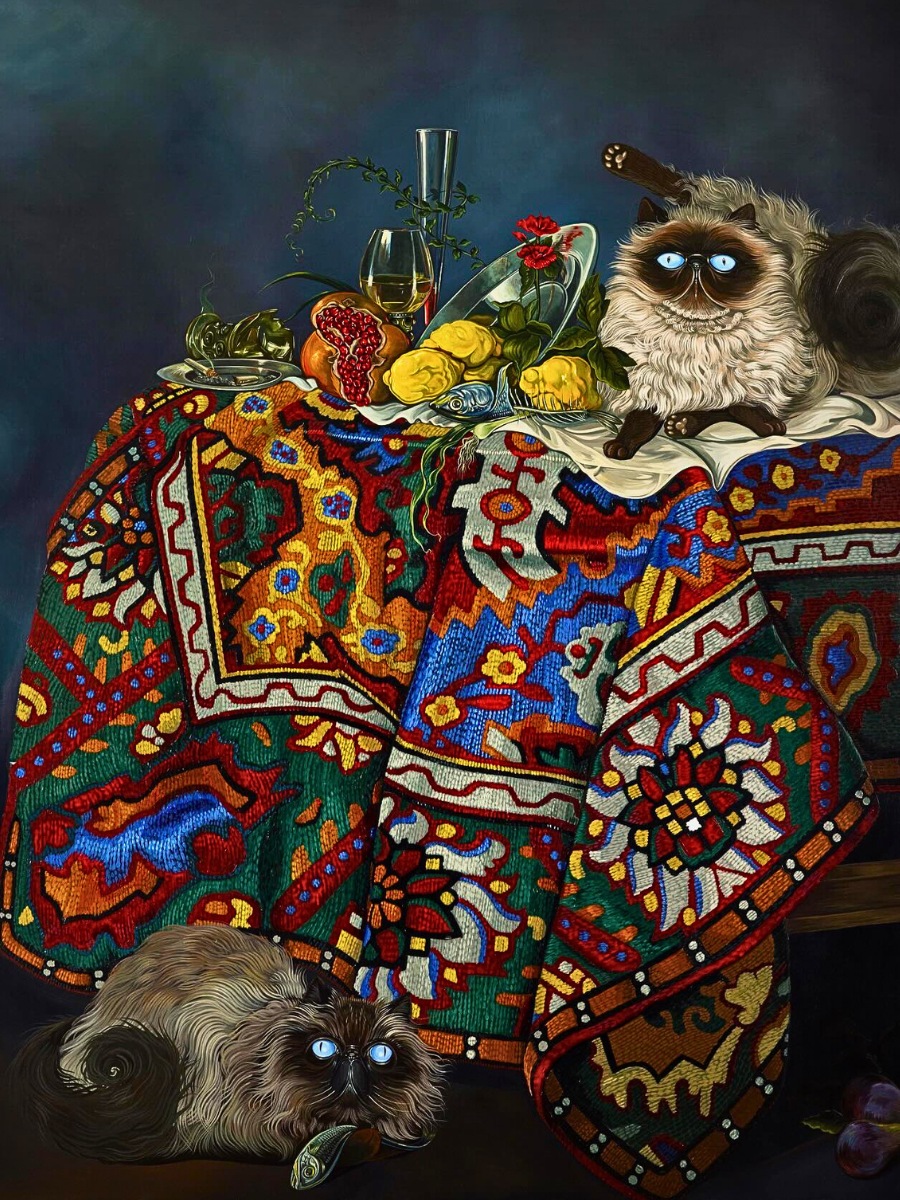
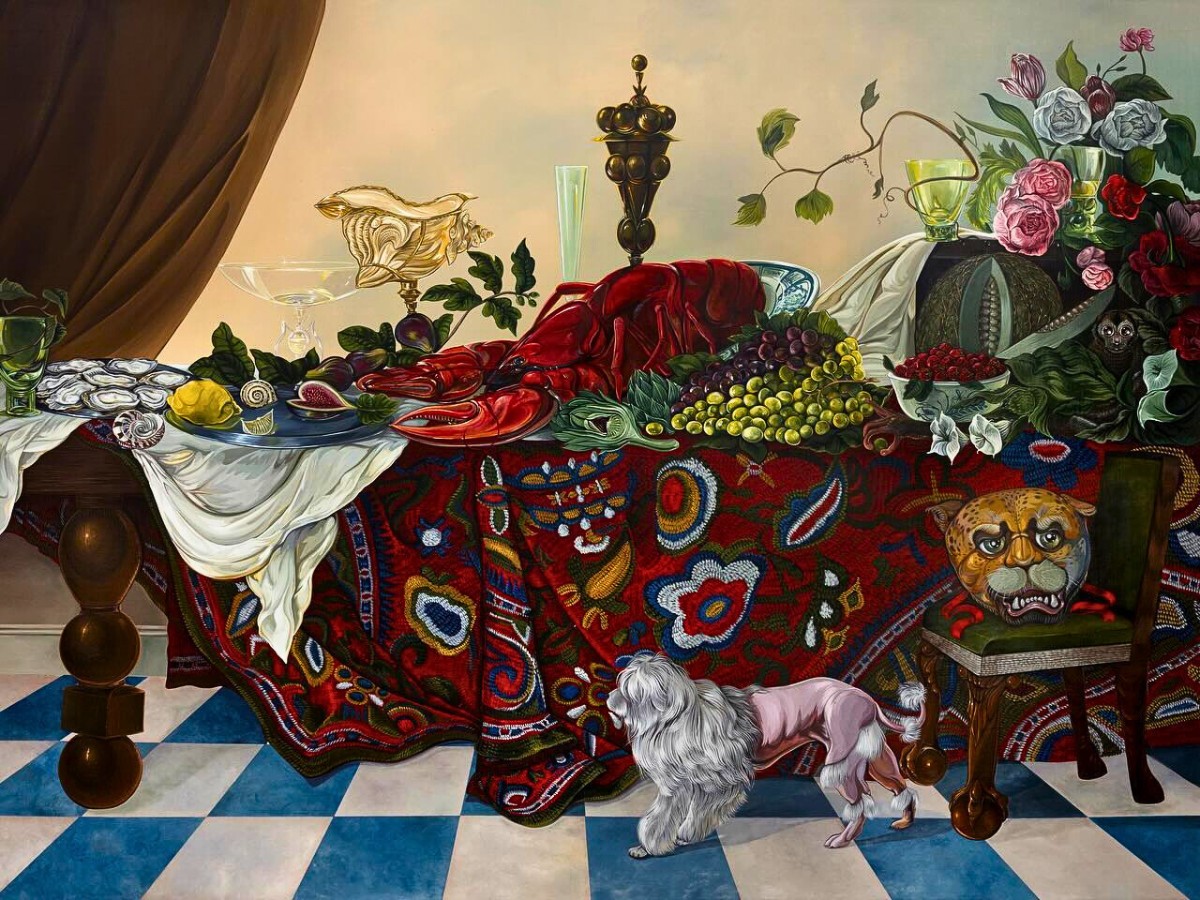
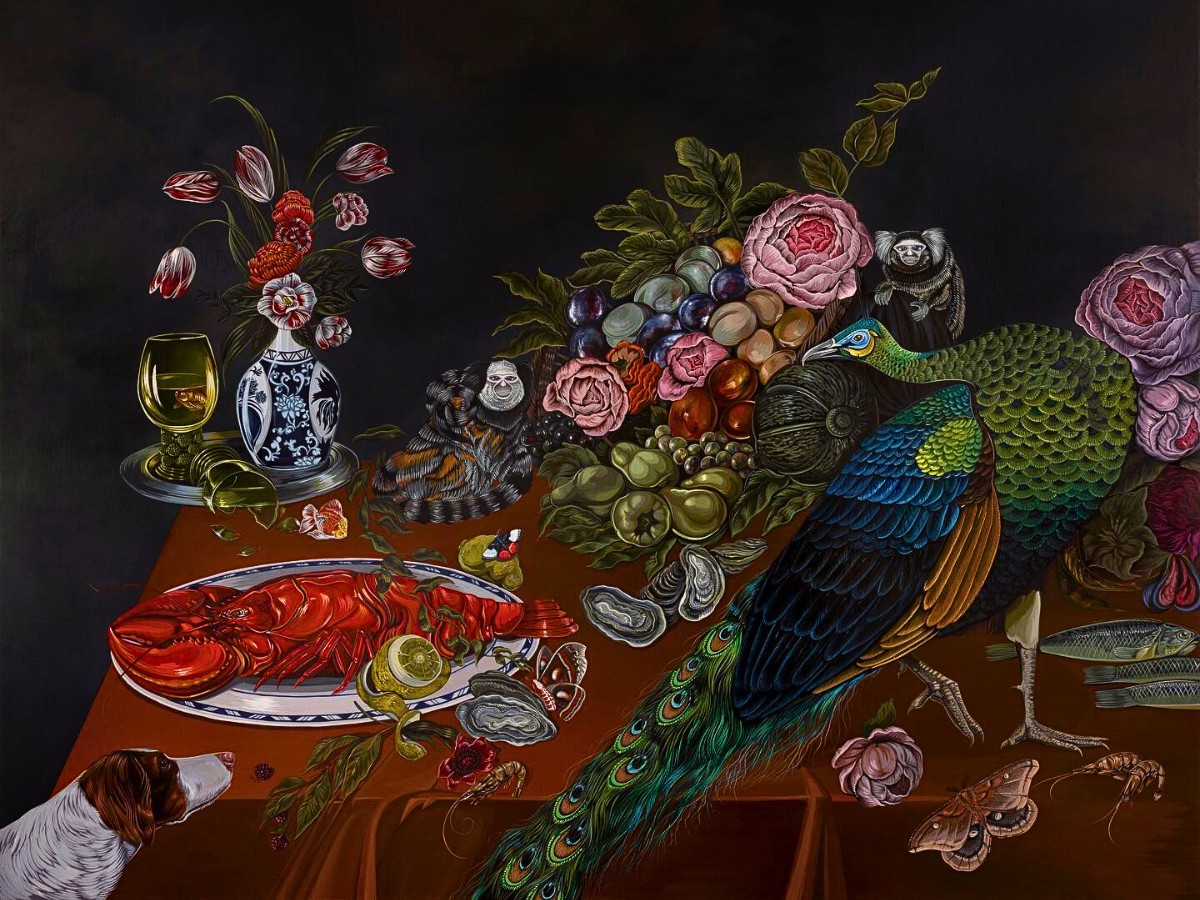
Sabrina doesn't hold back. Her compositions overflow with flowers, fruit, vessels, animals, and hidden details that reward extended viewing. ‘Beg, Borrow, and Steal’ shows this maximalist tendency at its peak, with dogs and cats in frenzy over a table laden with produce, seafood, flowers, and meat. The abundance here tips into disorder, and refinement falls into chaos.
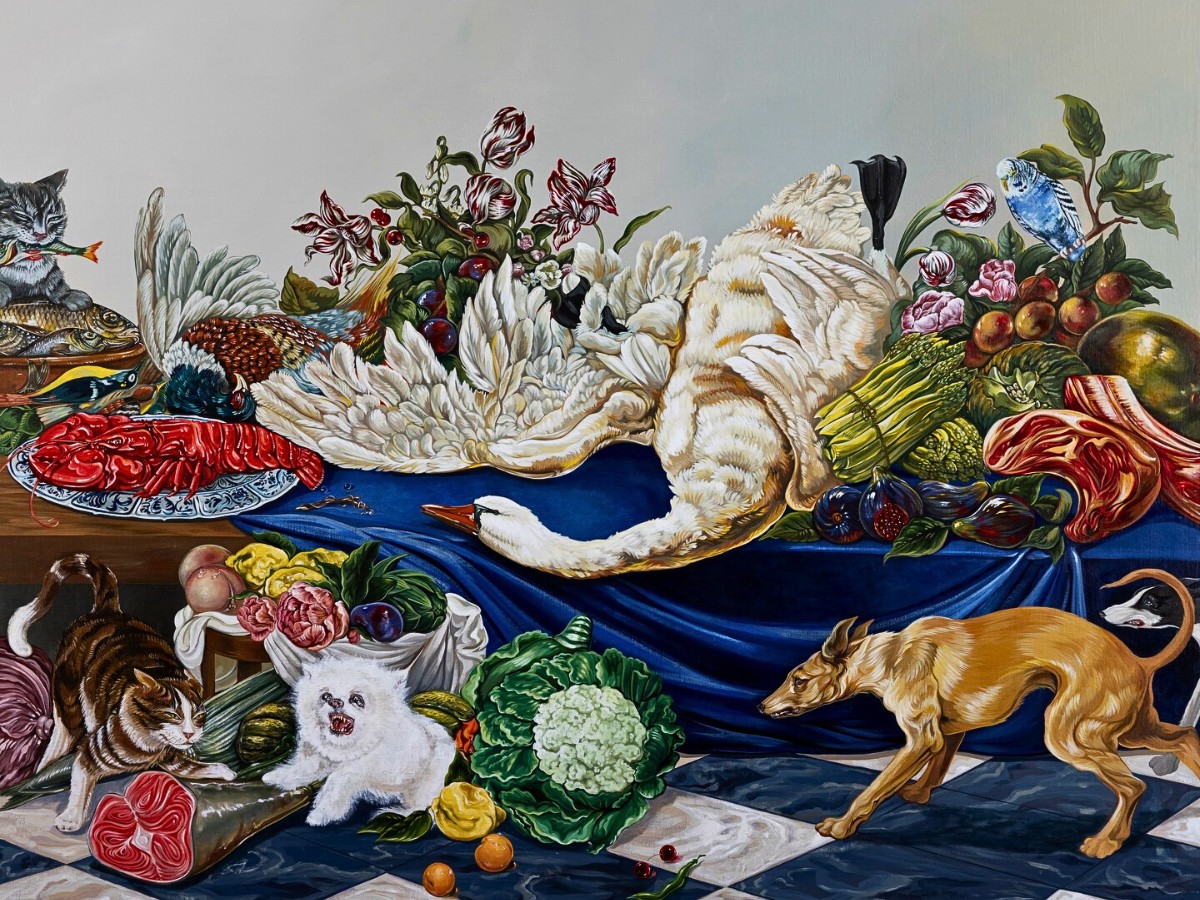
This approach feels particularly relevant now, when abundance and scarcity coexist in contemporary settings. Her paintings capture both the desire for plenty and the anxiety that comes with it, the way too much of a good thing can feel overwhelming rather than being comforting. The flowers in these scenes are beautiful but almost suffocating in their profusion.
Technical Mastery Meets Contemporary Ideas
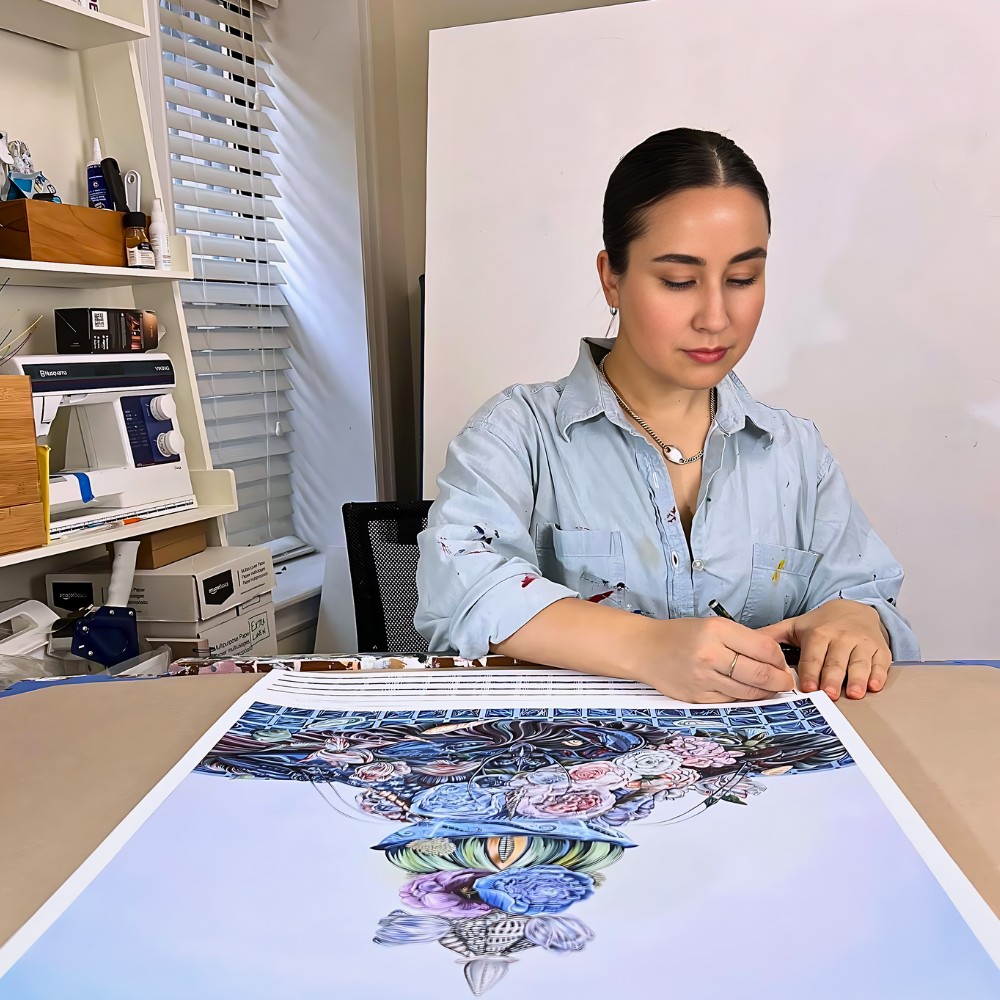
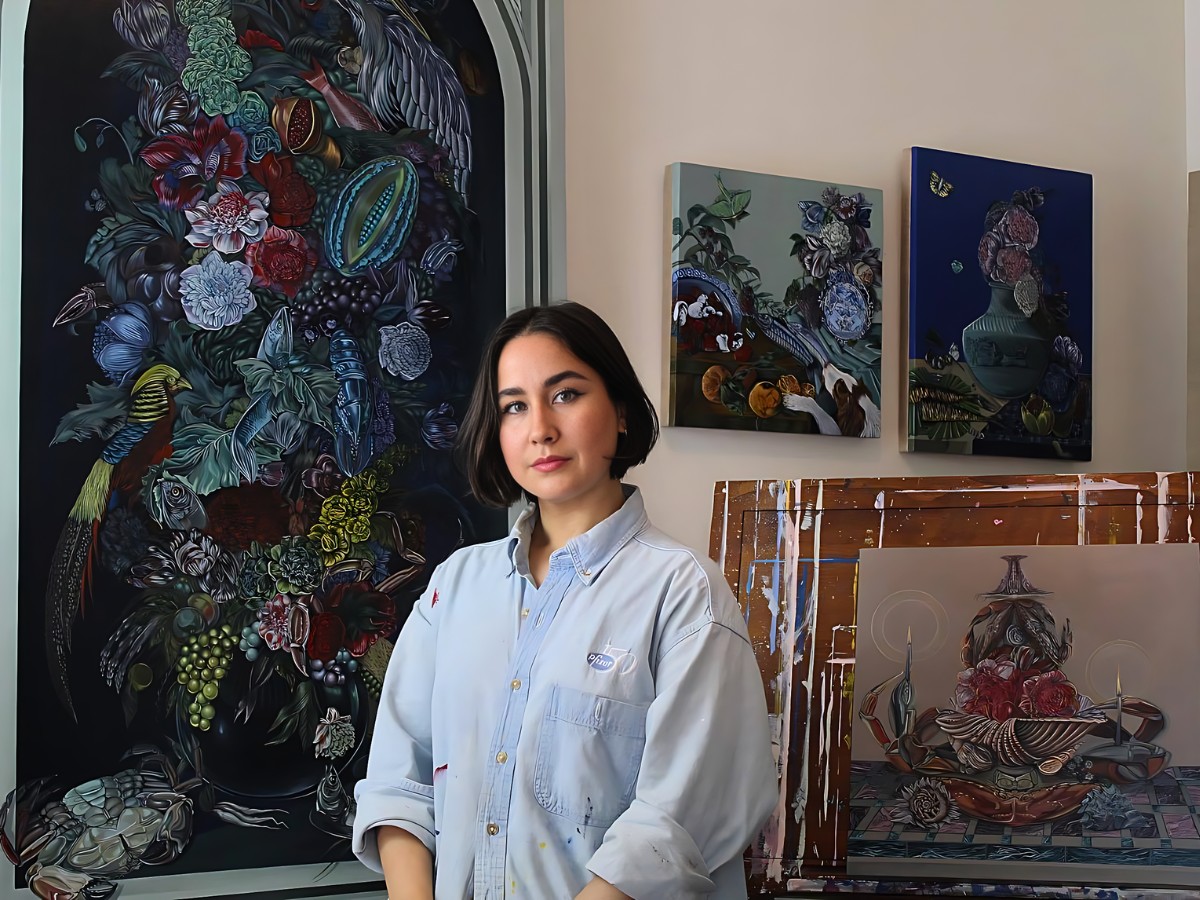
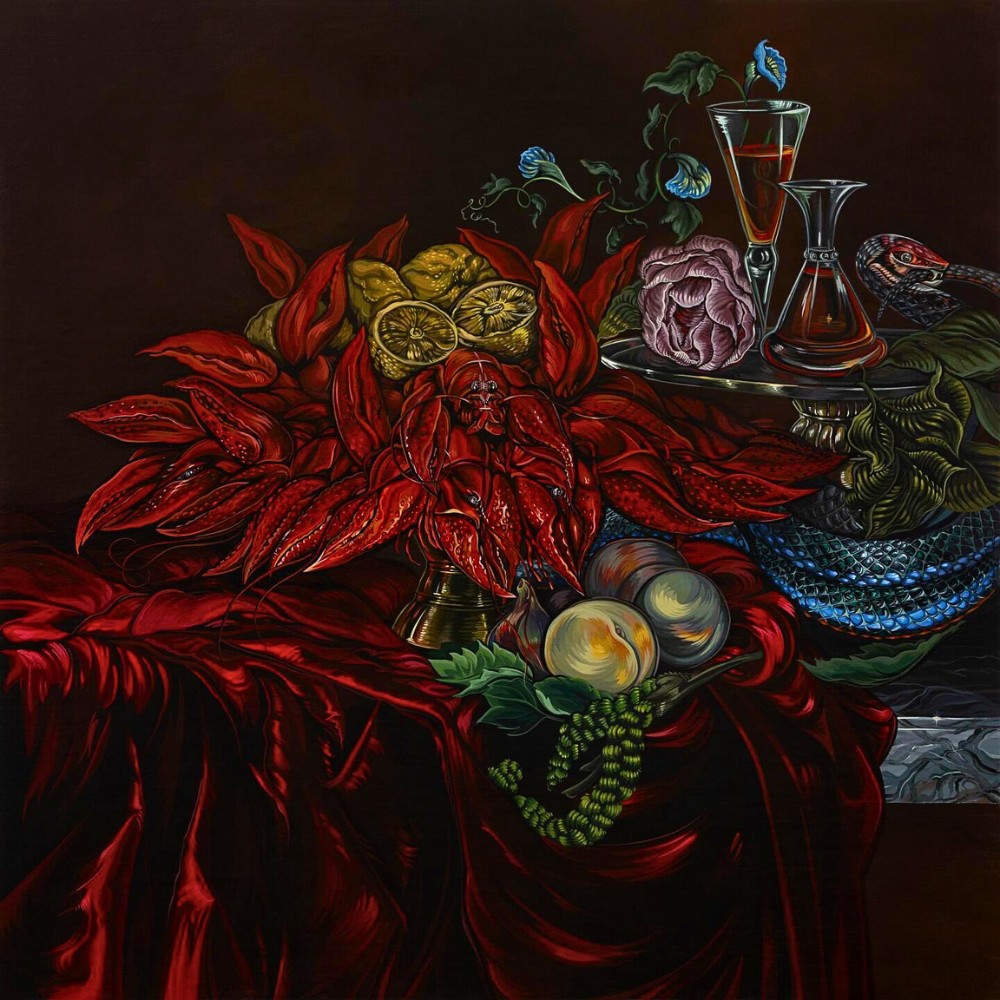
Working in acrylic on linen over panel, Sabrina achieves a level of detail and depth that gives her paintings an almost old-master quality. She understands how light moves through petals, how shadows collect in the folds of fabric, and how to make different textures feel distinct and real. This technical groundwork allows her conceptual risks to land, because the execution is so solid that viewers trust where she's taking them.
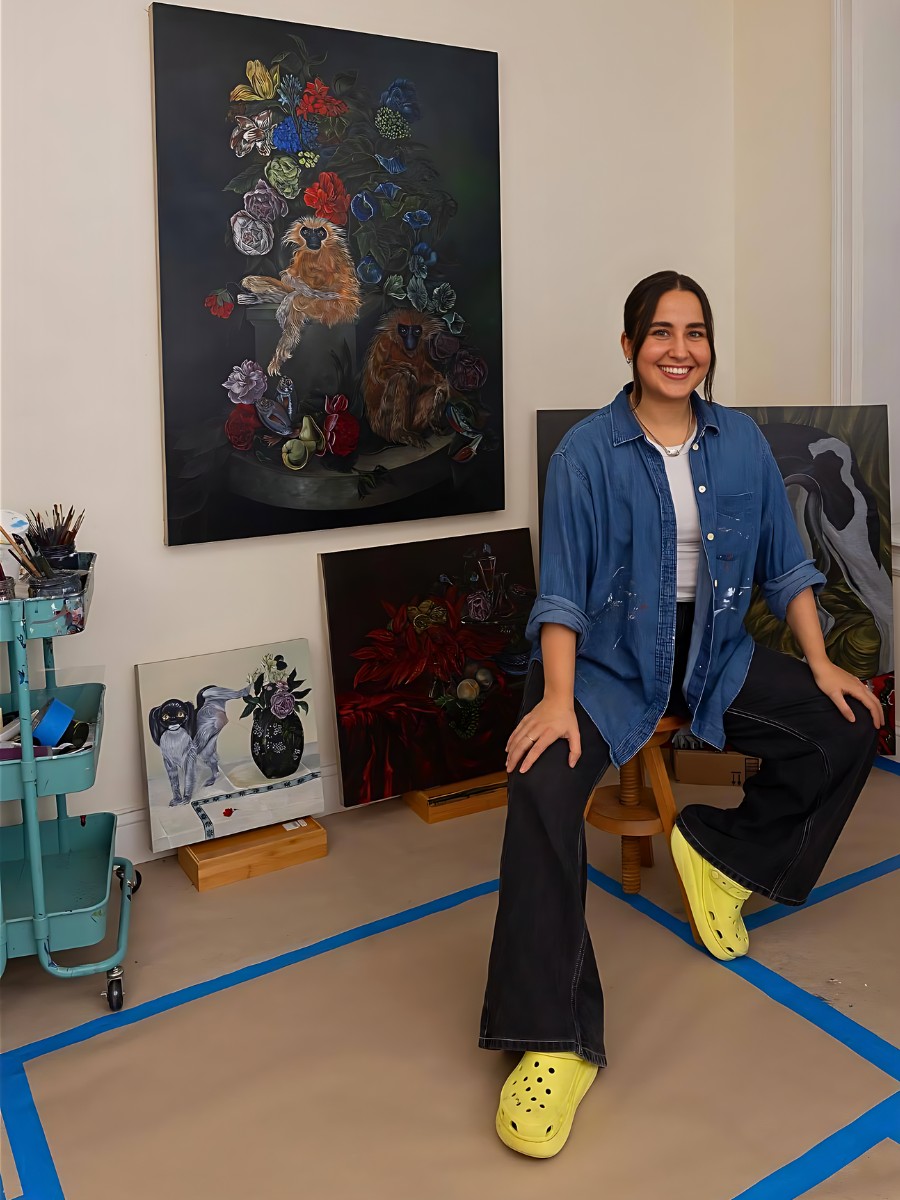
Her minor works also show this skill at an intimate scale. ‘Plucked’ shows a hand holding two purple peonies arranged to resemble human eyes, a simple but effective image that works because the flowers themselves are rendered so convincingly. The strangeness of the concept only succeeds because the painting itself is so accomplished.
Curated and presented by Beers London, Sabrina's floral artworks continue to explore themes of boundaries, nature, and observation. She also keeps delving into even more exciting directions, having already carved out a unique space in contemporary art where historical techniques meet surreal sensibilities and where floral beauty serves narrative purposes beyond mere decoration.
Are you interested in floral art that challenges while it charms? You can check out Sabrina's website and social pages for her upcoming exhibitions.
Photos by @sabrinabockler.