
Tessa built its name on premium Ecuadorian standard roses, and its spray roses now sit alongside Ranunculus, Alstroemeria, and other specialty flowers in a deliberately broad assortment. Grown at around 3,100 meters (about 10,170 ft) in the Ecuadorian Andes, they follow the same quality standards as the farm's roses, from variety choice to postharvest handling.
For this edition of the World of Spray Roses member spotlight, Jena Gizerskiy, Commercial Strategy Manager at Tessa, explains why the company grows spray roses, how altitude and careful handling shape their quality, and what florists and wholesale partners look for today.
Why Tessa Grows Spray Roses Next to Its Standard Roses
Tessa moved into spray roses as its business, and its customers evolved. The team saw the value of offering a more diverse assortment, and spray roses became part of that shift together with Ranunculus, Alstroemeria, and other specialty flowers.
"For us, it has never been about focusing on one particular category," says Gizerskiy. "It's about building a well-rounded portfolio that gives our customers access to exceptional flowers for different markets, occasions, and design preferences, all while maintaining the standards they have come to expect from Tessa."
That approach places spray roses inside the wider Tessa offer rather than in a separate line. Buyers who know the company for its standard roses can expect the same quality promise from a stem that carries several heads.
How Does Altitude Shape Tessa Spray Roses?
Tessa grows at approximately 3,100 meters above sea level. According to Gizerskiy, the mix of abundant natural light, cooler temperatures, and favorable growing conditions supports the traits that Ecuadorian flowers are recognized for: strong stems, rich color, and well-formed heads.

"Of course, altitude is only part of the equation," Gizerskiy adds. "Variety selection, experienced growers, careful crop management, and proper postharvest handling all contribute to the final quality of a flower. At Tessa, we believe it is that combination of nature and expertise that makes the difference."
A Few Interplant Favorites From the Tessa Collection
Tessa works with several breeders to keep its spray rose collection varied, and Interplant Roses, the breeder behind World of Spray Roses, is among them. The team judges each variety on growing performance, product characteristics, quality consistency, and suitability for the markets Tessa serves, and it keeps evaluating new breeding developments.

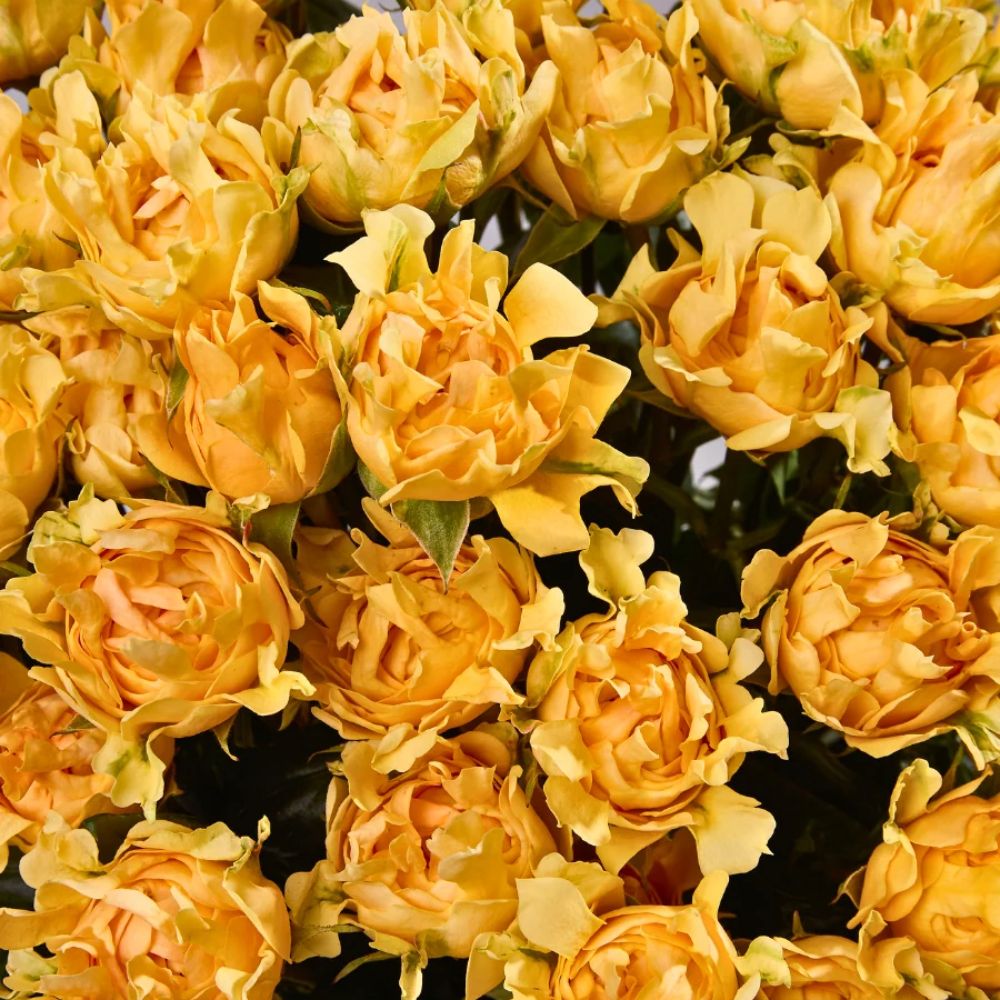
Among the Interplant spray rose varieties grown at Tessa, Gizerskiy highlights three of her personal favorites: Spray Rose Arctic Flow, Spray Rose Paradise, and Spray Rose Snowflake. She appreciates Arctic Flow for its beautiful white blooms and distinctive ruffled petals, which bring texture and movement to floral designs. Paradise stands out for its vibrant yellow color and sculpted petals, offering designers something different when they want to add personality to an arrangement. Snowflake provides a more classic touch, with delicate white blooms that work beautifully across different floral applications.
Consistent Quality From Greenhouse to Florist
A spray rose stem carries several heads that need to open evenly, so uniformity and the right harvest stage matter even more than with a single-headed rose. Tessa's teams follow flower development and quality closely through growing and harvesting. After harvest, the flowers move through the company's established postharvest infrastructure and quality standards, which are designed to preserve freshness and protect the product on its way to the customer.
"Ultimately, our goal is simple: when a customer opens a box of Tessa flowers, they should feel confident in the quality of what they receive, regardless of the flower category," says Gizerskiy.
That care continues at the florist, where the right conditioning keeps every head on the stem performing. Thursd covered the practical steps in spray rose care from grower to vase.
What Florists and Markets Ask for in Spray Roses
Tessa supplies customers across international markets, each with its own preferences and expectations. Across the industry, Gizerskiy sees a growing appreciation for flowers that offer versatility, interesting textures, and distinctive shapes, and spray roses fit naturally into that demand. Their multiple heads work in everyday arrangements as well as weddings and larger floral installations, a pattern also visible in the American spray rose market.
"Our wholesale partners serve florists and designers who are looking for dependable products that perform beautifully and allow them to create with confidence," Gizerskiy says. Feedback from those customers guides the assortment, helping Tessa support different floral uses without losing its focus on premium quality.
Why Flower Education Matters
For Tessa, the World of Spray Roses spotlight is a chance to show the work behind flower production in Ecuador, a sector represented by the growers and exporters association Expoflores. Gizerskiy sees education as important for every flower category: "The more florists and consumers understand about flower characteristics, proper care, and design possibilities, the more confidently they can make their selections."

That focus on understanding links Tessa to other members of the series, including Braam Roses, Ziway Roses, and Alma Spray Roses, and to breeder Interplant.
Learn more about the company on the Tessa website and its grower page on Thursd.
Whether it is a classic rose, a spray rose, or a specialty flower, Tessa's commitment stays the same: quality, consistency, innovation, and strong relationships with customers.
All pictures, including the featured image, are by @tessacorp.roses