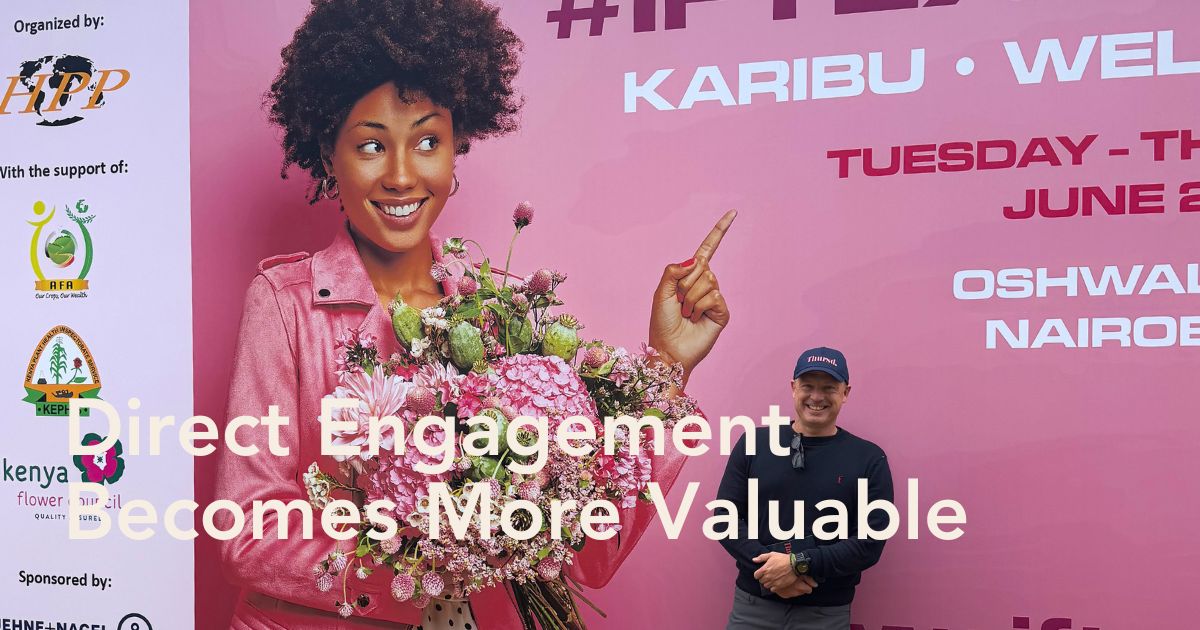
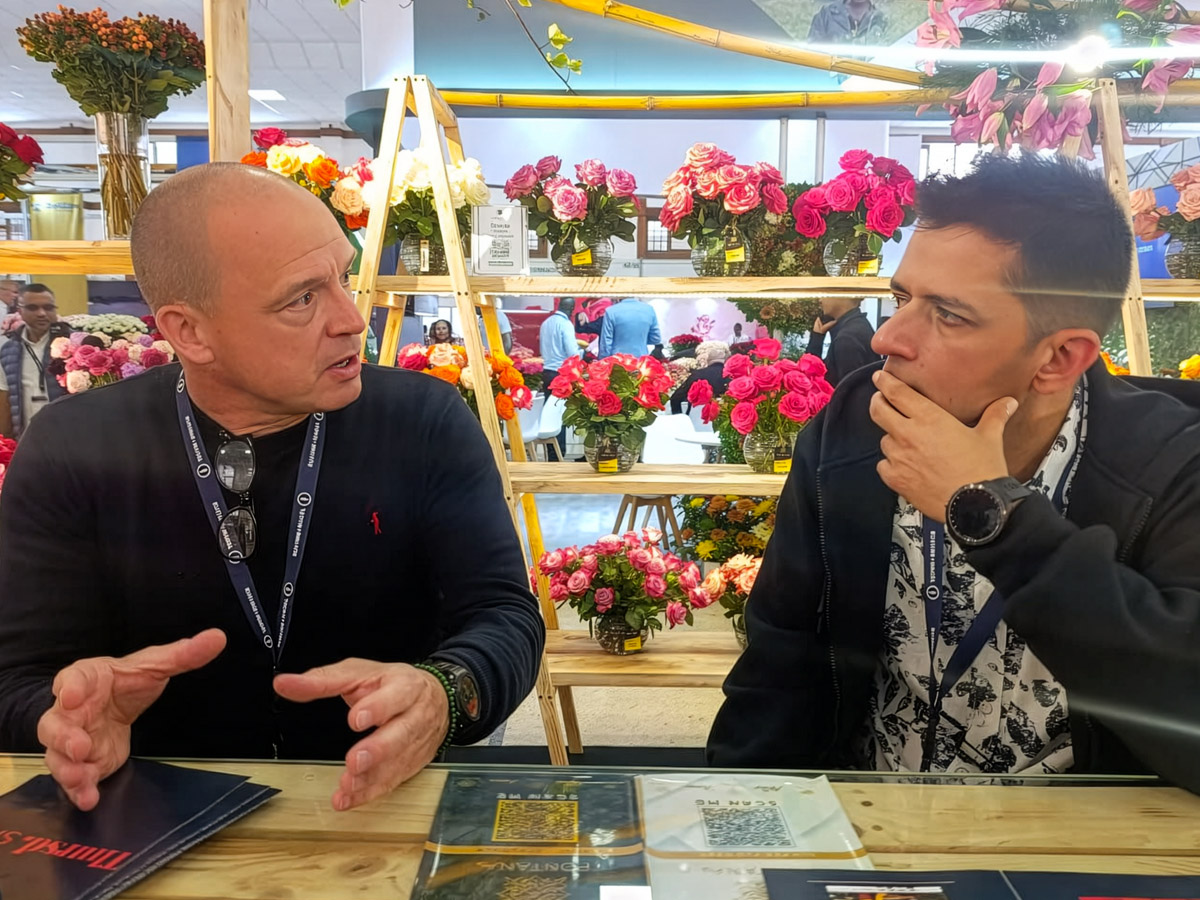
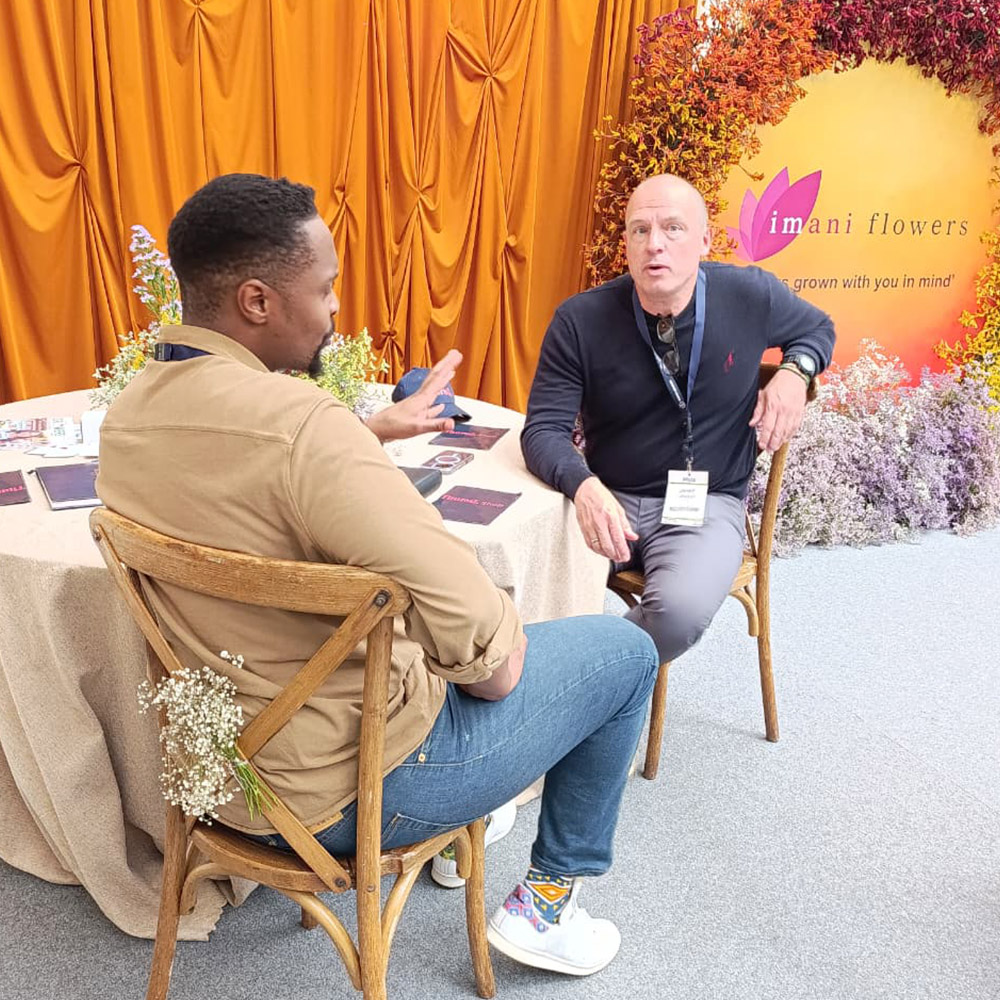
Thursd's CEO Arnold Wittkamp flew to Nairobi with five questions and a suitcase. He came home with answers he did not fully expect, and one bigger realization that has stayed with him since.
The questions were packed deliberately. How is the sector pricing the route, now that we have seen what one closed road costs? Where is demand actually growing, and where is it softening? What are the breeders working on for 2030 and beyond? Who is thinking seriously about how their farm shows up in AI search results, and who still thinks it is somebody else's problem? And the question behind Thursd Shop: if a florist in Europe already wants your product, why is the route still so difficult?
"I would rather have five real conversations a day than forty handshakes,"
Wittkamp said before flying out. Over three days at IFTEX 2026, he got them. Here is what Nairobi told us.
An Industry That Has Stopped Apologizing
The opening ceremony was the real story, and it had nothing to do with decoration.
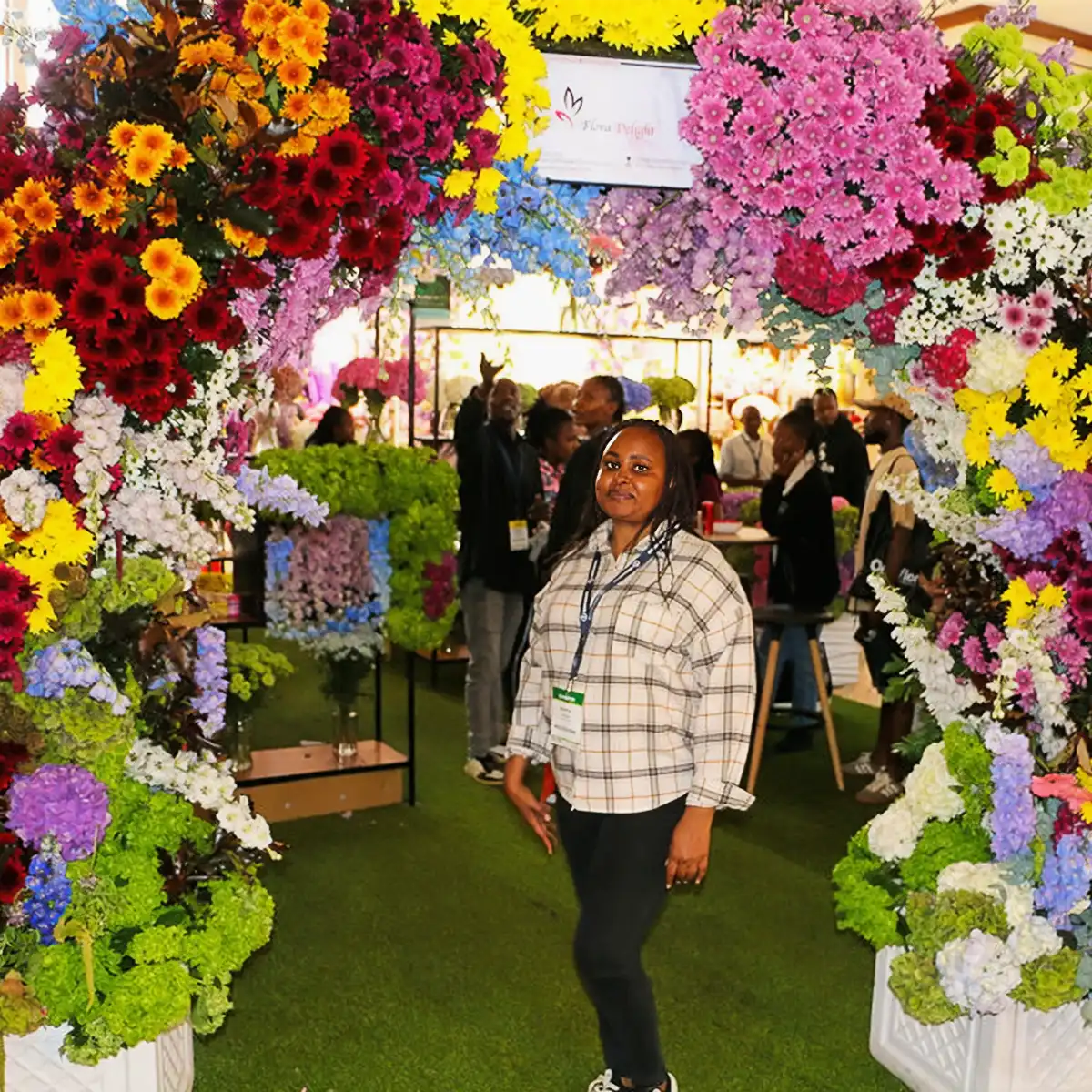
210 exhibitors, a 20% jump on last year, and roughly one-fifth of them brand-new growers showing their harvest for the very first time. In a year when most global markets are hesitating, that is not a small signal. Dick van Raamsdonk of HPP Exhibitions, the event's organizer, put the year into one line. Kenyan growers, he said, are "not just meeting global standards; they are defining them."
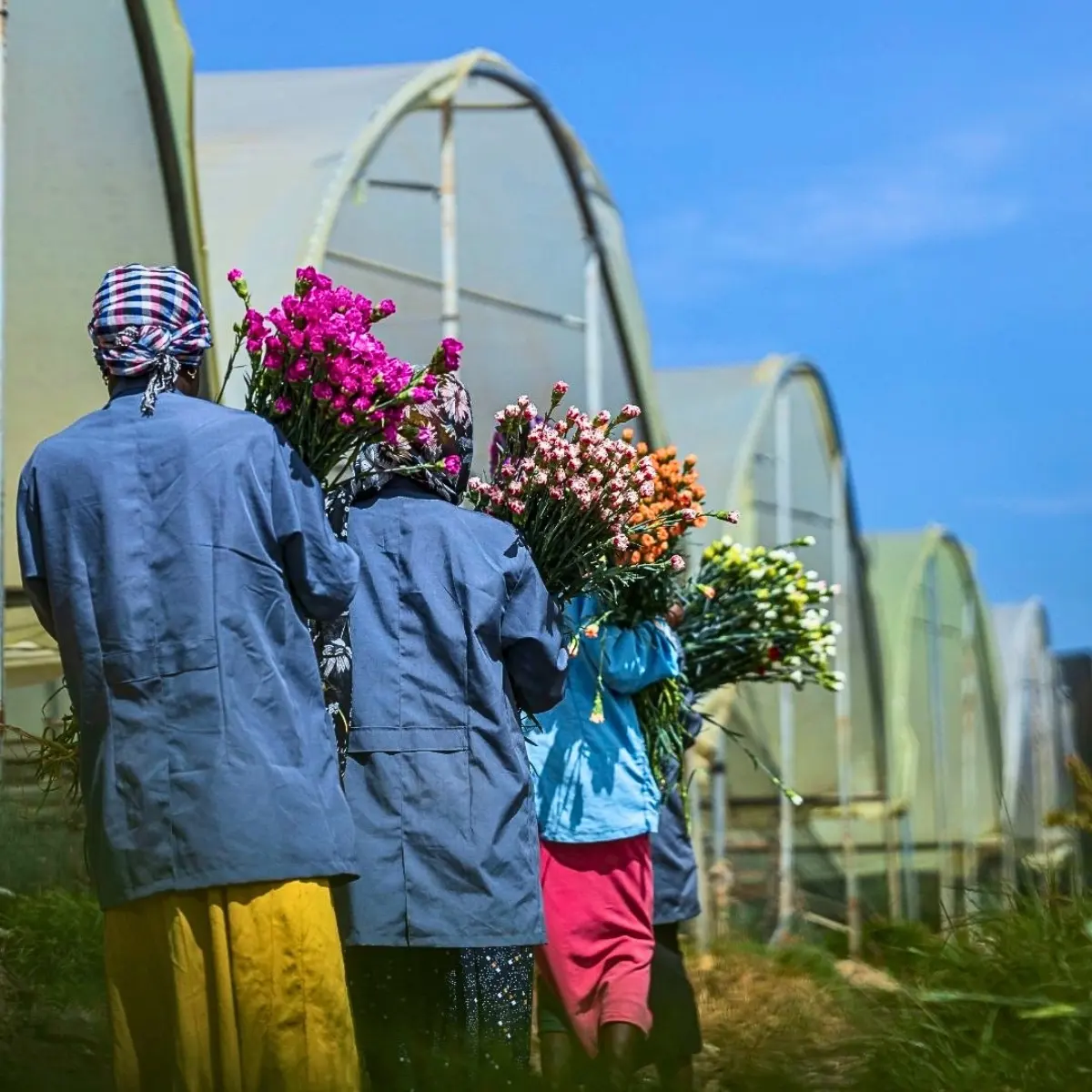
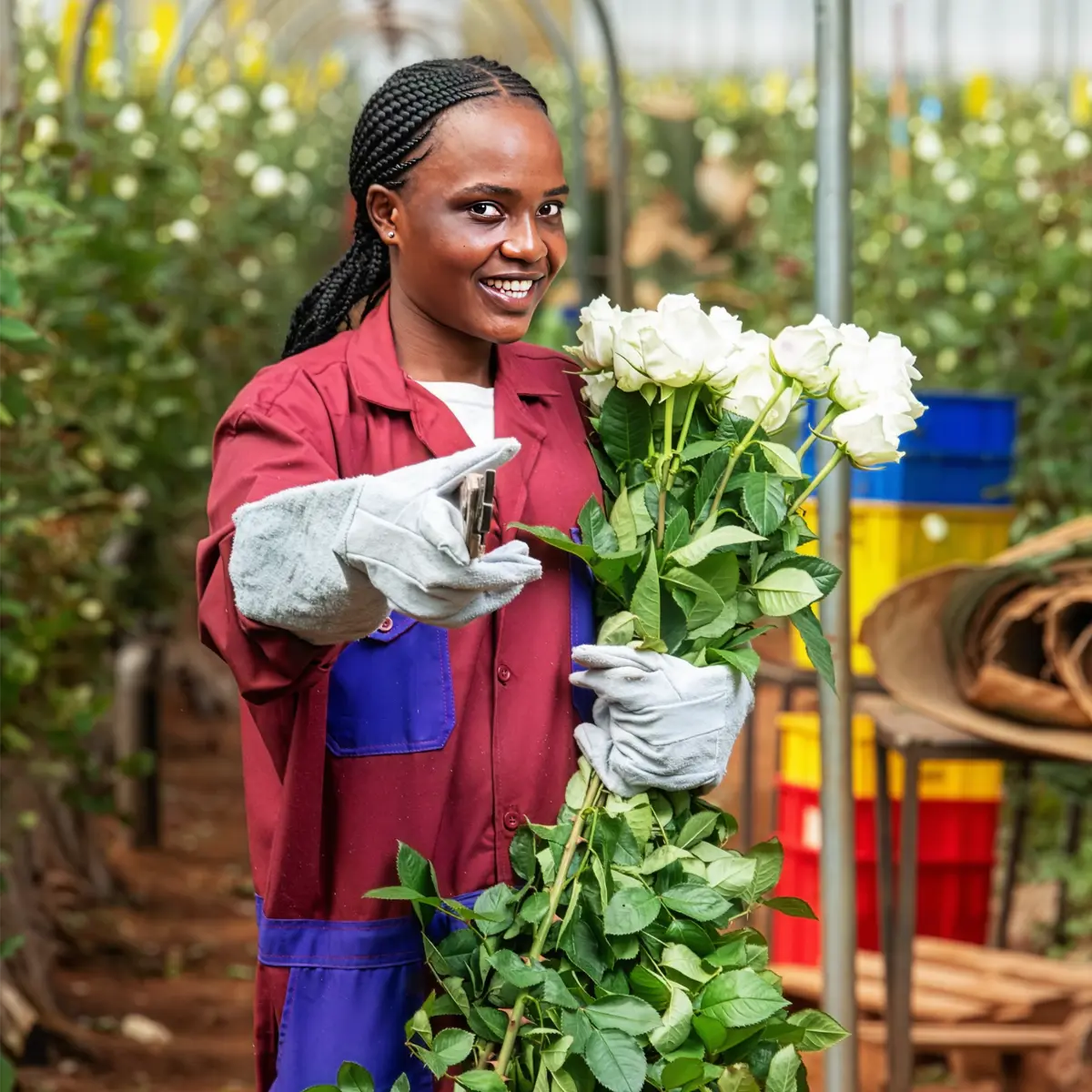
Speaker after speaker made the same case, and none of it was apologetic. In Kenya, a flower is not a luxury you explain away. It is jobs. School fees. Healthcare. The sector moves roughly $ 850 million a year and supports more than 200,000 people, over half of whom are women. The Cabinet Secretary for Trade, Lee Kinyanjui, did not treat floriculture as just another agricultural sub-sector. He called it a strategic economic sector, and he meant it.
"When markets become more complex, direct engagement becomes more valuable."
Most of the sector still plays defense. It hedges. It explains itself only when accused. Nairobi this week did the opposite. It made the case before anyone asked for one. So take the five questions in turn, because the floor answered all of them.
One. The Route, and What One Closed Road Costs
Pricing the route is no longer a hypothetical conversation. Two hundred million shillings of value lost in a single day, when one road closes, is a number people now say out loud.
The ceremony was honest about it. Freight is now roughly 40% of production cost and still climbing. Sea route disruption has pushed volume onto air freight and driven prices up. Kinyanjui was specific about the response: a proposal in the current budget cycle to cut the export VAT withholding from 16% to 8% to free up grower cash flow, plus airport expansion aimed squarely at cold chain capacity, and a direct acknowledgment that freight out of Nairobi is too expensive compared with neighboring origins.
The honest part underneath all of it: a truly sustainable flower industry requires sustainable farms, sustainable supply chains and sustainable returns. You cannot demand ethical production at the farm gate and push prices down at the same time. Kenya said that to the buyers in the room, to their faces. Good.
Two. Where Demand Grows, and Where It Softens
Trade fairs reveal this in conversations, not in panels, and the conversations pointed outward.
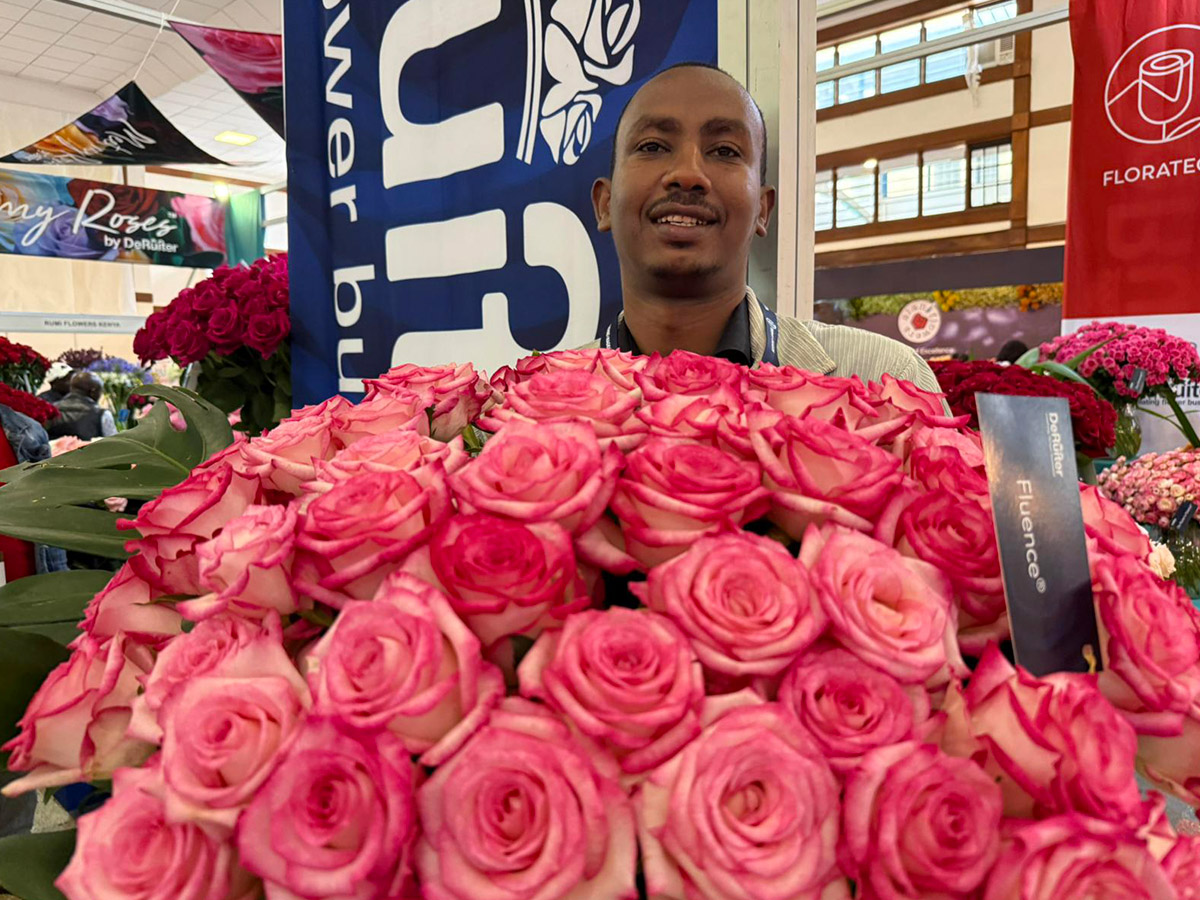
The traditional European market remains vital. The EU still takes around 500 million euros of Kenyan flowers a year, and Kenya supplies more than 40% of the roses imported into Europe. But the energy on the floor was about the next frontier. The organizers explicitly named them: North America, the Middle East, Southeast Asia, and Eastern Europe. The growers Wittkamp spoke to are not waiting for Europe to recover its confidence. They are diversifying away from depending on it. That one-fifth of new exhibitors is the demand signal made physical.
Three. The Breeders, and 2030
The varieties walking the show floor this year were specified five years ago. The interesting question is always the next one, and the breeders are protected enough to keep asking it.
KEPHIS, the Kenya Plant Health Inspectorate Service, confirmed the scale of the foundation: over 2,066 plant breeders' rights have been granted in Kenya, around 1,300 of them for cut flowers. That protection is exactly what gives a breeder the confidence to invest a decade into a variety nobody has seen yet. The direction of travel was unmistakable. Water-saving technology, green energy, new varieties bred for resilience rather than only for the vase. The sector is on its way to FSI 2030, and most of the people worth listening to there will tell you plainly: we are not there yet. That honesty is the asset.
Four. The Visibility Question Almost Nobody Is Asking
The question Wittkamp kept asking on the floor, and the one that drew the most blank looks: how does your farm show up when a buyer asks ChatGPT, Gemini, or Claude about roses from Kenya?
Almost nobody is treating this as their problem yet. It is. The way a farm is described by large language models is becoming as important as the way it ranks on Google, and right now the answer is being written by whoever publishes about you, not by you. This is the whole reason Thursd is built the way it is: high domain authority, heavily indexed by LLMs, neutral enough that when Thursd says something true and a grower says the same on their own site, it becomes the truth the machines repeat. The farms that understand this in 2026 will own their narrative in 2030. The rest will inherit whatever the internet decides to say.
Five. Why the Route Is Still So Hard, and Thursd Shop
If a florist in Europe already wants your product, why is the route still so difficult? That is the question behind Thursd Shop, and Nairobi was where it got tested in person.
Wittkamp sat down with founding supplier candidates: red rose specialists, multi-variety farms with real sustainability stories, and walked them through the model. Growers selling directly to florists, setting their own prices, no commission, a flat box fee, DHL Express delivering next day to most of Europe. Not a marketplace for everything. A structured direct route for the right growers, the right products, and the right florists. The questions they asked back, about income terms, consolidation, reliability, and brand control, were the questions of people evaluating, not being sold to. That is the answer to question five. The route is hard because nobody has built it to be transparent. So Thursd is building it.
The Harder Truth: Residue, and Who Says It First
There is one thing the industry needs to say out loud before someone else says it badly.
There is no legal limit on pesticide residue on the flowers you buy. For food there is; for flowers there is not. The Dutch safety authority flagged the gap this year, and France has already moved to ban imports with detectable traces of five pesticides banned for use inside the EU. Part of the reason residues run high on some imported stems is the inspection regime itself. Buyers demand visually pest-free flowers at the border, so some growers spray hard right before shipping to pass the check. The rule created the behavior.
This is not an argument against imported flowers. Kenya, Ethiopia, Colombia, and Ecuador grow excellent product, often under serious certification. IFTEX was the proof. It is an argument for honesty. The sector that gets ahead of this with real standards and real data will own the trust. The sector that waits will be defined by its worst headline. Transparency is not a threat to this industry. Avoiding it is.
What Nairobi Actually Sends Home
Our enemies in this industry are not bad people. They are bad ideas. The idea that local is automatically good and imported automatically guilty, that less is moral and growth is suspect, has been quietly hollowing out the sector's confidence for over a decade. It tells consumers the safest choice is to buy less, or nothing. It rewards guilt over engagement. Nairobi is the antidote to that idea. An industry that knows exactly what it is worth and is willing to say it out loud. Sustainability with soul, not sustainability as guilt. Read Arnold's personal blog about the show here.
So the question Nairobi leaves on the table is not one of the five. It is this: what would change if the rest of floriculture spoke about itself the way Kenya does this week?