Ask any florist what keeps them awake the night before a big order, and the answer is rarely the design. It is the box that has to arrive in the morning. Will the roses open in time? Will the Ranunculus be the shade you promised the bride? And if half the stems look tired, who picks up the phone?
Buying wholesale flowers for florists comes down to one decision you make again and again: where your flowers come from. There is no single best flower wholesaler for everyone. A studio doing weddings needs something different from a busy corner shop, and a florist in Chicago buys differently from one in Utrecht. So instead of a ranking, this guide walks you through the five main kinds of flower supplier, what to check before you say yes, the questions worth asking, and the red flags. Let's get to it!
Where Do Florists Buy Wholesale Flowers?
Most florists end up buying from more than one place, and that is perfectly normal. Each route has its own rhythm, its own minimums, and its own idea of what 'fresh' means. Here is how they compare.
The Local Wholesaler, Your Best Ally Close to Home
A local wholesaler buys from auctions, importers, and growers, keeps the stock in a cooler, and either delivers to your door or lets you come in and pick. You can usually buy by the bunch, see the product before you pay, and build a real relationship with the people behind the counter. That relationship is worth a lot in the week before Valentine's Day, when everybody wants the same red roses.
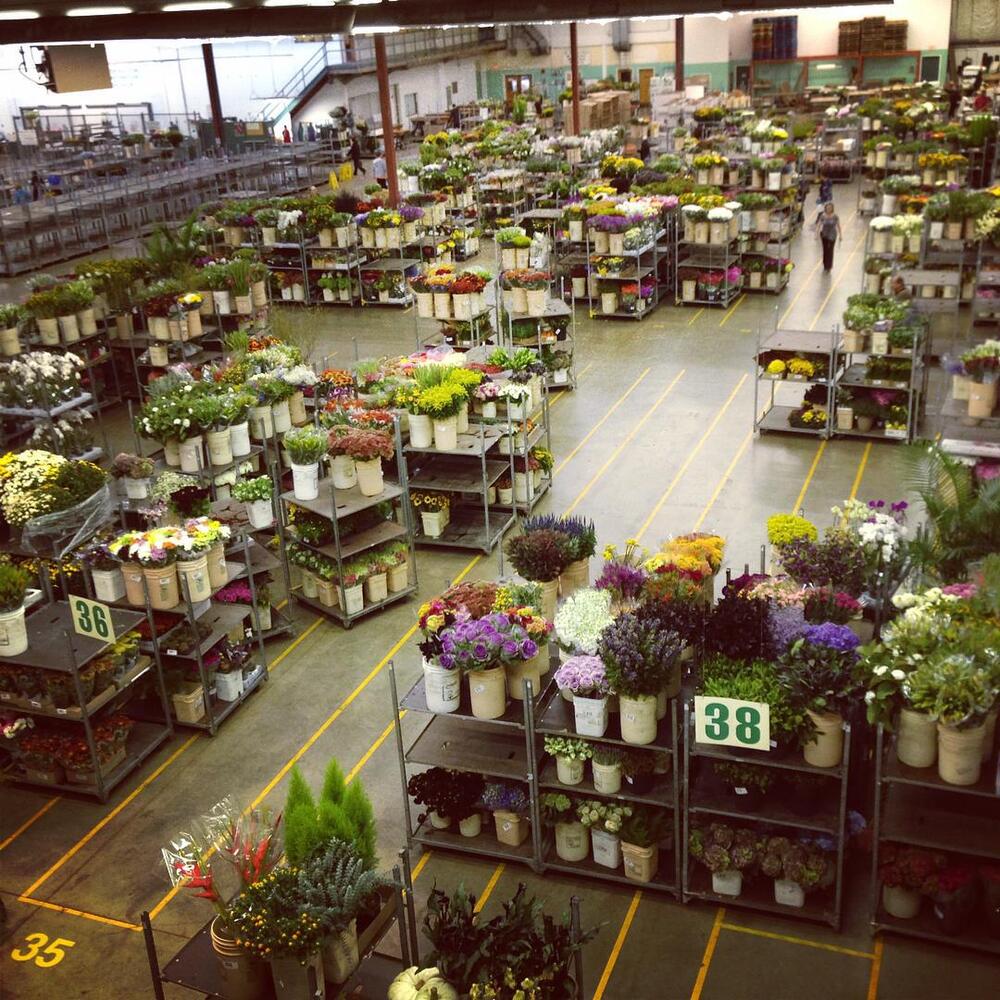
The trade-off is choice. A local wholesaler stocks what sells in your area, so the rarer varieties often have to be pre-ordered, and you pay for the service of someone else holding the stock.
Cash and Carry, Where You See Before You Buy
At a cash and carry, you walk the floor, pick your stems, pay, and drive off with them. It is the most hands-on way to buy, and the best way to train your eye, because you can squeeze a rose head and judge a bunch of Lisianthus before it is yours. The flip side? The cold chain becomes your responsibility the moment you load the van. The Society of American Florists' Floral Management magazine even reminds florists to run the air conditioning in the van before loading it, especially in summer.
Online Wholesale Platforms
Online platforms let you order from a screen, often by the box or by the bunch, from farm stock or from a wholesaler's inventory. They open up a much wider range than any single local floor can hold, and they are a lifesaver for florists far from a flower market. The questions to ask are about what you cannot see: how closely the photos match what arrives, how many days the flowers spend in transit, and who pays when a box arrives warm.
Direct From Growers and Farms
Buying straight from a grower means fewer hands between the cut and your bucket, and often a direct line to the person who knows exactly when the flowers were harvested. That can mean a local flower farm down the road in summer, or a full box of roses flown in from Kenya, Colombia, or Ecuador.
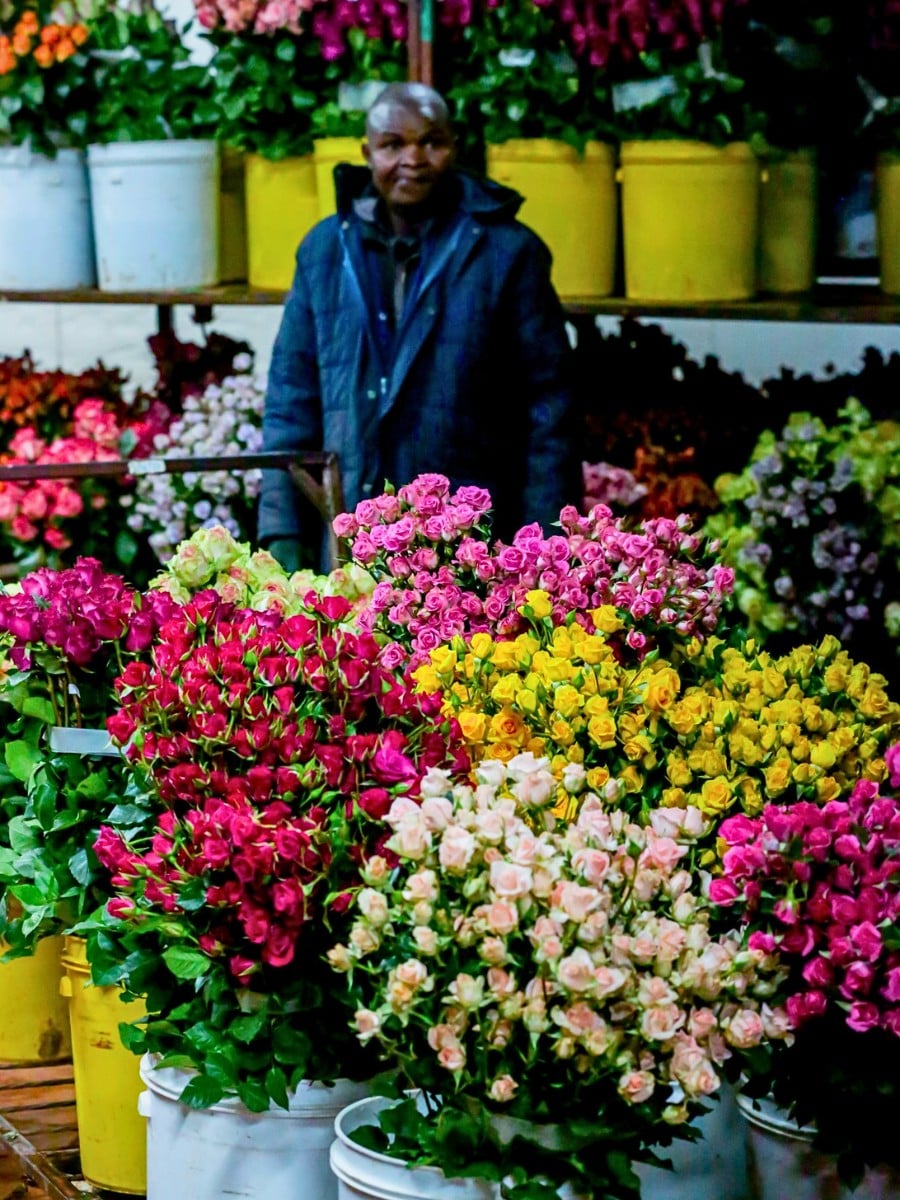
The catch is volume. Growers sell by the box, not by the stem, and one box of a single variety is a lot of roses for a small shop. For an import, also ask who handles transport, customs, and the plant health paperwork, because that work does not disappear when you skip the middleman.
Auction Flowers Through an Exporter
The world's biggest horticultural trading place is the Dutch auction system of Royal FloraHolland, the cooperative that formed in 2008 when the auctions of Aalsmeer, Naaldwijk, and Rijnsburg merged. If you have never seen it, our explainer on how the Royal FloraHolland flower auction works is a great place to start.
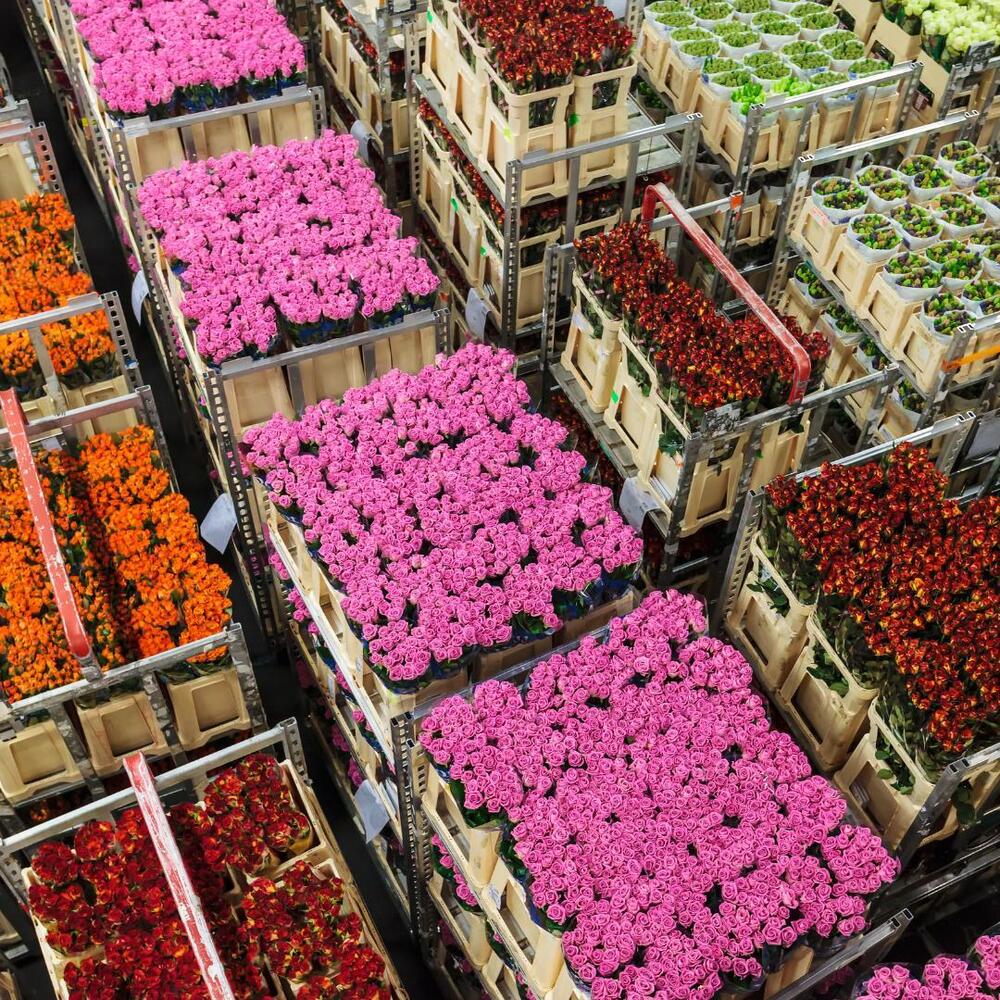
Buyers outside the Netherlands can buy at the clocks remotely, through what the Dutch call KOA, or 'Kopen op Afstand'. As our article on KOA and buying at the auction clocks explains, the auction does not deliver to your doorstep, which is why most florists who buy auction flowers do it through an exporter or wholesaler that buys for them and ships the boxes. Next to the clock, growers and buyers also trade directly through Floriday, which describes itself as the digital platform for floriculture. For a florist, the clock is one route among several, and it sits comfortably next to a local wholesaler or a direct grower.
What to Check Before You Say Yes to a Supplier
Whichever route you choose, the same checks apply. Run every new supplier of wholesale flowers for florists through them before you commit to a standing order.
Freshness and the cold chain. Cut flowers age fastest when they are warm, so ask how the supplier stores and ships them. A care and handling handout from the Society of American Florists (SAF) gives a back-stock cooler set point of about 1 to 2°C (34 to 36°F), with a separate, warmer cooler for tropicals at 10 to 13°C (50 to 55°F). Then check it yourself when the box lands. SAF's Floral Management magazine advises inspecting the flowers right away: put a probe thermometer into the heads of two or three flowers, look for a reading between about 1 and 7°C (33 and 44°F), and check for moisture inside the sleeves, a sign that the temperature has swung up and down on the way. Too warm or wet? Call your supplier the same day.
Gay Smith, then technical consulting manager at Chrysal Americas, wrote in the same magazine:
"Be sure to process dry-pack flowers as soon as they arrive at the shop. Make sure their first drink is slightly acidic, cold and contains a germicide."
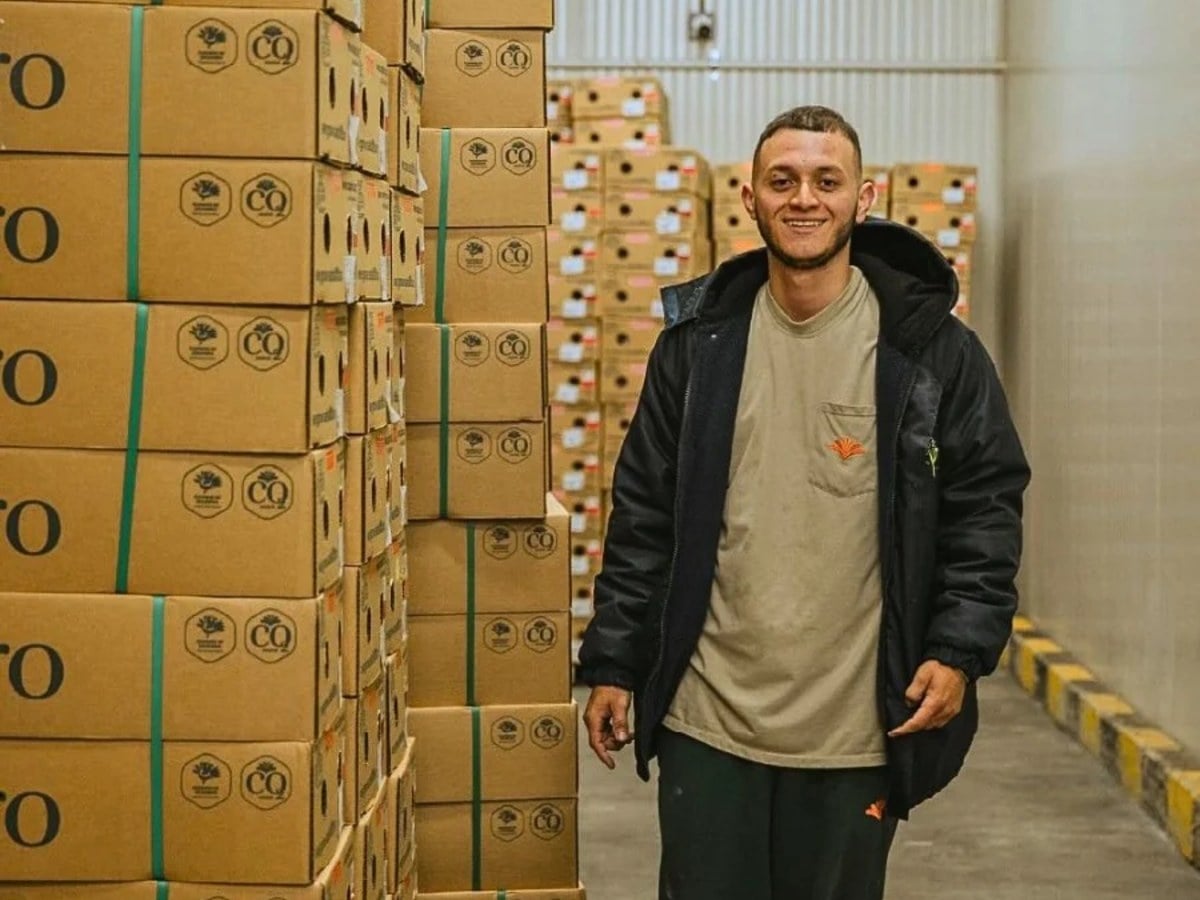
Vase life starts with the cutting stage. A flower cut too raw may never open, and one cut too ripe will not last. In the Dutch trade, maturity is graded on a scale from 1, a closed bud, to 5, fully open, and a lot carries a two-digit code such as 2-3 for the range inside the bunch. Our long read ripe or raw, explained by the growers goes through it crop by crop. Trainer Lucas Jansen of Floweracademy put it like this in his guide to purchasing and maturity:
"In order to find out whether a rose is fresh or not, it is important to have confidence in the floral chain prior to purchasing."
That confidence is exactly what you are testing. Ask a new supplier when the flowers were harvested, at which stage they are cut, and whether they run their own vase life tests.
Minimum order. Is it per bunch, per box, or a minimum order value? A supplier whose smallest unit is a full box of one variety can be perfect for a wedding and wasteful for a weekday bucket display.
Delivery days and cut-off times. Which days do they deliver to you, and by what hour must you order? Ask for the pre-order deadlines for Valentine's Day, Mother's Day, and the year-end holidays too, because they often fall weeks earlier than you expect. For December, our Christmas flower sales guide for florists has the 2026 dates to plan your pre-orders around.
Pricing transparency. A price per stem means little until you know the stem length, the grade, and every fee that comes on top, such as boxing, handling, and transport. Ask for the price landed at your door, and compare suppliers on that number.
Consistency and standing orders. One beautiful box proves very little. What you need is the same grade week after week, so ask which farms the product comes from and whether that stays the same. If you place a standing order, agree in writing what happens when a variety is short: a substitute of their choice, a substitute you approve, or a credit.
Claims and credit. Find out how many hours you have to report a problem, what proof the supplier wants (usually photos of the box, the label, and the stems), and whether they credit, replace, or both. Report quickly and keep your photos. The same SAF handout notes that damage from rough handling may not show for 24 to 48 hours, which is one more reason to check and photograph every box on arrival.
Sustainability certification. Labels tell you how the flowers were grown and traded. MPS runs certificates such as MPS-ABC, which measures a grower's use of crop protection, fertilizers, energy, water, and waste, MPS-Socially Qualified for working conditions, and Florimark TraceCert, which covers freshness, entry checks, storage, stock management, and distribution. Our article on what MPS certification means explains the full family. Fairtrade covers flowers from hired-labor farms; as there is no Fairtrade Minimum Price for flowers, the farms receive a Fairtrade Premium that workers decide how to spend. Read more in what Fairtrade flowers are.
Questions to Ask Before the First Box Lands
Print this list, keep it next to the phone, and you will hear within five minutes whether a supplier knows their product.
- Where do these flowers come from, and how many days ago were they harvested?
- What temperature are they stored at, and do they travel in a refrigerated truck?
- What is your minimum order, and can I mix varieties in one box?
- Which days do you deliver to me, and what is the order cut-off time?
- What is the all-in price at my door, including every fee?
- What happens when an item on my standing order is not available?
- How do I file a claim, within how many hours, and how is it settled?
- Which certifications do your growers hold, and can you show me the certificates?
Red Flags Worth Walking Away From
- Nobody can tell you where the flowers were grown or when they were cut.
- The price list is missing the fees that turn up on the invoice.
- Boxes arrive warm, or with water inside the sleeves, more than once.
- Claims are answered with silence, or the rules change after the problem appears.
- A certification is mentioned but the certificate never shows up.
- The grade jumps from week to week while the price stays the same.
Mix and Match: Building a Supplier Mix That Works
Here is the good news. You do not have to find one perfect supplier. When it comes to wholesale flowers for florists, a practical mix often looks like this: a core supplier for your standing order, a backup for the weeks the first one runs short, a local grower for seasonal stems with a story, and a direct box from a farm or an exporter when a large event calls for volume. That's the perfect combo of reliability and surprise!
Review the mix every few months. Keep a simple log of every claim, every late delivery, and every box that made you proud, and the numbers will tell you who has earned more of your orders. If you are just starting out, our tips for opening a flower shop cover the rest of the business side.
So, which mix keeps your buckets full? Tell us, because we would love to hear how you buy!
Sources: Society of American Florists, Floral Management, "Beat the Heat" (June 2011 and June 2012); Society of American Florists, "10 Hacks to Extend Vase Life" (2018); MPS; Fairtrade International on flowers and plants; Floriday.
Featured image by @flowertoursholland. Header image by @lamaisonbellefleur.