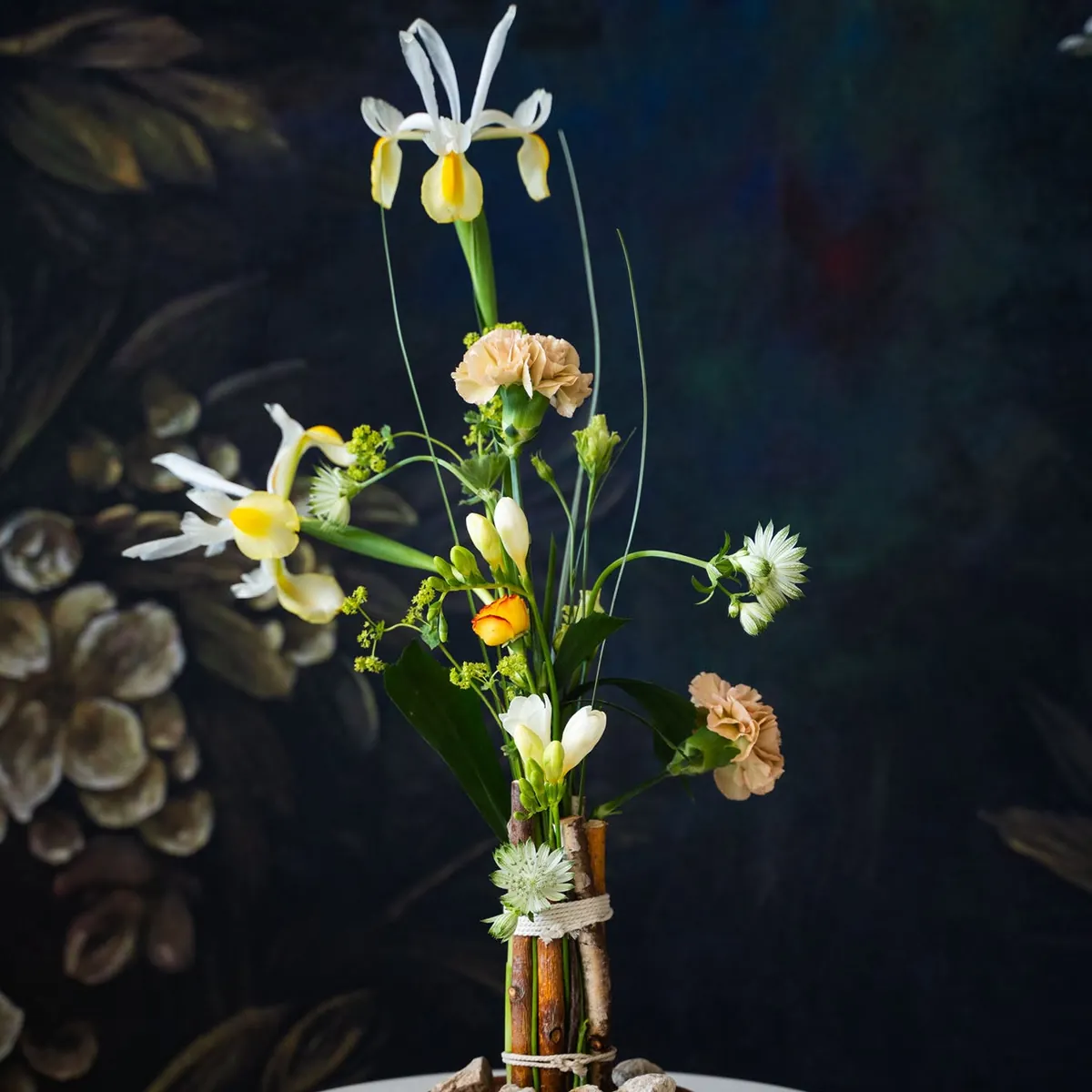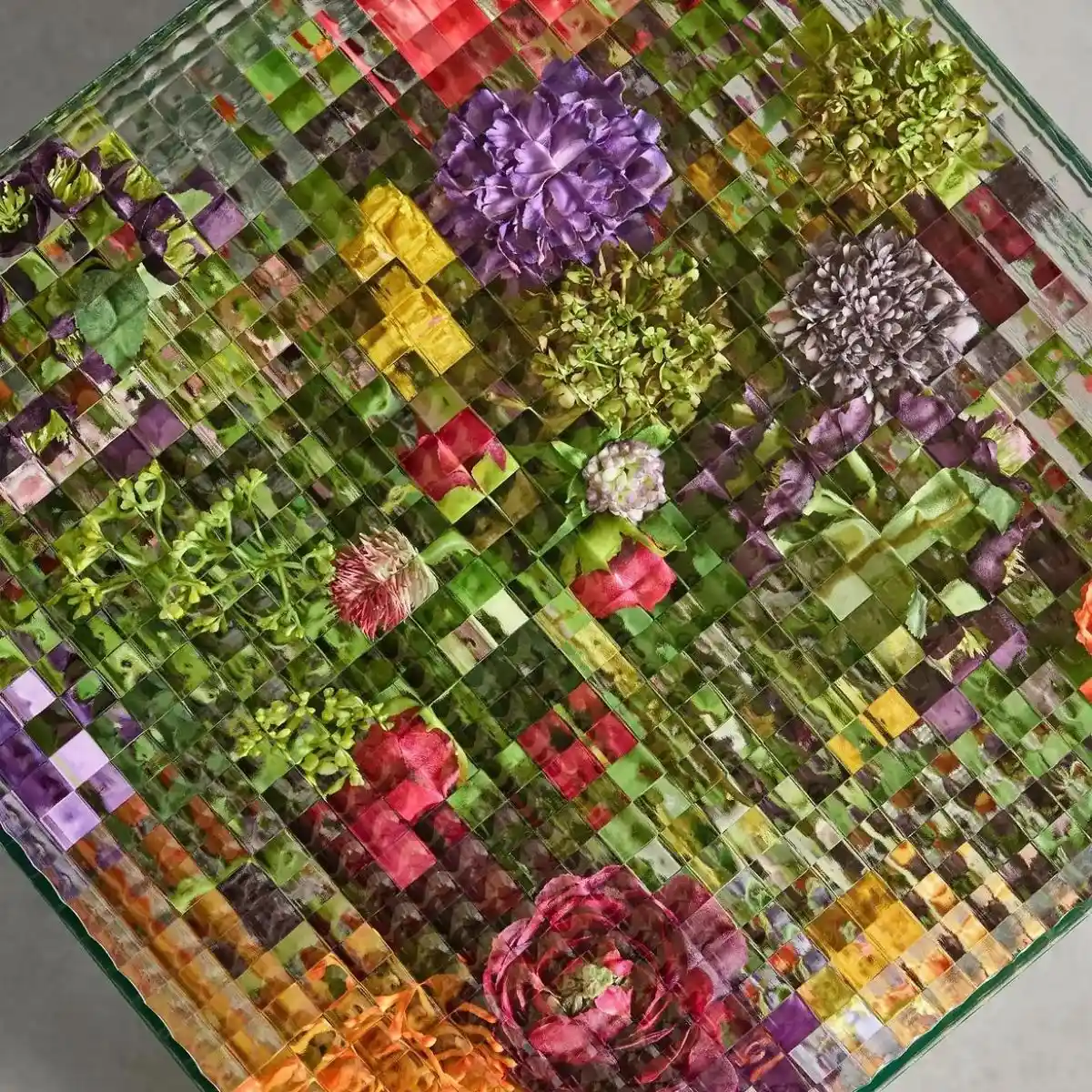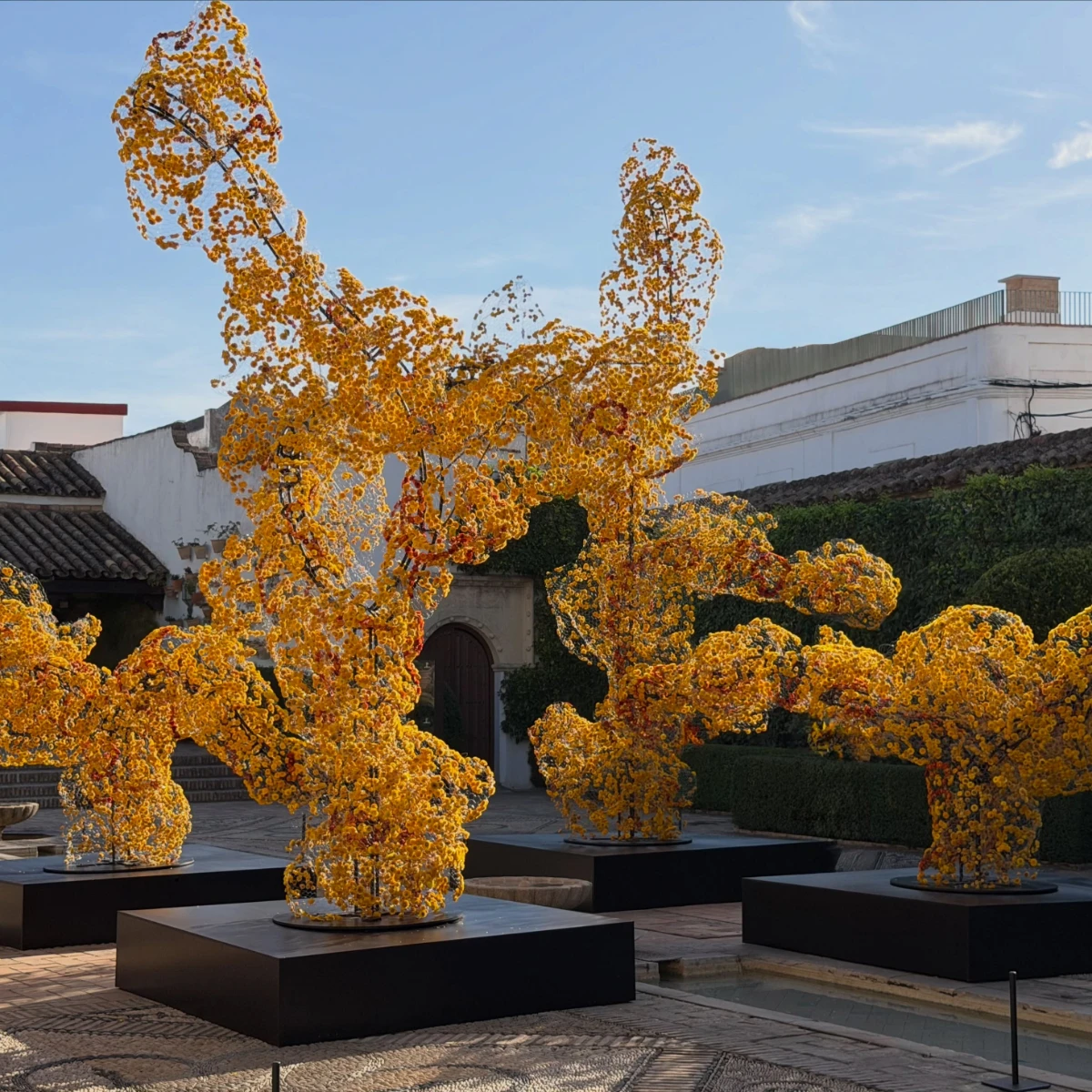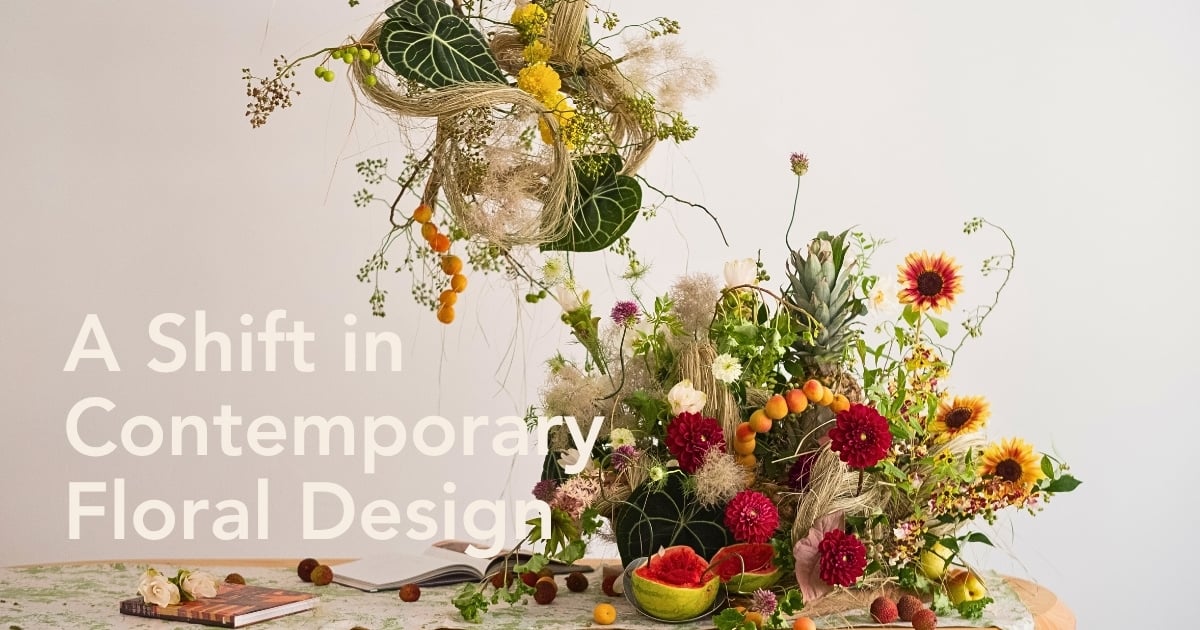
A distinct shift in contemporary floral design is moving us away from overflowing, heavy arrangements toward a more intentional, minimalist aesthetic. Heavily influenced by Japanese ikebana – particularly the avant-garde principles of the Sogetsu School – modern botanical design acts as spatial punctuation, using negative space and restraint to let the environment breathe in pursuit of deliberate harmony.
Breaking the Rigid Rules of Traditional Ikebana
Sofu Teshigahara founded the Sogetsu School in 1927, breaking the rigid rules of traditional ikebana by integrating fresh ideas from Western modern art. Grounded in the radical belief that 'ikebana is art,' Teshigahara's vision earned him the moniker 'the Picasso of Flowers' from TIME Magazine.
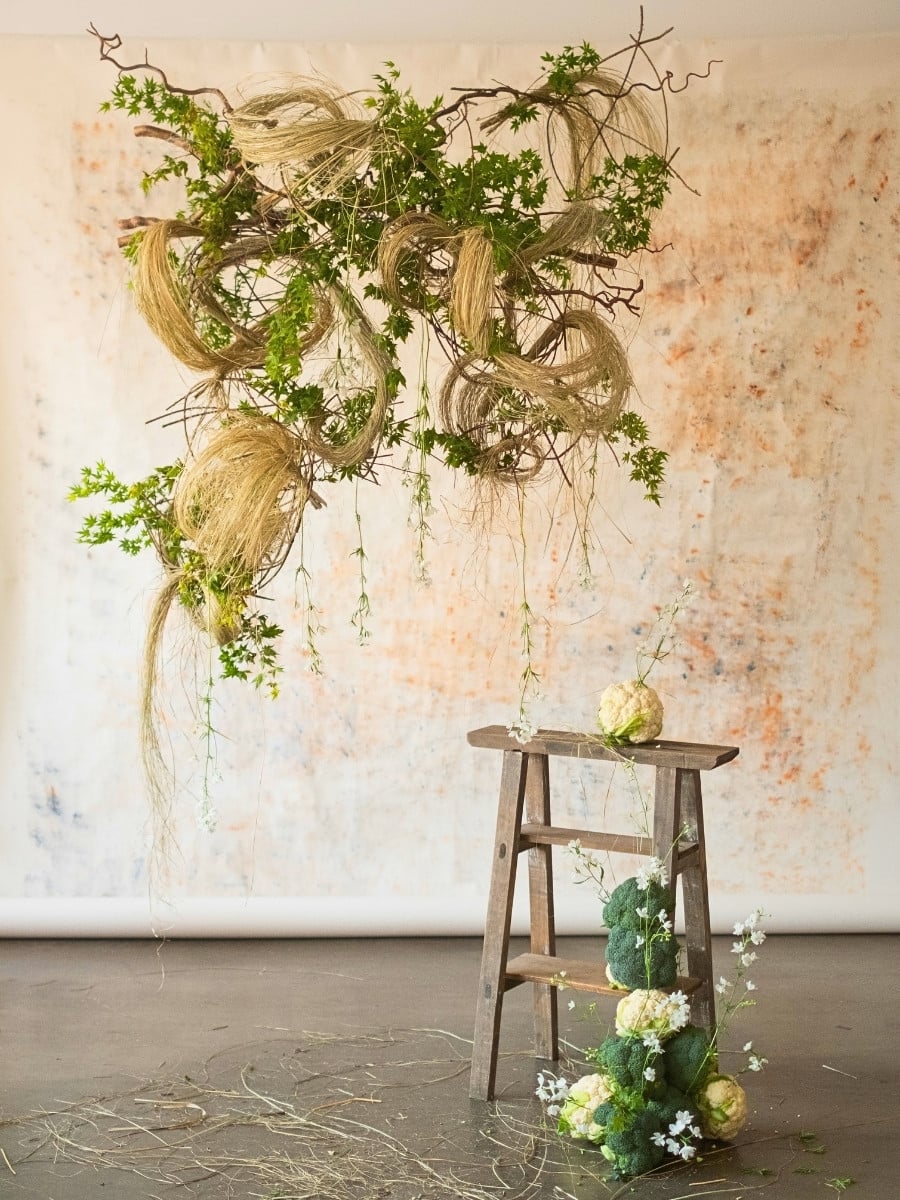
True to the core philosophy of the school – that Sogetsu ikebana can be created anytime, anywhere, by anyone, and with any material – this serves as the guiding spark for my own artistic process. Because anything can serve as a medium, cultivating a habit of deep observation in daily life is essential.
My Process Almost Always Begins With a Kenzan
When inspiration strikes, jot down a quick note and capture a rough sketch to preserve the spark of the idea. The next crucial step is determining the structural mechanics required to bring your vision to life. My process almost always begins with a Kenzan – ideally one with a diameter of 7 cm or larger to provide a stable, weighted foundation for sculptural work.
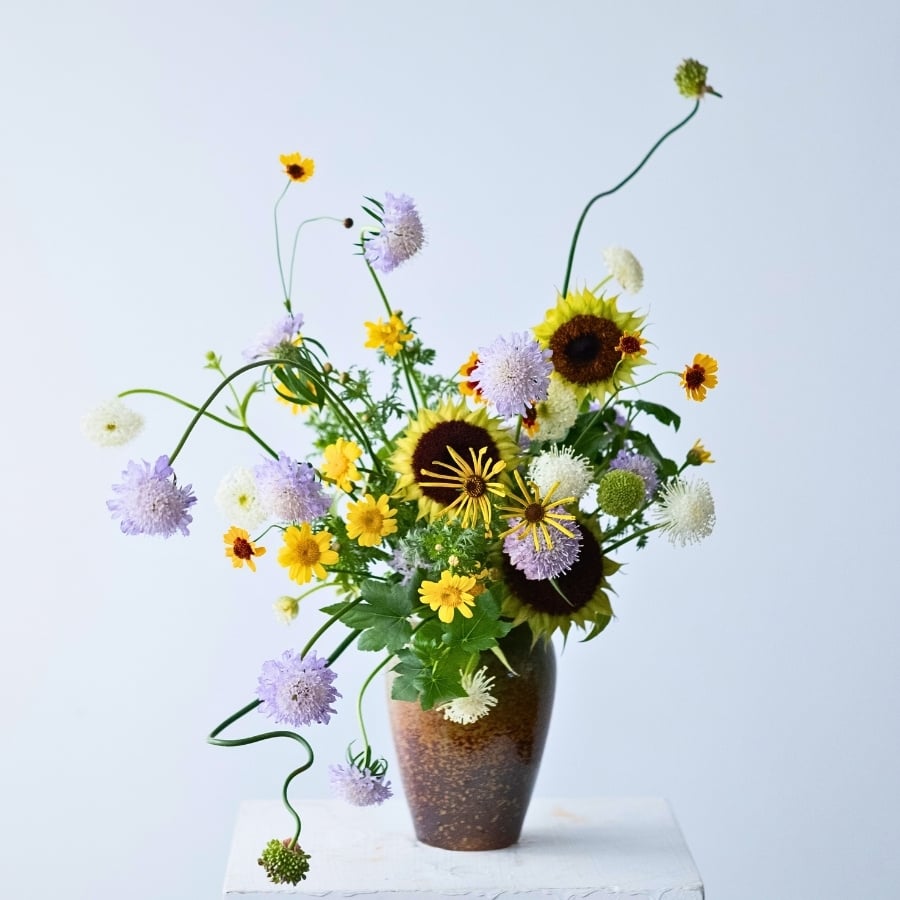
When incorporating heavier elements like fruit into a sculpture, structural support becomes essential. Natural branches and bamboo sticks serve as reliable extensions, elegantly bridging materials that cannot be mounted directly onto the Kenzan. To build a solid foundation, you can begin by establishing geometric shapes, using mass flowers to flesh out the form.
Maintaining Balance and Harmony Is Paramount
Alternatively, you can begin with a repeating pattern – such as curling flexible branches into circular loops – and group these forms together to build multi-dimensional depth. Maintaining balance and harmony is paramount. When designing a botanical sculpture intended for a gallery setting, it must be fully considered in the round, ensuring it commands a compelling presence and reads dynamically from every possible viewing angle.
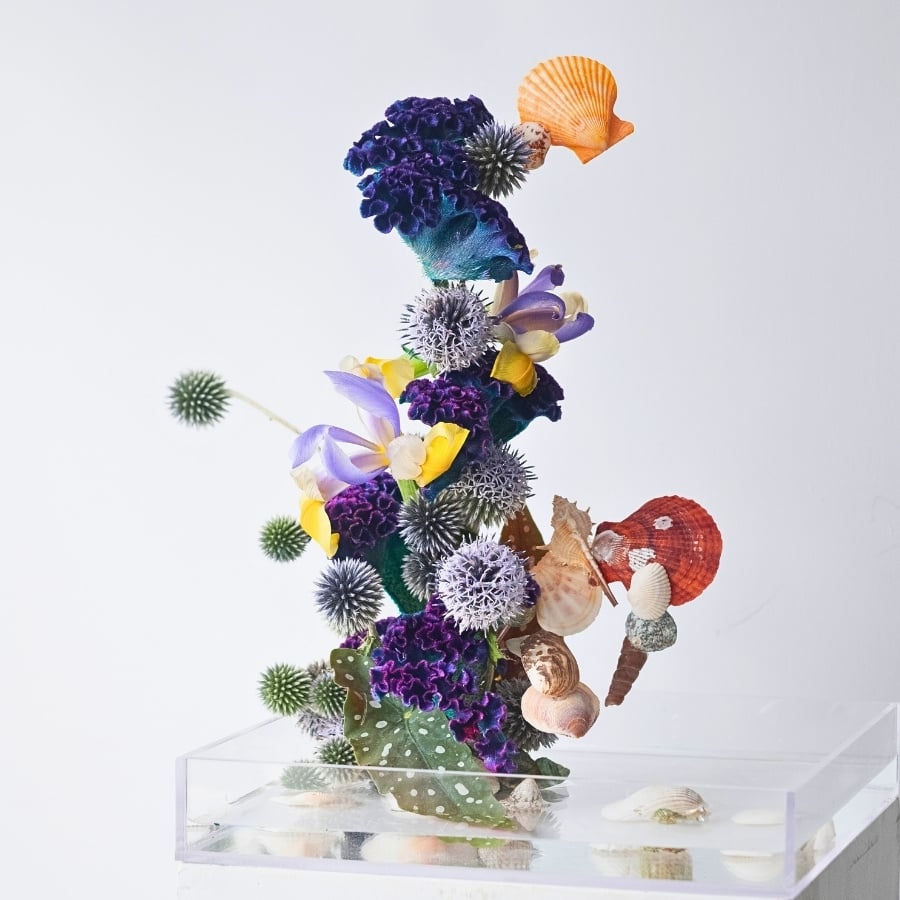
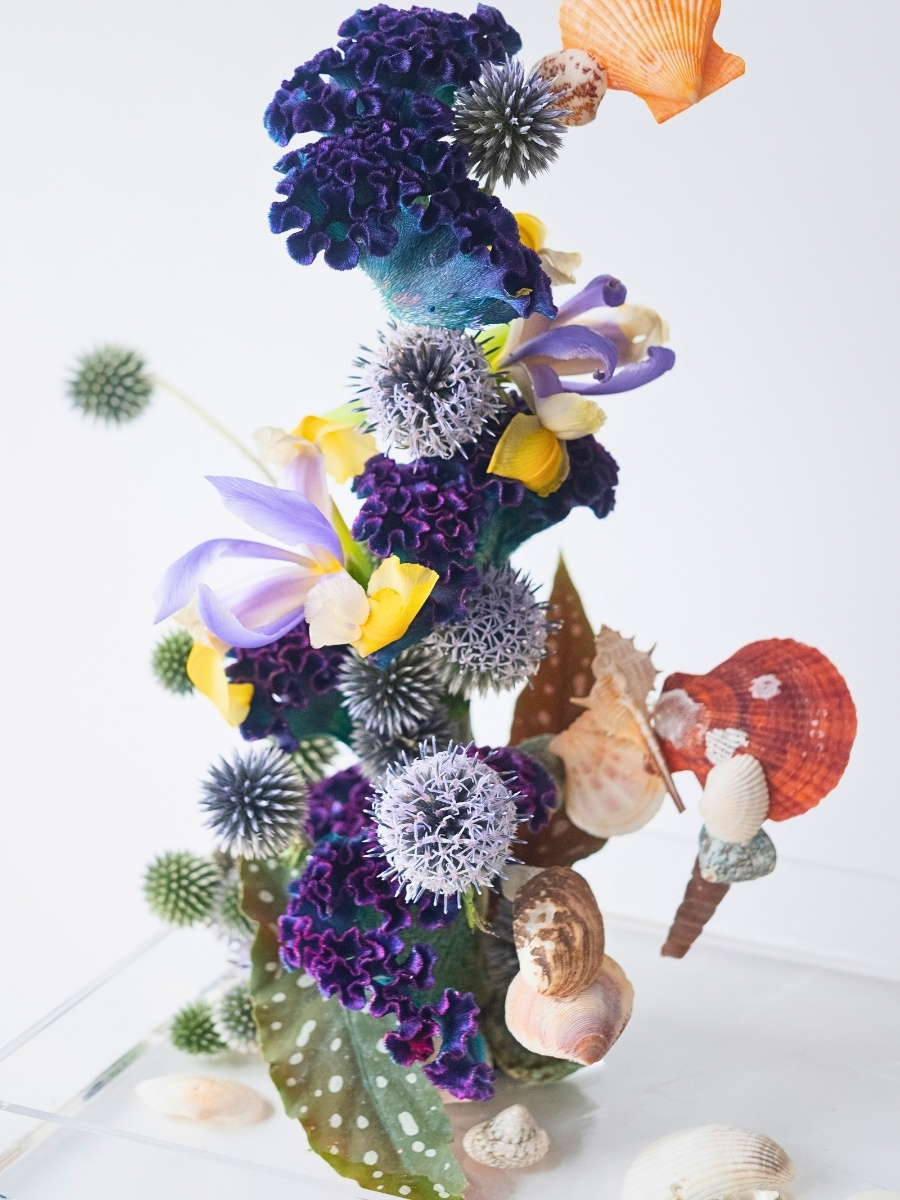
Whether drawn from literature, music, or other artistic disciplines, each piece starts with a story. From there, I explore flower markets, stationery shops, and local markets to source materials that capture the essence of the theme. My work 'Under the Sea' was conceived as an exploration of marine environments and sustainability.
Bringing This Narrative to Life Without Floral Foam
To bring this narrative to life without floral foam, I anchored the structure using a heavy Kenzan, reinforced with strong branches and thick aluminum wire. Dyed blue Celosias from Japan evoke the texture of coral, while Echinops mimic sea urchins, and carefully placed shells complete the coastal landscape.
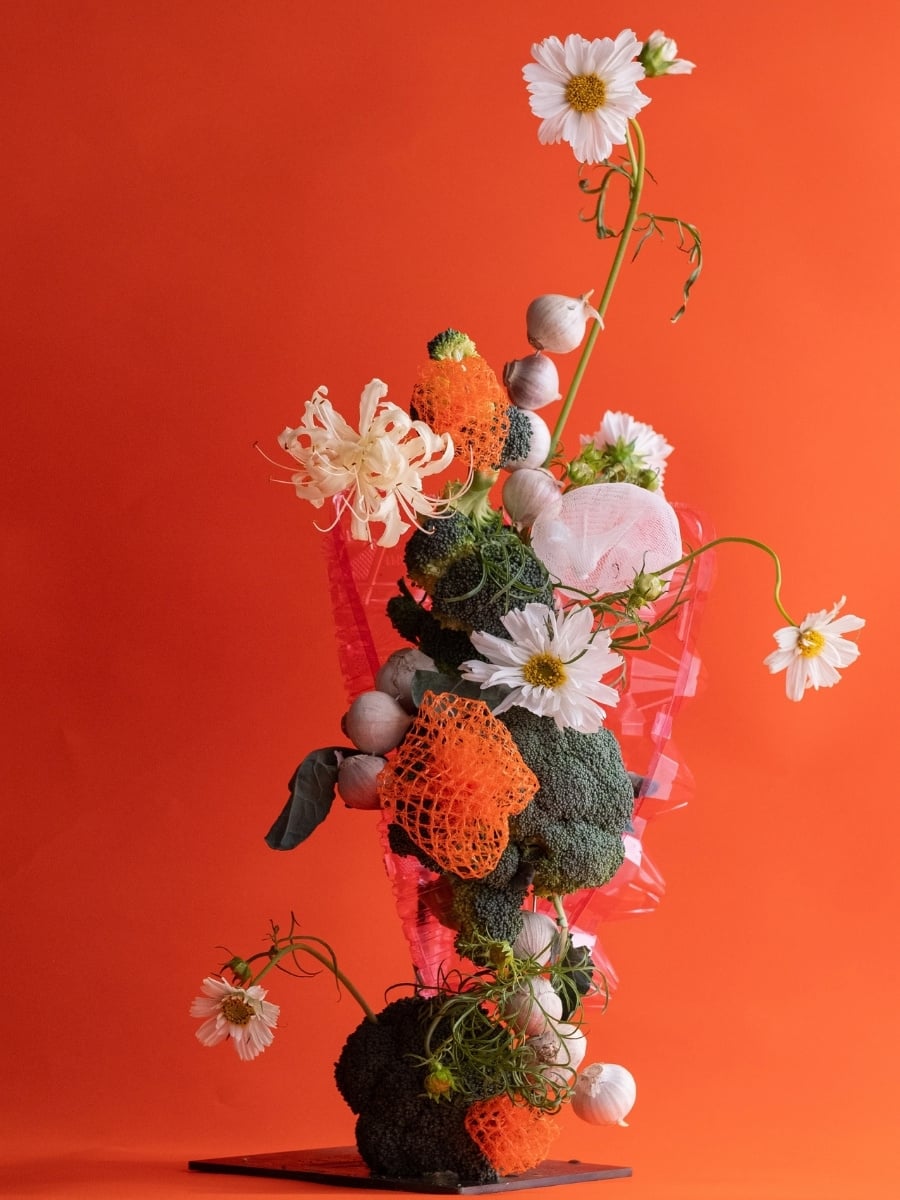
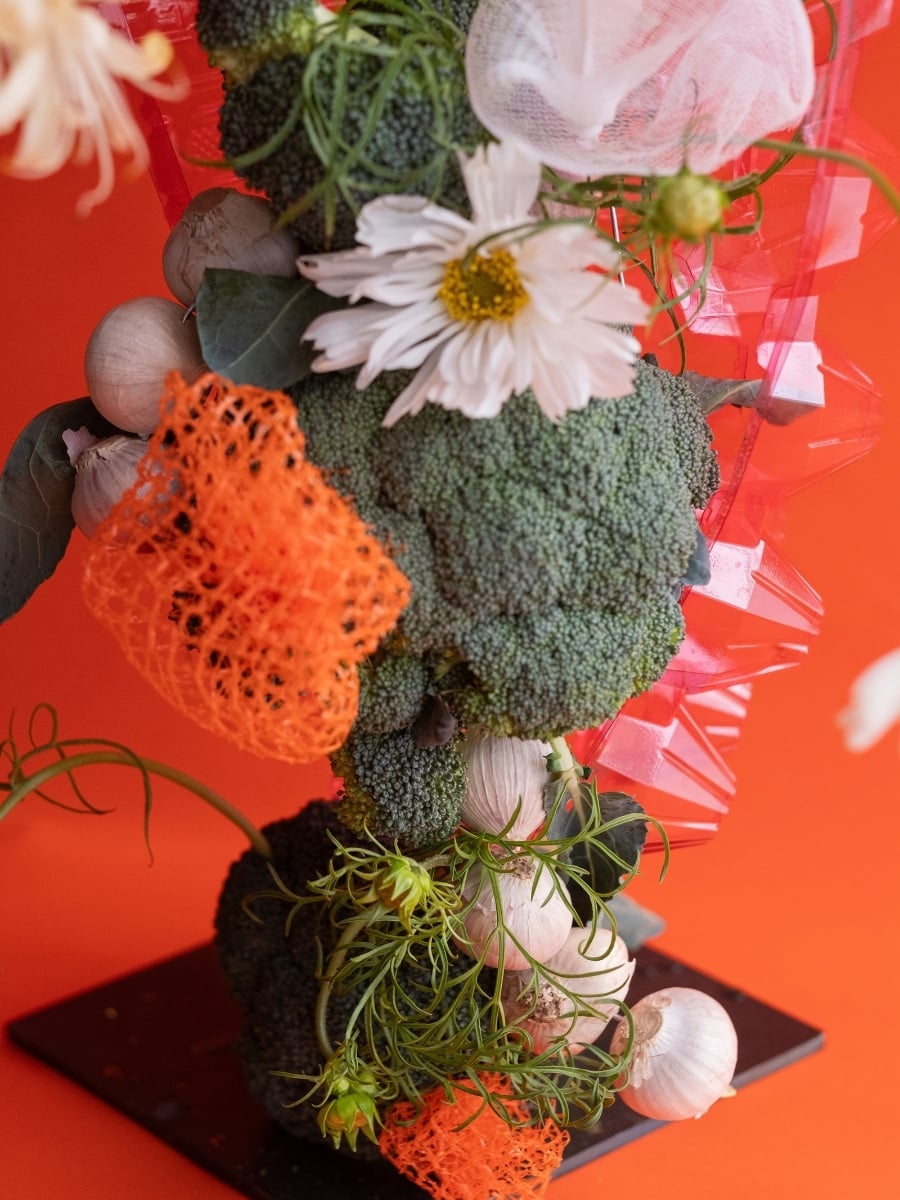
Another ikebana-inspired sculpture, 'Trash?' plays with mixed media and everyday ephemera. By collecting packaging from daily necessities and market runs, the piece questions how we might repurpose objects creatively before sending them to recycling. The main structure is held by a metal stand supporting an egg container.
A Dialogue Between Organic Beauty and Everyday Industrial Waste
Using a small, concealed foam mechanics setup, I arranged fresh cosmos and Nerine alongside unexpected elements such as broccoli stems secured with bamboo sticks and garlic scapes shaped into fluid curves with internal aluminum wire. The result is a dialogue between organic beauty and everyday industrial waste.
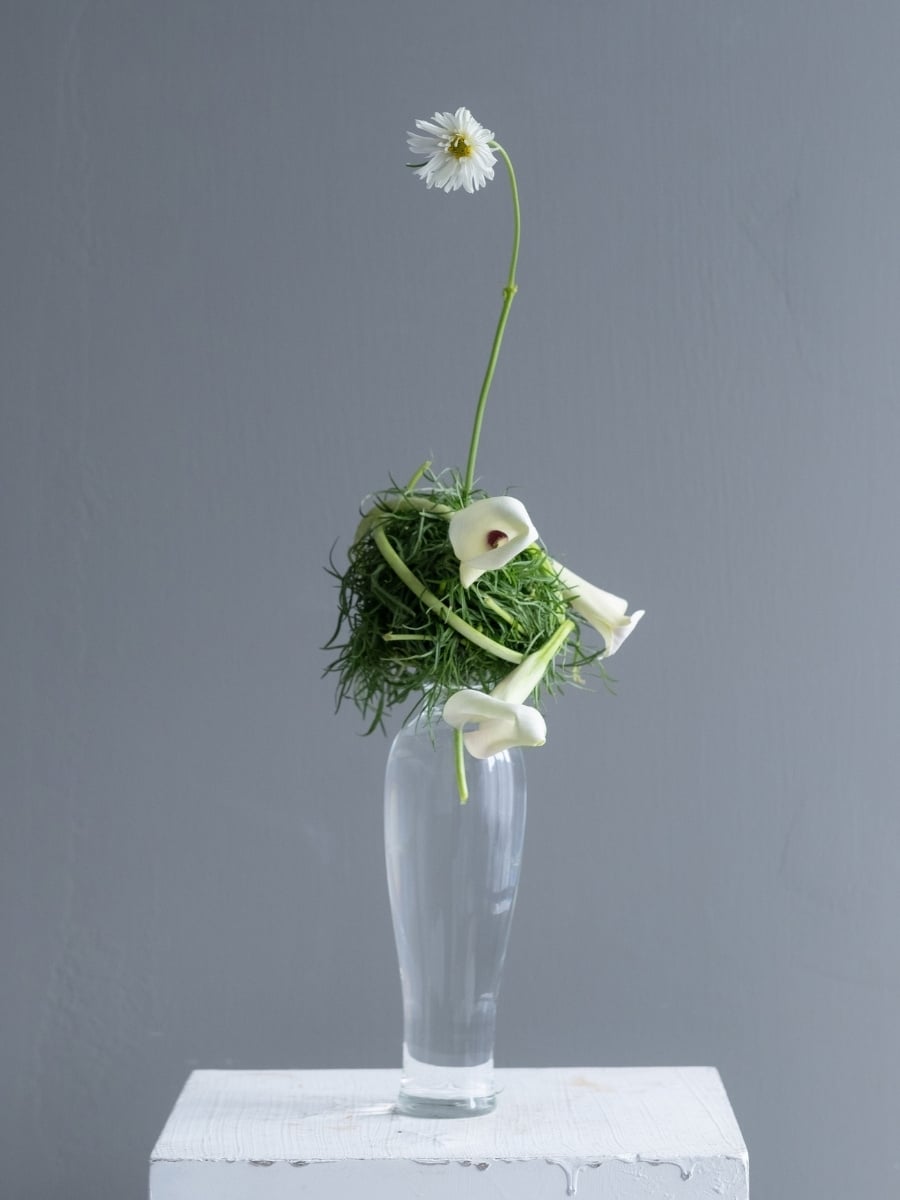
Ultimately, contemporary floral sculpture is an exploration of space and transformation. By stripping away excess, every stem, line, and recycled element is allowed to speak for itself – proving that art is not confined to the gallery, but can be shaped from the ordinary world right around us.
Photos: Gahan Mi.