A potted Christmas tree has something a cut tree will never have again: roots. Buy a small fir or spruce in a pot, keep it cool and moist for a couple of weeks, and it can go into the garden in January and grow on for decades. That is the idea behind the living Christmas tree. In shops, a live Christmas tree often just means a real one, freshly cut, so read the label before you pay.
Some living trees are not garden trees at all. A rosemary Christmas tree, a golden lemon cypress, or a Norfolk Island pine needs a mild climate to live outdoors, so in a cold one, it stays a houseplant or a patio plant.
What Is a Living Christmas Tree?
A living Christmas tree is a conifer sold with its roots, to be decorated indoors for a short time and then planted outside or kept growing in its pot. Most are firs and spruces raised for the purpose by nurseries, plus a few tender evergreens that people dress up as Christmas trees, such as rosemary sheared into a cone. The real difference with a cut tree is the season it is in. A cut tree is finished the day it is felled. A living fir or spruce is dormant, resting through winter as it would in the forest, and the whole job is to keep it that way until it goes back outside, as University of Illinois Extension explains.

Container-Grown or Root-Balled
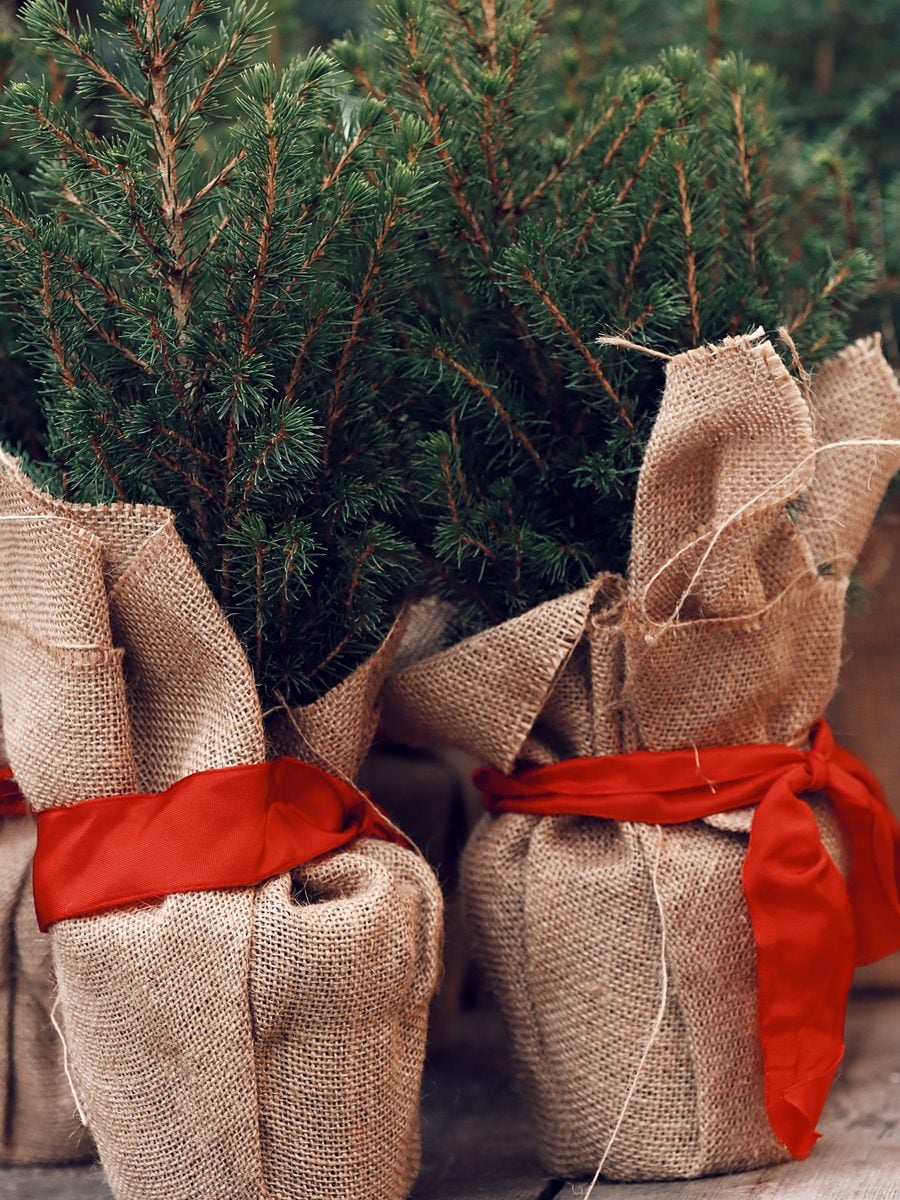
Living trees come in two forms, Illinois Extension notes. A container-grown tree has spent its life in a pot, which makes it the easiest potted Christmas tree to handle. A balled-and-burlapped tree, B&B in the trade, was dug from the field with its root ball wrapped in burlap. Both can be replanted. The root ball is heavy, though, and indoors, it needs a large watertight tub around it, filled with moist potting soil or shredded peat moss to hold the tree up and keep the roots from drying out.
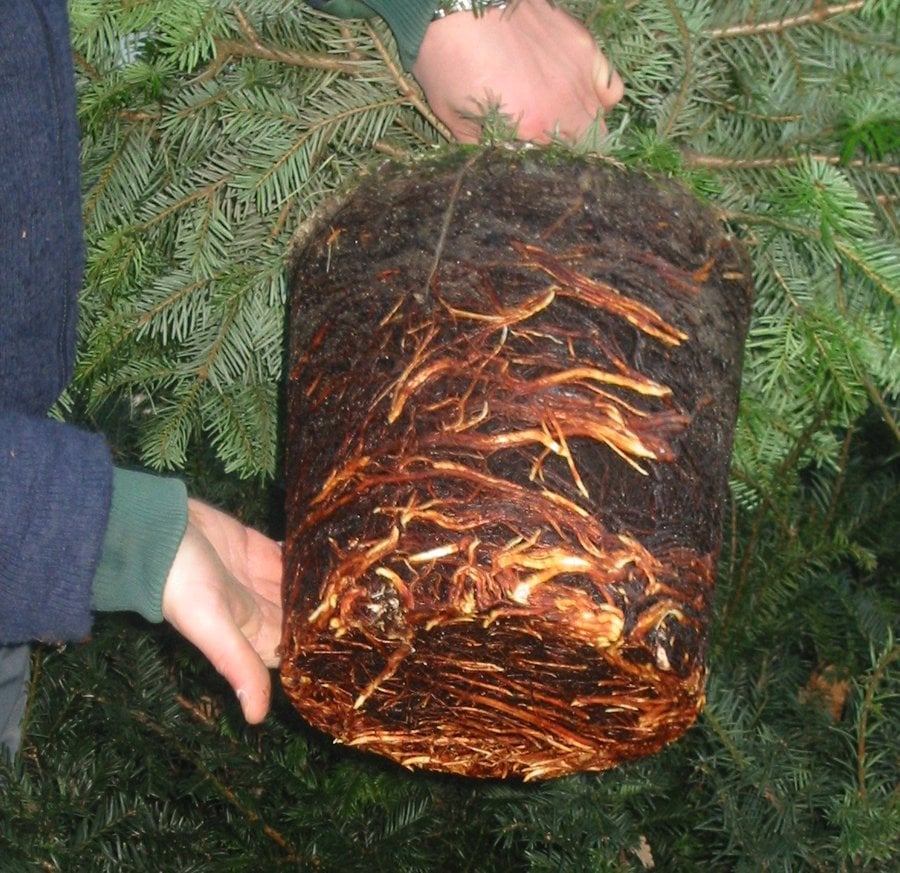
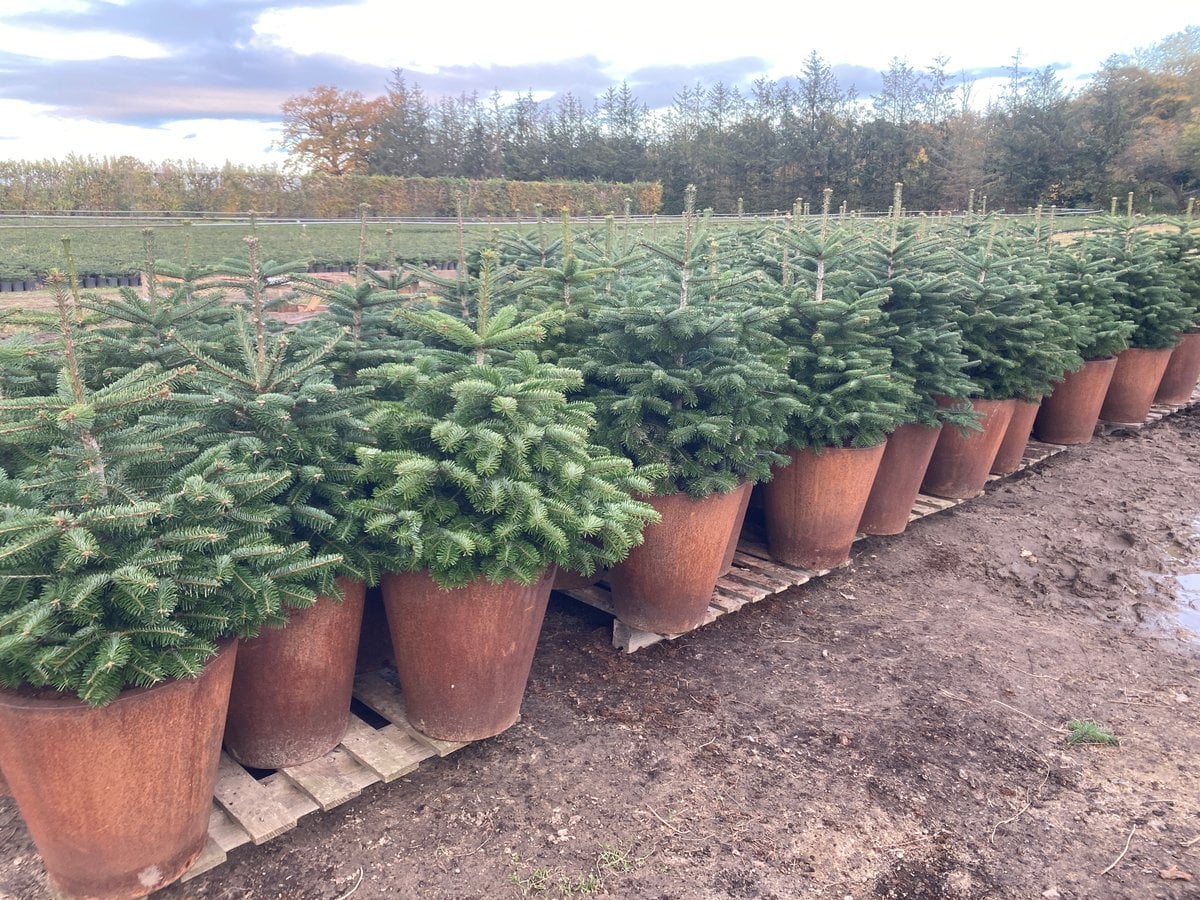
So, how do you tell them apart at the garden center? Lars Hvidtfeldt of Kirstineberg Planteskole, a grower of pot-grown Nordmann firs in Nykøbing Falster, Denmark, gives three tells. A tree that was dug up and potted shortly before sale often has a plastic bag around the pot, it shifts when you grasp it, and it sits in heavy, ordinary soil. A tree grown in its container has drainage holes with roots showing, in a lighter medium such as peat. Lars: "A tree that has been dug up has no roots, whereas a container-grown tree is full of roots."
The species matters too. "Picea abies (Norway spruce) and Abies nordmanniana (Nordmann fir) are two different species with different root systems," he says. "Picea abies has a finer root system, whereas Abies nordmanniana has a taproot." A dug-up, potted Norway spruce may keep growing once it's planted out, and "the smaller the tree, the greater the likelihood." A dug-up Nordmann fir has lost its root system, though. In Lars's words, "you are buying a dead tree."
Think about the end of the story before you buy. Most living Christmas trees are forest species, and Illinois Extension warns that many of them reach at least 10 meters (35 feet), with branches spreading 3.5 to 4.5 meters (12 to 15 feet) at the base, unless you choose a smaller variety. A small garden calls for a dwarf.
Bringing home a cut tree instead? How to choose one and keep it fresh is covered in the guide to the types of fir trees.
The Best Living Christmas Trees to Buy
The best tree depends on where it will spend the next ten years. If it is going into the garden, buy a conifer that is hardy where you live. If it is going to stay indoors after the holidays, buy one that is happy as a houseplant, because a fir or a spruce never will be.
Nordmann or Fraser Fir in a Pot
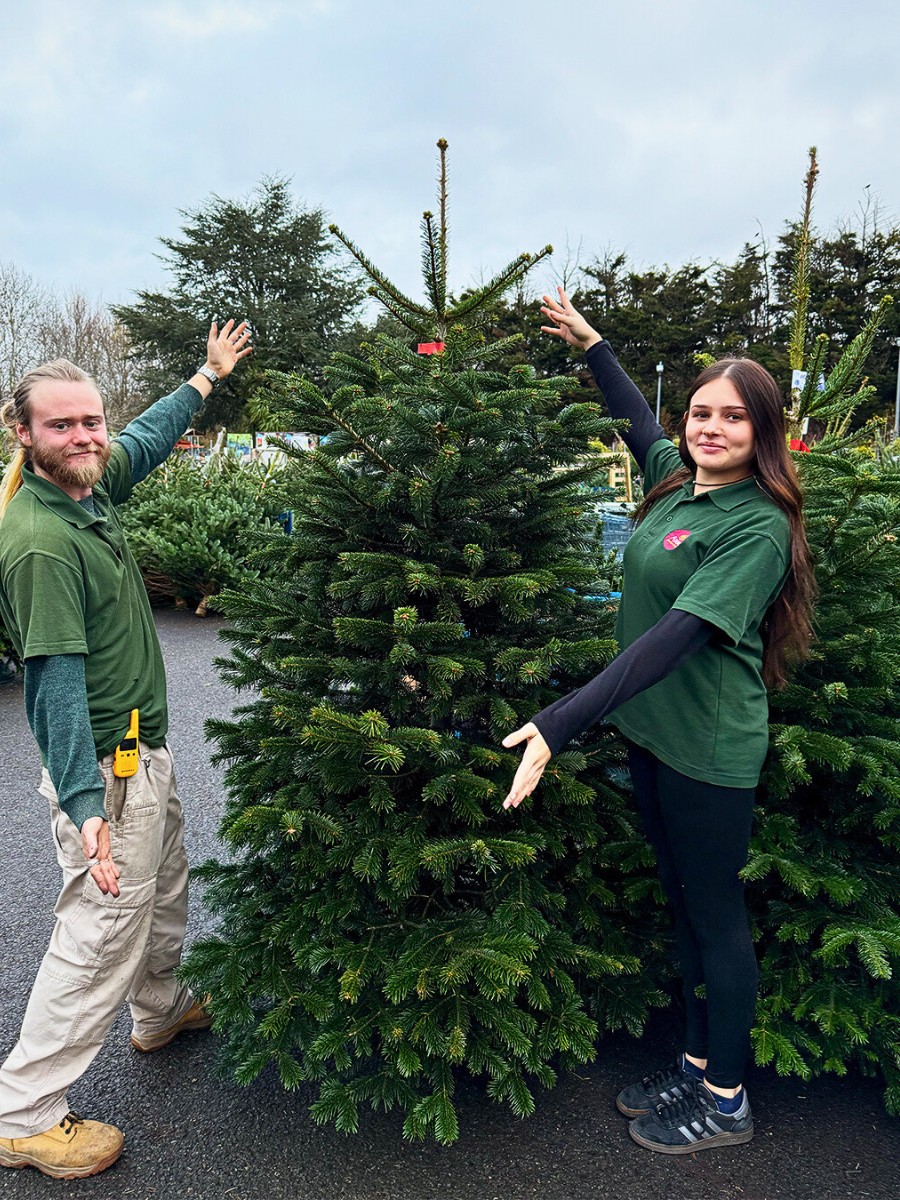
The two classic Christmas trees are also sold with roots. The Nordmann fir, Abies nordmanniana, comes from the Caucasus mountains and northeastern Turkey. Its flat, glossy, dark green needles carry two white stripes underneath, and they stay on the tree even after it dies.
Patience is part of the price. At Kirstineberg, a Nordmann fir grows in its pot for 3 to 6 years before it's sold, Lars Hvidtfeldt says.
The Fraser fir, Abies fraseri, is the American favorite. In the wild, it grows only high in the southern Appalachians, at 1,200 to 2,000 meters (4,000 to 6,700 feet) in North Carolina, Virginia, and Tennessee, and North Carolina's Christmas tree industry ranks it as its number one species. The needles are about 2.5 centimeters (1 inch) long, shiny dark green above, silvery white beneath, and fragrant.
Both are trees for cool climates. NC State lists the Nordmann fir as hardy in USDA zones 4 to 6 and the Fraser fir in zones 4 to 7, and neither likes hot summers, so in a warm region, treat one as a holiday tree in a pot rather than a garden tree. Their cousin, the noble fir, is best known to florists as cut branches: the Nobilis from Denmark that goes into wreaths and table pieces.
Dwarf Alberta Spruce
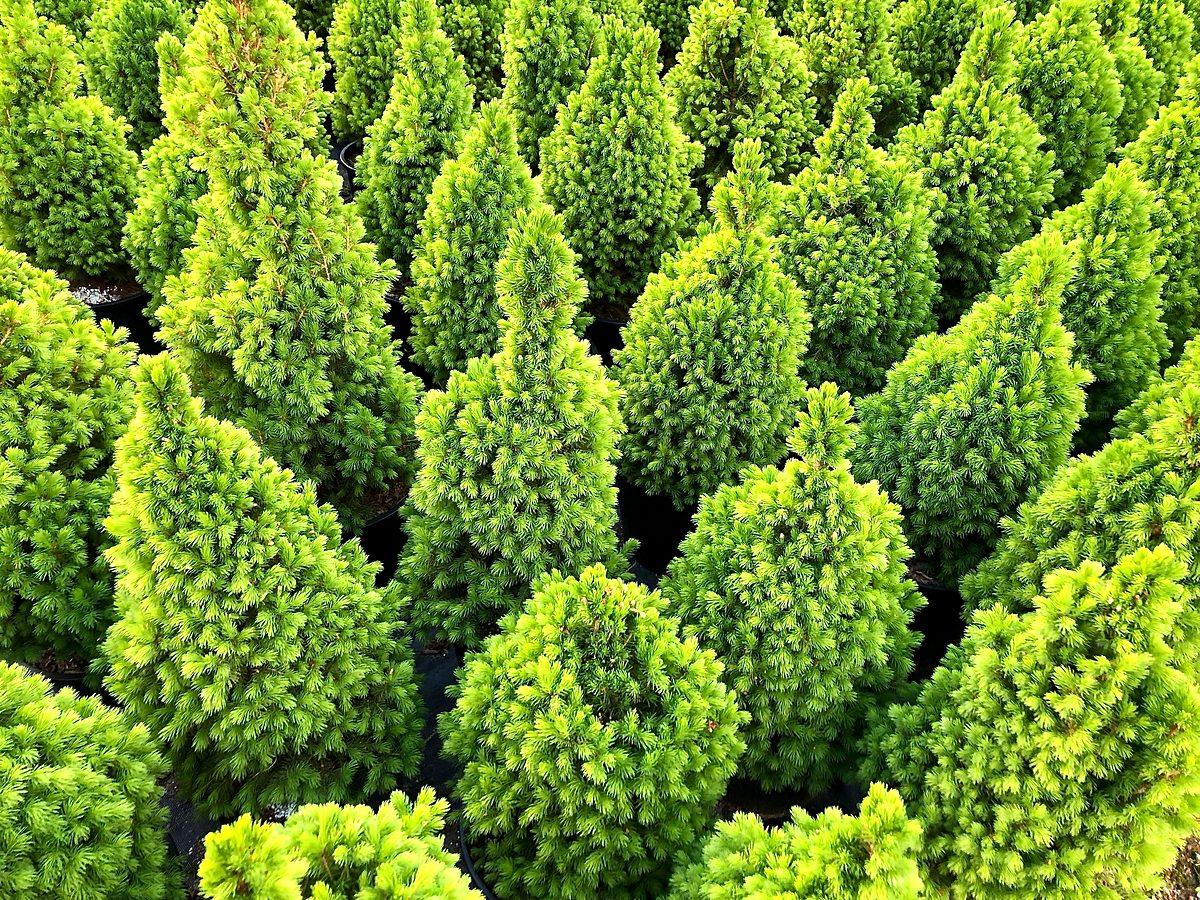
The little cone on the garden center table is usually a dwarf Alberta spruce, Picea glauca Conica. Two botanists from the Arnold Arboretum in Boston found the original plant in 1904 near Lake Laggan in Alberta, Canada, while they were waiting for a train home. One of them was Alfred Rehder, a University of Arkansas extension column recalls. Oregon State University now calls it very common in cultivation, and every December, stores sell 30-centimeter (1-foot) trees by the thousands as tabletop Christmas trees.
It grows into a dense cone without pruning, and slowly: about 7.5 centimeters (3 inches) a year, according to Virginia Tech's extension service, eventually reaching some 3.5 meters (12 feet). It is hardy to USDA zone 2, about minus 40 degrees in both Celsius and Fahrenheit, which makes it one of the safest living Christmas trees to plant out in a cold climate. The branches are so dense that only small, light ornaments hang well.
Its weak spot is spider mites, which thrive in warm, dry air. That is one more reason to keep its stay indoors short. Outside, Virginia Tech advises shaking a branch over a sheet of white paper in spring and fall to spot the mites early. Prune out any shoot that reverts to the open, long-needled growth of the wild white spruce.
Norfolk Island Pine
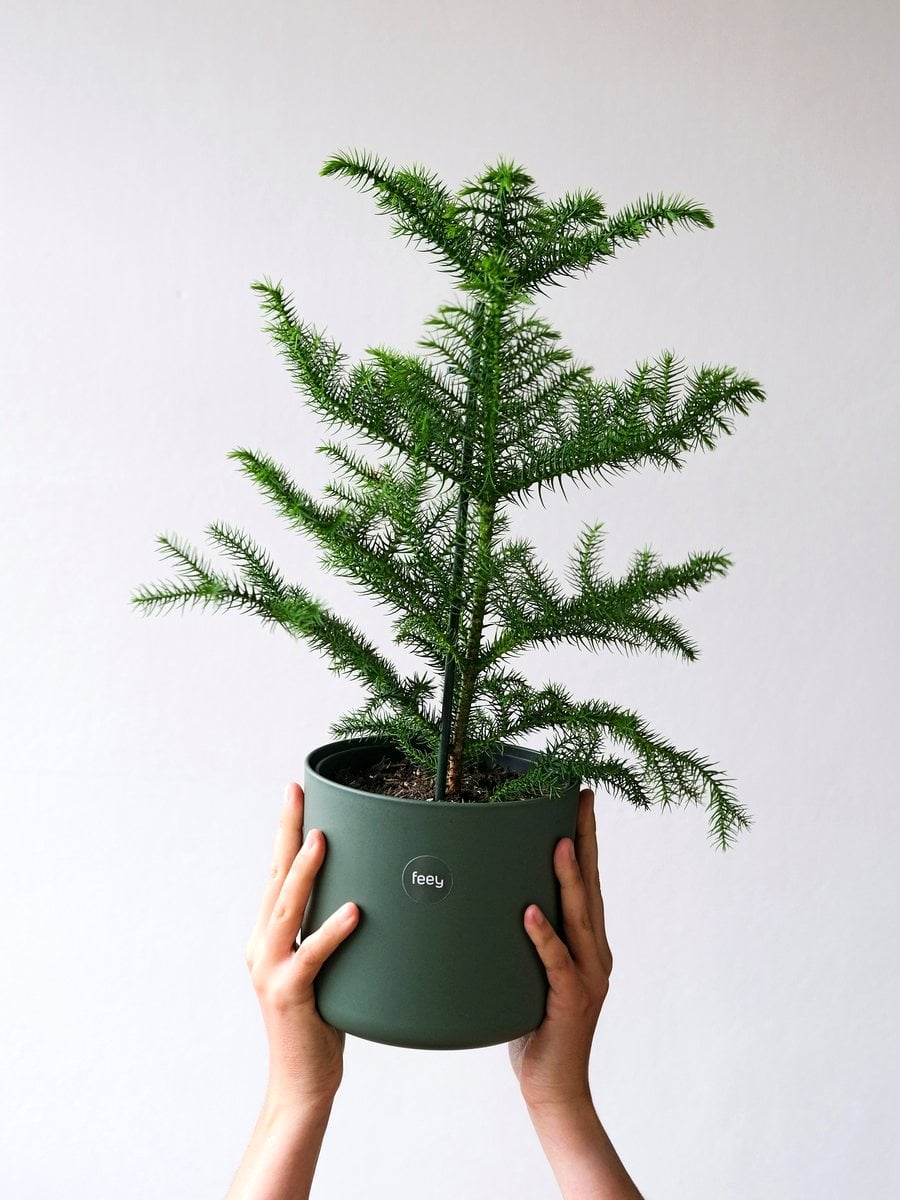
The one tree on this list that is happy indoors all year is the Norfolk Island pine, Araucaria heterophylla, which is not a pine at all. Its soft, tiered branches take light ornaments well, and after Christmas, it simply carries on as a houseplant in a bright, cool window. Outdoors, it survives only where it never freezes. In the Netherlands, JK Plant grows it in greenhouses and sells it as Nordic Pine. Light, water, humidity, and what to do about brown needles are all in the Norfolk Island pine care guide.
Rosemary Trained as a Tree
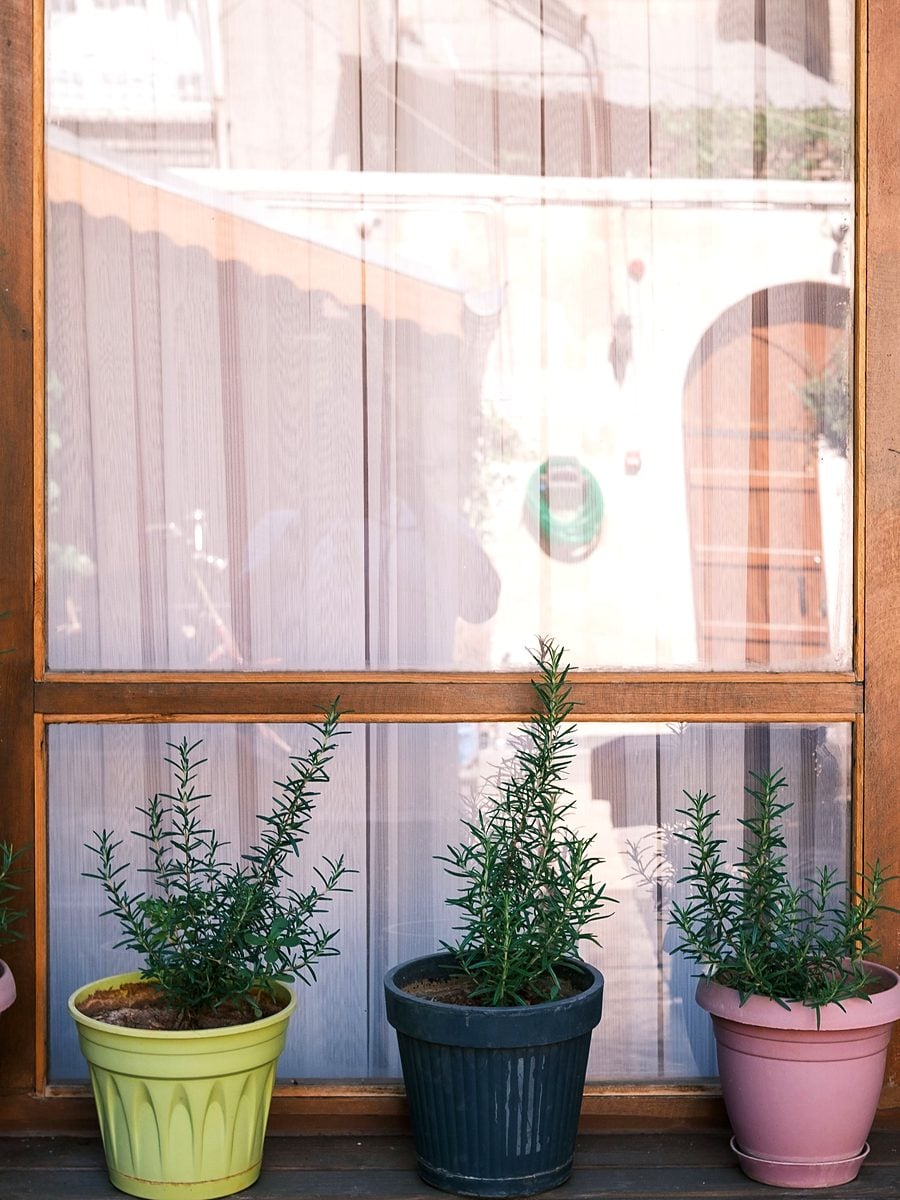
A rosemary Christmas tree is the kitchen herb, Salvia rosmarinus (formerly Rosmarinus officinalis), grown in a greenhouse and sheared into a small cone for the holidays, as University of Georgia Extension describes it. It smells of Sunday lunch when you brush past it, and it is cheap and easy to find in December.
It is also the living Christmas tree most likely to die by February. Rosemary is a Mediterranean shrub that wants full sun, at least six hours a day, and NC State Extension names overwatering as the most common cause of decline. A warm, dry room is the other enemy. Give it a cool spot, no warmer than about 18°C (65°F), in a south- or west-facing window, and turn the pot once a week, Extension Kenosha County of the University of Wisconsin advises. Water only when the soil feels dry about 2.5 centimeters (1 inch) down, then water thoroughly, and never leave the pot standing in water. Air that moves keeps powdery mildew away.
Outdoors, rosemary is hardy only in mild climates: USDA zones 8 to 10. Elsewhere, it spends the winter indoors and the summer outside, with the pot sunk to its rim in a sunny bed. Where winters are mild, plant it out in spring once it has adjusted to the outdoors, and it grows into a shrub of 1 to 1.5 meters (3 to 5 feet).
Lemon Cypress
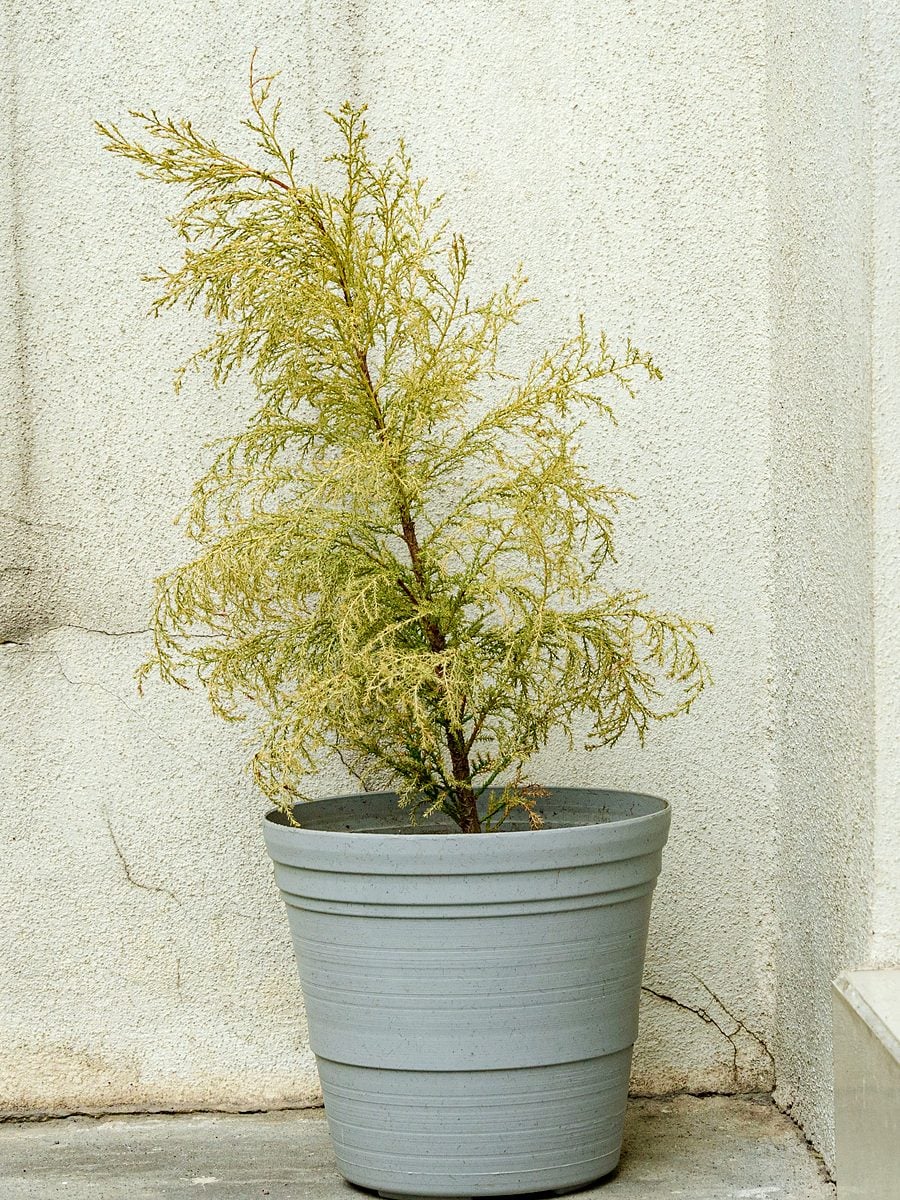
The lemon cypress is a golden form of the Monterey cypress, Cupressus macrocarpa, a tree that grows wild only on a short stretch of the central California coast around Monterey. The plants sold at Christmas are usually Goldcrest or the narrower, dwarf Wilma, both bright yellow to chartreuse, and the foliage smells of lemon when you crush it. Goldcrest appeared as a mutation at Treseder's nursery in Cornwall, England, in 1948, and Dutch nurseries turned it into a Christmas plant only this century, the horticulturist Larry Hodgson wrote on his Laidback Gardener blog.
Indoors, it needs more light than most homes give it in winter: three to four hours of direct sun a day, Hodgson advised, plus cool nights of 13 to 18°C (55 to 65°F). Keep the soil evenly moist. A lemon cypress that dries out completely does not come back, and once the needles turn dry and crunchy, the plant is lost. A humidifier or a tray of wet pebbles helps against the dry air of a heated room.
Outdoors, NC State lists the species for USDA zones 7 to 10. In a mild garden, a lemon cypress can go outside in spring, moved into the sun step by step so the foliage does not scorch, and Goldcrest can eventually grow into a tree of about 20 meters (65 feet). Kept in a pot and trimmed in spring or summer, it stays a tabletop cone.
Prefer flowers to needles? A Poinsettia Christmas tree is built from potted Poinsettias stacked into a tree shape.
How to Keep a Potted Christmas Tree Indoors
Everything below applies to the firs and spruces. The Norfolk Island pine, rosemary, and lemon cypress can stay indoors after the holidays, as long as they get strong light and a cool room. A dormant conifer cannot, and a warm living room is the fastest way to wake it up.
How Many Days Can a Live Christmas Tree Stay Indoors?
Not long. University of Illinois Extension keeps the visit to four to five days in total, because a tree that stays inside longer may break its winter dormancy and start to grow. The Missouri Department of Conservation allows 7 to 10 days at most and warns that a longer stay raises the chance that the tree buds, which lowers its survival once it is planted outside. So plan on a week at the very most, and less is better: bring the tree in a few days before Christmas, and take it out again soon after.
A grower of pot-grown trees is more relaxed. For his pot-grown Nordmann firs, Lars Hvidtfeldt of Kirstineberg Planteskole puts it at two months or more indoors. What kills the tree, he says, is lack of water and direct heat. So, keep the root ball moist and the pot well away from the radiator.
Give It a Week in the Garage First
Going straight from a frosty garden center to a heated room is a shock for any potted Christmas tree, so go in steps. Until the last week or two, keep the tree outside in the shade, on the north side of a building, so it stays dormant, Illinois Extension advises. Then give it a week or two in an unheated garage or shed that stays above freezing, as the Missouri Department of Conservation suggests, and check the branches for insects while it is there. After Christmas, reverse the steps. The tree spends a few days back in the garage, kept above freezing with its root ball watered, before it goes outside.
Water, Light, and Decorations
Indoors, give the tree the coolest spot you have, away from radiators, heating vents, and the fireplace. Check the root ball every day, because heated air dries it fast, and keep it moist but never wet. A container tree needs a large saucer under the pot, and Illinois Extension suggests watering evenly until a little water collects in it. A root-balled tree goes into a watertight tub, with a few rocks or a block of wood in the bottom so the roots do not sit in water, and a layer of mulch or newspaper over the root ball to keep it from drying out, as the Missouri Department of Conservation suggests.
Decorate with a light hand. Small LED lights stay cooler than old incandescent strings, and light ornaments suit a small tree.
Living Christmas Trees and Pets
Of the trees in this guide, the ASPCA lists rosemary and the Norfolk Island pine as non-toxic to dogs and cats. Firs and spruces are more of a nuisance than a poison. Chewed needles can irritate the mouth and stomach and cause vomiting, diarrhea, and drooling, and a large amount can block the gut, because needles do not digest well, writes Charlotte Flint, DVM, a staff veterinarian at Pet Poison Helpline. The ASPCA list has no entry for lemon cypress, so keep it out of reach of pets that chew.
The water is a risk too. The ASPCA calls standing tree water a breeding ground for bacteria, so cover the saucer or tub. Anchor the tree so it cannot tip over, or raise a small one on a stable base, which Illinois Extension notes also keeps it out of a pet's reach. And leave out the tinsel: swallowed, it can cause severe vomiting and block a cat's digestive tract.
Replanting a Living Christmas Tree After Christmas
Which Living Christmas Trees Survive Replanting
A potted Christmas tree survives replanting when it is hardy where you live and goes into the ground before it has started to grow. Here is how the trees in this guide compare, by USDA hardiness zone, from the sources named above.
| Tree | Hardy Outdoors | After Christmas |
|---|---|---|
| Dwarf Alberta spruce Picea glauca Conica |
USDA zones 2 to 6 (Virginia Tech), 2 to 7 (Arkansas) | Plant out; in hot summers, give it afternoon shade |
| Nordmann fir Abies nordmanniana |
USDA zones 4 to 6 | Plant out in a cool climate; dislikes clay and hot, dry summers |
| Fraser fir Abies fraseri |
USDA zones 4 to 7 | Plant out in a cool climate; does not tolerate heat |
| Lemon cypress Cupressus macrocarpa Goldcrest |
USDA zones 7 to 10 | Garden tree in mild areas; elsewhere a houseplant or patio pot |
| Rosemary Salvia rosmarinus |
USDA zones 8 to 10 | Plant out in spring in mild areas, pot it elsewhere |
| Norfolk Island pine Araucaria heterophylla |
Frost-free climates only | Houseplant almost everywhere |
Zones are a guide, not a promise. Heat matters as much as cold: in the American South, the dwarf Alberta spruce does best with afternoon shade, on the north or east side of a house, the University of Arkansas column advises.
Dig the Hole Before the Ground Freezes
In a cold climate, the ground can be frozen solid by January, so prepare in the fall. Dig the planting hole before the soil freezes, larger than you think you need, and keep the soil you dug out somewhere frost-free, such as the garage, to backfill with later, the Missouri Department of Conservation advises. Illinois Extension recommends a hole at least 30 centimeters (12 inches) wider than the root ball and one or two bales of straw, 15 to 20 centimeters (6 to 8 inches) deep, over the site to stop the ground from freezing deeply.

Putting It in the Ground
After its few days back in the garage, plant the tree on a mild day. Take off the pot, or the burlap and any rope or twine around a root ball. Set the tree so the top of the root ball is level with the ground and the base of the trunk, where it starts to widen, sits at soil level or slightly above. Backfill with the saved soil, water thoroughly, and spread 5 to 8 centimeters (2 to 3 inches) of mulch or straw over the root zone. Keep watering through the first spring and summer whenever rain falls short, because the first year decides whether the tree settles in, Illinois Extension notes.
Keeping It in a Pot Instead
No garden, or the wrong climate? A dwarf Alberta spruce can live in a container for several years, Virginia Tech notes, out on a balcony or patio in full sun or part shade, and come back in for a few days next December. Water it all year, because a pot dries out much faster than the ground.
A pot-grown Nordmann fir can do the same. Lars Hvidtfeldt says his trees can be reused "for several years," with fertilizer and water every year and a larger pot as they grow, or they go into the garden. Kirstineberg even has a deal with its hometown: "We have an arrangement with the local city who rents trees from us every year." Care tips are on the Kirstineberg care page, next to the pot-grown Nordmann fir itself.
For the rest of the house, the guide to Christmas plants and flowers covers what flowers in December, from the Christmas cactus to the Poinsettia. And for trees that break every rule, see these unusual Christmas trees and the famous Christmas trees around the world.
Sources opened for this guide, October 2026: University of Illinois Extension, How to care for a living Christmas tree (Richard Hentschel, December 4, 2020). Missouri Department of Conservation, Live Christmas Trees. Virginia Cooperative Extension, Dwarf Alberta Spruce, Picea glauca Conica (Alex X. Niemiera, reviewed 2024). Oregon State University Landscape Plants, Picea glauca Conica. University of Arkansas Cooperative Extension, Dwarf Alberta Spruce (Gerald Klingaman, 2004). NC State Extension Gardener Plant Toolbox, Abies nordmanniana, Abies fraseri, Monterey cypress, and Salvia rosmarinus. University of Georgia Extension, Rosemary shrubs make their debut as tiny Christmas trees (2013). Extension Kenosha County, University of Wisconsin, Holiday Rosemary (Vijai Pandian, 2020). Larry Hodgson, Laidback Gardener, on the golden Monterey cypress (December 19, 2017). ASPCA, Rosemary and Australian Pine in its toxic and non-toxic plants list, and Holiday Safety Tips. Pet Poison Helpline, Deck the Halls with Holiday Plants (Charlotte Flint, DVM).
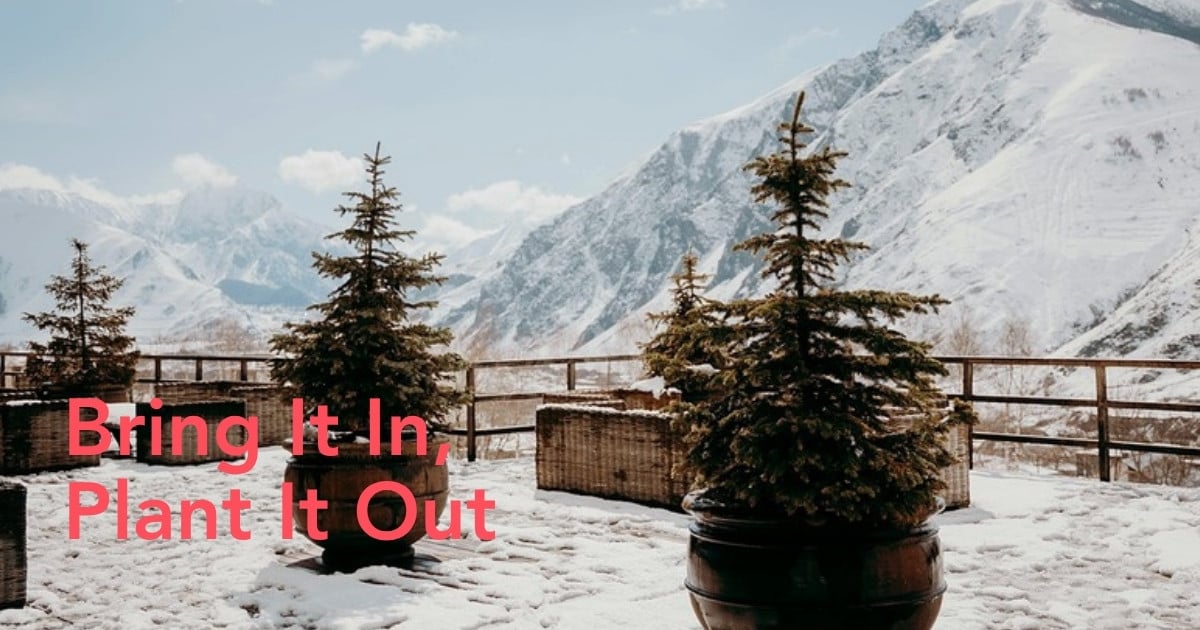
Featured image: decorated potted fir by Sóc Năng Động on Pexels. Header image: potted spruces on a snowy mountain terrace by Roman Odintsov on Pexels.