Every November, small trees with soft, neat tiers of branches go on sale as tabletop Christmas trees. That is the Norfolk Island pine, Araucaria heterophylla, and it makes a good living Christmas tree: it looks like a small fir and fits on a side table. Then January comes. The heating dries the air, and the lower branches start to brown.
It does not have to go that way. Norfolk Island pine care comes down to what a heated home lacks in winter, which is light and humid air. Add a cool spot, and the tree you decorate this December can still be growing next Christmas. Here is how to look after it indoors and how to get it through the months after the holidays.
What Is a Norfolk Island Pine?
Start with the name, because it misleads. The Norfolk pine, as many people call it, is not a pine at all. It belongs to the Araucariaceae, a family of conifers that was widespread in the age of the dinosaurs and today survives in the Southern Hemisphere with about 41 species, according to UF/IFAS Extension. Its former botanical name is Araucaria excelsa.
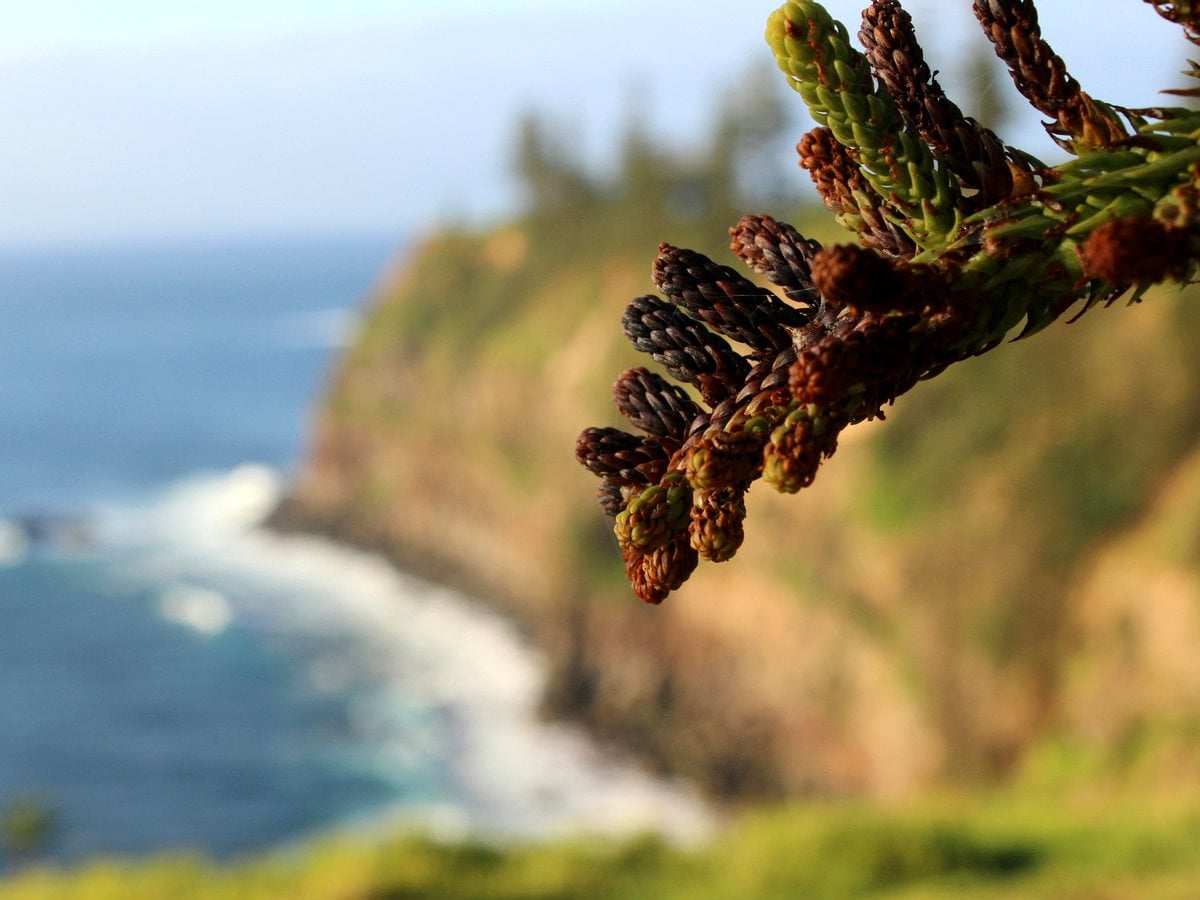
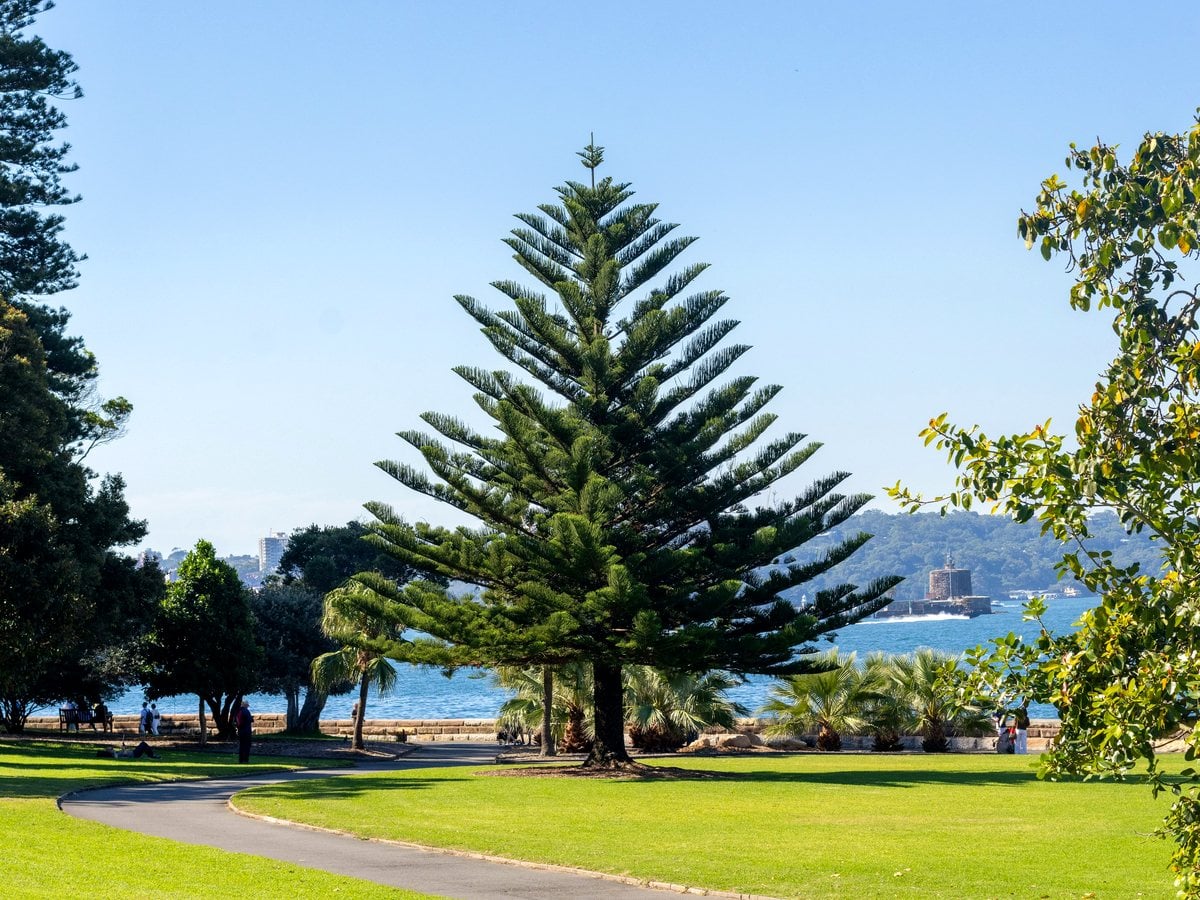
Its home is Norfolk Island, a small Australian territory in the South Pacific between Australia, New Zealand, and New Caledonia. There it can grow as tall as 60 meters (about 200 feet), according to Parks Australia, which runs the island's national park. The tree is on the island's flag. Its seeds fall in May and June and feed the island's endangered green parrot. In the wild, it grows only on Norfolk Island and on tiny Phillip Island, 6 kilometers to the south, and that small range is why the IUCN lists the species as Vulnerable.
Captain James Cook sighted the tall trees in 1774. A few years later, with its timber from New England cut off by the American Revolutionary War, the British Royal Navy considered them for mainmasts, but the wood proved too brittle, a University of Connecticut extension fact sheet notes.
Why the Houseplant Looks So Different
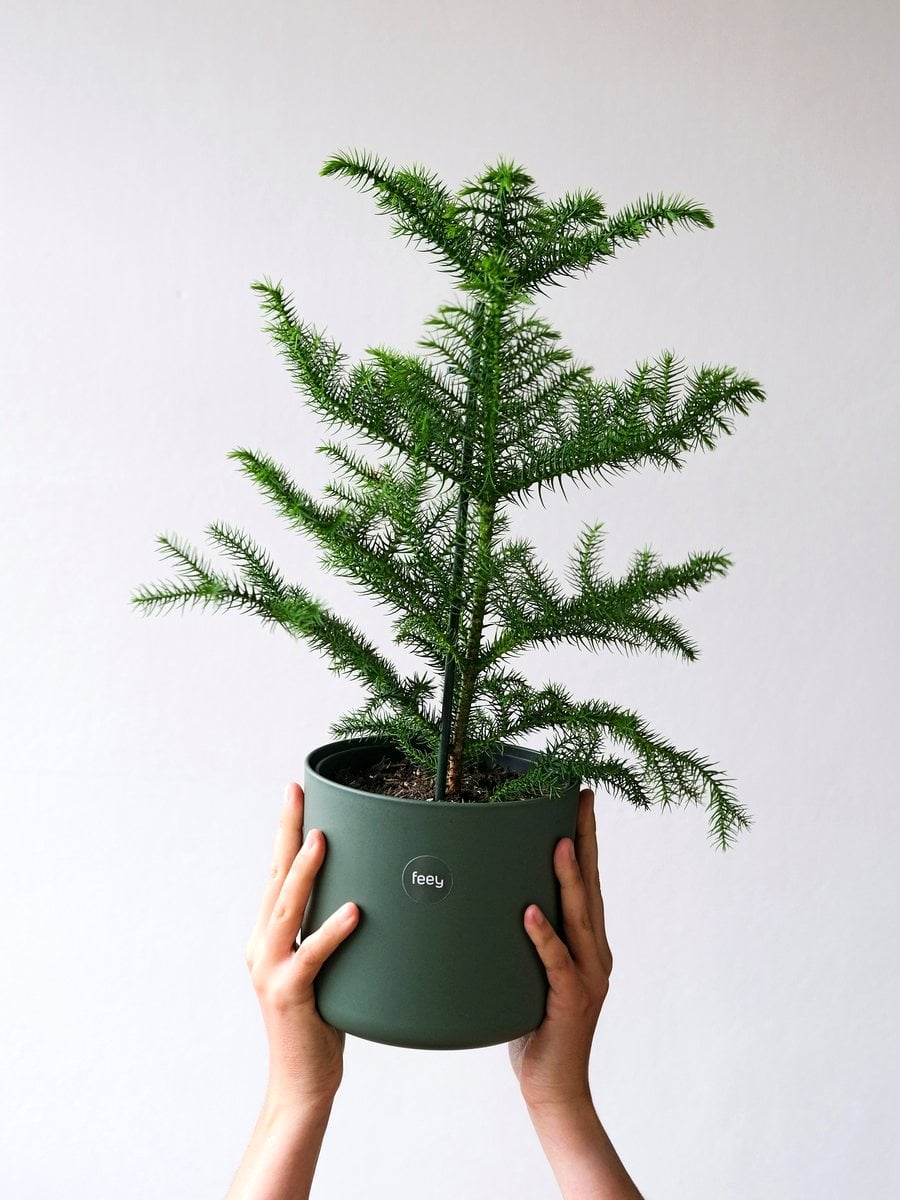
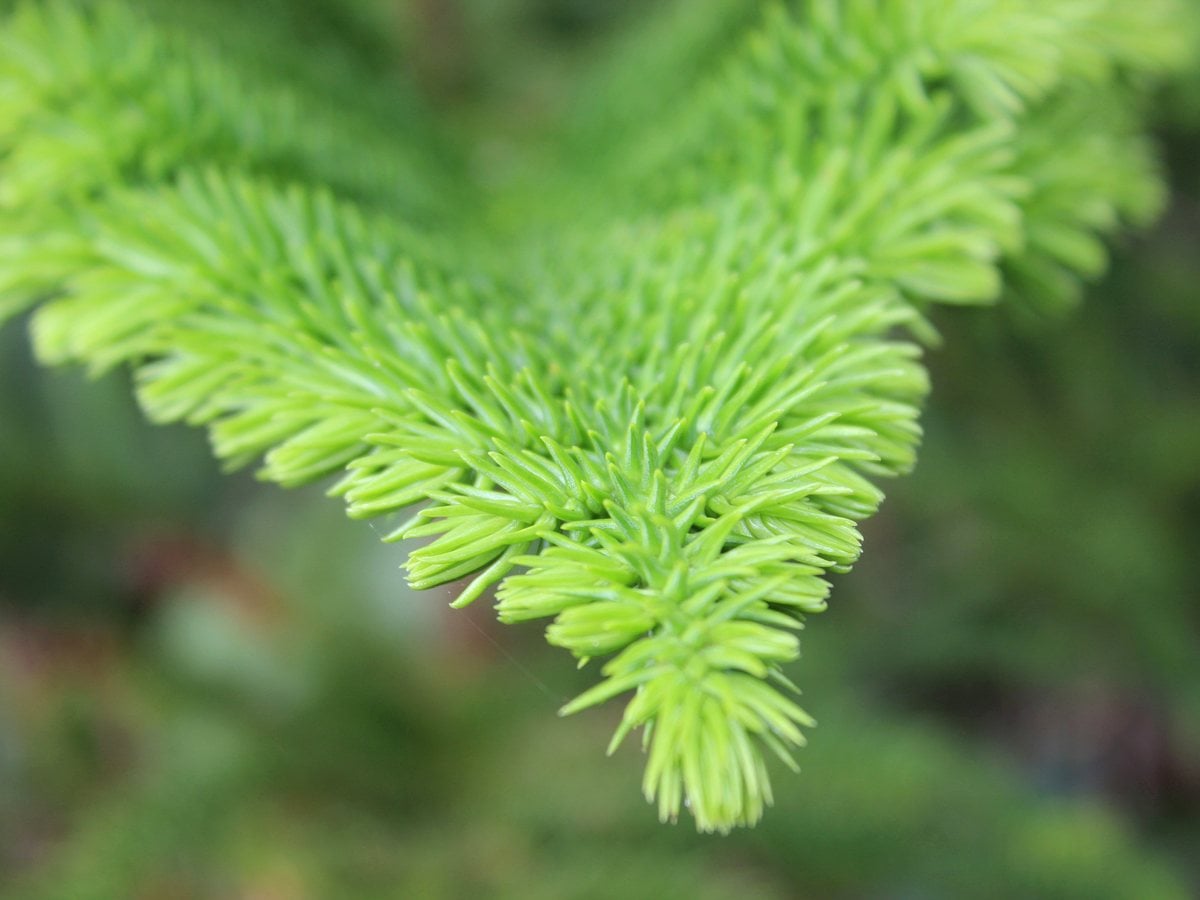
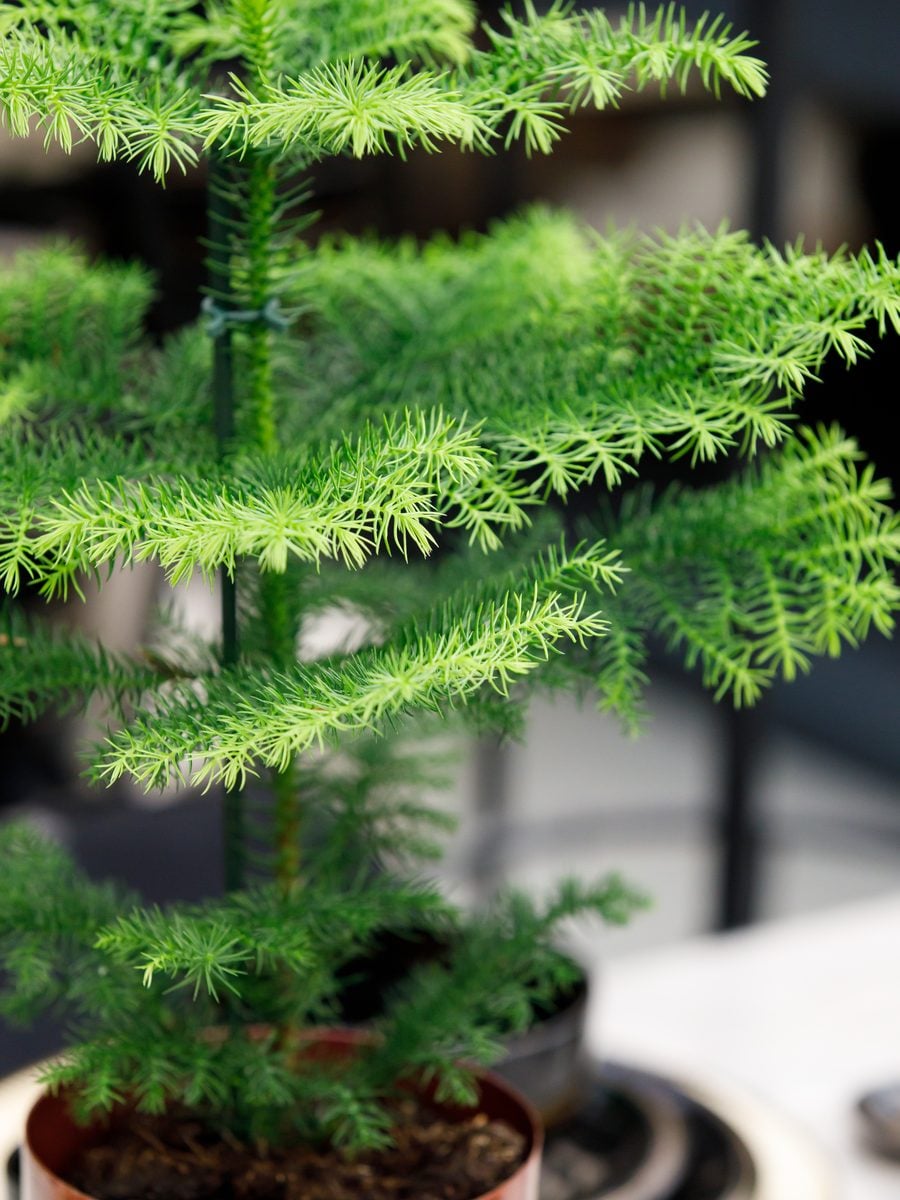
The potted tree hardly resembles the giant. The species name heterophylla means 'different leaves': young trees carry soft, needle-like leaves, and old trees switch to short, scale-like ones. As a houseplant, it keeps its soft young look for years. Its branches grow in flat tiers around one straight trunk, typically five to a tier, according to NC State Extension.
Where the Potted Trees Come From
In the Netherlands, it is a greenhouse crop. JK Plant in Honselersdijk, in the Westland near The Hague, grows Araucaria heterophylla under the name Nordic Pine and has it available from September to December every year, according to its own website. The grower pitches it as a modern alternative to the Christmas tree, one that, unlike a cut tree, likes being indoors and stays green all year. It looks prickly, the grower adds, but it is surprisingly soft to the touch. In Dutch, it goes by kamerden, the room pine.
Joram Kuijvenhoven, who grows them with his brother Jelle, explains how those trees are made. The pots run from 10.5 to 27 centimeters (about 4 to 11 inches), and every tree starts at the nursery itself. "We grow the Araucaria from our own cutting production, so everything happens locally," he says. The smallest pot size takes about a year to grow, the largest about three. And there's one tree in every pot, because a tree grown from a cutting never needs splitting.

How to Care for a Norfolk Island Pine Indoors
Good Norfolk pine care indoors means four things: bright light, humid air, a cool room, and steady watering. Winter is the hard part, because most homes are too dry for it then, Iowa State University Extension notes.
Give It the Brightest Window
Put it close to an east-, west-, or south-facing window. North light is not strong enough, according to the New York Botanical Garden (NYBG), and a tree kept too far from the glass loses its dense shape and drops needles. A couple of hours of direct sun are fine, but harsh midday sun can scorch the needles. Turn the pot a little every week, or the tree leans toward the light and grows lopsided.
Water When the Top of the Soil Feels Dry
Water thoroughly when the surface of the soil feels dry to the touch, and let the excess run out of the drainage hole. Empty the saucer after about 15 minutes, NYBG advises, because roots that stay wet can rot. The opposite hurts too, so never let the root ball dry out completely. In winter, the tree uses less water in the low light and the cooler room, so water a little less often while keeping the soil just moist.
Raise the Humidity
Humidity is where most homes fall short. NYBG puts the target above 50 percent relative humidity. Stand the pot on a tray of wet pebbles, with the pot on the stones and not in the water, or run a humidifier nearby. Grouping it with other houseplants helps as well. A simple hygrometer next to the plant tells you whether it is working.
Keep It Cool, Away From the Radiator
A Norfolk Island pine prefers a cool room: 16 to 21°C (60 to 70°F) by day and 10 to 18°C (50 to 65°F) at night, according to NYBG, with a winter rest at the cooler end, around 13 to 16°C (55 to 60°F). Keep it away from radiators, heating vents, air conditioners, and drafty doors, because blasts of hot or cold air brown the needles. NYBG calls it a poor long-term choice for a home kept on the warm side.
The greenhouse it comes from isn't warm either. JK Plant grows its trees at about 15 °C (59 °F), Joram says, so the move to your living room is a small step for the tree. The one spot to avoid, he adds, is straight on a floor with underfloor heating.
Feed Lightly, Repot Rarely
From spring to early fall, feed it with a diluted houseplant fertilizer every two to four weeks, and not at all in winter. More food does not make a better tree, since too many feedings weaken it, NYBG warns. Repot only every two to three years, in spring, into a slightly acidic, well-drained potting mix in a pot with a drainage hole. Handle the roots gently, because they are delicate.
Never Cut the Top
Pruning is mostly about what to leave alone. The tree grows upward from one tip at the very top. Cut that tip off, and it stops gaining height and only adds side growth, according to NYBG. Lower branches that die do not grow back either, so a bare base stays bare.
Why Norfolk Island Pine Needles Turn Brown or Drop
Some browning is normal. The oldest needles on the lowest branches gradually turn brown and fall, NYBG notes. When branch tips go crisp all over the tree, or branches die higher up, look for one of these causes:
- Dry air. Heating dries the house in winter, and dry air is the most frequent cause of brown tips.
- Uneven watering. Too much water, in a pot without a drainage hole or with a saucer left full, browns the needles. So does too little, often in a small pot packed with roots.
- Too little light. The tree grows lanky and drops its lower branches. NC State Extension notes that it can put up with very low light for two or three years before the leaves drop and the lower branches go.
- Too much sun. Harsh midday sun burns the needles.
- Drafts. Hot or cold air from vents, radiators, doors, and windows browns the needles too.
- Spider mites. They thrive in warm, dry rooms. Check the brown patches for fine webbing, and rinse the mites off with water.
Fix the cause early, because a dead branch does not come back.
The Norfolk Island Pine as a Living Christmas Tree
A Norfolk pine Christmas tree is a houseplant in party clothes. UConn Extension suggests trimming one with ornaments on a mantel or a dining table, and Iowa State describes how many people dress theirs with miniature lights, ribbons, and ornaments. It works because the tree stays in its pot and keeps growing after the holidays.

That's how the grower sees it too. "We see the Araucaria above all as the sustainable alternative to the Christmas tree," says Joram Kuijvenhoven of JK Plant. "After Christmas, the decorations come off, and there it stands, a great, trendy green houseplant that lasts for years."
Who Buys a Living Christmas Tree?
So who picks a potted pine over a cut fir? Trend forecaster Sandra Könings of Trendlogic has had one at home for about ten years. "A very big market. Not the traditional, most conservative one. First of all, the people who never want fake. But the ones who connect with nature. The ones who find authenticity the essence of everything!" Add the people who want to be original, she says. "Innovators, early adopters, and design lovers for sure."
It doesn't always stop at one tree per house, either. "You often see that next to a big tree, the children get their own little tree in their room too." And after the holidays, it's what a cut tree can't offer that counts. "Its shelf life is a real added value, and so is its beautiful natural shape."
How to Decorate It Without Hurting It
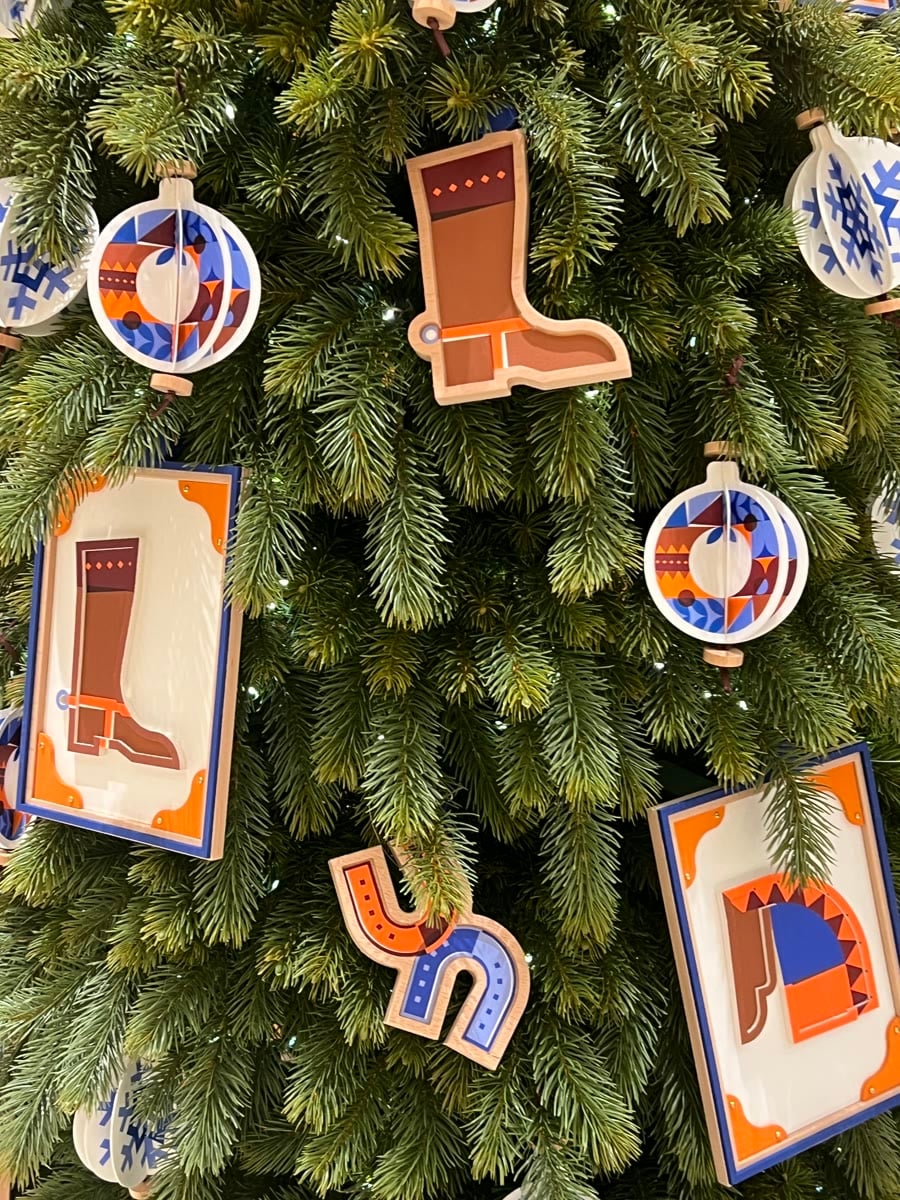
Small ornaments and miniature lights suit its soft branches. Leave the tree in its bright spot for the holidays instead of moving it to a dark corner. If a cat lives with you, skip the tinsel. The ASPCA warns that swallowed tinsel can cause severe vomiting and an obstructed digestive tract, and it can even require surgery. Set the pot where it cannot be knocked over, too.
So what goes on it this year? Trend forecaster Sandra Könings of Trendlogic doesn't hesitate: "Trees full of bows are the trend this year!" Or make it yourself in a paper style, she adds, a look she saw in Düsseldorf in November, even at Hermès.
Is a Norfolk Island Pine Toxic to Cats and Dogs?
No. The ASPCA lists it, under the name Australian pine, as non-toxic to dogs, cats, and horses, and NC State Extension tags it the same way. What hangs on it at Christmas is another matter, as the tinsel warning shows. For more plants that are safe around pets, see Thursd's list of pet-friendly houseplants.
How to Keep It Alive After Christmas
In early January, take off the decorations and give the tree the brightest cool spot you have, away from the heating. Keep the humidity up while the heating runs, and water whenever the top of the soil is dry. Hold off on fertilizer until spring, and on repotting as well. If the pot turns out to hold several small trees, NYBG advises separating them in spring, one per pot. The grower would leave them together. JK Plant grows one tree per pot from its own cuttings, but even with several seedlings in one pot, Joram Kuijvenhoven wouldn't split them, "because the Araucaria has a vulnerable, fragile root."
Looked after this way, it stays an attractive houseplant for years, UConn Extension notes, and it adds a little height each year. Next December, it comes out as the tree again.
Can a Norfolk Island Pine Go Outside?
In summer, yes. On a patio, it wants bright shade, out of the strong afternoon sun, and it comes back inside once night temperatures regularly drop into the 10 to 15°C range (the 50s °F), UConn Extension advises.
Planting it out only works where winters stay mild. NYBG gives USDA zones 10 and 11, where winter temperatures stay above about 5°C (the low 40s °F), and UF/IFAS Extension says it cannot take temperatures below about 2°C (35°F). In the United States, it grows outdoors in Florida and coastal Southern California, NC State Extension notes.
Think before you plant one in the garden, though. In Florida, it grows to 18 to 24 meters (60 to 80 feet), UF/IFAS writes, and it does not hold up well in hurricanes. Because it is vulnerable to lightning and snaps in high winds, planting is restricted in parts of South Florida, according to UConn.
How Big Does a Norfolk Island Pine Get?
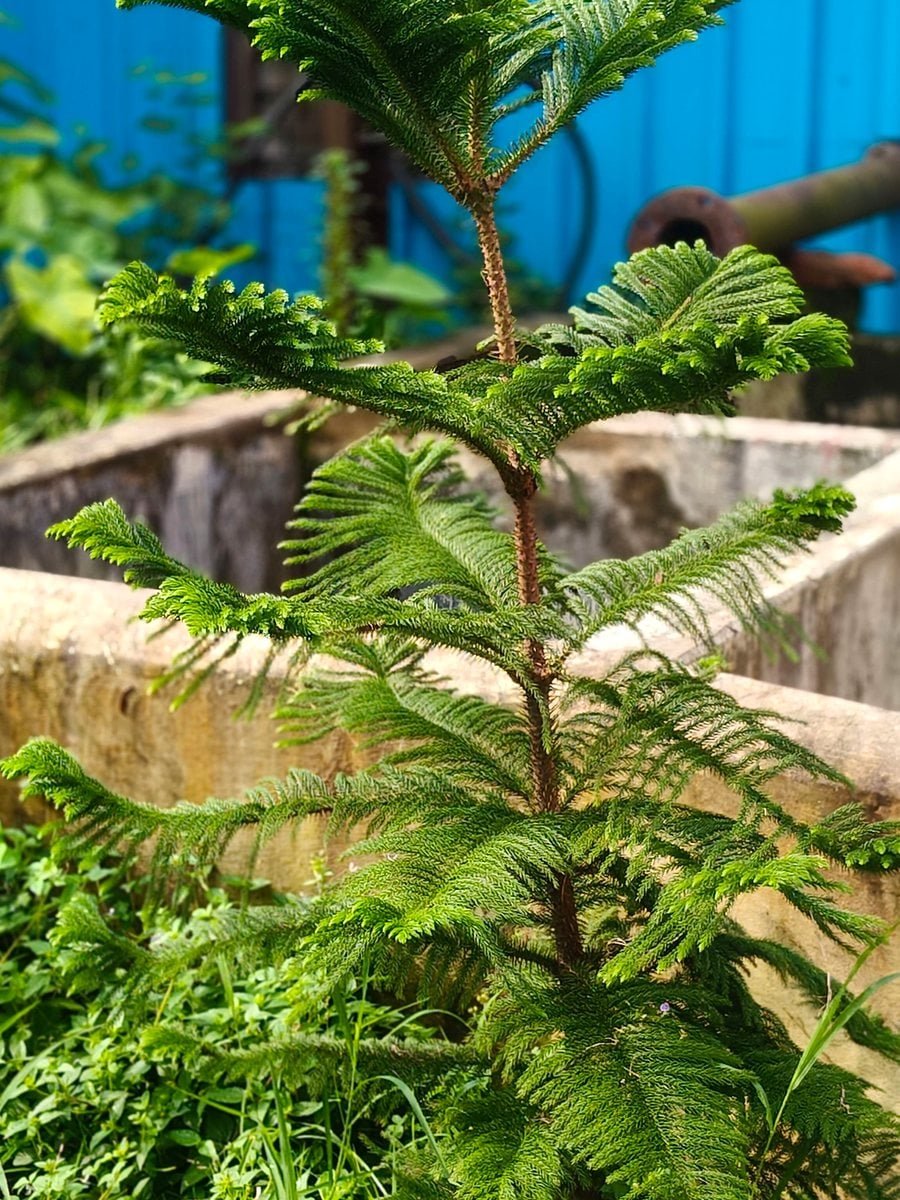
Indoors, slowly. It rarely adds more than about 15 centimeters (6 inches) a year, according to NYBG, and after about a decade, it may stand 1.5 to 2.4 meters (5 to 8 feet) tall, UF/IFAS writes. With years of good care, it can go higher: NC State Extension gives 2.7 meters (9 feet) indoors, and NYBG up to 6 meters (20 feet).
Joram Kuijvenhoven counts it in tiers. Every year the tree adds one new whorl of branches, he says, and in a living room that comes down to only 5 to 20 centimeters (2 to 8 inches) a year. So the tree you buy is pretty much the tree you'll have next Christmas, one tier taller.
Outdoors, it is another tree. On Norfolk Island, it grows to about 60 meters, and the tallest one measured there stands 55 meters, The Gymnosperm Database records. Planted trees on warm coasts elsewhere are often confused with a close relative, the Cook pine, Araucaria columnaris, which grows narrower and often leans.
Think of it as a houseplant that gets dressed up once a year. If you want a cut tree as well, Thursd's guide to types of fir trees covers the Nordmann, the noble fir, and more, and the list of fresh Christmas greenery has the cut greens for around it. For more plants that carry the season indoors, see the 15 Christmas plants and flowers to grow or gift, the Amaryllis care guide, Christmas cactus care, and Poinsettia care. If your Christmas cactus flowers in November, it may well be a Thanksgiving cactus: here is how to tell the two apart. And for the trees nobody takes home, there are the most beautiful Christmas trees around the world and some unusual Christmas tree ideas.
Sources opened for this guide, September 2026: University of Connecticut Home and Garden Education Center, Norfolk Island Pine (fact sheet by Donald B. Lacey, Rutgers). UF/IFAS Gardening Solutions, Norfolk Island Pine. North Carolina Extension Gardener Plant Toolbox, Araucaria heterophylla. New York Botanical Garden, LuEsther T. Mertz Library, Norfolk Island pine houseplant and the reference answer What is the best time to repot and separate several Norfolk Island pine trees?. Iowa State University Extension, Yard and Garden, How do I care for a Norfolk Island Pine? (December 18, 2023). Parks Australia, Norfolk Island National Park, Norfolk Island pine. The Gymnosperm Database, Araucaria heterophylla (Christopher J. Earle), for the range, the 2019 IUCN assessment, the tallest tree, and the Cook pine. ASPCA, the Australian Pine entry in its toxic and non-toxic plants list. ASPCA, Holiday Safety Tips. JK Plant, Assortiment and Nordic Pine (in Dutch).
Featured image: Norfolk Island pine by feey on Unsplash. Header image: Norfolk Island pines on Norfolk Island by Grant Charsley on Unsplash.