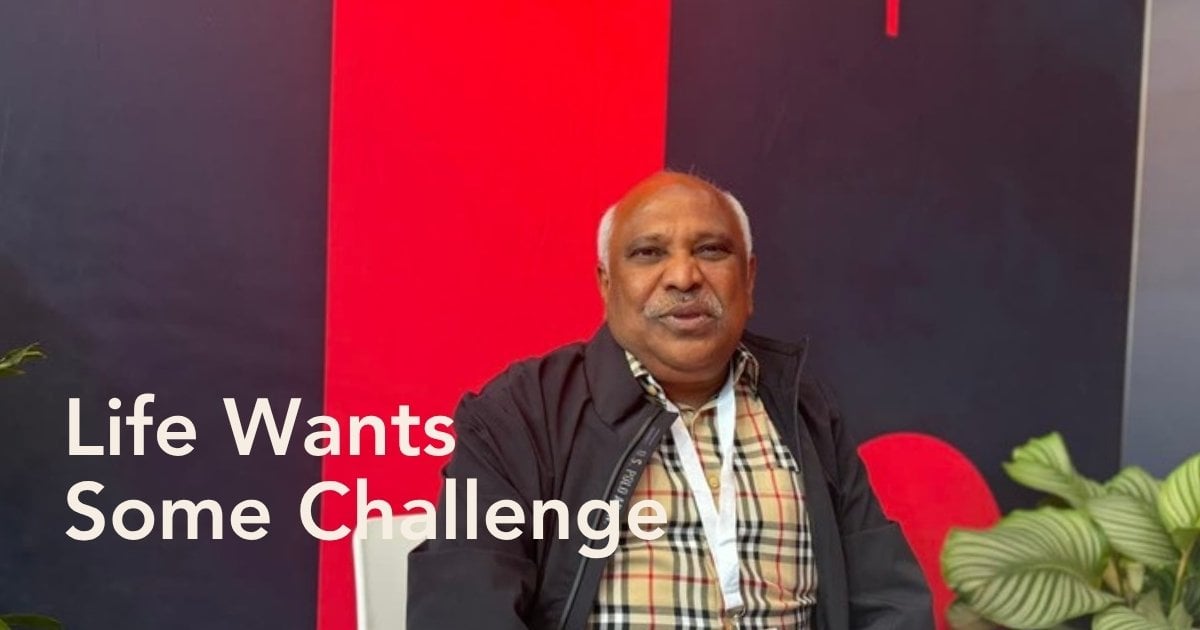
His friends fought him on the name. Black, they said, isn't a word you put on flowers. Mohamed Ehiya, chairman of Black Tulip Group, kept it for exactly that reason, and more than three decades later the same instinct explains the rest of the story. At IFTF in Vijfhuizen on November 3, Thursd CEO Arnold Wittkamp asked him how a flower importer in Dubai ended up with farms across Kenya and Ethiopia and, by his count, more than 15,000 people on the payroll. Short answer? He keeps looking for the next challenge, and he keeps the same people around him while he does. If you buy roses or summer flowers from Kenya, that next challenge is coming your way.
How Mohamed Ehiya Went From Dubai Importer to Kenyan Grower
Flowers on His Days Off
He didn't grow up with flowers, and his parents had nothing to do with them. What he had was a brother in Dubai, the manager of a very small wholesale company run by a Singaporean owner. On Saturdays, Sundays, and holidays, Ehiya went along.
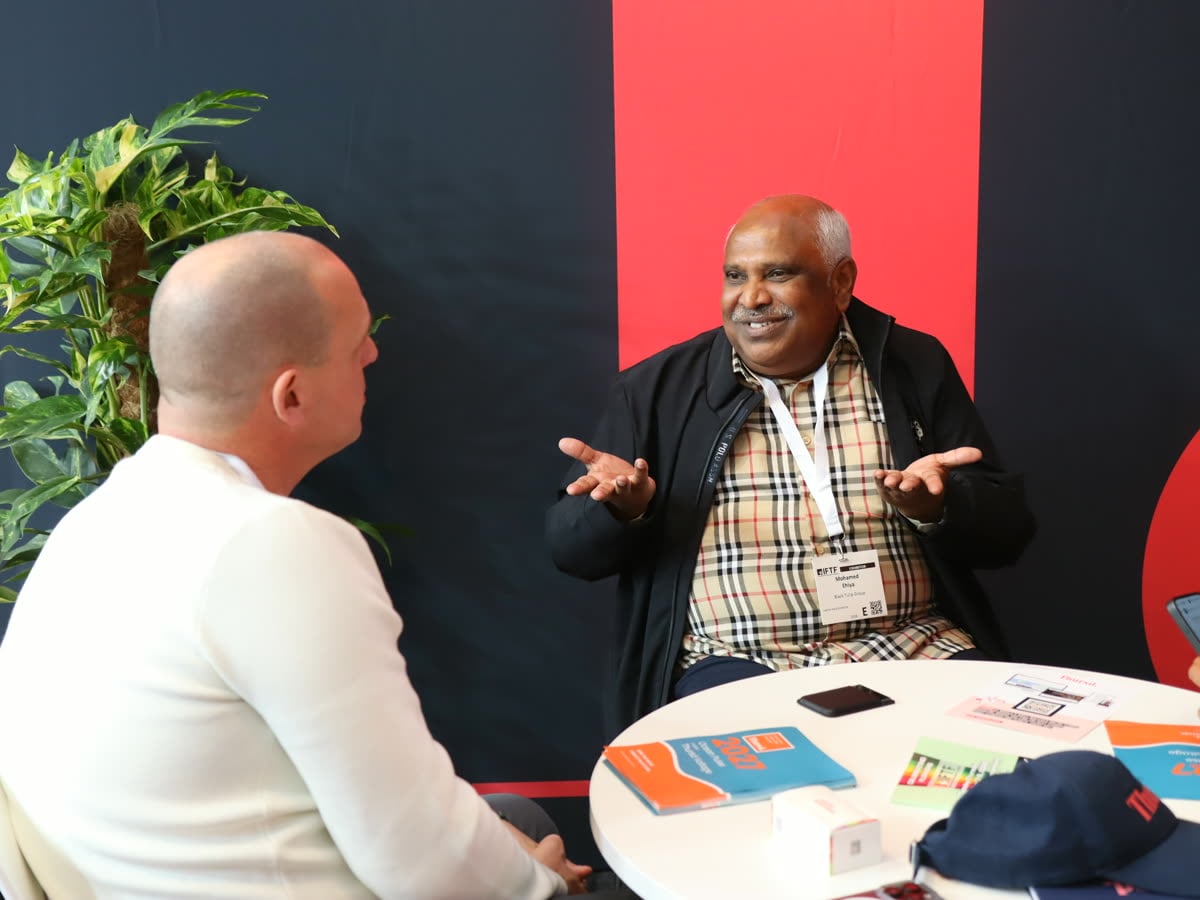
"I see the flower business. I like, I love this business," he says. Picture Dubai 35 years ago: five-star hotels going up, and flowers still a new trade in town.
He has now lived there for 43 years. He's flown to more than 120 countries, and Dubai is still the place he calls reliable and easy for business.
From Carnations to a Six-Hectare Farm
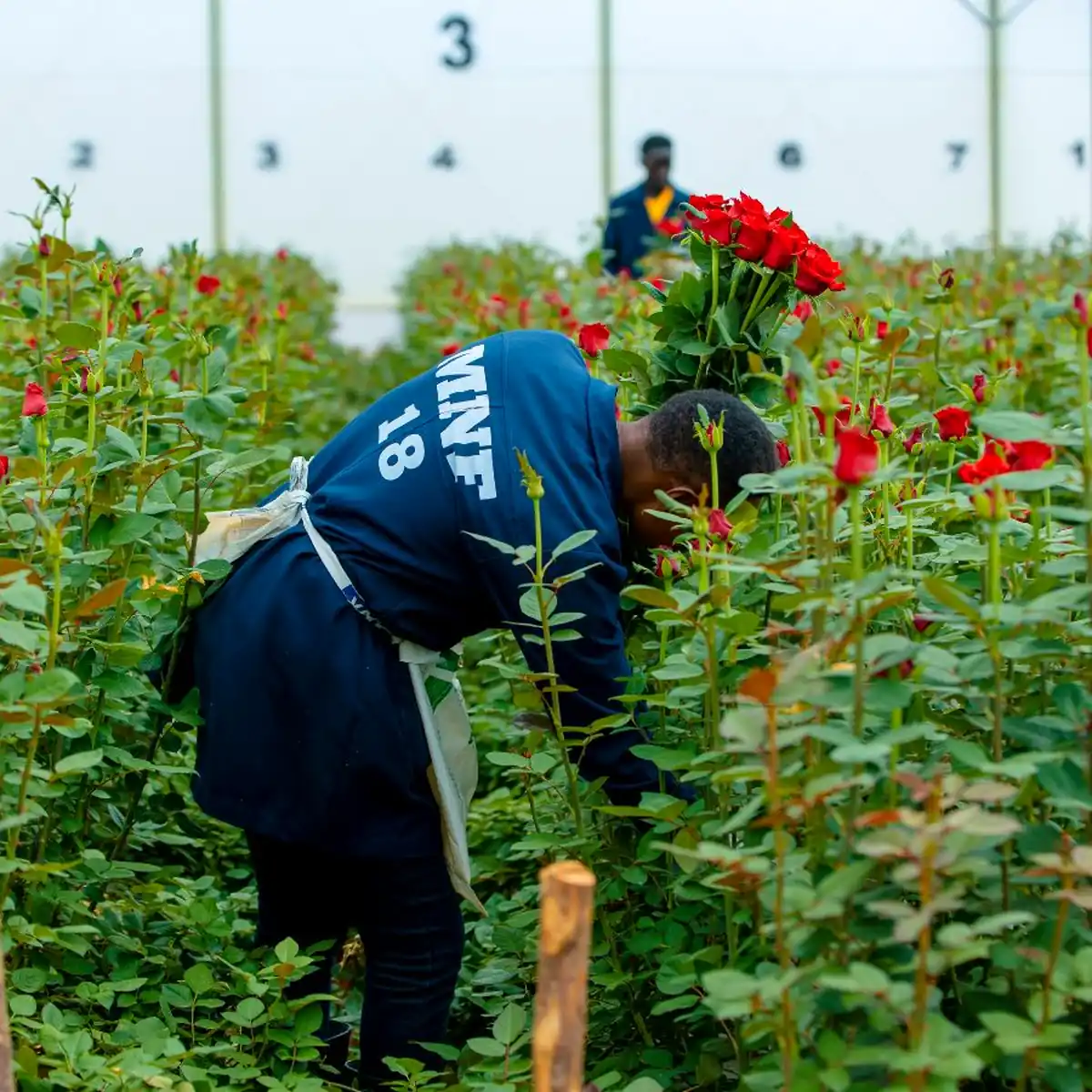
Kenya came next, and he came as a buyer. In 1992, he recalls, there were maybe four or five farms to buy from, one of them big, in Naivasha, and what they sold was carnations. Only carnations. If you've walked the Kenyan stands at IFTF, you'll find that hard to imagine, now that Kenya's flower exports bring in about USD 630 million a year.
So he opened an office at the airport and traded with every farm he could. Then came the question that changes a trader's life: why not buy one? His first was the farm now known as Black Petals, and it was tiny. Six hectares. For the first few months, everything went to Dubai. After that came Saudi Arabia, Oman, Qatar, and Malaysia.
Then came Australia, the part of the story worth retelling. There were no direct flights, so the boxes flew from Kenya to Dubai, on to Kuala Lumpur with Malaysia Airlines, and from there to Sydney. For two or three years, he says, he was the only one sending Kenyan flowers to Australia. What made it work? Quality first, then Dubai's connections, then finance.

Why Mohamed Ehiya Chose the Name 'Black Tulip'
He wanted a name nobody else had. Everyone around him told him black was a bad idea, and that was the attraction. (By the way, a truly black tulip doesn't exist, which somehow makes the name better.)
Was it a bit like the black sheep, Arnold asked, the one who does things differently? "Yes," Ehiya said. "Something different." Then came the word he kept returning to. "Life wants some challenge."
"It's a People Success"
Ask someone who built a group like this what made it work, and you'd brace for a speech about strategy. Ehiya gave three reasons in a minute, then dropped all of them for a fourth. "It's a people success," he says. Black Tulip's leaders have been there for 15, 20, 25, even 30 years.
Arnold pushed back: if you keep challenging people for 20 years, don't they leave? "I care for my team," Ehiya says. "If I don't care for my team, my team doesn't care for my company." He calls the people who work for him his brothers, and he sums up the group as "a team care company."
Politics is the one challenge he won't take. Asked what Kenya's government should do for flowers, he politely declined. After 30 years of going to Kenya, he's "purely a businessman," and he would rather talk about his charity work.

Where Mohamed Ehiya Sees the Flower Trade Going
Could 50 Percent of Flowers Travel by Container?
This is the boldest number of the interview. Black Tulip already ships flowers by sea container to the UK, the Netherlands, and the Middle East, and Ehiya says all three routes work well. He expects that once the war in the Middle East is over, about half of all flowers will travel by sea. “My thinking, 50 percent,” he says.
That would be a big change. Today almost all of Kenya’s cut flowers are still flown out. Even Nini, one of the farms furthest ahead with sea freight, sent about 20 percent of its Roses by ship this September. In 2025, Black Tulip’s CEO, Mohan Choudhery, still called sea freight a supplementary option. The chairman has moved on from supplementary.
If you buy Kenyan flowers, it’s worth asking your supplier what your boxes will be doing in three years. The balance between air and sea is still being worked out, but Ehiya’s point is simple. The question is no longer whether it works.
Why Kenyan Flowers Might Reach the US Market
Ehiya has two or three customers in the United States today, and he thinks there's room for more. Kenyan flowers are cheap to grow, he says. Cheaper than Colombian and Ecuadorian ones, even. The problem is the freight, as you'd expect.
The duty is where it gets interesting. Since July 24, Colombian flowers pay a 12.5 percent US tariff. Ecuador's growers pay around 6.8 percent, Colombia's flower association Asocolflores calculates.
Kenya isn't on the US list of 60 economies behind those tariffs, and its duty-free access under AGOA was extended to the end of 2028. "Kenyan flower, no duty," he says. "Zero duty."
Don't expect Nairobi to replace Bogotá overnight, though. Colombia still supplies close to 60 percent of US flower imports, and it's a few hours' flight from Miami. "Future, everything possible," is as far as Ehiya will go.
250 More Hectares of Greenhouses, and Then Fruit and Vegetables
Black Tulip isn't finished with flowers. For 2027 and 2028, Ehiya is planning about 250 hectares (620 acres) of new greenhouses. That's about the same as the group's whole flower area in Kenya in 2023.
What does that mean for you as a florist or a buyer? More summer flowers to choose from, for a start. Ehiya says no group in Africa carries a wider range, and last year's assortment ran from roses and Alstroemeria to Ranunculus and Matthiola. The group makes bouquets too, and it buys about USD 2 million worth of flowers a month from other farms.
The local Kenyan market doesn't interest him much as a place to sell Kenyan stems, but he does see an opening for imported Cymbidium and Phalaenopsis. India, he says, is the same story with exclusive flowers, and he claims the title of largest flower importer there.

The surprise is what comes next. He's looking at 800 to 1,200 hectares (2,000 to 3,000 acres) of mixed agriculture: avocado, papaya, capsicum, then maybe strawberries, blueberries, and pineapple. His reasoning has nothing to do with flowers. The world's population keeps growing, he says, land keeps shrinking, and everybody wants good food.
He eats dragon fruit two days a week and already imports fruit, so he's not guessing. He wants to try the yellow pitaya that grows in Colombia. By the end of that story, Arnold had offered to come and work for him.
Everything Possible, Just Not Alone
It's a long way from Nadukkadai, the village in Tamil Nadu where his story starts, to 15,000 jobs across Kenya, Ethiopia, Dubai, Oman, Qatar, Saudi Arabia, Malaysia, and India. Black Tulip dates itself to 1990, and the group says he built it with his siblings. In 2021, it announced that he would set up an oxygen plant at Thanjavur Medical College Hospital.
Asked if he was proud of all that, he didn't really take the compliment. He pointed at God, then at positive thinking, and then he went straight back to the word he started with.
"Something I want new, always I want new," he says. "Something I want challenge, always I want challenge." And then the bit that explains the 30-year colleagues: "But I want to gather all. Not alone."
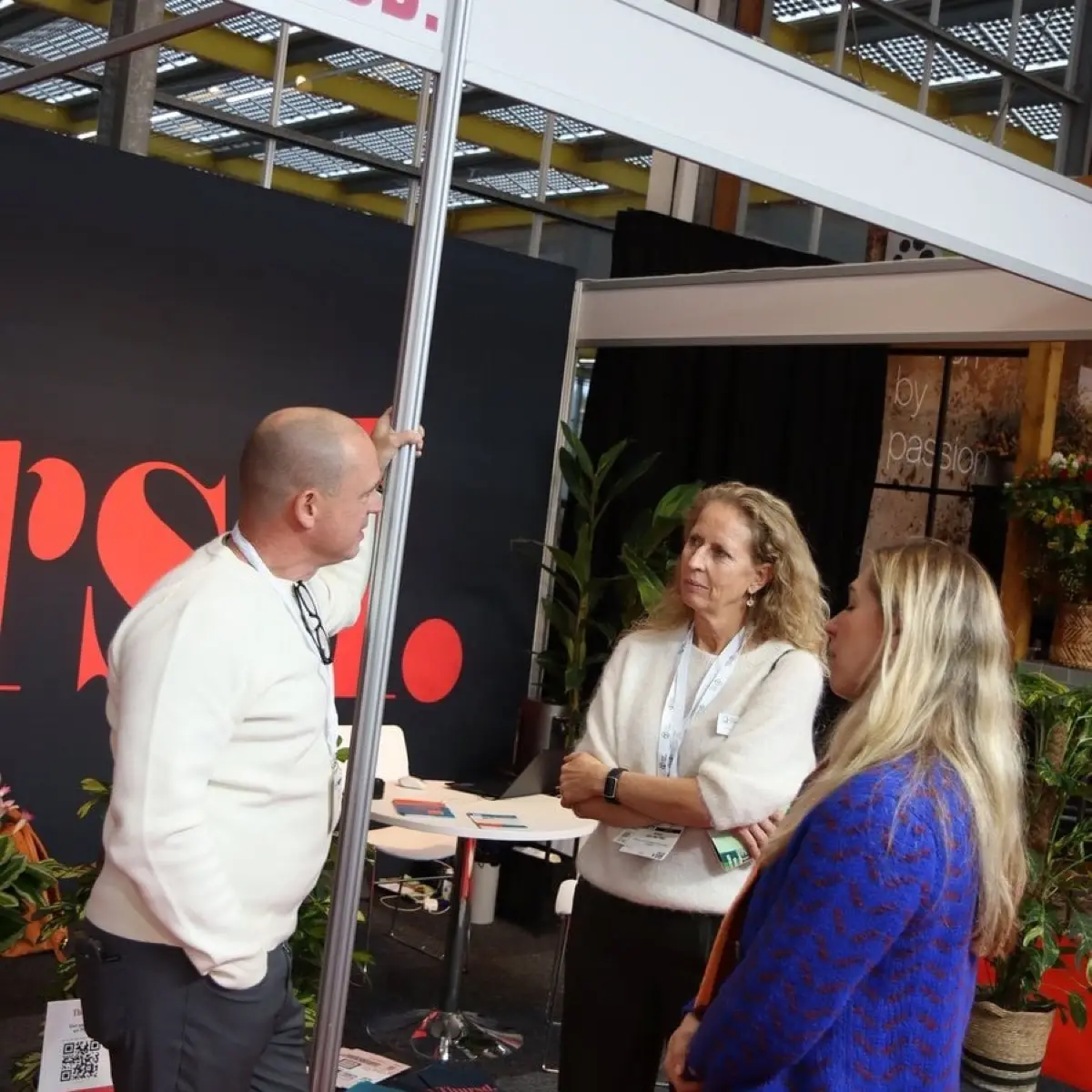
Featured imageby @thursdofficial: Mohamed Ehiya during his interview at IFTF 2026. Header image: Mohamed Ehiya at the Thursd stand at IFTF 2026. Photos by Thursd.