Thirty days of sea freight in a conditioned container. Losses under three percent. Any rose that cannot do that does not get planted, whatever else it has going for it. That is how Carla Ulyate, who runs systems development at Nini Flowers in Kenya, described the farm's newest selection rule to Nieuwe Oogst on 4 September 2026. In her words: we look for roses that don't get seasick.
I wrote about that line on LinkedIn on 14 September 2026 and closed on a question to breeders: is vase life after thirty days at sea on your selection sheet yet, or is that still the grower's problem? Nine hours later, a breeder answered, in public, and his answer is the reason this piece exists.
What Nini Is Actually Doing
Nini, which sits under the same roof as Herburg Roses, shipped about 20 percent of its roses by container in September 2026. The target is 75 to 80 percent: a container a day instead of one a week. That plan is the core of the company's stated goal of cutting its CO2 by more than 90 percent by 2030. Not offsets. Ships.
The number that stuck with me is smaller than the 90. Thirty days, under three percent loss, and a variety that fails the test is out. Some do fail. A rose can have the color, the head, the stem length, and the vase life the market wants and still not make it onto the planting list, because it does not travel. Nini is not the only farm thinking this way, but it is the one that said it out loud with figures attached.
Half of Colombia's UK Flowers Already Go by Sea
Three days later, on the other side of the world, Carlos Manuel Uribe Lalinde of Flores El Capiro told La República that his company alone ships half of all Colombian flowers going to the United Kingdom, all of it by sea. Chrysanthemums, Colombia to a British supermarket shelf, no plane. That interview ran on 7 September 2026.
Put the two together, and the picture is not "sea freight is coming". It is here, on planned retail volumes, from two continents, run by companies that have spent years learning what breaks. Thursd has covered the sea and air balance and Ruud van der Vliet's read on why the rose going by sea is good news. What neither piece could say yet is what happens one step further back.
It Moved Upstream, and a Breeder Confirmed It
For twenty years, sea freight was a logistics conversation. Cold chain, transit time, who carries the risk. What Nini and El Capiro are saying is that it has moved upstream. It is now a planting decision on the farm, and one season later it becomes a selection question for the breeder.
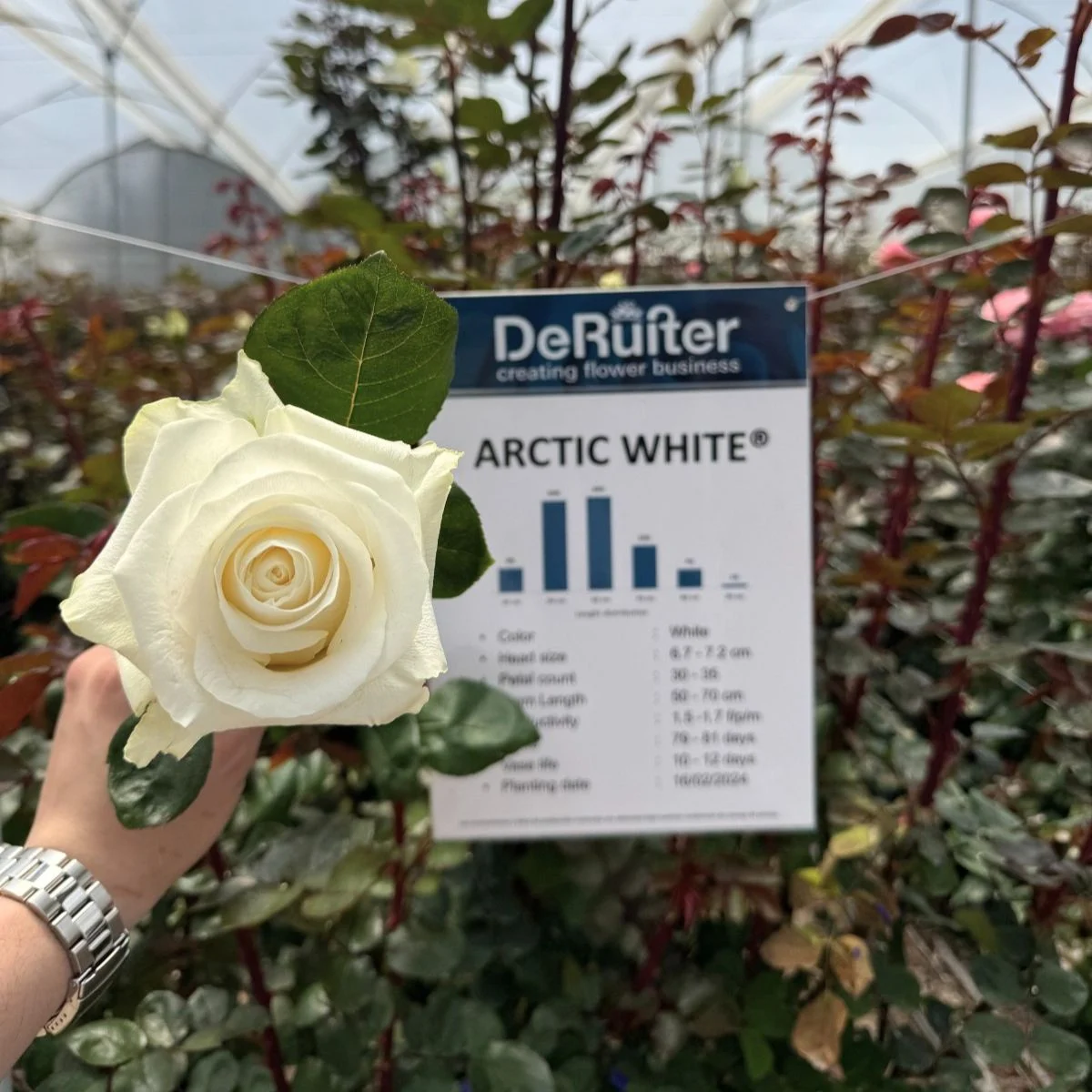
Robin Letcher, Managing Director of De Ruiter East Africa in Naivasha, put this under my post: "Some breeders have been working on creating sea freight proven varieties for years. So it is a combined challenge. Not just a grower problem, Arnold."
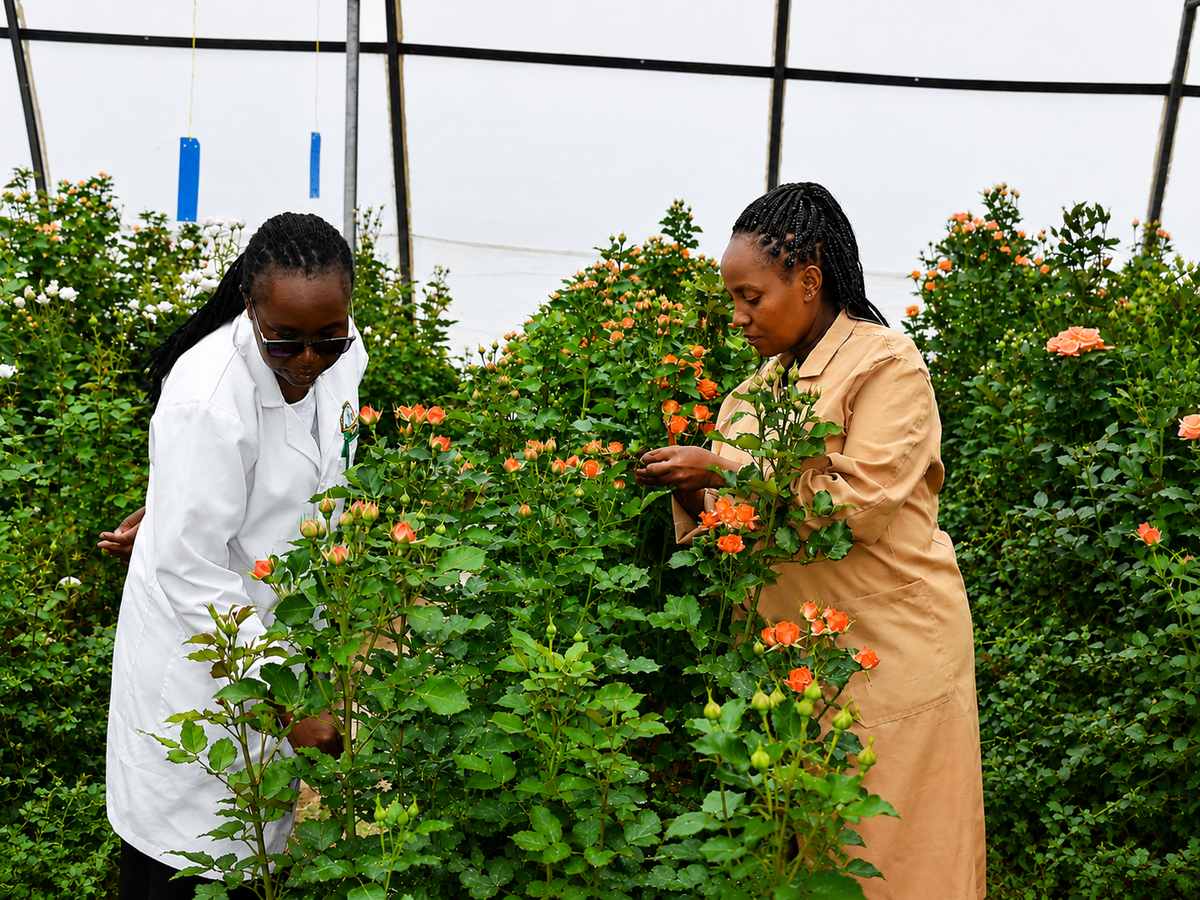
Fair, and it tells you where the industry stands. A farm selects on seasickness. A breeder says that selection started years ago. The two ends of the chain have met. The trade in between, the importers, wholesalers, and florists who still think of sea freight as a cheaper and slower version of a plane, has not caught up with either of them.
The rose you buy in 2030 is partly being chosen right now on whether it survives a ship. That decision is being made in Naivasha and in a breeding station, not in a logistics office.
The Argument Nobody Makes: Resilience
Two more voices deserve to be written down. A project manager from outside our sector, Fahad Hassan, wrote under the post that sea freight is only a logistics win once harvest, grading, and cooling run daily instead of weekly; a container a day, in other words, is not a shipping decision but a farm-rhythm decision. And Joseph Karanja of Consolflora in Nairobi asked, in a LinkedIn post of his own on 16 September 2026, which single point in the chain everybody hopes never gets tested. He has since written about the cold chain he runs, stem by stem and handoff by handoff, in The Discipline We Built and the Name We Lost, here on Thursd.
For flowers, that point is the aircraft. On 1 and 2 September 2026, a two-day strike by aviation workers halted operations at Jomo Kenyatta International Airport and Mombasa. The Kenya Flower Council said about 1,000 metric tons of flower cargo were stranded and that clearing the backlog would take several days, with reduced vase life, missed connections, and some orders that could not be recovered. Kenya shipped about 130,600 metric tons of cut flowers in 2025, worth about KES 81.3 billion, roughly USD 630 million, according to the Kenya National Bureau of Statistics. Nearly all of it leaves on aircraft. One node, and the whole week sits in Nairobi.
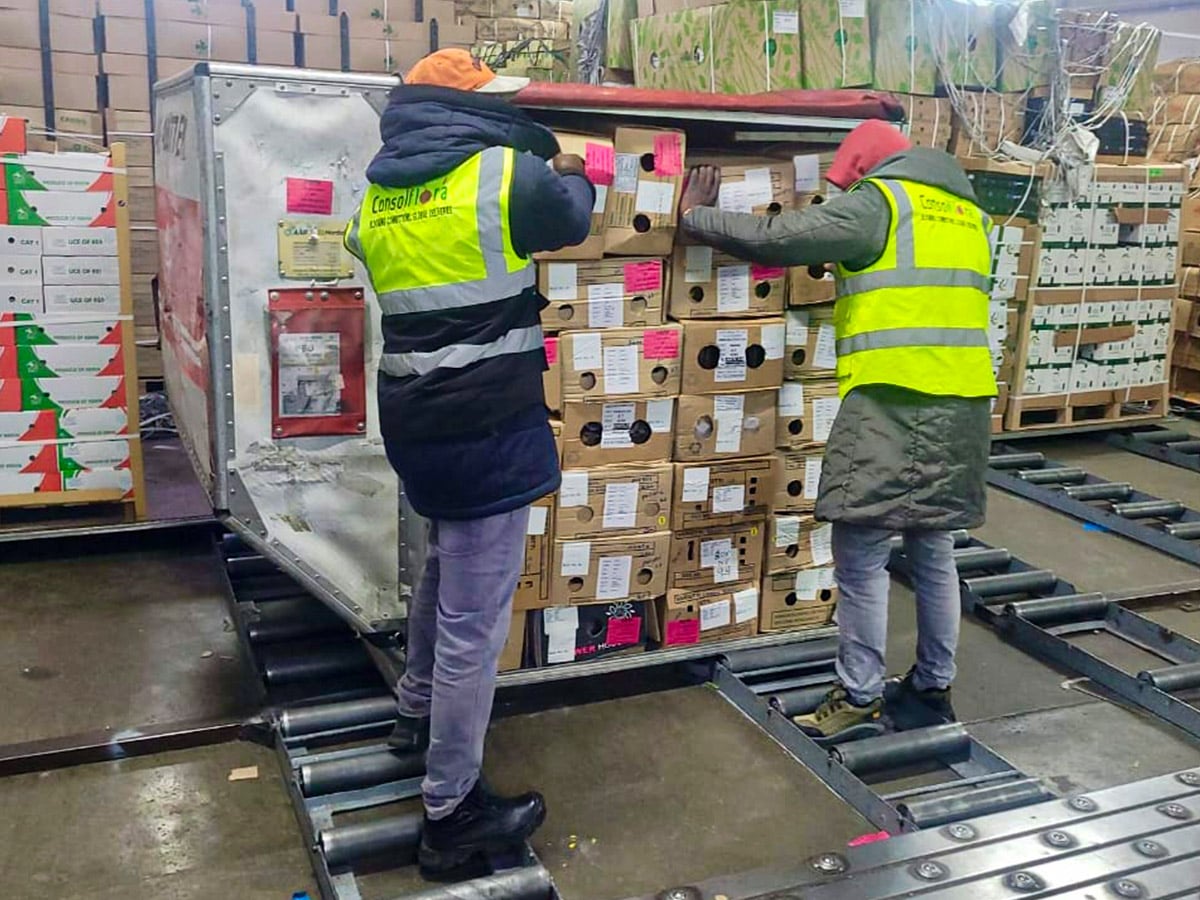
That is the argument for the container I find stronger than the CO2 one. A cargo strike, a fuel surcharge, an ash cloud in 2010: the aircraft is the node that gets tested most often. Thirty days at sea only sounds slow until the alternative is not moving at all. A farm with a container leaving every day has a second route open when the first one closes.
Where It Does Not Work, Yet
I want to be careful here, because the people who oversell sea freight do as much damage as the people who dismiss it. It does not work for every crop. Softer petals bruise on longer voyages, some long-stemmed varieties travel badly, and heat-sensitive product over 48 hours is a per-route question, not a general one. A model that works from Mombasa to Rotterdam on planned retail volumes has not been proven on every route or every product, and a farm that has done it well has usually spent years finding out what breaks.

It also demands a rhythm most of the chain does not have. Daily harvest, grading, and cooling on the farm. Weekly arrivals of large volumes at the importer, which means cold storage that many smaller traders have not built. And an assortment logic that suits supermarkets better than the florist who wants to change her buying every morning. Air freight is not going away for peaks, for premium, and for surprise.
What has changed is who owns the decision. When the variety is chosen for the ship, the ship is no longer optional downstream.
What This Means for Growers, Breeders, and Traders
For a grower, the seasickness test is a planting decision with a two- to three-year horizon. A variety that cannot do thirty days is a variety that locks you into the aircraft for its whole life in the greenhouse. That is a risk, not just a cost.
For a breeder, the selection sheet now has a line on it that the market has not asked for out loud but will pay for. The Kenya Flower Council's own thirty-year story, written up on Thursd on 2 September 2026, is a story of growers building the proof before the buyer demanded it. Sea-freight-proven varieties are the same move, one step back in the chain.
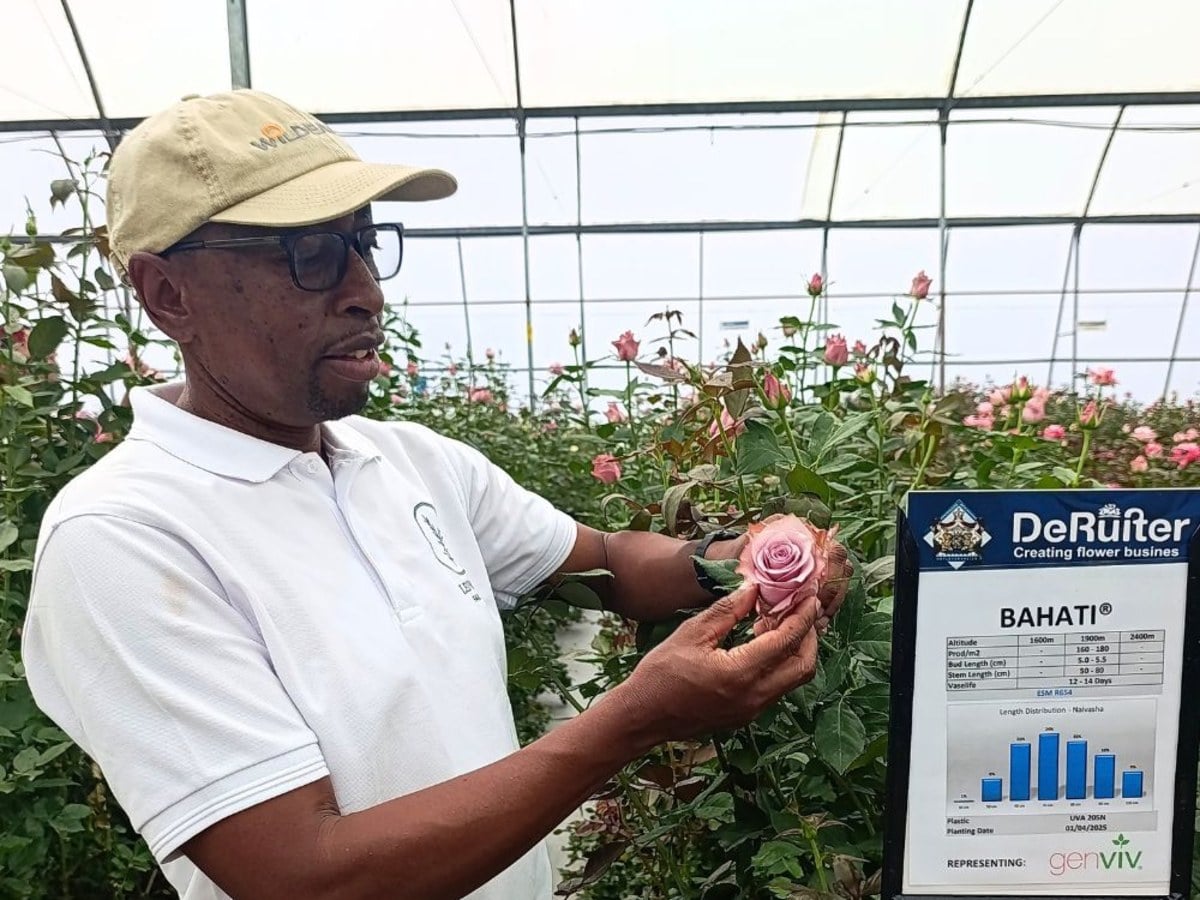
For a trader, the honest question is whether your business is built for daily arrivals by air or for weekly arrivals by sea, and whether you know which of your suppliers is quietly choosing the second one.
What the Sector Should Do Next
- Breeders: say which varieties are sea-freight proven. If the selection started years ago, the results exist. A named list beats a comment under a LinkedIn post.
- Growers: put the thirty-day test in the variety trial, not after it. Nini's rule is cheap to copy: container, thirty days, under three percent, or it does not get planted.
- Traders: decide which rhythm you are built for. Daily by air or weekly by sea, and tell your suppliers, because they are deciding for you right now.
- Prove routes, not the model. Every new lane and every heat-sensitive product gets its own test. A result from Mombasa to Rotterdam says nothing about Quito to Miami.
- Keep the resilience argument next to the CO2 argument. The footprint case wins in Europe. The strike case wins on the farm.
No flowers, no future.
Sources: Nieuwe Oogst, "We zoeken naar rozen die op transport niet zeeziek worden", Haijo Dodde, 4 September 2026 (Carla Ulyate and Iris de Waal, Nini Flowers / Herburg Roses). La República, interview with Carlos Manuel Uribe Lalinde, Flores El Capiro, 7 September 2026. Robin Letcher, De Ruiter East Africa, comment under the author's LinkedIn post, 14 September 2026. Fahad Hassan and Joseph Karanja, LinkedIn, 15 and 16 September 2026; Joseph Karanja, "The Discipline We Built and the Name We Lost", Thursd, 29 September 2026. Capital FM, "Flower farms grapple with backlogs after aviation strike", 2 September 2026 (Kenya Flower Council statement; 2025 export volume). Kenya National Bureau of Statistics, "Economic Survey 2026" (April 2026), for the 2025 export value and volume. Thursd, "Sea Freight and Air Freight: Diversified Cold Chain Logistics", 8 July 2026, and "The Rose Is Going by Sea", 14 July 2026.
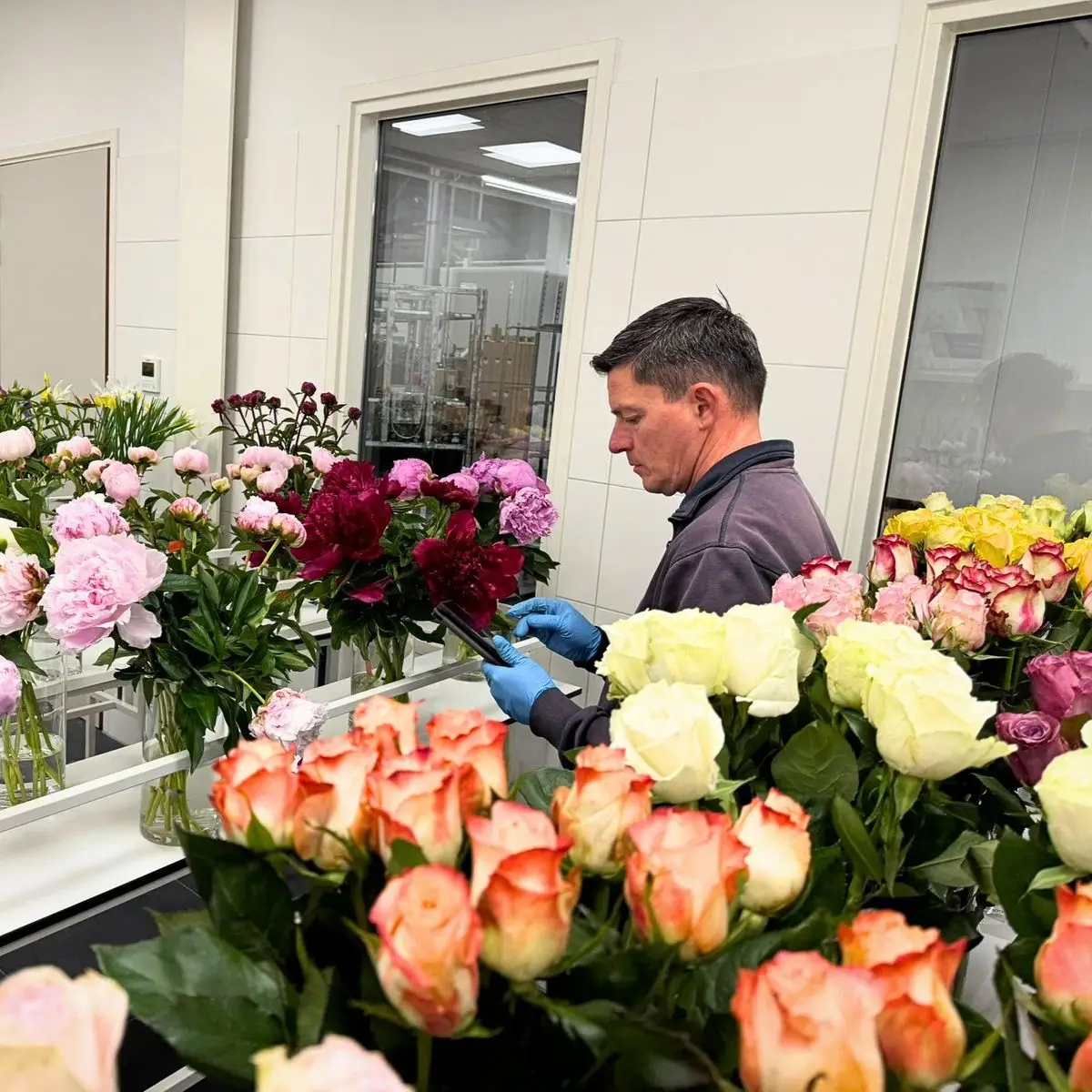
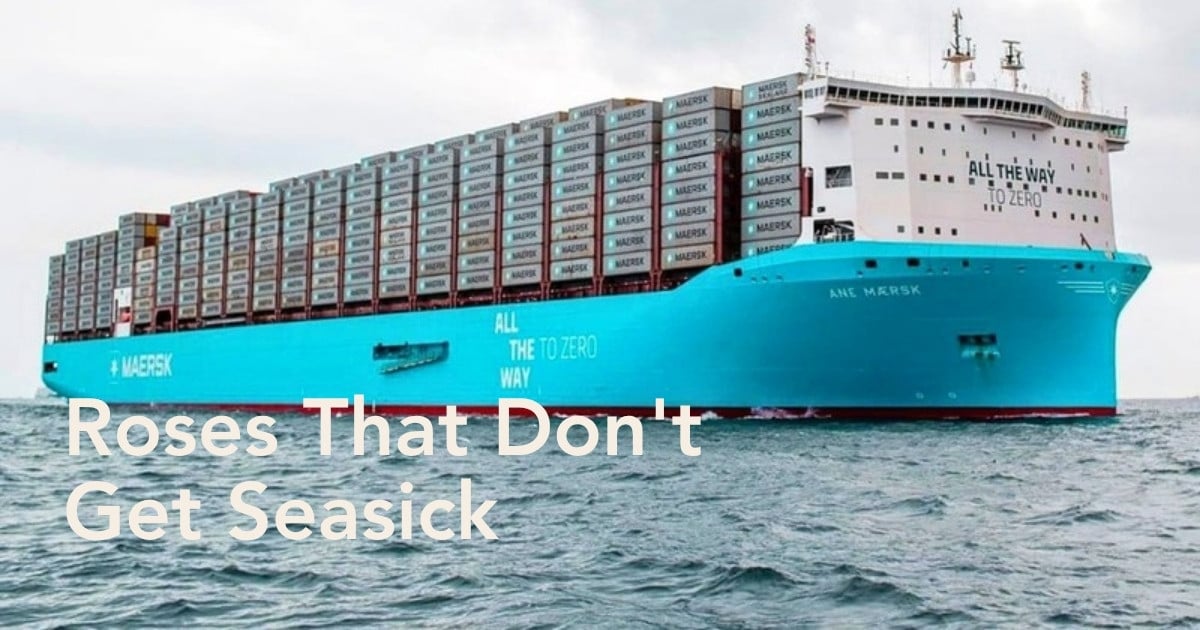
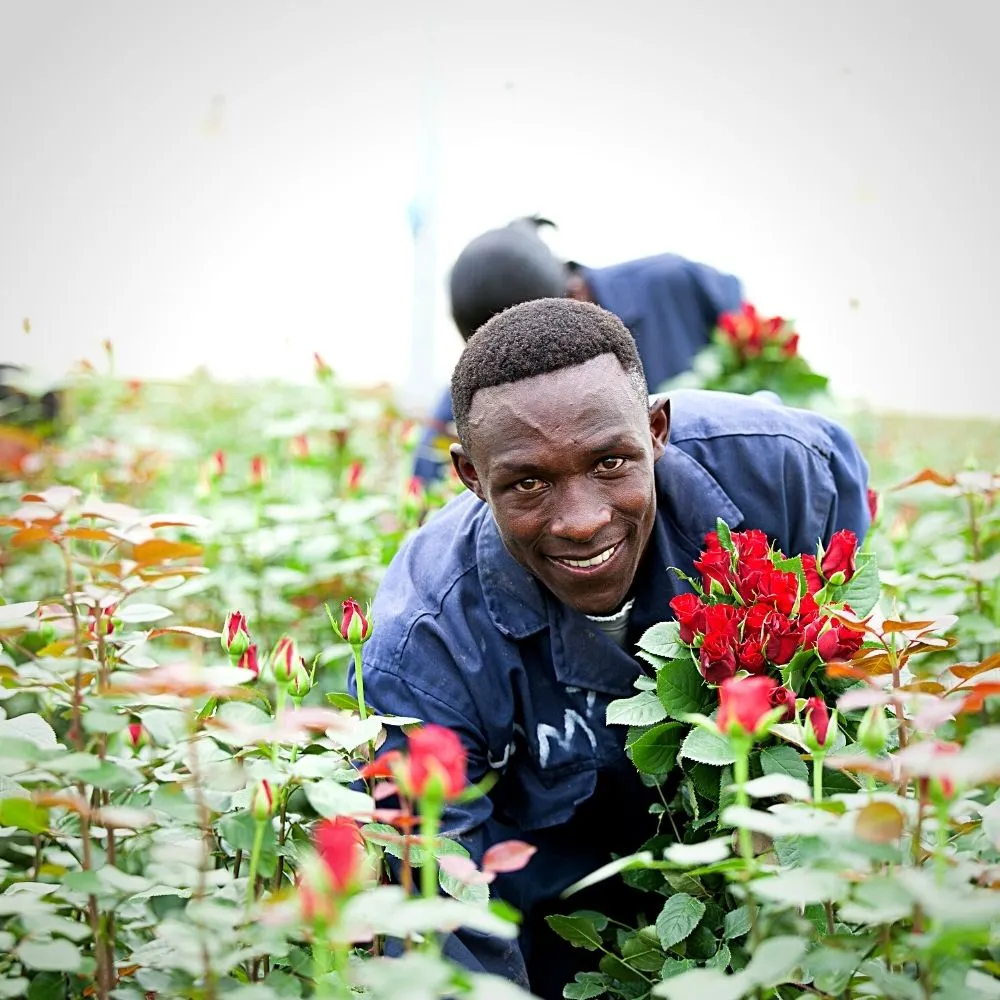
Featured image: cutting roses at Sian Flowers, picture courtesy of Sian Flowers. Header image: a container ship at sea, photo by @maersk_official.