What if your biggest growth opportunity isn't inside your own company, but in the connection with others? In floriculture, we are used to doing business independently. Many companies are family businesses, built up over generations on craftsmanship, entrepreneurship, and a real passion for the product. But when I look at what is coming our way, I increasingly wonder whether we can still solve tomorrow's biggest challenges on our own.
Sustainability. Digitalization. AI. Transparency. Labor availability. Changing consumer behavior. Rising customer demands. Pressure on margins. None of these stop at the gate of a nursery, the office of a trading company, or the door of a flower shop. So perhaps we shouldn't only look at how we compete, but above all at how we collaborate.
Strong on Your Own, Stronger Together
Competition keeps us sharp, and a better product, smarter cultivation, a distinctive assortment, or better service will keep making a difference. But I believe tomorrow's competitive strength will depend less and less on what you can organize within your own walls.

How much knowledge and expertise can you, and do you want to, keep building yourself? Growers, exporters, florists, and breeders can each invest in marketing, data, systems, and research. But when we connect knowledge, data, reach, specialisms, and market insights, something different happens. Not just scale, but a greater ability to create value for the market and the customer.
What I Saw When Six Growers Joined Forces
Years ago, Olaf van der Voort was my very first client when I started as a freelancer. For a long time, I took care of marketing and communication for Van der Voort Potplanten and Van der Voort Young Plants. We started with the basics: what the company stands for, which customers it wants to be relevant to, and how to translate that consistently into marketing, internally and externally. Marketing stopped being a collection of separate actions and became more and more a structural part of the organization.
Then Van der Voort Potplanten became part of Riza Growers. Together with five other family businesses, it bundled sales and marketing, and the marketing work I did for Van der Voort moved to the Riza Growers marketing team. In effect, I lost a client. And yet, from a marketing perspective, I mainly saw a fine development, because of what was taking shape on the other side.
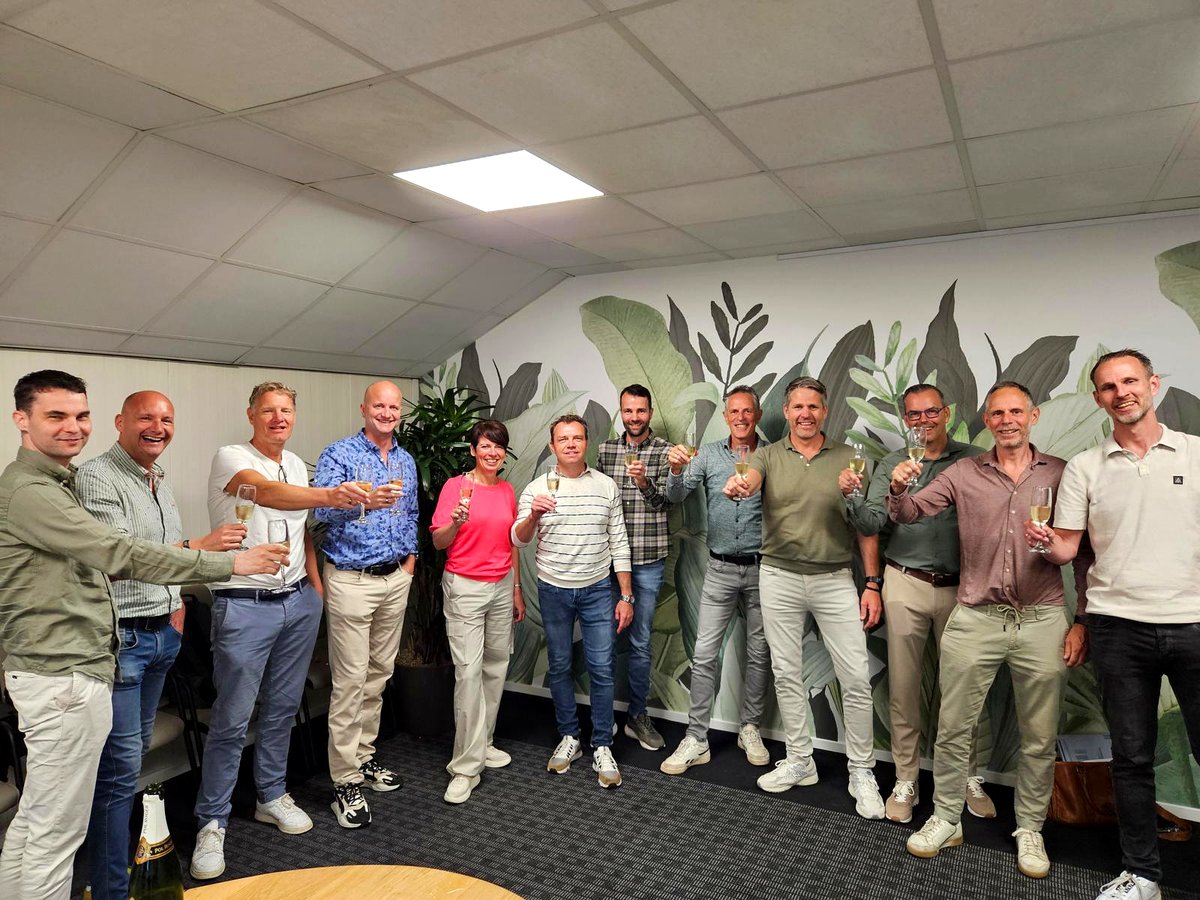
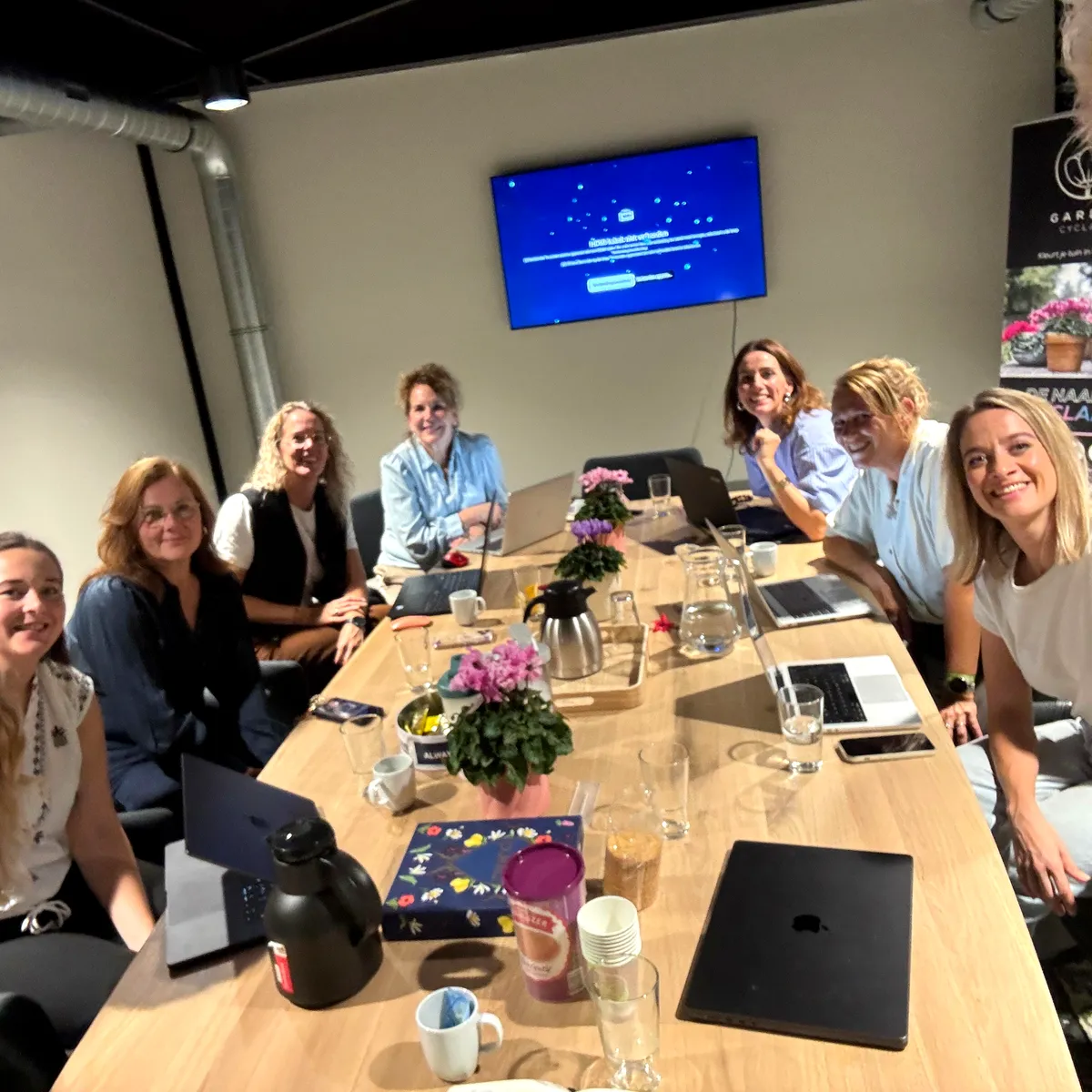
Ter Laak Orchios, Maarel Orchids (not in the photo), Bunnik Bromelia, Karma Plants, Van der Voort Potplanten, and Concorde Plants.
Not Bigger for the Sake of Being Bigger
The six growers brought together products that complement each other instead of competing head-to-head. That created a stronger joint proposition, and working with one collective became more interesting for customers. On the retail shelf, different products could strengthen each other. Account managers gained a broader portfolio, and with it new ways to advise customers and to grow themselves commercially.
Marketing can move to the next level too. Instead of every company organizing its own knowledge, people, resources, and budget, one joint team can work more professionally on brand, market knowledge, data, content, sustainability, and customer support. Of course, you have to build that together, and you often take a step back first before you can move forward together and create more value than you could alone.
Sometimes progress means your own role changes or even disappears. But if entrepreneurs, employees, and customers all become stronger as a result, that is exactly what strategic marketing is about to me. That is what I mean by 1+1=3: collaborating not to become bigger, but to create something none of you could have achieved alone.

Collaboration Means Daring to Let Go
Real collaboration isn't always easy. It means letting go of something: part of your autonomy, your familiar way of working, perhaps your own sales or marketing activities, sometimes even something you have thought of as "ours" for years. That takes trust. You need to be clear about what you stand for, what you add, and where someone else is better than you. That is exactly why I see collaboration as a strategic marketing question. Don't start with what we can do together. Start with where, together, we can create more value for the customer than each of us can alone.
The Same Movement Further Down the Chain
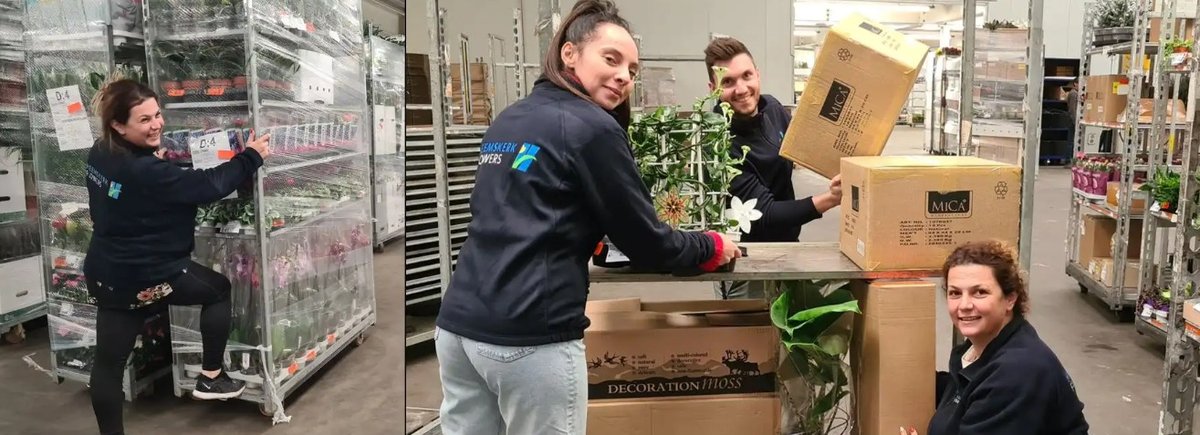
Through my work at Heemskerk Flowers, I see the market changing on the trade side as well. Scale is increasing. For smaller trading companies and, for example, the mobile wholesalers who drive fixed routes to florists, it is getting harder to make the necessary investments in assortment, logistics, systems, and service pay off alone. Independent florists are having a hard time too, in the Netherlands and abroad. And in the Netherlands, another challenge may be on its way: the government's proposal to raise VAT on flowers and plants from 9% to 21% from 2028. That would put even more pressure on the sector.
That doesn't make scaling up the answer in itself. The more interesting question is how we can organize the chain so that we serve the customer better and enough value remains for everyone who plays a role in it. Not how we each protect our own piece, but where we can organize and connect things more smartly, so the whole chain becomes stronger.
Some challenges don't recognize company boundaries at all. Sustainability shows this most clearly. A more sustainable floriculture doesn't happen because one grower lowers their footprint. If packaging doesn't fit the next link, data can't be exchanged, or everyone keeps using their own definitions and systems, we only get so far. And the question I explored in my previous blog, how to keep flowers and plants relevant for future consumers, can't be left to one grower, trader, florist, or marketer. It is a shared responsibility, and above all a shared opportunity.
From Chain to Network
Perhaps we should even look differently at the word chain. A chain sounds linear: the breeder develops, the grower produces, the trader sells, the florist or retailer presents, and the consumer buys. But reality is becoming more of a network. Growers work with growers, breeders with traders, and marketers with data experts. And hopefully, all of them are listening better and better to the people it is ultimately about: the customer and the consumer.
That doesn't mean doing away with competition. But what we compete on may change. Instead of each building the same knowledge, infrastructure, and data, we can build some foundations together and stand out in the value we create on top of them. Perhaps collaboration isn't the opposite of competition. Perhaps being good at it is becoming part of your competitive strength.
Throughout this series, I keep coming back to one conviction: from product to position. Here I would add this. You don't build a strong position only by looking closely at your own company. You also need to understand the position you hold in the bigger picture. Where do you truly add value? Where do you need others? And perhaps even more important: where do others need you?
For me, that is one of the most important strategic marketing questions for the years ahead, because the biggest growth opportunities don't only arise within organizations. More and more, they arise between them. So where is your biggest growth opportunity: within the walls of your own company, or in the connection with others?