AI comes up in almost every marketing conversation these days. We use ChatGPT to produce copy, social posts, translations, and newsletters faster, and we ask AI for ideas on campaigns and presentations. In the floral and horticultural industry, both in the Netherlands and internationally, I see curiosity growing too. But I also wonder: are we mainly using AI to do what we already did, only faster? Or are we also using it to organize marketing in a fundamentally different and better way?
For me, that is the interesting question. AI is not only about efficiency. It touches on how we gather knowledge, understand markets, make choices, and translate strategy into daily practice.
From Producing Faster to Understanding Your Market Better
In the first four blogs of this series, I took one step at a time: from product to market, from selling today to building for tomorrow, from marketing as communication to marketing as a strategic discipline, and from marketing as an executing function to marketing at the management table. AI adds a new dimension to all of this.
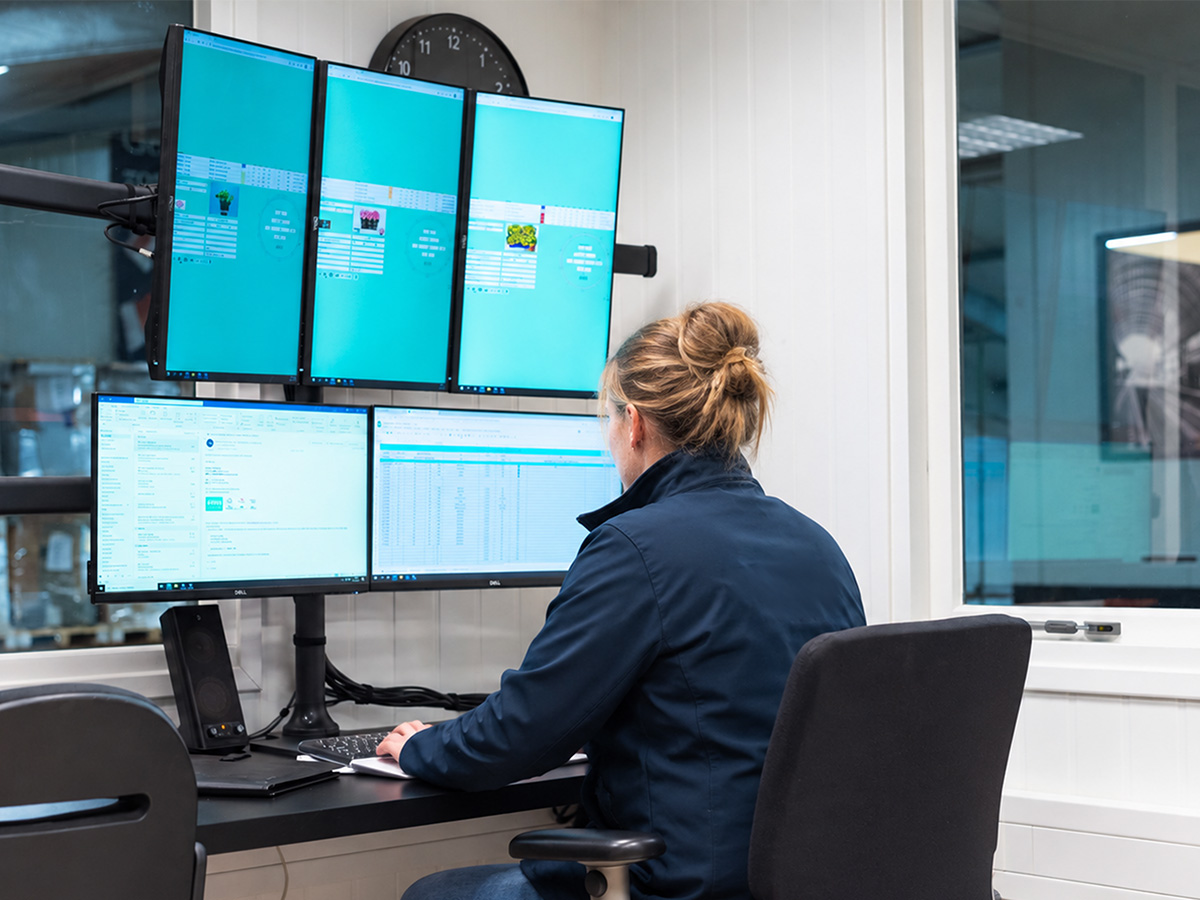
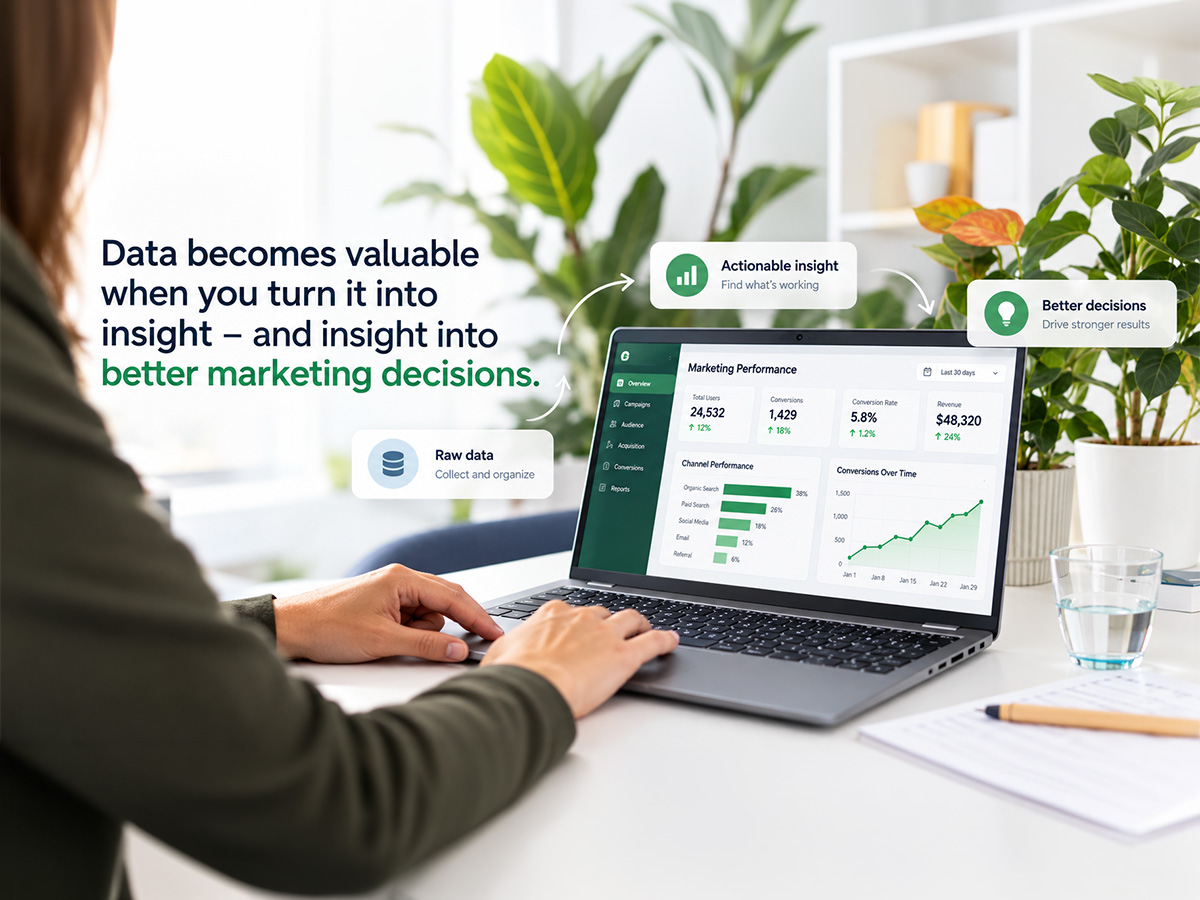
Companies often hold an enormous amount of knowledge: customer conversations, sales data, market information, website behavior, research reports, and the experience of account managers. But it is usually spread across different places and people. AI can help connect it, recognize patterns, and raise new questions.
The question then shifts from "Can AI help us write a newsletter faster?" to "Can AI help us understand our market and customers better?" I find the second one far more interesting.
More Content Does Not Mean More Relevance
At the same time, I see a risk. The easier content is to produce, the more of it there will be, but more content doesn't automatically mean more relevance. When everyone can create texts, images, and campaigns faster, other questions become more important. What do we stand for, who do we want to be relevant to, and what value do we add?
AI can do a lot. But it doesn't decide which position your company should choose in the market. That still takes market knowledge, entrepreneurship, human experience, and strategic choices. Technology speeds things up. If you don't know which way you want to go, you mostly end up going the wrong way faster.
What AI Tells Buyers About Your Company
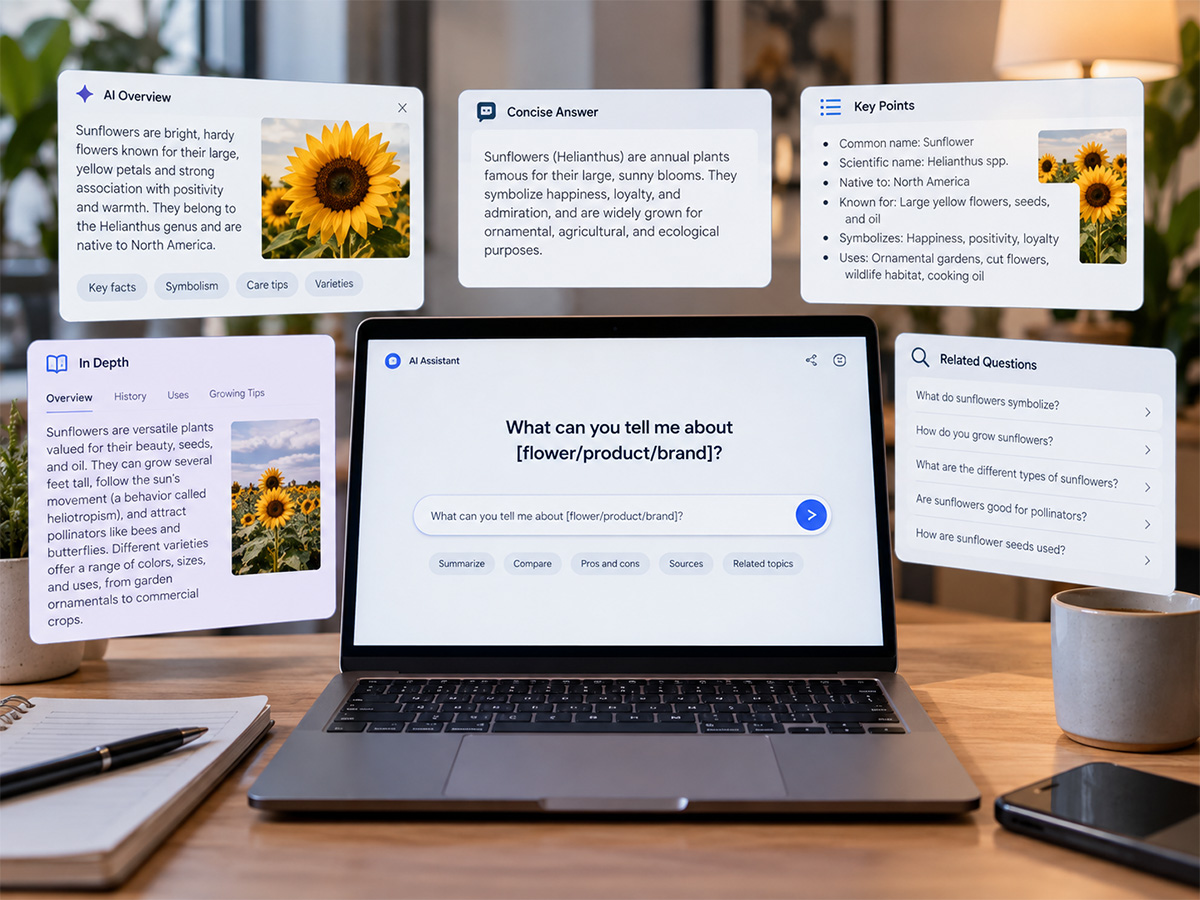
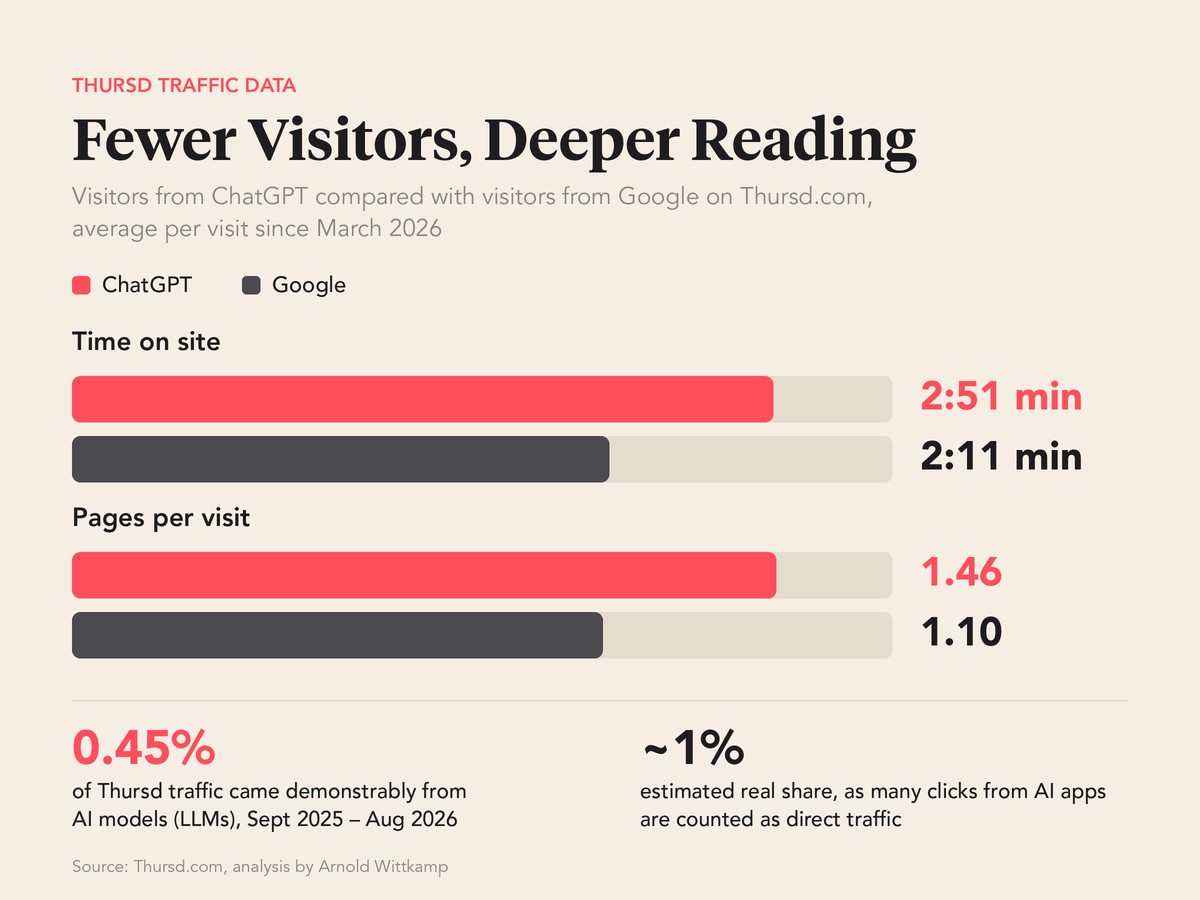
At Thursd, the platform where this series appears, you can see AI also changing how people find and interpret information about companies, brands, and products. Arnold Wittkamp of Thursd ran the numbers for me. Over the twelve months from September 2025 through August 2026, about 0.45% of Thursd's traffic demonstrably came from large language models (LLMs) such as ChatGPT, Claude, and Gemini. The real share is probably higher, because Google Analytics has only registered AI assistants as a separate channel since May 2026. Arnold estimates it is closer to 1%.
That is a small share, and it isn't growing at Thursd right now. But that is exactly what makes it interesting. More and more often, people get their answer inside the AI environment itself, without ever clicking through. That raises a more fundamental marketing question: which information does AI use to put that answer together?
Which Content AI Sends Visitors To
At Thursd, the pattern is clear. AI mainly sends visitors to articles that answer a specific question in depth and have been online for some time. Think of specific flowers, the best flower accounts on Instagram, vertical gardens, or famous flower paintings.
Visitors who click through from ChatGPT also behave differently. Since March, they have stayed on Thursd for an average of 2 minutes and 51 seconds and viewed 1.46 pages. Visitors from Google stay 2 minutes and 11 seconds on average and view 1.10 pages. So there are few of them, but they seem to go deeper into the subject.
When AI Gets Your Brand Wrong
Thursd is now also looking at the other side: what do AI models actually say about a brand or product when a buyer asks about it directly? That is where things can go quite wrong. For one breeder, four of the five AI answers suggested a particular flower color was dyed or not available commercially, even though that color is real and the flower is on the market. One model even referred to Etsy and a supplier of dyed flowers. Asked about the brand name, a model linked it to a security company in Singapore.
That gives positioning an extra meaning in the age of AI. It is no longer only about "Can people find my company?" It is also about "Is what AI says about my company and products correct when I'm not there to explain?"
A simple exercise for every entrepreneur and marketer in our industry: ask different AI models exactly the questions your customers, florists, retailers, or buyers might ask about your company and products. What do they tell you? Which sources do they use? And above all, do you recognize the position you want to hold in the market?
Using AI as a Sparring Partner at Greenhouse Sustainability
In my work with Greenhouse Sustainability, I've seen how AI can help on the other side of marketing, too. Two years ago, I wrote a marketing plan for Greenhouse Sustainability aimed at the Dutch horticultural sector, with its various footprint tools at the center.
Early this year, we took a fresh look at that plan, and this time I deliberately used AI as an extra sparring partner. Not by asking it to "write a new marketing plan," but by using it to analyze our existing strategy, market information, experience, and open questions. Which assumptions deserve another look? Which target groups offer potential? Where can we sharpen our approach?
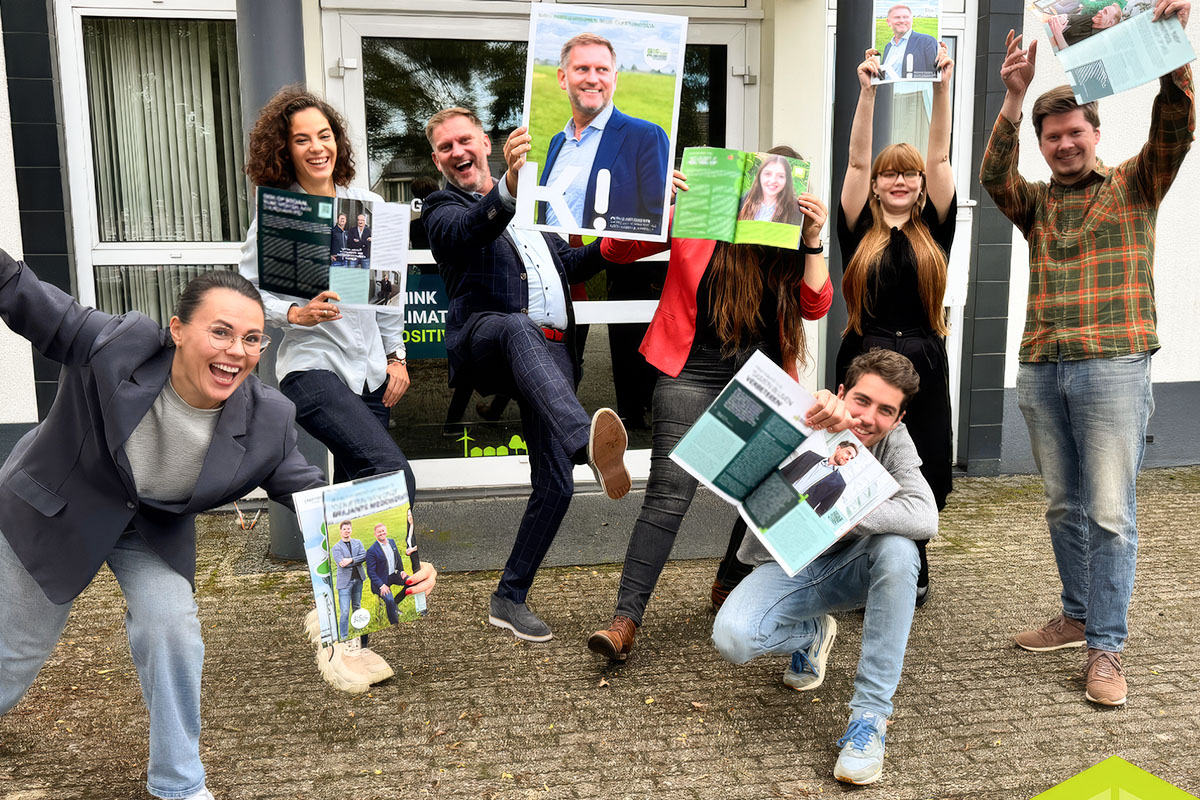
We did the same with our online marketing. After a year of structural work on social media, we had data. By combining those figures with our own evaluation and using AI for further analysis, we sharpened our online marketing policy.
That, to me, is the important change. AI didn't come in at the end to write a text. It helped earlier, with analyzing, reflecting, and making better choices. People still decide which insights matter.
AI Doesn't Start With the Tool
This is also changing our profession. The marketer of tomorrow doesn't have to write every text or run every analysis from scratch, but does need to get better at asking questions. Which data can we connect? What patterns do we see? What does this mean for our customers? And is what AI gives back actually correct, including about our own brand and products?
That calls for different skills. Less producing, and more analyzing, interpreting, connecting, giving direction, and keeping watch. Perhaps AI is making visible what marketing should always have been: the link between market, customer, strategy, and organization.
We are only at the beginning, and I don't know what our profession will look like in five years. But one thing is becoming clearer to me: AI doesn't replace a clear strategy. It amplifies the effect of the choices you make. If you have a clear positioning, good market knowledge, relevant customer insights, and usable data, AI can help you see connections, ask new questions, and reach better insights faster. If that foundation is missing, you can mainly produce more of the same, very efficiently.
So perhaps the most important AI question for our industry is not "What can we do with AI?" but "What do we want to achieve as a company, and where can AI help us make better choices?" After what Thursd found, I would add one more: "Do you actually know what AI is telling people about your company and products today?"
Try it. What you get back might start a very different marketing conversation. None of us will figure this out alone. The future of floral marketing will take shape through experimenting, sharing knowledge, and learning from each other.