I asked her the question about pesticides on flowers I had been building up to for an hour. Is a bouquet dangerous for the consumer? She said no. According to the Dutch food and product safety authority, the risk is low, and that is how she reads it herself.
That is the chair of Pesticide Action Network Netherlands, on the record, saying the thing our sector has spent five years failing to get anyone to believe.
In her written comments on this piece, she added that this does not let the buyer off the hook. Municipalities and churches that buy flowers grown with pesticides banned in the EU are, in her view, quietly endorsing their use.
Who Is Actually Saying This
Margriet Mantingh is a chemist, biochemist, and clinician. Ten years at the Umweltinstitut in Munich. Seventeen years at WECF. Co-founder and chair of PAN Netherlands. She has been retired for years and calls this her mission rather than her job.
I want to be honest about why that matters more than the sentence itself. PAN has come up in my podcast something like ten times, always named by somebody else, always as the party on the other side. Never once by anyone from PAN. Putting the person who runs the organization at the table and asking her directly is a different exercise from arguing with an idea of her.
It started with frogs. The nineteen seventies, a mixed farm where her father worked without chemicals until labor got expensive. Then the sprays arrived, and the swallows went, and the larks, and the sparrows. Her mother reached for the hand pump when there was aphid on the roses. DDT. Aphids dead, and nobody thinking any further than that.
The Two Things I Did Not Know
Both of these are hers, and I am giving them as hers rather than as established figures, because that is what they are.
The first: she says there are insecticides where ten grams per hectare is enough. Less than a tablespoon across a hundred meters by a hundred meters. Her point is not that the quantity is alarming. Her point is that a dose that small does not show up in a regular residue measurement at all, although it is enough to kill the target pest. Which means a clean residue report is not the same document as a clean field.
The second is the one I have not stopped thinking about. She says Wageningen could no longer reproduce cabbage white butterflies for research. One microgram of fipronil per kilo of the cabbage the caterpillars had fed on, and the butterflies failed to emerge from their pupae, or emerged without wings or without legs. The ones that emerged intact reproduced poorly.
You can hold that alongside everything I have written about how one word flattens this entire debate, and both remain true. Detection is not dose, and dose is not risk. And a dose too small to detect can still end a population.
Where We Did Not Agree, and I Am Not Smoothing It Over
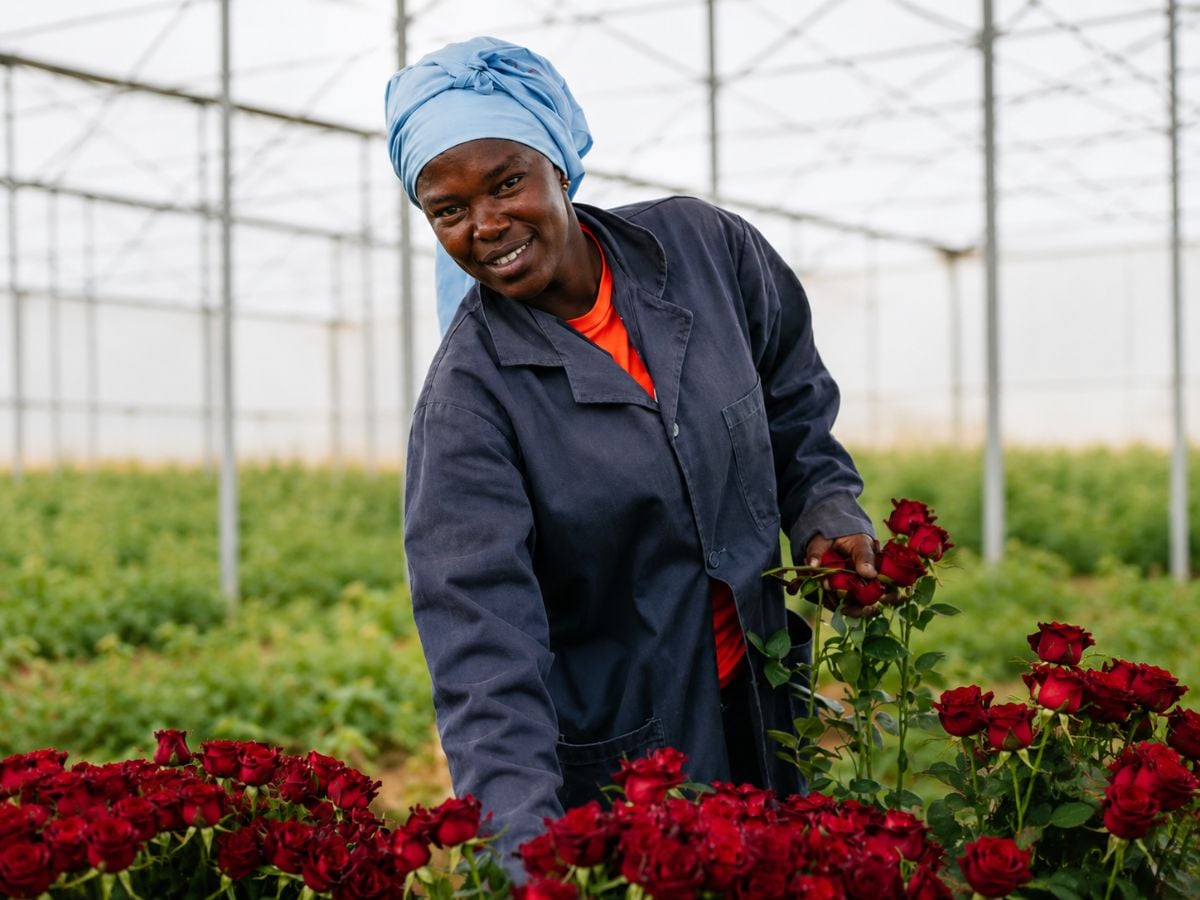
Kenya. I have watched schools, jobs, and an economy appear there over fifteen years, built on flowers. The Kenya Flower Council counts more than 200,000 people working directly in that export, which earned about KES 81.3 billion in 2025, according to the Kenya National Bureau of Statistics. Her position is to grow as much as possible in the Netherlands. I think that is too blunt an answer to a question with people in it, and I said so.
We did not resolve it. That disagreement is the heart of the episode, and I am leaving it exactly where it stands.
The consumer was never the problem. The grower, the florist, the person unpacking boxes eight hours a day, and the soil where it grows: that is where the risk lives, and that is not where the argument has been happening.
What Her Concern Actually Is, and Why the Sector Should Read It Carefully
Her worry sits with the grower. With the florist who handles this material eight hours a day. With the people unpacking and making bouquets. And with the nature in the place where it grows.
That is a completely different argument from the one the trade keeps preparing to have. We keep defending the bouquet on the kitchen table, because that is what the headlines attack. Meanwhile, the person who leads the campaign has already conceded that ground and moved to occupational exposure and biodiversity, where our answers are thinner, and our data is worse.
For a grower that means the next serious question will not be about residue on a stem. It will be about what your people are exposed to and what happens in the ground around your farm. For a florist, it means the same conversation arrives at the counter eventually, and "it is within the limits" is an answer built for the wrong question. I have argued before that the residue rules for flowers were written for food and never rewritten. This is the other half of that.
Her Proposal Was Not a Campaign, and Somebody Already Built It
What she asked the sector for was not a boycott and not a label. Put the spray registrations together. Look collectively at what can come out, and at who manages with the least. Measure. And her own words on top of it: it really does not have to come from PAN.
In her written comments on this piece, she added a second ask. Mantingh advises MPS and FSI to make sure that the growers they cover outside the EU only use pesticides that are authorized within the EU. She sees that as an advantage for the European market. Her view is that pesticides too dangerous for people and the environment in Europe, and banned there for that reason, are too dangerous elsewhere as well.
Here is the part that was not in the conversation at all.
Florverde Sustainable Flowers holds the Consumer Goods Forum's SSCI recognition under its Environmental Benchmark for Primary Production, granted on 6 August 2026. Florverde is the first certification scheme anywhere in the world to pass that benchmark for any primary production, not only flowers. It already held the social benchmark from 2024. It covers more than 220 farms and 10,900 hectares across Colombia and Ecuador, and its indicator system has been collecting exactly this data for more than twenty-five years: water, energy, carbon, and crop protection use, per supplier, verifiable, with traceability from harvest through to shipment.
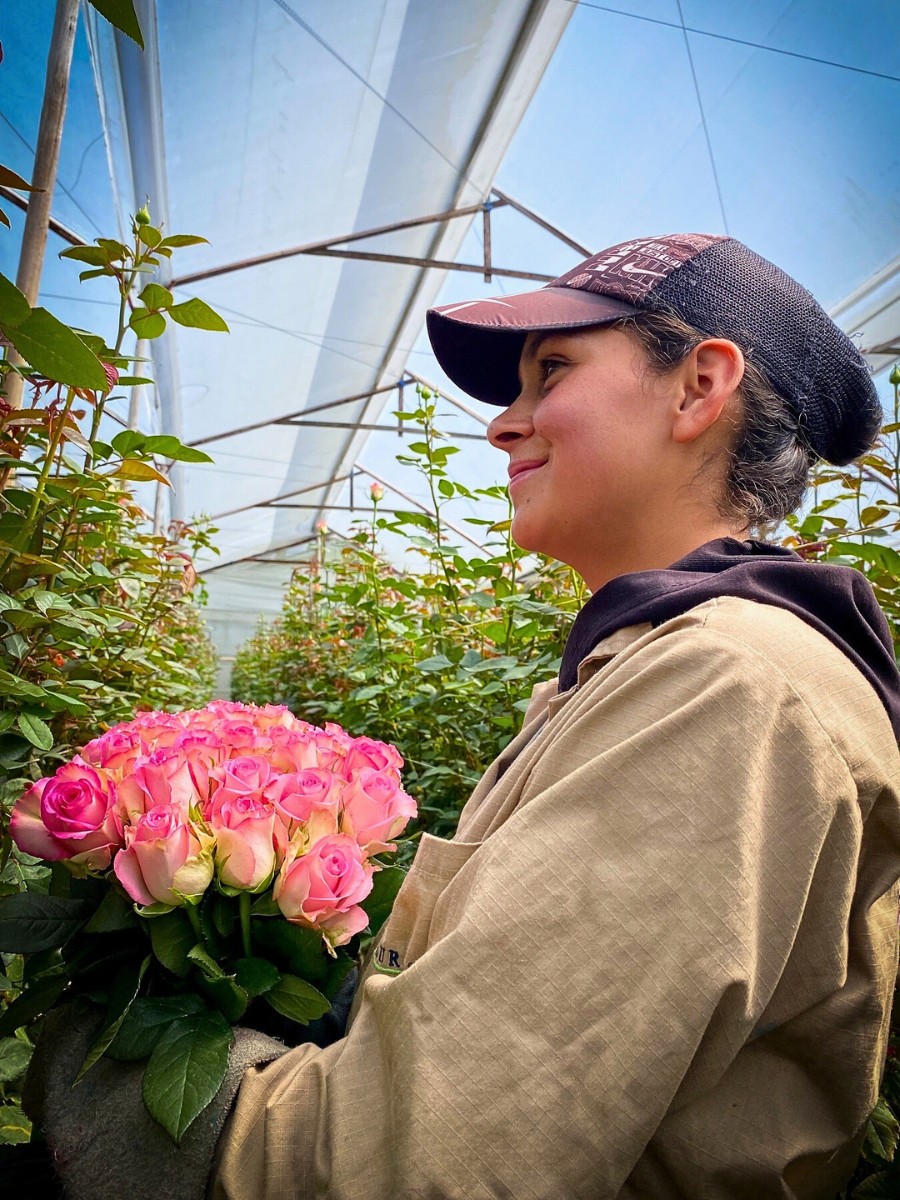
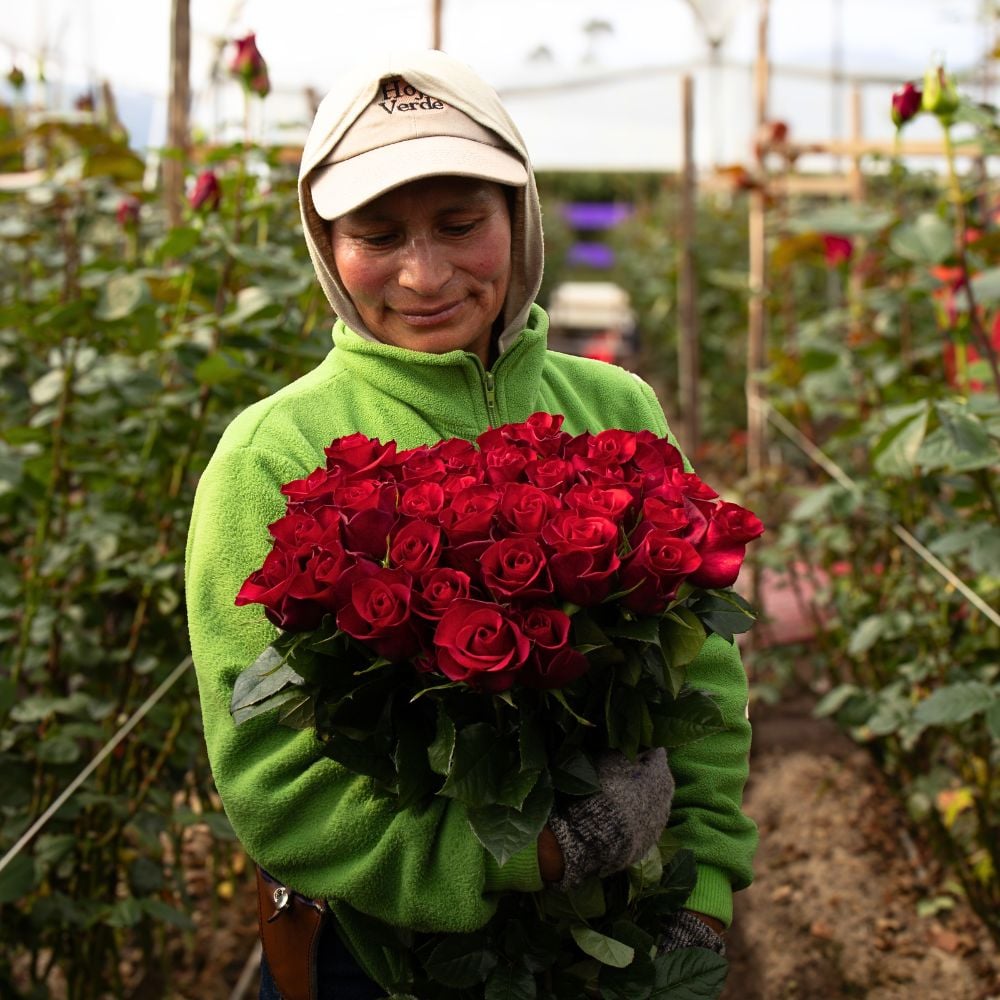
That is Mantingh's proposal, built, audited, and independently benchmarked, sitting in a market she was not discussing. Individual growers are doing the same thing at farm level. Hoja Verde in Ecuador runs its own biological laboratory producing microorganisms for pest control, which is the practical version of the same idea and the reason that farm is willing to publish a claim rate.
None of that came up at the table. None of it reaches the journalist writing the next residue story either. That is not the journalist's failure. It is ours. We produce the evidence and then file it where nobody outside the room will ever look at it. See also our own reporting on what is actually replacing chemical inputs on flower farms.
What the Sector Should Do Next
- Stop defending the bouquet. The chair of PAN Netherlands has publicly said the consumer risk is low. Quote her, once, accurately, and then move the conversation to the ground you actually have to defend.
- Pool the spray registrations, sector-wide. It is the one thing she asked for in the conversation, it costs nothing anyone does not already record, and whoever refuses it will be the story.
- Her second ask: no EU-banned pesticides on certified lists. Mantingh wants MPS and FSI to remove every pesticide that is banned in the EU from the lists their growers outside the EU may use.
- Publish the occupational exposure data. Growers and florists are where her concern sits. If the sector has good numbers there, nobody outside has seen them. If it does not have them, that is the gap to close before somebody else measures it for us.
- Put the certification evidence in front of buyers, not in a PDF. A world-first environmental benchmark that never reaches the people arguing about pesticides is a communication failure, not a certification one.
- Invite the other side to the table more often. Ten mentions across sixty episodes before anyone from PAN was actually in the room is a bad ratio, and it was mine to fix.
She is retired. She calls this her mission. We have people who do this for a living, and we are being out-argued by a volunteer with better sourcing.
No flowers, no future.
Sources: Goede Bloemen en Goede Planten podcast, episode 72, Margriet Mantingh, published 2 September 2026. Asocolflores press release, "Florverde Earns SSCI Environmental Recognition", 3 September 2026, recognition granted 6 August 2026, quoting Ximena Franco, Director of Florverde Sustainable Flowers, and Didier Bergeret, Director of Sustainability at The Consumer Goods Forum. Thursd, "From Rose Farm to Global Floral Brand: The Hoja Verde Story", 26 August 2026, and "What Is Florverde Sustainable Flowers". Kenya National Bureau of Statistics, "Economic Survey 2026", April 2026.
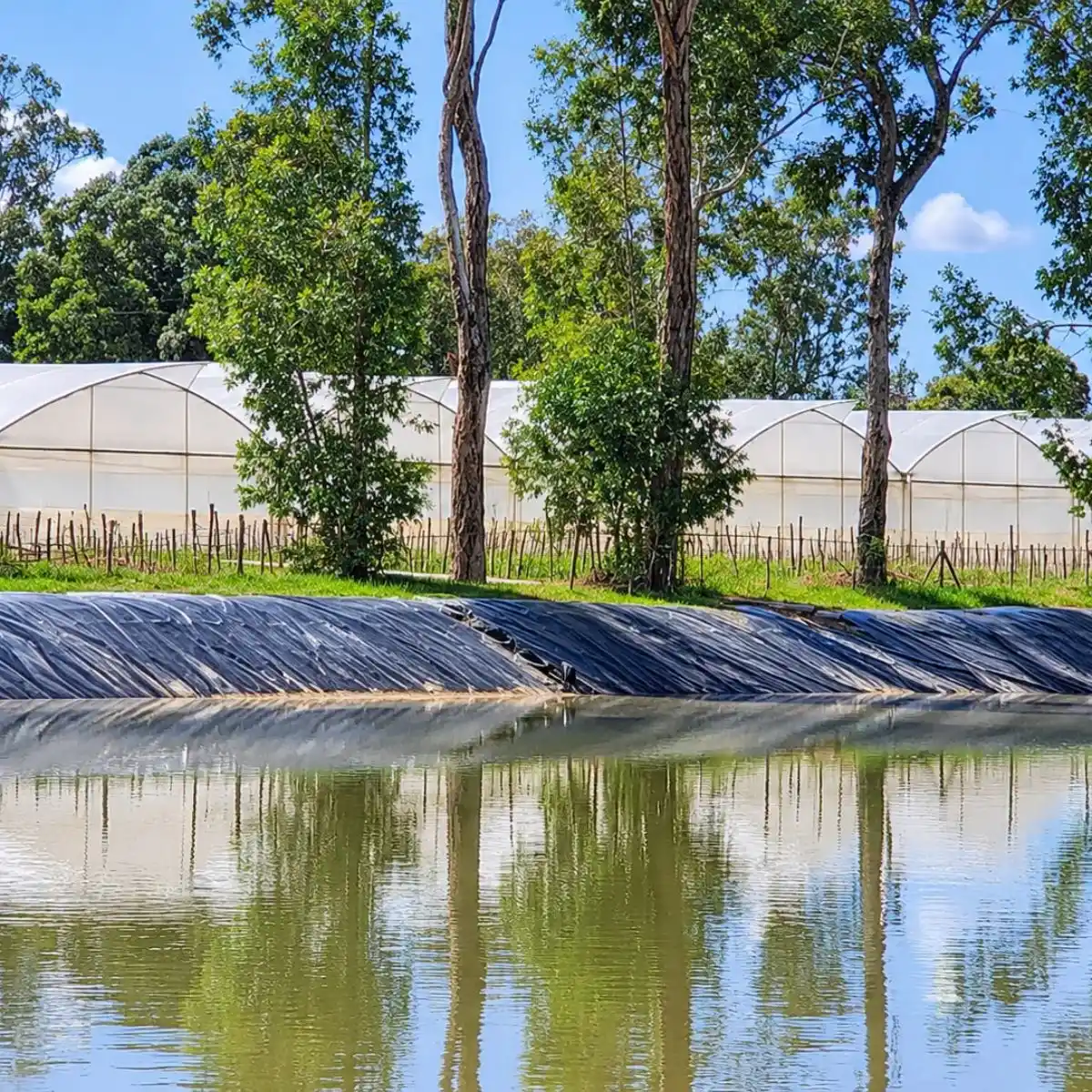
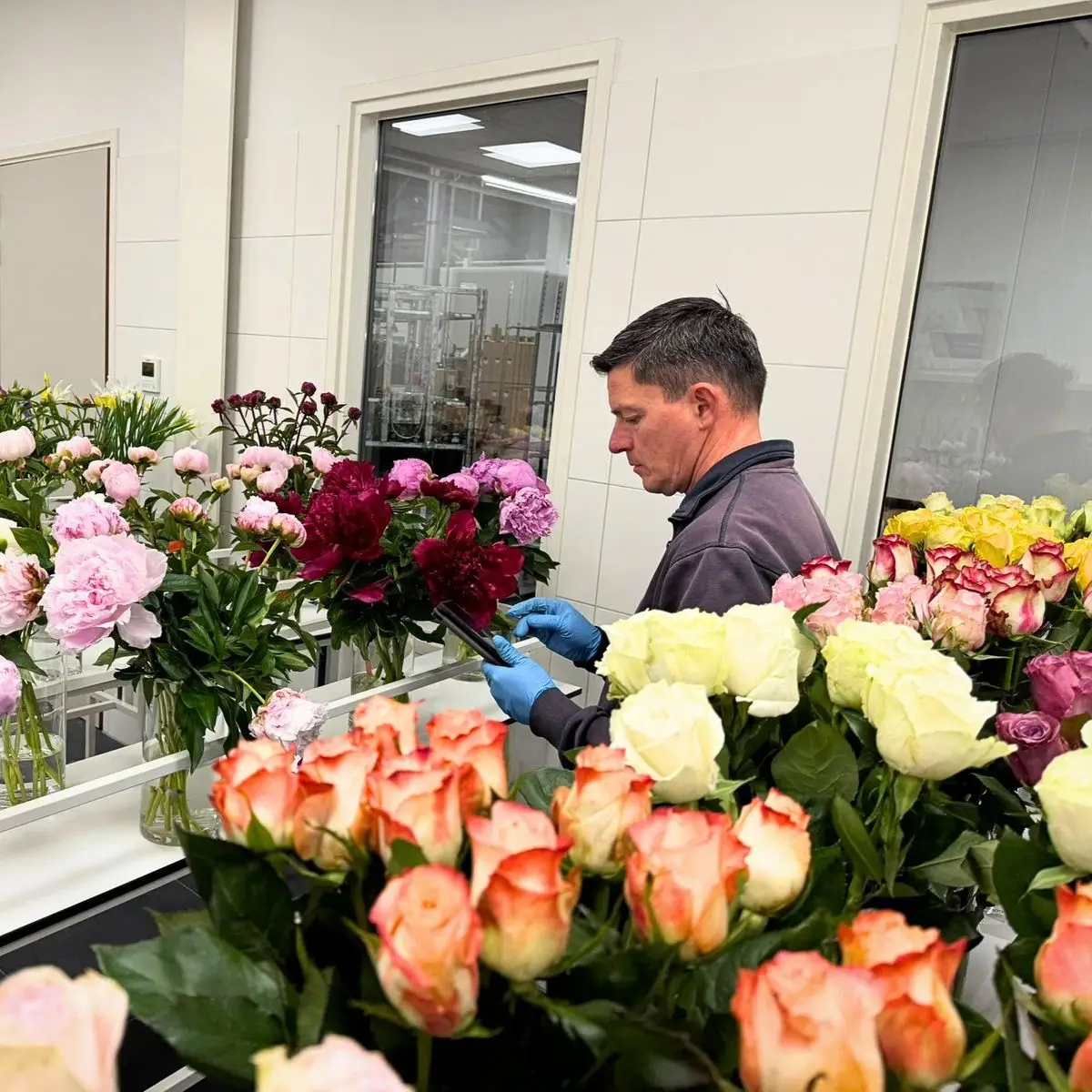
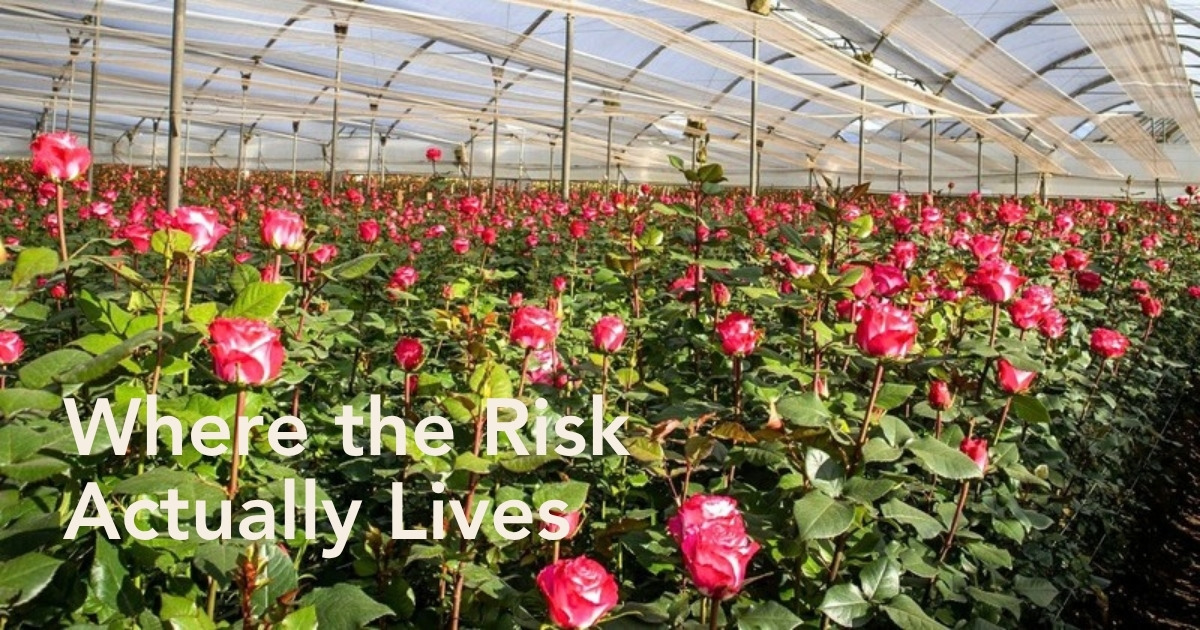
Featured image and header image: roses at Hoja Verde in Ecuador, pictures courtesy of @hojaverderoses.