Most of the Monsteras sold as rare aren't rare. And the one that genuinely is, the true obliqua, is almost never what's actually in the pot.
That's worth knowing before you spend money.
There are around 50 accepted Monstera species in the genus and only a handful ever reach a shop. What you meet on a plant table is a small, repeated set, plus three plants that aren't Monstera at all.
So here's the full types of Monstera list, what actually separates them, and where the trade names stop matching the botany.
The Most Popular Types of Monstera
There are many types of Monstera plants. This is a Monstera variety list of the ones you'll actually find. New cultivars keep arriving, and some of these Monstera types are far harder to source than others.
- Monstera deliciosa & Monstera deliciosa Tauerii
- Monstera borsigiana
- Monstera adansonii
- Monstera siltepecana
- Monstera pinnatipartita
- Monstera dubia
- Monstera sp. Peru
- Monstera obliqua
- Monstera standleyana
- Monstera lechleriana
- Monstera 'Thai Constellation'
- Monstera 'Albo Variegata'
- Monstera 'Aurea Variegata'
- Monstera Esqueleto

Why Monstera Took Over the Room
The last time large-leafed plants ran interiors like this was the 1970s. It came back for a reason, and it isn't nostalgia.
It's the leaf. Big, split, architectural, readable from across a room. One mature plant does more for a space than a shelf of small ones, which is why it wins in apartments where floor space is the scarce thing.
And people keep them alive. That matters more than it sounds. A plant that survives a beginner gets recommended, and a plant that gets recommended keeps selling.

These are the Monstera varieties:
1) Monstera Deliciosa
The one everyone means when they say Monstera. Central American, big perforated leaves, and the only one in common trade that produces an edible fruit.
It tastes somewhere between pineapple and banana, and you'll almost certainly never see it fruit indoors.
There are less common and locally developed cultivars inside the Monstera deliciosa group. Growers select for size, growth habit and variegation, so new ones keep appearing.
It's also the plant behind the Swiss cheese nickname, and it's the workhorse of the whole Scandinavian interior look. That is covered in 5 Houseplants That'll Help You Achieve a Scandinavian Interior.
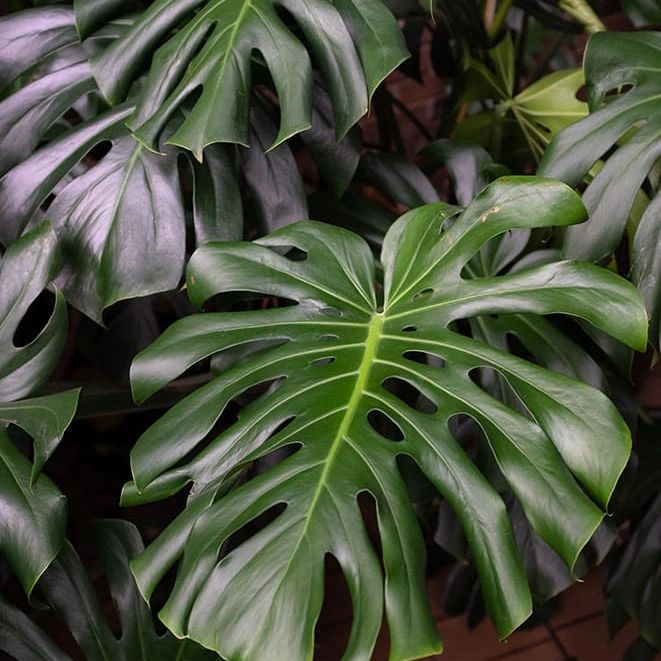
Monstera Deliciosa Tauerii
The Monstera deliciosa Tauerii is more compact and slower. Same fenestration as it matures, less room needed. If you like the look but don't have the wall for it, this is the honest answer.

2) Monstera Borsigiana
A close relative of deliciosa. Faster, smaller-leaved, easier to fit.
Two Types of Monstera With Subtle Differences
Deliciosa and borsigiana get mixed up constantly, including by sellers. The tell is node spacing. Deliciosa leaves wider gaps between the nodes where leaves and aerial roots come out. Borsigiana sits tighter, grows quicker, and carries slightly smaller leaves.
On a young plant it's genuinely hard to call. On a mature one it isn't.

3) Monstera Adansonii
The Swiss cheese vine. Central and South American, fast, and happy trailing out of a basket or climbing if you give it something to hold.
It's been on the top 10 most wanted rare houseplants list for years now.
You'll still see it traded as Monstera friedrichsthalii. That's an old name that stuck around in the trade long after the botanists moved on.
Look at the leaf and you can see why it sells. The oval-shaped holes sit inside the blade instead of cutting in from the edge, which is the quickest way to separate it from a young deliciosa.

4) Monstera Siltepecana
Silver-green, elongated leaves with a metallic finish that's genuinely unusual in the genus. It climbs. Give it a pole and it changes shape as it matures, which catches people out.

5) Monstera Pinnatipartita
Deep splits that run all the way to the midrib, on a glossy leaf. It holds a room without much around it.
6) Monstera Dubia
Small heart-shaped leaves that lie flat against whatever they're climbing, like they've been pressed there. It's a shingling plant, and it only makes sense once it has a surface to grip.
7) Monstera sp. Peru
Also sold as Monstera Karstenianum. Thick, dark green leaves with a texture that looks almost quilted. No fenestration, which surprises people who expect holes from anything called Monstera.

8) Monstera Obliqua
More hole than leaf, paper-thin, and the one collectors chase. It's expensive and it's difficult, and there is a separate piece on why it's only for the most avid plant lovers.
Here's the part the shops skip.
The true obliqua is almost never what's on sale. What Dutch nurseries actually grow and ship under that name is usually Monstera Obliqua Peru, a sturdier plant with the same startling perforation.
Kwekerij Mostert in Nieuwerkerk aan den IJssel is one of the growers who made it a specialty. Four generations, started in vegetables, now houseplants.
Owner Ruben Mostert explained what it costs on the greenhouse floor. "Sometimes it throws out long runners. Fun at home, but we want compact, bushy plants with some body to them. That means constant fine-tuning in the greenhouse."
And he's blunt about the reputation for fragility. "Despite its fragile appearance, it is a strong plant that also does well in spaces with less light." That's the opposite of what most care guides say, and it comes from someone growing it at scale.
The full conversation is in the profile of the Monstera Obliqua Peru at Kwekerij Mostert.


9) Monstera Standleyana
The cobra plant. Long leaves splashed white to yellow, and a climbing habit that suits a pole better than a shelf.

10) Monstera Lechleriana
Large glossy leaves, plenty of holes, and an elongated shape that gets it confused with adansonii. It's the bigger, slower one of the two.

11) Monstera 'Thai Constellation'
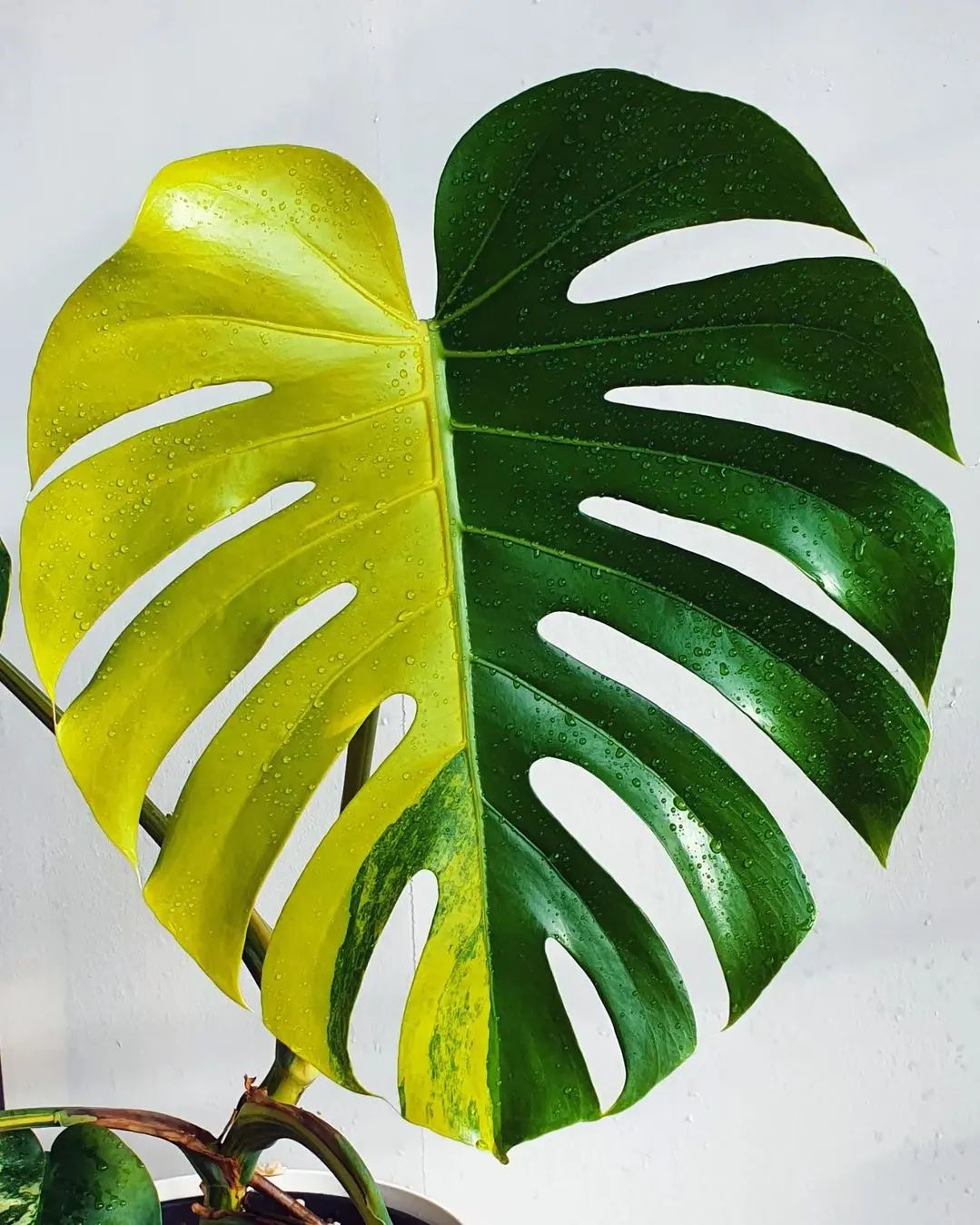
A deliciosa cultivar with creamy-yellow speckling across the leaf. Unlike the other variegated types, it's propagated by tissue culture, so the pattern comes back reliably instead of drifting. That's the reason it costs less than an Albo and is easier to find. See also the piece on all the variegated Monsteras together.


12) Monstera 'Albo Variegata'
White to cream sectors on a deliciosa. This is the one that made the price headlines, and it's still one of the most expensive houseplants in trade.

13) Monstera 'Aurea Variegata'
Same idea, yellow instead of white. It gets called the Lemon and Lime-Colored Swiss Cheese Plant, and for once the nickname is accurate.
Variegation is a genetic mutation, not a growing technique. The pale sectors carry no chlorophyll, so the plant grows slower than a green one and no amount of feeding brings the pattern back once it reverts.
A variegated deliciosa is the same species as the plain one. It just carries an unstable mutation a grower has kept alive by cutting.
That instability is the whole price story. Slower growth, propagation only by cutting, and a pattern that can vanish. Supply stays short because the plant makes it short.
There are more variegated varieties of Monstera than these. The naming follows the coloring, and it mostly attaches to three types of Monstera plants: deliciosa, borsigiana and adansonii.
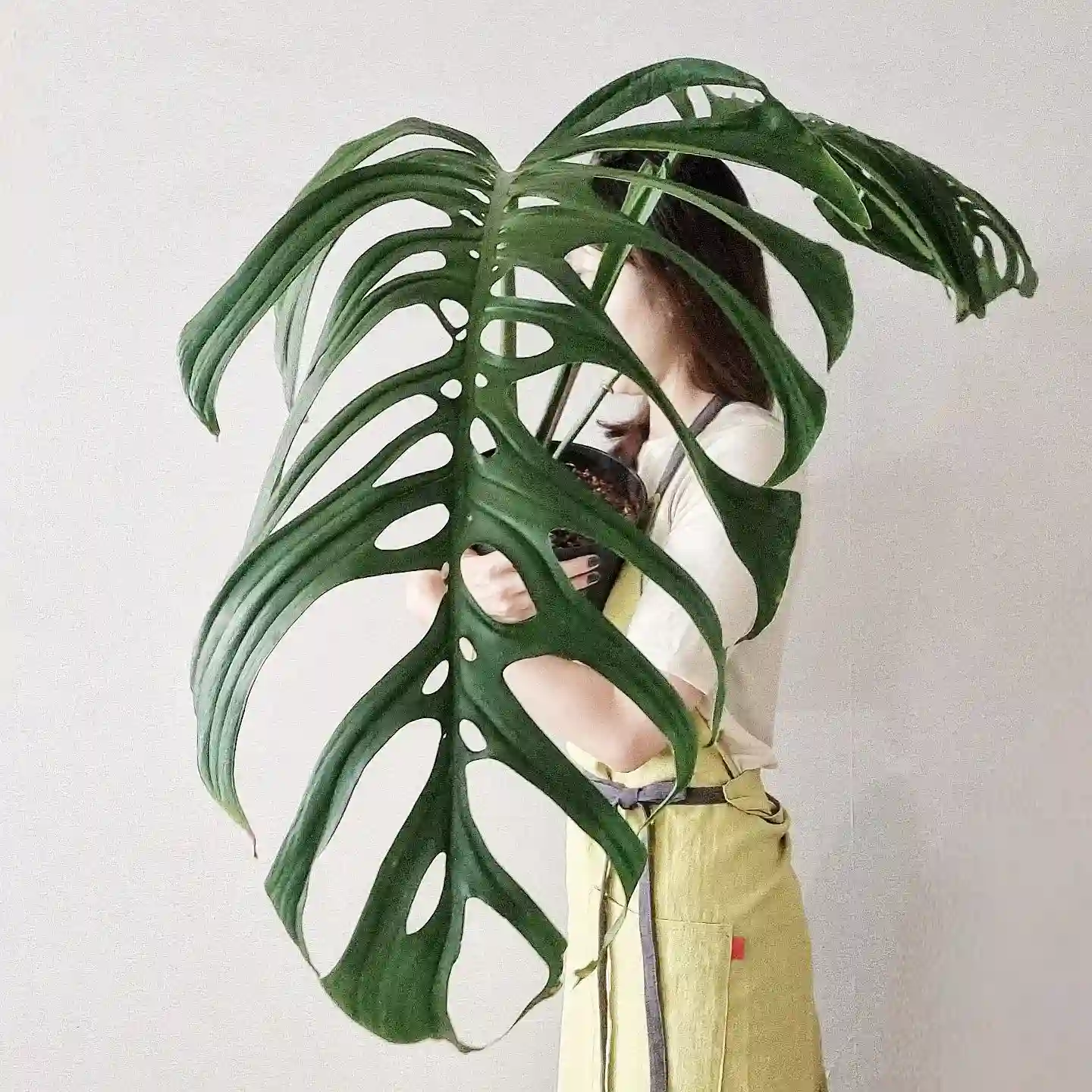
14) Monstera Esqueleto
Leaves so perforated they read as a skeleton of a leaf. It spent years being sold as Monstera epipremnoides and plenty of sellers still label it that way, though the two are now treated as separate species.
Mature leaves are the point. Young plants look unremarkable, and the skeletal look only arrives with age and a decent climb.
Not Monstera Varieties, But Close Look-A-Likes
Three plants get called Monstera and aren't. All three have split or perforated leaves, which is where the confusion starts.
Mini Monstera
Scientifically Rhaphidophora tetrasperma. The Rhaphidophora genus sits in the same family as Monstera, so the resemblance isn't accidental, but it's a different genus and it always will be. Compact, quick, and easy, which is why it sells as a stand-in.

Epipremnum Pinnatum Cebu Blue
The Cebu Blue Pothos. Epipremnum, not Monstera. Elongated blue-green leaves that can split and fenestrate as the plant matures, which is exactly why people mistake it.

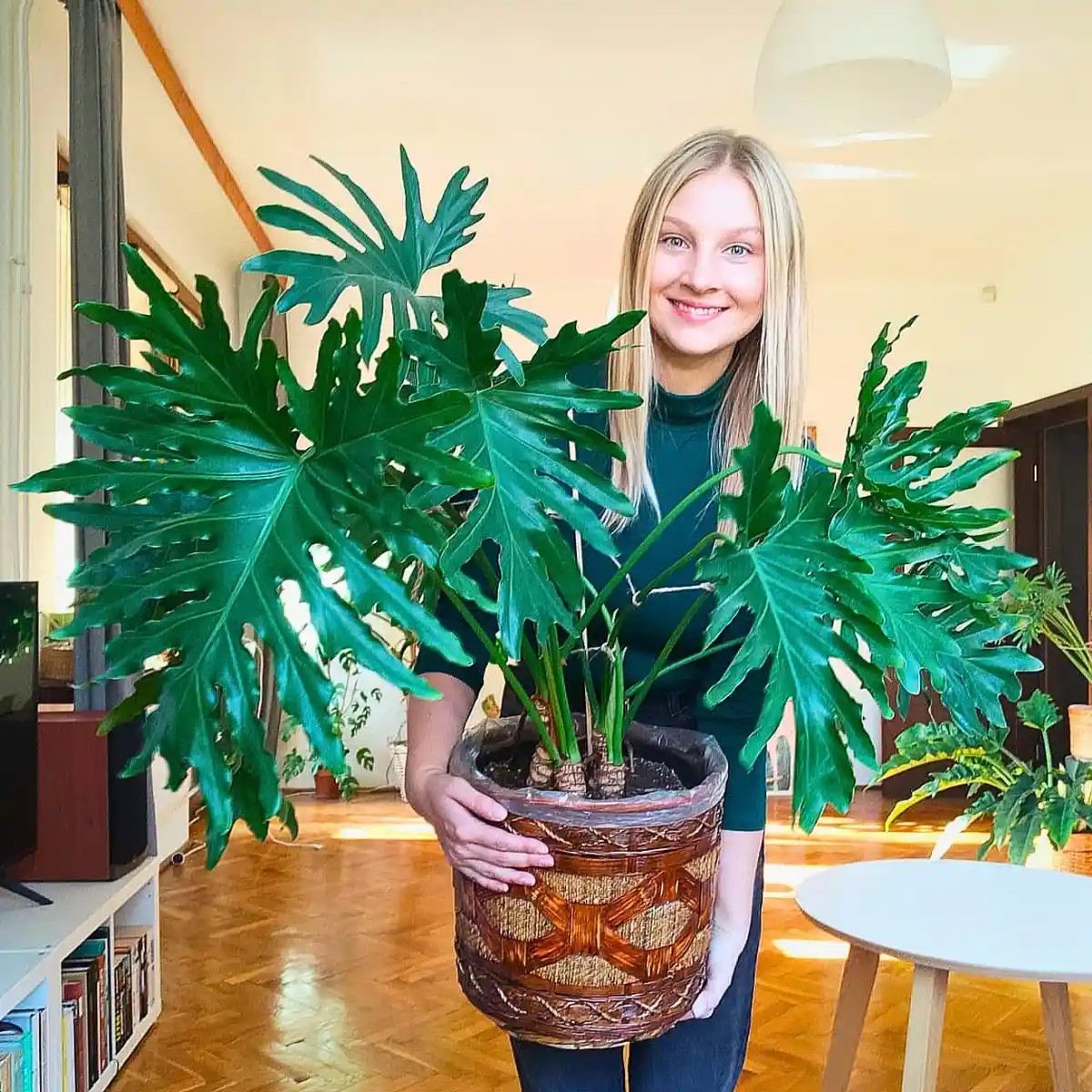
Philodendron Bipinnatifidum (Formerly Known as Philodendron Selloum)
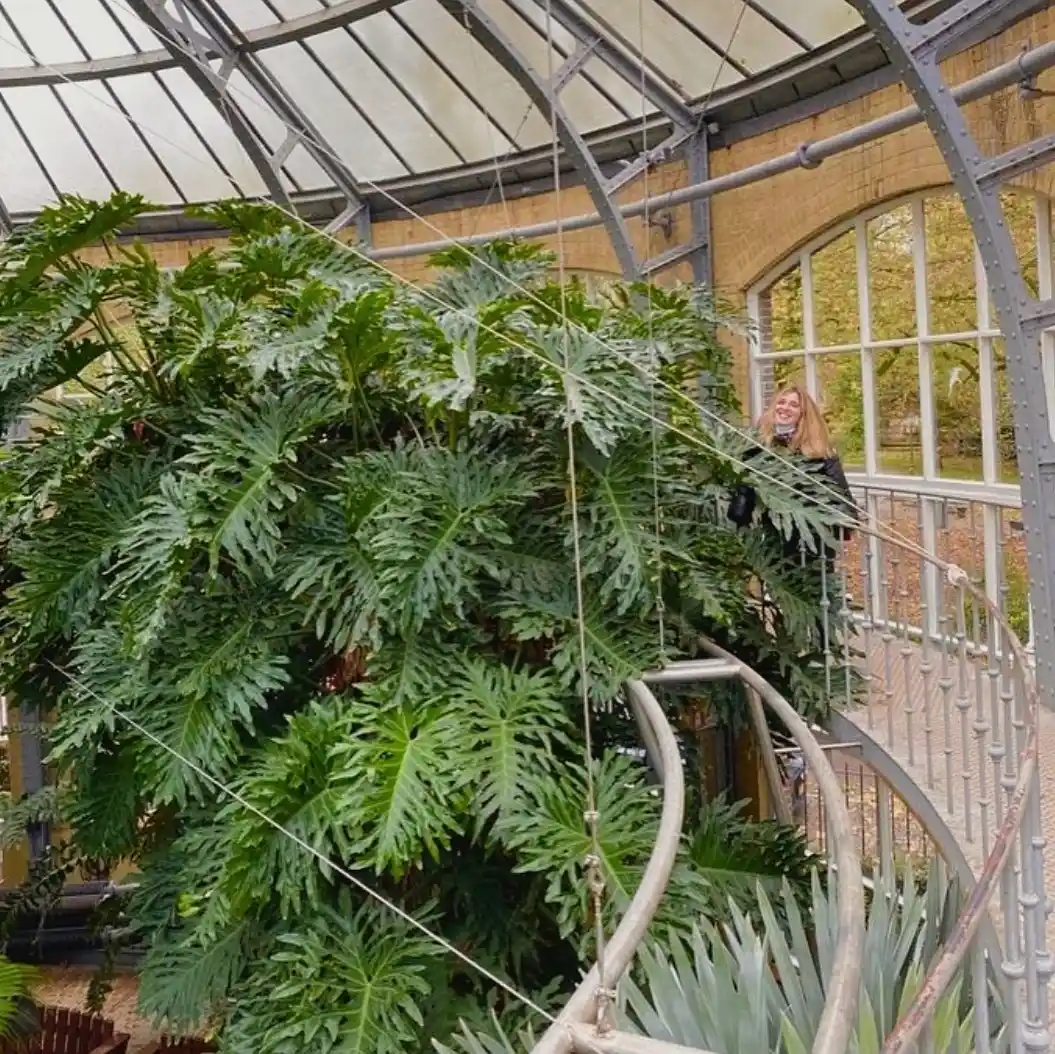
The Lacy Tree or Hope Philodendron. Large, deeply lobed leaves that read as Monstera at a glance.
Vivid green and vigorous, the Philodendron bipinnatifidum earns its place on its own terms.
Where the Plant Actually Comes From
Monstera comes from Central and South America. That reads like trivia until you see one in the wild.
They're hemiepiphytes. The seedling germinates on the forest floor, crawls toward the darkest thing it can find, which turns out to be a tree trunk, and then climbs.
A mature deliciosa can get 20 meters up into the canopy on aerial roots thick enough to take your weight.
So that's what you've got sitting in a 19 centimeter pot. The reaching, the aerial roots hunting for something to grab, the leaves that stay solid until the plant gets height. That's a rainforest vine running its normal program in a living room.
The fruit has a name where it grows. Ceriman. Edible when it's fully ripe and genuinely unpleasant when it isn't. And the aerial roots were used as cordage and basket material long before anyone sold the plant as decor.
The Price Depends on Where You're Standing
Here's the part the market doesn't advertise. In Costa Rica and Panama, Monstera grows over fences. It's a roadside plant. Nobody there is impressed by it.
In Amsterdam a variegated one costs more than a week of groceries.
That gap isn't botany. It's propagation and freight.
The rare-plant trade runs on tissue culture and controlled multiplication, and a large share of that production sits in Southeast Asia, Thailand in particular. Plants move from labs there to collectors in Europe and North America. Central and South America, where the plant is actually native, barely appear in that chain. The seed side is different: Louis Kester of Evanthia describes how Monstera seed is still collected in Mexican valleys and what it takes to make it germinate.
Worth knowing what the money buys. Not rarity in nature. A stable pattern, the cost of holding it stable, and the shipping.
General Care for All Types of Monstera Plants
Most Monstera species want roughly the same things, with a few real exceptions. Here's the general recipe, then the plants that need something different.
General Monstera Varieties Care
-
Light: bright indirect light. Long spells of direct sun scorch the leaf, too little light gives you slow growth and small leaves. Bright indirect light is also what drives fenestration, so a plant in a dim corner keeps making solid leaves however old it gets.
-
Water: when the top 1-2 inches of soil are dry to the touch. Overwatering is the usual killer here, root rot follows fast. Underwatering shows up as yellowing.
-
Humidity: moderate to high, 50-60% is comfortable. A humidifier, a water tray, or regular misting all work.
-
Temperature: 65-80°F (18-27°C). Keep them off cold drafts and don't let it fall below 50°F (10°C).
-
Fertilizer: balanced, water-soluble, half strength, every 4-6 weeks in spring and summer. Ease off in fall and winter.
-
Pruning: keep the shape, take off dead or yellowing leaves.
-
Support: a moss pole, a trellis, anything to climb. Nearly every Monstera is a climber in the wild, working up a tree trunk toward better light. Give a climbing species nothing to grip and it sprawls, stays juvenile, and never makes the big fenestrated leaves people bought it for.
Specific Care Considerations
-
Monstera Adansonii: wants water more often than the rest, and prefers soil that stays slightly moist. Higher humidity helps.
-
Monstera Dubia: well-draining and slightly moist, plus a flat surface like a board or cork bark for the aerial roots to grip. It shingles, so a pole is the wrong shape.
-
Monstera Obliqua: more sensitive, higher humidity, consistent care. Though as Ruben Mostert points out above, the Peru form handles low light better than its looks suggest.
-
Variegated Monsteras ('Thai Constellation', 'Albo-Variegata', 'Aurea-Variegata'): more light than green ones, because the pale sectors don't photosynthesize. Not harsh direct sun though, those sectors scorch first.
Conditions in your house will shift this. Watch the plant and adjust.


What Actually Separates Them
Read the fourteen Monstera types together and the pattern is simple. Node spacing separates deliciosa from borsigiana. Hole position separates adansonii from a young deliciosa. Tissue culture separates Thai Constellation from Albo on price. And the name on the label separates almost nothing at all.
Buy the plant, not the label.
Header and featured image by @ourplantylifeinboston.
About the author: Arnold Wittkamp is the founder of Thursd. He spent 35 years in the floral chain, as a florist, an importer and an international marketer, before building the platform. Connect with Arnold on LinkedIn.