Market conditions, trade policy, regional competition, and genetics.
It is no secret that 2026 has not been the best year for Colombia's floriculture industry. The challenges did not arrive one at a time. They came all at once. A sharply appreciating peso, a 23% increase in the minimum wage, labor reform that raised the cost of night and Sunday work, a U.S. tariff that rose from 10% to 12.5%, and fewer people willing to work on flower farms.
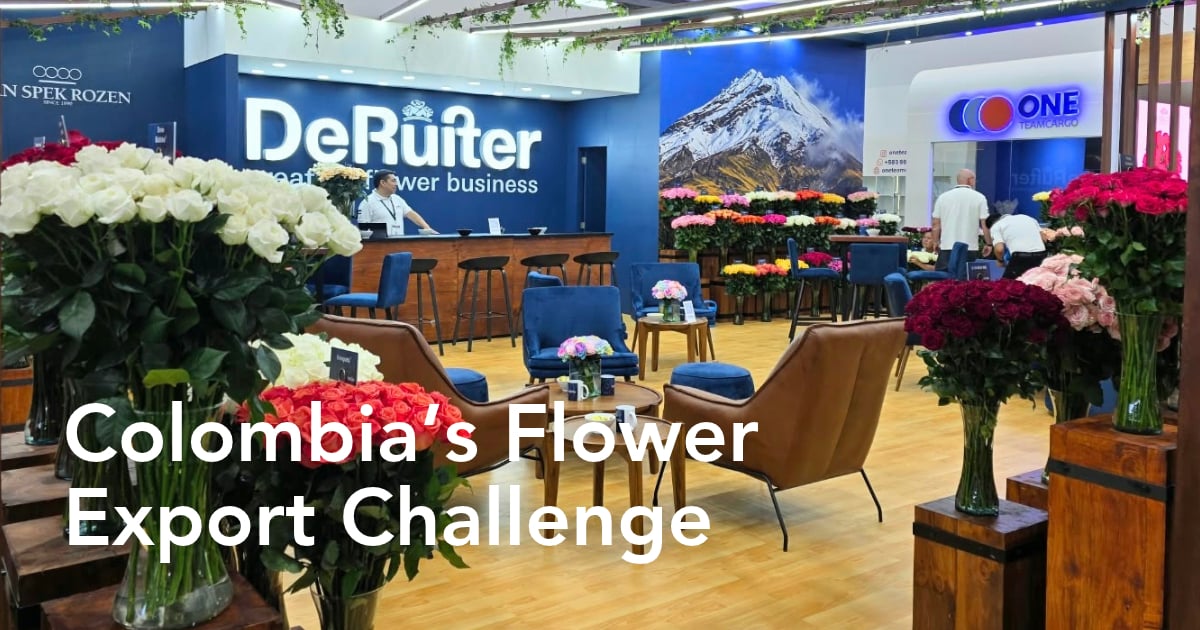
A few weeks ago, De Ruiter Colombia attended Expoflor Ecuador to take a closer look at a neighboring industry that has been growing for several years. The team came away with a clear conclusion: there is a great deal to analyze, and many decisions to make before the season that will shape the industry's future: Valentine's Day 2027.
A Storm on Multiple Fronts
Exporting more no longer guarantees higher profits.
The first challenge is currency-related. A flower grower's revenue from exports depends entirely on the exchange rate, and the U.S. dollar closed on October 21 at a representative market exchange rate (TRM) of COP 3,163, down approximately 15.6% year to date. According to Asocolflores, over the past 18 months the industry has received around 30% fewer pesos for every dollar earned from exports.
While revenue is shrinking, costs are rising. The industry association estimates that costs have increased by approximately 35%, driven primarily by labor, which accounts for around 60% of a farm's cost structure. In addition to the minimum wage increase, Sunday pay premiums rose to 90% on July 1, and the working week was reduced to 42 hours in mid-July. Fertilizers, plastics, and freight add further pressure.
The third challenge is trade-related. For more than a decade, the trade agreement with the United States allowed Colombian flowers to enter the country duty-free. Since April 2025, the industry has paid an additional 10% tariff. By the end of the previous administration, the surcharge had risen to 12.5%, amid an investigation by the Office of the United States Trade Representative (USTR) into forced labor. The impact is direct: the United States buys nearly 80% of the flowers Colombia exports.
- US$2.397 billion: Colombian flower exports in 2025, a historic record and a 2.1% increase over 2024.
- −5%: Decline in exports between January and June 2026, totaling US$1.338 billion, according to DANE.
- 12.5%: Additional tariff currently applied to Colombian flowers entering the United States, compared with no additional surcharge for Ecuador.
- Approximately 35%: Estimated increase in the industry's production costs, according to Asocolflores.
- 240,000: Direct and indirect formal jobs generated by the floriculture industry, with women accounting for approximately 60%.
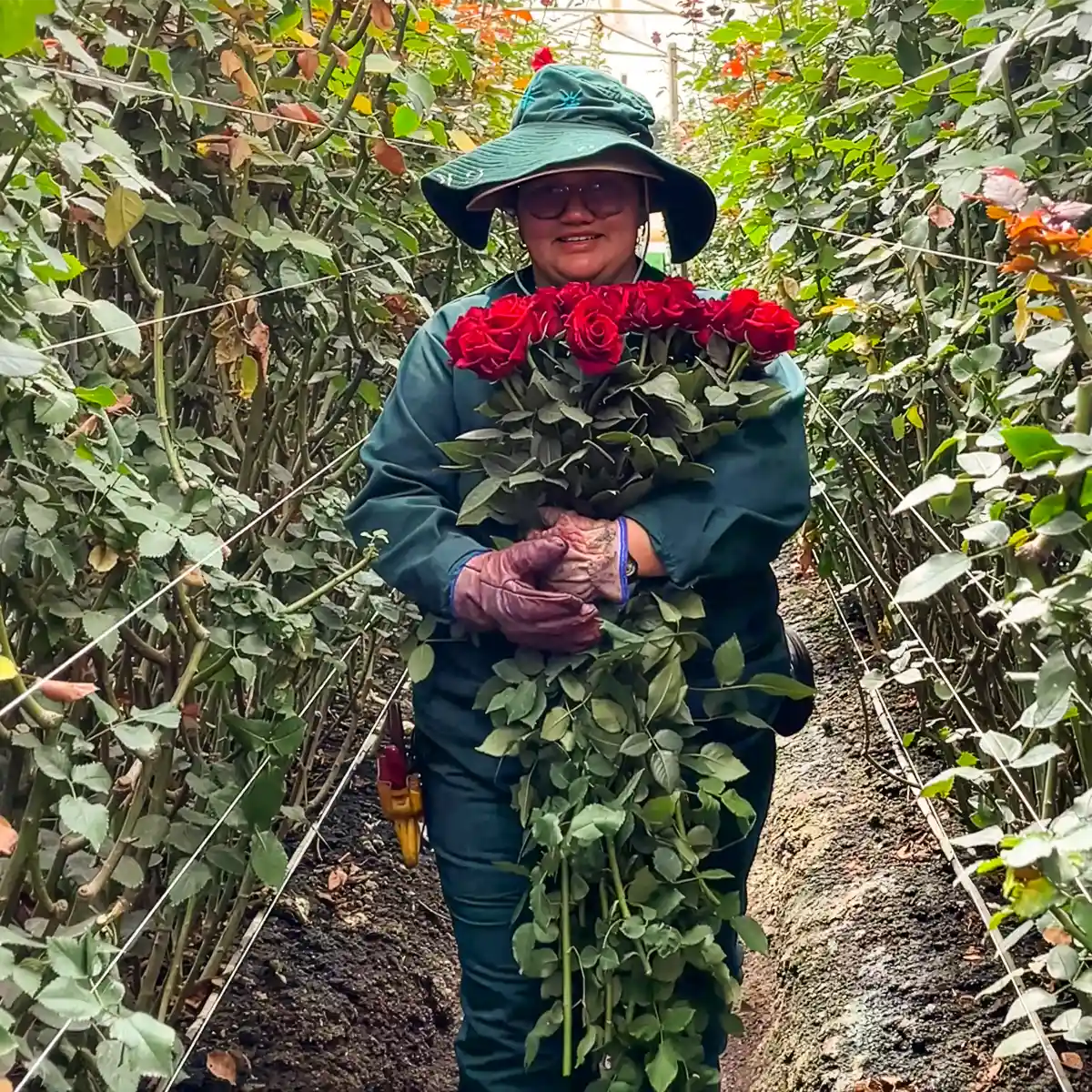
What De Ruiter Saw at Expoflor
The same Andes, similar people, different results. Expoflor 2026 took place in Quito from October 6 to 8, with 130 exhibitors and more than 2,700 visitors from 73 countries. The atmosphere was confident: Expoflores expects Ecuador's flower exports to reach approximately US$1.078 billion by the end of the year, up from US$1.045 billion in 2025.
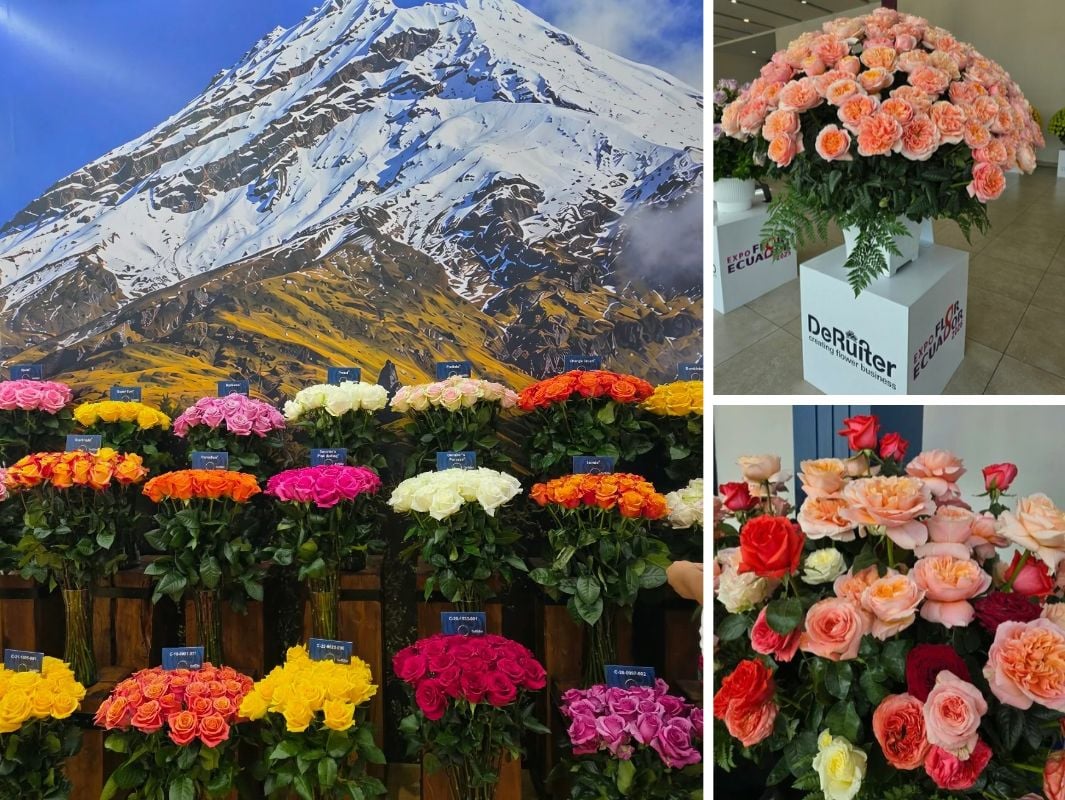
Although Colombia and Ecuador have historically served different markets, both countries share something fundamental: their people. They are Andean countries with very similar cultures, working practices, and social contexts. So why is one growing while the other is contracting? The main answer lies outside the farms, in an area flower growers cannot control but can influence: trade policy.
Following its reciprocal trade agreement with Washington, Ecuadorian flowers enter the United States without an additional surcharge and pay only the base tariff, which is 6.8% for roses. Colombian flowers, which paid nothing for years, now face a 12.5% surcharge. For the first time in a long while, the tariff advantage lies on the other side of the border.
Alejandro Martínez, President of Expoflores, said:
"This is the first time Ecuador will have more competitive access to the flower market than Colombia."

The figures already reflect this shift. During the 2026 Valentine's Day season, flower shipments transported by Avianca Cargo to the United States grew by 16% from Ecuador and 4% from Colombia. At Expoflor, participants also spoke openly about a decline in purchases from Colombia due to tariffs and currency appreciation.
Another strategic development adds to the pressure: Ecuador's flower industry is entering the U.S. mass market, a segment historically dominated by Colombia. This is not an easy move for Ecuador. The mass market demands volume, productivity, cost efficiency per stem, uniformity, and vase life on a very different scale from the high-value markets in which Ecuador has built its reputation. But the intention is clear, and Colombia cannot ignore it.

A New Government and a Clear Expectation
Many investments are on hold while the industry awaits concrete decisions. In June, Abelardo de la Espriella won the presidential runoff and took office on August 7. His close ties with the Donald Trump administration have raised expectations across the export sector. De Ruiter Colombia has spoken with several flower-farming business owners, and a common sentiment emerges: many have put their investments on hold until concrete decisions are made. Their main hope is that relations between the two governments will lead to a genuine reduction in tariffs, allowing Colombia to compete with Ecuador on equal terms again.
There are signs of progress in that direction. Before taking office, the incoming government announced a plan for the sector that includes a National Currency Hedging Program, preferential credit lines for working capital and investment, and incentives to protect formal rural employment. In addition, the Ministry of Commerce issued a decree addressing forced labor that could bring the additional tariff back down to 10%. The government is also negotiating a reciprocal agreement with the USTR aimed at allowing between 90% and 93% of Colombian exports to enter the United States duty-free. The government expects to sign the agreement in December 2026, although the date has not yet been confirmed.
Laura Valdivieso, President of Asocolflores, said:
"We trust that the new government will act very quickly."

Valentine's Day 2027: The Season That Will Define the Year
Make it through to February and arrive in the strongest position possible is the goal for De Ruiter Colombia. Valentine's Day and Mother's Day account for approximately 40% of the industry's annual sales. This is why many farms are making a major financial effort to reach February 2027. The season will be crucial in determining which businesses currently facing difficulties manage to stay afloat. Decisions that will shape the season, including when to pinch plants, are being made right now.
In the short term, the situation favors companies with greater financial resources. Large flower-farming groups are taking the lead, buying farms, absorbing competitors, and gaining market share, even while operating at negative margins. They have a clear vision of what may come once the market stabilizes. But crises also create opportunities. For those entering the business, this may be a moment to establish themselves on a solid foundation.
A recent analysis by Universidad Externado captures the situation as the paradox of selling more but earning less. The question is no longer how many flowers the country exports, but how much value it retains from each one. Productivity is no longer simply a technical metric; it has become a matter of survival.
Genetics as a Bridge to the Future
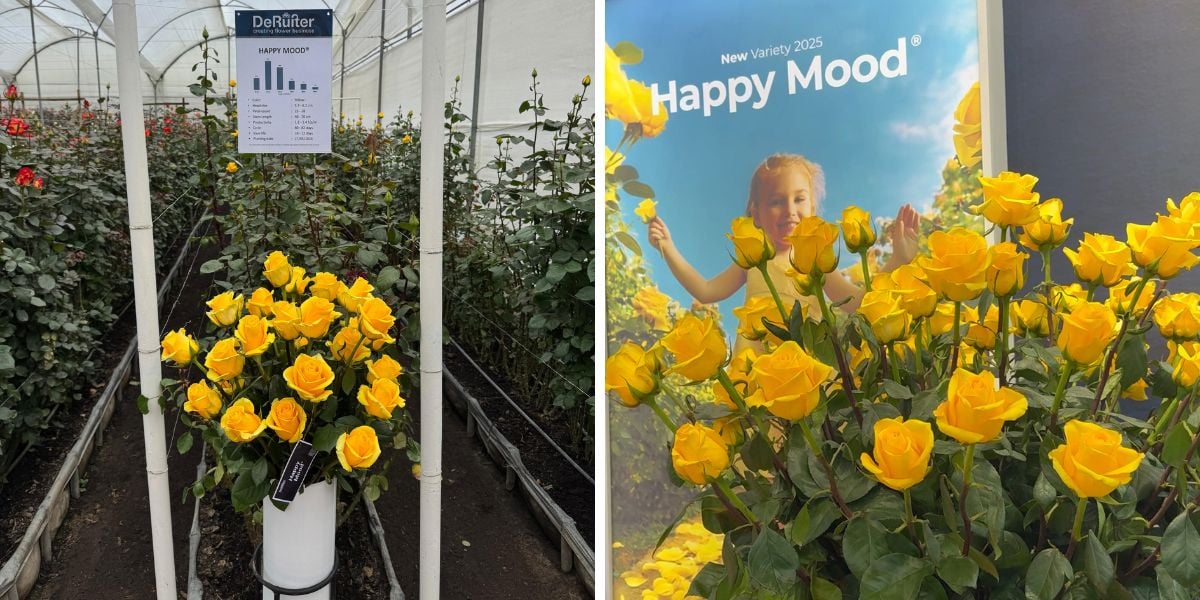
Difficult times do not last forever. They are part of a cycle. When revenue per stem falls, and labor becomes more expensive, the variety planted today determines profitability in the years ahead. More stems per square meter, greater disease resistance, plants that make harvesting and grading easier, consistent color, and good vase life all translate into lower costs and greater value per flower. Varieties such as Rose Happy Mood, developed with strong disease resistance, and Rose Arctic White, recognized as Best Standard Rose Variety at Proflora 2025 for its productivity and uniformity, were developed with precisely this approach in mind.
De Ruiter has supported the floriculture industry since 1913. In more than a century of history, this is not the first time we have faced a period like this alongside our customers. Experience has taught us that those who are well positioned when the cycle turns will be the ones who grow. The stability of the industry is also our stability.
That is why we want more growers to have the opportunity to evaluate our varieties on their own farms, even if their current cash flow makes it difficult to do so under normal conditions. We are open to new agreements and proposals, with one clear objective: to help ease the industry's burden in whatever way we can and build together the floriculture industry that will emerge after Valentine's Day 2027.

Sources
Asocolflores; statements by Laura Valdivieso in El Tiempo (September 2026), La FM (July 2026), and Forbes Colombia (September 2026).
DANE, flower and foliage exports from January to June 2026 (via Infobae, August 2026). Analdex, 2025 exports (via Portafolio, February 2026).
Portafolio, representative market exchange rate (TRM) on October 21, 2026. Law 2466 of 2025 (labor reform).
Expoflores and the Central Bank of Ecuador (via El Universo, Primicias, and El Comercio, February–October 2026). Avianca Cargo, Valentine's Day 2026 season.
Incoming government, plan for the flower-farming sector (Blu Radio, July 2026). Ministry of Commerce and AmCham Colombia, negotiations with the USTR (October 2026).
Gélvez, T. and Castellanos, J. D., “When Blooming Is No Longer Enough,” Razón Pública – Universidad Externado (August 2026).