Fresh cut flowers come full of life, color, and elegance, and then they are wilted and gone, sometimes faster than one would like. Yet the bouquet on your kitchen counter already has its days in it; a grower put them there long before you unwrapped the paper. So how to make flowers last longer comes down to not losing them: wash the vase, give the stems a fresh cut, add flower food, strip the leaves below the water line, and keep the bouquet in a cool spot. That's all. The aspirin can stay in the cabinet.
Ask a rose grower, say, Porta Nova in the Netherlands. It states two weeks of vase life, the trade's term for how many good days a stem gives you in water. Its test room shows many stems pass that. "We simply say two weeks of vase life, period," Marc Eijsackers, the company's Manager Marketing, said in a 2024 interview (translated from Dutch). "We have our own test room. And then you see that a lot of them go past those two weeks, of course."
The catch? "Only the last stretch, you never know what a consumer or a trading partner has done with it in between."
You're that last stretch. Well, no pressure.
How to Make Flowers Last Longer in a Vase, in Five Steps
- Wash the vase in warm soapy water, then rinse it well.
- Cut the stems fresh. Take off at least 1.3 cm (1/2 inch) with a sharp knife or sharp scissors, and get them into water right away.
- Add flower food at the dose on the packet, and stir until it dissolves.
- Strip the leaves that would sit below the water line.
- Find a cool spot, away from direct sunlight, heat sources, and the fruit bowl.
Then repeat the vase, the water, and the cut every 2 to 3 days, and pull out fading blooms as you go. Quite a short routine, you'd agree! Each step protects something the grower already put in the stem, and that's what will make flowers last longer.
Why a Clean Vase Matters More Than Any Trick
A clean vase matters because bacteria breed in dirty water and leave you with clogged flower stems that can't absorb water. Flowers drink a lot of water, so water quality counts, and stagnant water turns into a breeding ground quickly. That bacterial growth settles in the stem's water channels and cuts off the supply.
The numbers are sobering. In University of Florida tests (T.A. Nell and R.T. Leonard, 2009), roses given a drink in an 11-day-old solution lost up to 50% of their vase life. That old solution held 2.6 million bacteria per milliliter; a fresh one held none. That was a trade bucket, not a kitchen vase, but bacteria don't read labels.
So wash the vase with soap and water after each use. Old residue left from a previous arrangement harbors bacteria that shorten the life of your next one. Clean glass or glazed ceramic is a smart choice because it's easy to rinse and less likely to hold old film. A spotless vase is the simplest way to prevent bacterial growth, and it gives a fresh arrangement a healthier start from day one.
Then keep it that way. Change the water every couple of days, and at once if it turns cloudy. Purdue University Extension treats cloudy water as the sign of microorganisms. Penn State Extension says to replace it completely every few days, rinsing and recutting the stems as you go. Forgotten vases are among the most common mistakes. "Oh yes, very basic things and mistakes still get made," Eijsackers said in the same interview.
Keep the Stems Drinking
The grower has kept that stem drinking from the start. "In the harvesting process, a very important factor is that we guarantee 100% hydration of the stems from the cultivation stage, ensuring that the flower is fresh and free of stress," Pilar Buitrago, a biologist at the Colombian grower Alexandra Farms, said in 2025. Your job is to not break that chain.
Does the Angle of the Cut Matter?
Less than you've been told. Out of water, stems suck in air, the bubbles block the way, and the cut end dries out. So a fresh cut is worth making. Cutting the stems at an angle of 45 degrees is another matter. Purdue still advises a slant, so the stem isn't crushed and a flat end doesn't rest on the vase bottom. But Nieves García, an ornamental crops researcher at Wageningen University & Research, points to a study at FloraHolland's testing center. As she told the university's magazine in 2021: "It doesn't affect how long the flowers last." Water uptake depends on the vessels in the stem, and those don't change with the angle.
Sarah Dikker, a floral stylist who won Hollands Beste Bloemstylist in 2014, said much the same in a 2026 interview: to her, the slanted cut simply isn't necessary. That's one florist's view, of course.
What does matter is the blade. A dull one crushes the stem's vascular tissue instead of cutting cleanly through it, and crushed tissue can't draw water efficiently. García adds that a damaged stem leaks sugars into the water, and bacteria love that. Cutting under water? Purdue advises it for roses. Yet University of Florida rose tests found dry cutting doesn't shorten vase life, and they warn that the cutting water itself gets dirty. Cut in the air, then straight into the vase.
Why Leaves Come Off Below the Water Line
Any foliage submerged in water will rot, and that rotting material is a direct source of bacteria. Purdue puts it plainly: submerged leaves "decay and hasten the decline of cut flowers by encouraging microbial growth." So remove submerged leaves before the stems go in. It's a simple step, but one that is often skipped and later regretted.
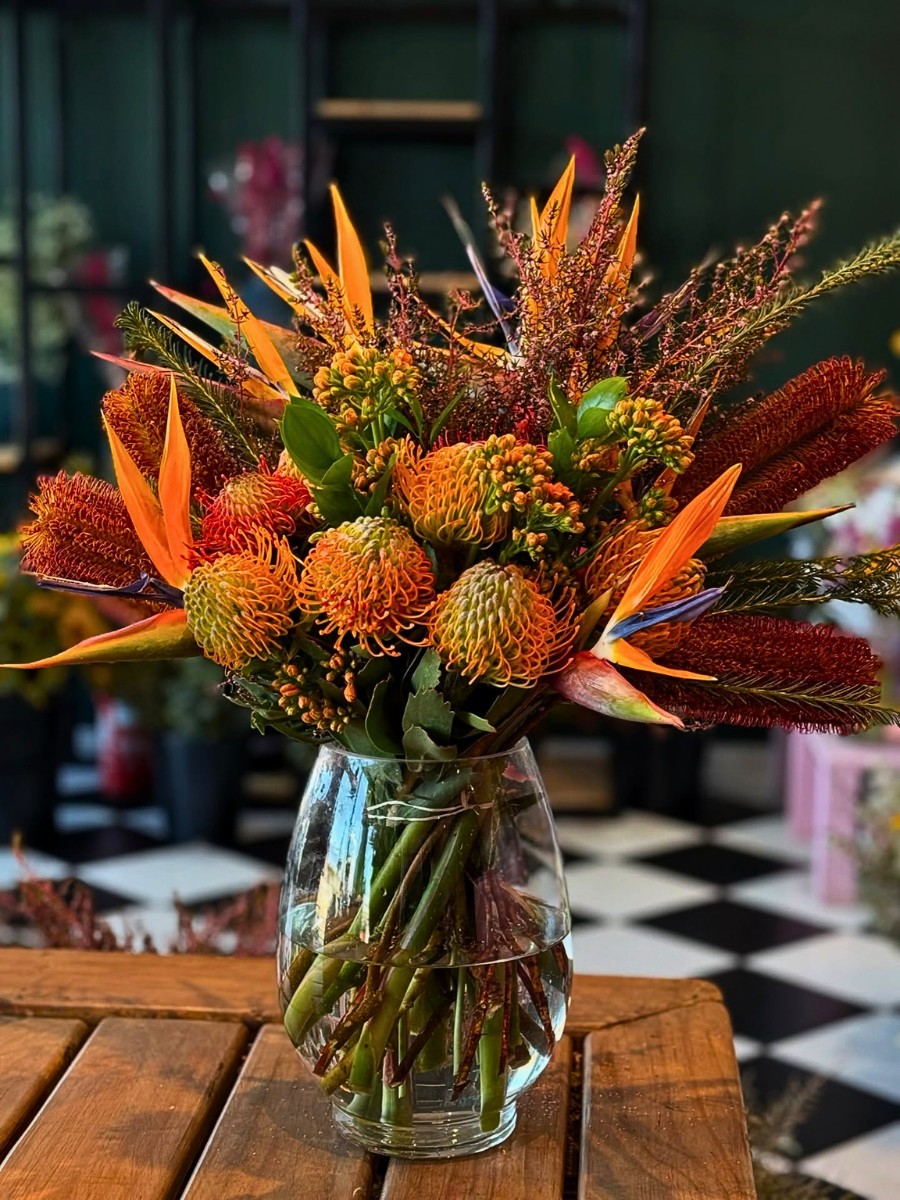
Also, don't overcrowd the vase. Fresh flowers need room so the stems aren't crushed, and water should move freely around them.
Give Them a Deep Drink First
If your fresh flowers have spent the afternoon in a warm car or arrive looking limp, conditioning them helps considerably. Recut the stems and stand them in deep water for at least 20 minutes, or up to about 2 hours with paper wrapped around the heads, until they're crisp. That's Purdue's method, and it rehydrates stems that have been out of water for some time.
Lukewarm water or cold? The experts don't agree. Purdue says warm water moves into the stem faster. García says research shows dry stems take up cold water fastest, and that after this the temperature barely touches how long the bouquet lasts. So room temperature water from the tap is fine.
Hollow-stemmed flowers like Delphiniums are the exception. Turn the stem upside down, fill it with water, and plug it with a small piece of cotton wool before you stand it right-side up in the vase. The RHS gives the same advice. This keeps the channel hydrated from the inside out.
Flower Food Puts Back What the Plant Stopped Giving
Now for the part of the story you never see. "Because roses only receive sugar (energy) as long as they grow on the plant, waiting as long as possible and harvesting relatively late will give us bigger and stronger roses that last much longer because they contain more energy," Stefan van Vuuren, then commercial director at Porta Nova, said in 2020 for the Ripe or Raw series. In plain words, the stem arrives with a full tank, and the cut ends the refill.
Commercial flower food (preservative, on some packets) tops it up. The sachet tucked into your bouquet, from Chrysal or another maker, feeds the flower, lowers the water's pH so stems drink better, and slows bacteria. Properly mixed in a clean vase, flower food can add two to three days of vase life, University of Florida researchers reported in 2006.
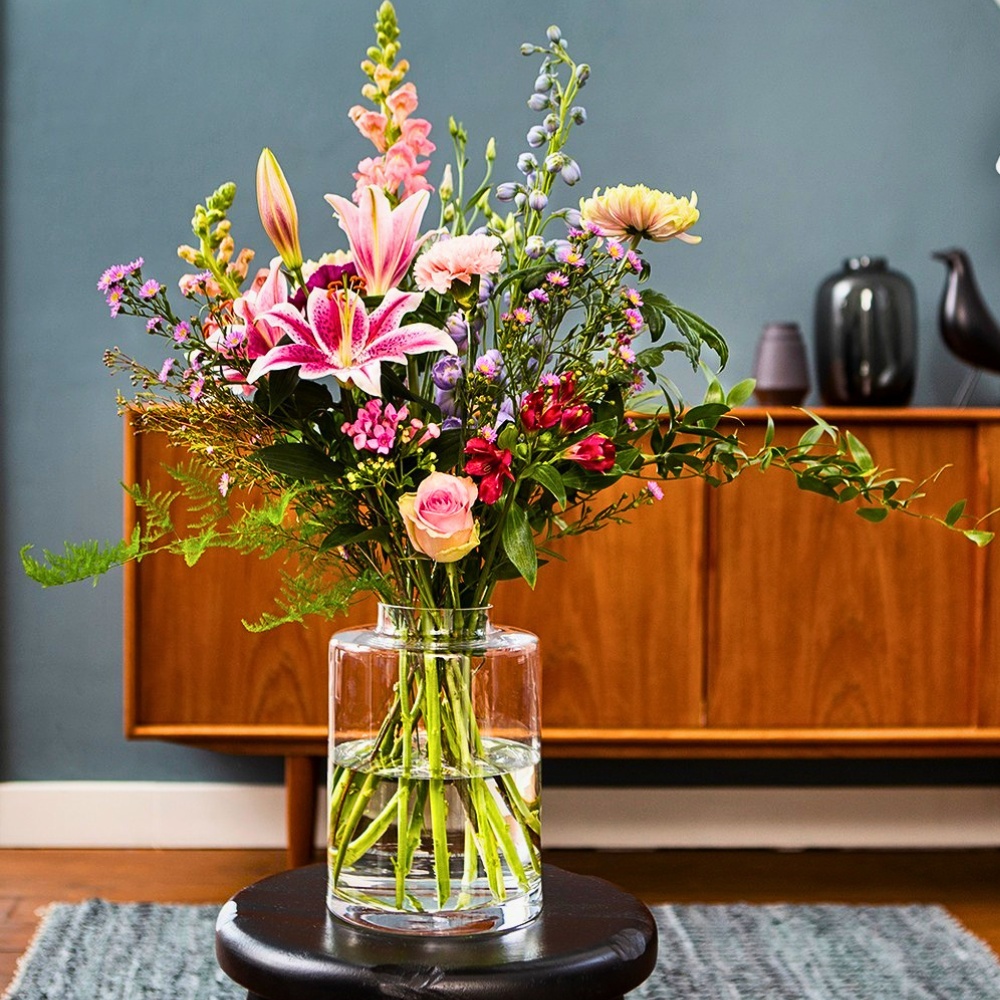
The Kitchn's May 2026 home test points the same way: 7 days on flower food against about 3 in plain water that was never changed. Just so that you know, that was one vase per method, and the test stopped at day 7. Either way, use flower food at the right dose and dissolve it thoroughly, as García advises.
No Packet? A Simple Mix
If you're without a packet, stir 5 ml (1 teaspoon) of sugar and 5 ml (1 teaspoon) of white vinegar into 1 liter (about 1 quart) of water. That mix reached about 6 days in the same Kitchn test, again in one vase. It's a stopgap, so change it often. In a 2014 study by Iftikhar Ahmad and John Dole, lemon juice or citric acid plus sugar, left in the vase continuously, reduced the vase life of roses and sunflowers.
You'll see recipes that add bleach to this mix. Leave it out. Bleach and an acid such as vinegar release chlorine gas, and the New Jersey Department of Health says never to mix bleach with products containing acids. If you've mixed them and feel unwell, get to fresh air and contact your local poison control center.
How to Keep Cut Flowers Fresh in a Cool Spot
Heat spends what's in the stem faster, because flower aging speeds up at high temperatures. So how to keep flowers fresh longer is largely about where you put them, and a cool location beats a bright one. Keep arrangements away from heating vents, sunny windowsills, and televisions, all heat sources. Essentially, a cool environment can extend the life of a bouquet, while bright sun on a windowsill can shorten it.
Then there's the fruit bowl. Ethylene gas, which ripening fruit gives off, shortens flower life, so placing a vase of roses next to a bowl of bananas or apples is, unfortunately, a recipe for quick wilting. When University of Florida researchers tested 39 popular rose varieties, 34 were sensitive to it (2009).
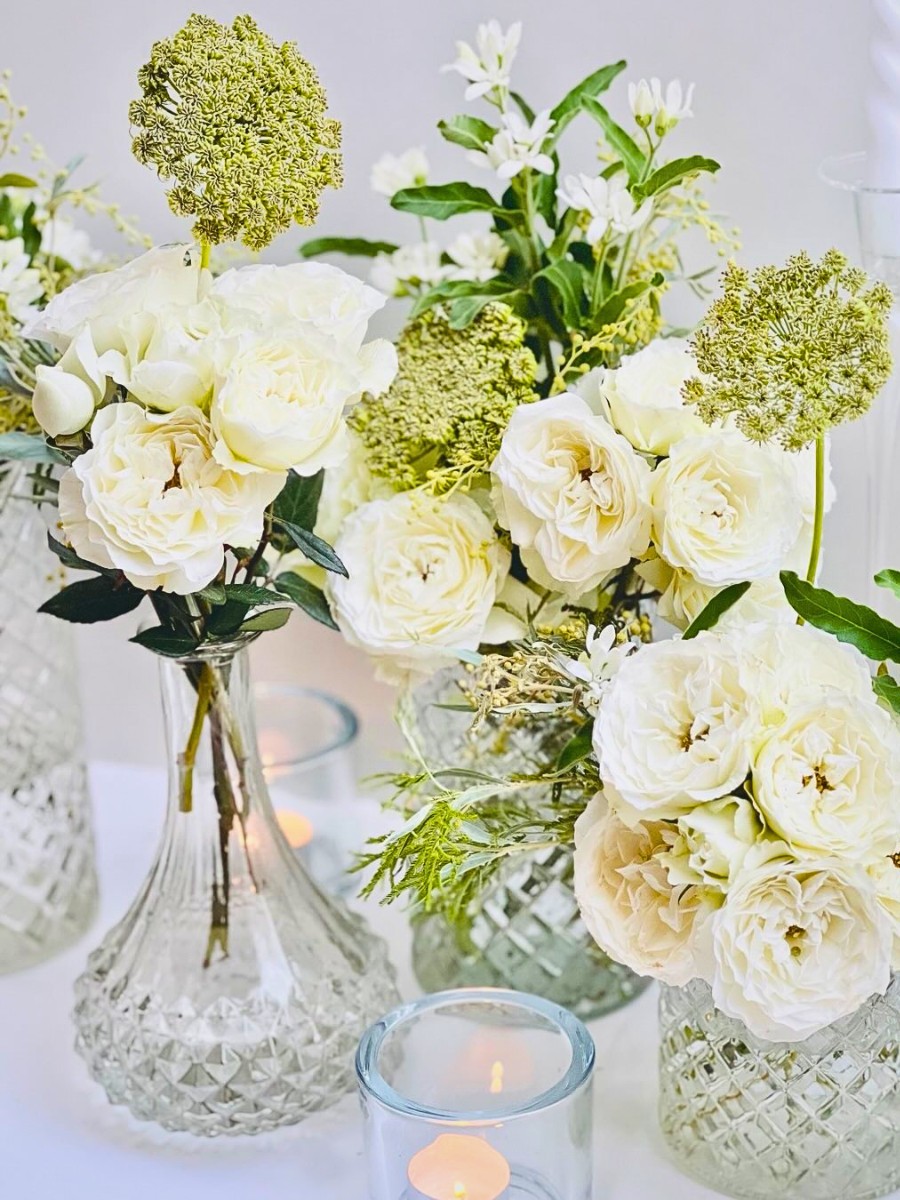
Should fresh flowers go in the fridge overnight? Yes, if there's room beside the leftovers and no fruit in it. Purdue says it's possible to double the life of your flowers in a cold room or the refrigerator at night. Anything above 2°C (35°F) will do. Tropical stems are the exception: Anthuriums, bird of paradise, and certain orchids suffer chilling injury below 10°C (50°F).
How Long Do Flowers Last in a Vase?
There's no single number, and anyone who gives you one is rounding. As a floor, University of California Cooperative Extension says properly cared-for flowers should last a week after purchase (2015), and the trade treats 7 days as standard. Past that, how long flowers last comes down to the flower and the grower.
| Flower | Vase life | Source and care note |
|---|---|---|
| Campanula Campanulove |
19 days in water, up to 21 with flower food | Independent FlorEsearch test, February 2025. The flower food gave the extra days. |
| Carnation | Up to 2 to 3 weeks | The carnation guide, 2025. Change the water; don't just top it up. |
| Alstroemeria Charmelia |
Up to 21 days | Royal Van Zanten, 2024. A trade figure for one line. |
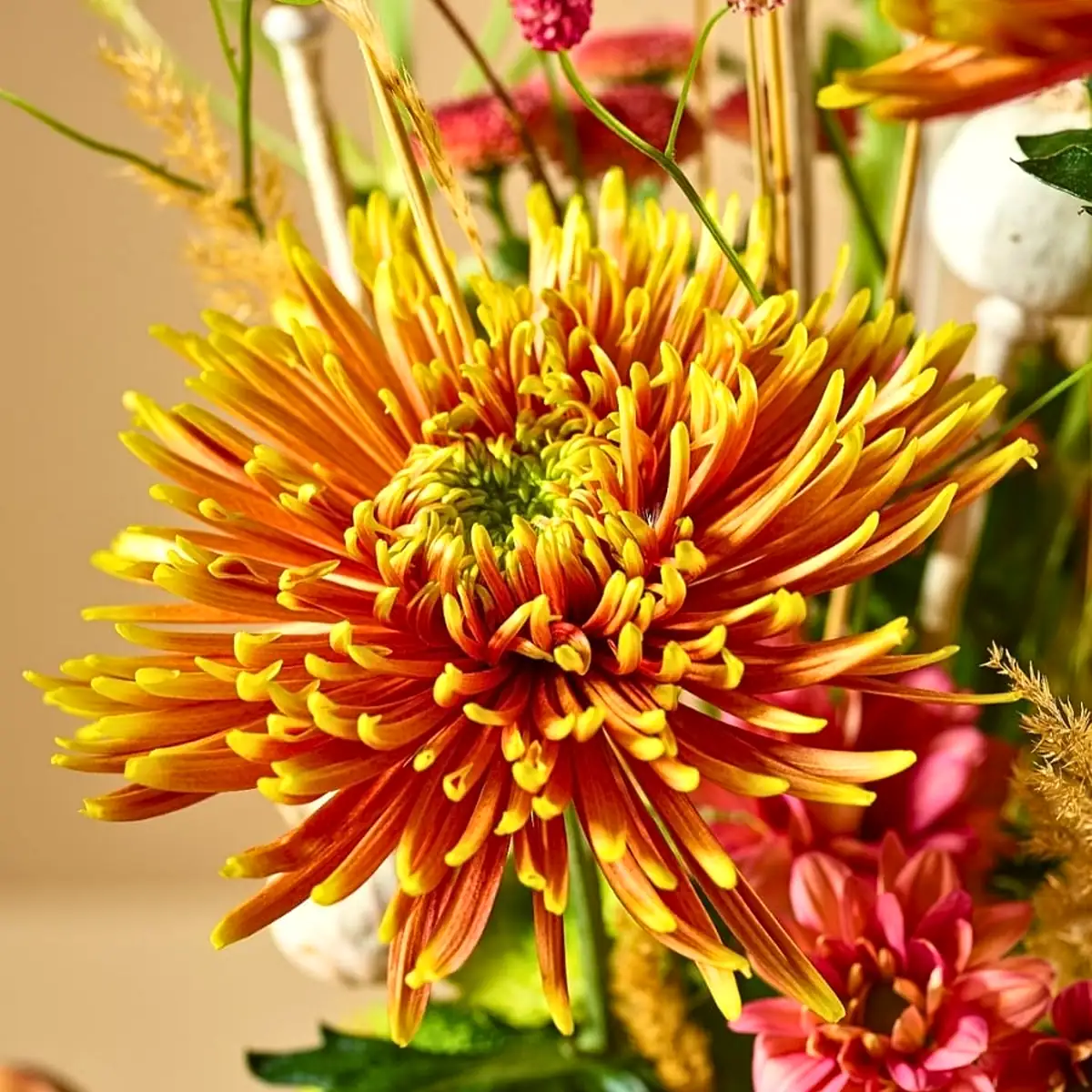
| Chrysanthemum and Lisianthus | About 2 weeks | The Mother's Day guide, 2026. Among the longest lasting in the shop. |
| Rose Red Naomi |
2 weeks | Porta Nova, tested in its own room, 2024. |
| Rose Redvolution |
12 to 14 days | Rosaprima, 2024. Same care as any rose. |
| Dahlia Dazz |
7 days | Dazz, 2025. Large Dahlias seldom reach it. |
Read the Red Naomi row carefully: it's one grower's roses in its own test room, not every rose in every shop. Whichever flower you buy, recut and refill every two days. Tulips and lilies are missing on purpose, too; no grower's figure for them holds up.
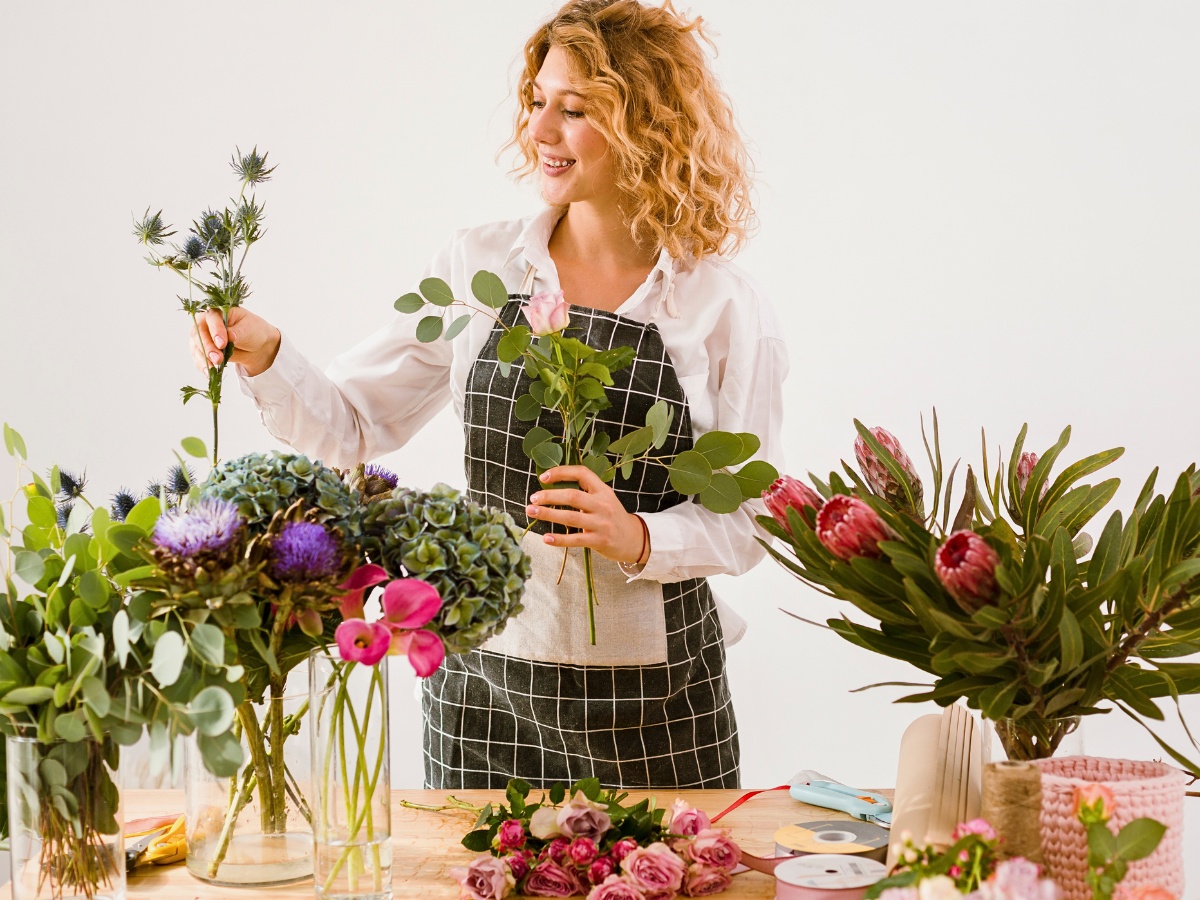
Pick Flowers Showing Color at the Shop
Part of the count is settled the moment you choose the bunch. Tight green buds look like the fresh option. Growers disagree. "Many people do not understand this, but the vase life can really get longer if the flowers are longer on the plant," Levi Evers of Bredefleur said in 2024. So a lily with one open flower isn't an old lily.
Karolien Tesselaar of Tesselaar Alstroemeria saw it in real homes. During the 2020 lockdown, the nursery let its flowers open on the crop, made them into exuberant bunches, and handed them out. "A week and a half later this bunch was still full of color in people's homes!" she said. Peonies run the same way: a hard green bud may never open. And if your shop keeps roses in a floral cooler, buy those; display coolers added 30 to 50% to vase life in the Florida tests.
Do Sugar, Vinegar, Aspirin, or a Penny Help?
You'll have heard them all. They may have been perceived to work, but none of them will make flowers last longer as reliably as a clean vase, a fresh cut, and flower food. The verdicts:
- Sugar helps by half. It feeds the flower and the bacteria alike, so sugar alone can shorten vase life. The full story is in does sugar help flowers last longer.
- Vinegar helps only in a mix. It lowers the pH, and stems drink more in acidic water, but it brings no food.
- Aspirin doesn't help. Purdue University Extension says aspirin in vase water doesn't prolong the life of cut flowers.
- A penny doesn't help. Purdue says the same of copper pennies. A 1965 penny managed 5 to 6 days in one Kitchn vase, but US pennies since 1982 are mostly zinc.
- Bleach alone did little in one vase. At about 1 ml per liter (1/4 teaspoon per quart), it gave 3 to 4 days in the Kitchn test, against about 3 in plain water.
- Sprite on its own lasted about 4 days. Vodka with sugar reached 3 to 4 in the same test, against 7 for flower food.
If you want to keep cut flowers fresh longer, reliable cut flower care beats kitchen folklore.
What to Do When Flowers Droop
Even a well-kept bouquet can sag. A rose head that hangs is called bent neck, and it typically appears in the first three days after purchase. London florist Moyses Stevens lays the whole rose flat in a sink of cool water for about 40 minutes, then recuts the stem and returns it to fresh water. That's florist practice rather than a lab protocol. It does fit the wider rule, though: most flowers recover fully from wilting once they're recut and given a proper drink.
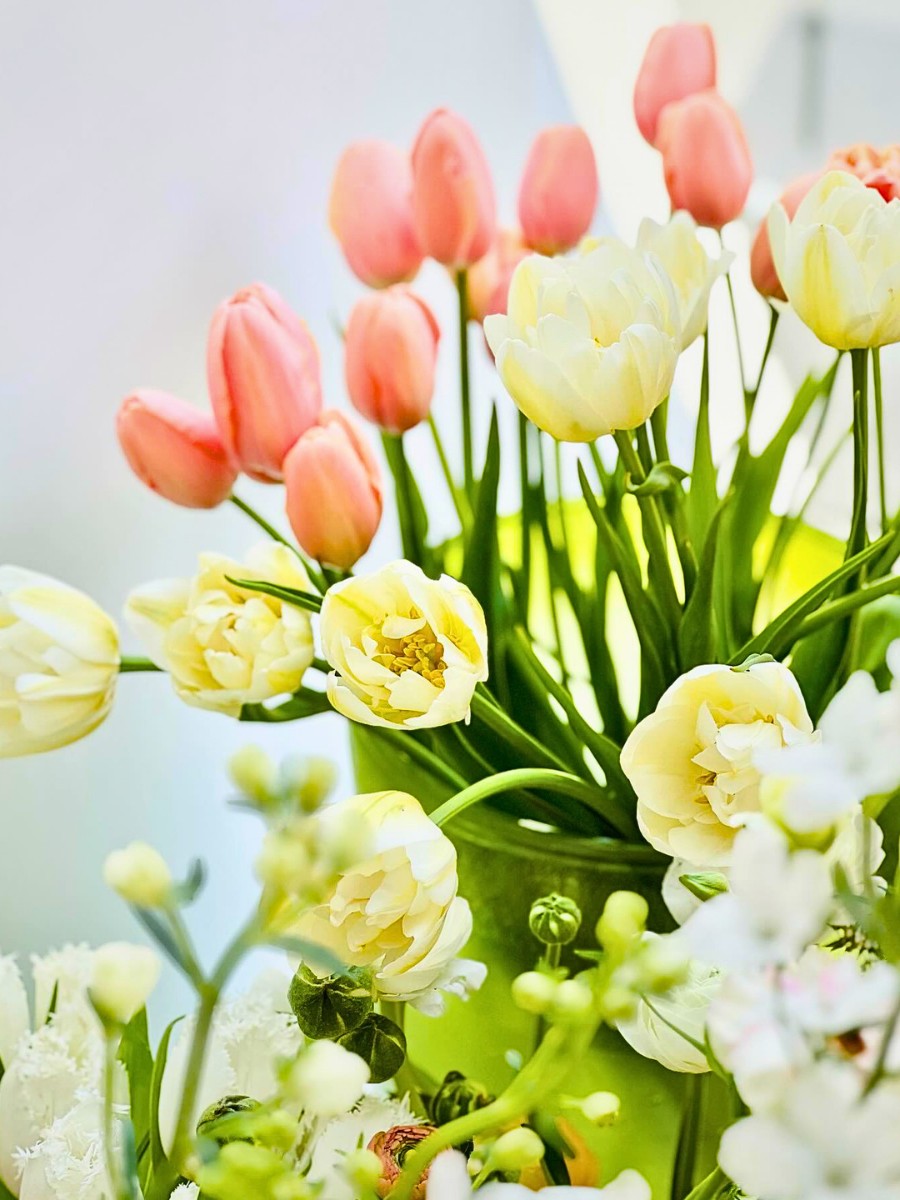
Tulips aren't wilting when they lean. They keep growing in the vase and bend toward the light, so give them a tall vase and turn it now and then. Daffodils are poor housemates: their sap is toxic to tulips, shortening their vase life and yellowing their leaves, so they get a vase of their own. More on that in can you mix different flowers in one vase.
The Flowers Bring the Days, You Keep Them
The verity is that most of the work was done before you ever saw the bunch. The grower fed the stem and cut it at the right moment, so the days came to your counter already in it. Keep the vase clean, the stems freshly cut, and the bouquet out of the heat, and you get those days. The kitchen tricks can stay in the cupboard.
Then do as Sarah Dikker always told people, translated from Dutch: "put flowers on the table, sit down next to them and enjoy them." That part needs no instructions.
Featured image by freepik. Header image by Andrea Piacquadio.