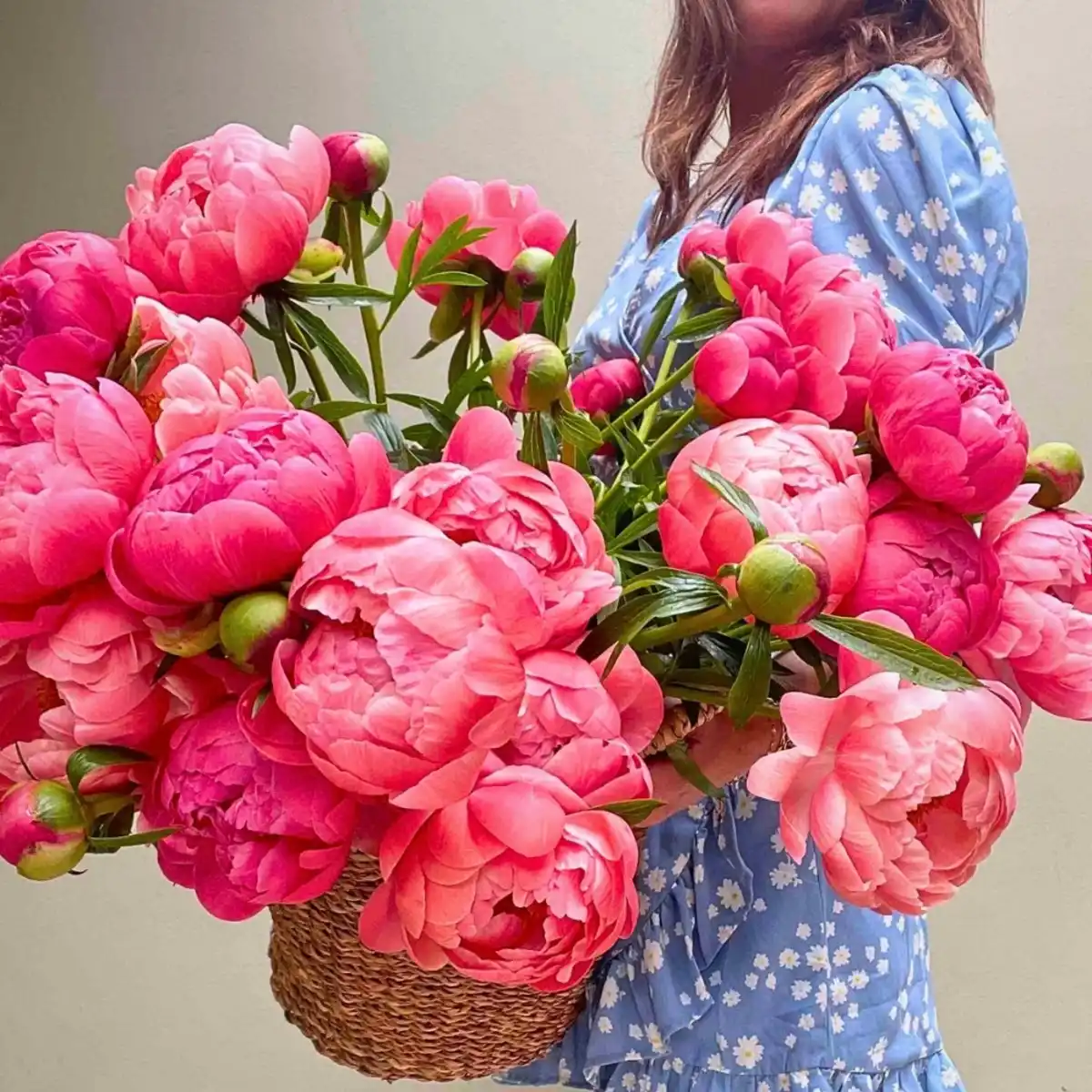
A winter wedding carries a unique kind of spark. Candles replace sunshine, the air is crisp, and flowers look less like decoration and more like a soft rebellion against the venue's cold and the short days. Done well, they can feel as lush as any June arrangement, just with deeper colors, richer textures, and a touch of frost.
The best flowers are those that truly belong to the season, from Anemones and Ranunculus to Helleborus, Amaryllis, and garden roses. But the challenge is that the garden is asleep by then. The best choices, therefore, depend on knowing where December through February flowers come from.
About Winter (Wedding) Events’ Flowers
In the Northern Hemisphere, outdoor flowers are mostly dormant from December to February, so florists draw on a few sources. Some flowers have a natural winter season, others are grown year-round in greenhouses and highland farms, and evergreens and berries look their best now.
Carefully choosing the seasonal flowers is one of the most ideal decisions one makes since winter adds its own stress and costs. In-season flowers are also fresher, last longer, usually cost less than those forced out of their natural window, and support sustainability. If your wedding is in the Southern Hemisphere, in Australia, South Africa, or somewhere in Argentina, December may mean summer, so the advice about forced bulbs and greenhouse flowers does not apply.
Also, in winter weddings, strong varieties and careful handling matter more than in summer. How, then, does one work through all these elements to get the right flowers that merit a place in their winter wedding arrangement? There are several factors to consider (and keep in mind).
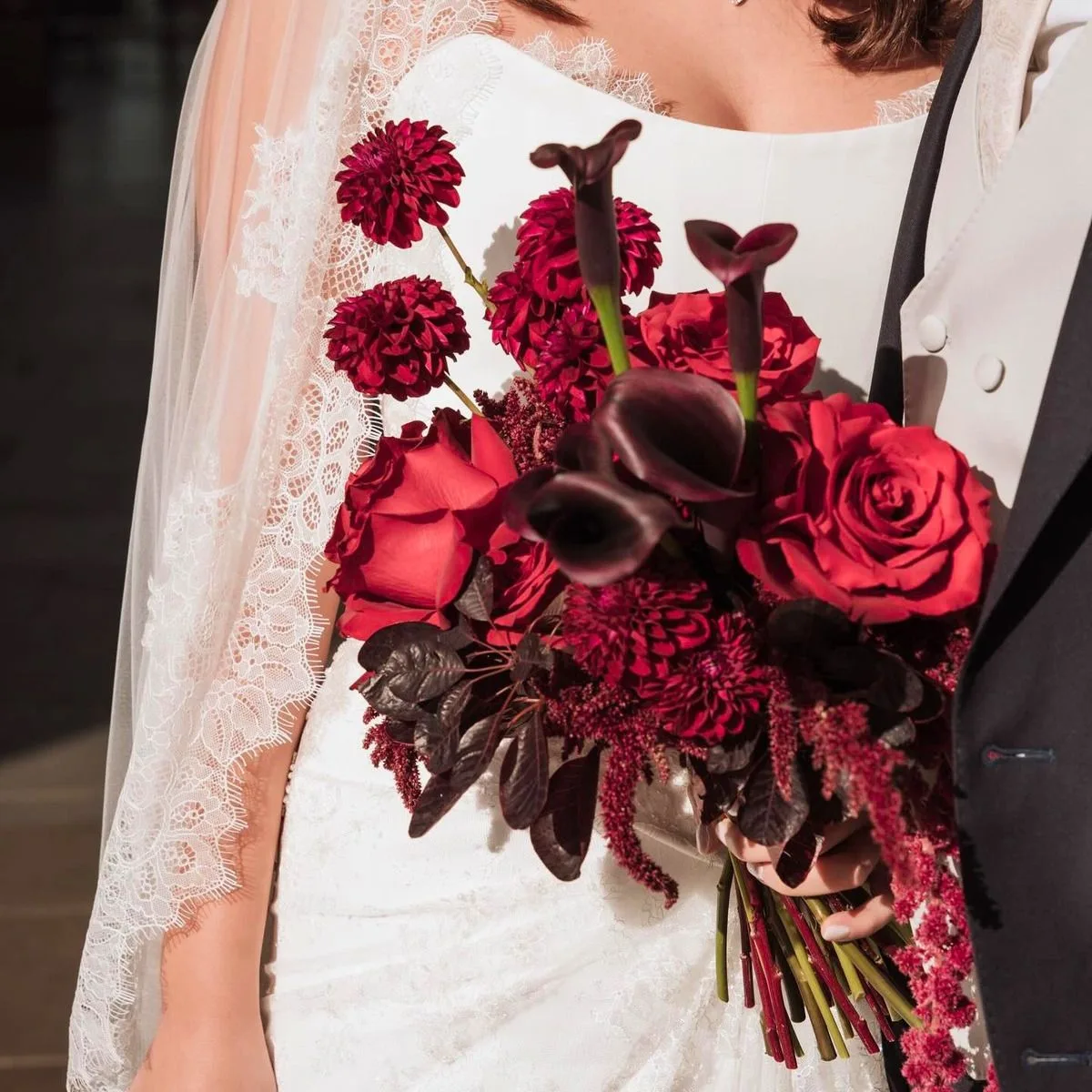
A Bridal Bouquet Featuring Soft Layers and Winter Color
Ranunculus is, for the most part, the winter bouquet's natural star, even though it starts a little late in winter and runs through spring. It peaks in February and March, so it suits late winter weddings best. Its petals recall a garden rose, and blush, cream, and apricot shades pair easily with greenery and berries. This flower, whose paper-thin petals layer into a rose-like form, also comes in burgundy, chocolate brown, pastel pink, and white.
Designer Chloe Powell recommends it as a focal point, partly because it pairs beautifully with rustic foliage and velvet ribbon. Timing is, however, the nuance: a Ranunculus bought fully open has only a few days left, so order it tight and let it gradually open on schedule.
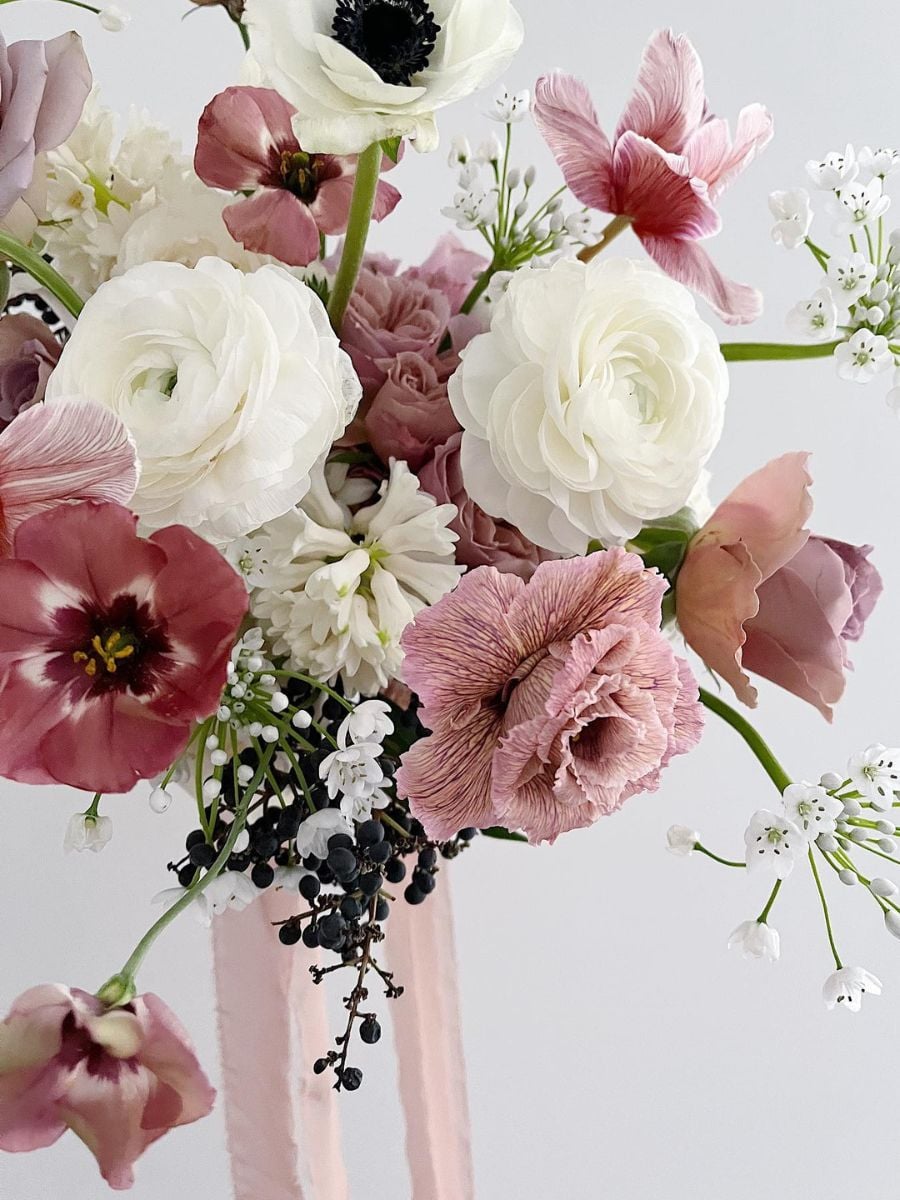
Anemones are ideal, too, adding contrast to the cold light. They come into season in autumn and run through spring, which makes them one of the most reliable winter wedding flowers. Their black centers and bright or deep red petals sharpen a bouquet of softer flowers such as roses and Lisianthus. Their dark centers also give contrast against white or blush petals. The Panda type, with crisp white petals and a black heart, is a favorite for modern bouquets. Also, buy them tight, because they open widely. Keep them cool until the ceremony so the petals stay crisp.
Hellebores, called Christmas or Lenten roses, are also perfect winter wedding flowers. They carry romance with a moody edge, flower around the holidays, and the season continues through Lent with Helleborus orientalis. Their nodding heads, in white, green, dusty mauves, deep purples, antique greens, and deep burgundy, suit candlelit tables and relaxed bouquets.
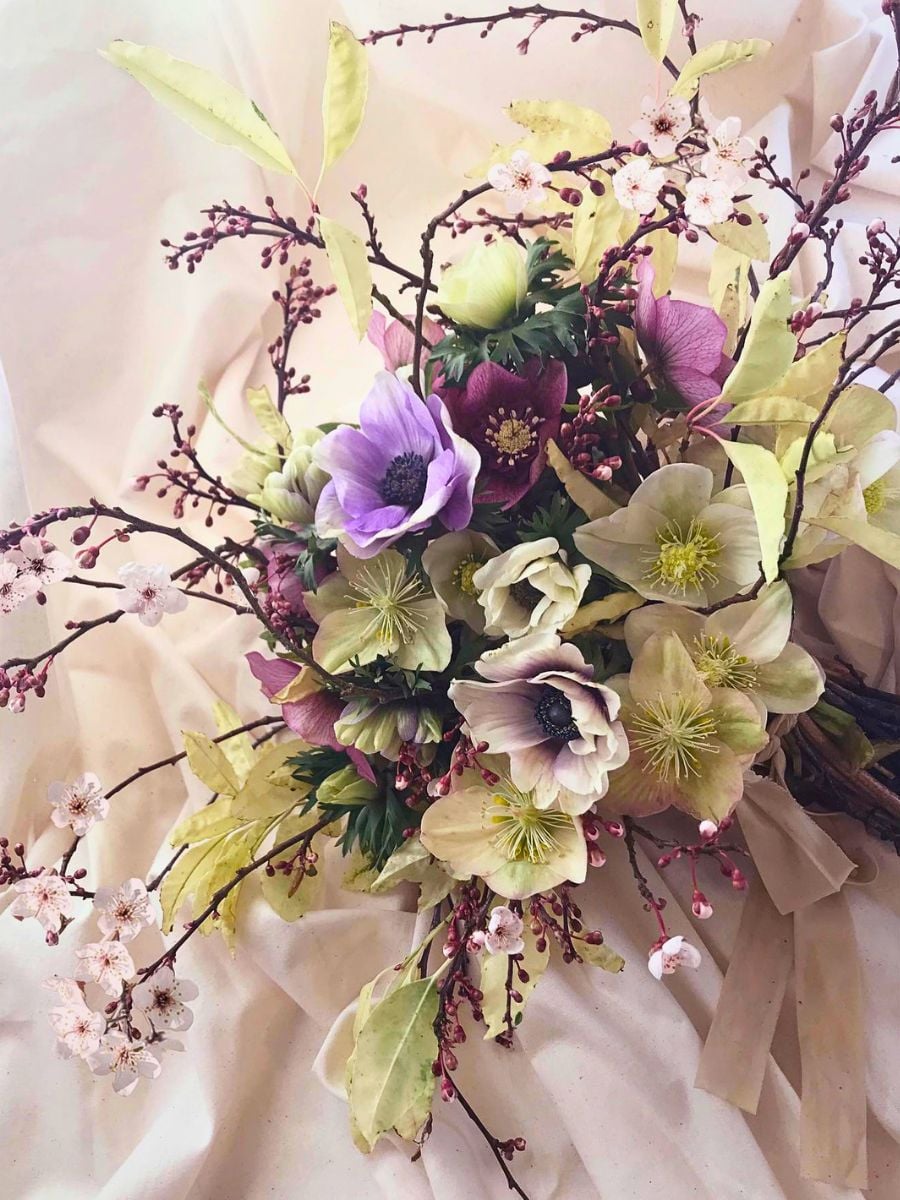
Grower Marginpar cultivates Helleborus in Kenya and Ethiopia, including the variety Helleborus Mammoth Red, and credits breeding, a moderate climate with cooler nights, and the right cutting stage for strong vase life. These flowers thrive in the cold, but still need careful conditioning to avoid wilting.
Standard Roses, Garden Roses, and Spray Roses All Keep It Classic
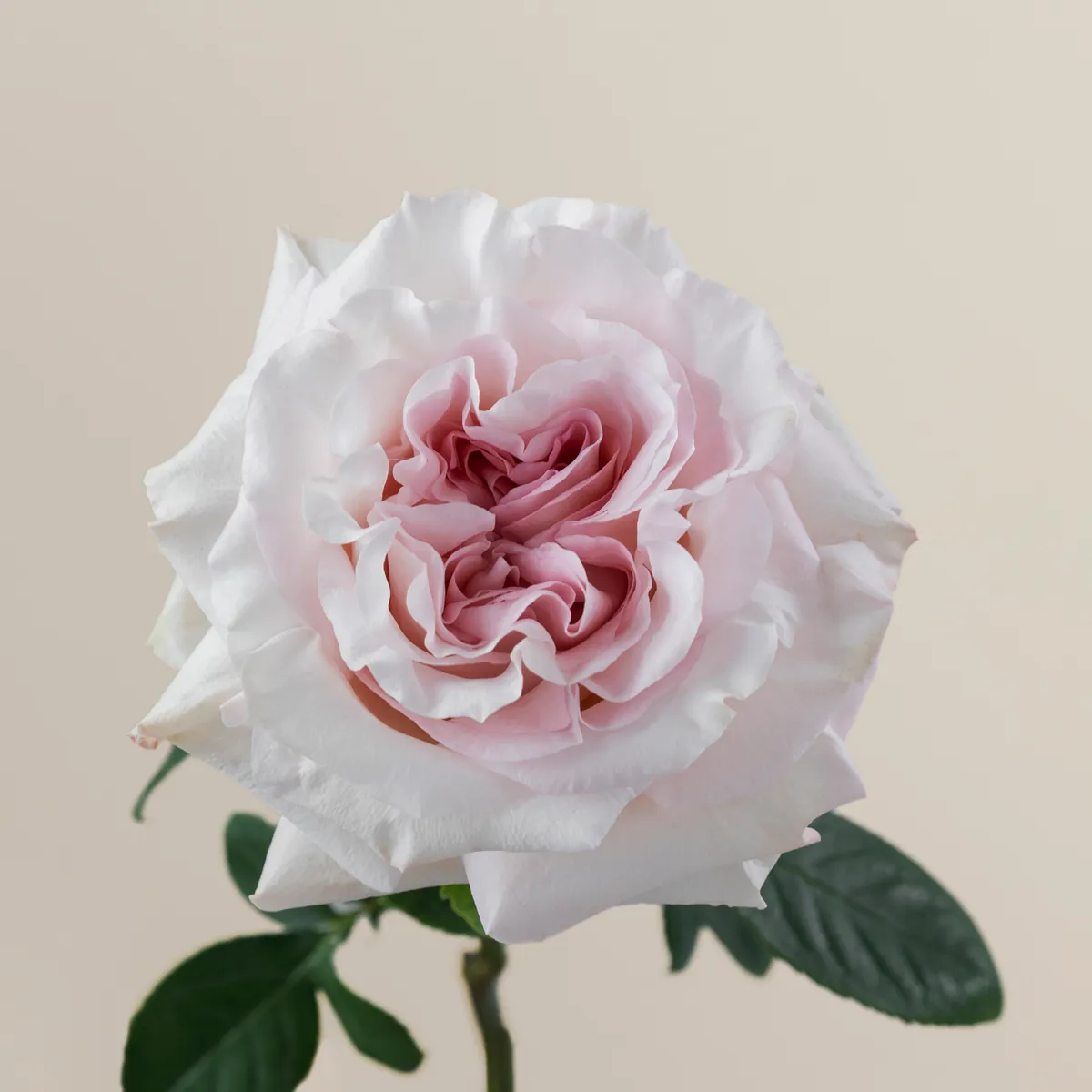
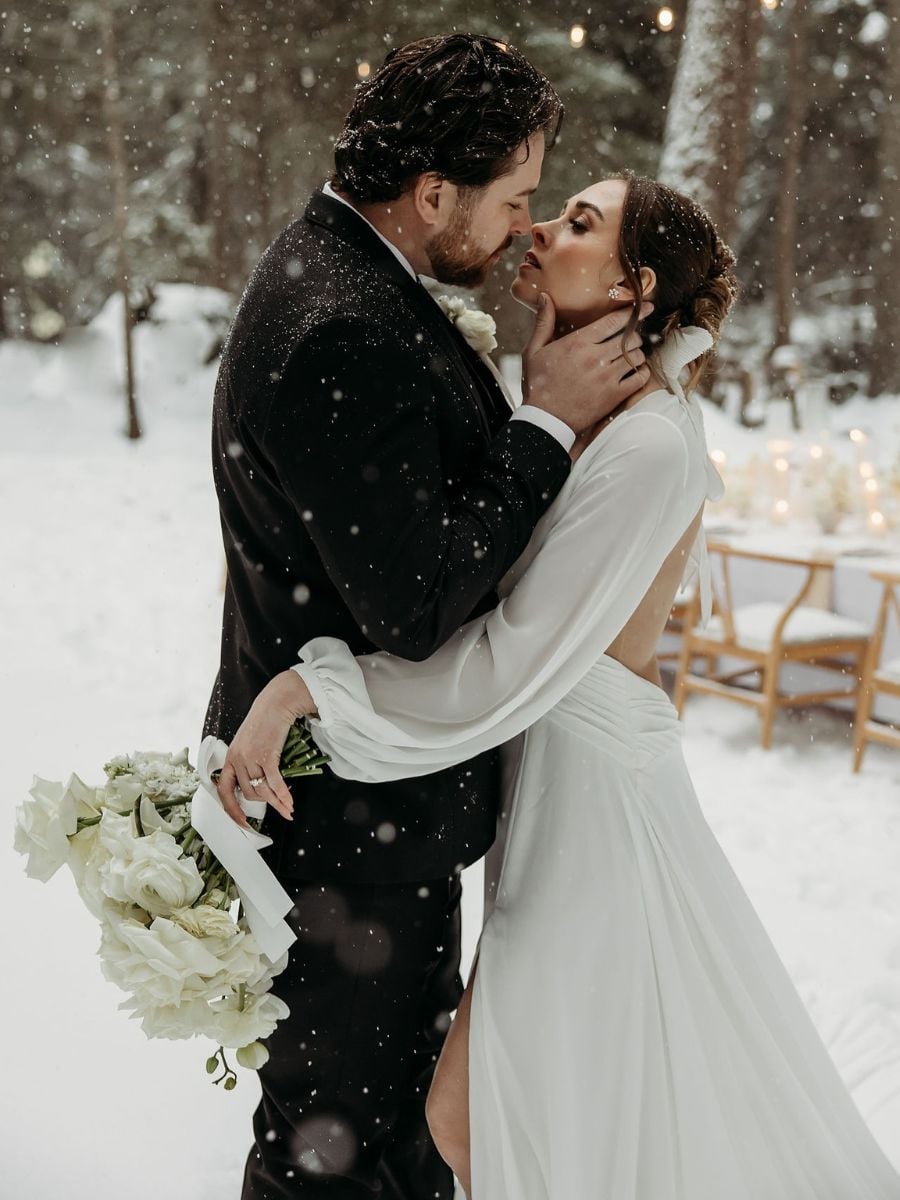
Roses are available all winter, which makes them the safety net of wedding design. White roses remain the reliable base since white suits snowy palettes. Rose Nova Vita from breeder United Selections is a good example. Grown year-round, these roses anchor many winter designs. Garden roses, for their part, give the full, romantic look. This impression is easily expressed in winter wedding garden roses, which show Garden roses Leonora and Tess from Colombia’s Alexandra Farms in bouquets and table designs.

Garden roses can be held up with willow branches and topped with other florals in such designs. But if you want to avoid price pressure, remember that red rose prices can rise suddenly before and around February 14, so choose blush, peach, or white instead of solely focusing on red for a wedding that week.
Statement Flowers for the Ceremony Space
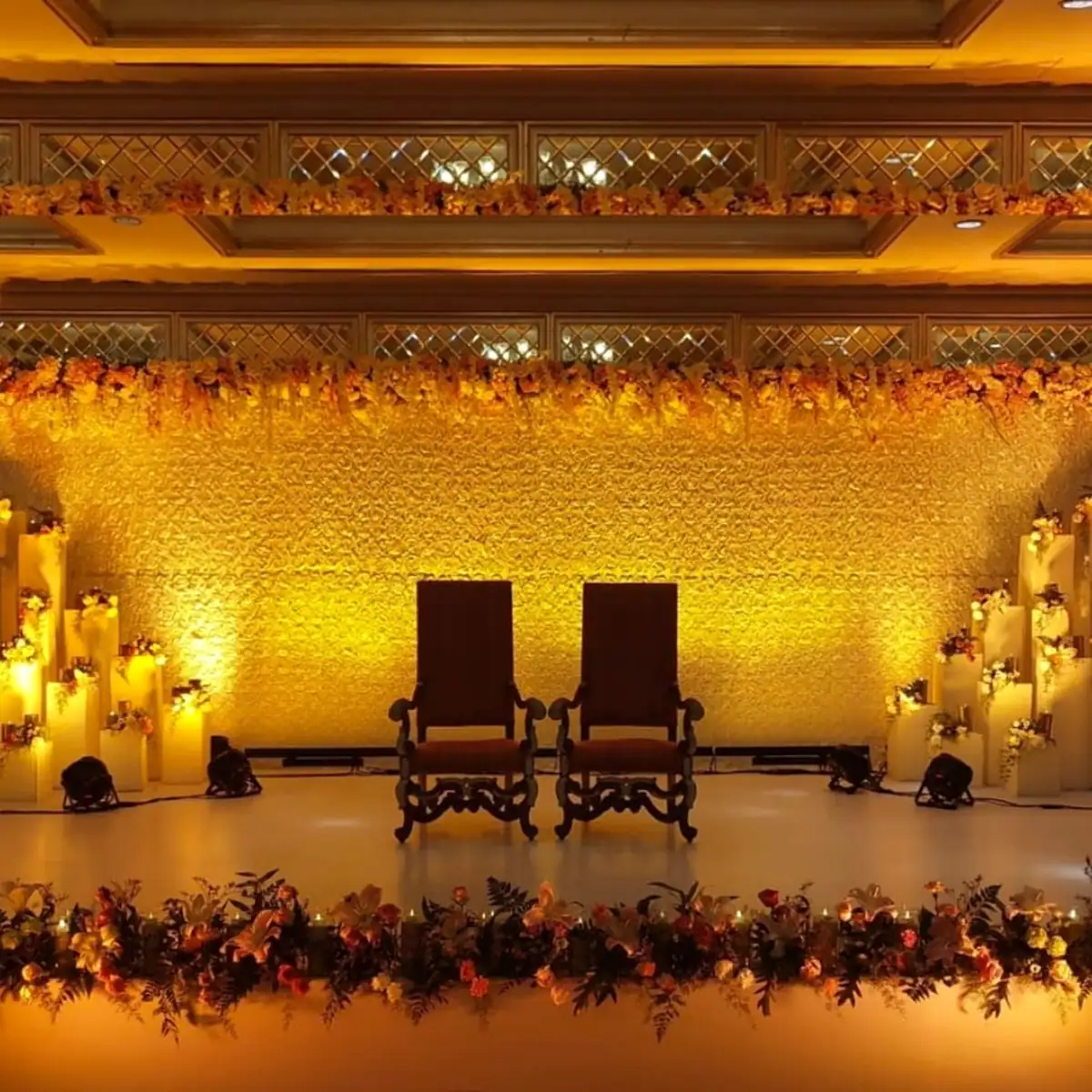
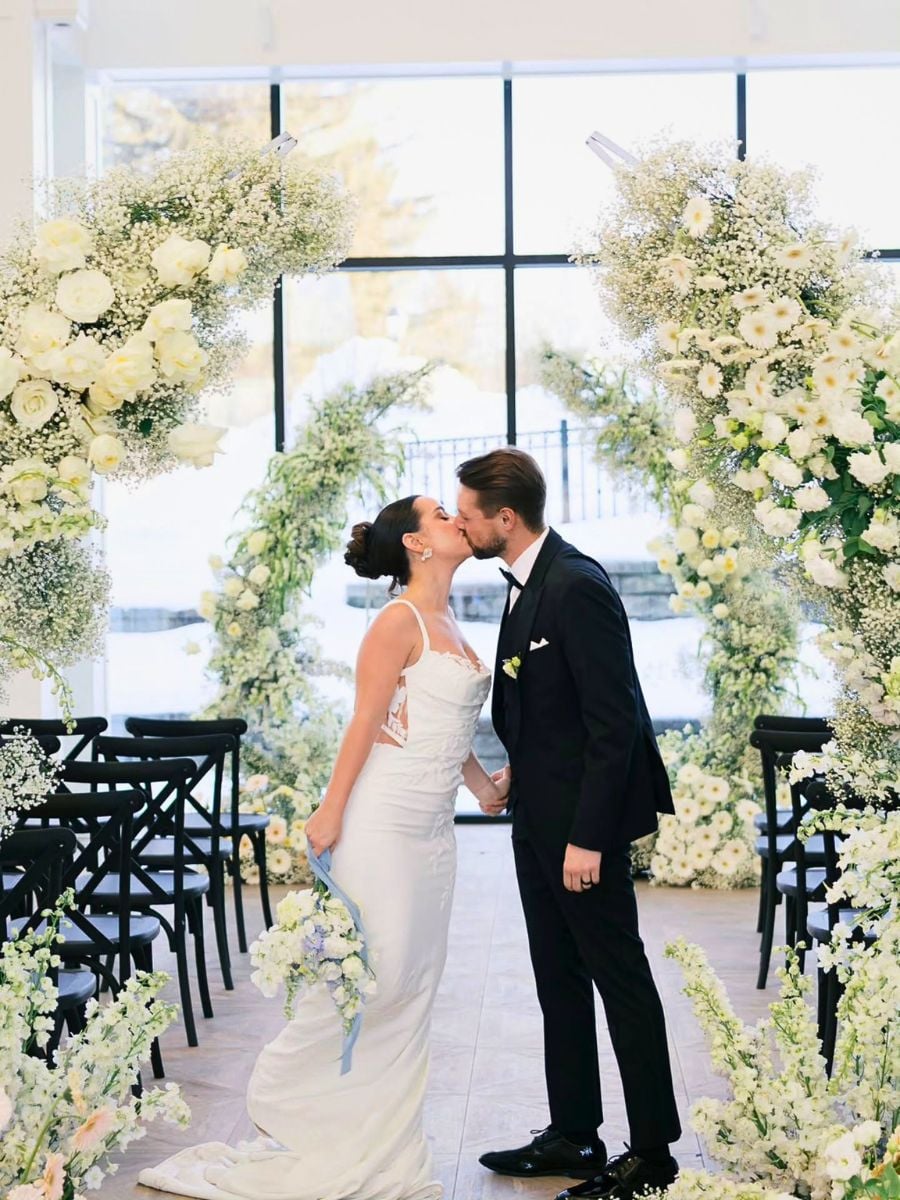
The ceremony space needs flowers with presence. Amaryllis peaks around Christmas, and its tall trumpet shapes in white and red suit arches and aisle pieces. A white Amaryllis over white spray roses makes an elegant all-white design, and red Amaryllis looks striking with pine and cones. Pink does it well too, with corresponding florals.

Boers Amaryllis is one of the Dutch specialists behind these flowers’ supply, and the varieties suit ceremony arrangements and tall table pieces where they make a statement. Note that since their hollow stems tend to split and curl at the base, insert a thin cane or tie the base, and use shallow water.
When building a design with these flowers, perhaps start arches with an evergreen base, and then add roses or Amaryllis where photographers will be looking. For airy drama, a variety like Clematis Amazing® Vienna, with pure white star-shaped petals and trailing vines, would be ideal to add to the hanging installations. Also, Protea, which stands for strength and adaptability, and Hydrangea, which stands for grace and abundance, suit larger pieces.
Orchids, Callas and Others That Add Formal Elegance
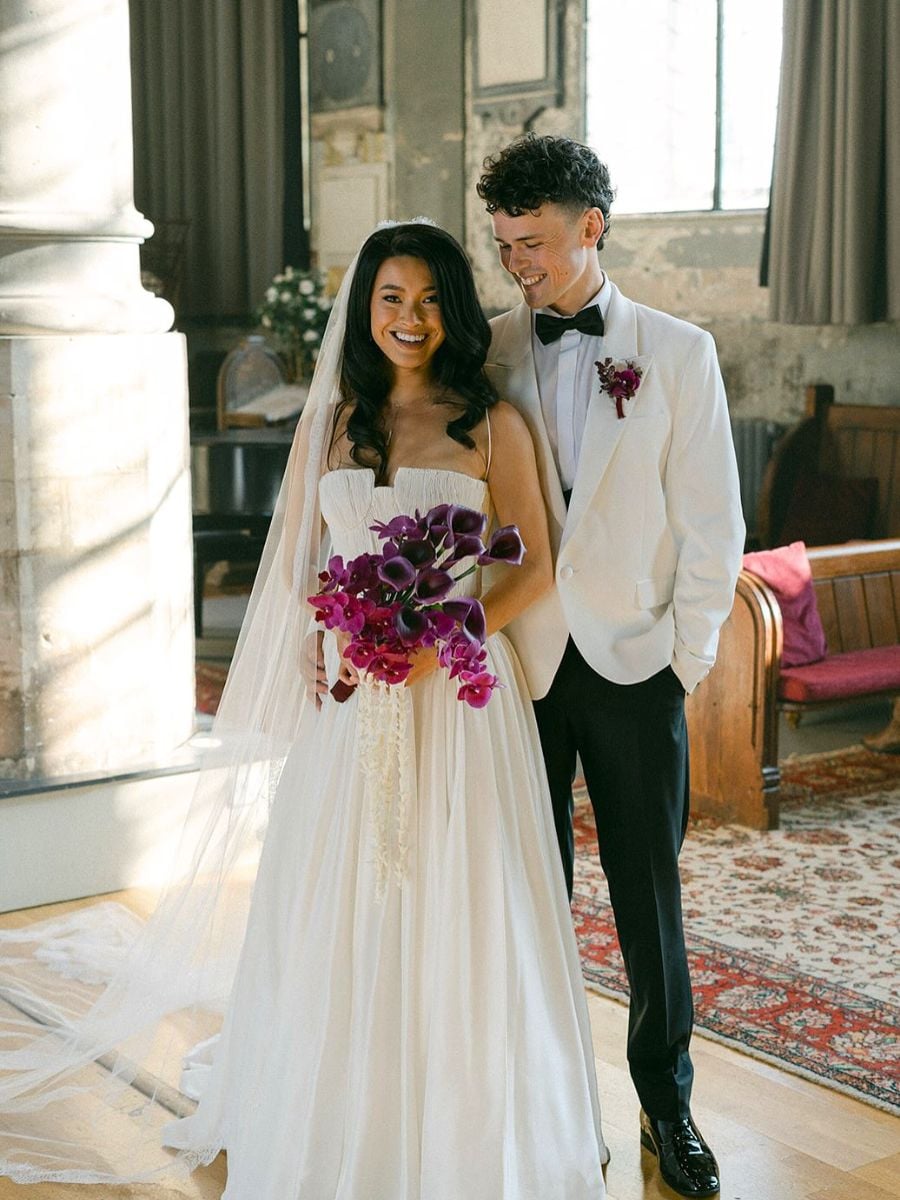
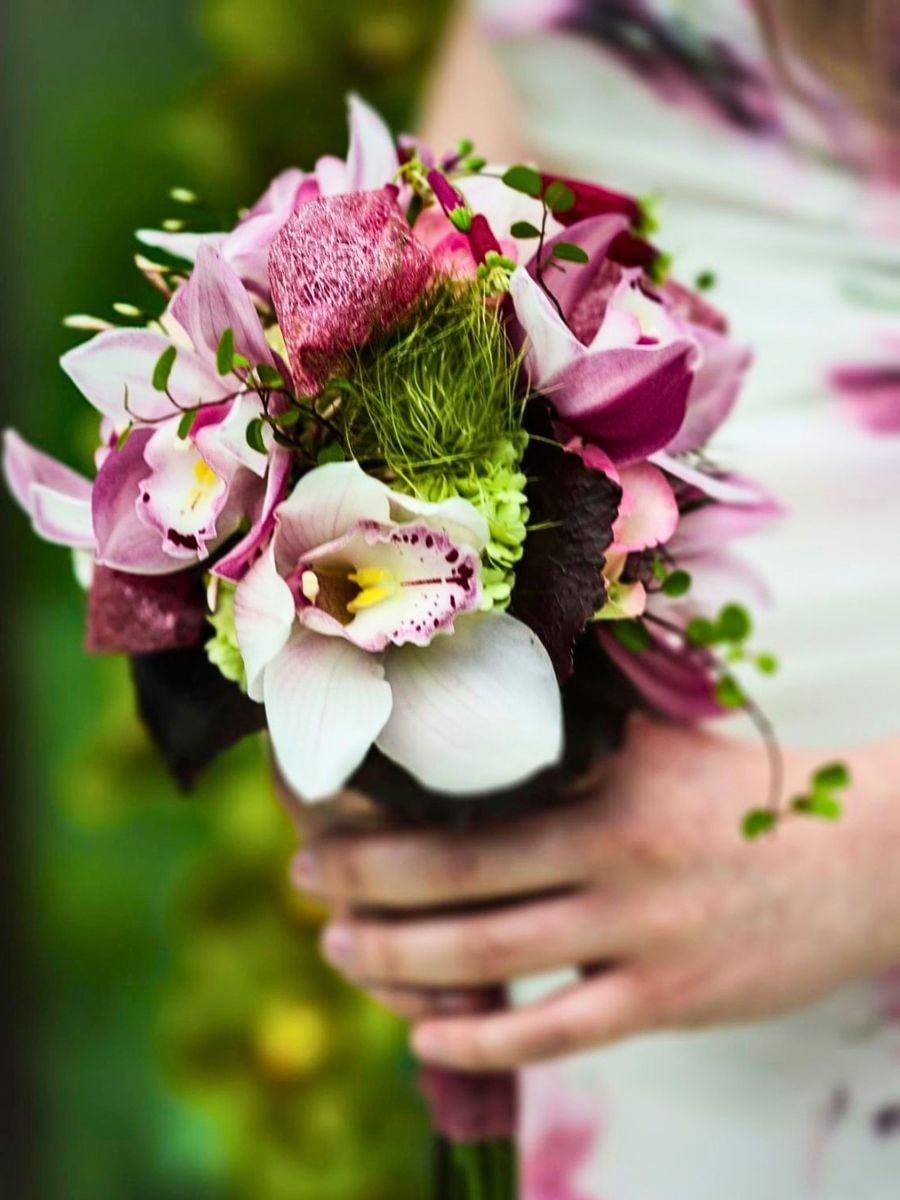
For black-tie weddings, orchids and calla lilies provide polish. Cymbidium generally lasts six to eight weeks, according to the RHS, so it handles a long event day with ease. Alain Poot Orchideeën in Delfgauw breeds and grows Cymbidium, including Cymbidium Kensi. White Phalaenopsis, for its part, generally suits minimalist designs and holds for long.
Callas are also an ideal flower to use, with their velvety, sculptural form, working in arches and bouquets. Varieties such as Captain Ventura (pure white) are available all year. Christmas-time wedding bouquets often pair dark callas with neutral roses and foliage for an intense look. In De Lier, Haas Calla and Helleborus grows Calla and Helleborus as its two main flowers, a useful pairing for winter palettes.
You’ll also be delighted to know that tulips usually come from forcing in December, even before gardens flower. W.F. Leenen in Sassenheim is one of the bulb specialists behind this supply, forcing Daffodils, tulips, and even Ixias. These flowers could also add a subtle statement to floral installations.
Branches, Berries, and Winter Florals and Evergreens That Build Texture
Foliage and evergreens do a lot of the visual work in winter designs. For instance, the red berries of Ilex add color. In Boskoop, Emiel de Jong’s nursery has grown Ilex since 1975, harvesting from the end of September to December. Winterberry also holds its berries from early December until after New Year if kept cool, making it ideal for design work.

Elsewhere, pine, cedar, and eucalyptus look their best in the cold and add fragrance. Pine and cedar are, notably, heavy, so use short pieces at the base of bouquets and longer ones along runners. A long runner of cedar, Magnolia leaves, and berries suits a reception table, with eucalyptus and willow adding height and movement.
Also, Hypericum is said to represent resilience and hope, which suits a wedding in the cold months. Hypericum berries therefore work well with varieties like Eryngium and Astrantia, which cope well through the day. Snowdrops, small white bells that symbolize hope, are another delicate winter detail, and Camellias with symmetrical, waxy petals can come in handy, floating in a low bowl of water on a table.
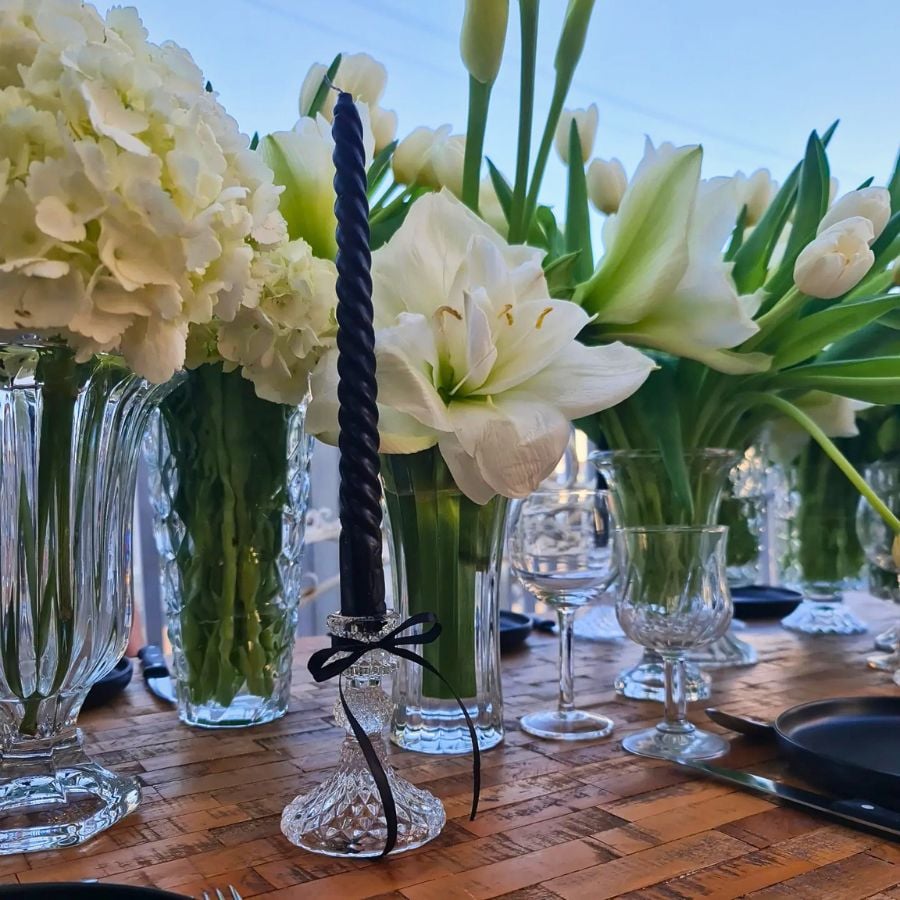
Note: Keep centerpieces low so guests can talk across the table, and use glass hurricanes or tall tapers to keep candle flames clear of dry greens. Also, for warm reception rooms, Chrysanthemums are a good choice, since they have a long vase life and hold up well indoors.
Choosing a Palette
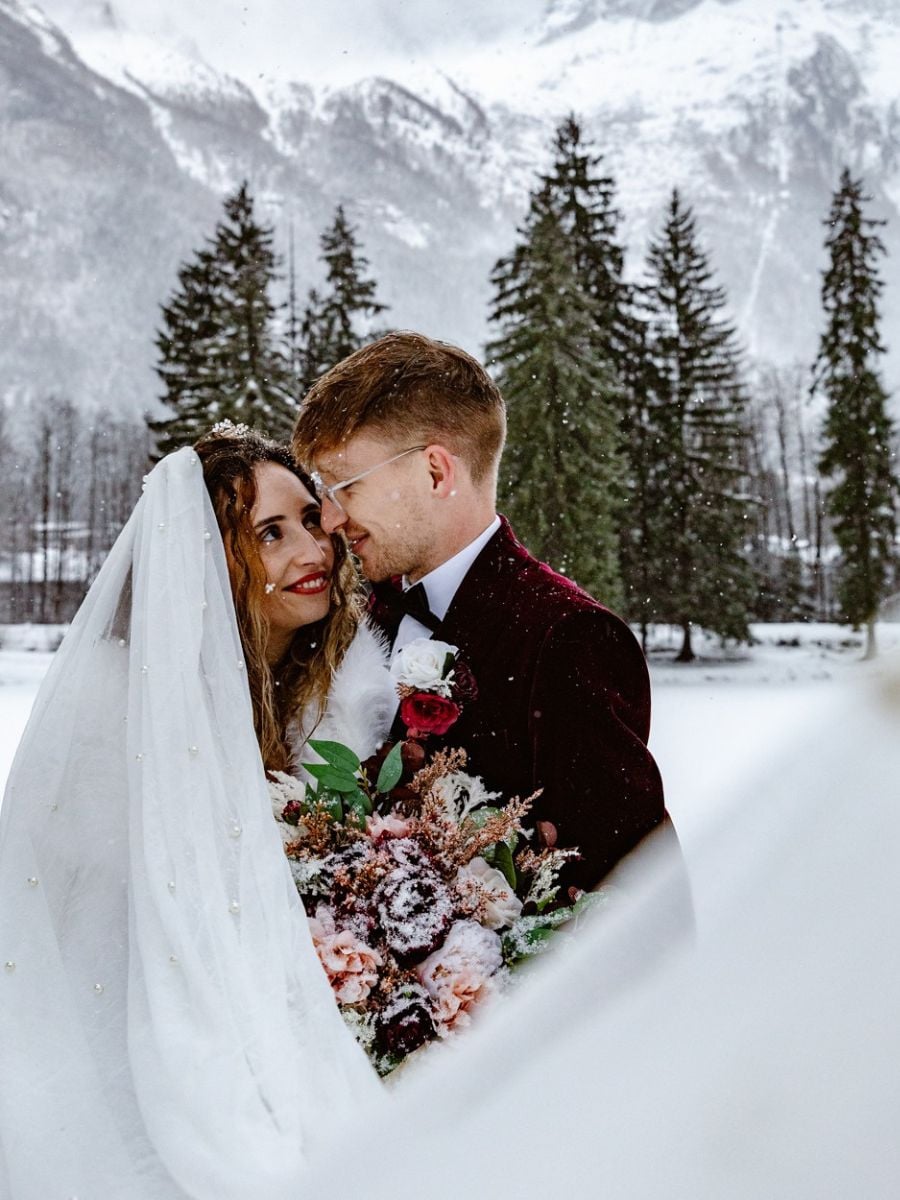
Color gives the day its character. White and green are the classic winter palette, and soft blues add a frosted accent. A frost palette of white, silver, and ice blue, certainly, feels crisp and clean. Elsewhere, a deep burgundy palette creates drama for evening receptions. Wine and plum, made with burgundy roses, deep red Anemones, plum hellebores, crimson callas, and chocolate Ranunculus, feels rich and moody.
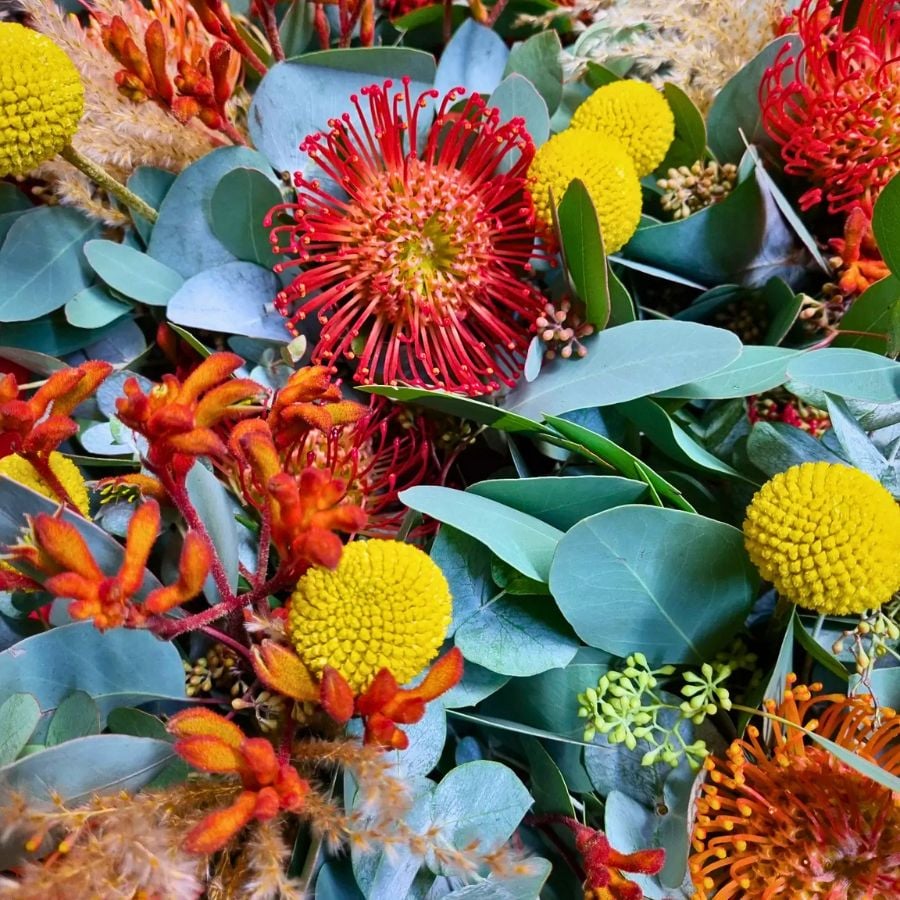
Forest and gold is another strong palette that pairs pine, cedar, and willow with golden Anigozanthos and brass candlesticks. A blush-and-dusty-blue palette could pair Lisianthus, Hydrangea, blush roses, and sea holly.
And for couples who want a forward-looking approach, Thursd’s Trend Color 2027, Ocean Pulse and Thursd Voltage, pairs a deep teal with a warm orange. Teal would appear in ribbon or linen, and orange Ranunculus or other thematic flowers provide the coral warm orange. In a basic palette, the Ocean Pulse teal and Thursd Voltage orange combination could also work with blue-green foliage and amber Ilex berries.
A Few Practical Tips for Winter Wedding Flowers’ Planning
- Book early, since winter specialty flowers have limited supply.
- If it works for you, choose one structural element, one focal flower, one volume flower, and one filler so the budget holds.
- Keep flowers in a cool room until the last moment, away from radiators and fruit bowls, and use sugar-based flower food to help dry-shipped stems recover.
- For outdoor ceremonies, favor sturdy stems such as hellebores, evergreens, and roses, and keep delicate Ranunculus for sheltered spaces.
- Ask your florist which varieties are strongest that week, because winter supply changes fast.
- Boutonnieres and corsages should ideally be kept small, sturdy, and simple, repeating one standout element from the bouquet.
Featured image: @montana_bride. Header image @_emedic.