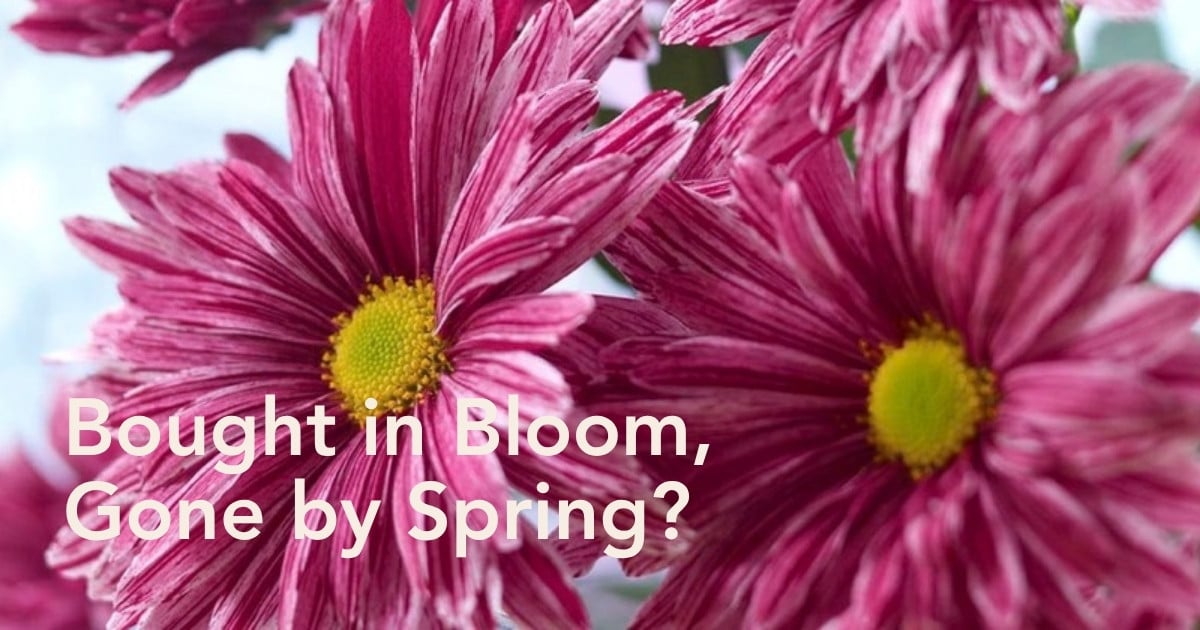
Every September, garden centers and grocery stores fill up with fall mums in full flower. By spring, a lot of those pots are empty. That is not bad luck. It mostly comes down to which mum went home with you and when it went into the ground.
So, are mums perennials? The plant is. Chrysanthemum x morifolium, the Chrysanthemum sold as both garden mum and florist mum, is a perennial that is hardy to about USDA zone 5. Whether yours comes back is another question. This guide covers how to care for mums in pots and in the ground, how often to water them, the types of mums you will see for sale, and what it takes for garden mums and potted mums to flower again next fall.
Are Mums Perennials?
Yes, most mums are perennials. Chrysanthemum x morifolium is hardy in USDA zones 5 to 9, according to both NC State Extension and Illinois Extension, and in the South it overwinters outdoors without much help. The catch is in the word most. Florist mums, the potted ones sold all year, are not bred for winter, and many fall mums bought in full flower die before they ever get a second season.
Most of the difference comes down to two things: which kind of mum you bought and when it went into the ground.
Garden Mums Versus Florist Mums
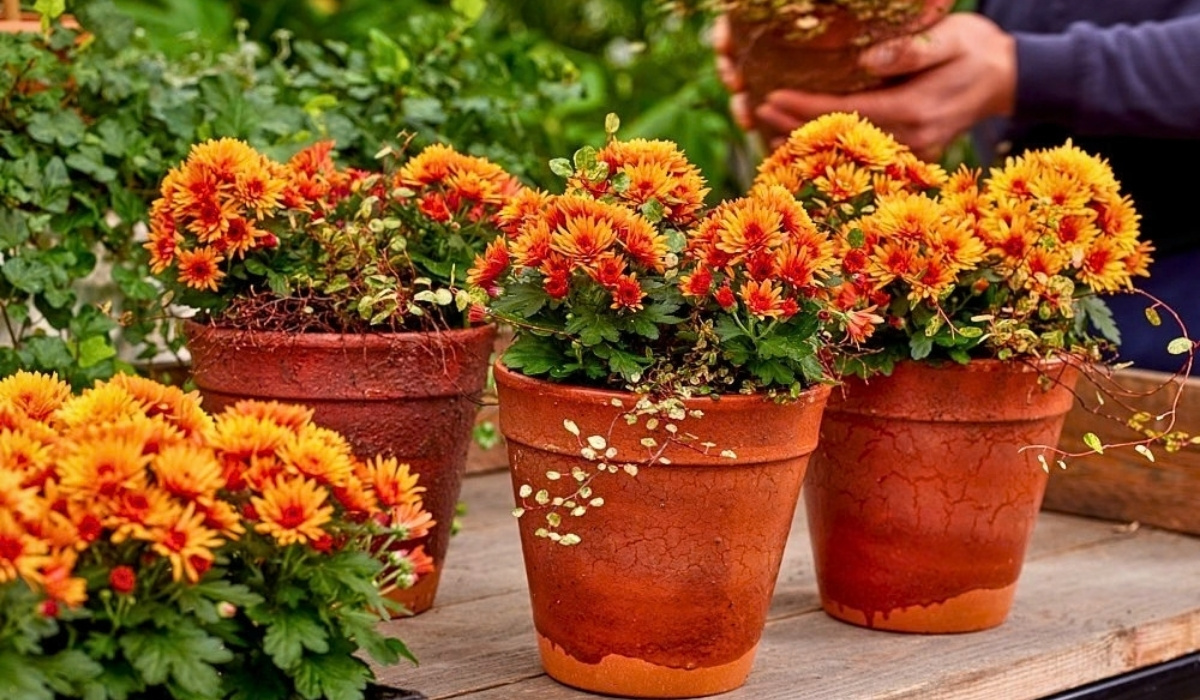
Both are Chrysanthemums, and at the register they can look the same. They are not bred for the same job.
Florist mums are the potted plants sold year-round at florists and supermarkets, often in a foil wrap or a decorative pot cover. They need a long stretch of uninterrupted darkness before they set buds, so outdoors they flower late in fall, and frost often kills the buds before they open. Iowa State University Extension is blunt about it: most florist mums will not survive the winter outdoors in Iowa, and the few that do rarely flower outdoors again. Enjoy one indoors, and then compost it.
Garden mums, often sold as hardy mums, are more cold-hardy and need a shorter dark period, so most of them flower by early fall. The University of New Hampshire Extension adds that single-flowered types are hardier than the double florist varieties, and it names 'Hillside Sheffield Pink' and Chrysanthemum weyrichii 'White Bomb' as examples.
Why can a florist sell mums in May? Mums are short-day plants: they set buds when the nights get long, which is why they flower in autumn. Greenhouse growers light the plants to keep them growing and then black out the greenhouse to bring them into flower, a routine explained in the piece on how Chrysanthemum breeding works. The same sensitivity can work against you at home. Iowa State and Illinois Extension both warn that a mum planted near a street light or a house light may flower late or not at all.
Why Most Fall Mums Die
A mum bought in September is usually sold at its peak, a tight mound with every bud open. That is great on a porch and hard on a plant you want to keep. Penn State Extension puts it simply: a mum planted in fall while already in bloom may not survive the winter because it spends its energy on flowers instead of roots.
Then there are the roots themselves. Mums have shallow, fibrous roots, and when the soil freezes and thaws over and over, the plant can be heaved out of the ground, Iowa State notes. A fall-planted mum has had weeks, not months, to root in. Illinois Extension adds that drought-stressed plants are less likely to make it through winter and that mums do not like wet feet, so a low, soggy spot finishes what the cold starts.
The fix starts at the garden center. Gary Bachman, an Extension horticulturist at Mississippi State University, advises choosing plants with buds that are just beginning to open because they give the longest color show. Illinois Extension makes the same point about late-season mums, which still look green and plain on the bench but give you the whole flowering season at home instead of the tail end of it.
How to Care for Mums in Pots and in the Garden
How to care for mums depends on the plan. A pot of mums for the porch only has to look good until frost. A mum you want back next year needs an early spot in the ground and a little attention in spring.
How to Care for Potted Mums
Outdoors, give potted mums full sun. Gary Bachman of Mississippi State says that is where they flower best, and Iowa State and Illinois Extension recommend at least six hours of direct sun for mums in the ground. Indoors, a florist mum does best in a bright spot out of direct sun at 16 to 21 °C (60 to 70 °F), Iowa State says. Either way, snip off faded flowers as you go, since Penn State notes that removing them regularly helps prolong flowering.
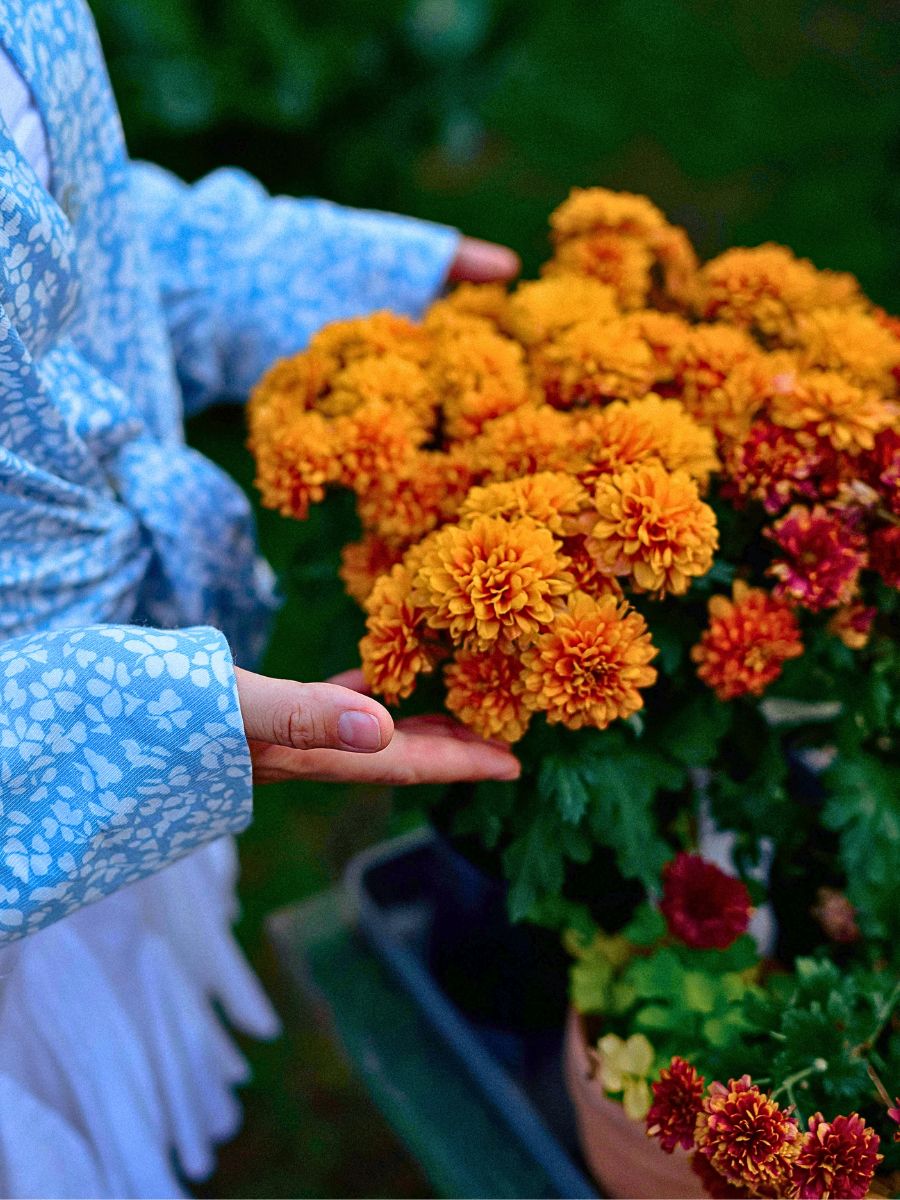
When frost is in the forecast, pull the pots close to the house, move them into a shed or garage, or throw a light sheet over them, as Illinois Extension suggests. A pot that sits in a decorative cover should come out of it to be watered and go back in once it has drained.
How Often to Water Mums
More often than you think. A potted mum in full flower is a lot of plant in a little soil. Illinois Extension's guidance for potted mums is to water every other day, or at least whenever the top 2.5 cm (1 inch) of soil is dry. Water until it runs out of the drainage hole so that the whole root ball gets wet, not just the surface.
Keep the water on the soil, not on the leaves. Wet leaves invite fungal problems, Gary Bachman of Mississippi State notes, and a pot that dries out loses color that takes a while to come back. Clemson Cooperative Extension adds that mums need the most water while they are flowering.
Mums in the ground are easier. Iowa State recommends a steady supply of moisture, 5 cm (2 inches) of mulch around the plants, and watering every 7 to 10 days when the soil is dry during long dry spells.
When to Plant Mums so They Come Back
In spring. Iowa State, Illinois Extension, Penn State, and the University of New Hampshire Extension all say the same thing: a mum planted in spring has a whole growing season to root before winter. Penn State's timing is early spring, once all danger of freezing has passed.
Planting a fall mum anyway? Get it in the ground as soon as you bring it home. Penn State advises planting at least six weeks before freezing weather so that the roots have time to establish. Pick a sunny, well-drained spot, ideally a sheltered one near the house and away from outdoor lights. Set the plant at the same depth it grew in the pot, and space plants 45 to 60 cm (18 to 24 inches) apart, per Iowa State.
Getting Mums Through the Winter
Leave them alone in fall. It looks untidy, but research cited by Iowa State and Illinois Extension shows that garden mums survive better when the old stems stay standing through winter. Once the ground starts to freeze, add mulch. Illinois Extension suggests a 10 cm (4 inches) layer, and Iowa State recommends straw or pine needles in late November or early December. Skip fallen leaves, which mat down and can damage the plants. Pull the mulch back in early spring, and cut out last year's stems when new growth starts.
No time to plant? Illinois Extension's fallback for potted mums is simple: after a hard frost, move the pot to a cool, dark place, and bring it back outside when the weather warms up in spring.
Pinching Mums in Spring
A mum that comes back grows taller and floppier unless you pinch it. When new shoots reach 15 cm (6 inches), pinch out the tips, and do it again when the side shoots reach the same length. Iowa State and Illinois Extension both say to stop by early July, and gardeners use the Fourth of July to remember it. Pinch later, and the flowers come late. Taken to its extreme, the same technique gives you the Japanese thousand-bloom Chrysanthemum, one plant trained to carry hundreds of flowers.
Iowa State's advice is to feed with a slow-release fertilizer when new growth begins in spring and to skip feeding in summer so that the plant does not push soft growth into fall. It also recommends dividing garden mums every two or three years in early spring, as soon as new growth appears.
Types of Mums, and Which Ones Come Back
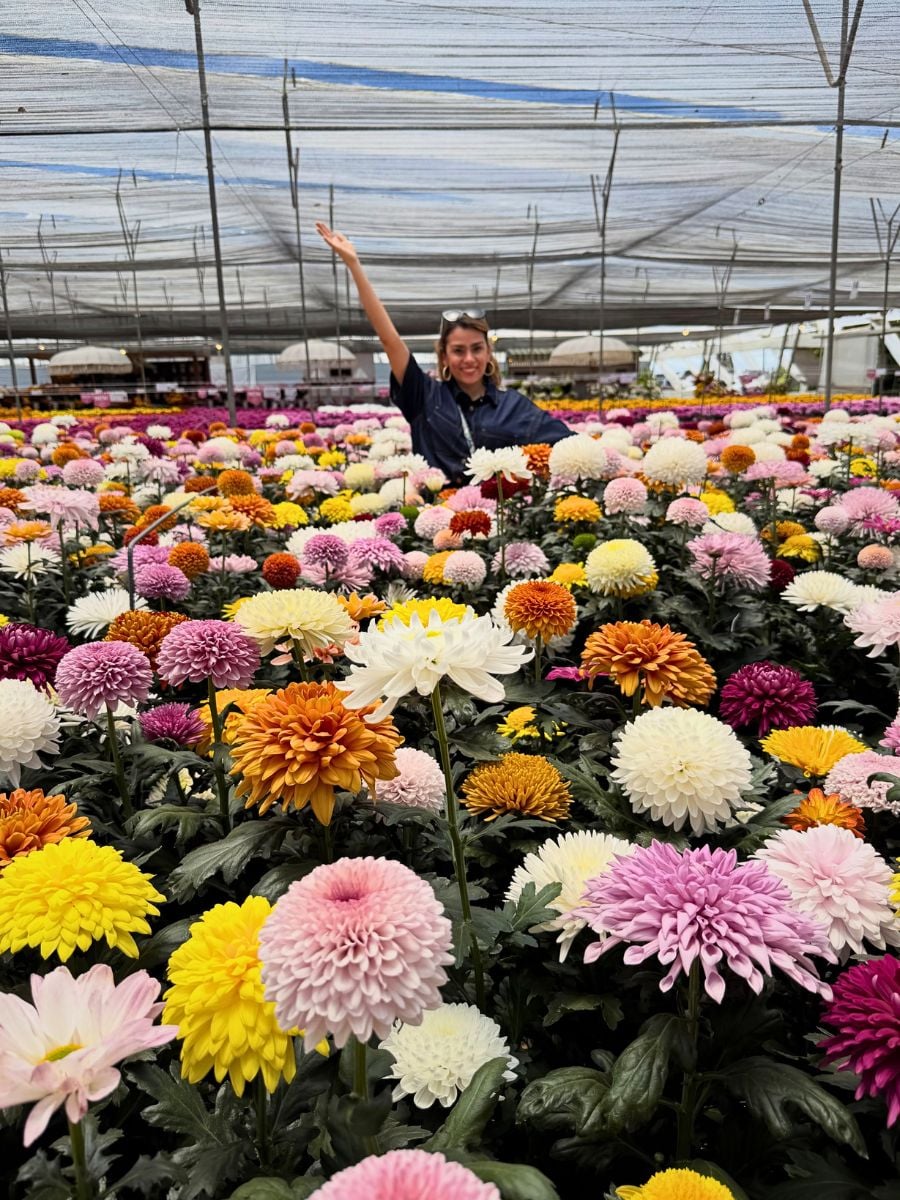
The National Chrysanthemum Society sorts mums into 13 bloom classes, from giant incurves to thread-thin spiders, as the New York Botanical Garden's library guide lays out. At a garden center, you will meet a handful of them, and they are not equally tough. Iowa State's list of mum types notes which forms have hardy cultivars, and that is the list worth knowing before you buy.
Cushion Mums
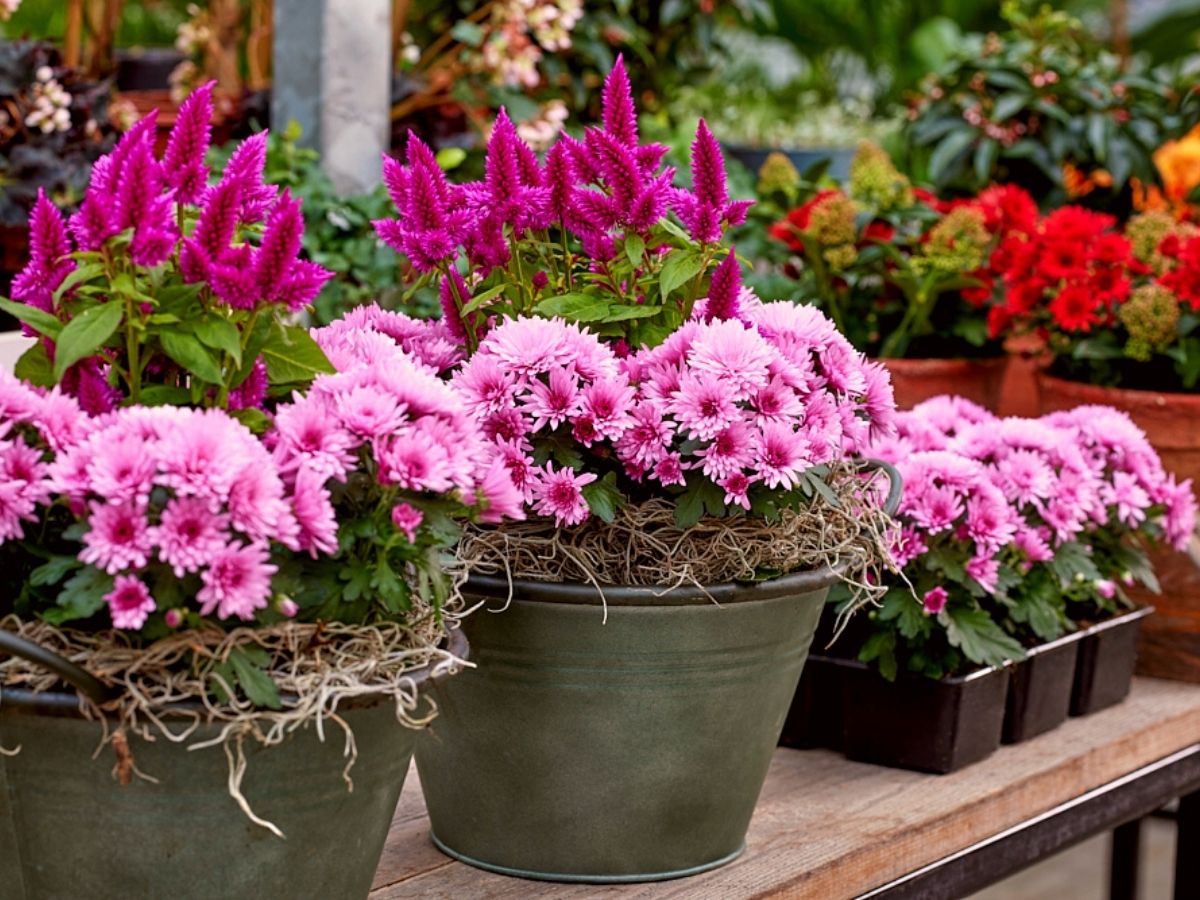
These are the low, bushy domes that fill garden center benches in September. Iowa State describes cushion mums, often called azalea mums, as early flowering, with most cultivars hardy. Strictly speaking, cushion describes the plant's habit rather than the flower, as Clemson points out. Compact garden mum series such as Multiflora PaX from Royal Van Zanten grow into this rounded shape.
Decorative Mums
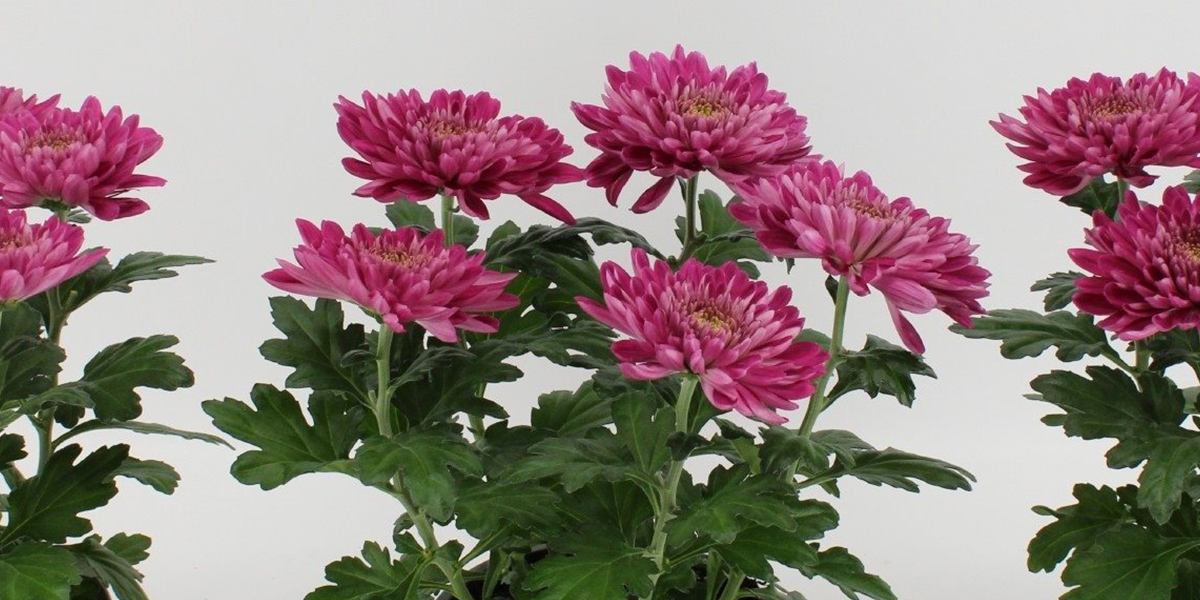
Decoratives have double or semi-double flowers with short petals, the upper ones curving in and the lower ones bending down. The NYBG guide calls it a very common class that you will often find among garden mums, and Iowa State lists many hardy cultivars in the group. The pot mum Chrysanthemum Zembla Desna, with its large, well-filled purple flowers, shows the full, double look.
Pompon and Button Mums
Pompons form small, stiff, almost round flowers, and Iowa State counts some hardy cultivars among them. Buttons are the small version, with double flowers under 2.5 cm (1 inch) across, according to Illinois Extension. The same round shape turns up in the vase as a cut flower, in varieties such as Chrysanthemum Momoko from Dekker Chrysanten, which forms pink pompons.

Single and Daisy Mums
Singles look like daisies, with several rows of long petals around a flat center, as Iowa State describes them, and the group has many hardy cultivars. The hardiest examples named by the University of New Hampshire Extension are single-flowered too. Among cut flowers, Deliflor's Chrysanthemum Midnightsun has the look, with orange petals that fade from light to dark around a green eye.

Anemone Mums
An anemone mum looks like a semi-double with a raised center, which the NYBG guide compares to a pincushion. Iowa State says most cultivars in this group are hardy. The pot mum Chrysanthemum Sunda shows the form, with purple petals edged in white around a green-yellow anemone center.

Spider and Quill Mums
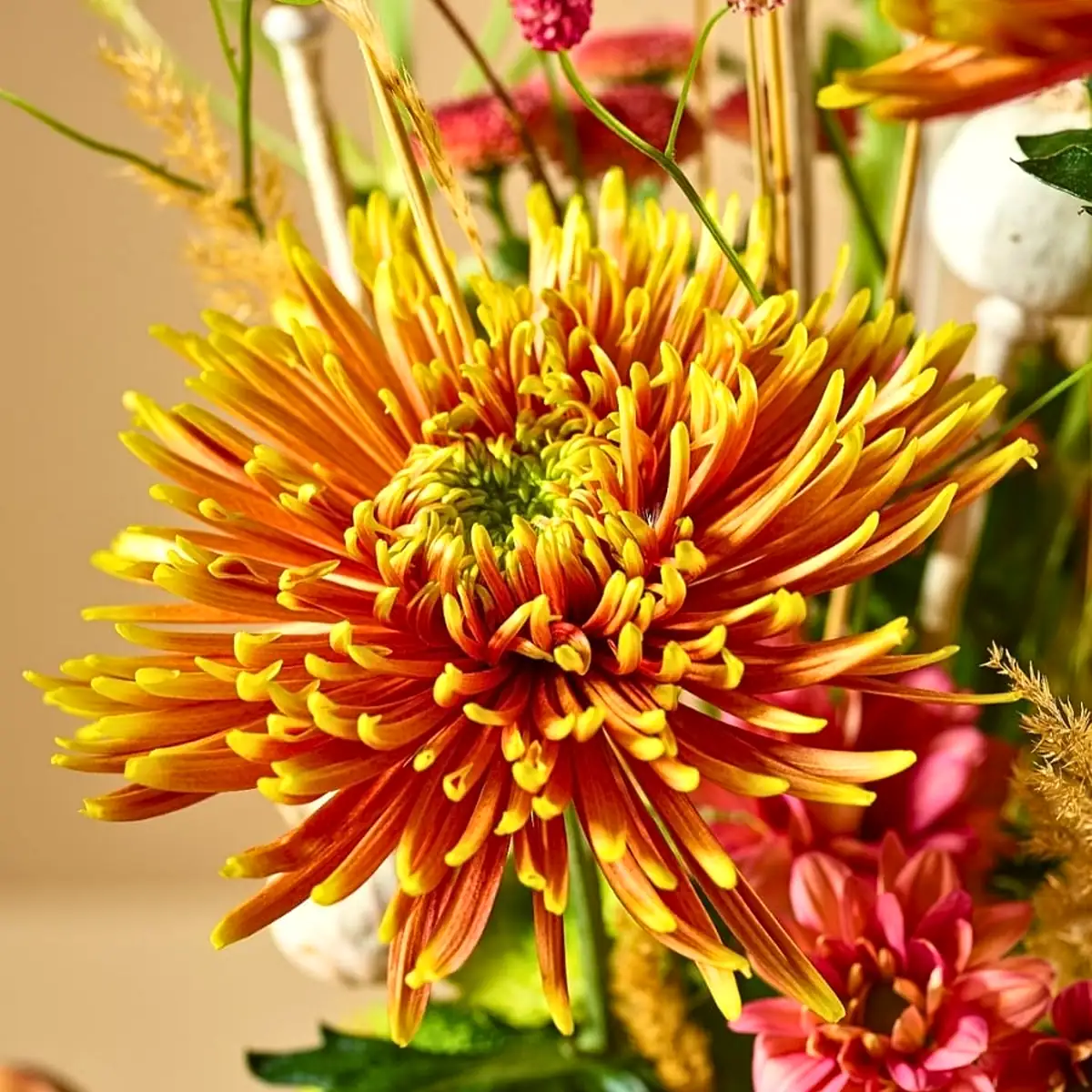
Spiders have long, tubular petals that hook or curl at the tips; quills have straight tubular petals; and spoons end in a small spoon shape. These are the mums least likely to come back: Iowa State lists few hardy cultivars among spiders and quills, and only some among spoons. As cut flowers, they are easy to enjoy. Chrysanthemum Capriool, bred by Dekker Chrysanten, shows the spider form, with many long, narrow, string-like petals.

Spray, Disbud, and Santini Mums at the Florist
Cut mums are sorted differently. A spray mum carries several flowers on one branched stem, like the Midnightsun above. A disbud has its side buds removed, so one big flower gets everything. A Santini is a small-flowered spray with a compact habit, as the piece on Chrysanthemum breeding explains. Growers such as Staalduinen Chrysanten in 's-Gravenzande in the Netherlands grow cut spray mums in colors from white to purple, orange, and red.
David Marín, director of Deliflor Americas, named a disbud as his favorite flower in his 10 Questions interview on Thursd: "My favorite flower is the Magnum variety, a large, resilient, and long-lasting Chrysanthemum bred by Deliflor. It is a striking and impactful flower that stands out in any floral arrangement."

Santinis such as Dekker Chrysanten's Doria Orange bring small, sturdy flowers to autumn designs. For ideas with cut mums, see how florists use Chrysanthemums in autumn floral compositions. For the vase, Chrysal's Chrysanthemum care tips on Thursd cover conditioning and flower food, and the El Trigal Manantiales story follows Colombian Chrysanthemums on their way to the vase. Breeders keep adding forms and colors, as Danziger's Eliana Díaz explains in the interview about breeding mums.

One color garden mums never had is blue. The blue-toned BluOcean Chrysanthemums are a bred exception, grown as cut flowers in Colombia and, at the time of the 2025 report, sold in the United States, Canada, and Australia.
In Texas, a mum is also something you wear. The homecoming mum began as a real Chrysanthemum with ribbons, pinned to a date's clothes, and today it is made with artificial flowers so it can be kept, Spectrum News reports, citing Texas Highways.
Are Mums Toxic to Cats and Dogs?
Yes. The ASPCA lists Chrysanthemums as toxic to dogs, cats, and horses. The plant contains sesquiterpene lactones and pyrethrins, and the signs include vomiting, diarrhea, drooling, poor coordination, and skin irritation. For people, NC State Extension rates the poison severity as low, though handling the leaves can cause a mild rash in sensitive individuals. Keep potted mums where pets cannot chew them, and if one does, call your veterinarian or the ASPCA Animal Poison Control Center.
If you want the pot on the porch to be a plant next year, buy it in bud, get it into the ground early, water it as it matters, and leave the dead stems standing until spring. If it is a florist mum, enjoy it indoors and let it go. For company in the garden, the lists of fall-blooming flowers, autumn garden plants, and fall flowers for designs and gardens pick up where the mums leave off. Want to know what your mums say? The guide to Chrysanthemum meaning and symbolism goes color by color, and the history of the Chrysanthemum starts in China, where it was grown as a crop as early as the 15th century BC.
Sources for this guide, September 2026: Iowa State University Extension and Outreach, Growing Chrysanthemums in Iowa (Aaron Steil, reviewed September 2025) and I recently received a flowering mum from a florist. Can I plant it outdoors? (September 2024). University of Illinois Extension, Why do my mums always die? (Ken Johnson, September 2021), Planting and Maintaining Perennial Mums (Ryan Pankau, October 2022), and Mum's the word (Jamie Viebach, October 2024). Penn State Extension, Chrysanthemum Care. University of New Hampshire Extension, Can fall mums be planted in the garden? (September 2019). Mississippi State University Extension, Why Should I Water Mums from the Bottom? (Gary Bachman). Clemson Cooperative Extension, Chrysanthemums: How to Grow Garden Mums in South Carolina (HGIC 1161, Karen Russ and Robert F. Polomski, updated November 2025). North Carolina Extension Gardener Plant Toolbox, Chrysanthemum x morifolium. ASPCA, Toxic and Non-Toxic Plants: Chrysanthemum. New York Botanical Garden, LuEsther T. Mertz Library, Chrysanthemum Classifications. Spectrum News, A Texas tradition, the history of the homecoming mum (September 2024). Temperatures converted from Fahrenheit and rounded.
Featured image: Chrysanthemum Midnightsun by Deliflor. Header image: Chrysanthemum Stellini by Deliflor.