Almost everyone has had one. A spider plant on the kitchen windowsill, a striped clump spilling out of a hanging basket, a baby from a neighbor rooting in a glass of water. Chlorophytum comosum is about as forgiving as a houseplant gets, and that is exactly why it gets ignored until the leaf tips turn brown or the plant stops sending out new babies.
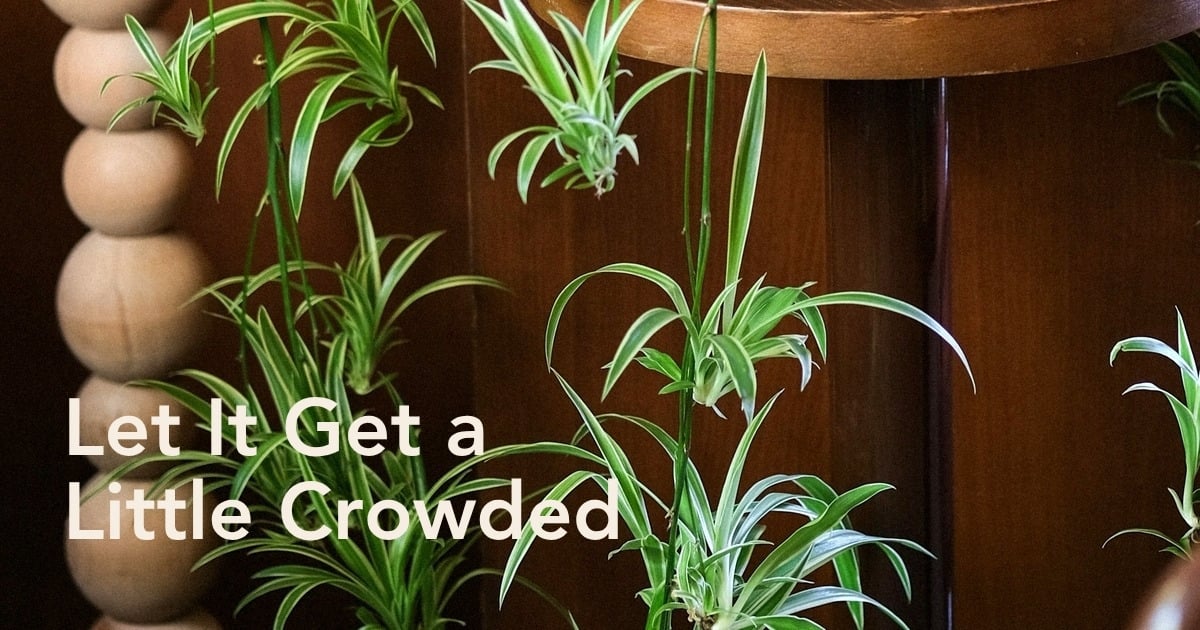
Good spider plant care comes down to light and water, plus one habit that feels wrong: let the pot get a little crowded. Below is what the plant needs, why the tips brown, how to root the spider plant babies, and how a Dutch grower of hanging plants raises them.
What Is a Spider Plant?
The spider plant is a member of the asparagus family, Asparagaceae, and grows wild across a large part of Africa, from tropical West Africa to Ethiopia and down to South Africa, according to NC State Extension. Its genus name is plain Greek: chloros means green and phyton means plant. The species reached Europe in the 18th century, South Dakota State University (SDSU) Extension notes, and labels also call it spider ivy, ribbon plant, or airplane plant.
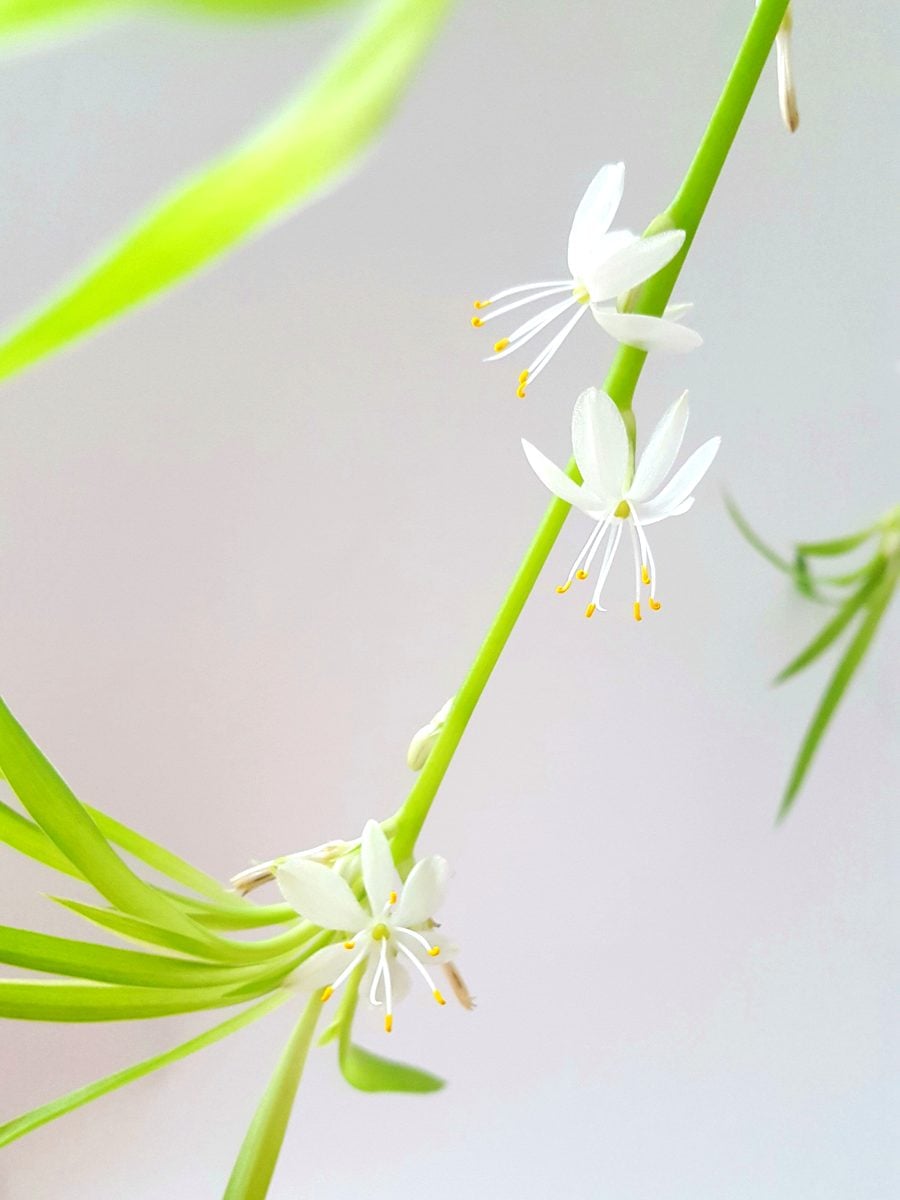
The name comes from the babies. Long, wiry stems of up to about 60 centimeters (2 feet) arch out of the clump, carry small white star-shaped flowers, and then grow tufts of new leaves at their tips: miniature plants that dangle like spiders on a thread. Below the soil, thick, fleshy roots store water, which is why the plant forgives a forgotten watering, University of Wisconsin-Madison Extension explains.
How a Dutch Grower Raises Spider Plants
One nursery that grows them is Hillplant, a family company in Sleeuwijk, in the Dutch province of North Brabant, that has grown hanging plants since 1984. The brothers John and Chris van den Heuvel run it: John looks after the crop, Chris after buying and selling. Hillplant is a member of the Decorum growers' collective and grows more than 50 kinds of hanging plants, many of them developed in-house, according to its own website.
Its spider plant list shows what a nursery actually ships: Chlorophytum comosum Bonnie, Lemon, Ocean, and Variegatum, plus a mix, in 17-centimeter (7-inch) hanging pots with a minimum plant height of 40 centimeters (16 inches), and Bonnie as an XXL plant in a 37-centimeter (15-inch) pot. Hillplant sells only to the trade, through the Floriday platform, the flower auctions in the Netherlands and Germany, and directly to garden centers, and most of its plants go to Germany and France. On pests, it turns to biological control first, and it is cutting back the peat in its potting mix.
Why grow them from the plant itself and not from seed? A spider plant can be grown from seed, but the seedlings do not necessarily keep the leaf coloring of their parent, Wisconsin Extension notes. For a striped variety, that settles it: the reliable copies come from the plant itself, from its babies or a division. At Hillplant, the brothers take cuttings for many of their plants from their own selection, according to the grower's page on Thursd. Pot up a baby at home, and you are doing the same thing on a smaller scale.
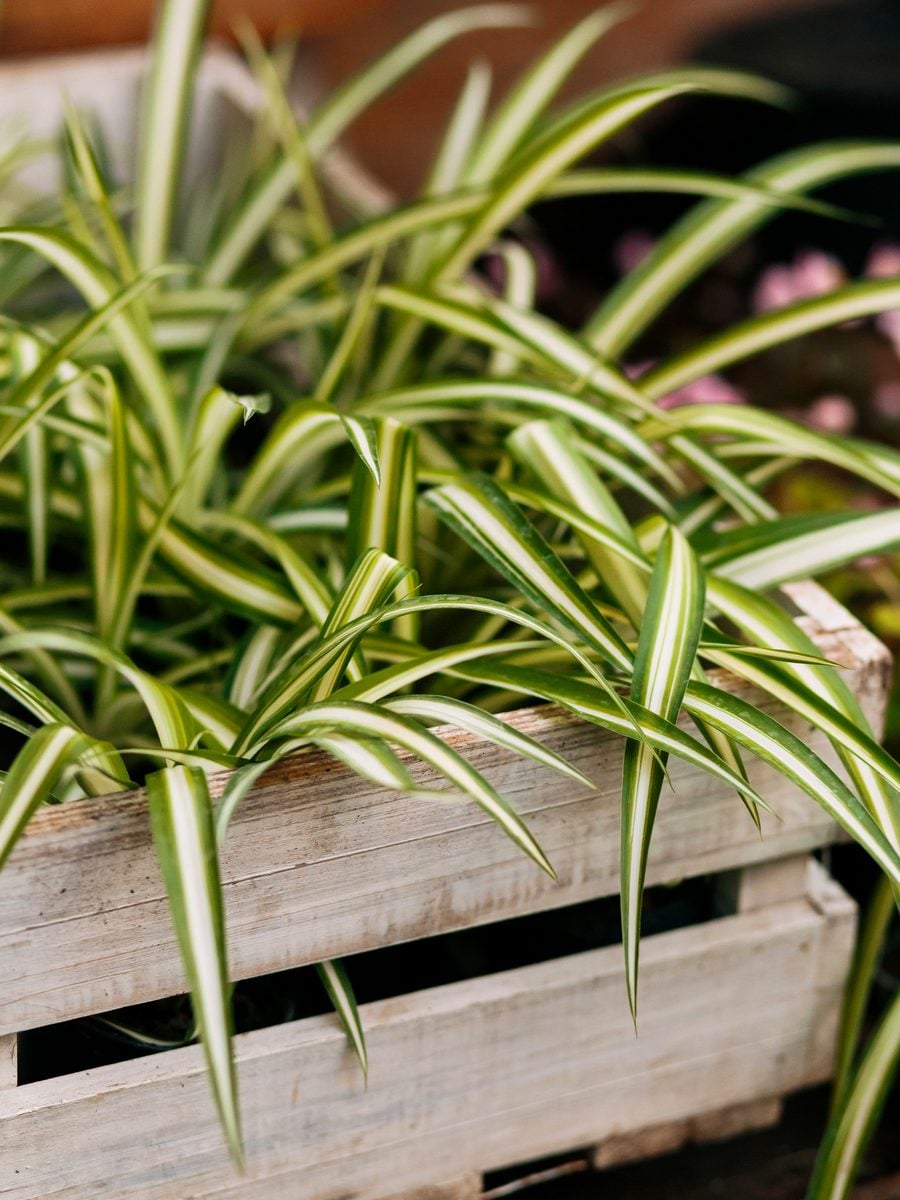
Vittatum, the Cream Center Stripe
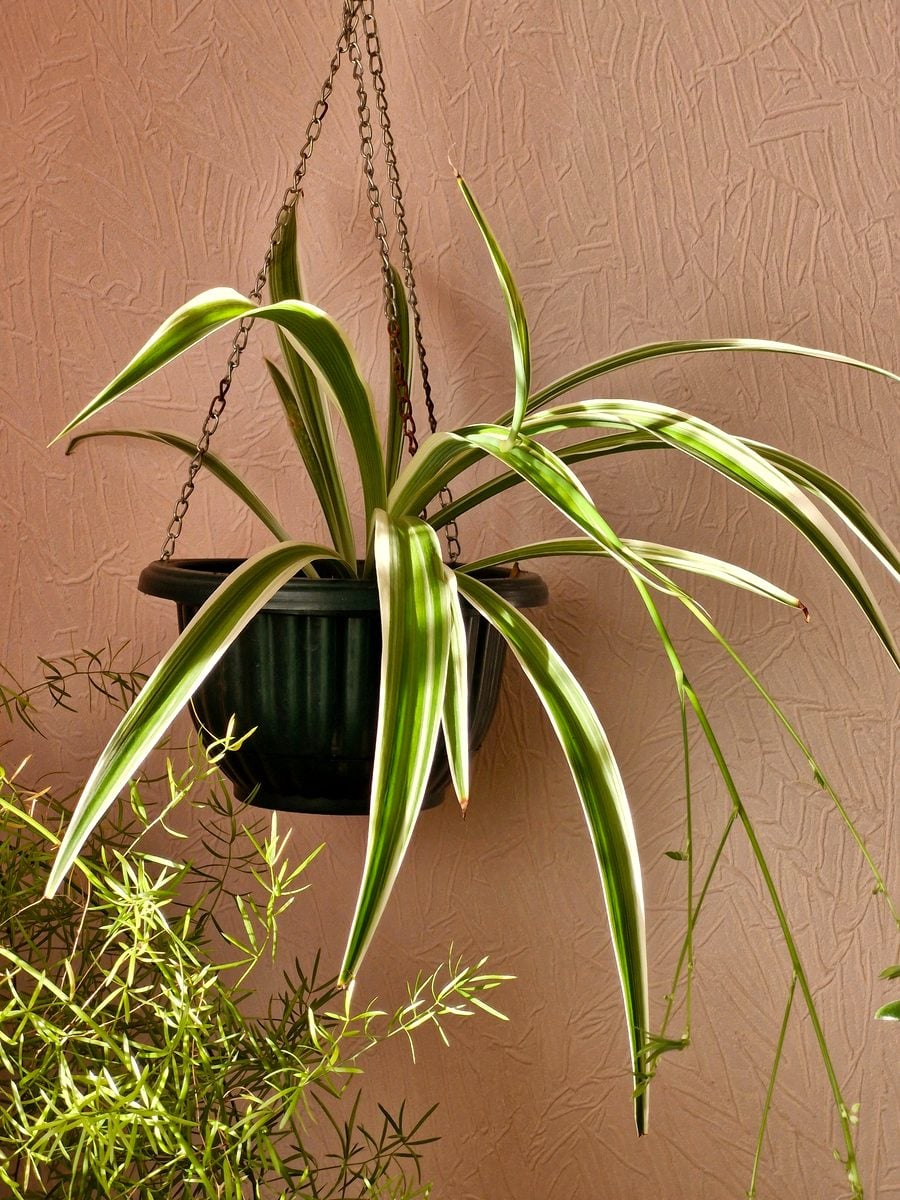
The classic. Its leaves are green with a broad, creamy white stripe down the middle. Clemson Extension calls Vittatum the most common variegated spider plant, and it grows a little slower than the all-green form, according to Wisconsin Extension. Thursd lists it as Chlorophytum comosum Vittatum.
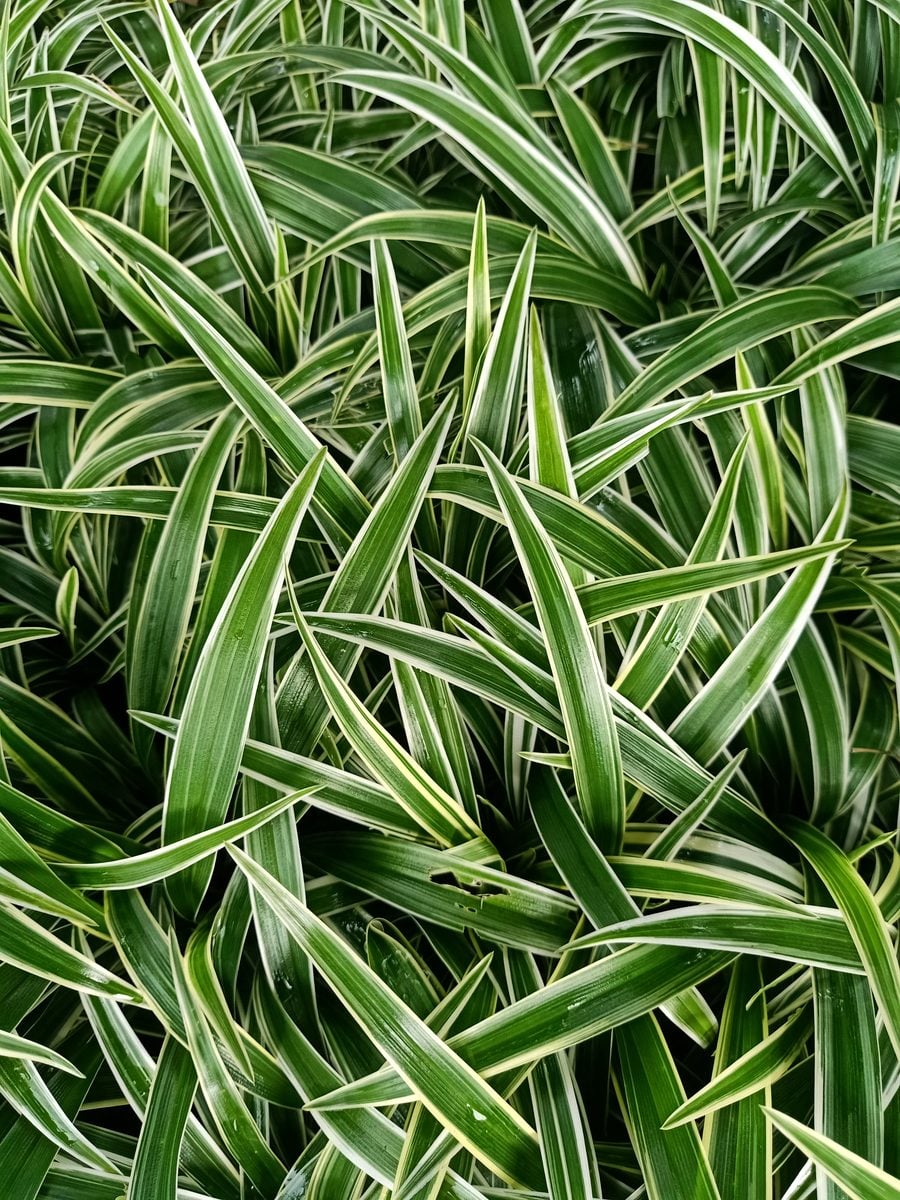
Variegatum, the White Edges
Here the pattern flips: green in the middle, white or cream along the edges. The leaves are longer and broader, 25 to 40 centimeters (10 to 16 inches) long and up to 2.5 centimeters (1 inch) wide, Clemson Extension notes, and Variegatum tends to make fewer babies than other types, according to Wisconsin Extension. It is one of the four varieties on Hillplant's list.
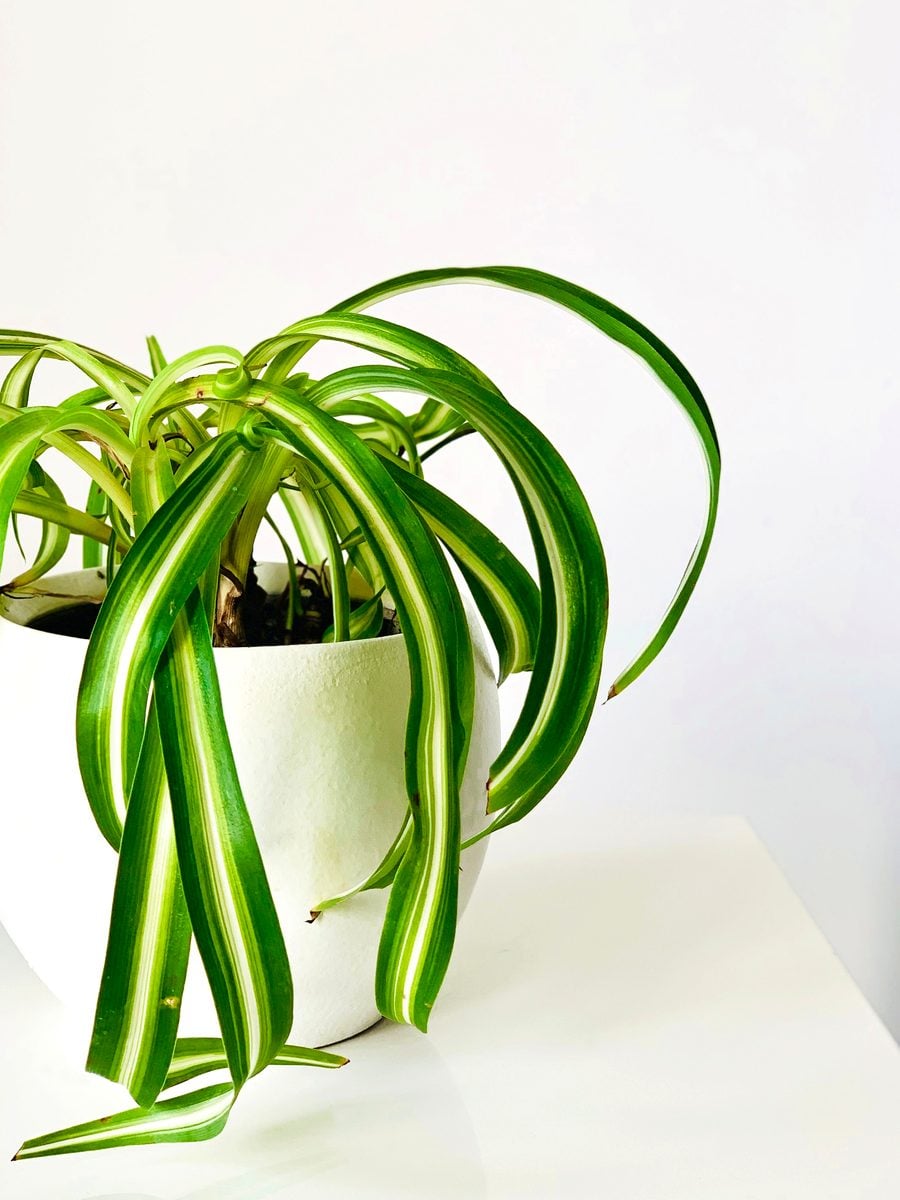
Bonnie, the Curly One
Bonnie's leaves curl and twist, in plain green or with a cream stripe in the variegated form, NC State Extension notes. Curly spider plants are the hardest of the groups to find, according to SDSU Extension. Hillplant grows Bonnie both in its standard hanging pot and as an XXL plant.
Newer names turn up as well. Hillplant also grows Lemon, with lemon-green leaves, as Thursd's Chlorophytum Lemon page describes it, and Ocean. Thursd also lists Chlorophytum Atlantic, with white-ribboned leaves edged in green.
How to Care for a Spider Plant
Spider plant care is forgiving, which is how the plant ends up in so many dorm rooms and offices. These are the things that separate a plant that merely survives from one that fills a basket.
Give It Bright, Indirect Light
Light comes first in spider plant care. Bright to medium indirect light suits it best, and it tolerates deep shade, NC State Extension notes. Strong midday sun is what to avoid, because it can scorch the leaves, according to Clemson Extension. Thursd's houseplant light guide puts spider plants in medium light: 1 to 1.5 meters (3 to 5 feet) from a south- or west-facing window, close to a north-facing one, or a little back from an east-facing window. The care notes on Hillplant's product pages ask for a half-sunny spot. A bright bathroom works too, and it is one of Thursd's bathroom plants that absorb moisture.
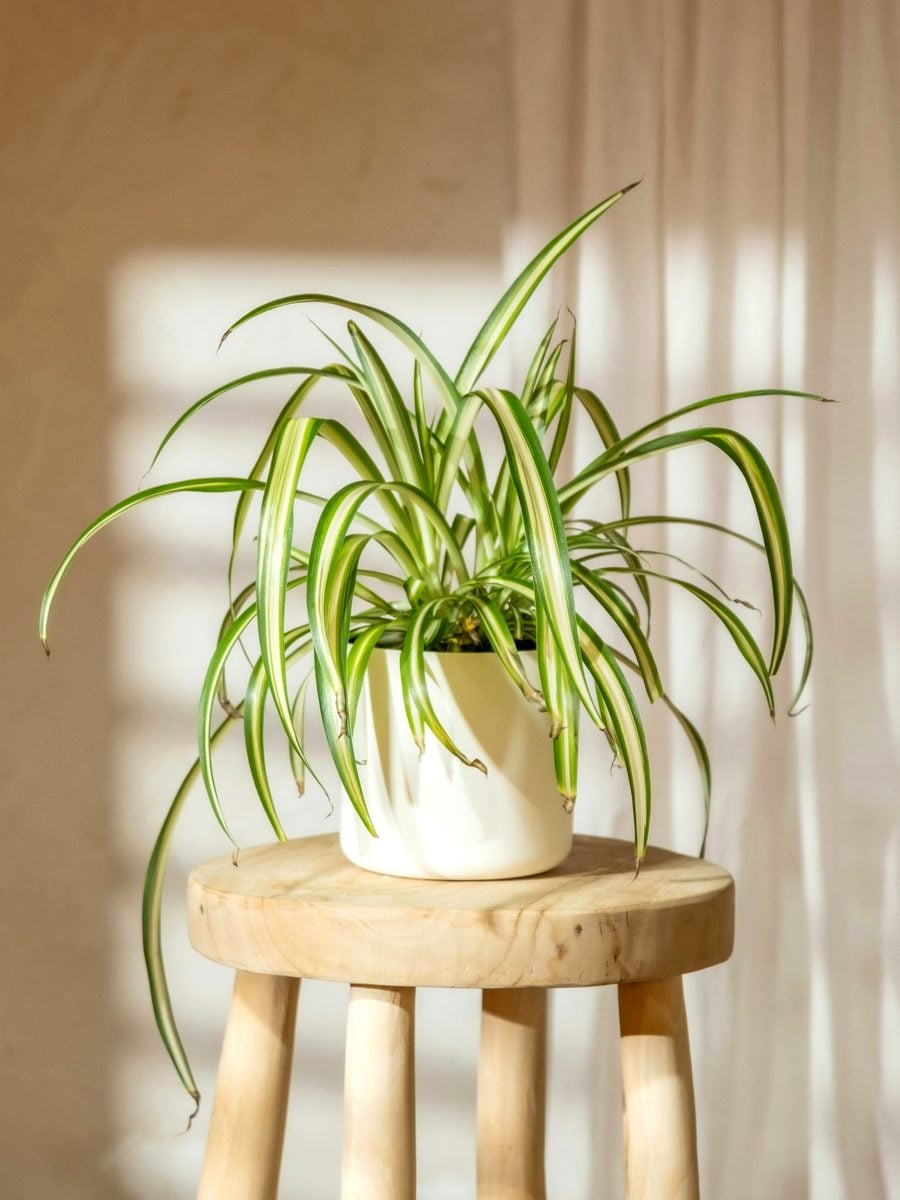
Water When the Top of the Soil Is Dry
Water thoroughly, then let the top of the soil dry out a little before the next round. UF/IFAS Extension puts that at the upper 2.5 centimeters (1 inch). SDSU Extension suggests about once a week, and Hillplant's care notes for its 17-centimeter pots say once or twice a week. Water less in winter, NC State Extension adds. The fleshy roots keep a reserve, so one missed watering does little harm. A pot standing in water does: soggy soil leads to root rot, Clemson Extension warns, so use a pot with a drainage hole.
Keep It at Normal Room Temperature
Normal room temperatures suit it. Clemson Extension's ideal is 18 to 24°C (65 to 75°F) during the day and 10 to 13°C (50 to 55°F) at night, while UF/IFAS calls anything below 13°C (55°F) too cool and anything above 27°C (80°F) too warm. Hillplant's care notes say 15 to 21°C (59 to 70°F). In winter, move the plant a little back from cold windows to keep it out of drafts, as Clemson Extension advises. Average humidity is fine, though in a dry, heated room a pebble tray or a humidifier helps, NC State Extension adds.
Use a Snug Pot and Feed Lightly
Use a general-purpose potting soil that drains well, Clemson Extension advises. The part of spider plant care that feels wrong is the pot: let it get a little crowded, because spider plants make the most babies when they are slightly pot-bound, according to Wisconsin and Illinois Extension. Do not overdo it, though. The thick roots can crack a pot, so divide and repot before that happens, Clemson Extension notes. UF/IFAS suggests repotting once a year while the plant is young and every other year once it is mature.
Feed it every three to four months, or more often at half strength, Wisconsin Extension advises, and wait four to six months before feeding a plant you have just repotted, according to Clemson Extension. More is not better: heavy feeding means fewer babies and can brown the tips.
Can a Spider Plant Go Outside?
In summer, yes. Wisconsin Extension suggests setting it outdoors after the last frost, in bright light but out of full sun, which burns the leaves. In warm climates, it is planted as ground cover in part shade, but think twice there: in Florida, UF/IFAS predicts the spider plant will become invasive and no longer recommends planting it out. Keep it in a pot.
Is a Spider Plant Safe for Cats and Dogs?
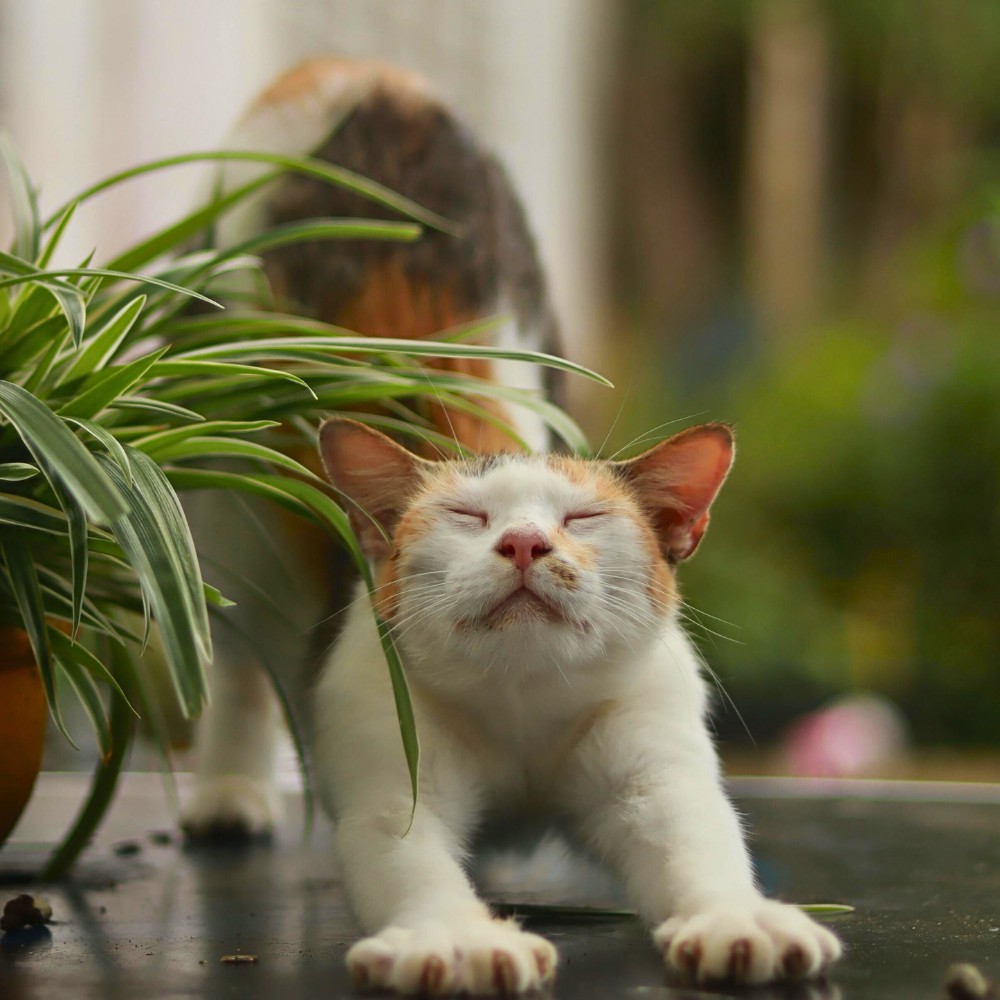
Yes. The ASPCA lists the spider plant as non-toxic to cats and dogs, and NC State Extension also tags it non-toxic for horses. That does not make it a snack. If your cat likes to chew the dangling leaves and babies, the ASPCA's general note applies: eating any plant material can cause vomiting and an upset stomach in cats and dogs. Hang the plant out of reach if yours treats it as a salad bar. For more options, see Thursd's pet-friendly houseplants for cats and dogs, and for dog owners, the houseplants that are poisonous for dogs.
Does a Spider Plant Clean the Air?
You will read that it does, and in small, sealed test chambers, potted plants do take up some pollutants. In a real home, the effect is too small to matter. A 2020 review of 12 chamber studies by Bryan Cummings and Michael Waring of Drexel University found that you would need between 10 and 1,000 potted plants per square meter of floor to match the air exchange a building already gets from outside. Grow it for its leaves and its babies, not as an air purifier. Thursd's list of the 35 best indoor plants that clean the air explains what the research really shows.
Why Spider Plant Tips Turn Brown
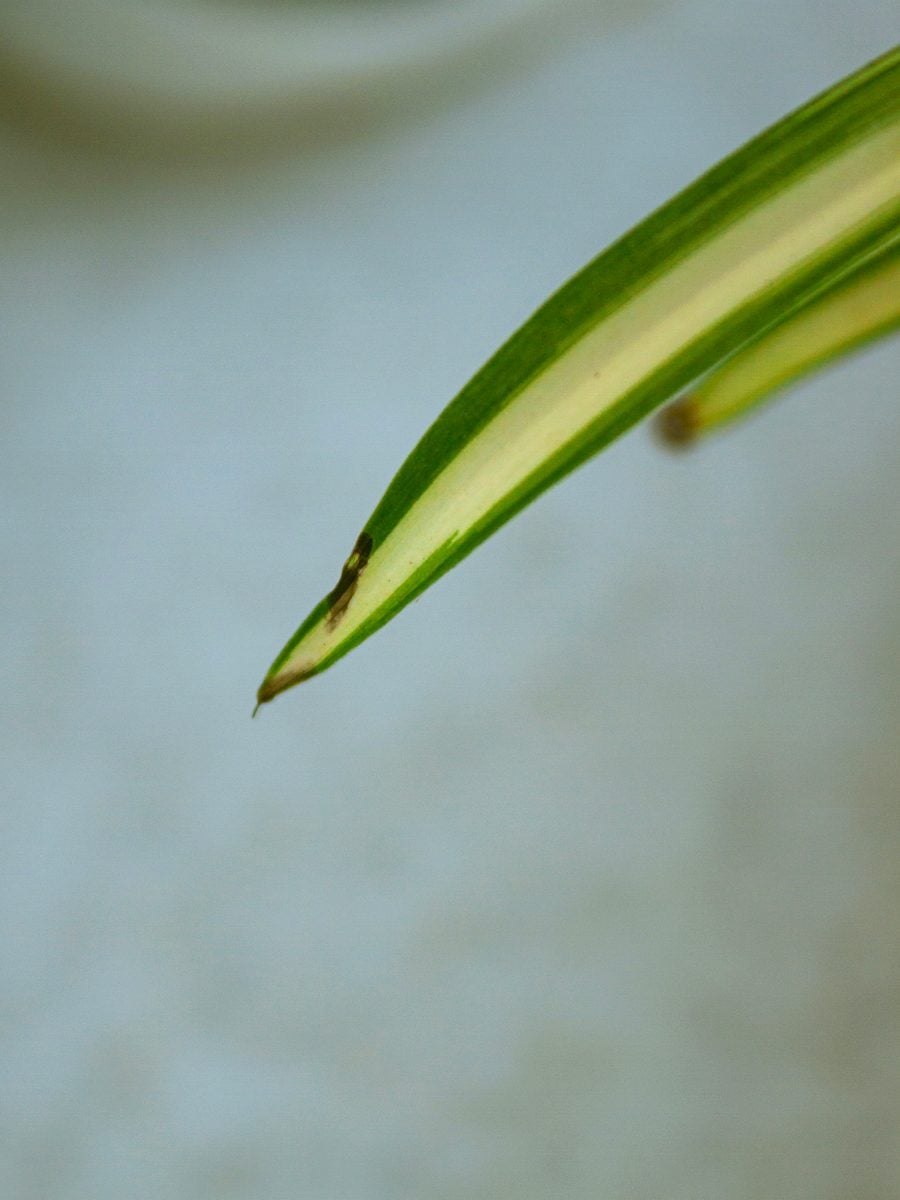
Brown tips are the most common complaint, and they rarely mean the plant is dying. The extension services name the same handful of causes:
- Salts and fertilizer. Too much fertilizer, or water high in soluble salts, burns the tips, Clemson Extension notes.
- Fluoride and chlorine. The plant is particularly sensitive to fluoridated water, according to UF/IFAS, which recommends rainwater or distilled water. Letting tap water stand for 24 hours before use, as SDSU Extension suggests, lets the chlorine escape.
- Dry air. Low humidity, as in a heated room in winter.
- Dry soil. A pot that dries out completely, again and again.
The brown part will not turn green again. Trim it off with clean scissors, following the shape of the leaf, and fix the cause so the new leaves stay green. Thursd's guide to majesty palm care deals with the same problem on a palm.
Root Rot and Pests
Too much water is the other common problem. Root rot follows from a mix that does not drain quickly or from watering too often, Clemson Extension warns, so check that the pot has a drainage hole and let the soil dry a little between waterings. Pests are rare indoors. Clemson Extension lists whiteflies, spider mites, scales, and aphids as the most common, and Wisconsin Extension adds mealybugs.
How to Propagate Spider Plant Babies
Spider plant propagation is about as easy as it gets. Each baby on a runner is a complete small plant, and UF/IFAS describes them as pre-rooted: many already carry the start of their roots while they hang. There are three simple ways to turn one into a new plant.
Pin a Baby Down While It Is Still Attached
This is the surest method. Set a small pot of soilless potting mix next to the mother plant, press a baby onto the surface without cutting the runner, and hold it in place with a bent paper clip or a U-shaped pin. Once it has rooted, cut the runner. Wisconsin Extension and Penn State Extension both describe this method, which gardeners call layering.
Pot Up a Baby That Already Has Roots
If a baby has grown roots while it hangs, cut it off and plant it directly in moist potting mix, Clemson Extension advises. It works at any time of year.
Root It in a Glass of Water
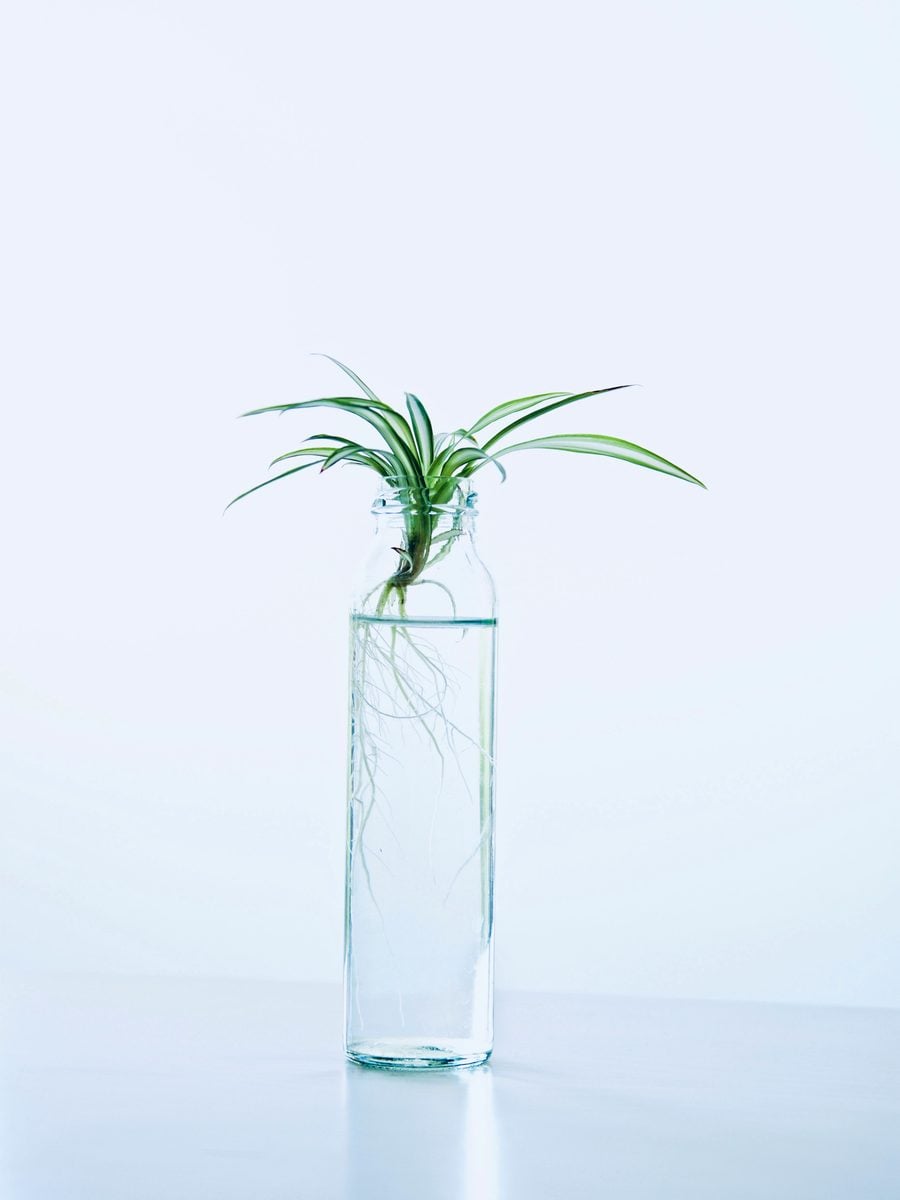
You can also stand a baby in a glass of water for a couple of weeks to grow more roots, then plant it in soil, as SDSU Extension suggests. Keep the leaves out of the water, Thursd's guide to growing indoor plants in water adds. It is the most fun of the three, because you can watch the roots grow.
A large plant can also be divided when you repot it, NC State Extension notes, and spider plants can be grown from seed, although the seedlings may lose their parent's stripes. For more plants that multiply this easily, see the seven easiest houseplants to propagate.
Why Is My Spider Plant Not Making Babies?
Spider plants flower and make babies in response to short days. They need long, uninterrupted nights, with less than 12 hours of light a day, for at least three weeks, according to NC State and Wisconsin Extension, which is why most babies appear when the days shorten in the fall, as Clemson Extension notes. Indoors, they can turn up at any time of year, but a plant in a room where the lamps stay on late may miss the signal. Other reasons:
- The pot is too roomy. Plants make the most babies when they are slightly pot-bound.
- It gets too much fertilizer. Heavy feeding cuts the number of babies.
- It is the variety. Variegatum tends to make fewer babies than other types.
Give it a few weeks of natural day length in the fall, in a room where nobody switches the lights on at night, and a pot it has nearly filled.
Once spider plant care is second nature, there are more easy plants to grow alongside it. See Thursd's 12 best indoor hanging plants, the best houseplants for shade and dark rooms, and the guide to peperomia care and propagation. Spider plants also have a place in feng shui, and they were a design favorite in the green sixties before they came back. The basics stay at a glance on Thursd's spider plant product page.
Sources opened for this guide, October 2026: University of Wisconsin-Madison Extension, Spider plant, Chlorophytum comosum (Susan Mahr, revised January 6, 2025). North Carolina Extension Gardener Plant Toolbox, Chlorophytum comosum. Clemson Cooperative Extension, Home and Garden Information Center, Spider Plant, HGIC 1513 (updated December 12, 2025). UF/IFAS Gardening Solutions, Spider Plant, and the UF/IFAS Assessment of Non-Native Plants in Florida's Natural Areas, Chlorophytum comosum (2025). South Dakota State University Extension, Spider Plants: Houseplant How-To (Cindy Schnabel). University of Illinois Extension, Spider Plant. Penn State Extension, Propagating Houseplants (Mary Concklin, updated March 9, 2026). ASPCA, the Spider Plant entry and the toxic and non-toxic plants list. Bryan E. Cummings and Michael S. Waring, Potted plants do not improve indoor air quality, Journal of Exposure Science and Environmental Epidemiology 30 (2020). Hillplant, Over ons, Overige hangplanten, and Verkrijgbaarheid (in Dutch).
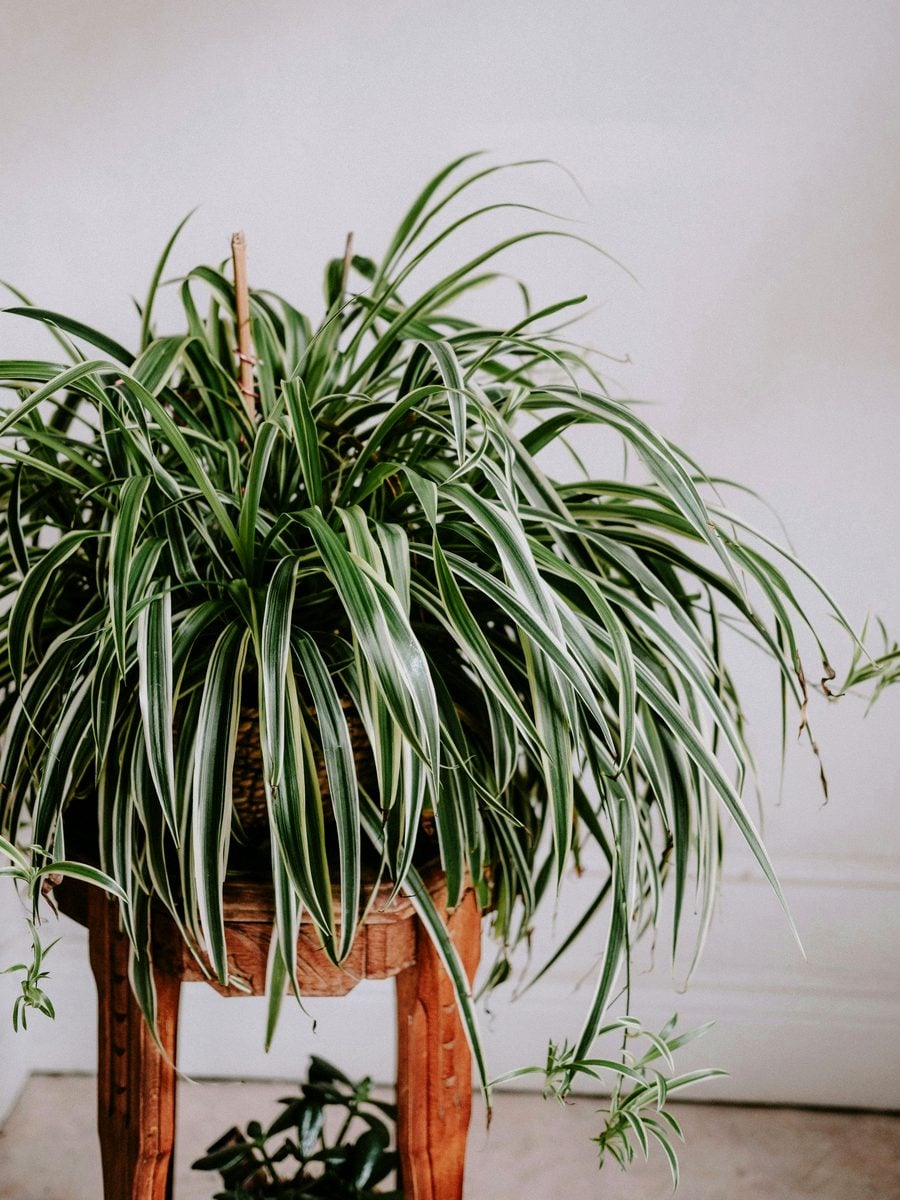
Featured image: spider plant on a wooden stool by feey on Unsplash. Header image: spider plant babies on their runners by Esra Afşar on Unsplash.