Gray roses do not exist the way red roses exist. No breeder codes a rose as gray, no catalog has a gray page, and the roses florists call gray are filed as lilac, cream, purple, or brown by the people who bred them. Metallic roses are stranger still: the sheen is real on a handful of bred varieties, and everything that shines like silver or gold has been tinted. This is the third piece in Thursd's series on the cool end of the rose palette, after purple roses and lavender roses, and it stays with the same rule: every rose named is a cut rose a florist can order, with the shade its catalog gives it and a photograph.
The demand is not in doubt. Thursd's own listing for Rose Menta says the variety is grown in large numbers and still "hardly enough to fulfill the rising demand for earthy-toned flowers," and the florist who found Westminster Abbey called it "the dreamiest garden rose for every neutral palette-loving, taupe dreaming, beige wonder child out there." Gray is a palette color, not a message, and that is where this article starts.
What a Gray Rose Means, and What It Does Not
Red means love, white means purity, yellow means friendship, and purple means love at first sight. Gray means nothing. There is no tradition behind it, and no florist sells a gray rose for its symbolism. It is bought for what it does in a design: it takes the saturation out of a bouquet, sits between cream and lilac without arguing with either, and photographs like linen. That is why the demand comes from weddings and from the earthy, muted palettes covered in the purple roses guide, and why a gray rose is almost never sold on its own.
Gray Is Three Undertones, Not One Color
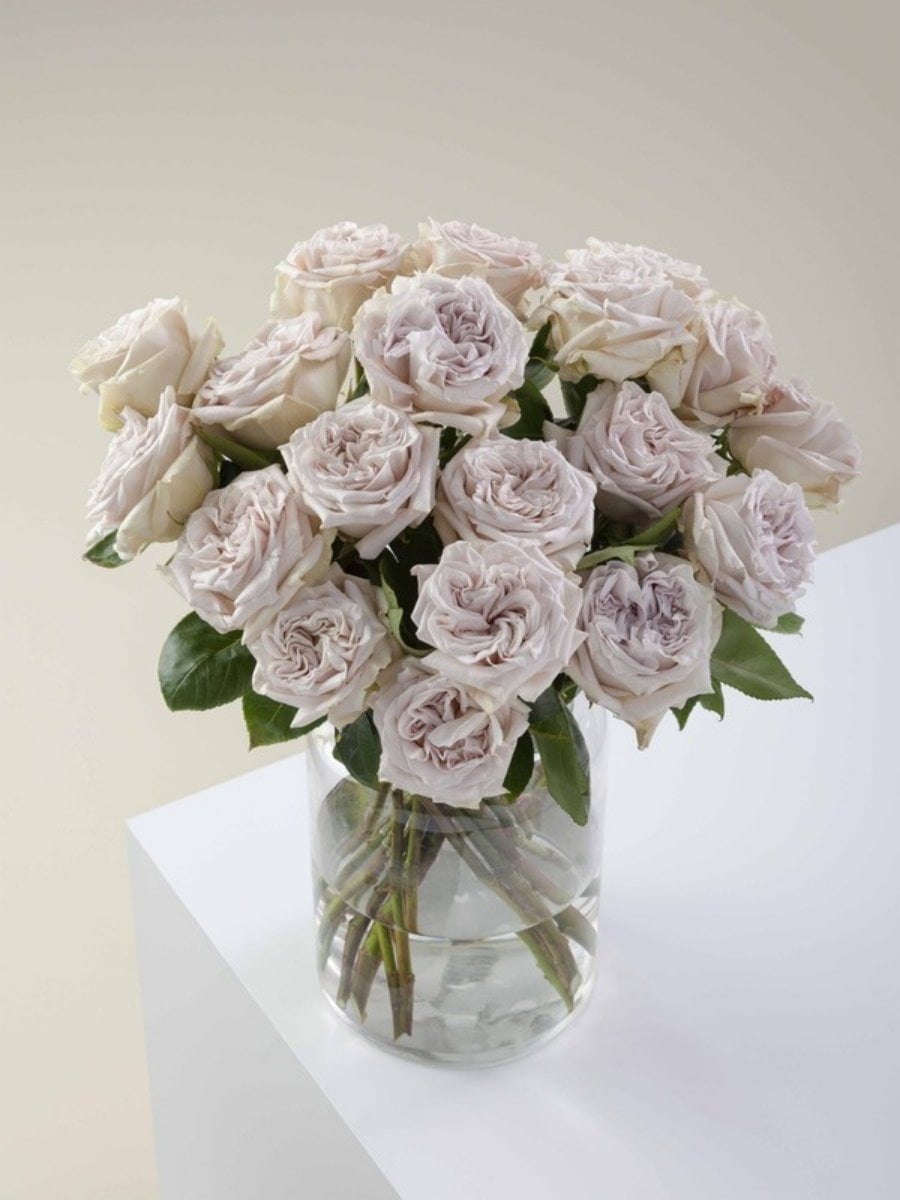
Look at the roses the trade calls gray and three families appear. The lilac-grays, where a lavender rose has drifted so far toward gray that the purple is a memory: Grey Knights, Amnesia, Silver Lace. The mocha-grays, where cream, lavender, and brown meet in one petal: Menta, and the reason it is so hard to describe. And the sand-grays, where a beige rose turns gray as it opens: Westminster Abbey, with Cappuccino, Cafe Latte, Moon Dust, and Sahara Sensation as its warmer neighbors. The breeders code them as lilac, purple and cream, cream, and brown. Florists put them in one bucket and call it gray. Both are right.
Grey Knights: The Lilac-Gray From De Ruiter
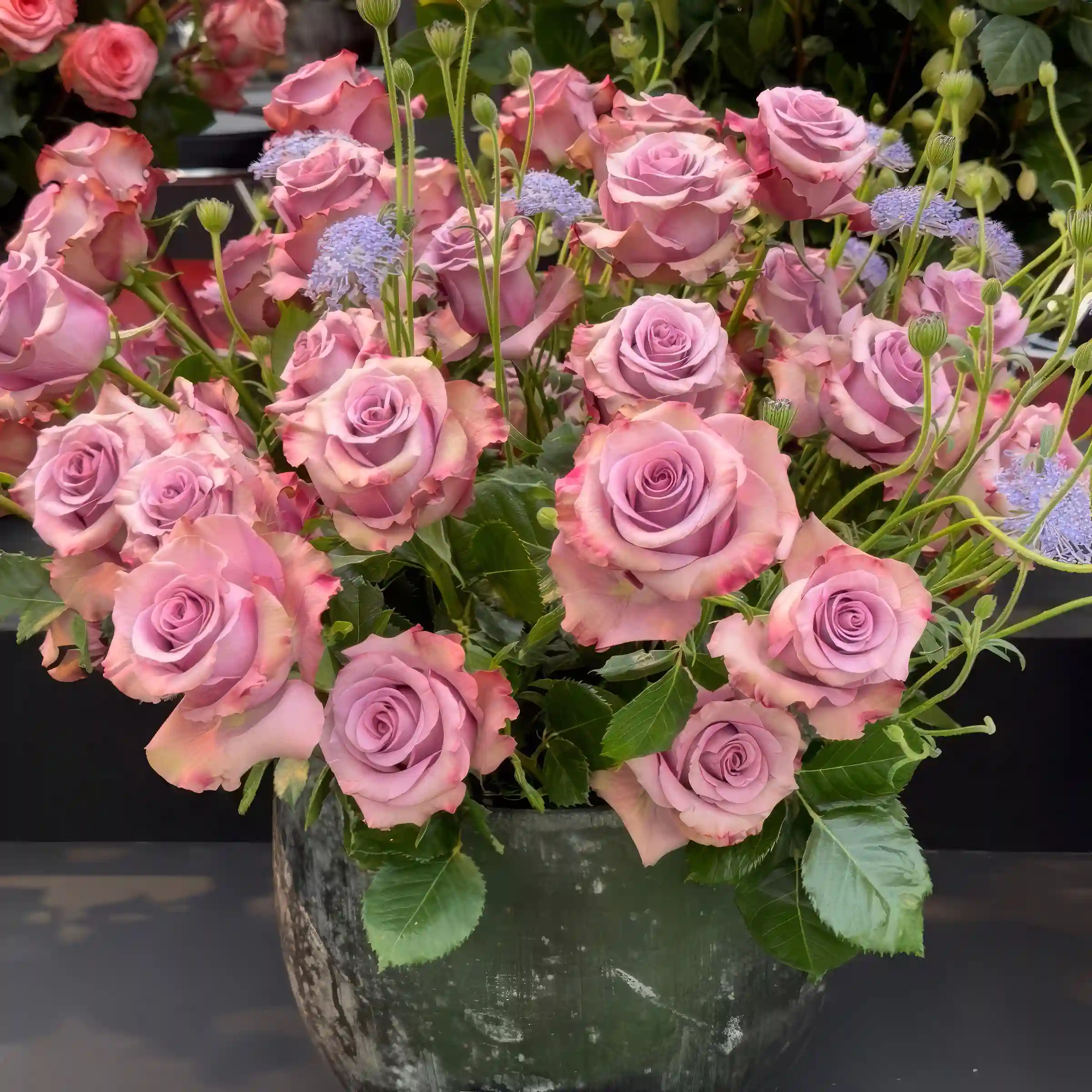
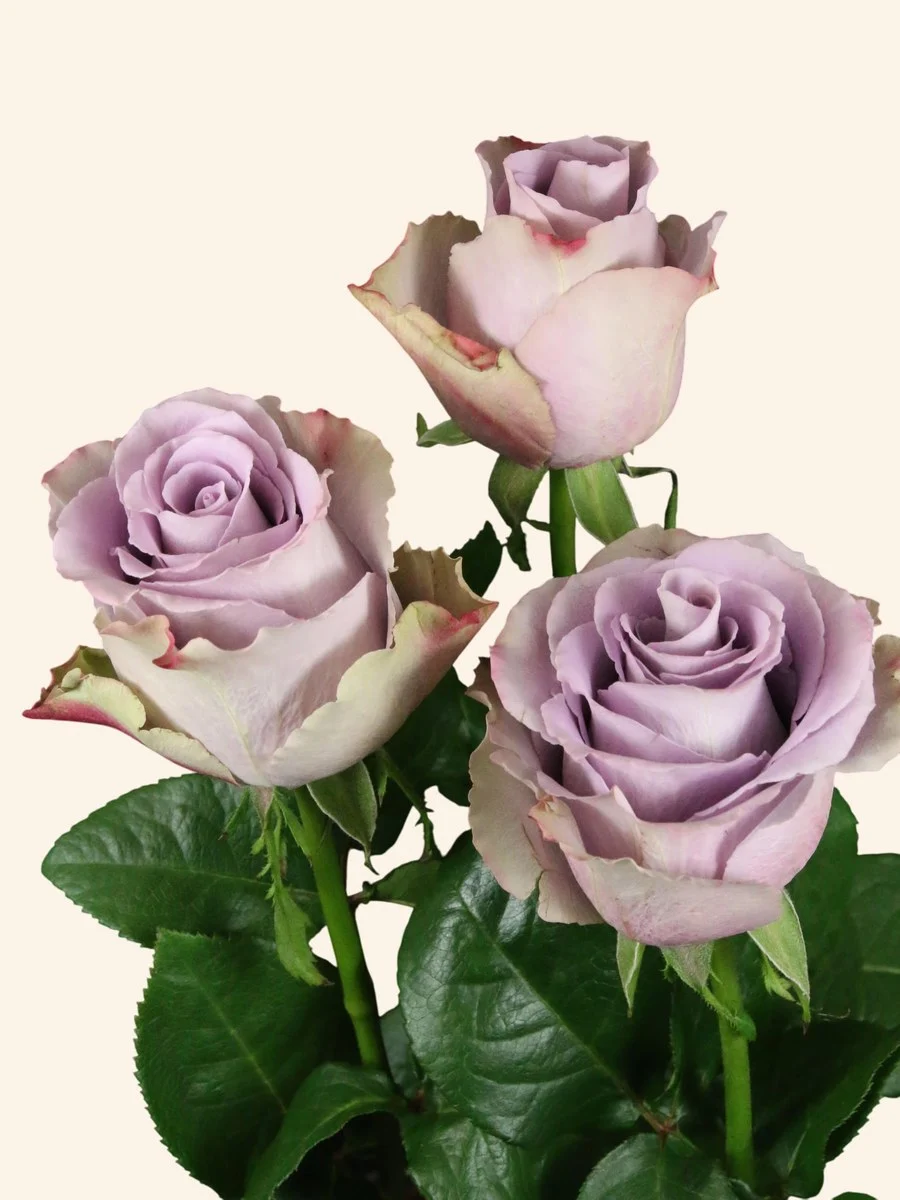
Grey Knights is the one rose in this piece with gray in its name, and it is a lilac to look at. De Ruiter has listed it for South America since 2014 as a standard rose with a bud of 60 to 65 millimeters, stems of 50 to 80 centimeters, 30 to 35 petals, and a vase life of 12 to 14 days, without a color code at all. The Dutch trade sells it as a lilac rose from Ecuador, and that is what it is in the hand: a cool, grayed lilac that reads gray next to anything warmer. De Ruiter also breeds an Early Grey, for the record, and that one is white.
Menta: The Mocha-Gray From Interplant
Menta is the rose that made gray a category, and nobody can describe it the same way twice. Interplant registers it as Intermetal, an intermediate hybrid tea coded purple and cream, on stems of 50 to 60 centimeters with 12 to 14 days in the vase. Thursd's own listing tries harder: "a pale lavender, brown salmon color," a rose whose color runs "from creamy lavender, and silvery pink to mocha and dark vanilla," richly filled and opening completely. It is grown by Mystic Flowers in Ecuador, the photographs on Thursd come from VIP Roses in the Netherlands, and the listing calls it "a must-have for bridal florists." The intermediate size is the point: a smaller head than a standard hybrid tea, which is what a neutral palette wants.

Westminster Abbey: The Sand-Gray From Schreurs
Westminster Abbey is named after the coronation church and colored like its stone. Bred by Schreurs, it opens brown-beige and, in the words of Thursd's profile of the variety, "slowly changes to an almost sandy-gray as it continues to bloom," on a garden-like head with asymmetrical layers and a vase life of 10 to 12 days. It is a seasonal rose in the Netherlands: VIP Roses grows it from April to November and nothing in the coldest months, and the grower put its own case plainly: "We saw this rose in early 2017 at breeder Schreurs and it was love at first sight." Alexandra Farms, Hoja Verde, and Rosaprima carry it in South America. It grows slowly, gives few stems per plant and does not always travel well, which is why it sits at the top of the wedding lists and not in the supermarket.

Amnesia: The Lavender That Goes Gray
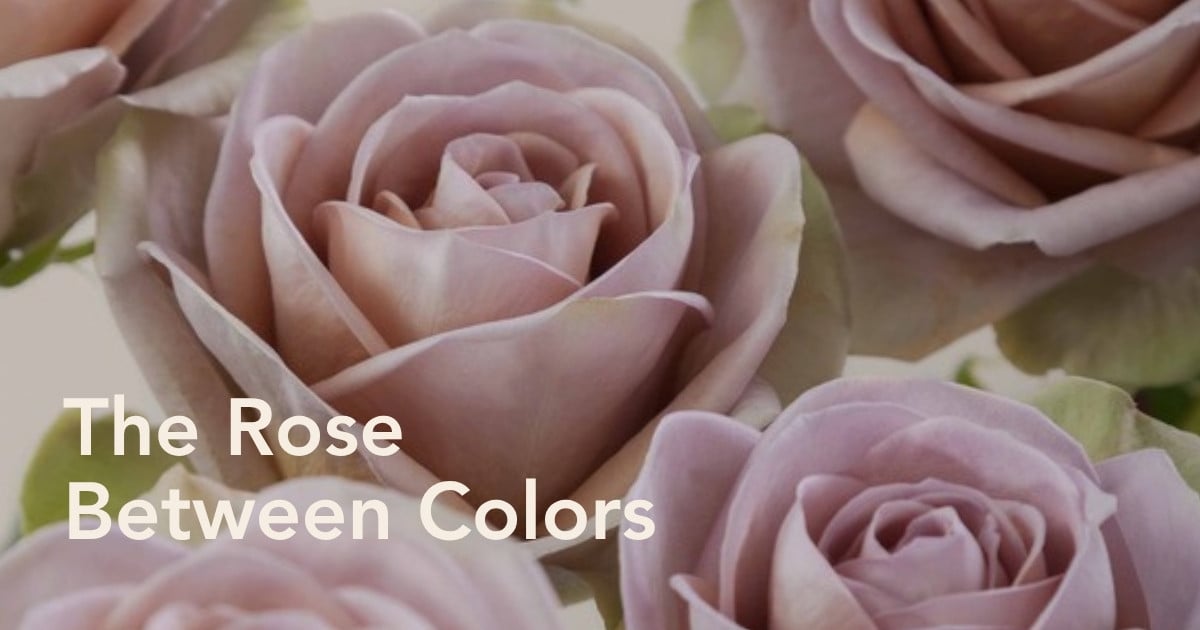
Amnesia belongs to the lavender family by catalog and to the gray family by use. Bred in France by NIRP International, its color "seems to shift from lavender to gray-lilac, suffused with hints of creamy café au lait, and set off with pale green in the outermost petals," which is why it appears in almost every gray or antique palette a wedding florist builds. Equator Roses files it as antique lavender at 40 to 60 centimeters and 10 to 14 days. Seven growers on Thursd carry it. It is the rose people mean when they say dusty.
Silver Lace: The Spray With the Silver Shade
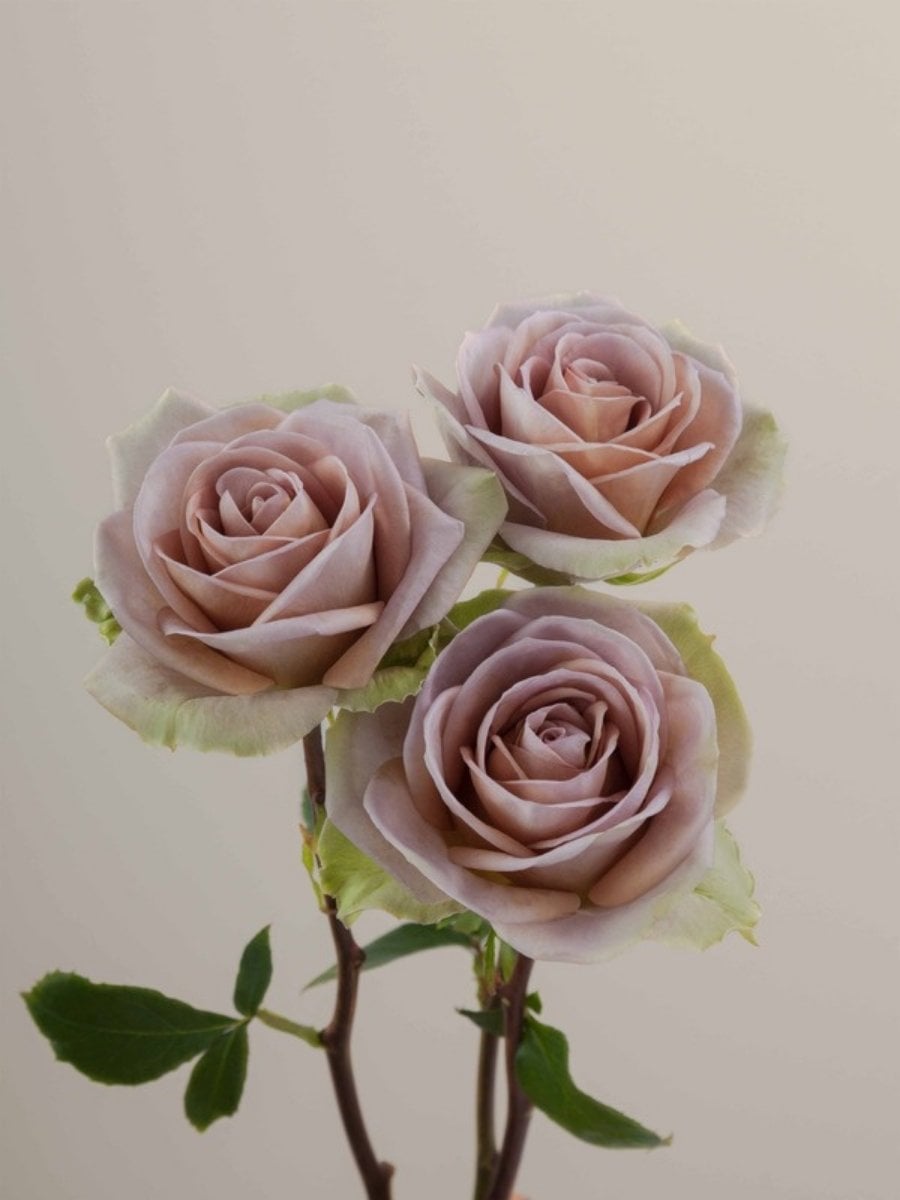
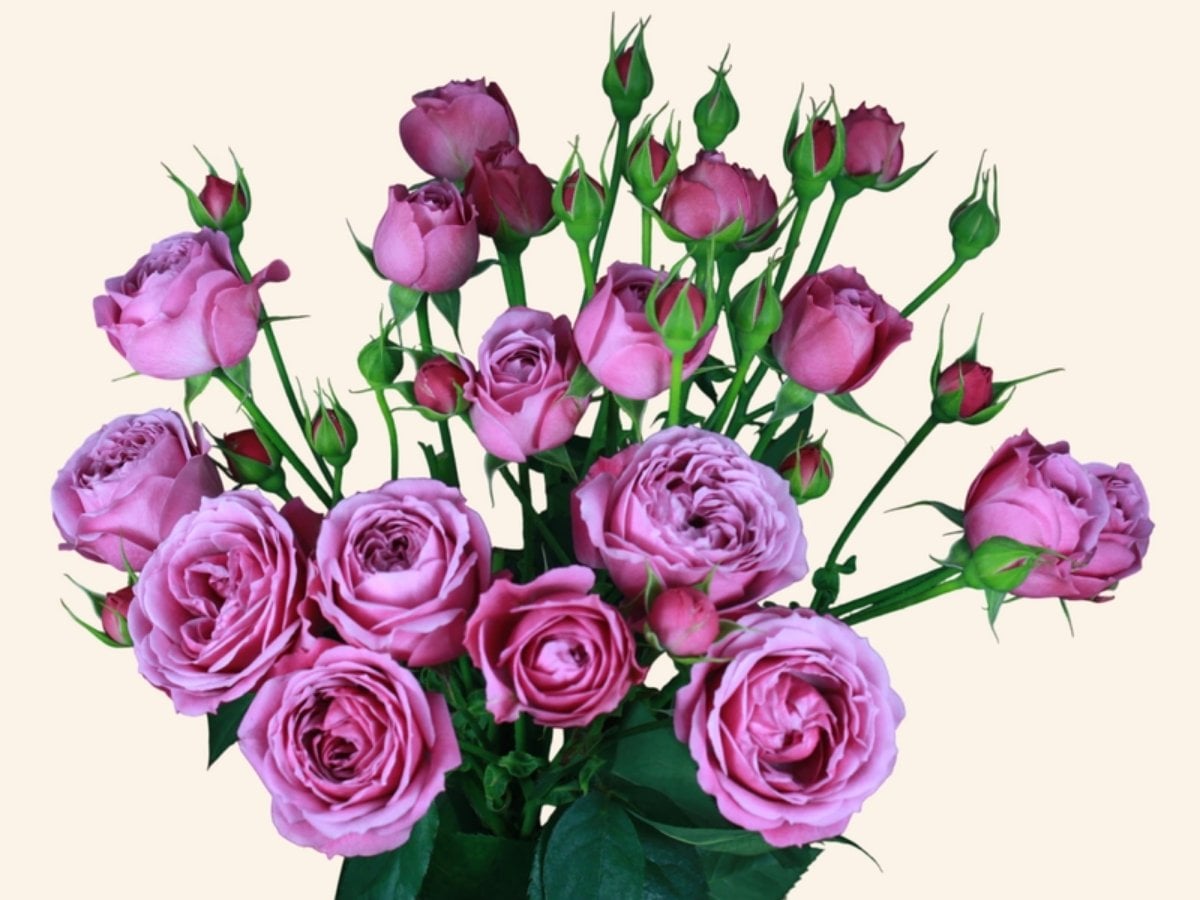
The spray of the family is Silver Lace, an Interplant cluster rose with cup-shaped blooms that Thursd's listing describes as "lilac colored with a silver shade," on a stem full of elegantly shaped buds with a light fragrance. It is the closest a bred spray comes to metallic without treatment, and it is also the one rose in this article with no grower listed on its Thursd page today, which says something about how thin the supply of true grays still is.
The Sand and Brown Neighbors
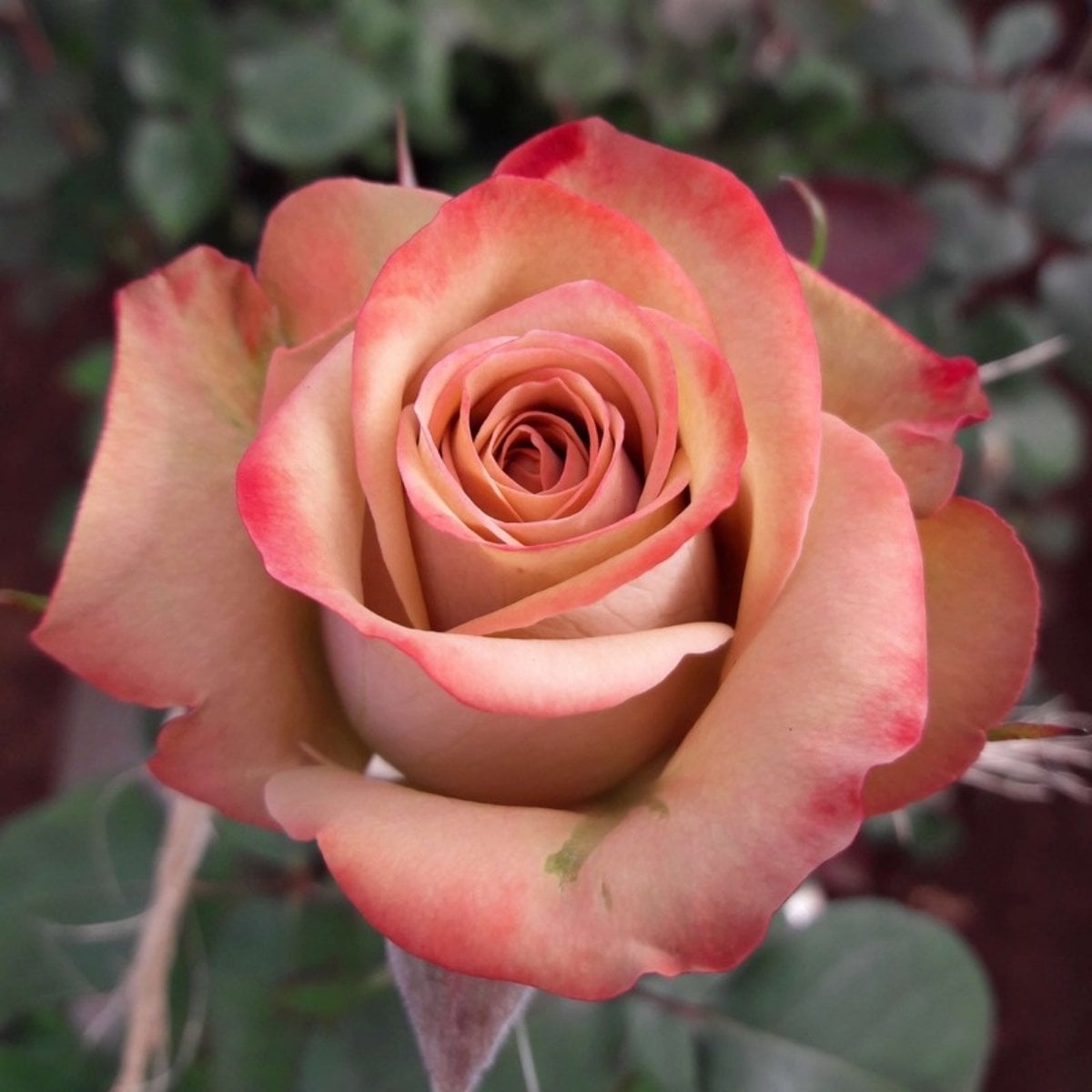
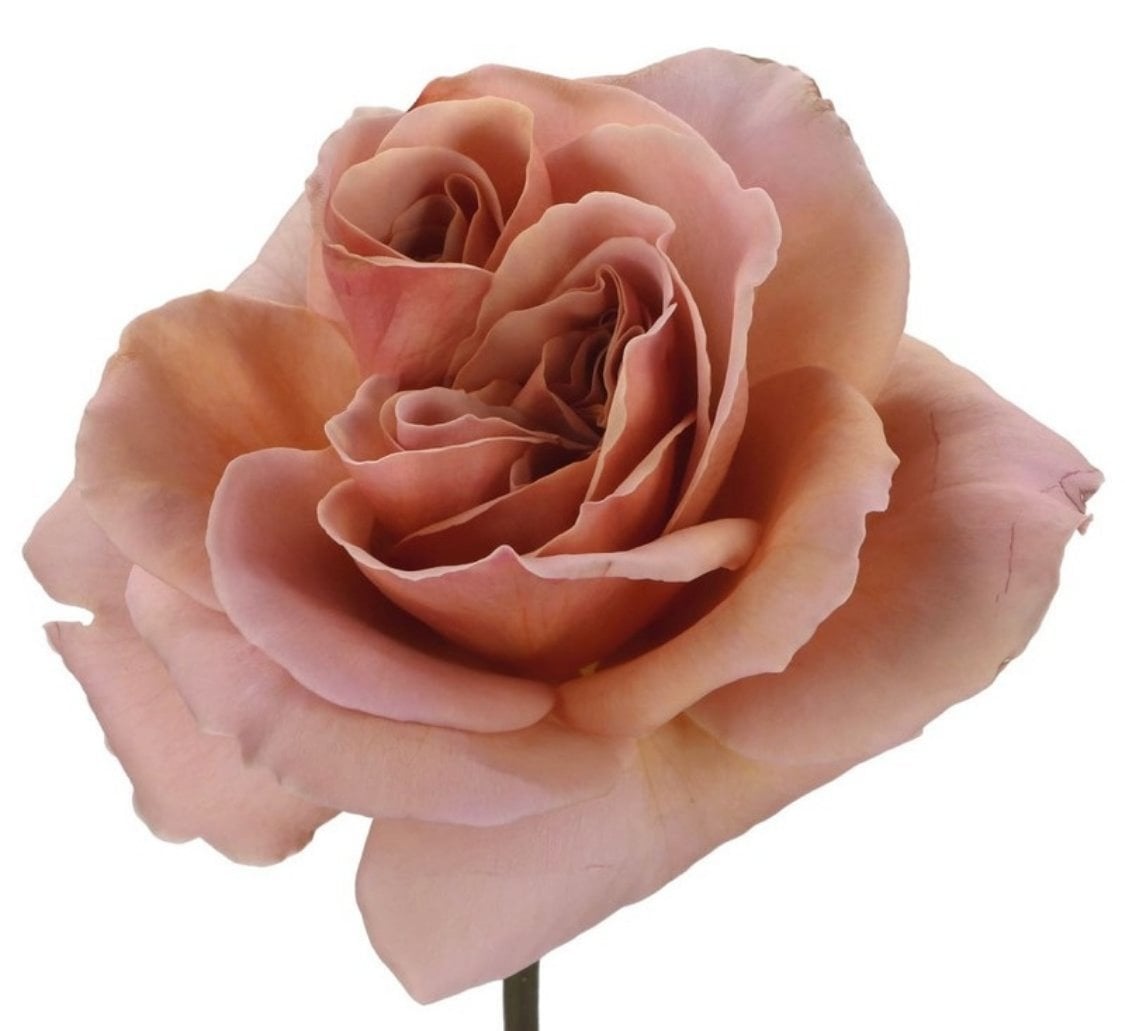
Four roses sit next to the grays in every muted palette and get called gray by florists who mean beige. Cappuccino, from Rosen Tantau, is a hybrid tea "in a light brown natural shade," a creamy, supersized head whose outer petals pick up a pink mark at higher altitudes; Fontana Flowers, Alisha, and Diya grow it in Kenya. Café Latte, from De Ruiter, is the copper one: antique petals in copper bronze with a slight pink undertone, opening fully with a sweet vanilla scent, grown by Alexandra Farms, Tambuzi, and Uhuru Flowers. Moon Dust, also Tantau, is "a dusty, antique pink rose" that turns sandy in full bloom, grown by Diya. And Sahara Sensation, the Wabara spray, is "the ideal warm, sandy, peach color" on ruffled, garden-like petals, grown by Alexandra Farms, Rosaprima, and Star Roses. Quicksand, Koko Loko, and Toffee, the nude, latte, and caramel roses, have a Thursd guide of their own.

Metallic Roses Are a Tint, Not a Breed
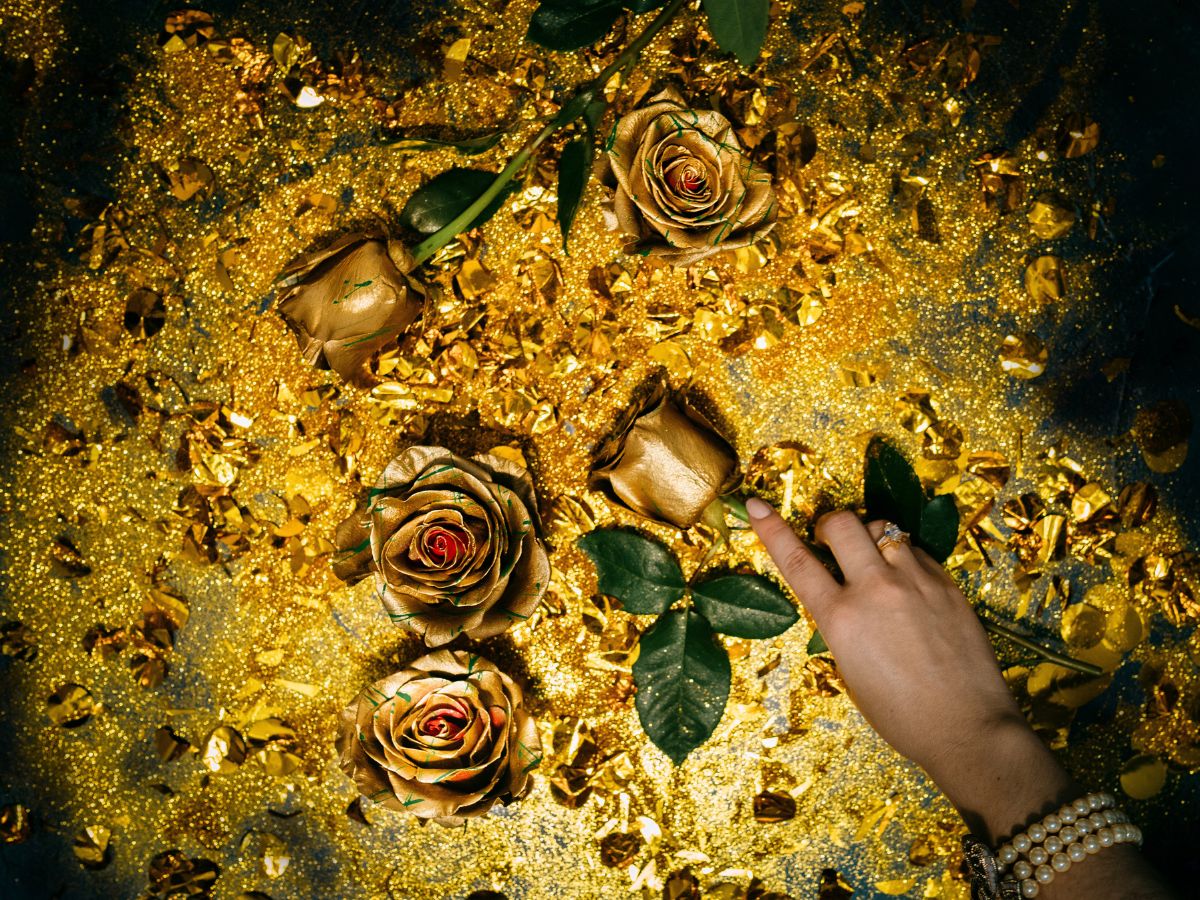
Here is the part the search results skip. Breeding can put a sheen on a petal: Misty Bubbles, the purple De Ruiter spray, is sold on its "nice purple metallic color," Silver Lace on its silver shade, and Interplant registered Menta as Intermetal. That is where the genetics stop. Every rose that is actually silver, gold, copper, or chrome has been treated, and the trade has two ways of doing it. Thursd's partner Star Roses in Ecuador explained both: absorption, where selected roses stand in a dye solution for around 24 hours and the color travels up the stem into the petals, and airbrushing, where the color goes on the surface. Star Roses works from varieties such as Mondial, Pink Mondial, Shimmer, Highlight, Mia, Explorer, and Freedom, and its fall range runs "from golden honey to metallic copper, deep brown to mild peach." Its golden roses are the proof that the perfect metallic rose exists; it is made, not bred.
None of this is a mark against a tinted rose. It is a reason to know which one you are selling. On the Dutch podcast Goede Bloemen en Goede Planten, Marc Sassen of VIP Roses, the same grower that gives the trade its Westminster Abbey, described how color treatment is coded at the auction: one code for everything treated, and a descriptive name the seller invents. A silver rose on a wholesale list is that code. A gray rose is a variety.
Buying and Caring for Gray Roses
Gray shows every mark, and the sand-grays show every day. Westminster Abbey is a seasonal rose from the Netherlands, April to November at VIP Roses, and its slow growth and thin stem count explain both the price and the gaps in supply; the South American farms fill the rest of the year. Menta and Amnesia are steadier, and Grey Knights and Menta carry the longest catalog vase life of the group at 12 to 14 days. Check the outer petals before you buy, expect to strip a guard petal, and buy the sand-grays a stage tighter than you think, because the gray only arrives as they open.
The care is standard: clean vase, fresh water, flower food, an angled cut of a couple of centimeters, foliage stripped only below the waterline, water changed once it clouds, and the vase kept away from fruit, direct sun, and heat. Take out any flower going over before it takes the rest with it. For a tinted rose, add one check: look at the cut end of the stem and the outer petal edges, where absorbed dye concentrates, before you promise a customer that the color will hold.
Three Families, One Band
Purple, lavender, and gray are one band read at three distances. The purples hold their color; the lavenders soften as they open; the grays were never quite a color to begin with, which is exactly why designers reach for them. When the brief says saturated, the roses are in Thursd's purple roses guide. When it says pale, they are in the lavender guide. When it says neutral, they are here, and when it says silver or gold, they are in a dye bath in Ecuador.
Featured image: Rose Grey Knights, photo by De Ruiter. Header image: Rose Amnesia, photo by Rosaprima. Body photos: Westminster Abbey, Amnesia, and Sahara Sensation by Rosaprima; Grey Knights and Misty Bubbles by De Ruiter; Menta and Café Latte by VIP Roses; Cappuccino by Rosen Tantau; golden tinted roses by Star Roses. Variety data: De Ruiter, Interplant, Schreurs, NIRP International, Rosen Tantau, and Wabara product ranges, Equator Roses, and Thursd's own product listings and articles.