A Persian legend says the first red tulips sprang up where a heartbroken lover died. Five centuries later, Dutch growers cut millions of them every winter, and they still carry the same message. So what's the tulip meaning, in short? Perfect love, with the color you pick deciding which kind: a red tulip says it out loud, yellow brings sunshine, white asks for a fresh start, pink says you care, and purple says you look up to someone. The tulip is also the first flower of spring, which is why it stands for rebirth and new beginnings. Here's what every color says, and how a wildflower from the mountains of Central Asia became the flower the whole world links to Holland.
What Do Tulips Symbolize? Perfect Love and a New Start
Love comes first. In the Persian story of Farhad and Shirin, Farhad dies of grief for the woman he loves, and red tulips spring up where his blood falls. That's a lot to put on a flower. Persian poets kept it there anyway, and the red tulip became the symbol of a deep love, the passionate kind that holds nothing back.
In the Victorian era, people wrote it down. In Kate Greenaway's Language of Flowers (1884), a red tulip is a declaration of love. It's still the reading most florists use today, and the core of every tulip flower meaning you'll find.
Then there's spring. A tulip bulb needs a real winter before it will flower, so when tulips bloom, the cold is over and springtime has started. That's where the meaning of rebirth and new beginnings comes from. Dutch bulb grower Sam van Schooten put it in two short sentences on the Dutch podcast Goede Bloemen en Goede Planten: "It's the first flower to bloom in spring. It comes back." (translated from Dutch). And it does, if you plant the bulbs well. Our guide to planting tulip bulbs shows you how.
Tulip Meaning by Color
What tulips represent depends mostly on the color, and that's where you get specific. These meanings come from floriography and florist tradition, not from any law, so read them as a shared language. Chances are the person you give them to will read them the same way.
Red Tulips: True Love, Said Out Loud
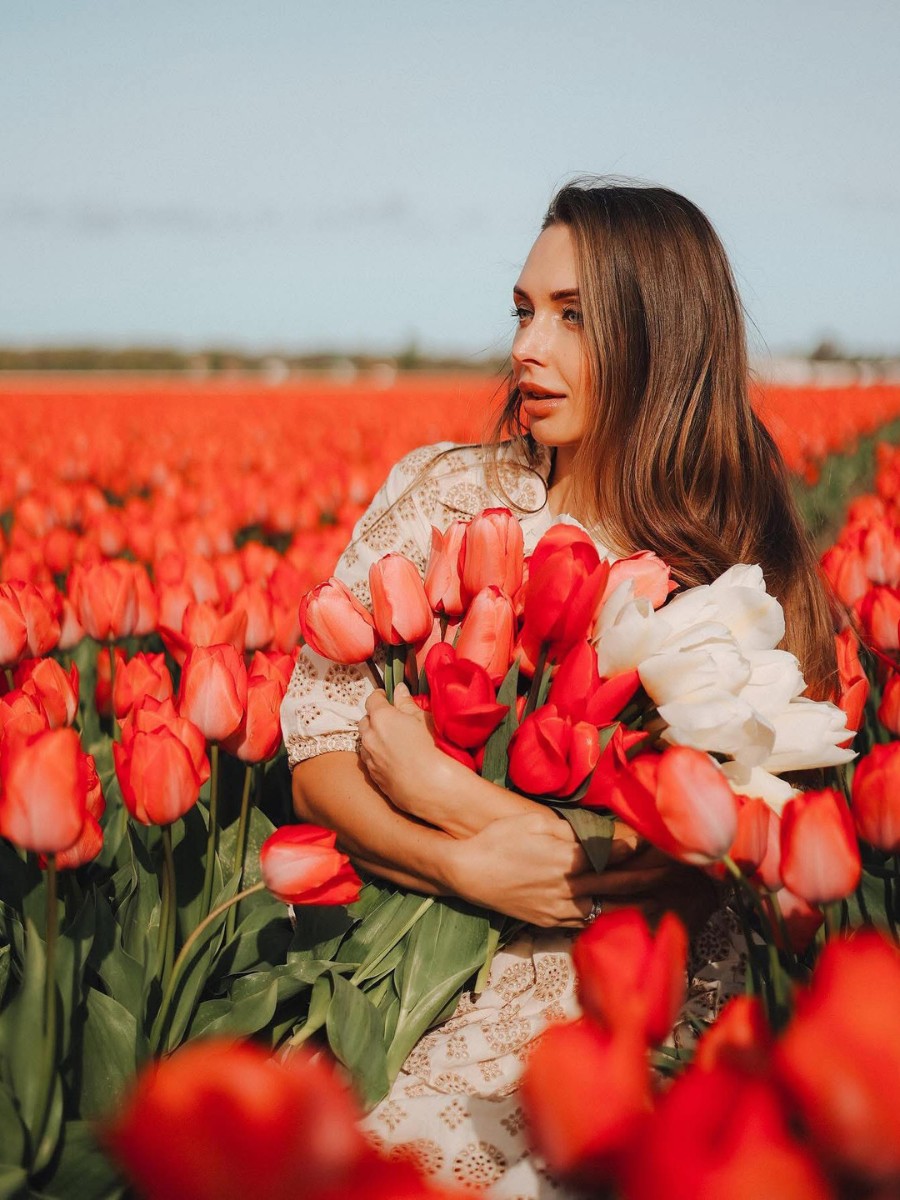
Red tulips mean true love, perfect love, and passion. They're made for romantic gestures: Valentine's Day, an anniversary, or the first "I love you." A red rose can feel like a script. A bunch of red tulips feels younger, a bit less formal, and just as clear. If you want more flowers that carry the same message, see our list of flowers that symbolize love.
Yellow Tulips: Cheerful Thoughts (They Used to Mean Hopeless Love)
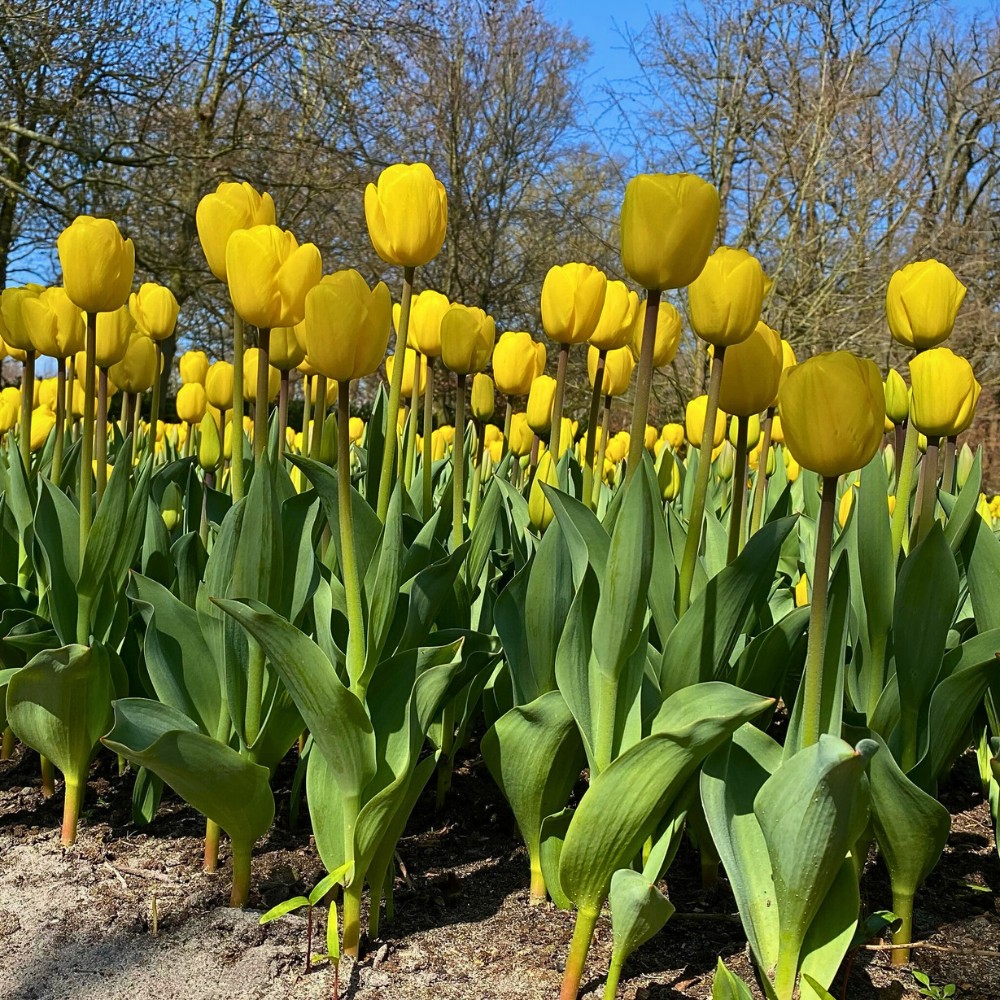
Here's a twist. In Greenaway's Victorian dictionary, a yellow tulip meant hopeless love. Not exactly what you want on a birthday card. Today the yellow tulip means the opposite: cheerful thoughts, joy, hope, and sunshine. It's the easiest way of brightening someone's day. Give it to cheer someone up, to say congratulations, or to a friend who could use a bright day. Big yellow parrot tulips such as Tulip Goldrace (Strong Gold Parrot) make that message hard to miss.
White Tulips: Forgiveness, Respect, and a Clean Slate
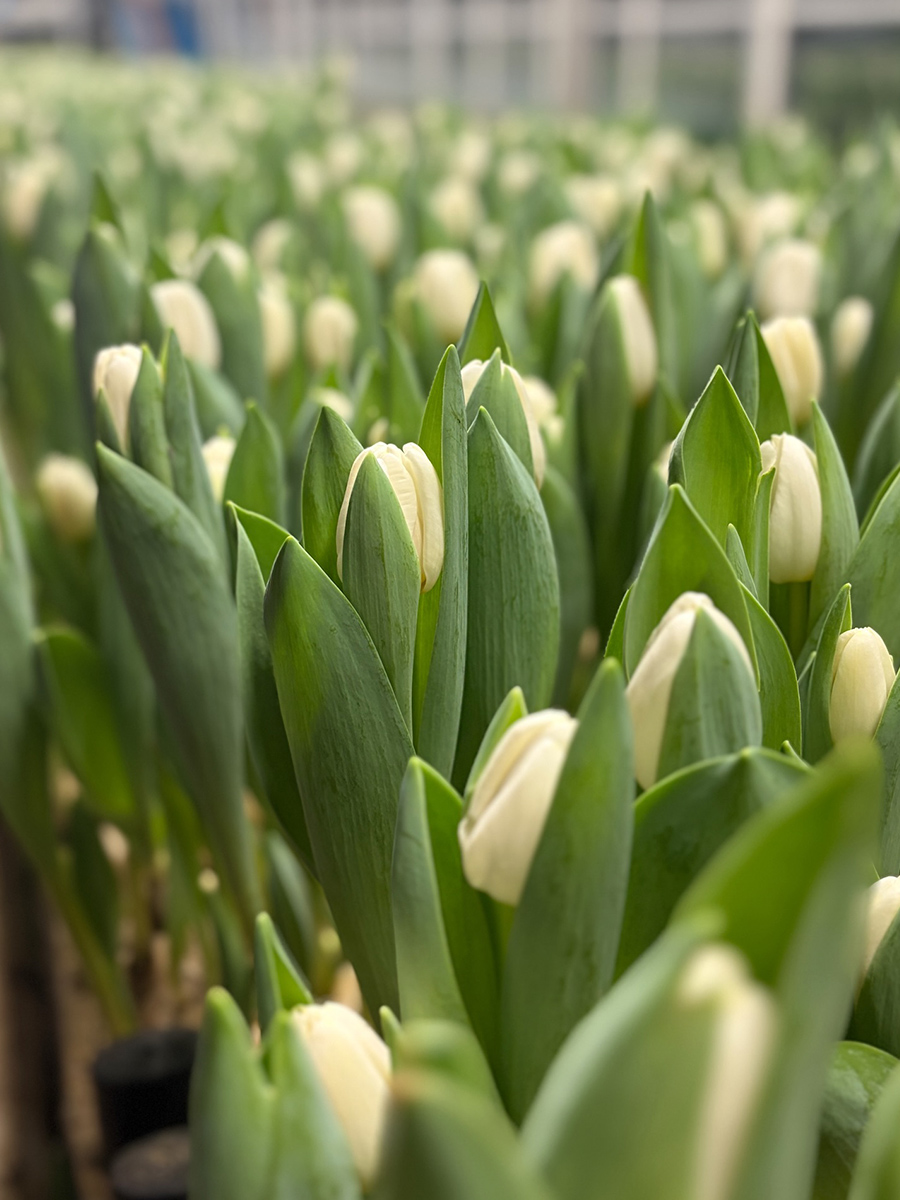
White tulips stand for forgiveness, purity, peace, and new beginnings. That's why they suit an apology and a wedding, and why they're a gentle sympathy gift for family members after a death. They say "let's start again" without making a speech of it. The old floriography line is lovely too: a white tulip says "I am worthy of you." For white varieties and ideas, see our piece on white tulips.
Pink Tulips: Affection, Care, and Happiness

Pink tulips are the easy ones to give. They mean affection, care, grace, and happiness, without the weight of red. Think Mother's Day, a thank-you to show your appreciation, a new baby, or a friend's birthday. Light pink leans soft and gentle; hot pink feels more playful. The double Tulip Columbus, grown by Dutch growers like Zwettulips and Borst Bloembollen, looks almost like a peony. We've put every pink variety worth knowing in our guide to pink tulips.
Purple Tulips: Royalty and Admiration
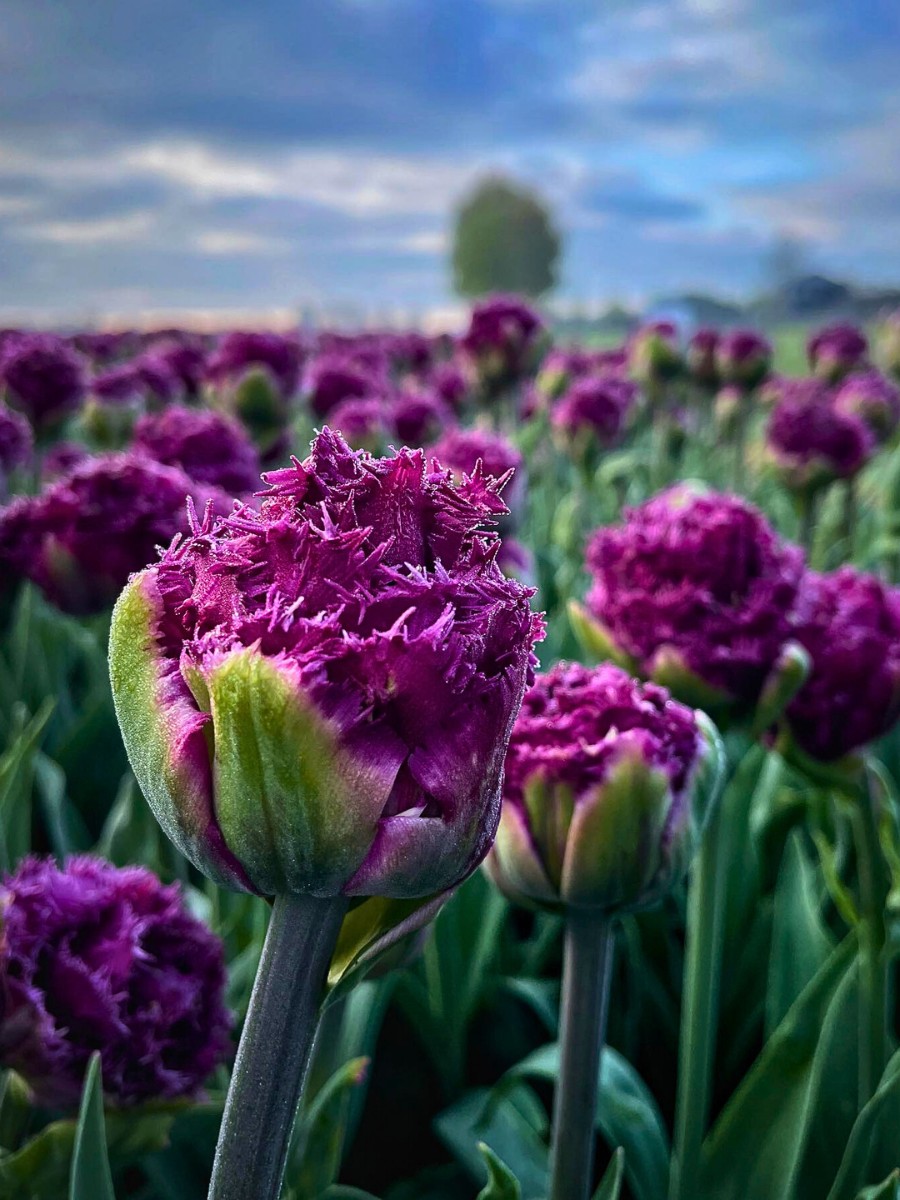
Purple was the color of kings long before it was the color of tulips, because purple dye once cost a fortune. The purple tulip carries that along. It means royalty, admiration, and respect, so it suits a mentor, a graduate, or anyone you're proud of. Fringed purple tulips, like the ones Triflor grows, add a bit of extra drama to the message. And blue tulips? Every tulip sold as blue is really lilac or violet, so it reads as purple too.
Black Tulips: Mystery, Strength, and a Little Drama
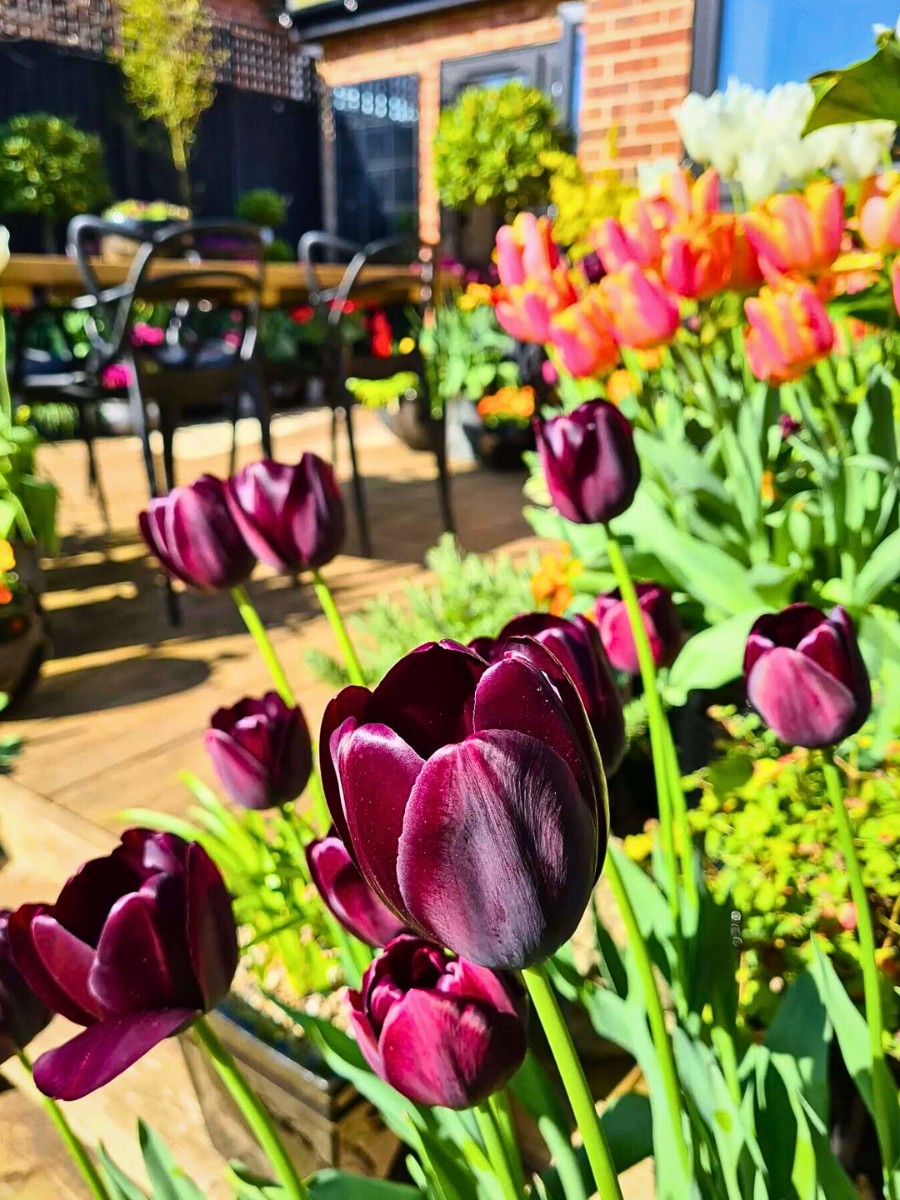
Black tulips mean mystery, power, and elegance. They're also not really black. Every "black" tulip is a very deep purple or maroon, and you'll see it when the sun hits the petals. The hunt for one is old: in 1850 Alexandre Dumas wrote The Black Tulip, a novel about a prize for the first grower to breed one. Today the classic is Tulip Queen of Night, which you'll find with growers such as Sam van Schooten. Our piece on black tulips names the darkest varieties.
Orange Tulips: Energy, Warmth, and a Dutch Royal Wink
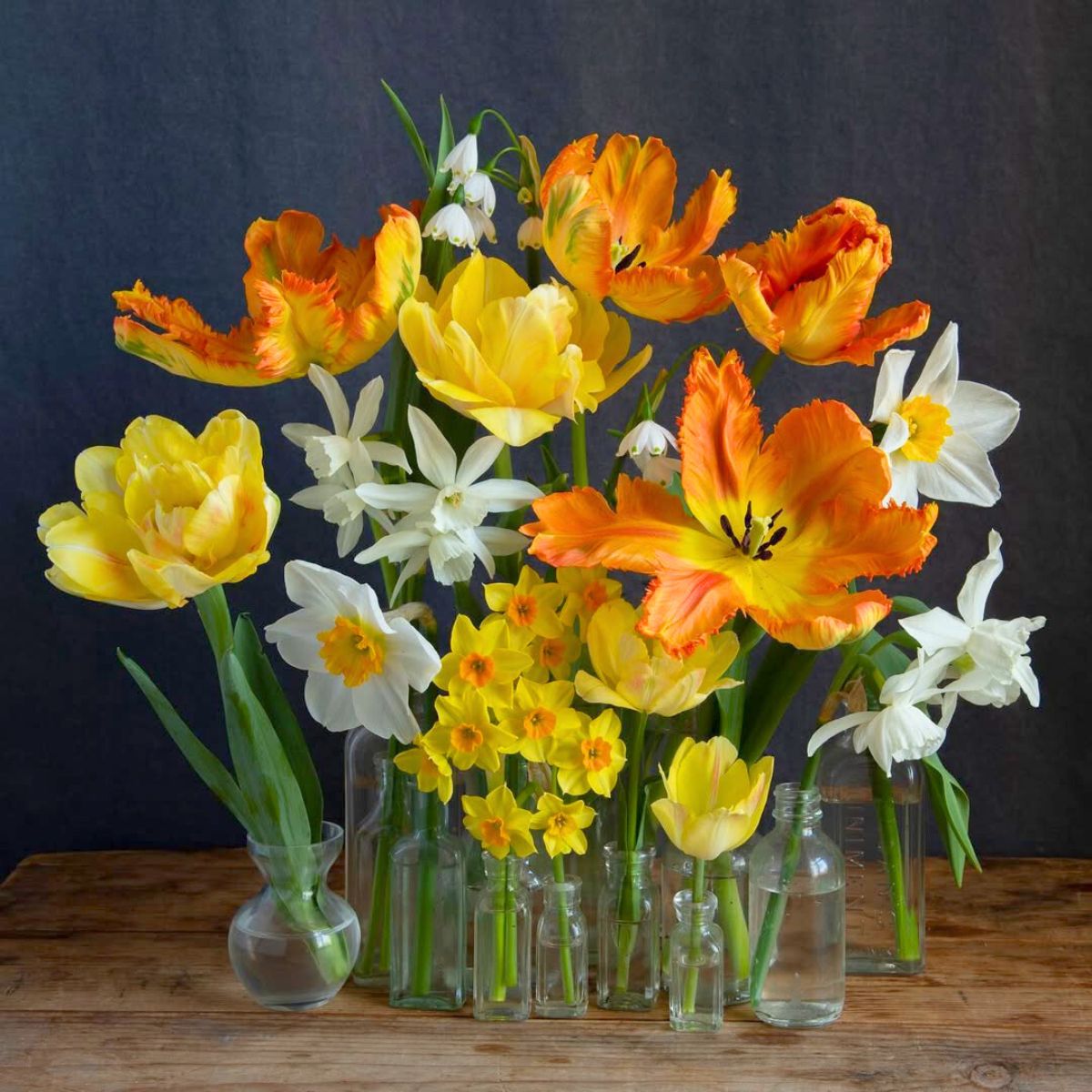
Orange tulips mean energy, enthusiasm, and warmth. They're a good pick for a new job, a housewarming, or anyone who makes you laugh. In the Netherlands, orange means one more thing: the royal House of Orange. So an orange tulip is about as Dutch as a flower can get. Ruffled orange parrot tulips are the showiest way to say it.
Where Tulip Symbolism Comes From: Persia, the Ottomans, and Holland
Wild tulips grow in the mountains of Central Asia, and the meanings started traveling with them long before Holland got involved. In Turkey and the rest of the Ottoman Empire, the tulip was called lale. In Arabic script, lale is written with the same letters as Allah, which helped make the tulip a symbol of divine beauty on tiles, fabrics, and the kaftans of sultans. Europe's word for it came from a mix-up: the flower looked like a turban, tülbend in Turkish, and the comparison stuck as its name. The court loved it so much that the years from about 1718 to 1730 are still known as the Tulip Era. Istanbul still holds a tulip festival every April.
Europe met the tulip in the 16th century. The botanist Carolus Clusius planted his bulbs in Leiden in the 1590s, and within a few decades the Dutch were trading single bulbs for the price of a house, the bubble we now call tulip mania. We've told that story in full in tulip mania and the history of the tulip, so we'll stick to what it did to the meaning.
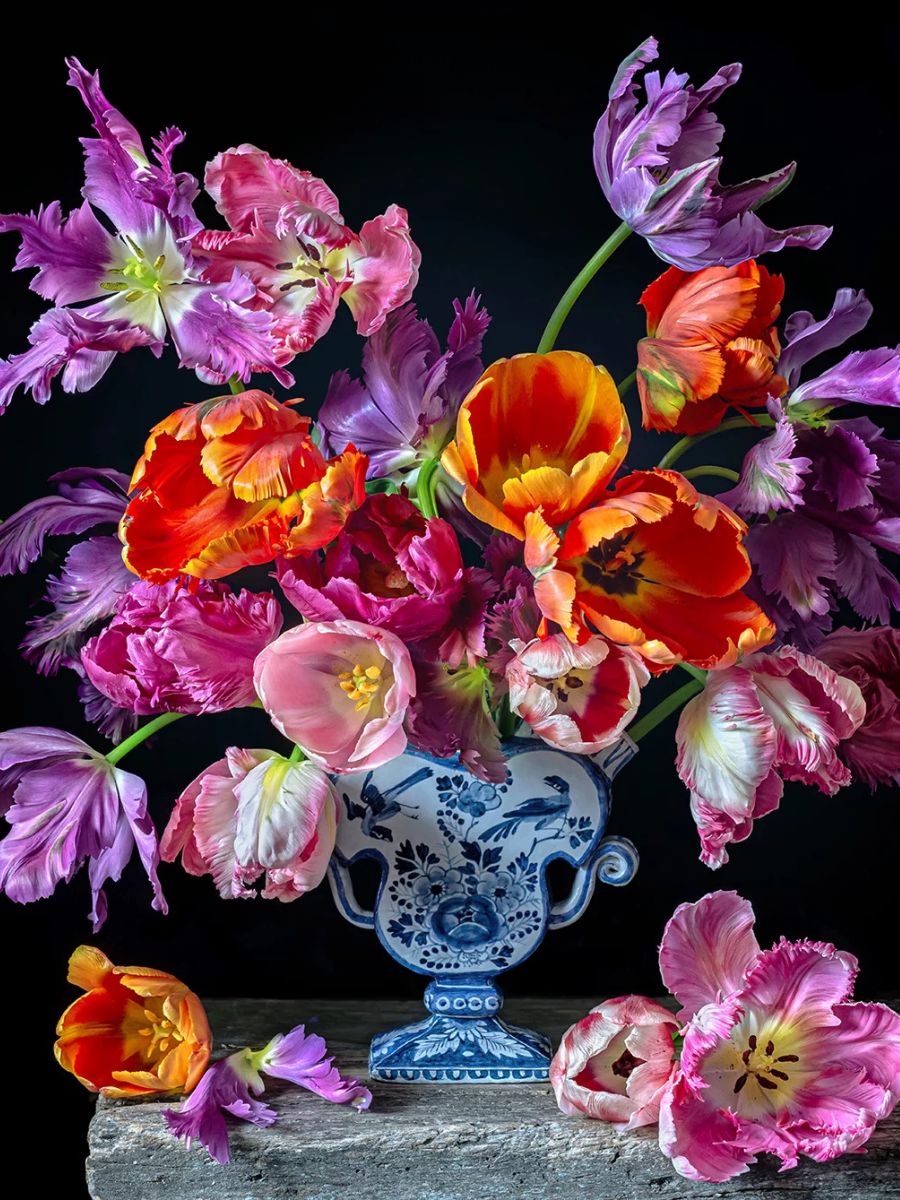
In the Dutch Golden Age, a tulip meant wealth. The most wanted ones had flamed, feathered petals, and painters put them at the top of their flower still lifes. Those flames turned out to be the work of a virus that also weakened the bulb, so the most expensive tulips were, in a way, sick ones. That's why the tulip in those paintings means two things at once: riches, and how quickly they fade.
The Tulip in Dutch Culture
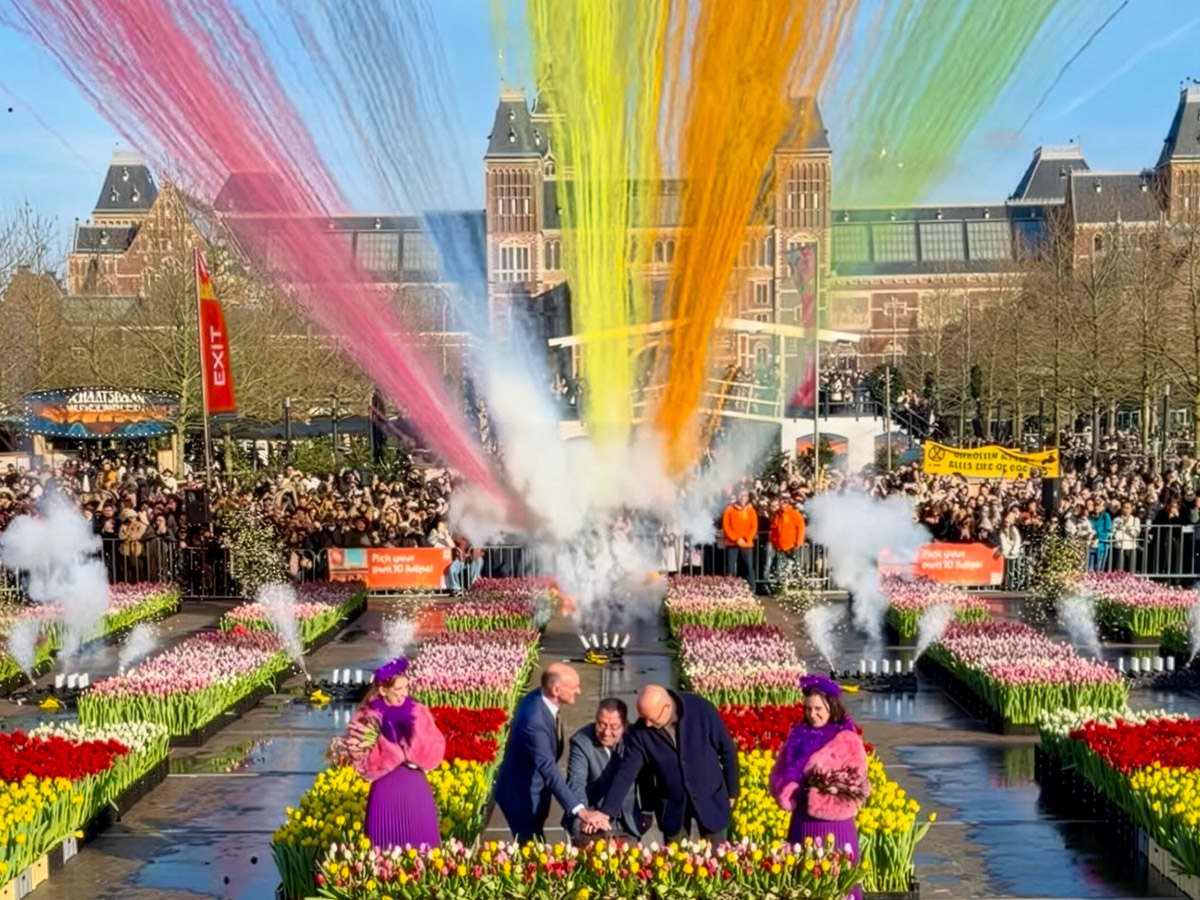
Few things say Holland like a tulip, and the Dutch know it. Every year on the third Saturday of January, National Tulip Day opens the cut tulip season in Amsterdam with a garden of tulips that anyone can come and pick for free. The fields are still bare then. The flowers come from greenhouses, where growers force bulbs from fall to May.

The tulip also became a thank-you. In 1945 the Netherlands sent 100,000 tulip bulbs to Ottawa, because Canada had sheltered Princess Juliana and her daughters during the war and its soldiers had helped liberate the country. Tulips have gone to Ottawa every year since, and the city still throws a festival for them in May.
For the people who grow them, the tulip is pride, even if they don't always get that at home. In the Netherlands, Sam van Schooten said, people sometimes feel sorry for a tulip grower. Abroad, it's the other way around: "If you go to America, or anywhere really, and you say, I'm from Holland, I grow tulips, they say: sit down. Oh, what's that like? Wow, how wonderful." (translated from Dutch). His own favorite? Flaming Parrot, a tulip he thinks will disappear within a few years.
Growers like Zwettulips in Rijsenhout, which has focused on tulips since 1989, now grow them all year round. They've even shared tips to make tulips last longer. If you want to know when each type is at its best, our tulip season guide has the calendar.
Which Tulip to Give, and When
Now the practical part. Pick the moment, then the color:
- Valentine's Day or an anniversary: a bouquet of red tulips, as many as you dare.
- Mother's Day or a family celebration: pink, such as Tulip Crown of Dynasty or Tulip Tresor.
- An apology: white. It says sorry and asks for a clean slate.
- Sympathy: white, simple, and not too many.
- Get well or a friend's bad week: yellow, for a bit of sunshine.
- Celebrating a graduation or a promotion: purple, for the admiration you'd like to say out loud.
- A new home or a new job: orange, for the energy of a fresh start.
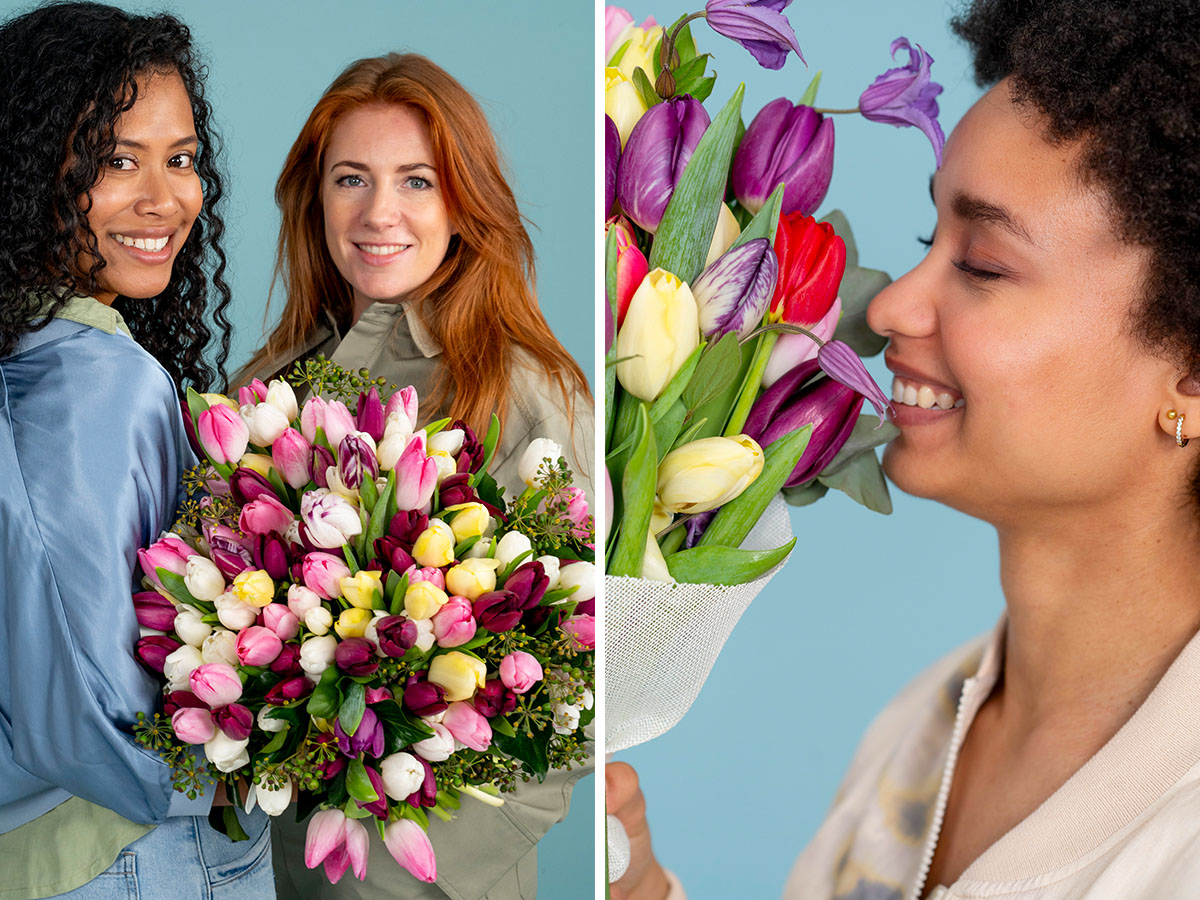
Mixing colors? Then the bouquet simply says "I thought of you," and that's never wrong. To match tulips with other flowers that say the same thing, use our flower meanings from A to Z.
A Tulip Keeps Talking After You Give It
Most cut flowers stop when you put them in a vase. Tulips don't. They keep growing after they're cut, the stems bend toward the sunlight, and the bright colors open wider every day. So your message changes shape on the table for a week or more. Choose the color that says what you mean, and let the tulip do the rest. It's a classic flower for a reason. Trust us, it's been doing this for five hundred years.
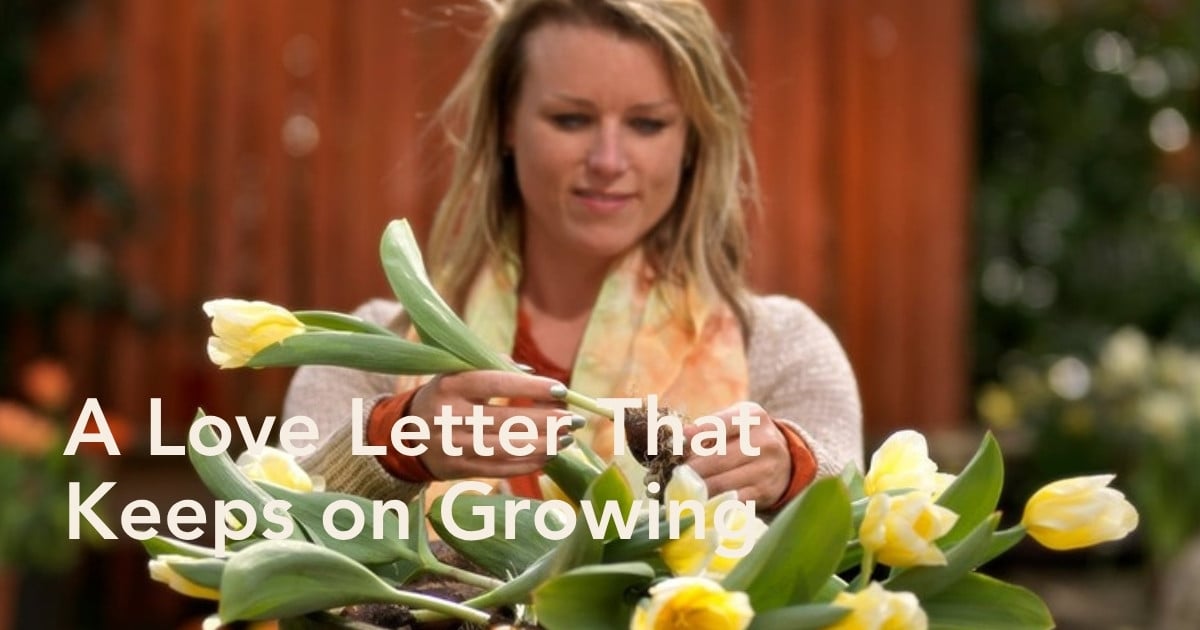
Featured image: a windmill next to the tulip fields of Schagerbrug in North Holland. Photo by @dernederlanden. Header image: a woman arranging yellow tulips. Photo by Steven Bemelman for iBulb.