Weddings in the summer almost always feel like a fantasy. Floral-wise, such weddings give you more flower choices than, perhaps, any other season. This sounds quite like a gift until you realize how fast the abundance could, in itself, become its own kind of pressure.
The right flowers for a summer wedding are not simply the ones that look best on a Pinterest mood board, but rather those that hold their form in the heat, suit the season's light, coordinate with an indoor or outdoor setting, and together create a truly summery feel. Here’s what you’d want to know when deciding on your summer wedding florals.
Why Seasonality Shapes Floral Choices
Perhaps the most important factor when choosing summer wedding flowers is whether they work with the season. Flowers at their natural peak in summer will always outperform out-of-season varieties in freshness, vase life, and overall quality. They are also more affordable when sourced in season, sometimes two to three times cheaper than the same flower ordered out of season.
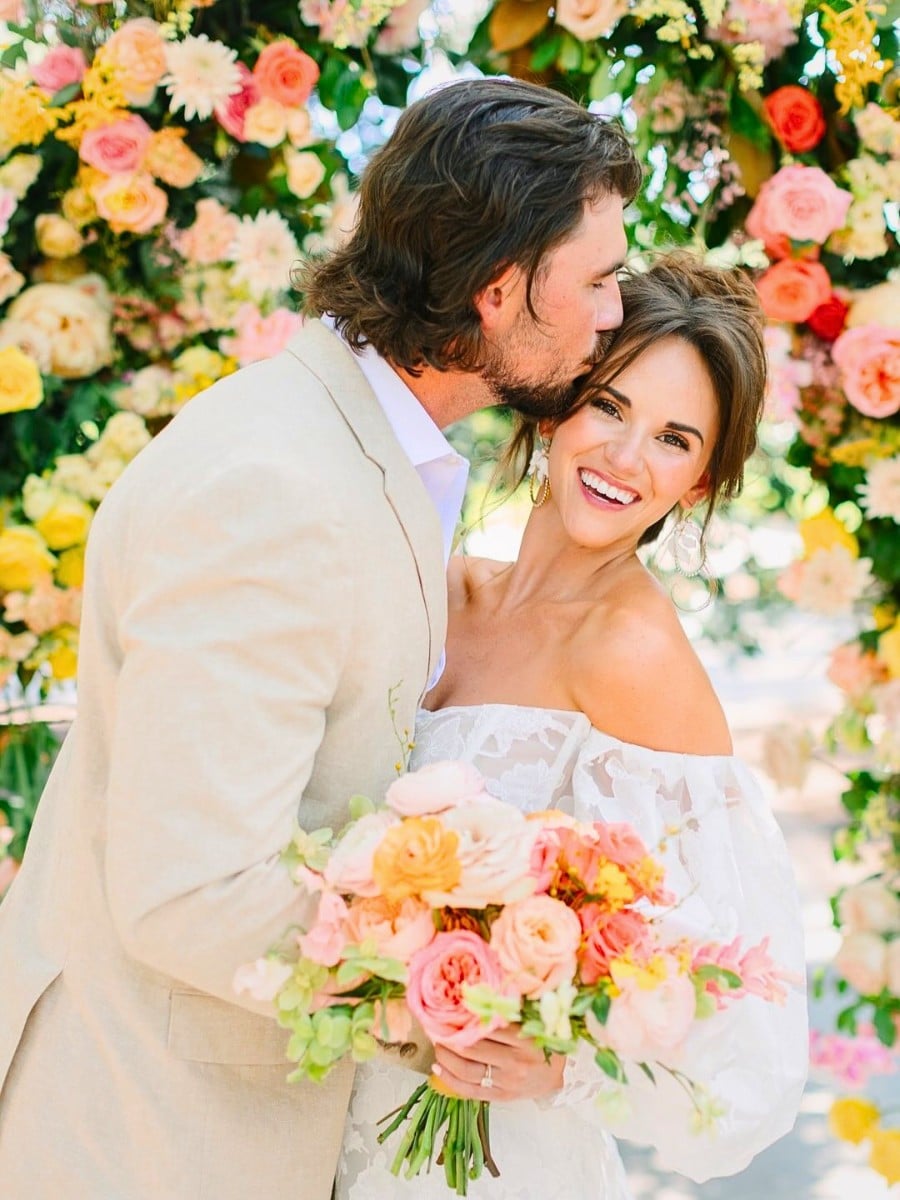
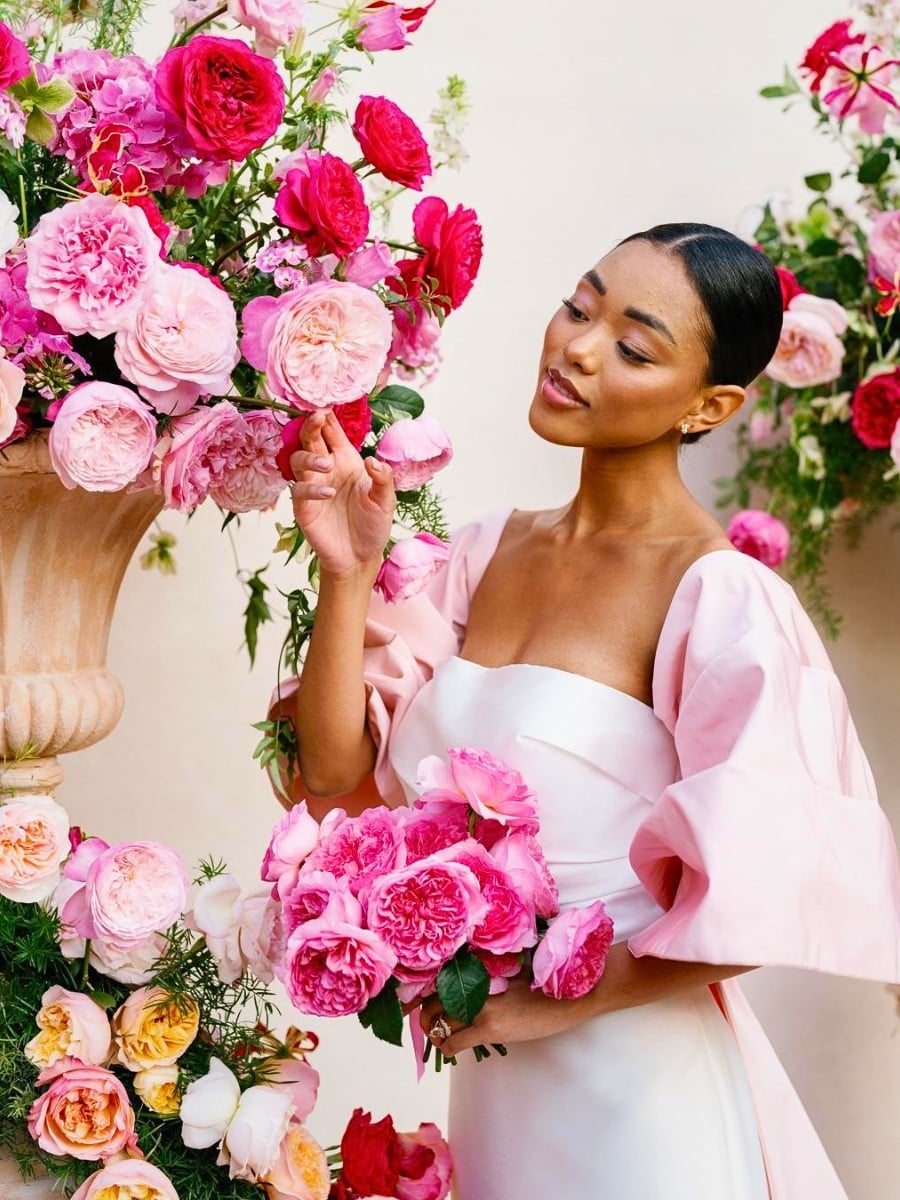
Garden roses are, perhaps, the best example of this principle. They reach their finest expression during the summer months, with full heads, intricate petal structures, and fragrances hardly replicable at other times of year. Varieties from growers like Alexandra Farms, including Rose Juliet, Rose Keira, Rose Miyabi, Rose Princess Miyuki, and the beloved cafe au lait-adjacent Rose Patience, offer warmth, softness, and a range of colors that transition seamlessly from blush and cream through to deep peach and warm burgundy. A summer wedding built around garden roses rarely needs much else to look complete.
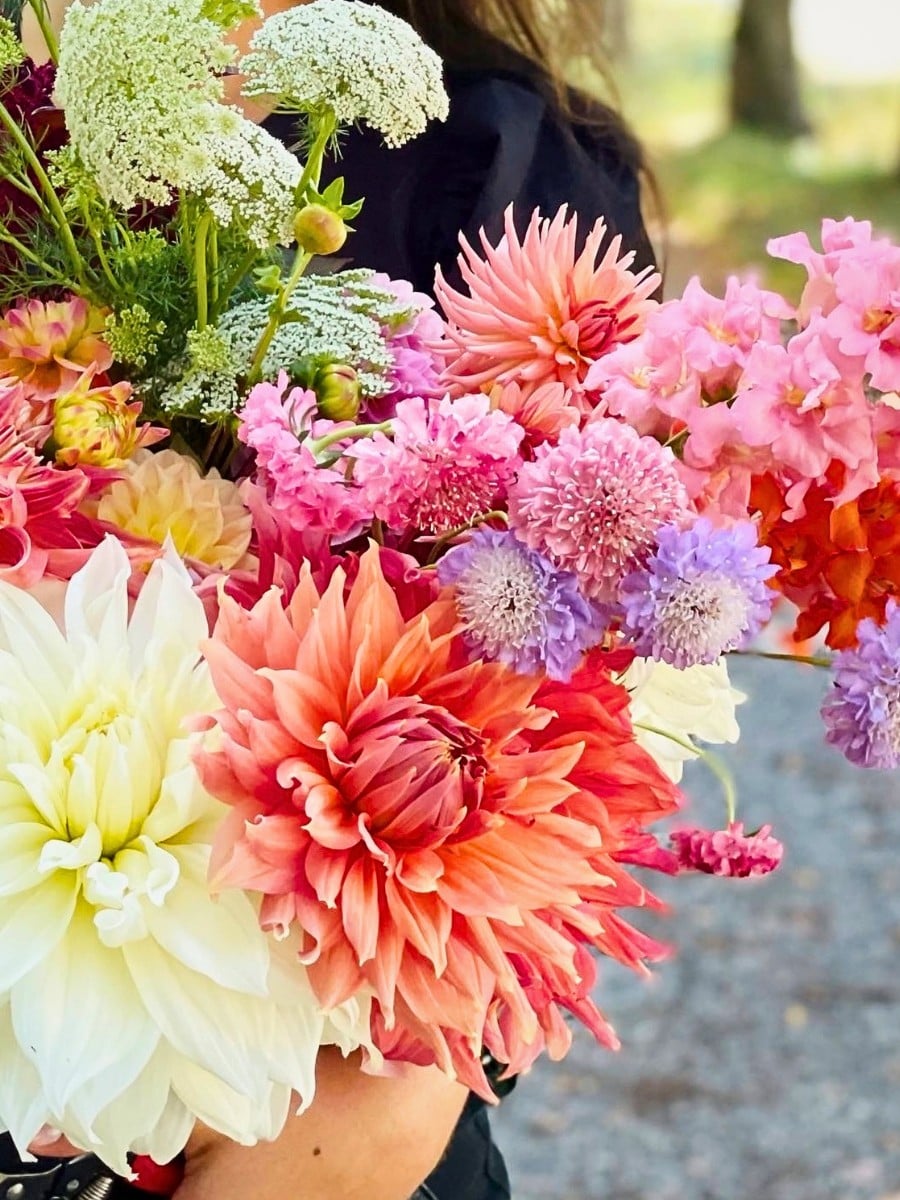
Dahlias follow an almost similar logic. They peak during the warmest months and carry a depth of color and form that make them one of the most useful flowers in a summer wedding arsenal. Their symbolism is well-suited to the occasion, too, representing commitment, resilience, and long-lasting connection. From dinner-plate varieties that anchor a bridal bouquet to smaller pompom and ball types that give geometry and texture to centerpieces, Dahlias scale across practically every application in a wedding setting.
Color, Palette, and the Light of the Season
Summer light is warm, direct, and unforgiving in the best possible way. Colors that look beautiful under the soft, diffuse light of spring could appear washed out or overly saturated under a July sun. Flowers that perform best at summer weddings tend to fall into two palettes: warm and saturated, or soft and cool enough to feel refreshing in the heat.
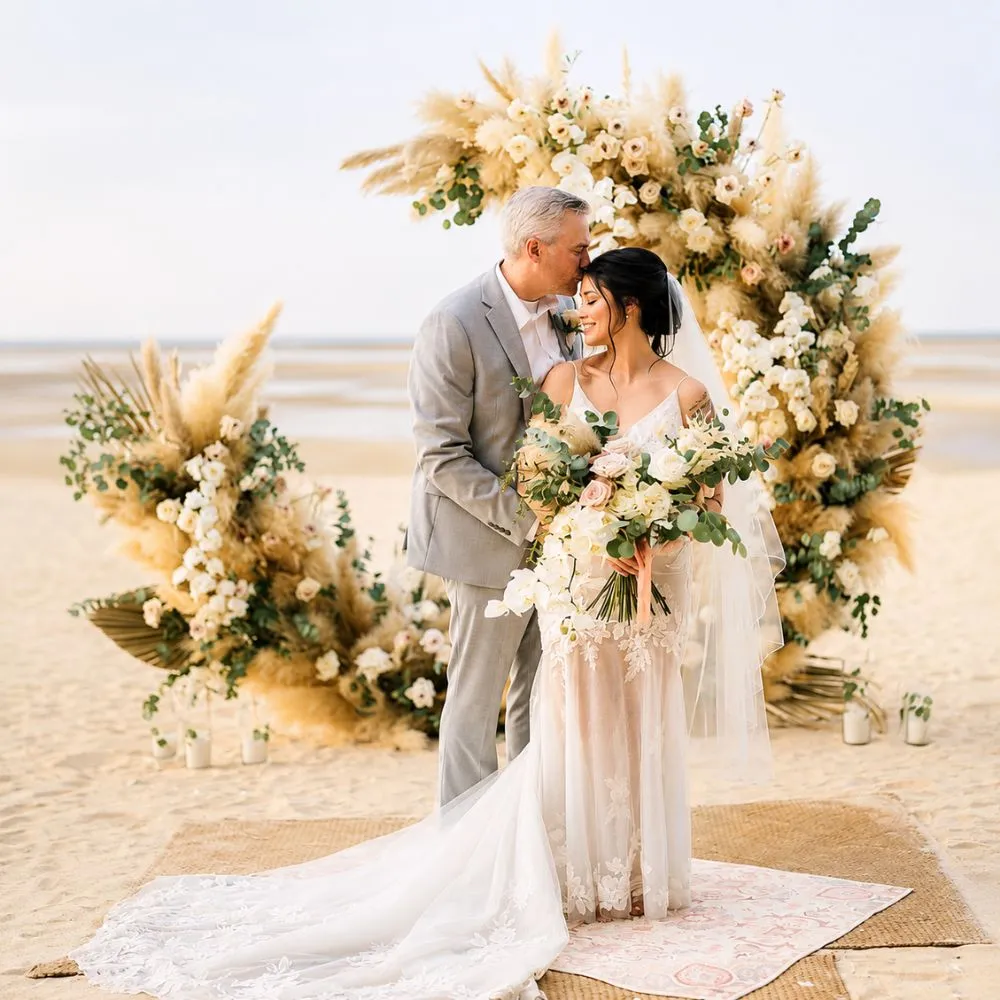
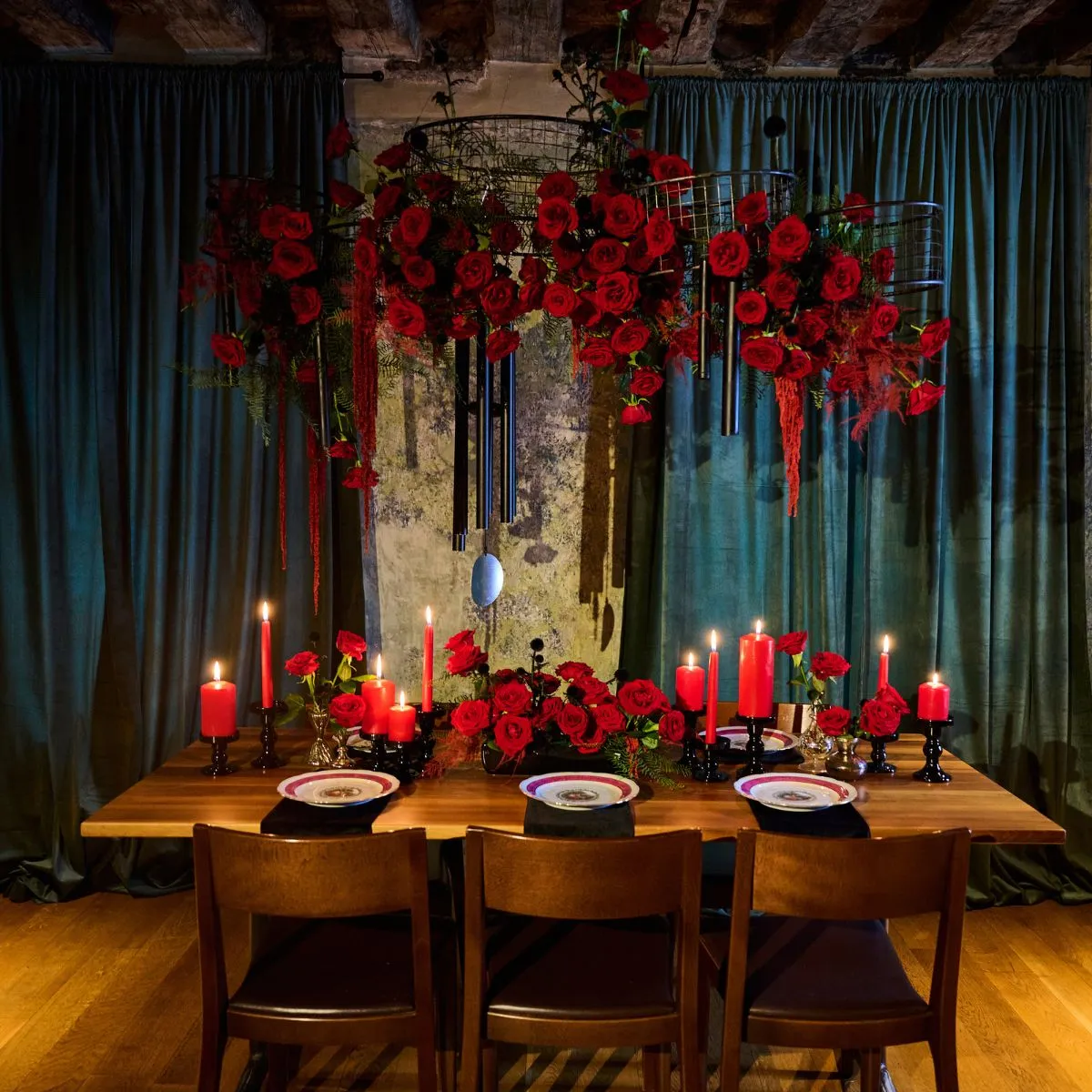
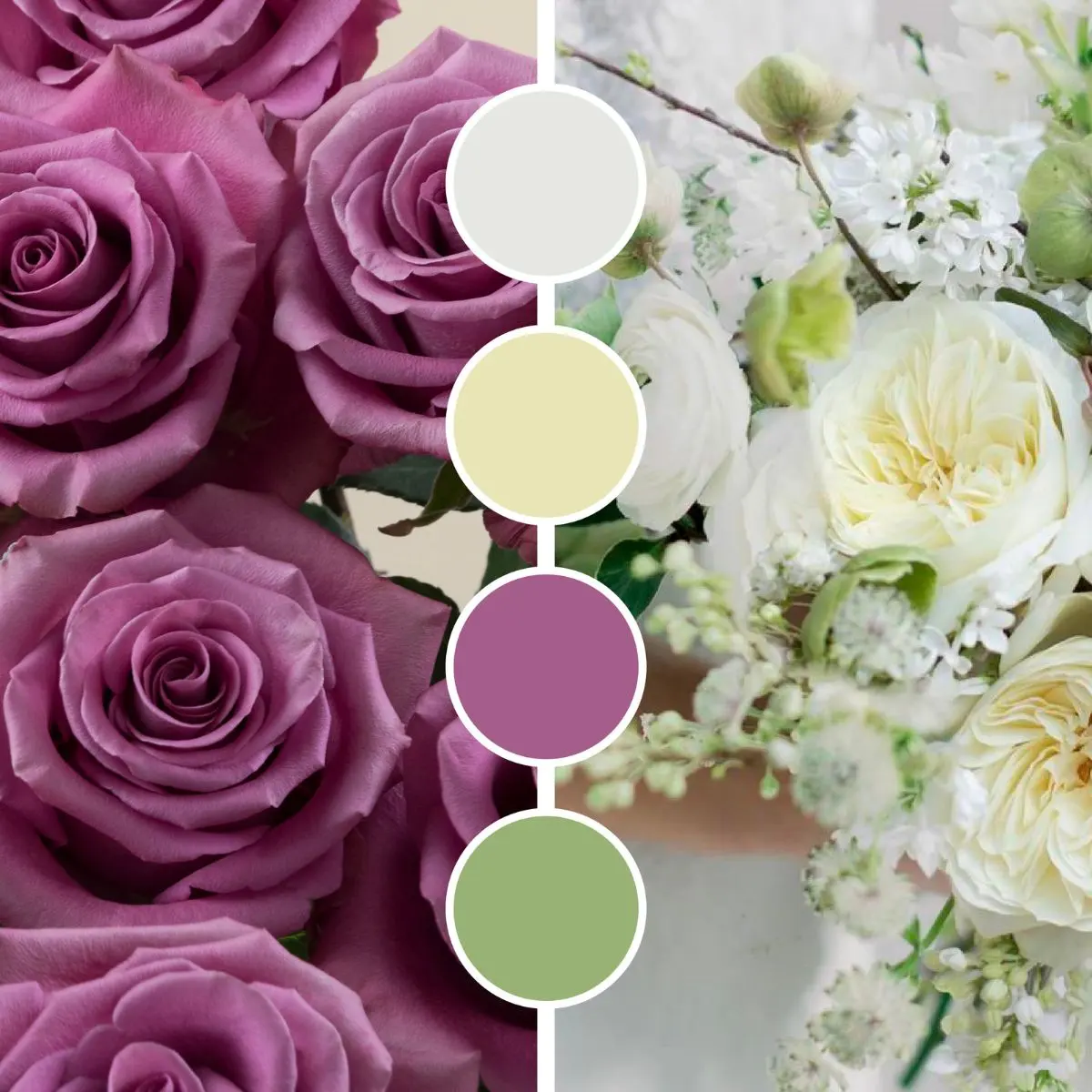
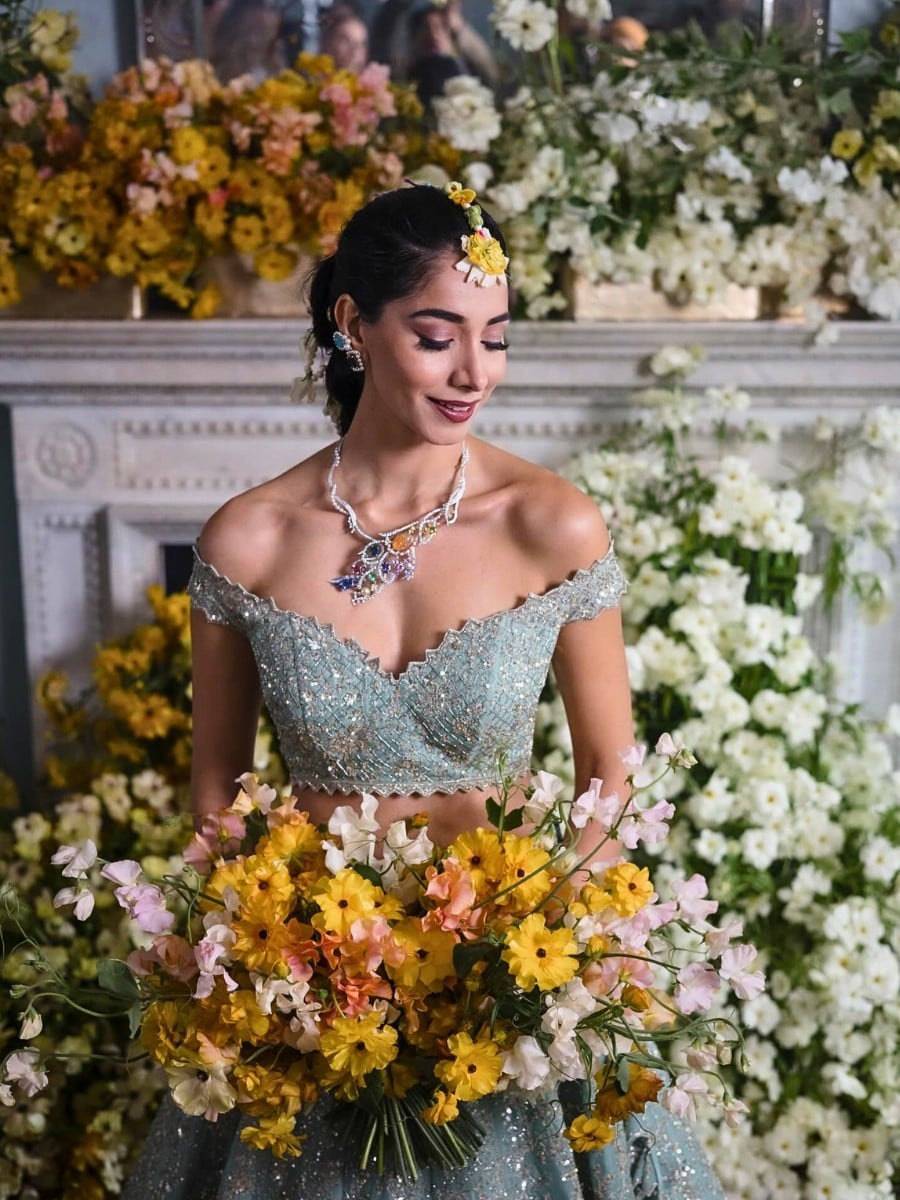
Warm palettes, built around blush, peach, coral, warm white, and deep burgundy, are seen as unmistakably summery and picture exceptionally well in natural light. Garden roses in tones like soft apricot and warm cream, combined with Ranunculus and touches of burgundy Dahlia, create luxurious and organic-looking arrangements.
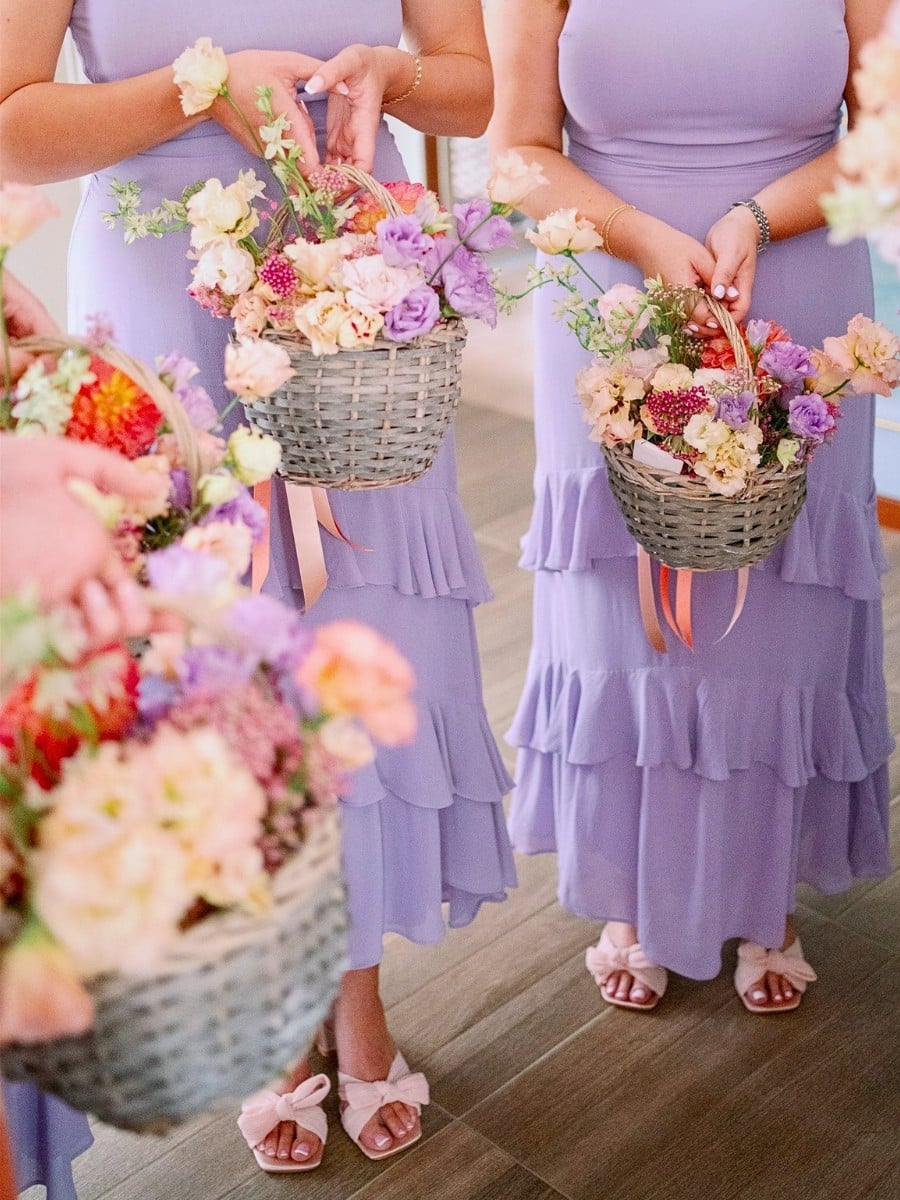
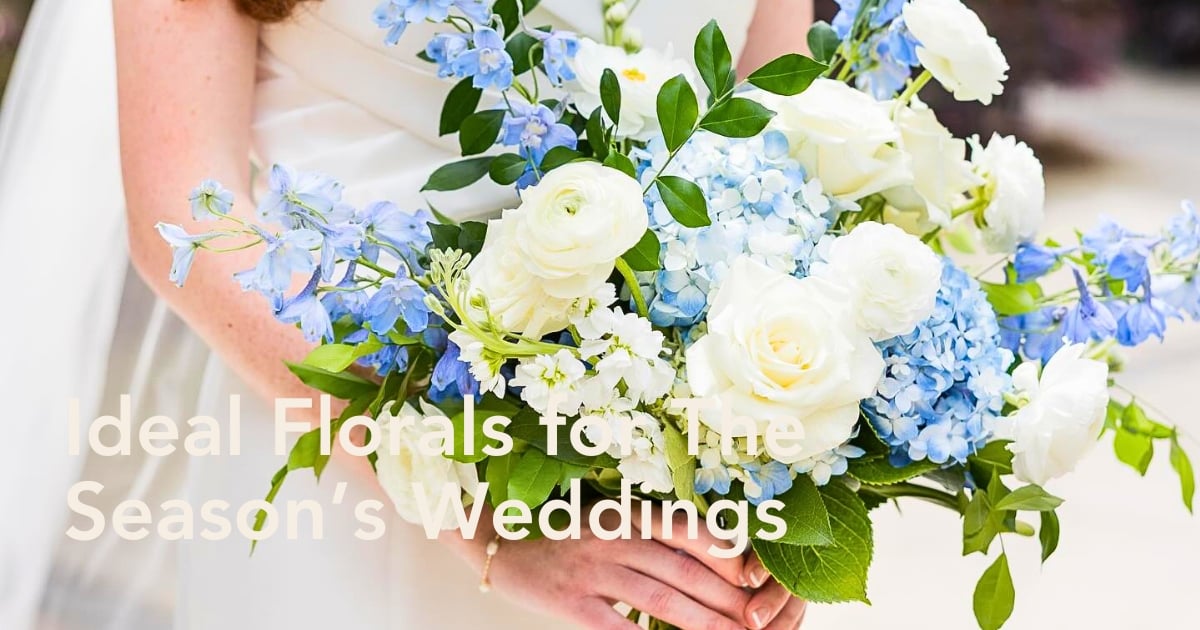
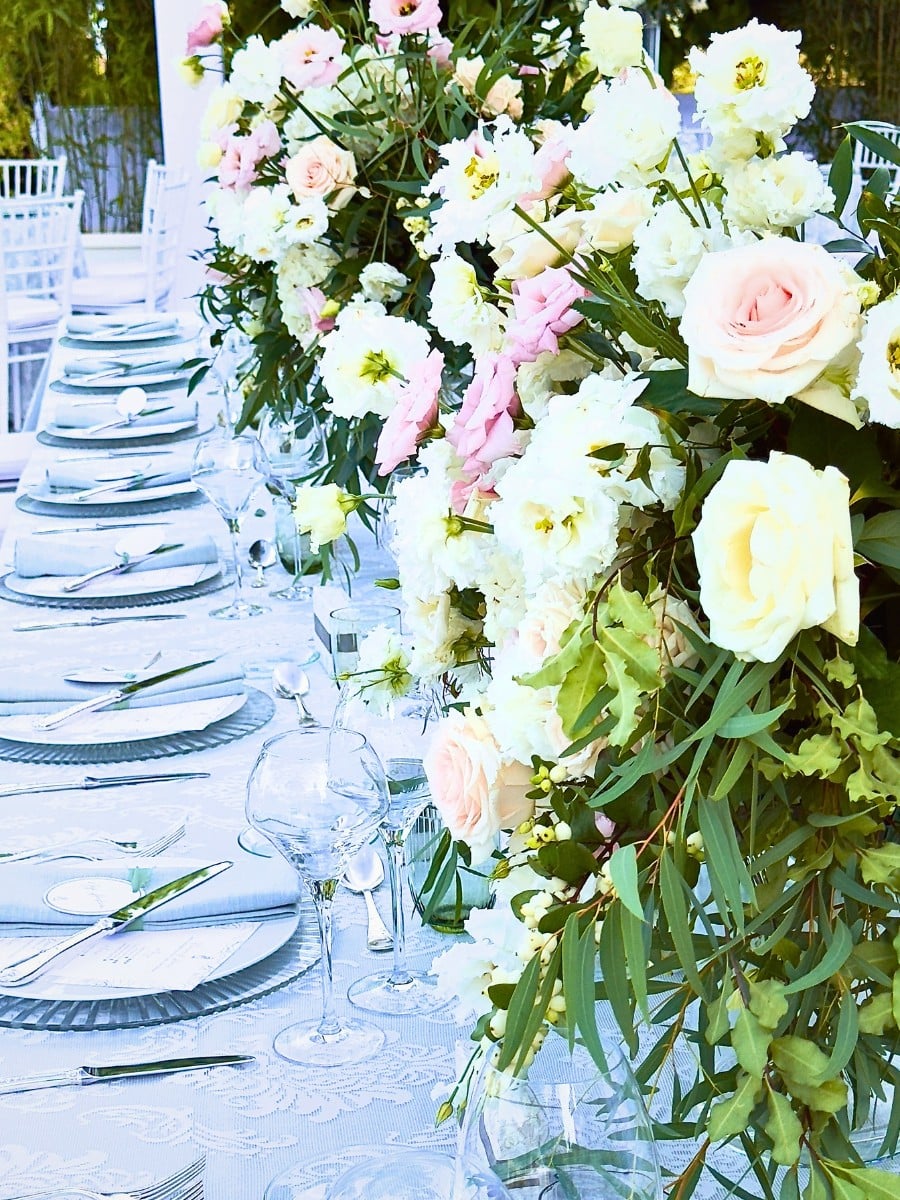
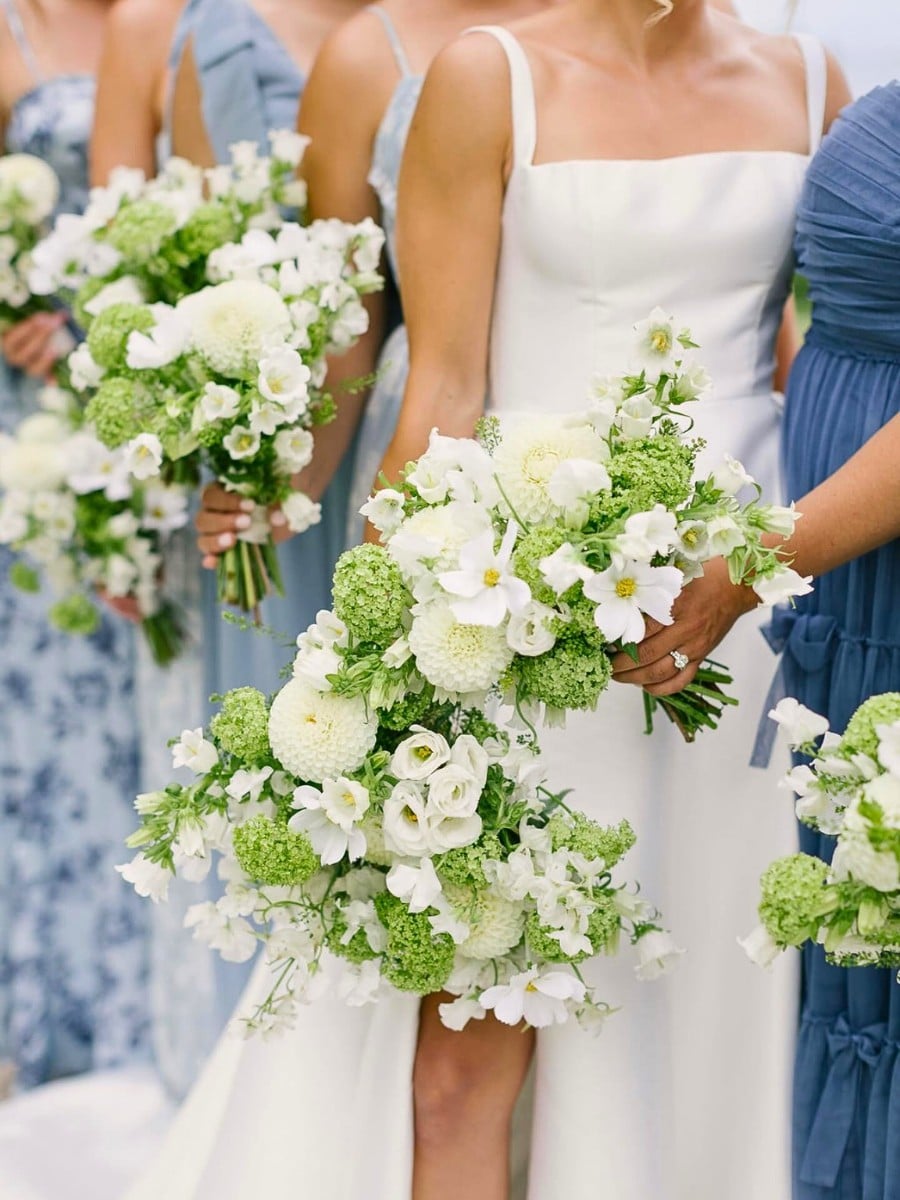
Ivory and warm white flowers, including white garden roses, white Lisianthus, and white Hydrangeas, have a similar quality and pair well with almost any wedding theme. Cooler palettes, featuring lavender, soft blue, lilac, and crisp white, offer a visual counterpoint to summer's heat and work particularly well for outdoor ceremonies where the color palette needs to be airy and unforced.
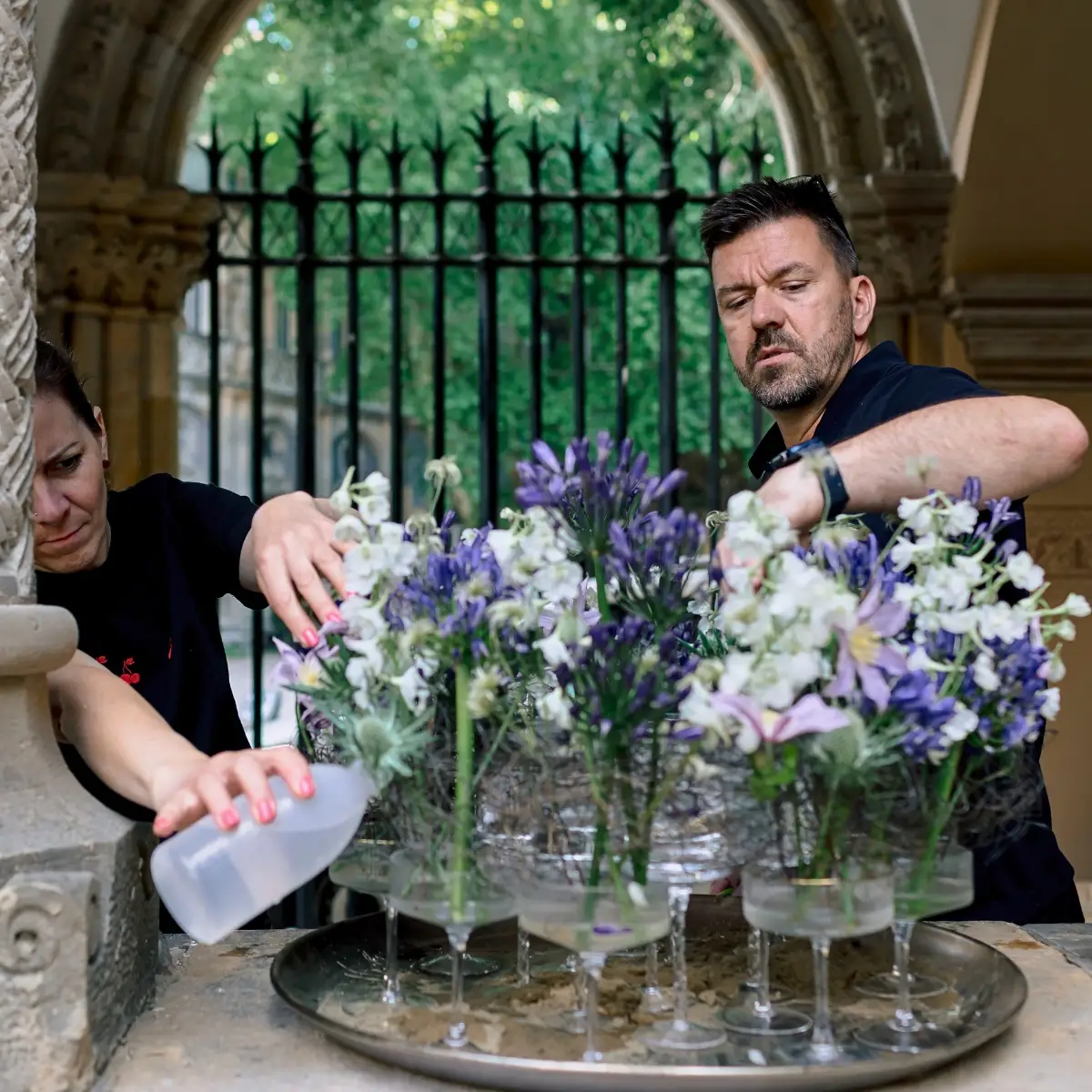
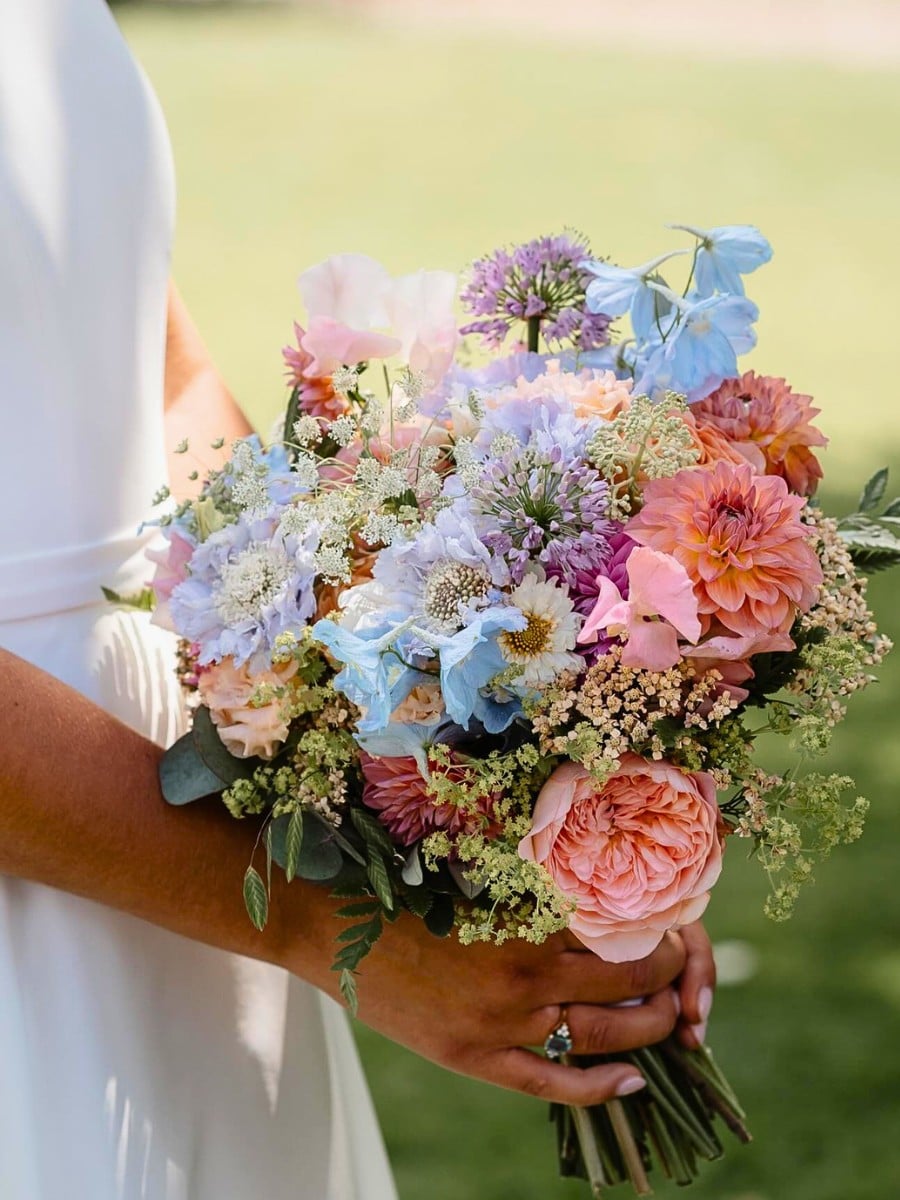
Delphinium and Scabiosa in soft purple, paired with white Lisianthus and eucalyptus, produce an arrangement with a light and polished feel. Coordinating these flower colors with the wedding dress is worth thinking through, since warm ivory gowns pair most naturally with blush and peach tones, while cooler whites complement lavender, pale blue, and crisp greenery.
Structure and Form, and the Suitable Flowers
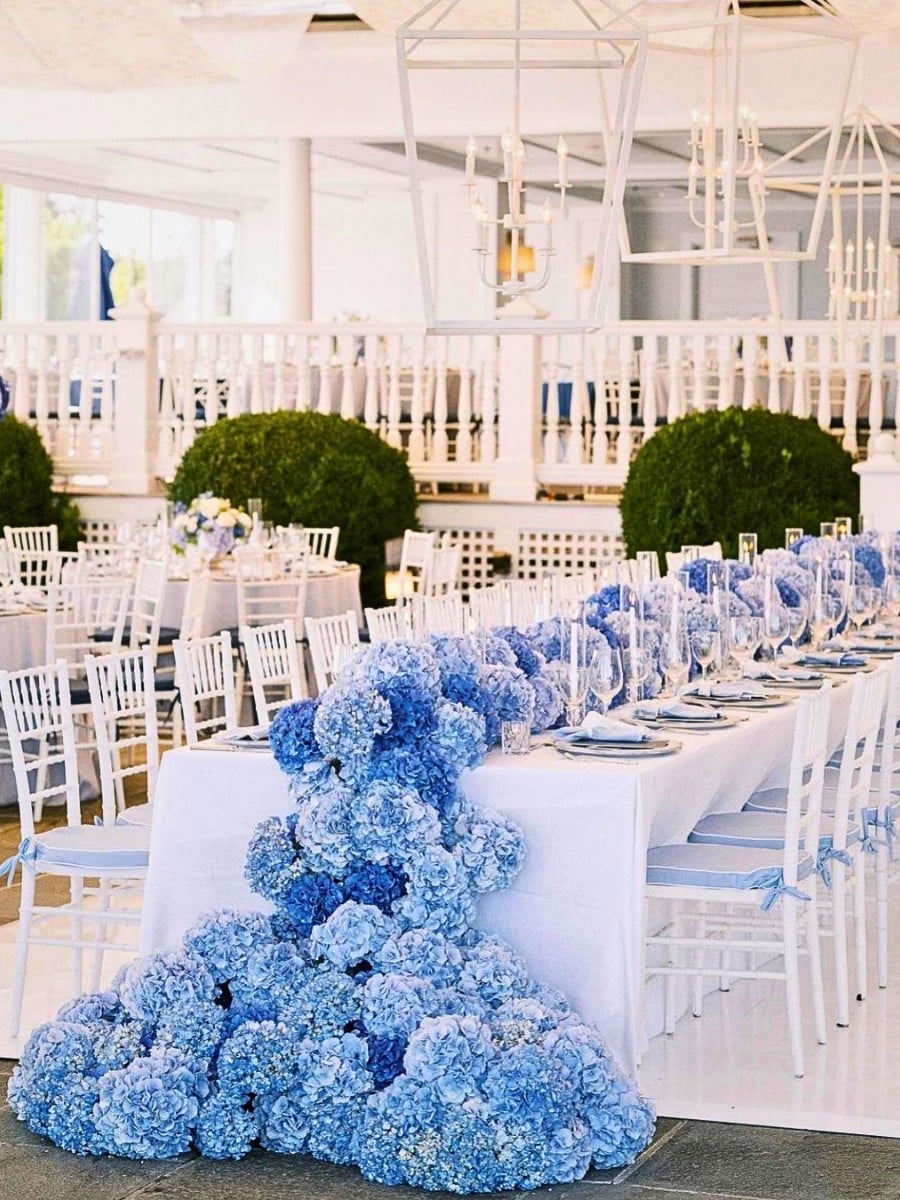
A well-designed wedding floral arrangement relies on a clear hierarchy: focal flowers carry visual weight, mid-sized supporting flowers add elaborateness, and lighter, airier elements bring movement and prevent the overall composition from feeling stiff. Hydrangeas are one of the most reliable volume flowers in summer wedding design, and a stem of this flower can fill a significant space in a centerpiece and provide a generous, cloud-like backdrop for more refined focal flowers like garden roses or Lisianthus.
White and pale green Hydrangeas are perennial favorites for their versatility, while blue and lavender varieties add color depth while not overshadowing the more structured focal flowers around them. One practical note: Hydrangeas are water-dependent and can wilt quickly in strong summer heat, so they are better suited to indoor ceremonies and receptions, or evening outdoor events when temperatures have dropped.
Lisianthus is one of the most underrated summer wedding flowers, which many professional florists rely on far more than the average couple realizes. Its ruffled, cup-shaped flowers bear a strong resemblance to roses and peonies at first glance, and their refinement suits formal weddings while still offering warmth.
Available in white, cream, pale pink, deep purple, and bicolor varieties, Lisianthus also holds exceptionally well once cut, often lasting ten days or more, which makes it a practical as well as beautiful choice. As a cost-effective alternative to roses and peonies, it allows couples to achieve a lush, layered look without stretching their budget.
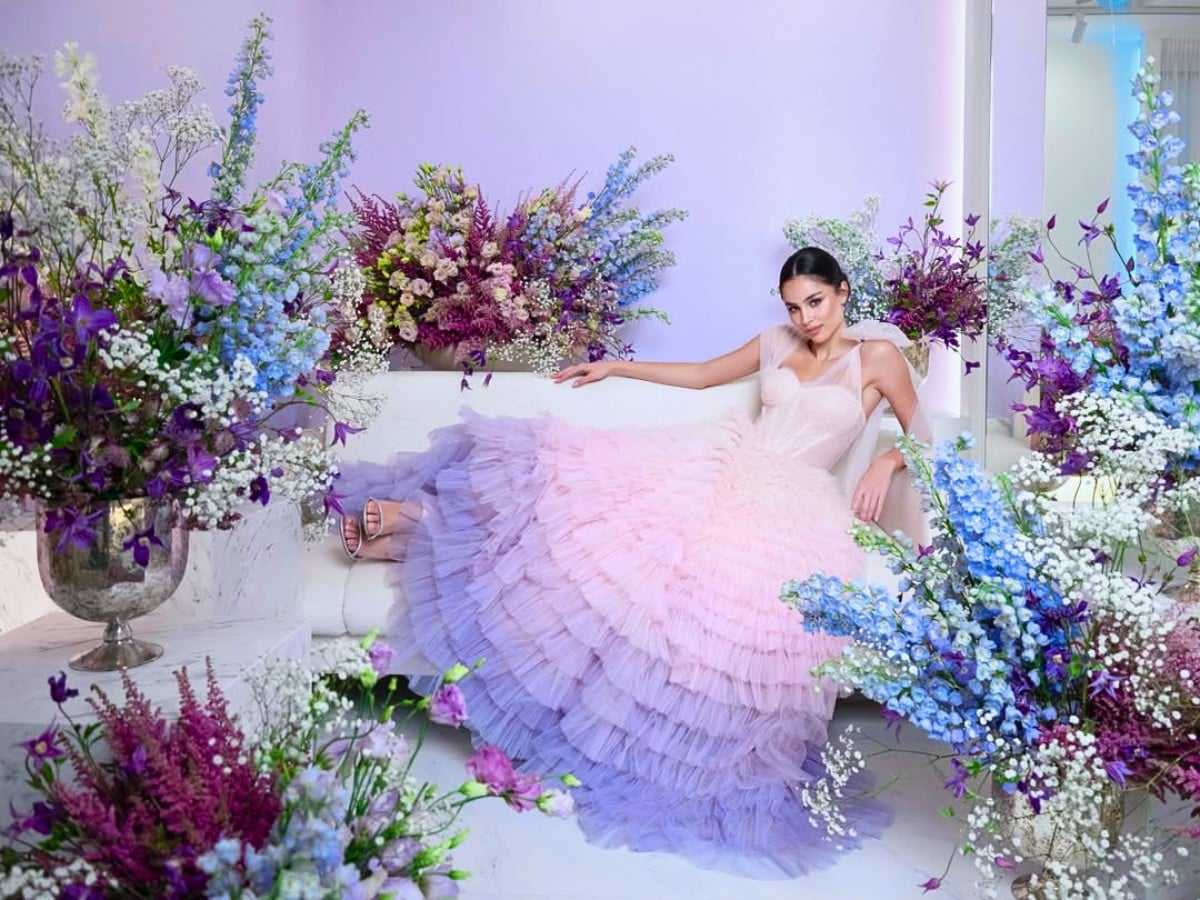
For vertical lines and upward movement, Delphinium and larkspur remain the most useful choices in a summer wedding setting. Their tall spires of tightly packed flowers in blue, violet, soft pink, and white draw the eye through an arrangement and prevent bouquets or installations from being too round or uniform.
Delphinium is the more architectural of the two, with stronger stems suited to large-scale arrangements and ceremony arches. Larkspur is more delicate and suits hand-tied bridal bouquets and looser garden-style arrangements particularly well.
Practical Elements Like Heat Tolerance and Vase Life
A summer wedding introduces a set of practical challenges that cooler-season weddings do not face. Strong heat can significantly accelerate the aging of cut flowers, and an arrangement that looks perfect at 10 AM may end up looking noticeably tired by midday if the wrong flowers are used or if conditioning is neglected.
Flowers that perform most reliably in summer heat include zinnias, which are among the toughest and longest-lasting of all summer cut flowers, garden roses, when properly hydrated and kept out of direct sun, Lisianthus, which is naturally durable, and cosmos and lavender, which handle heat waves with very little distress.
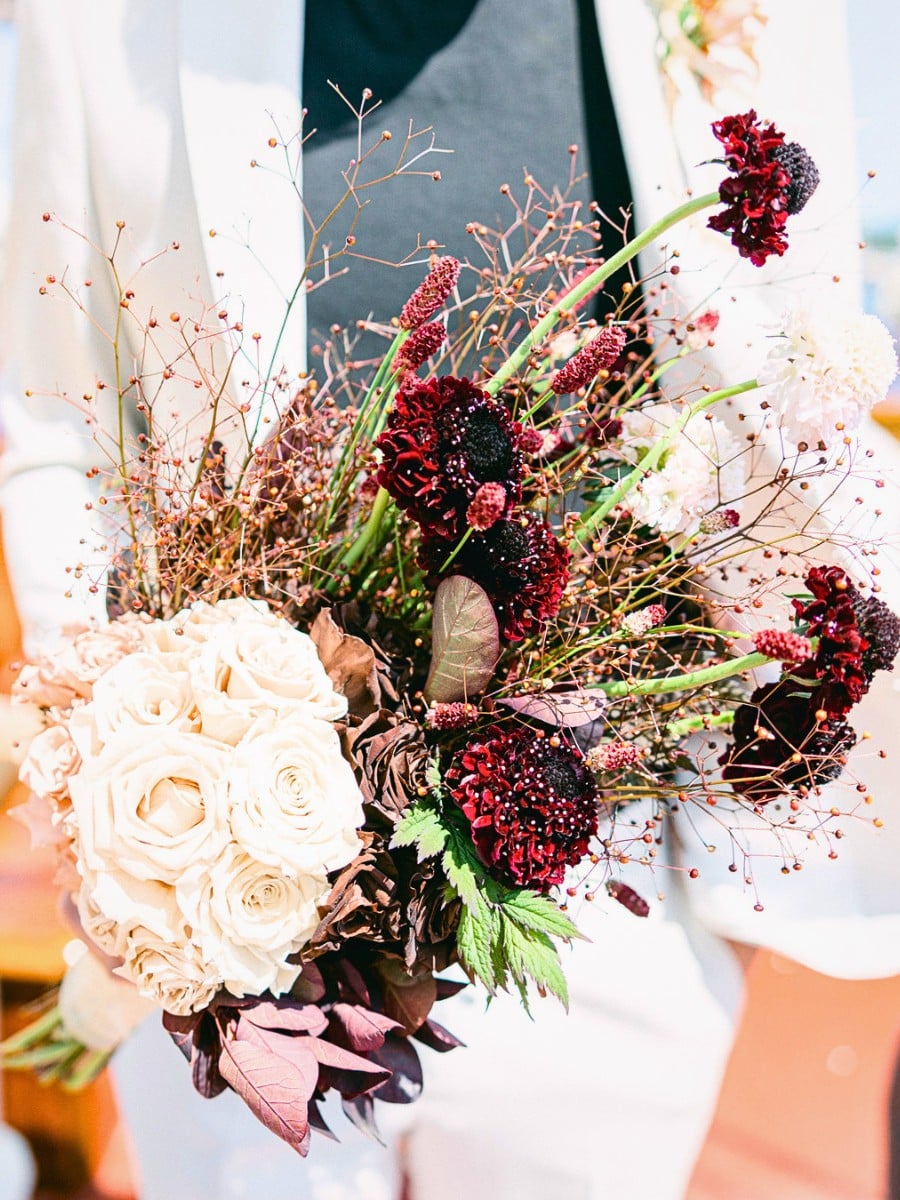
Those that require more careful management in summer heat include peonies, which have a relatively short window in early summer and soften quickly in high temperatures, and Hydrangeas, which need constant watering to hold their form through a long event.
Conditioning before the event is important. Flowers cut at a 45-degree angle, immediately placed in clean water, and rested in a cool location for several hours before arranging will reliably outlast flowers that are not properly prepared. Fresh flowers should be delivered as close to the ceremony time as possible so they have time to settle without sitting through extended heat exposure.
Texture, Movement, and the Supporting Flowers
Often, flowers and foliage that surround the focal flowers in a summer wedding bouquet determine whether an arrangement feels considered or assembled. Flowers like Scabiosa and sweet peas offer an airy, garden-cut quality that softens the structured forms of garden roses or Dahlias.
Eucalyptus, in its seeded and leafy forms, remains one of the most widely used wedding greens for its silvery-green color, subtle fragrance, and ability to frame other flowers without competing with them. Ranunculus has layered petals and a delicate look, blends colors beautifully, and adds textural depth to the arrangement.
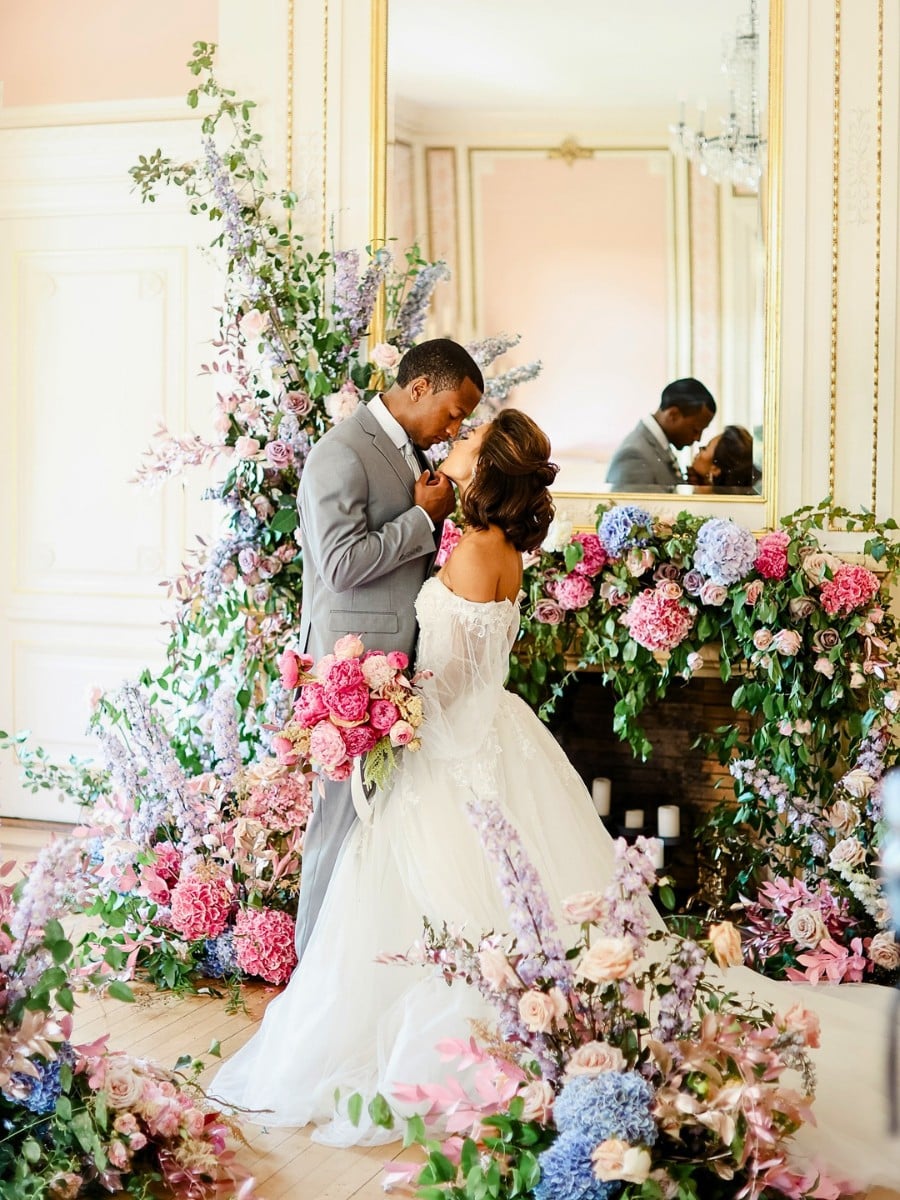
For couples drawn to a naturalistic or garden-style wedding aesthetic, yarrow, cosmos, and Scabiosa woven through the arrangements give the florals a just-gathered quality, just appropriate for the season. For a more formal or structured aesthetic, clean lines from Delphinium alongside garden roses and eucalyptus produce a polished result that does not feel rigid.
Additional Summer Wedding Flowers Worth Considering
There are so many flowers suitable for weddings, which appear regularly in summer wedding work, and merit a mention. Sweet peas add fragrance and delicate, ruffled petals in pastel shades that suit romantic, garden-style weddings, though their season tends to fade as summer deepens and temperatures rise.
Ranunculus performs strongly through early and mid-summer before the heat begins to shorten its availability. Peonies, beloved as they are, peak in late spring and early summer and should be confirmed with your florist well in advance if they’ll be the main attraction in your design. Calla lilies offer a clean, modern alternative for couples drawn to minimalist wedding styles. Their long stems and elegant trumpet form suit sleek bridal bouquets and architectural ceremony installations.
Freesia adds fragrance and small, delicate flower clusters that work well as filler in mixed arrangements. And ornamental grasses, including Pennisetum and Panicum, bring movement and a naturalistic dynamic that flowering plants hardly replicate quite as well. Others are sunflowers (which are the classic symbol of summer), Clematis, Campanula, carnations, orchids, Amaranthus, Gardenia, cornflowers, Irises, tweedia, lilies, and Gerbera daisies, among several more.
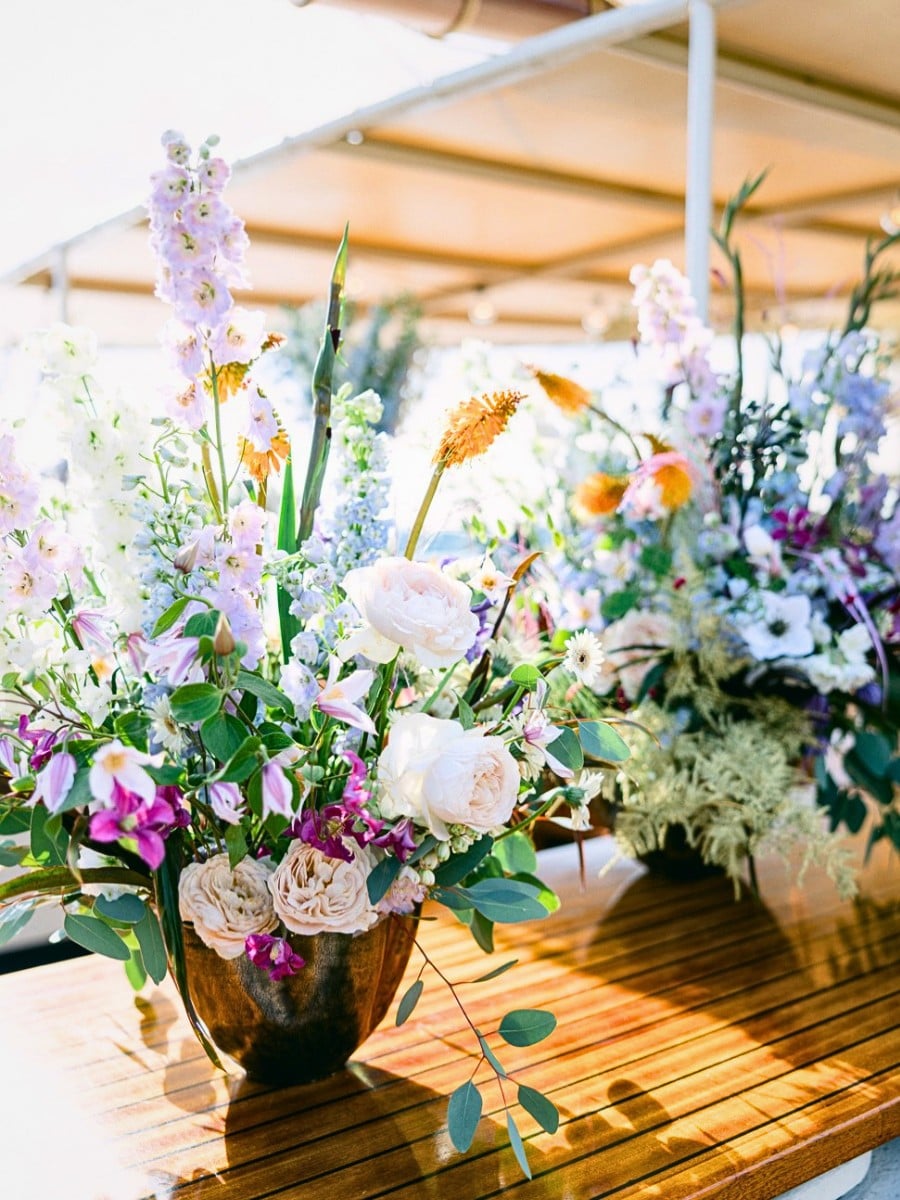
For couples building their wedding floral plan around a specific theme, flowers that define that theme should be confirmed with a florist early in the planning process. Availability changes across the summer, and flowers that are plentiful in June may be in shorter supply by late August, or vice versa.
What to Have in Mind When Working With These Flowers
A well-designed summer wedding floral plan generally starts with one or two hero flowers that define the look, supported by two or three complementary varieties in varied textures, and finished with foliage and filler that give the arrangements depth and movement.
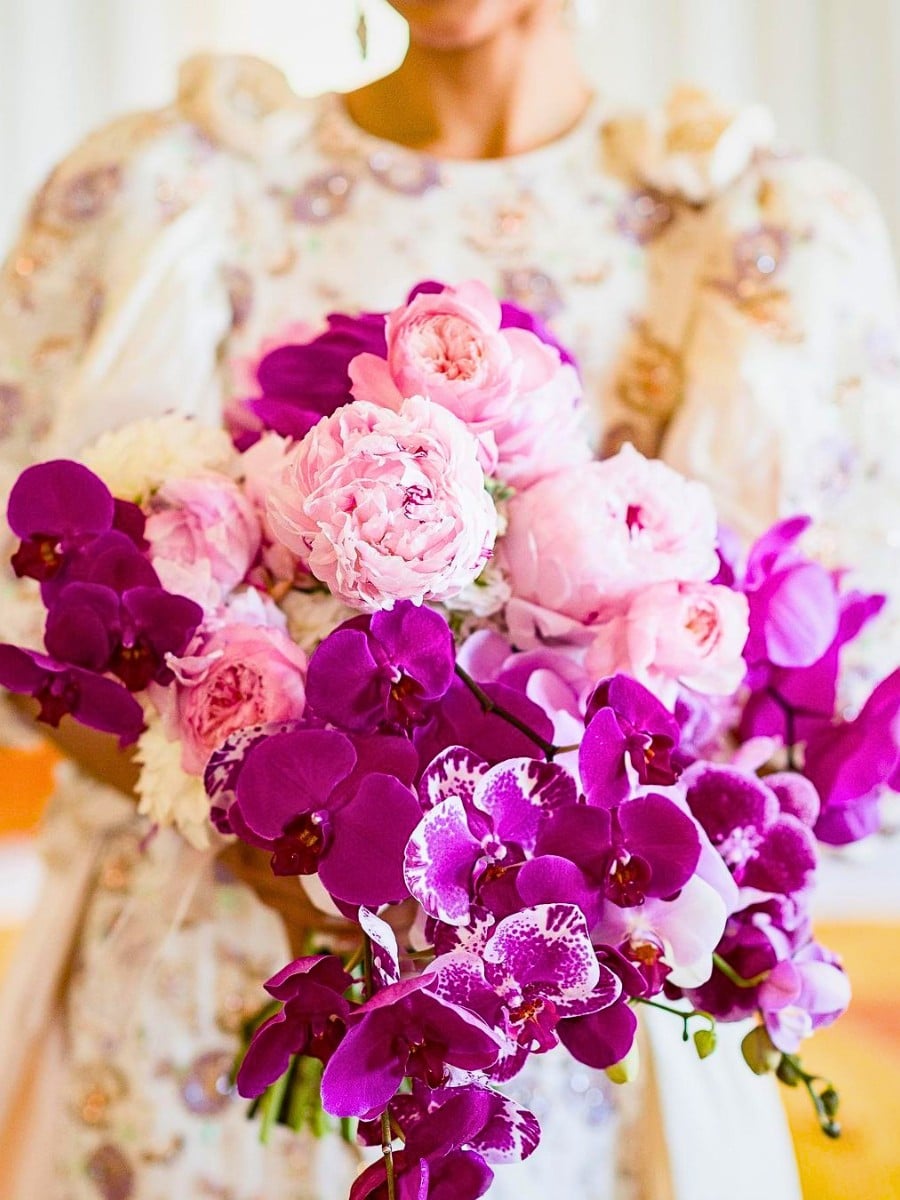
Color temperature should align with the theme, venue, light conditions, and the wedding palette. Warm and cool flowers can coexist beautifully in a summer arrangement, but the balance between them should be deliberate instead of being incidental.
For ideal results, work with in-season flowers, communicate early with your wedding floral designer/planner or florist about heat management and delivery timing, and allow the flowers’ natural qualities to lead the design, instead of forcing them into a predetermined concept. More often than not, this produces beautiful results just perfect for the day.
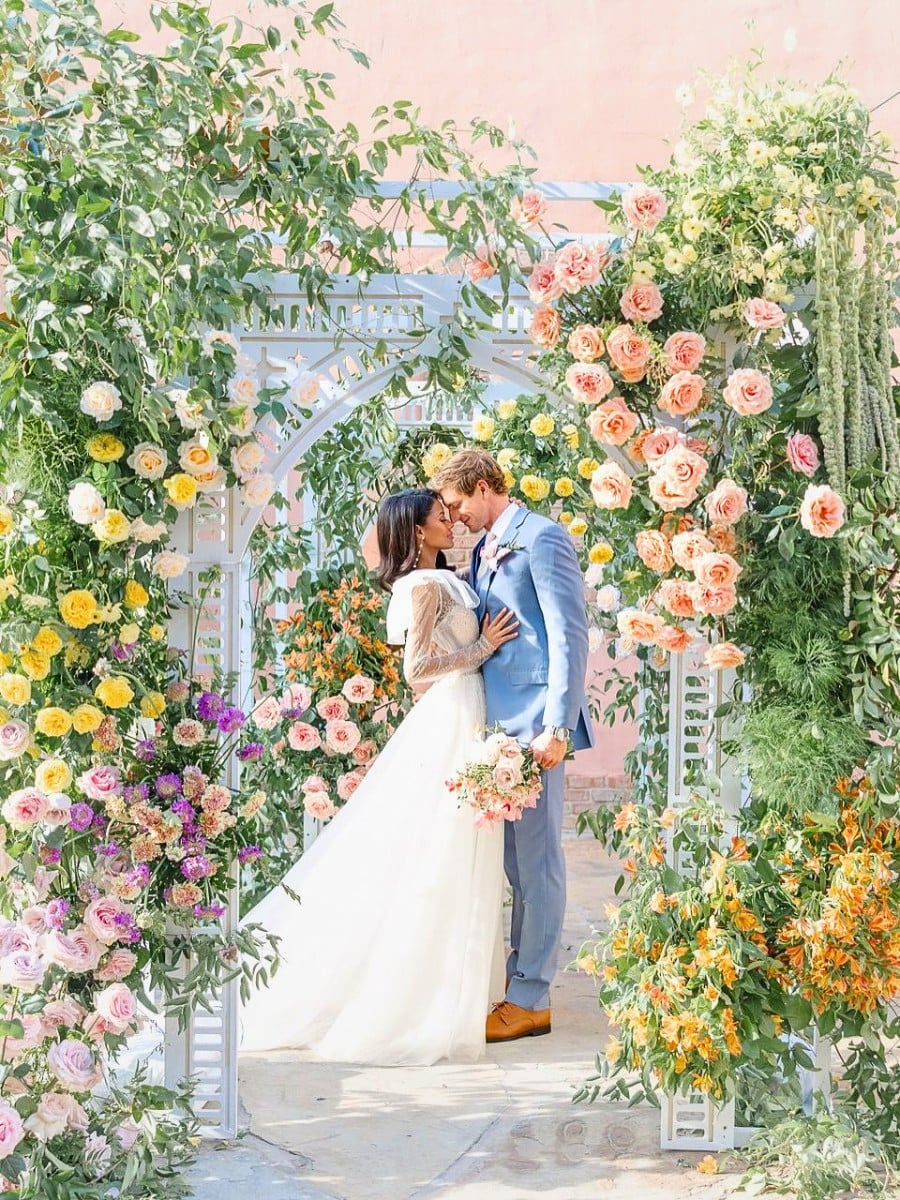
Featured image by @styledshootsacrossamerica. Featured image by @innseason.