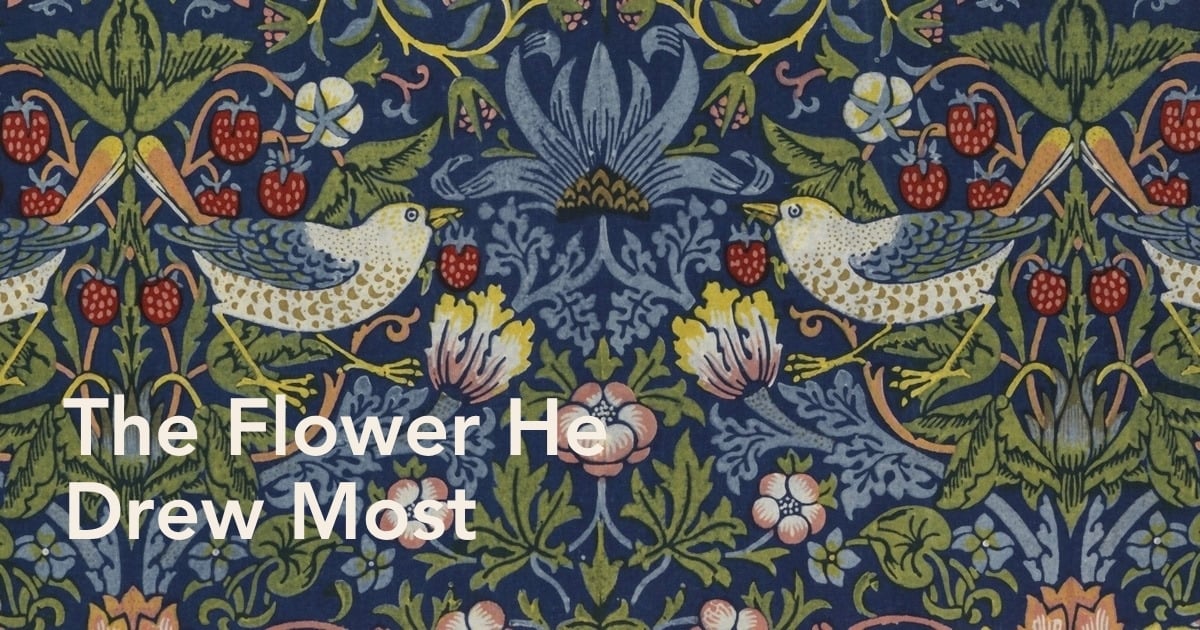
Look closely at almost any of the William Morris patterns still on sale today, and you are looking at a garden. Strawberry Thief is a pair of thrushes raiding the strawberry beds at his house in the country. Trellis is the rose trellis at his first home. Willow Bough is the willows along a little stream that runs into the Thames.
So which flowers grow in William Morris designs, and which one did he draw most? The count below comes from the Victoria and Albert Museum's records of William Morris wallpaper designs and fabrics. The winner is not the rose. It is the tulip. Below are the William Morris flowers by name, the designs everyone knows, how the count was done, and the varieties a florist can order today to bring the same flowers into a room.
Which Flowers Appear in William Morris Patterns?
Mostly the flowers of an English garden and the meadows around it, plus a few favorites that came from much farther away, the tulip first among them. Morris did not hunt for rare plants. In Some Hints on Pattern-Designing, a lecture he gave in 1881, he told his audience: "The rose, the lily, the tulip, the oak, the vine, and all the herbs and trees that even we cockneys know about, they will serve our turn better than queer, outlandish, upsidedown-looking growths."

Read the V&A's catalog entries for his designs, and you find about 30 kinds of flowers. Roses climb Trellis, and they twine with carnations, the old cottage-garden pinks, in Pink and Rose. Daisies, larkspur, jasmine, marigolds, sunflowers, poppies, and Anemones each have a design named after them, and so do the Chrysanthemum and the honeysuckle. Smaller flowers fill the gaps: columbine, borage, cornflowers (Morris called his 1892 paper Bachelor's Button), the snakeshead fritillary, and the tiny pimpernel. Fruit turns up too, from strawberries to pomegranates and grapes, and so do leaves, above all the curling Acanthus and the willow, one of his favorite motifs.
Which Flower Appears Most? The Count
Here is how to find the flower that recurs most in William Morris patterns. The count takes every wallpaper and furnishing fabric in the V&A's online collection that the museum credits to William Morris as designer and that his firm made before Morris & Co. closed in 1940. It leaves out designs by his assistant John Henry Dearle and others, and later copies by other companies. That leaves 103 designs. For each one, the count notes every flower the museum names in the design's title, its subject terms, or its description of the pattern.
The tulip is named in 13 of the 103 designs, about one in eight. That includes the Tulip printed cotton of 1875, the Wild Tulip (1884) and Garden Tulip (1885) wallpapers, and fabrics such as Medway and Evenlode, where the tulips are not in the name. In one of the 13, the curators themselves put a question mark next to the tulips, so the strict count is 12. The rose comes second with seven designs. The sunflower follows with four, one of them uncertain, and the lily, the Chrysanthemum, and the carnation have three each. The poppy appears in just one design Morris drew himself, the Poppy wallpaper of 1881.

Two caveats. In 55 of the 103 designs, the catalog names no flower at all, often just flowers and leaves, so the real numbers are higher across the board. And a count of titles alone, such as the list of his wallpapers on Wikipedia, puts the poppy first, because it includes papers called Red Poppy and Pink and Poppy that the V&A does not list under Morris's name. The result fits his own words, though: in 1881, the rose, the lily, and the tulip were the first three plants he named.
The Most Famous William Morris Designs
Morris designed more than 50 wallpapers, according to the V&A, and the museum holds more than 50 of his fabric designs as well. These are the ones people know best.
Strawberry Thief (1883)
William Morris's Strawberry Thief shows pairs of thrushes among strawberry plants, flowers, and leaves, one pair singing and the other about to make off with the fruit. Morris based it on the thrushes that kept stealing strawberries in the kitchen garden at Kelmscott Manor, his country home in Oxfordshire. It was slow to make. The cloth was dyed blue with indigo, and the pattern was bleached out of it, the indigo discharge method, which Morris only mastered in 1881, after he moved his works to Merton Abbey near Wimbledon. In May 1883, he wrote to his daughter that he was "anxiously superintending the first printing of the Strawberry thief."
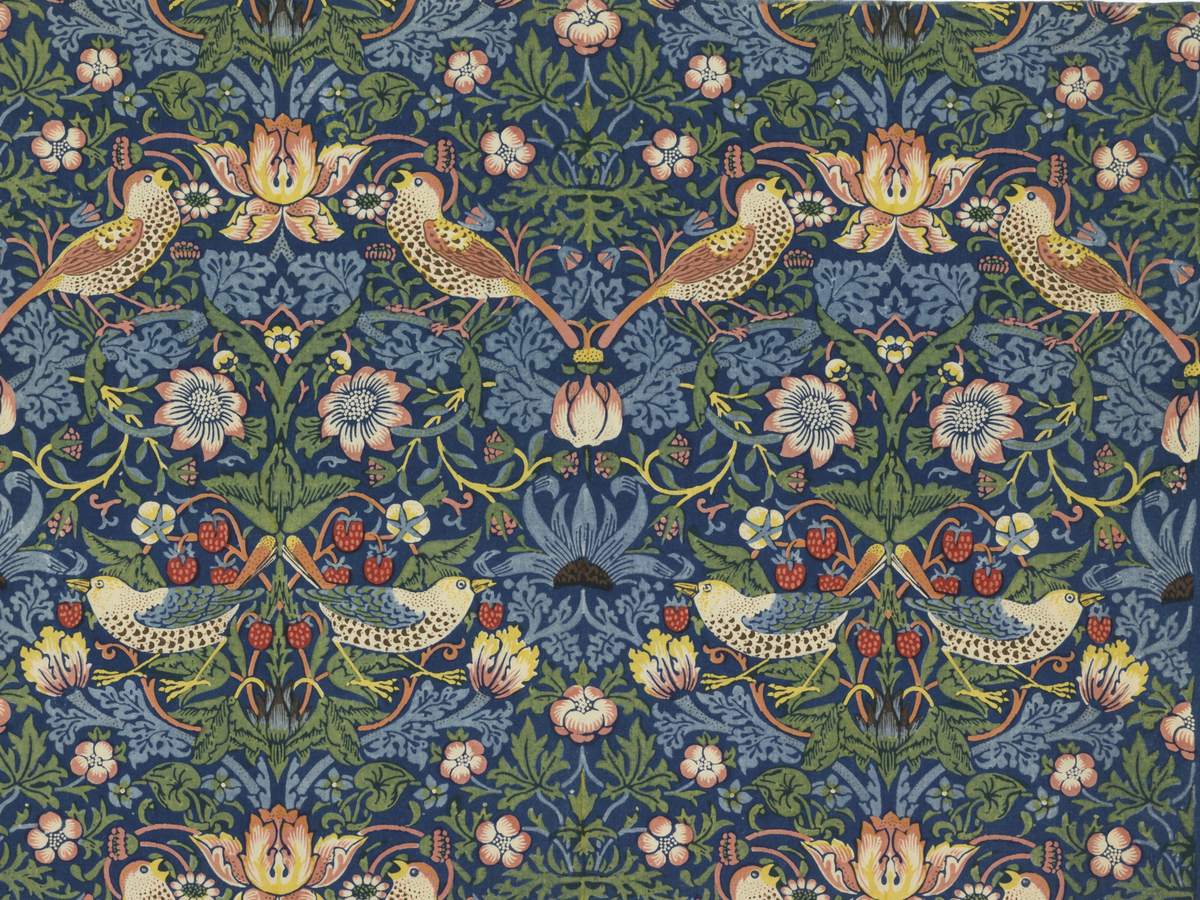
It was his first indigo discharge design with red and yellow added to the blue and white, and one of the most expensive printed fabrics Morris & Co. sold. Customers bought it anyway. The V&A now calls it his most recognizable design.
Willow Bough (1887)
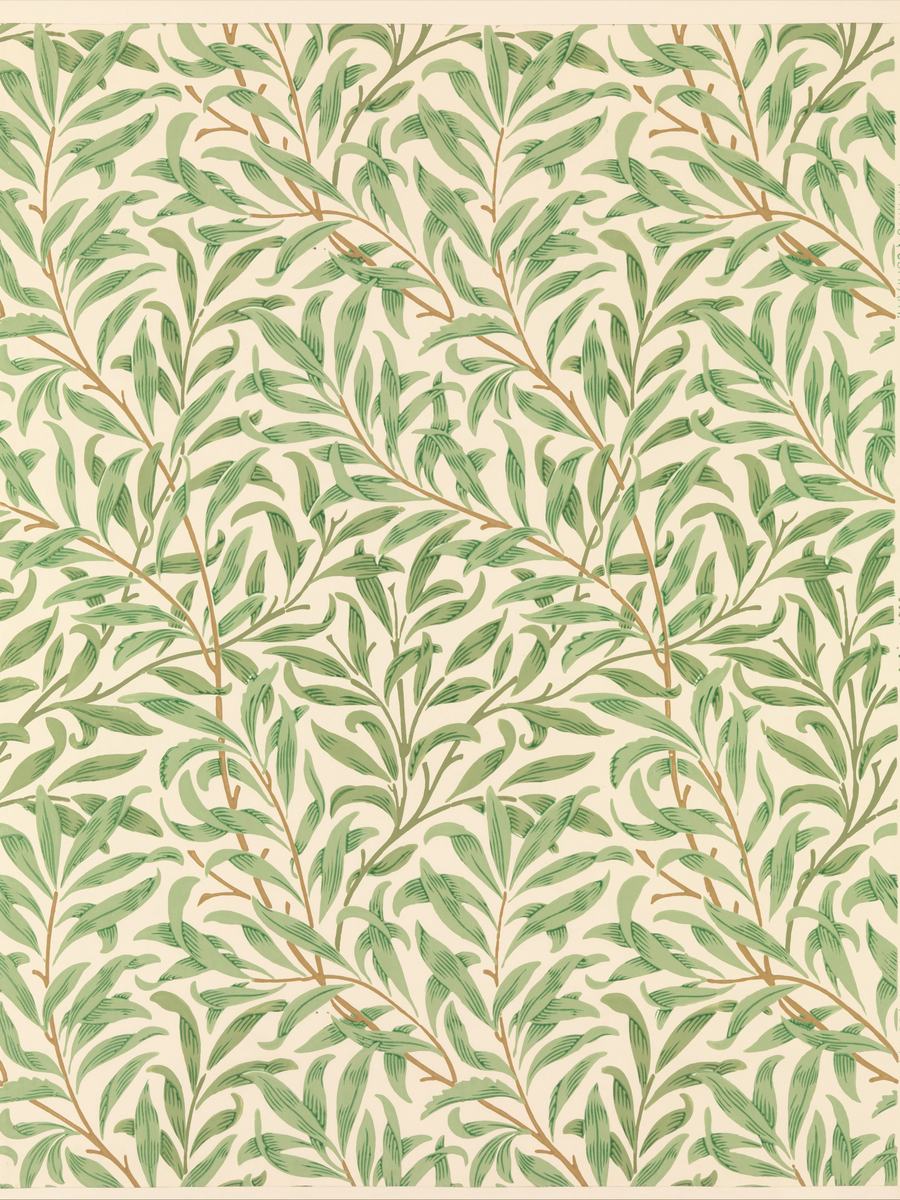
There is not a flower in it, only willow leaves, and it became the firm's most popular wallpaper, according to the V&A. His daughter May Morris remembered a walk "by our little stream that runs into the Thames," when her father pointed out the shapes of the leaves, and "soon afterwards this paper was done, a keenly observed rendering of our willows."
Trellis (1862)
This was the first wallpaper Morris designed, soon after he moved into Red House in Bexleyheath, where roses grew over trellises around the flower beds. The architect of Red House, Philip Webb, drew the birds. The firm's own attempts to print it failed, so the London printers Jeffrey & Co. took over. Trellis went on sale in 1864, the third Morris paper to be issued.

Daisy (1864)
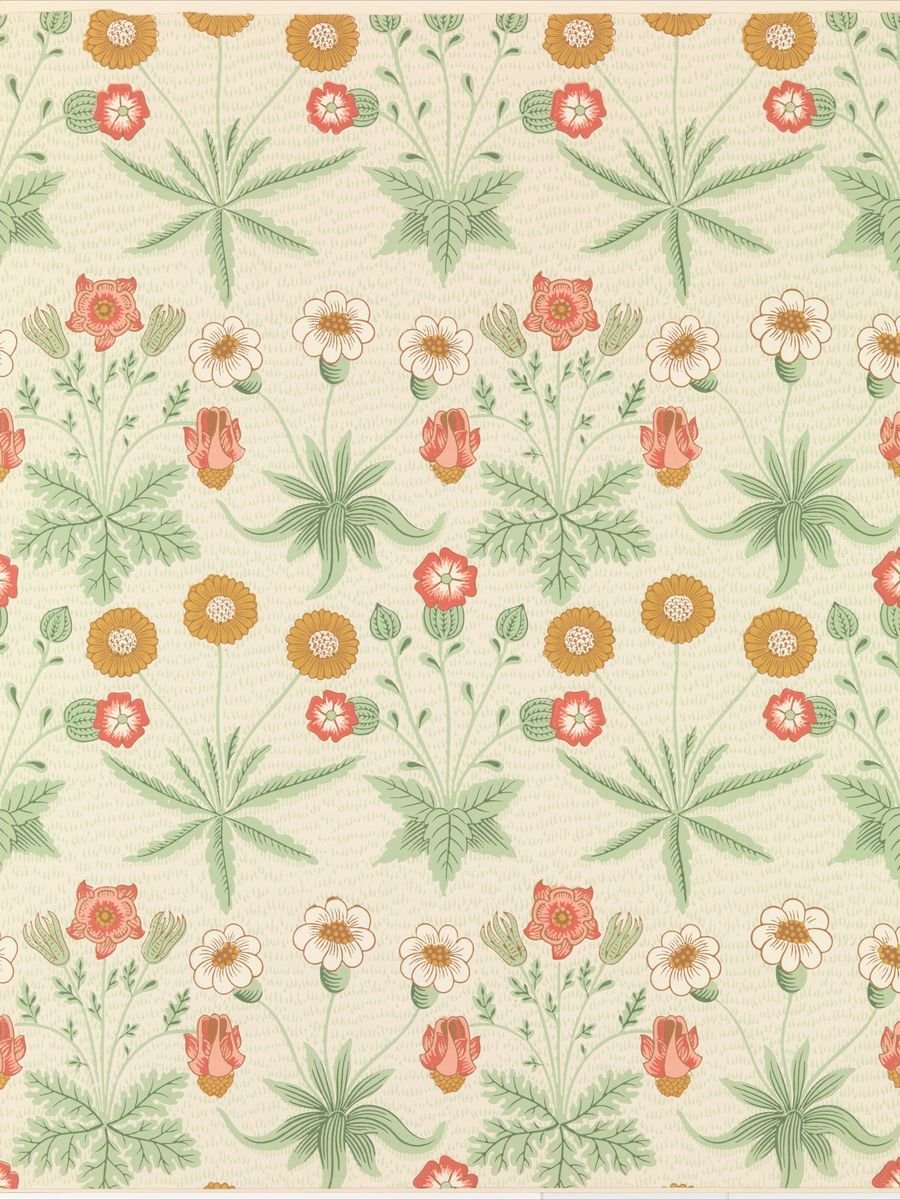
The second paper he designed and the first one sold. Simple clumps of plants with white, red, and yellow flowers stand on a pale ground flecked with green like grass. The V&A traces the flat, frontal plants to a woven hanging shown in an illuminated manuscript at the British Museum. The firm also sold a hand-painted Daisy tile from 1862, one of its most popular patterns.
Bird and Anemone (1881)
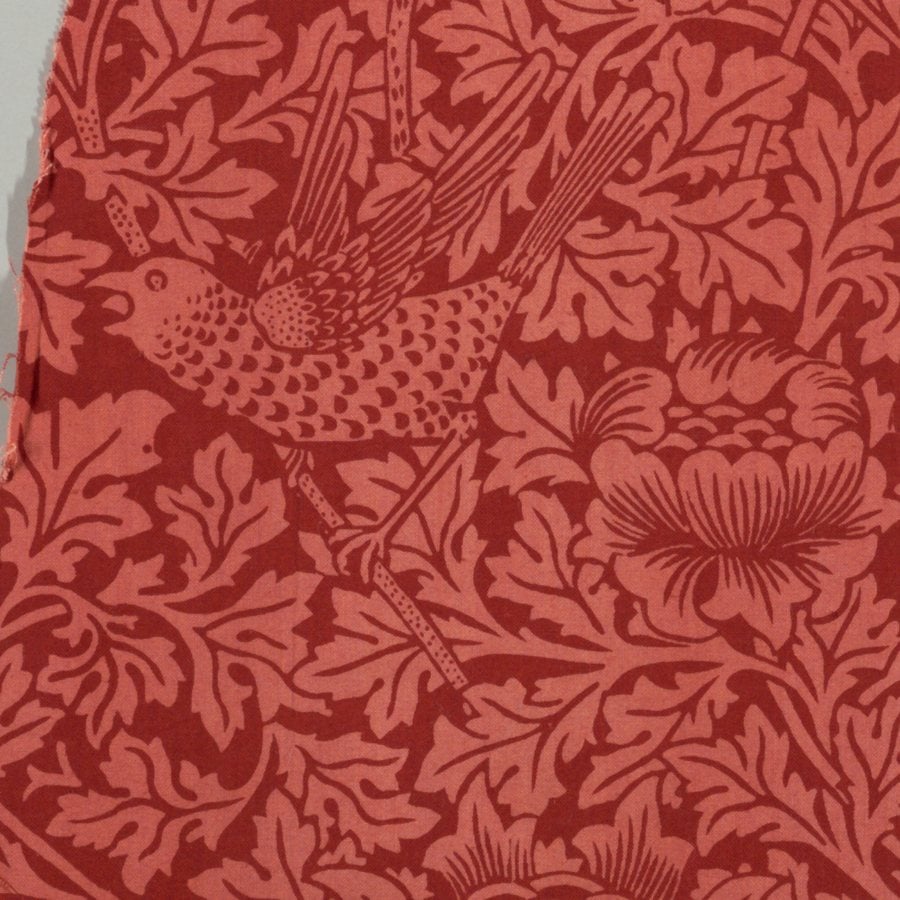
Anemones and two kinds of perching birds, in one of three single-color patterns Morris drew for indigo discharge printing in 1881. He registered it in June 1882. It is also one of the few Morris patterns sold both as a fabric and as a wallpaper.
Honeysuckle (1876)
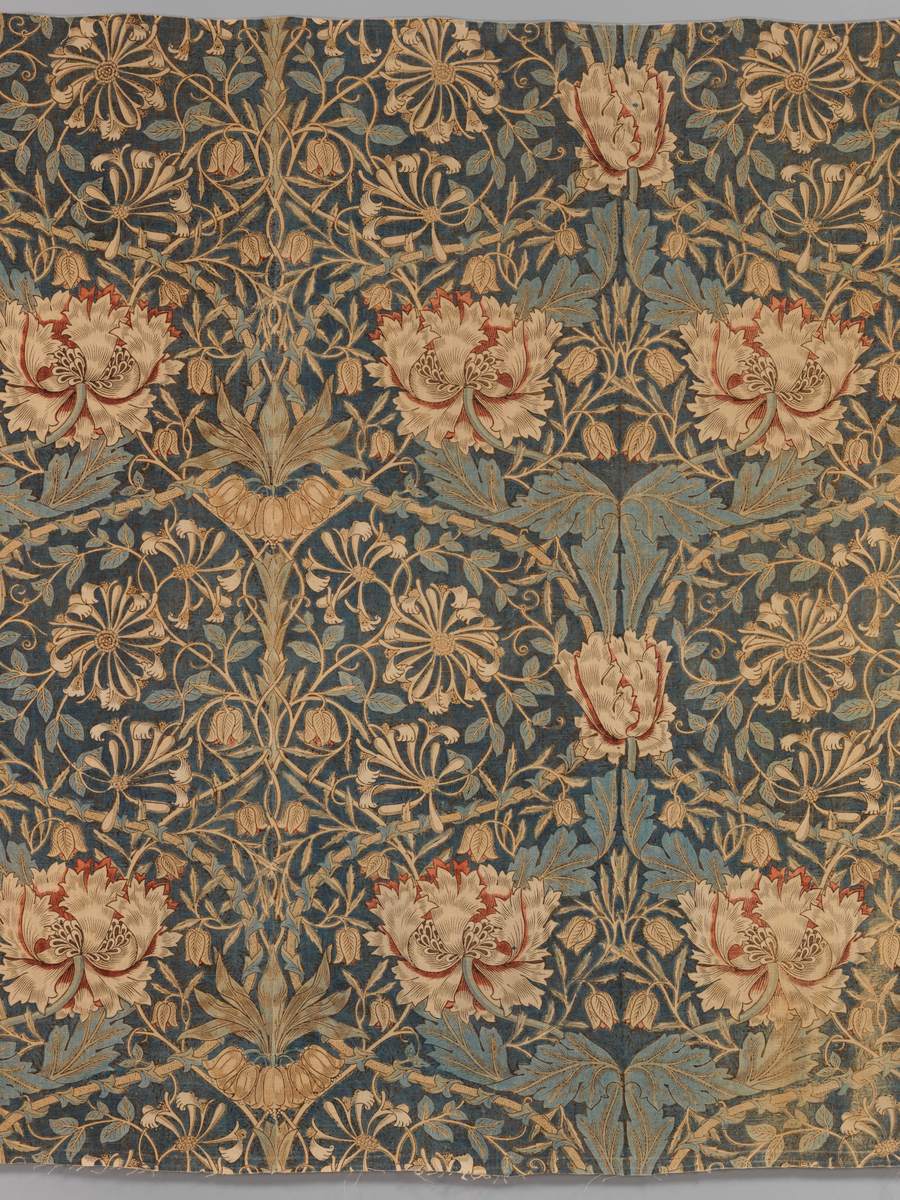
A large, symmetrical printed fabric, sold on linen, cotton, and silk. Do not confuse it with the Honeysuckle wallpaper of 1883, which his daughter May designed.
Three more designs belong on any short list. Acanthus (1875) needed 30 wood blocks and 15 colors, more colors than any Morris design before it. Pimpernel (1876) winds small pimpernel flowers through dense leaves. And Golden Lily was drawn not by Morris but by his assistant John Henry Dearle, according to the V&A.
The Morris Flowers a Florist Can Buy Today
Morris drew from his garden, so most of the flowers in William Morris patterns have a cut-flower descendant in a florist's bucket. These are modern varieties, not the plants he grew, but they are the closest a florist can order now.
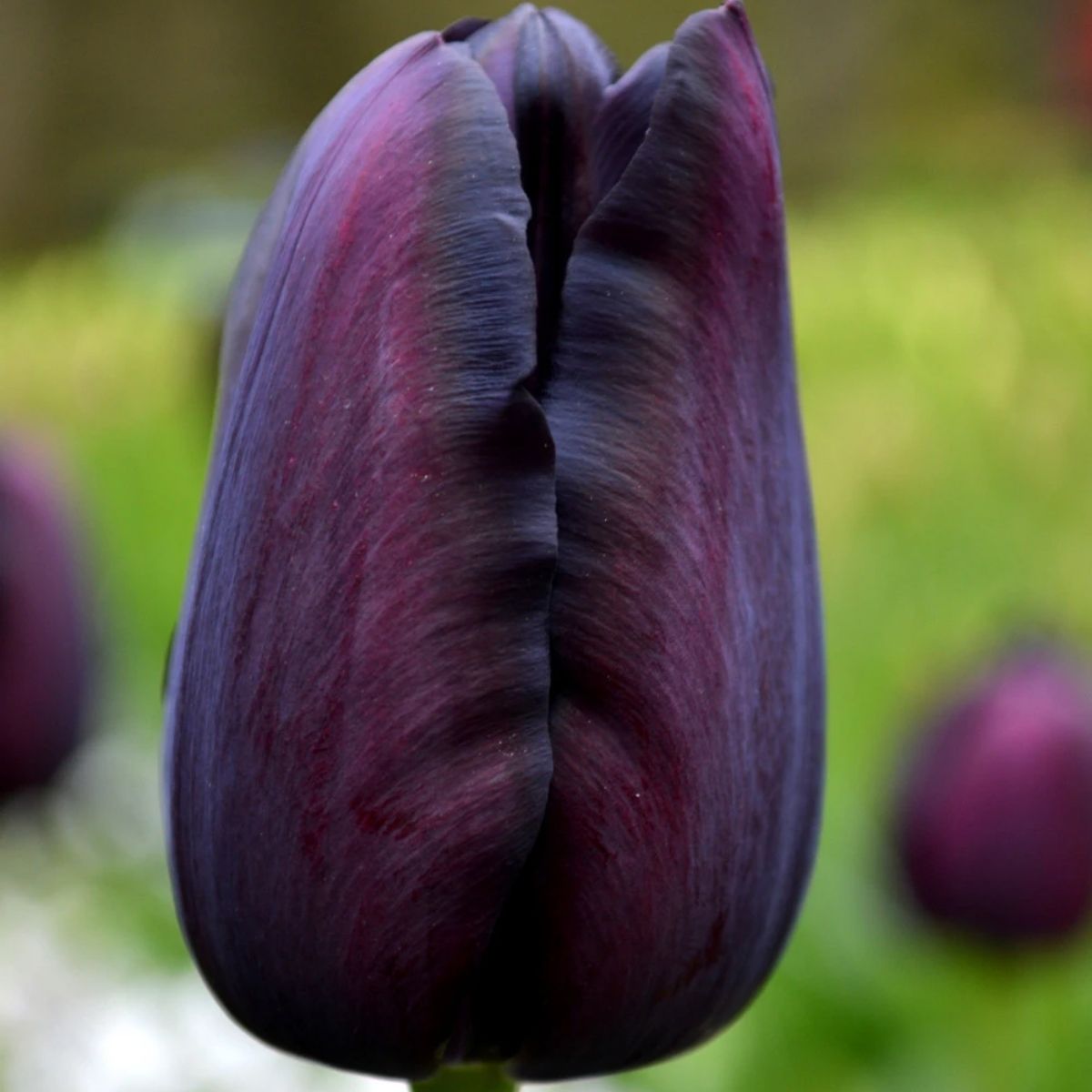
Tulip: Queen of Night
For the flower he drew most, start with an heirloom. Tulip Queen of Night is a deep, velvety maroon that looks glistening black in dappled light, and it is known as the original black tulip. It flowers late in the season, and the double Tulip Black Hero is a sport of it, found in 1984. In the vase, cut 2 to 3 cm off the stems, and if the tulips droop, wrap them in paper for about an hour. The guide to black tulips has the other dark varieties.
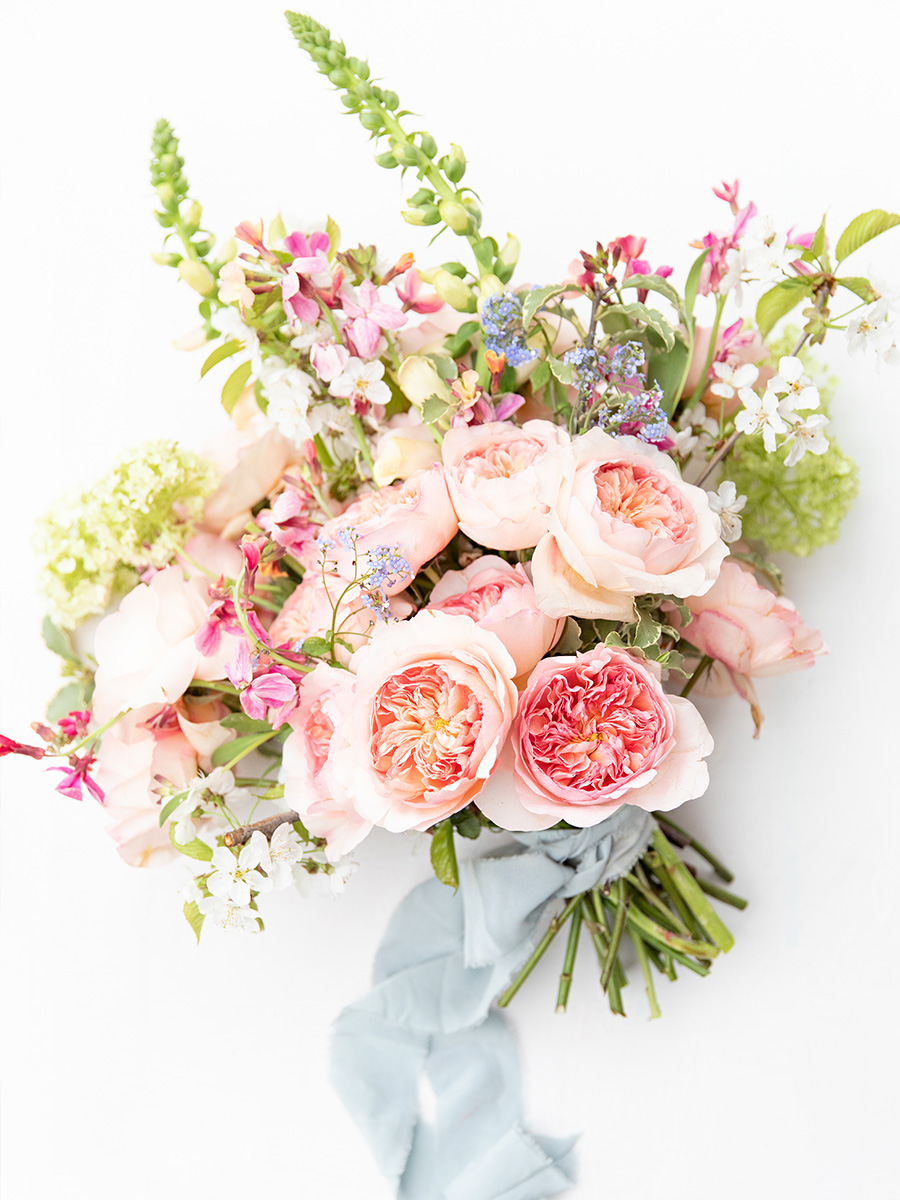
Rose: David Austin Roses
Morris had strong opinions about roses. In Making the Best of It, a lecture printed in 1882, he complained that florists had bred the rose for size until "a fine specimen of a florist's rose" was "about as big as a moderate Savoy cabbage," and he warned that the old cabbage rose and blush rose could disappear. The cut roses closest to his taste are the full, scented ones David Austin launched for florists in 2004, starting with Rose Juliet. Newer ones include Rose Phoebe and Rose Enid. There is even a David Austin garden rose called 'William Morris', introduced in 1998. For the carnations of Pink and Rose, a ruffled Dianthus such as Dianthus Brownie gives the same old-fashioned look.
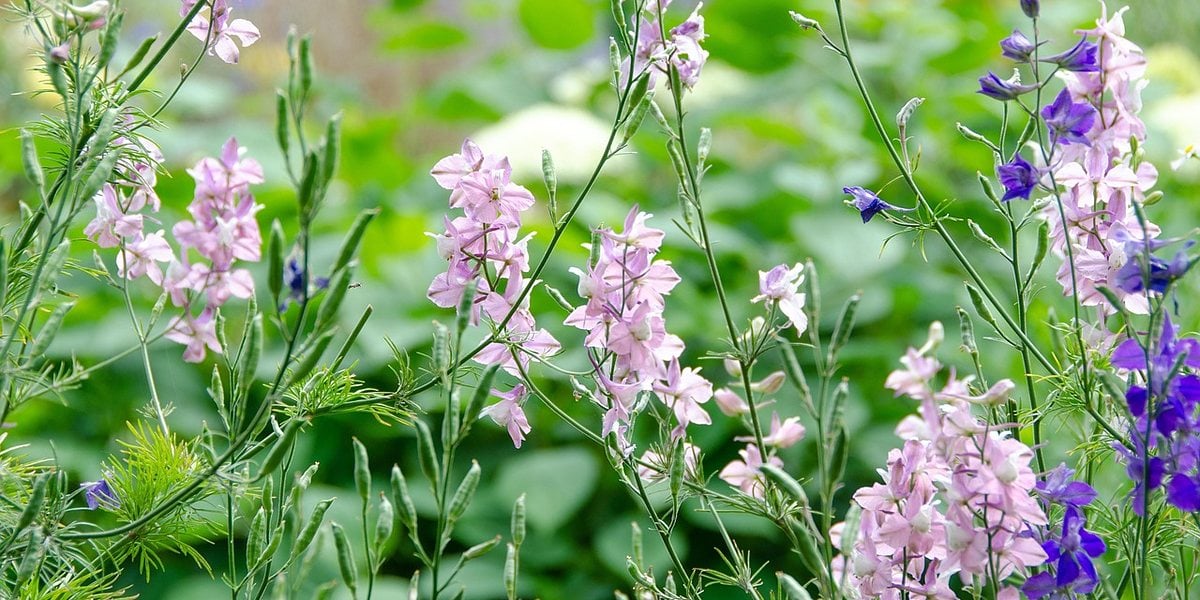
Larkspur: Annual Larkspur and Delphinium
Morris designed Larkspur in 1872, as a wallpaper and as a printed silk. Florists now get two flowers under that name: the annual larkspur, with thread-like leaves and a spur at the back of each flower, and the perennial Delphinium, a denser, heavier spike that is sold as larkspur too. The larkspur guide explains how to tell them apart, and the larkspur page covers care and safety.
Poppy: Icelandic Poppy
The Poppy wallpaper of 1881 is a pattern of twining poppy flowers and leaves. The poppy florists buy for the vase is the Icelandic poppy, Papaver nudicaule, with petals like tissue paper and a light citrus scent. Icelandic Poppy Peach is one of them. It flowers from early spring into midsummer and dislikes heat, which is why growers often treat this hardy perennial as an annual or a biennial. The poppy flower meaning guide covers the rest of the family.

Daisy: From the Meadow to the Vase
The daisies on Morris's 1864 paper are small meadow flowers. In the trade, the word covers more than one plant: the daisy product page on Thursd lists the English, oxeye, and Shasta daisies, all members of the aster family. What they mean in a bouquet is in the daisy flower meaning guide.

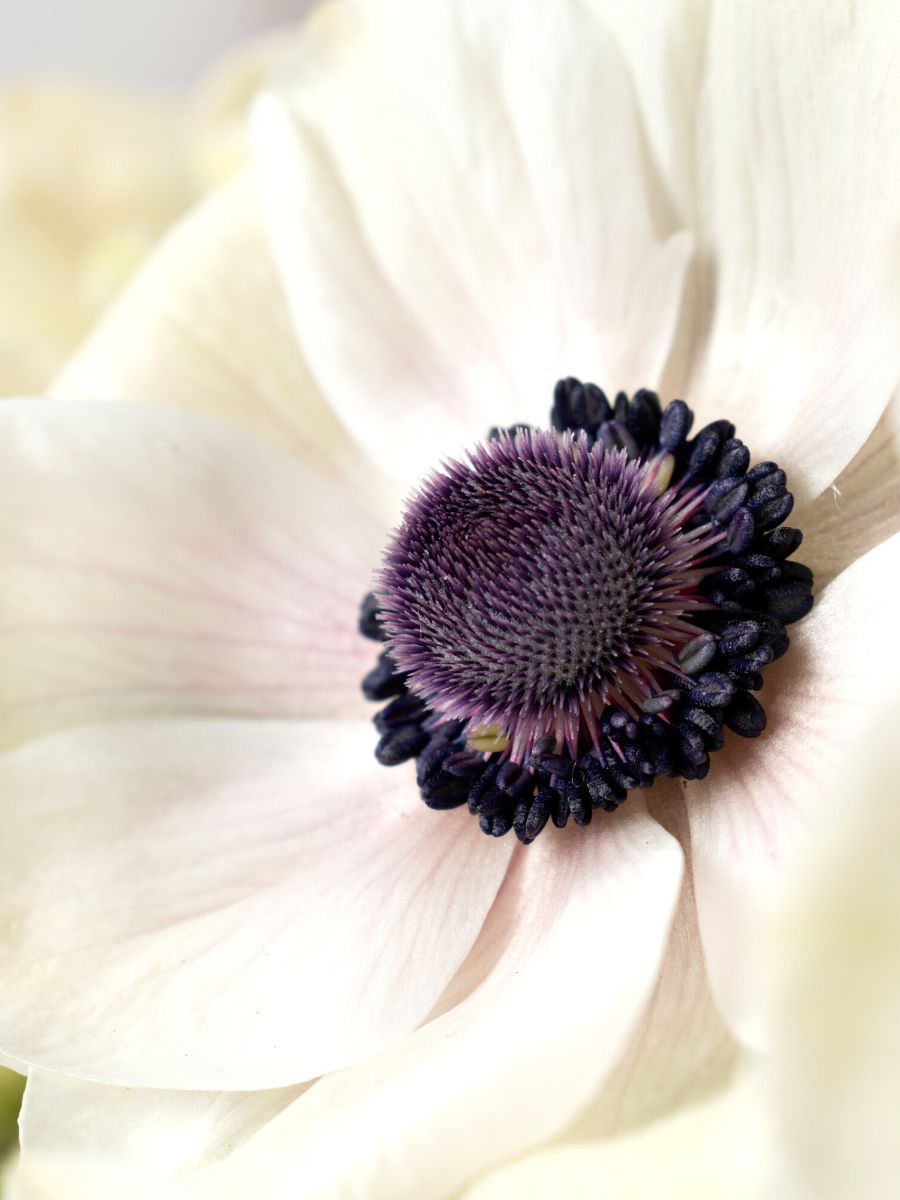
Anemone: Mistral Panda
Morris drew Anemones twice, in the Anemone wallpaper and in Bird and Anemone. For a white flower with a dark eye, look at Anemone Mistral Panda: large white flowers, sometimes with an extra layer of petals, around a black heart, on strong stems. Floraprima is one of the growers of Mistral Anemones.
Where to See William Morris Originals
In Britain
The William Morris Gallery in Walthamstow, east London, is the first stop. It is housed in the Morris family home, entry is free, and it opens Tuesday to Sunday from 10 am to 5 pm (Lloyd Park, Forest Road, London E17 4PP). The V&A in South Kensington holds hundreds of his wallpapers and fabrics, and many of the wallpapers sit in its Prints and Drawings Study Room, where you can ask to see them. The museum's dining room, which his firm decorated from 1866, is now called the Morris Room. Kelmscott Manor in Oxfordshire, the home of the strawberry thieves, is owned by the Society of Antiquaries and opens to visitors in season. Wightwick Manor near Wolverhampton, a National Trust house, has 13 Morris wallpapers, Daisy among them, all bought through the Morris & Co. shop or catalog.
In the United States
The Huntington in San Marino, California, calls its collection one of the top three William Morris archives in the world. The Metropolitan Museum of Art in New York, the Art Institute of Chicago, and the Cooper Hewitt in New York hold Morris wallpapers and fabrics too, and they publish photos of them free for anyone to use; most of the pictures in this article come from the Met and the Cooper Hewitt. For flowers painted on canvas instead of printed on paper, see the list of famous flower paintings.
Are William Morris Wallpapers Still Made?
Yes. William Morris patterns are still sold under the Morris & Co. name, now a brand of Sanderson Design Group, whose two UK factories, the Anstey wallpaper factory in Loughborough and the Standfast & Barracks fabric printers, print for its own brands, according to its 2026 annual report. The brand keeps an archive of logbooks, wallpaper samples, printed and woven textiles, and original wooden printing blocks. The V&A holds Morris papers that Arthur Sanderson & Sons reprinted from the original blocks around 1955. In September 2025, the brand released The Unfinished Works: 26 designs by Morris and John Henry Dearle from the Huntington's archive, completed and produced for the first time.
Sources: the V&A's online collection (Morris wallpapers and Morris furnishing fabrics) and its article William Morris and Wallpaper Design; Morris's lectures Some Hints on Pattern-Designing (1881) and Making the Best of It (1882); the Royal Horticultural Society's entry for the rose William Morris.
Featured image: Trellis wallpaper by William Morris, 1864, The Metropolitan Museum of Art, public domain. Header image: Strawberry Thief by William Morris, 1883, Cooper Hewitt, Smithsonian Design Museum, public domain.