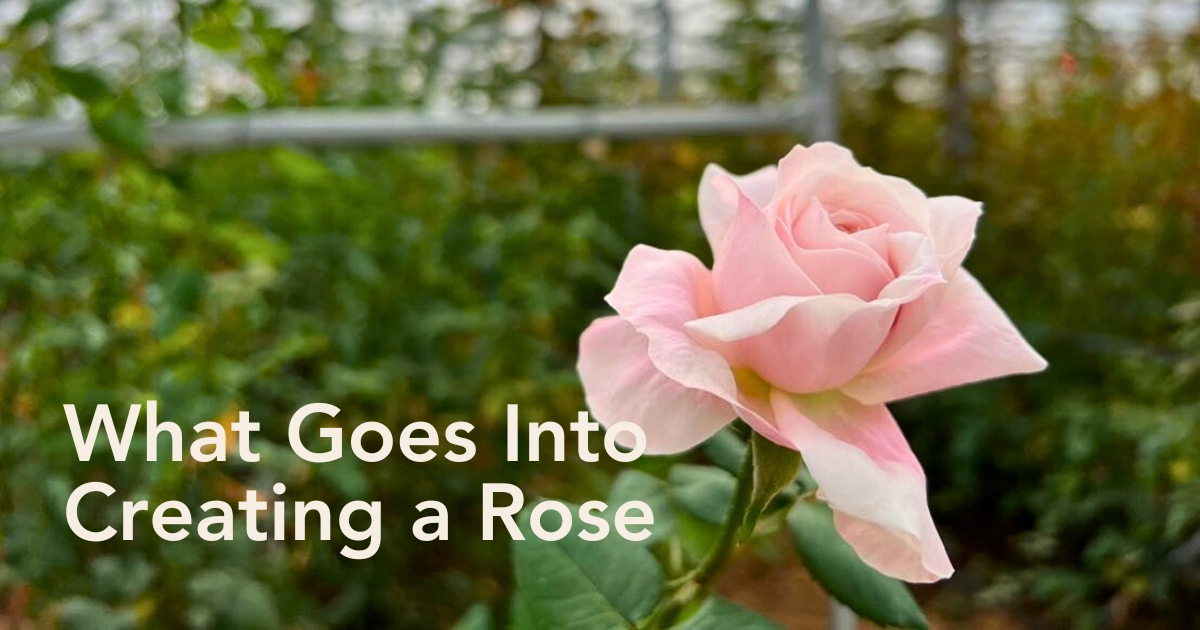
Before you fall in love with a rose, do you know how it was created? It often begins more than ten years earlier, shaped by scientific knowledge, careful observation, patience, and a willingness to work with uncertainty. A process that, in many ways, asks for more dedication than most people realize.
From greenhouse “labs” to trial fields, breeders carefully follow thousands of young plants. They observe, test, and question every step. Most of these plants never make it. Only a small selection is strong and unique enough to reach the grower. When you understand this process, you start to see your flowers differently and truly appreciate everything behind them.
Rose Breeding Starts With What Traits Breeders Wish For
Before anything happens, breeders begin with a tiered wish-list that hardly focuses on just one quality. Different breeders prioritize different traits, but certain qualities consistently appear across the board. Generally, breeders attempt to combine qualities such as flower shape, color, fragrance, vase life, plant health, and growth habit.
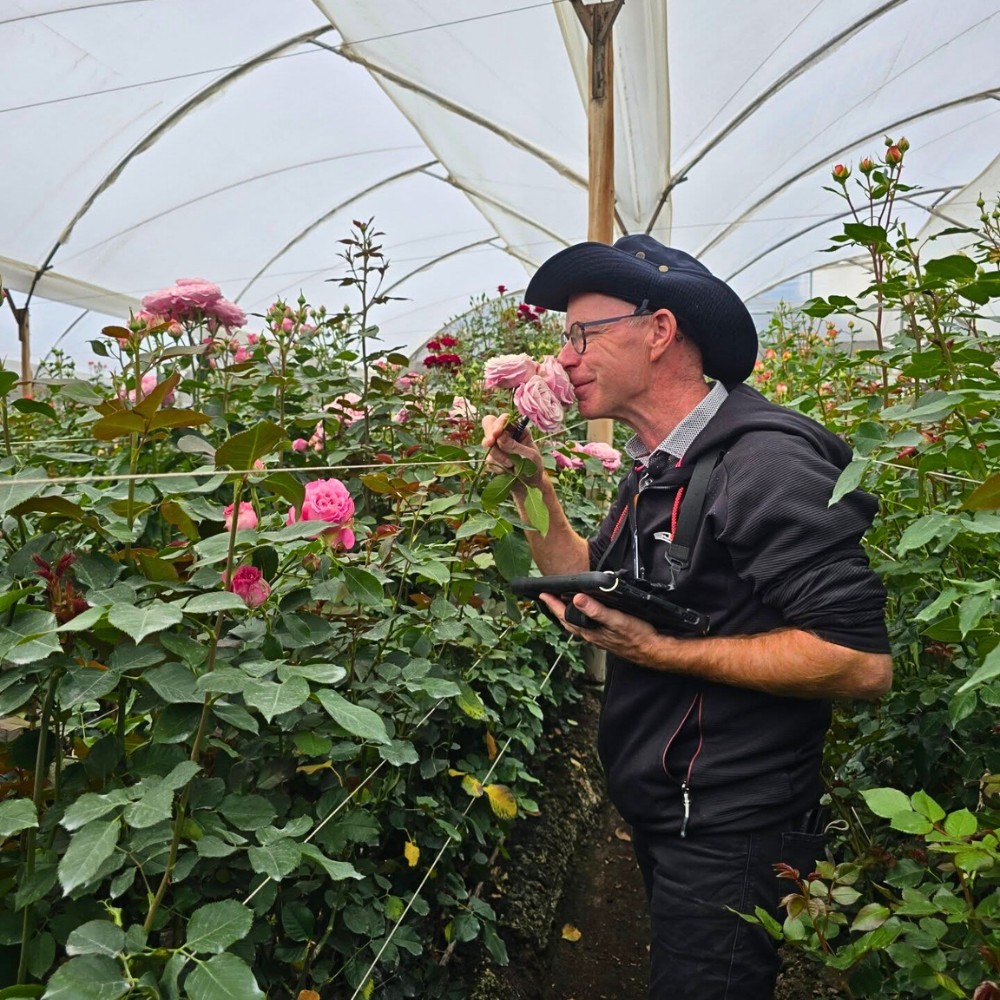
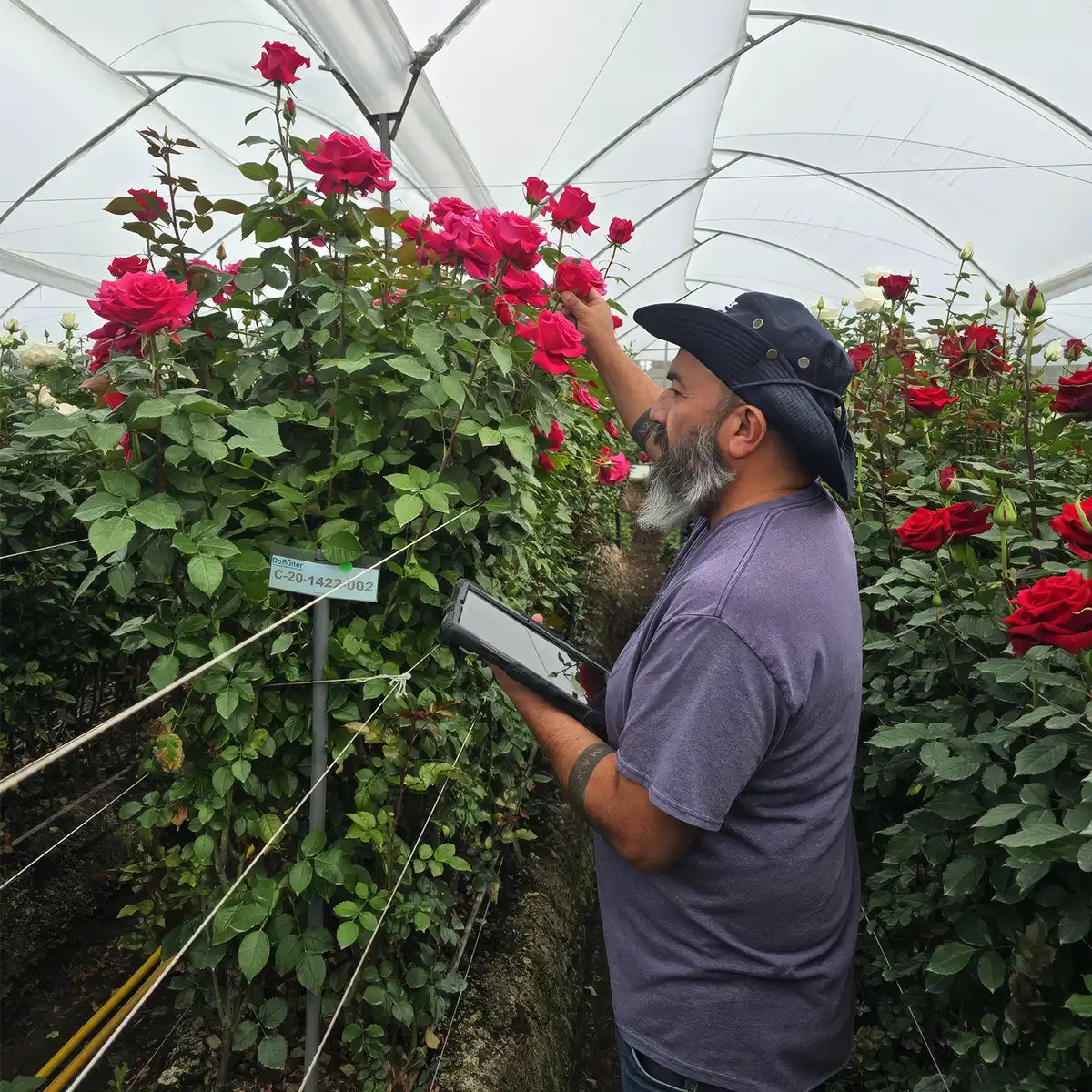
Cut rose breeders, like De Ruiter and United Selections, look closely at qualities, like head size, stem length, and how well a variety performs under greenhouse conditions, because florists need flowers that open beautifully and last well. Garden-type cut rose-focused breeding houses like David Austin Roses and Meilland give great emphasis to fragrance, in addition. Others (rose plants) seek repeat flowering and general plant shape. Gardeners, after all, live with the whole plant, not just the flowers.
But color remains one of the most closely evaluated characteristics. Breeders seek clear and stable colors, distinct from what already exists in the market. Besides that, head size matters greatly for cut roses for floristry. Generous, well-formed flowers that make an impression in arrangements are highly sought. Vase life, stem strength, and how neatly a rose opens are also considered attributes.

Breeder Jan Spek Rozen’s Erik Spek, for example, prioritizes color, head size, and productiveness as three of the most decisive specifications. Productiveness, here, means a plant's ability to produce a high volume of quality stems per square meter over the course of a season. This affects the commercial viability of a variety for growers.
Lately, disease resistance has also become one of the most sought-after traits across the industry. At David Austin Roses, trial fields have been kept at minimal spray input since the 1990s, precisely so that only the healthiest and most naturally robust varieties survive the selection process. The breeder's thinking holds that a rose should not need heavy intervention to perform well.
Elsewhere, Rosa Eskelund, founder of Roses Forever and breeder for Viking Roses, has a particularly unique approach. Her breeding program covers cut roses, pot roses, and garden roses, an unusually wide range for a single breeder. For garden and pot varieties, she focuses strongly on health and resistance so that no chemical treatment is required at any level of the supply chain. For her pot mini-roses Infinity Series, compactness and a short growing cycle are essential, since reducing energy consumption per plant is part of her environmental proposition.
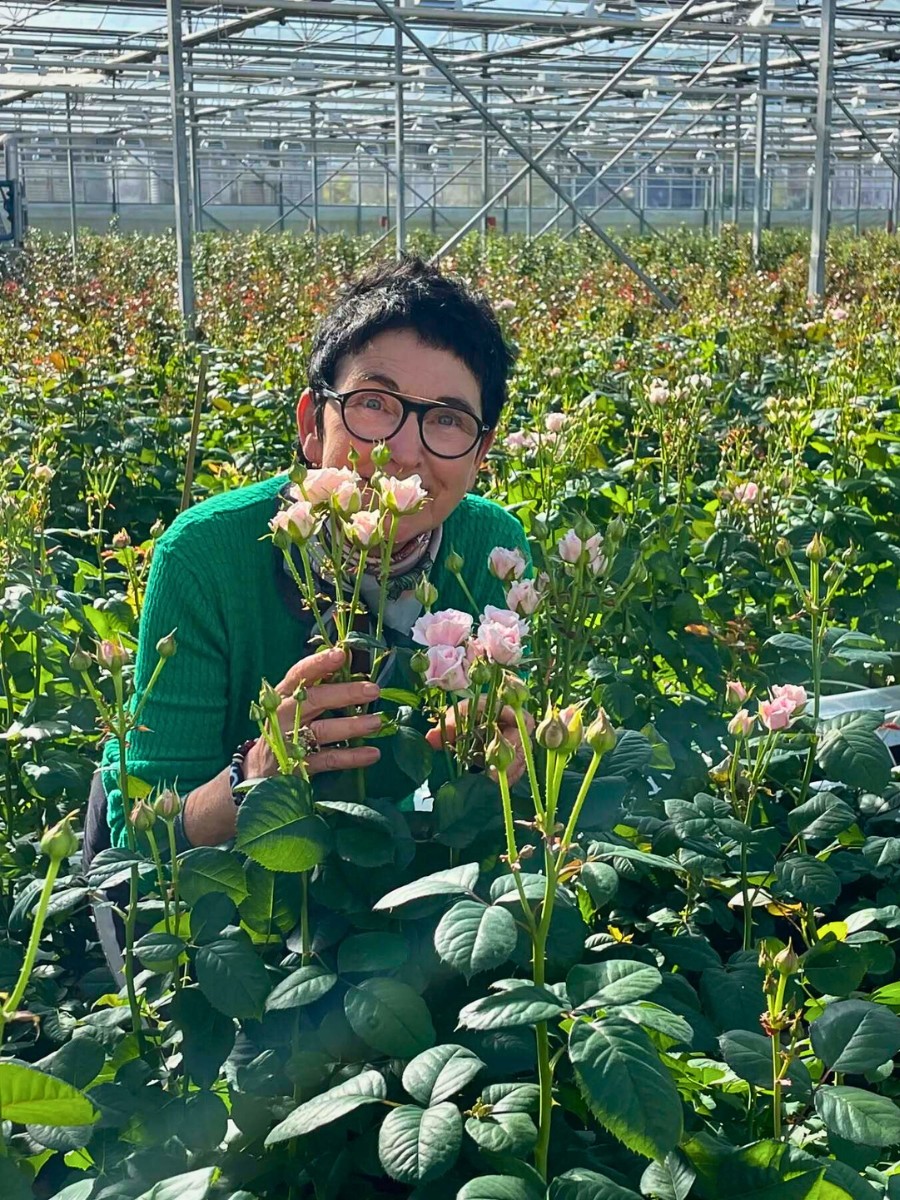
On the other hand, De Ruiter, one of the most established names in rose breeding, often balances aesthetics with commercial pragmatism. Their X-Pression Series, which has gotten recognition at events including the annual Keukenhof Rose Show, highlights their ability to develop delightfully varied varieties.
United Selections, which mainly conducts breeding and selection work in Kenya, while testing varieties across different continents and altitudes, takes a similarly systematic approach. Their program allows growers to partake in the selection process before varieties are formally released. This means commercial decisions are made out of actual feedback from the growers themselves.
The logistics of getting roses from farm to flower shop also shape breeders’ approaches. As sea freight becomes more common as a sustainable alternative to air transport, varieties that hold well over long transit are growing increasingly valued. That’s yet another criterion to an already demanding process, following next.
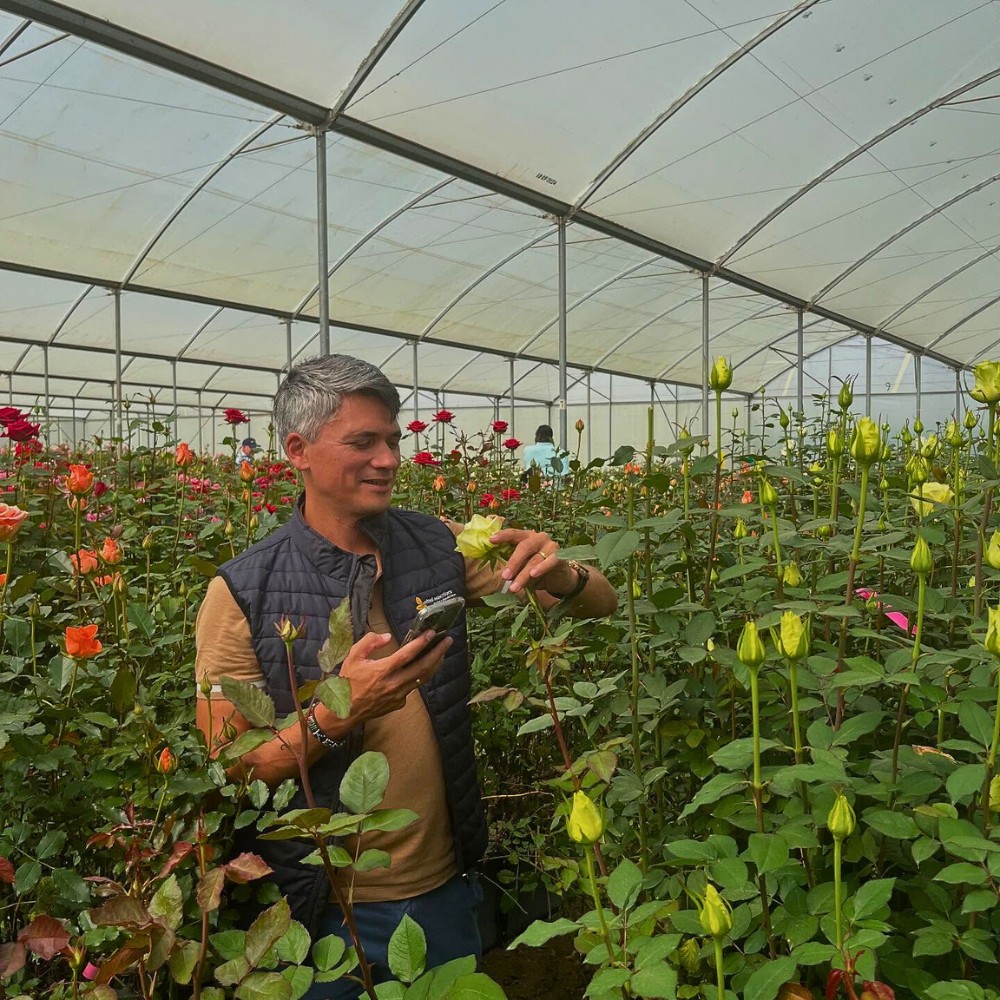
Hand Pollination and the Creation of the Rose Hip
A new rose begins as a pairing between two pre-existing plants, often referred to as the ‘mother’ and the ‘father’. Breeders keep large, prudently curated collections of these potential parents because they are the foundations of everything coming next.
Often, these are already established commercial varieties, promising experimental seedlings, and older lines known to carry valuable traits, like deep fragrance, unusual colors, or very strong health. Over several seasons, the breeder watches how these plants behave.
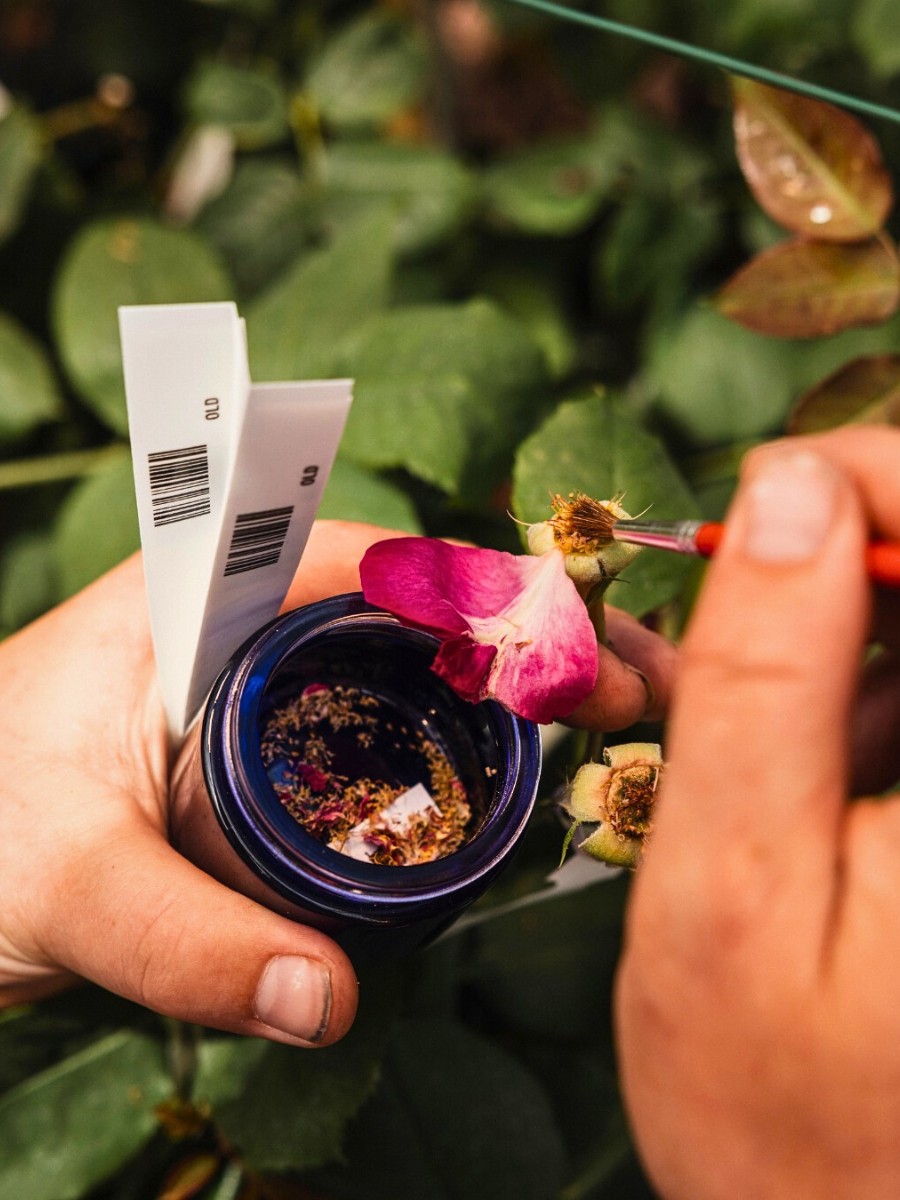
Once the parents are picked, hybridization begins. Here, human hands decide who meets whom, quite literally. The ‘mother’ flower is prepared first. As it begins to open, the breeder carefully removes the stamens so that it doesn’t fertilize itself. This step, often done in the morning, prevents accidental self-pollination and keeps the parentage of any resulting seeds clear and intended.
Later, usually the same day, the breeder collects pollen from the chosen father plant. The ripe anthers may be dried slightly to make the pollen easier to handle. With a fine brush or similar tool, the breeder applies the pollen to the receptive stigma of the mother flower.
Each pollinated flower is labeled with the codes or names of both parents, and the details are recorded. Years down the line, when a particular seedling shows promise, those records will be the only way to trace its family. This watchful, repetitive work is done cross after cross, until thousands of potential combinations have been made.
The Game of Numbers From Rose Hip to Seeds to Seedlings
Notably, breeders work on quite a great scale. For instance, Shropshire-based David Austin Roses, whose breeding program goes back more than seven decades, conducts between 75,000 and 100,000 individual crosses each year.
The reason for such volume is that breeding, at its best, is a numbers game. Each cross produces genetically unique seeds, and the odds of any single seedling carrying exactly the right combination of traits are quite low. Quantity gives breeders the statistical room to find quality.
Jan Spek Rozen, the Dutch breeder with roots going back to 1890 and a significant presence in Kenya's Naivasha region, approaches the same challenge with a similarly wide-scale program. Erik Spek, who heads the operations and regularly evaluates promising varieties in their test houses, understands well that the rose’s path from pollination to market is one of systematic elimination.
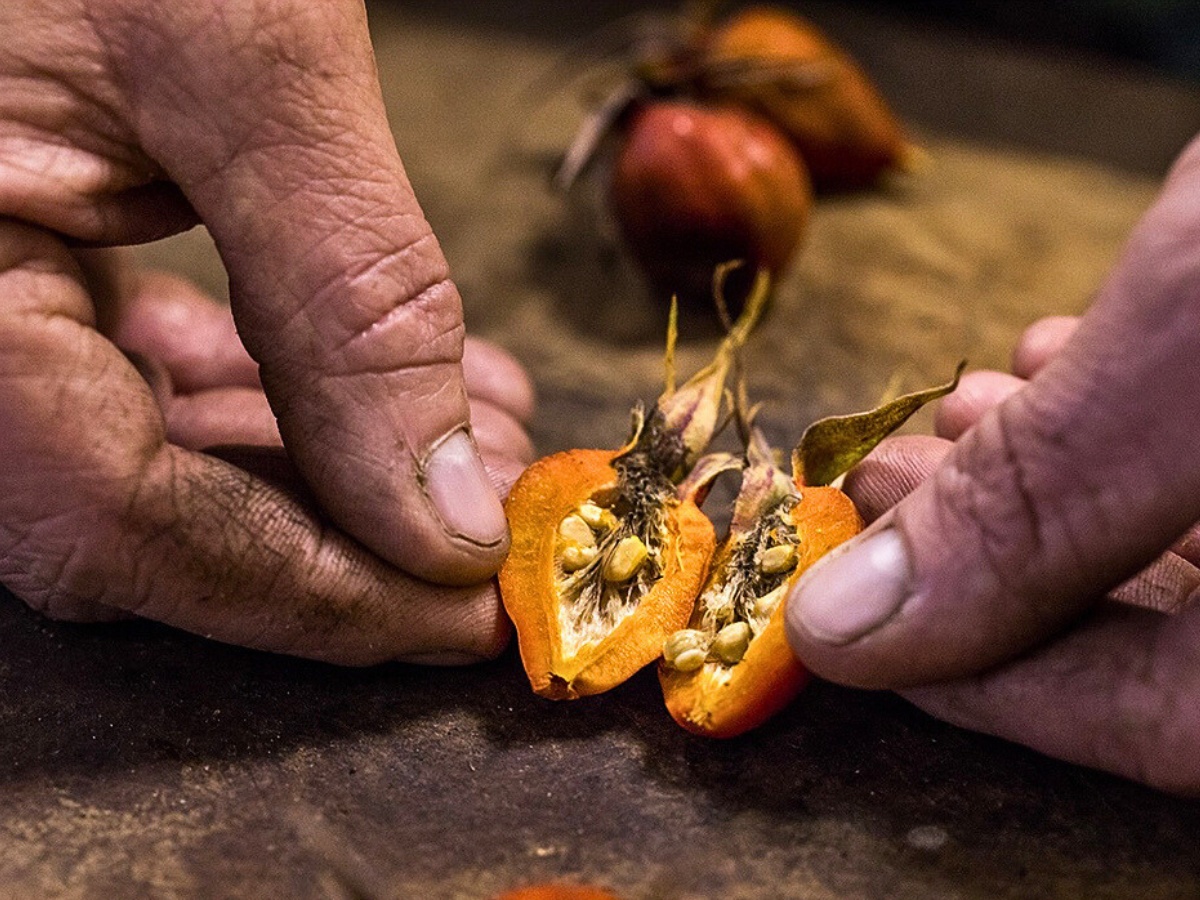
Back to the breeding process; if pollination is successful, the fertilized flower gradually swells into a hip (rose plant’s fruit), inside which are numerous seeds, each a unique genetic blend of its parents. Over the growing season, breeders watch these hips mature. When they are fully ripe, they are harvested, and the seeds are extracted and stored cool to simulate the natural winter period that rose seeds experience outdoors.
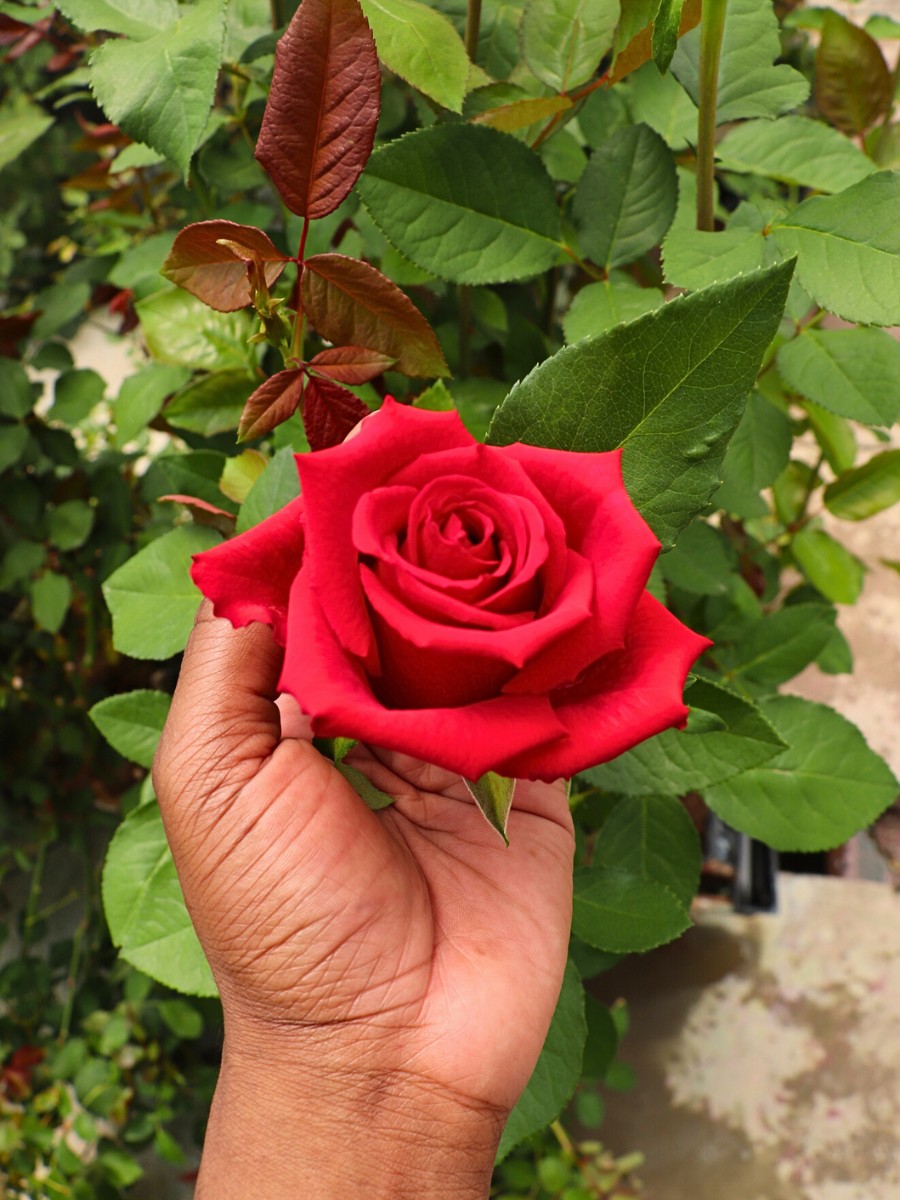
Typically, in January, the rose hip seeds are planted in huge numbers in controlled greenhouse environments. Every seed has the potential to be a new rose, but it is understood from the onset that only a very small fraction will survive the journey.
For example, from the annual crosses at David Austin Roses, approximately 450,000 seeds are collected each year, yielding between 150,000 and 200,000 seedlings, which are carefully observed for early signs of promise.
As they grow, one seedling might produce flowers of an unexpected color blend that seems exciting. Another might have an unusually graceful form, or a fragrance that stands out from other scents. Another might not be spectacular in terms of appearance, but easily fights off disease.
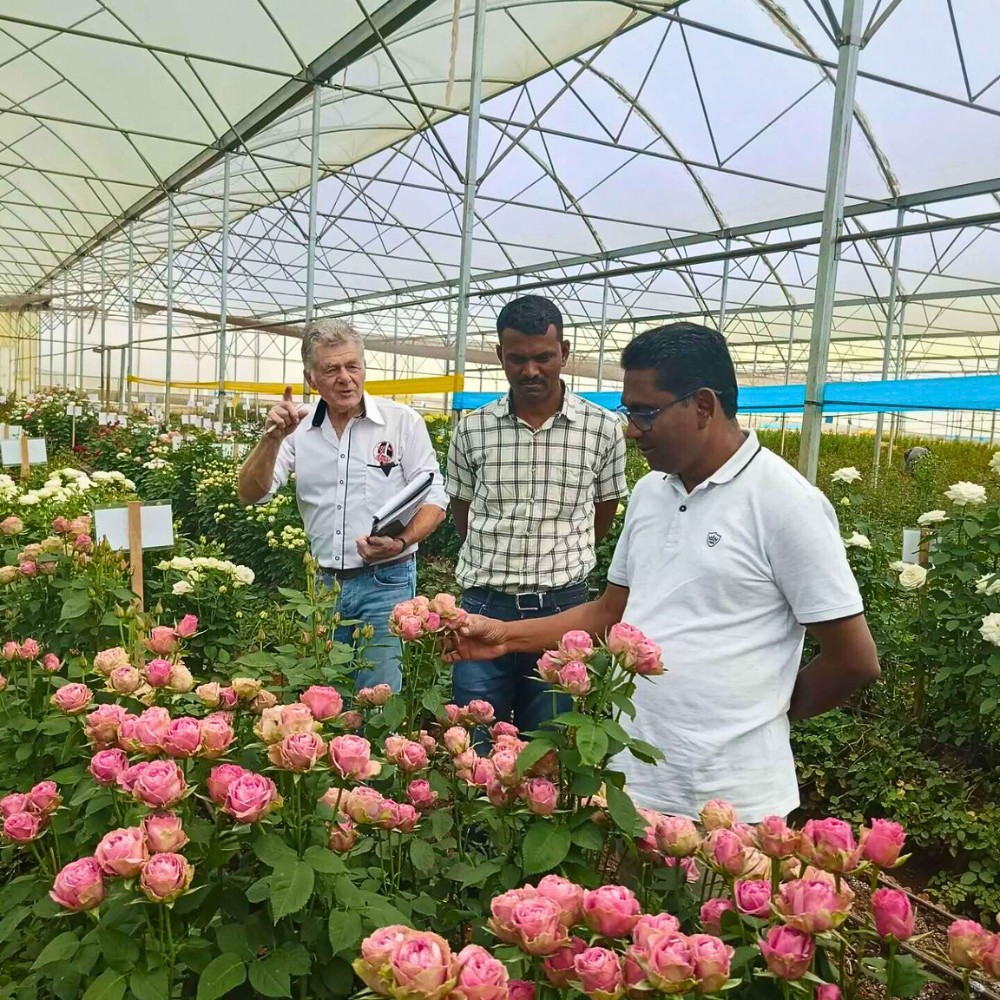
These promising individuals are kept and propagated for further testing, while thousands of their siblings are, quite emotionally, discarded. Here, breeders learn to say "NO" to many lovely, but not quite strong enough, candidates.
Trials, More Tough Decisions, and Long Timelines
The selection process is not completed in a single season. Seedlings that survive the first selection round move into multi-year trials, where they are grown in settings that match their intended future, observed over several flowering cycles, and assessed under varying conditions. Breeders study disease resistance, weather tolerance, fragrance, stem quality, and how the rose behaves as it opens and ages.
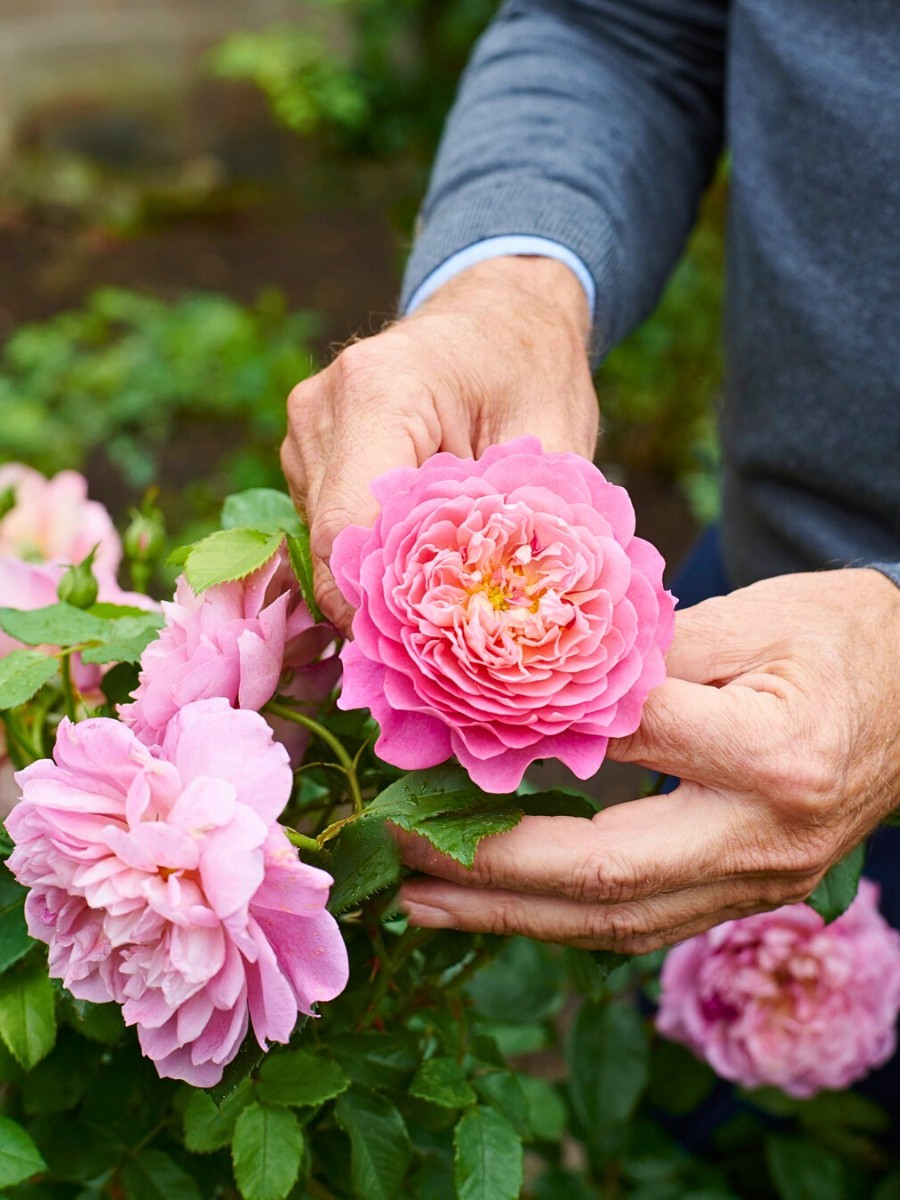
At David Austin Roses, from first cross to public introduction, it takes around twelve years for garden roses. Carl Bennett, their Hybridist and Breeding Manager, for instance, notes that their 2024 introductions, Rose Hettie, Rose Millicent, and Rose Bessie, were first created thirteen, twelve, and eleven years earlier, respectively. Sometimes, the process from initial cross-pollination through the long selection process takes even longer, and as Carl puts it, one must just learn to be patient.
For commercial cut roses, the timeline is shorter but still demanding. From pollination to commercial sale, the process typically takes more than five years and is usually ruthless. Within that window, breeders evaluate how varieties perform when grown and also during post-harvest handling, including cold chain logistics, stem durability, and the vase life.
A rose that looks enchanting in its first season may later show an erratic production pattern. Another might be perfect in the trial field but fail to propagate efficiently, making it difficult to supply growers at scale. When this happens, breeders hardly hesitate to let go of the rose and move their attention to those that deliver.
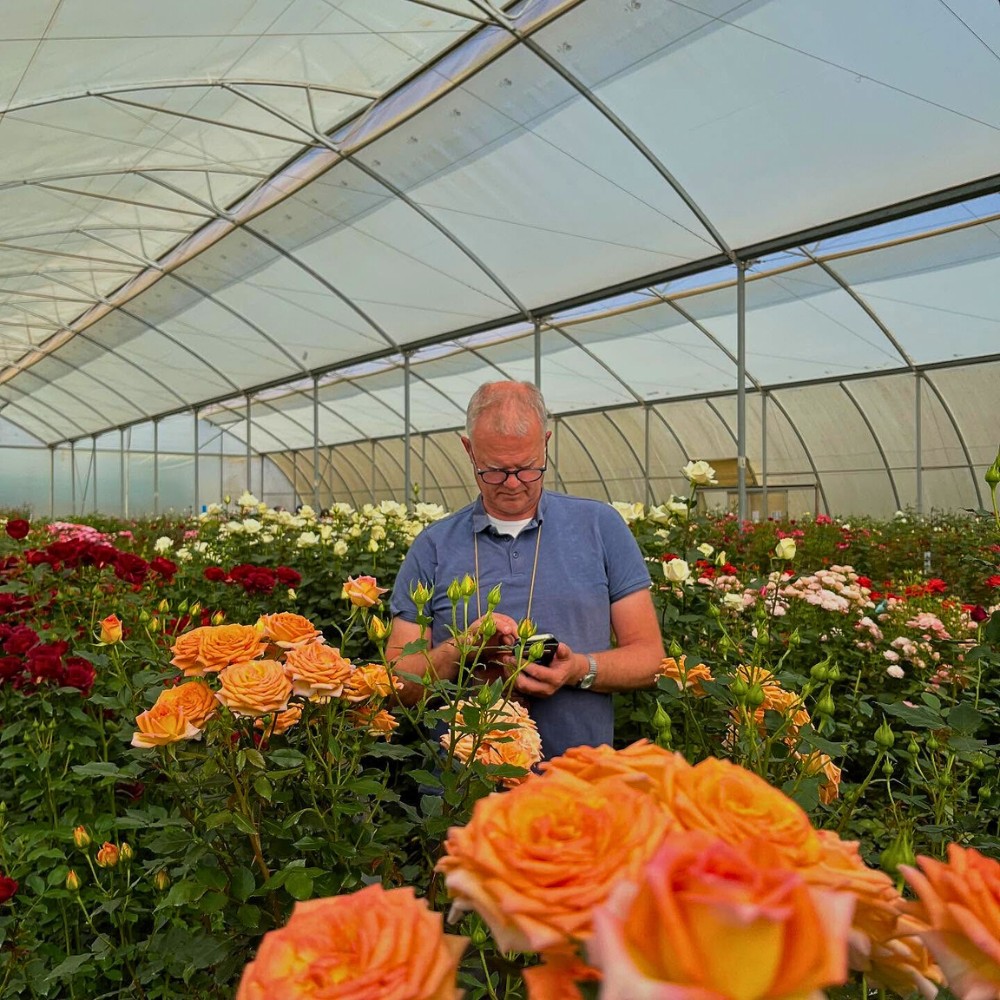
Throughout these trials, the numbers continue to shrink. From an original pool of many thousands of seedlings, only a handful make it into late-stage testing. And even at this point, a flower is still rejected if it shows weaknesses when grown on a larger scale or in a new environment.
About Rose Sports
Not every new variety comes from a deliberate cross. Some arise through natural genetic mutations, known as sports. A sport is a spontaneous change in a plant's genetics that alters one or more visible characteristics, most commonly color, while preserving the original plant's general form and growth habit. Sports can occur in any rose variety, and some have led to notable commercial successes.
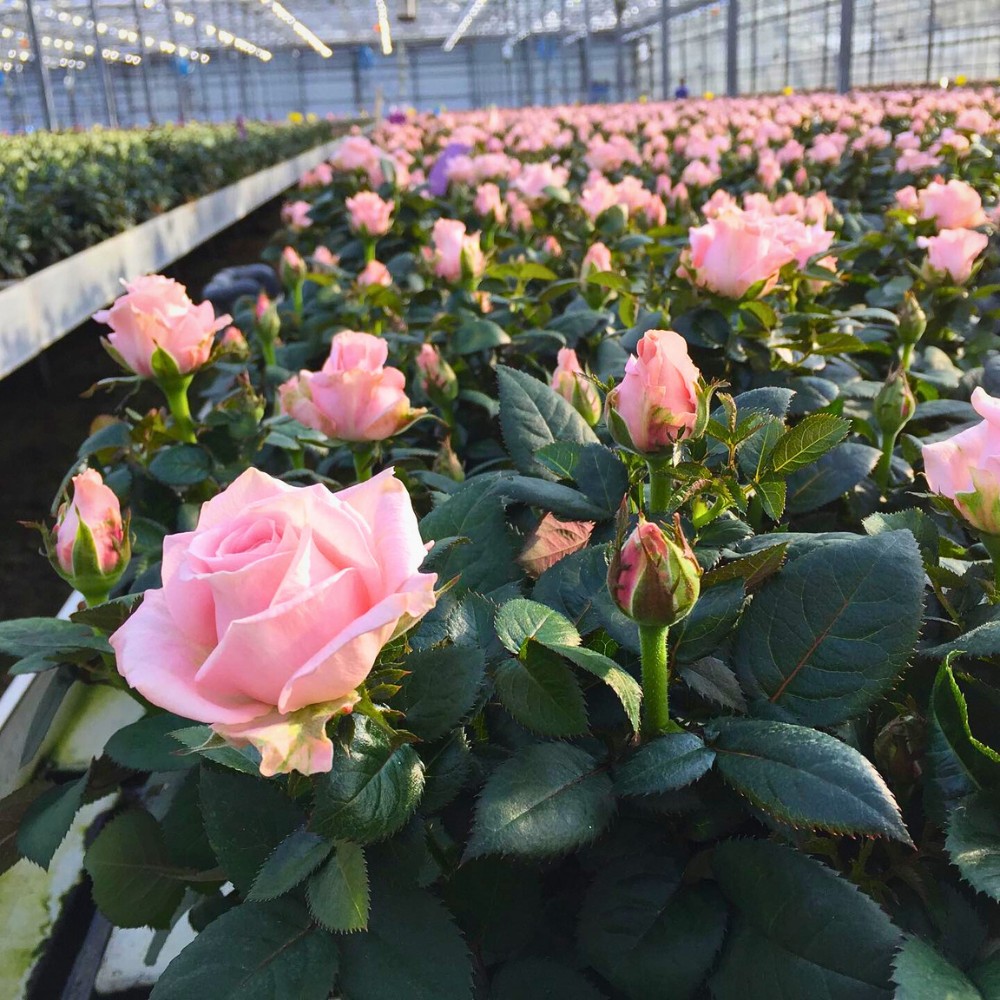
Rosen Tantau's Rose Paloma Steffi, for example, is a sport of the original Rose Paloma, distinguished by cream and green outer petals that transition to bright pink at the center. Breeder De Ruiter's Rose PomaRosa also gave rise to two notable sports over time. Rose Be Sweet and Anne Laure each carry the original variety's character in a different color expression. Other breeders, like Interplant Roses, known for their spray roses, also regularly monitor their extensive assortment for exciting sports and mutations.
From Breeder to Grower, Then Market
Once a new rose has passed these many tests, it moves into the final stage, which is the introduction to growers. Here, propagation and commercial processes begin. Breeders license new varieties to growers, who test the rose again under local conditions, then plant at scale if it proves reliable and profitable.
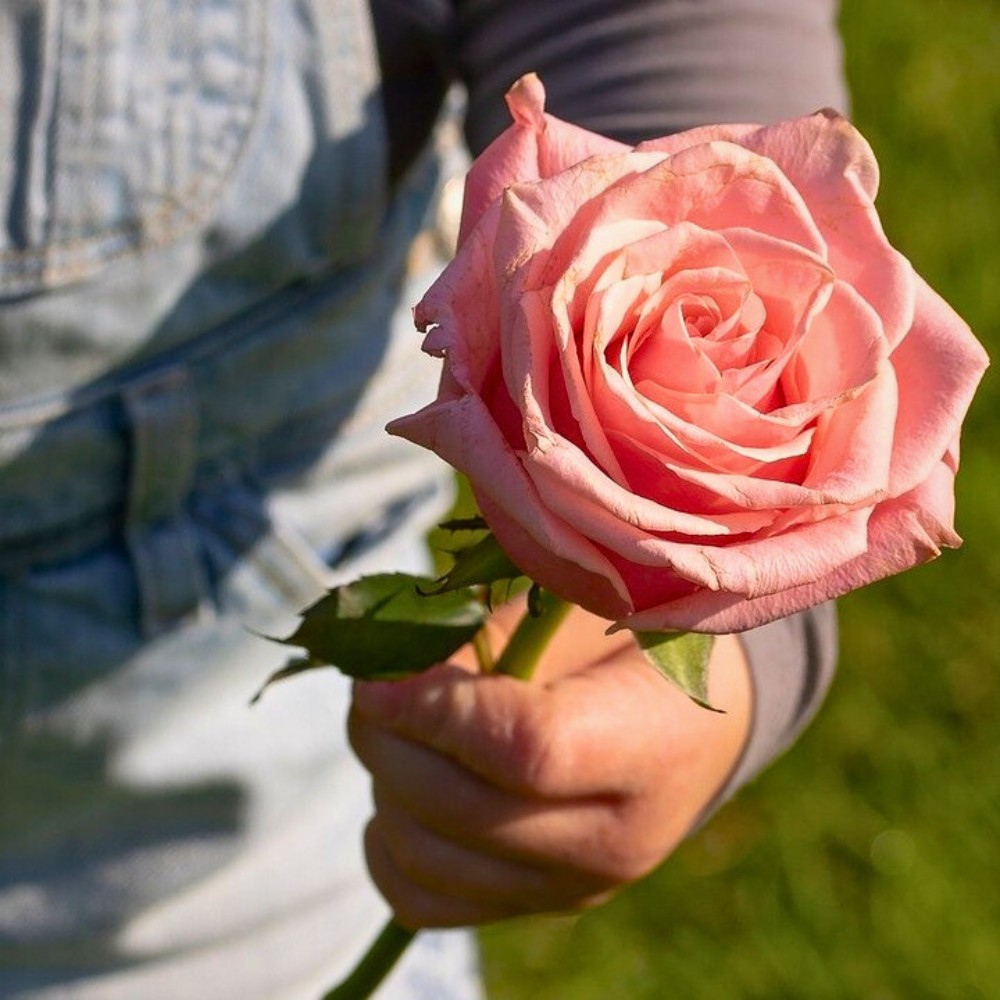
Yet, even after introduction, the breeders and growers keep watching, and if a variety fails to live up to its earlier promise, it may quietly exit production, replaced by newer selections that drive quality, health, or novelty a little further.
Growers pay a royalty per stem, which is how breeders recover the investment of years of breeding work. This system is protected under Plant Breeders' Rights (PBR), a form of intellectual property protection that ensures breeders get fair compensation when their varieties are propagated commercially.
Continental Breeding, a Spanish breeder holding a distinct locus in the Latin American roses market, is an example of how breeding programs and growing operations are structured to work coordinately. Their focus on premium garden-style varieties with strong performance, including good disease resistance and generous petal counts, shows an end-to-end approach that modern breeding programs require.
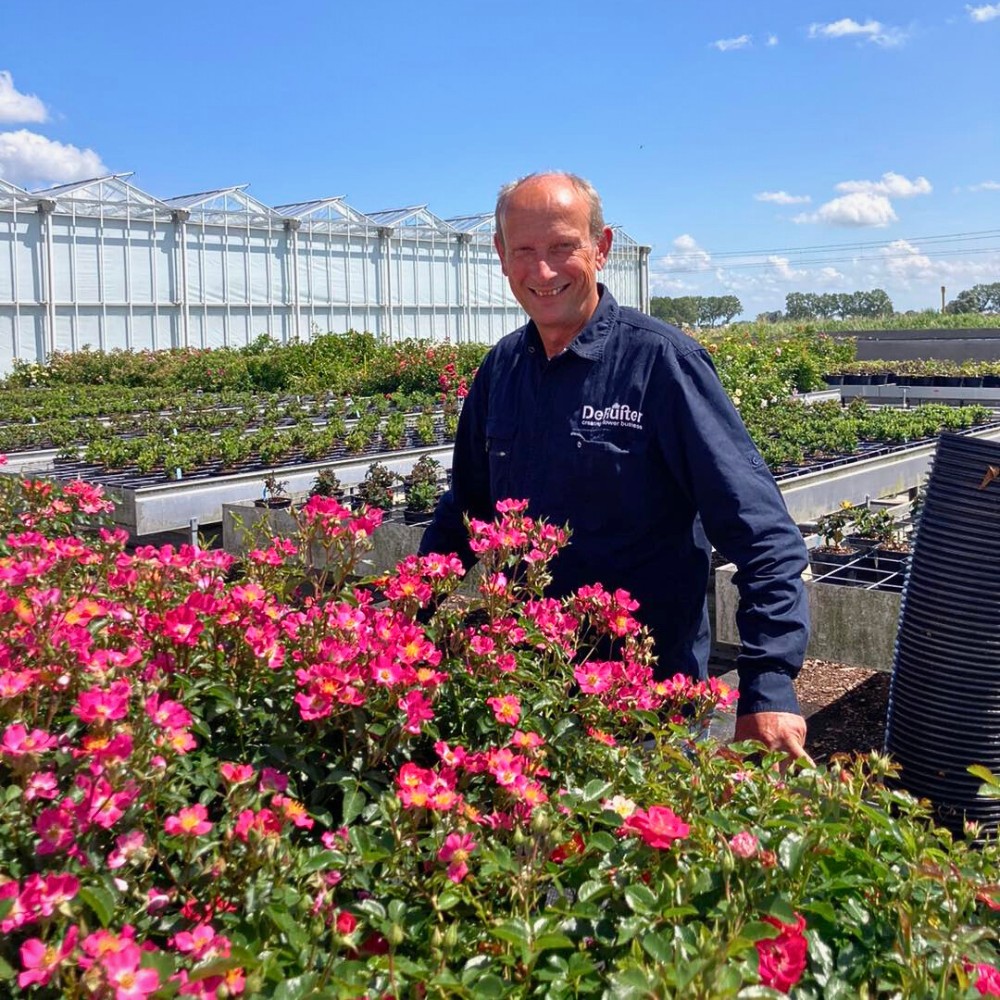
Hence, much as it is long and rigorous, the rose breeding process repays precision and patience more than sentiment. Looking at all those roses around, it is worth knowing that, however charming a variety is, it first had to prove itself and its perpetually perfect performance across all metrics considered.
Feature image by @david_austin_roses. Header image by @rosefarmkeiji.