The easiest hydroponic houseplants for beginners are spider plant, pothos, lucky bamboo, velvet leaf philodendron, coleus, monstera, satin pothos, peace lily, arrowhead plant, and Geranium. All ten root from a cutting in a glass of water, and all ten can keep growing there for months, often years, as long as they get bright indirect light, fresh water every two to four weeks, and a little liquid fertilizer. That, in short, is hydroponics at home: indoor plants fed by water and dissolved nutrients instead of soil.
It's also one of the hottest plant trends in indoor gardening, and not only because a jar of roots looks good on a shelf. No soil means no fungus gnats breeding in the pot, no repotting mess, and no guessing whether the plant is thirsty. Are you after the best hydroponic plants for flowers rather than foliage? That's a separate list. This one is about the green, forgiving ones. Well, mostly forgiving, as you'll see.
What Is Hydroponics? How Indoor Plants Grow in Water Without Soil
Hydroponics is the growing of plants without soil, with the roots in water that carries the nutrients soil would normally supply. Indoors, it works because a living room is a fairly steady place: temperature, humidity, and light change slowly, so you can grow hydroponic plants indoors with very little equipment. Soil is essentially a pantry and an anchor. Take it away, and the water has to do the feeding while a vase or a few pebbles do the holding.
A stable indoor environment is important for both plant health and everyday home comfort. If an air conditioner is blowing warm air, running constantly, or failing to control temperature during hot weather, homeowners may need professional air conditioning repair to restore proper cooling, airflow, and indoor comfort.
The word itself comes from Greek: hydro for water and ponos for labor, so roughly "water doing the work." It was popularized in the 1930s by William Frederick Gericke at the University of California, Berkeley, who grew tomato vines several meters tall in nutrient tanks and set off a minor sensation. For houseplants, the idea comes in three levels:
- Water propagation: a cutting in a glass of plain water. It roots on what the stem has stored, and with a few drops of fertilizer it can stay there for good.
- Semi-hydro or hydroculture: the plant sits in clay pebbles (LECA) or another inert substrate in a pot with a water gauge. This is the system behind most office plants in the Netherlands.
- Active hydroponics: pumps, air stones, and timed nutrient flow, the route for herbs and salad crops.
Hydroculture, in fact, is a trade of its own. Ruud Steur, who co-founded the Dutch florist platform FloraNL, turned his small village flower shop toward business clients early on. "I had to specialize. So I focused on two things. The business market, companies ordering flowers. But also hydroculture: planting offices, going on a hydroculture course, how all of that works," he said on the Dutch podcast Goede Bloemen en Goede Planten (translated from Dutch). At home, you won't need a course. Here are 10 hydroponic plants that are great for beginners, all of them happy at the first level and most of them at the second.
10 Best Hydroponic Houseplants for Beginners
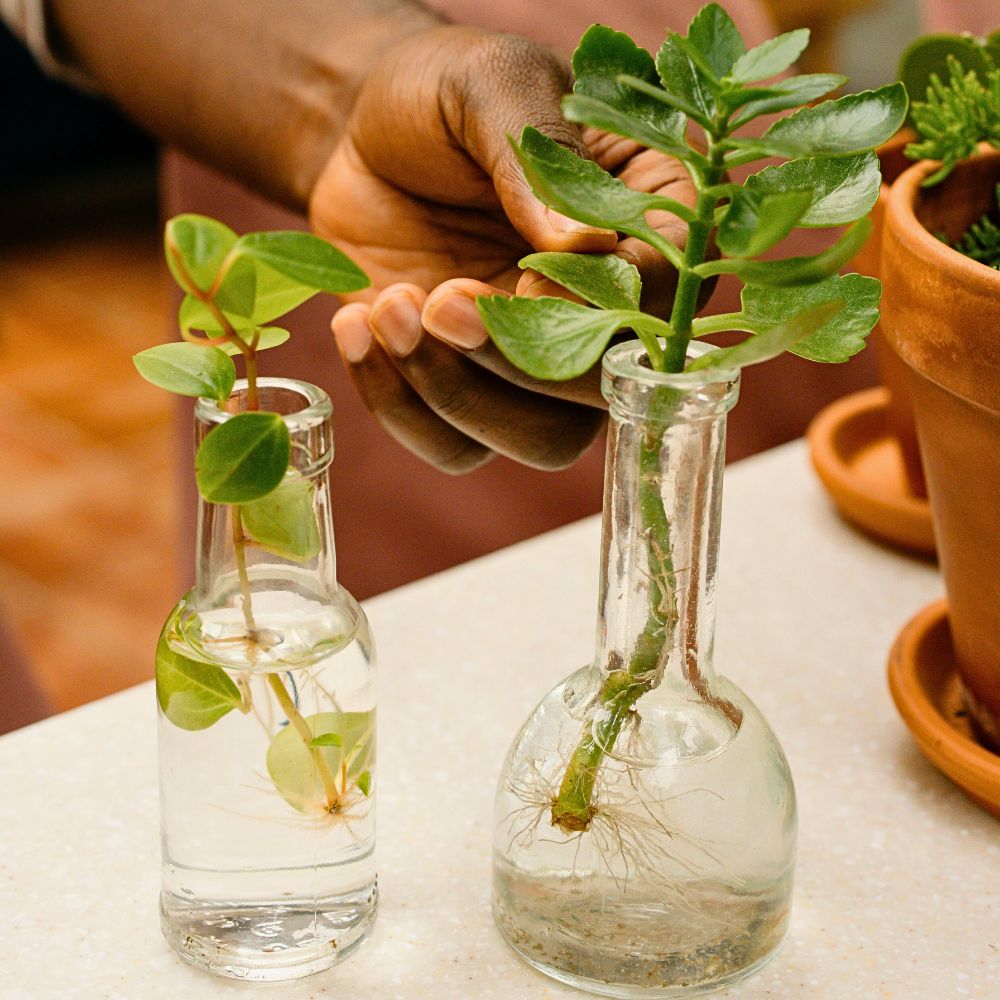
Have you ever put a cutting in a glass of water? Then you have already done hydroponics. Most people pot the rooted cutting afterward, but you can also let it grow on in the water. It's that simple. A potted plant can make the move too, as long as you rinse every crumb of potting soil off the roots first. Change the water every two to four weeks and add a water-soluble fertilizer at a quarter to half the label dose, since plain water runs out of nutrients. Don't overdo it. So, which houseplants are suitable for growing in water as hydroponic plants? These ten have the best track record, and the first one's the easiest of all. Propagating from cuttings is the way in for almost every one of them.
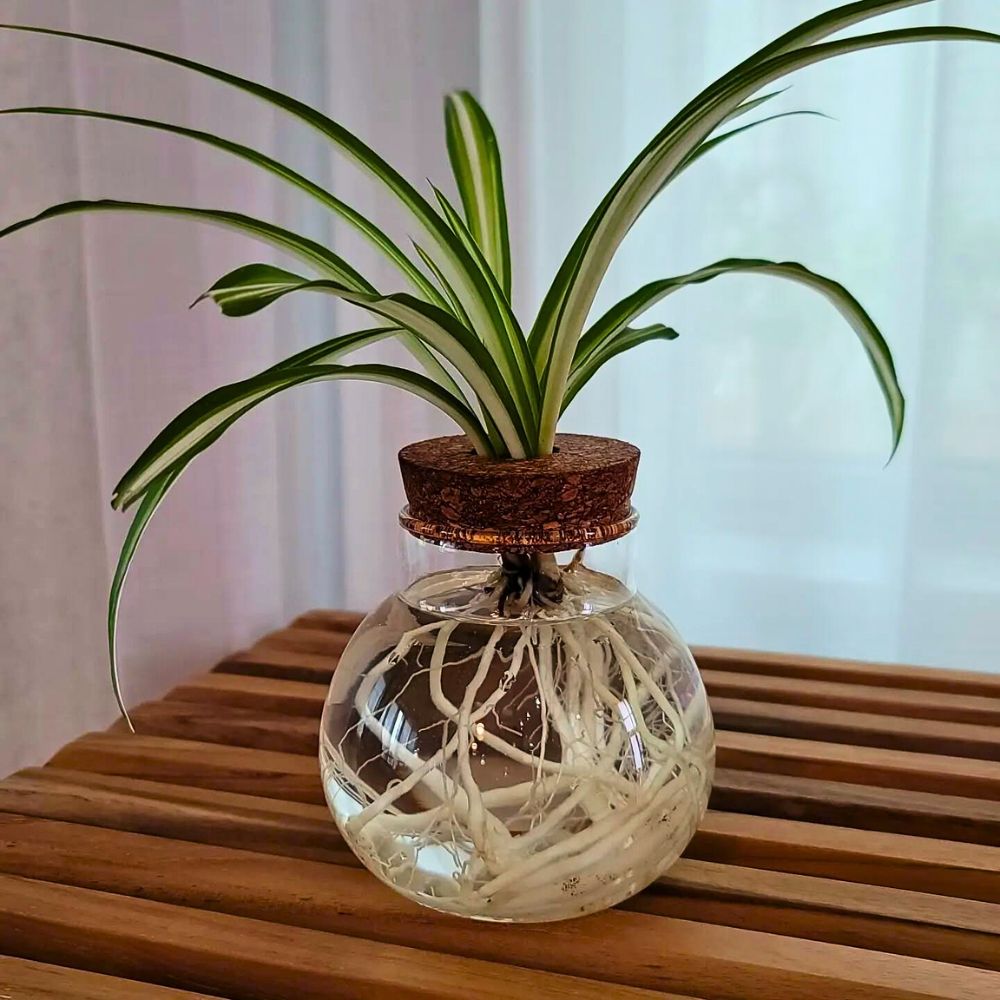
1. Spider Plant (Chlorophytum Comosum)
Spider plants are among the best hydroponic plants for beginners, featuring arching leaves with distinctive white stripes. These hydroponic houseplants are relatively easy to grow in water and produce baby plantlets that can dangle from long stems or be propagated separately. They are often sold as air cleaners, but a 2019 Drexel University review of the research found you would need hundreds of plants per room to match what an open window does, so the air-purifying claim is best taken with a pinch of salt. What they really do well is root: the offshoots called "spiderettes" form roots while still on the mother plant and take to a jar of water within a couple of weeks. They tolerate lower light but thrive in brighter spots, which makes them one of the best indoor hydroponic plants for almost any room. Keep the leaves out of the water, though. Submerged leaves rot. For the full routine, see the spider plant care guide.
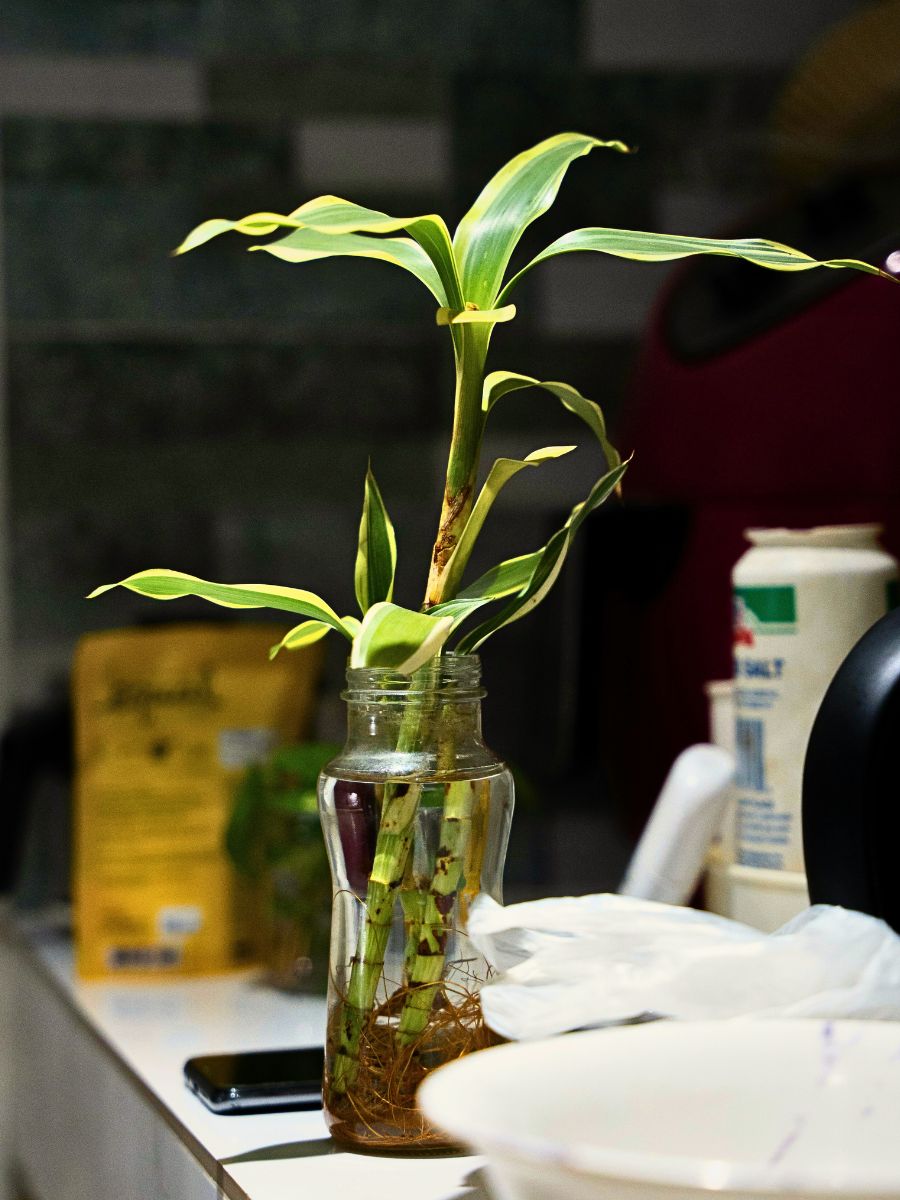
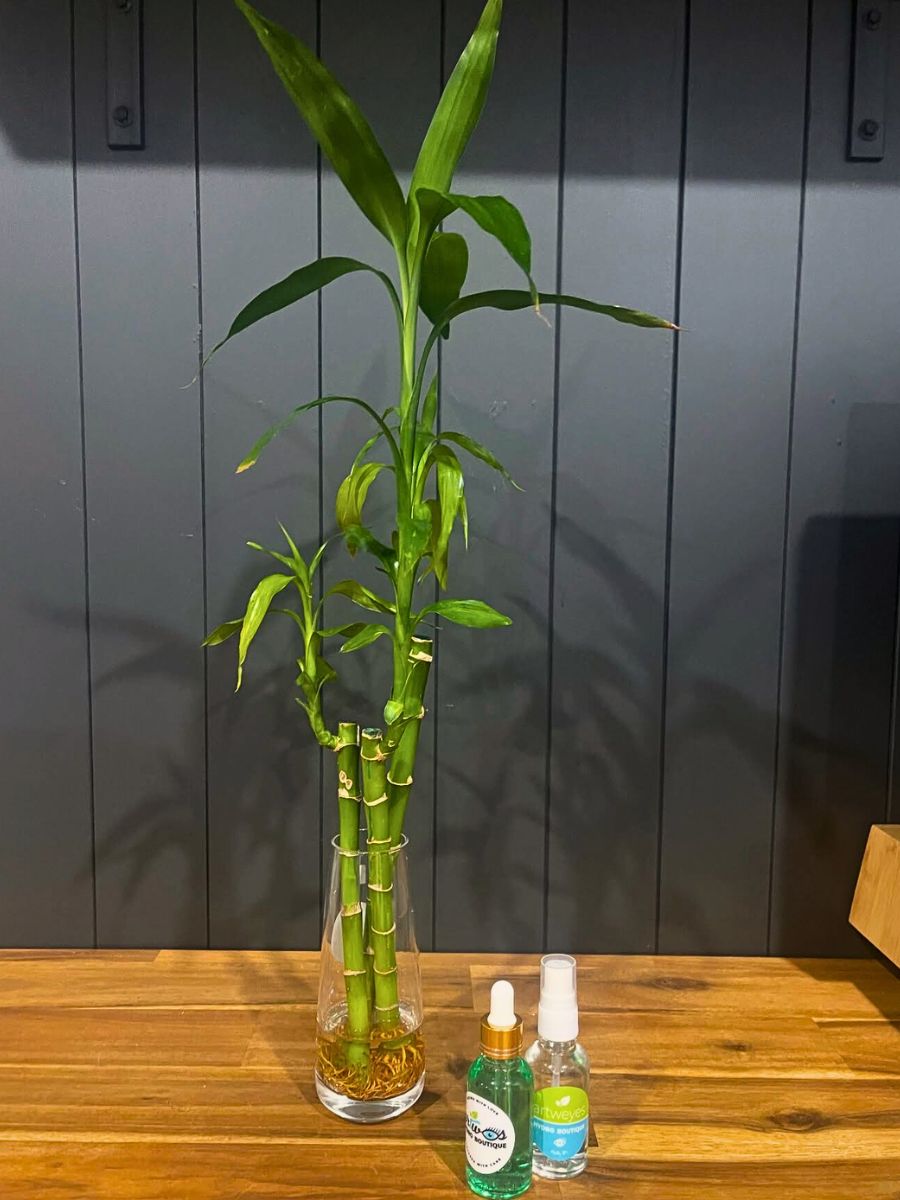
2. Lucky Bamboo (Dracaena Sanderiana)
Despite its name, Lucky Bamboo belongs to the Dracaena genus rather than the bamboo family. This auspicious houseplant that can be grown as a hydroponic indoor plant is said to bring good fortune and creates a bold statement in home decor. Lucky Bamboo prefers bright indirect light and can become top-heavy, so securing it properly in your glass vase with decorative stones is essential. It can be grown in water alone or with decorative pebbles, adding an elegant touch to any room. Use filtered water or rainwater if your tap water is hard or heavily chlorinated; yellowing leaf tips are the usual complaint. Noteworthy is that these Lucky Bamboos also bring good luck and fortune.
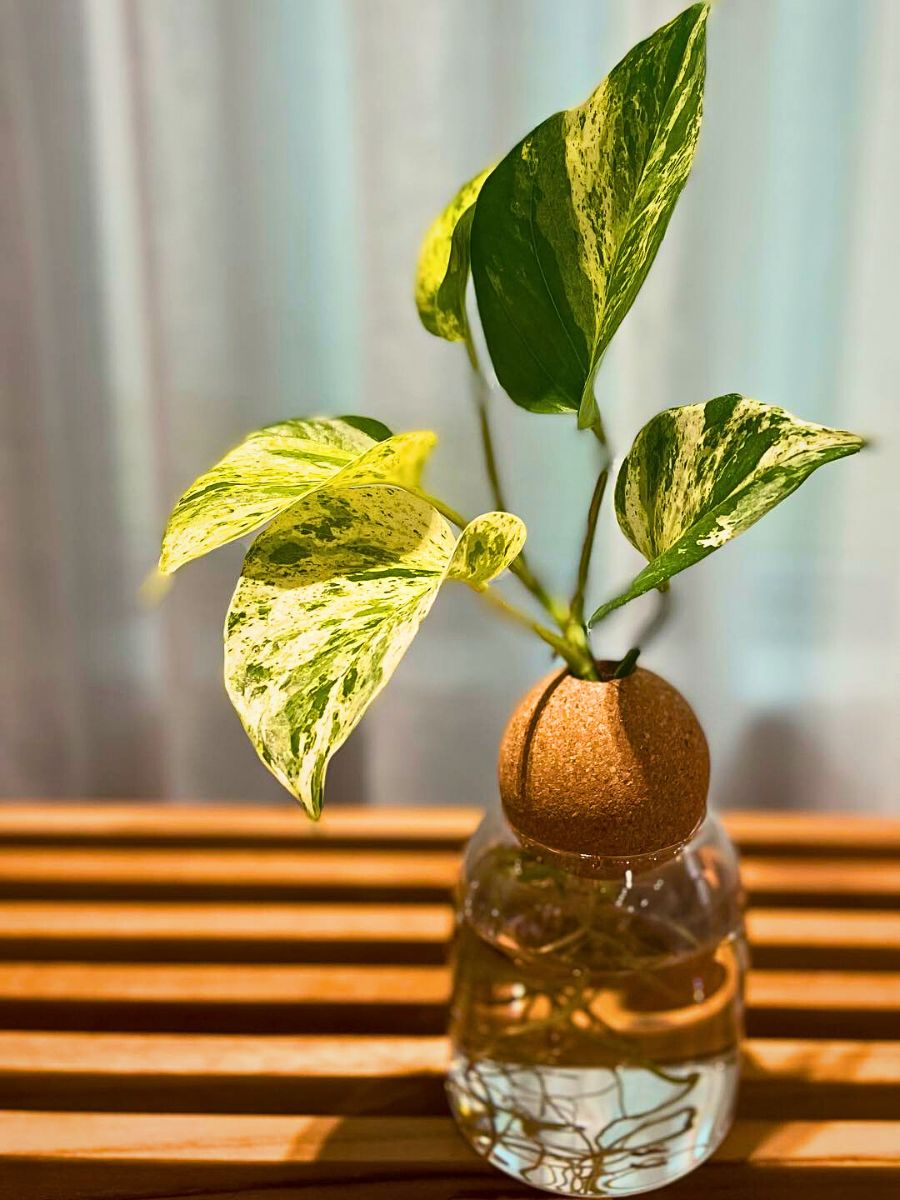
3. Pothos Plant (Epipremnum Aureum)
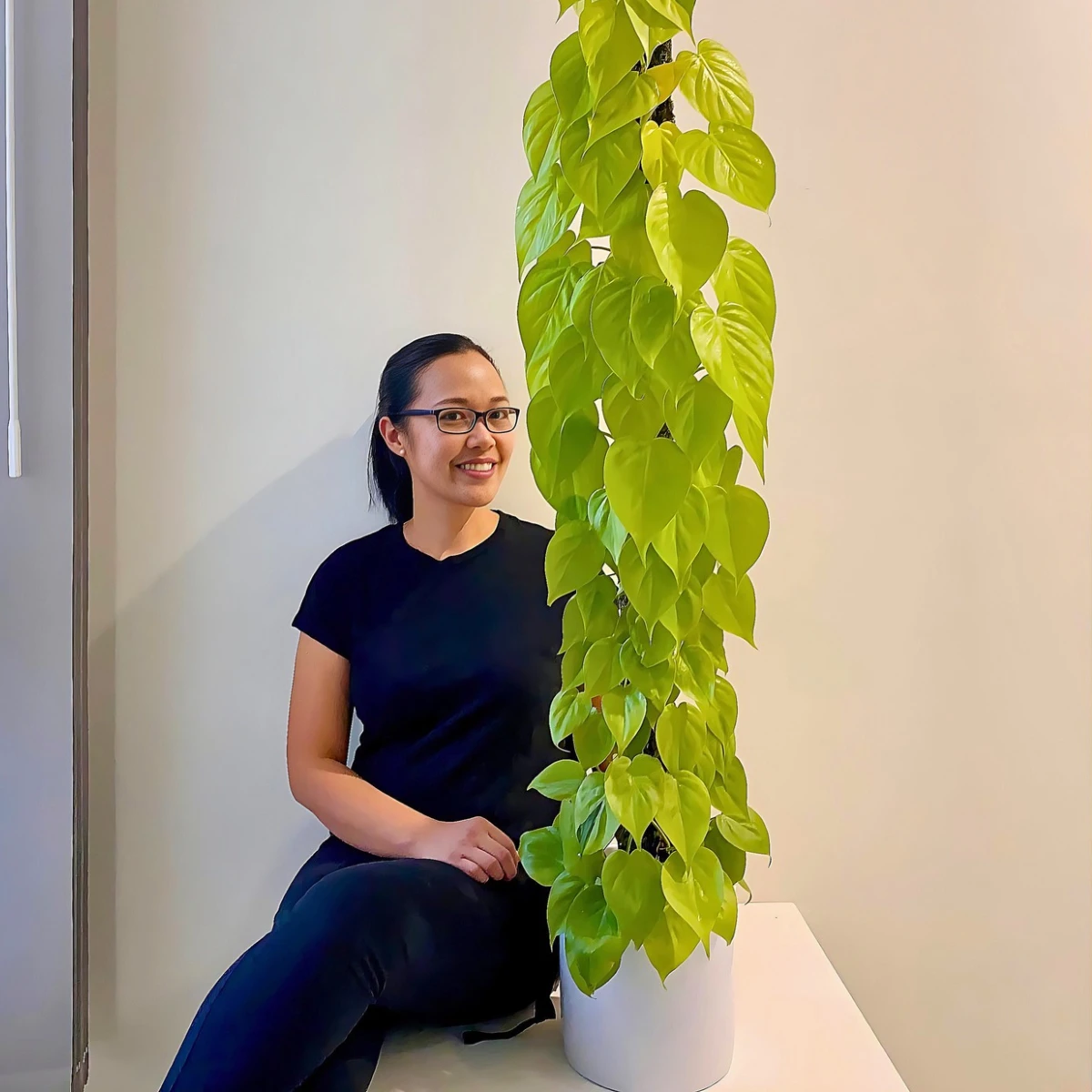
Pothos, also known as Devil's Ivy, is one of the easiest hydroponic plants to grow in water. Its trailing vines with heart-shaped leaves make it ideal for hanging baskets or cascading from shelves. It roots faster than almost anything else on this list. Usually it's two to three weeks. To propagate Pothos in water, take 4- to 6-inch (10 to 15 cm) tip cuttings just below a node, making sure two or three nodes sit under clean water. Pothos will keep growing for years without soil, making it a perfect choice for hydroponic houseplants. PS: it prefers bright shade to direct sun. The pothos care guide and the overview of types of pothos help you pick a variety.
4. Velvet Leaf Philodendron (Philodendron Micans)
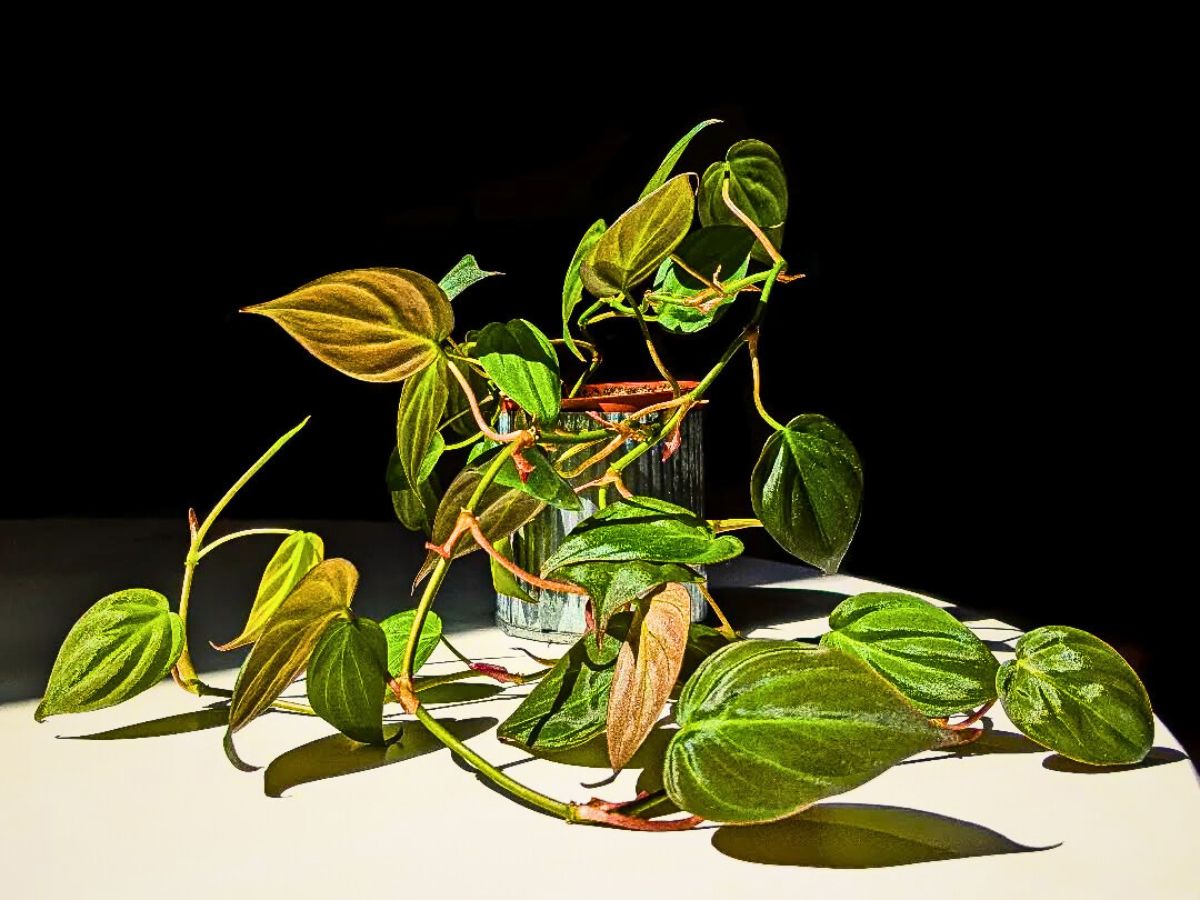
Philodendrons are popular hydroponic houseplants that adapt exceptionally well to water cultivation, aside from their normal soil-cultivation conditions. The Velvet Leaf Philodendron specifically features small, dark green to reddish foliage that's soft to the touch and glistens beautifully in light. Both vining heartleaf philodendrons and larger split-leaf varieties thrive in water culture, which makes them versatile choices for different indoor environments. This houseplant roots well and grows vigorously in water. Want to try another? The list of philodendron varieties shows which ones climb and which ones stay compact.
5. Coleus Plant
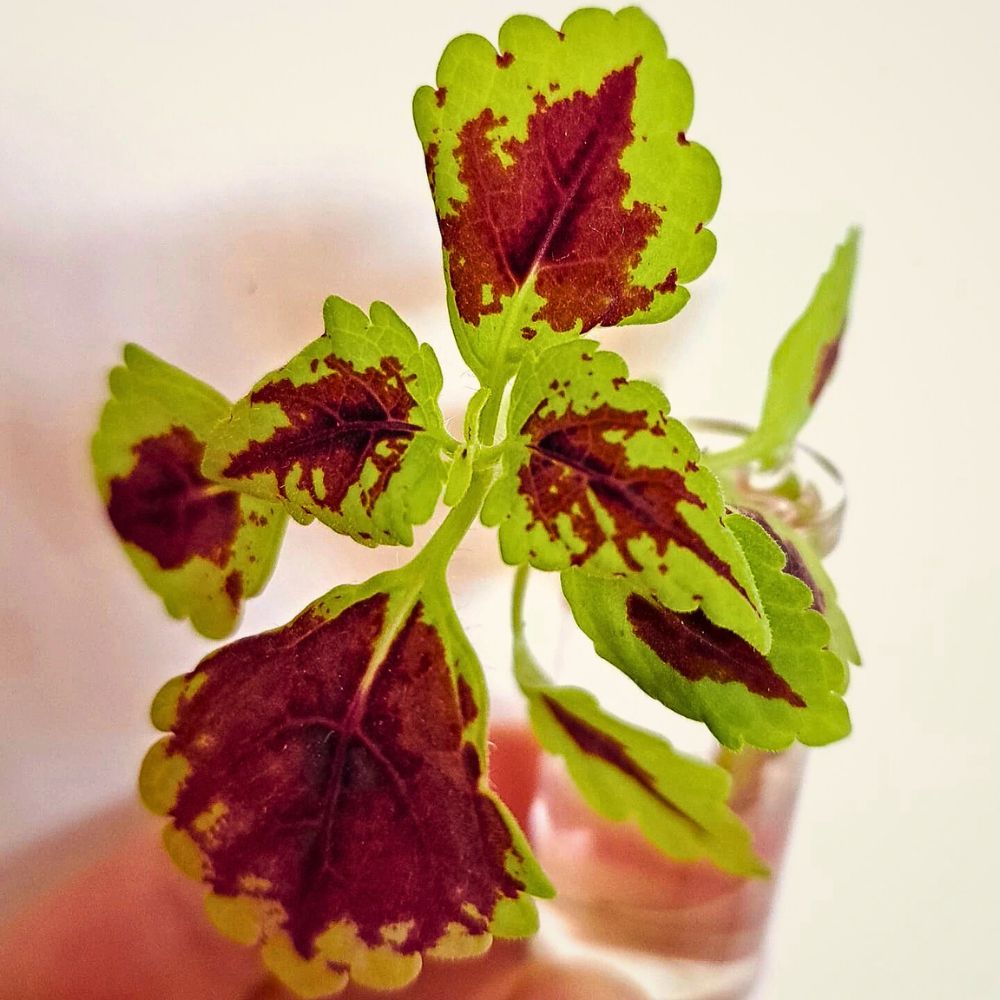
Coleus is an easy-to-grow houseplant that can also be grown as a hydroponic plant, thriving in water environments. Many gardeners prefer saving Coleus cuttings to start new plants before the growing season. Simply remove the lower leaves from a stem cutting and place it in water for a few weeks to develop a fully rooted plant. Coleus is one of the easiest plants to propagate: just snip small cuttings and place them in water. Pinch the tips as it grows, or it gets leggy in a jar. Coleus thrives in both full sun and partial shade and grows equally well in containers and the garden.
6. Monstera Plant
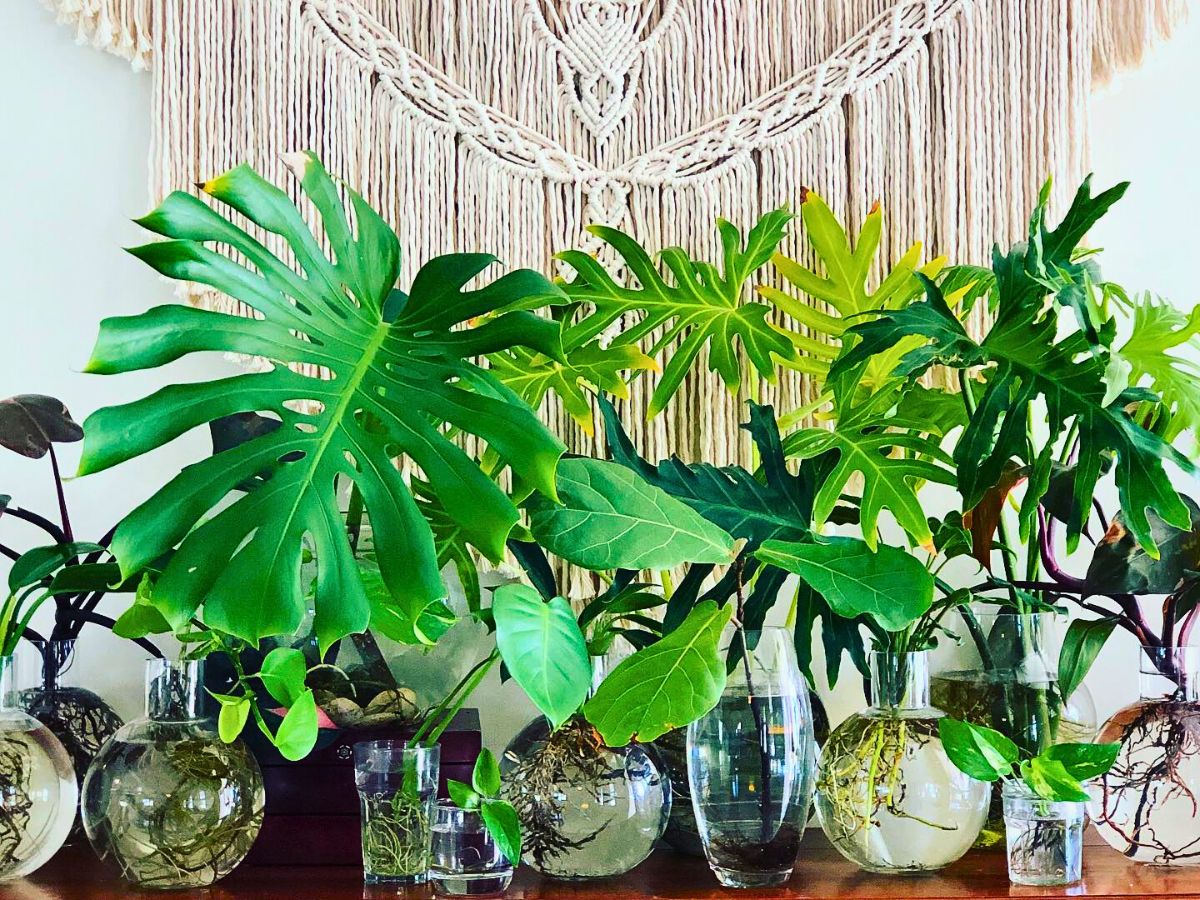
Monstera, also known as the Swiss Cheese plant, is a stunning indoor plant that can function as a hydroponic houseplant. It has large, fenestrated leaves and grows well in bright, indirect light. It makes a dramatic statement when grown in water. When growing Monstera hydroponically, take a cutting with a node and, ideally, an aerial root; that root goes into the water first and does most of the work. Provide structural support as the plant grows, because a big leaf in a light vase tips over sooner than you'd think. Not sure which plant you have? Here's how to tell philodendron and monstera apart.
7. Satin Pothos (Scindapsus Pictus)
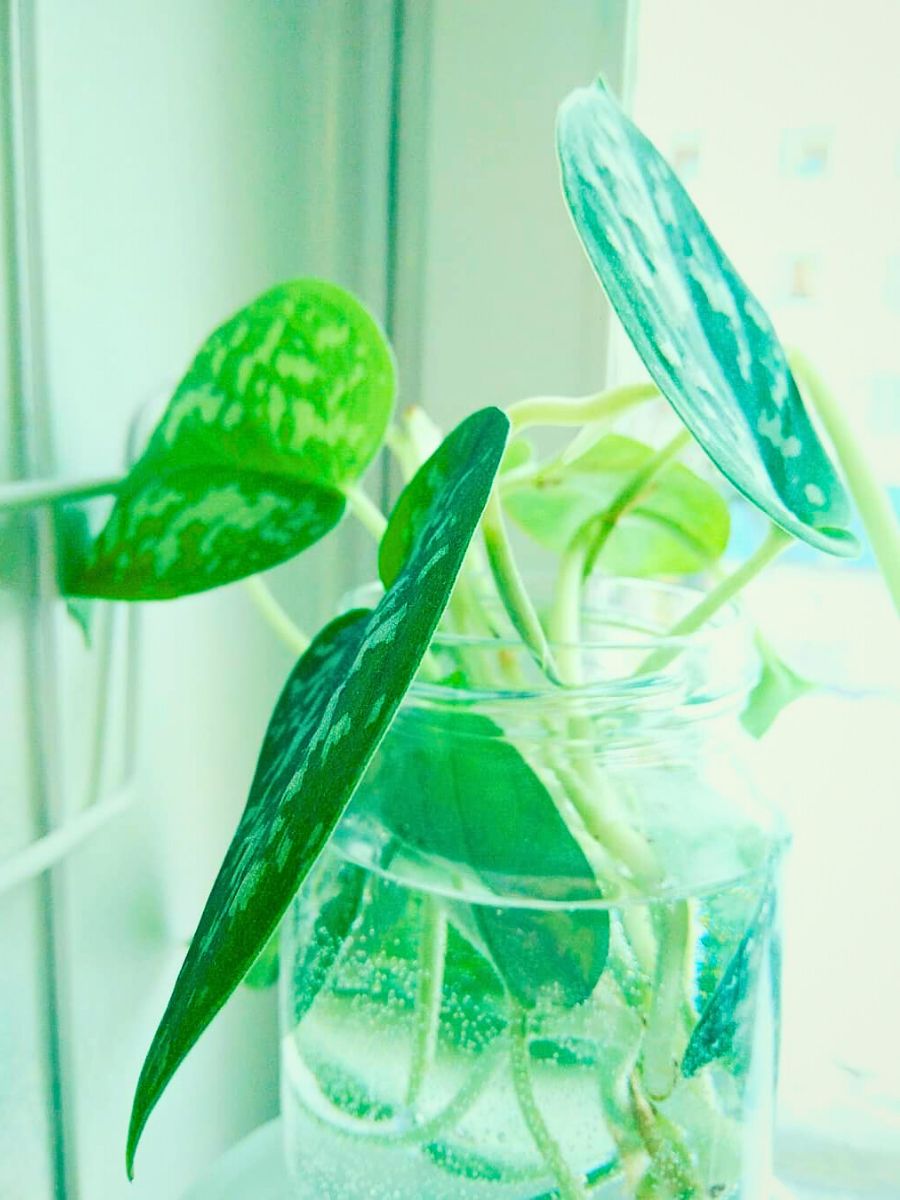
Another vining option is known as 'Satin Pothos' or 'Silver Philodendron'. This vining, hydroponic houseplant belongs to the Scindapsus genus. Its attractive, vining nature and pretty silver leaf spots make it an excellent choice for lovely hydroponic plant displays. It roots more slowly than its cousin the golden pothos, so give it a warm spot and a little patience. Once established, it is quite easy to maintain.
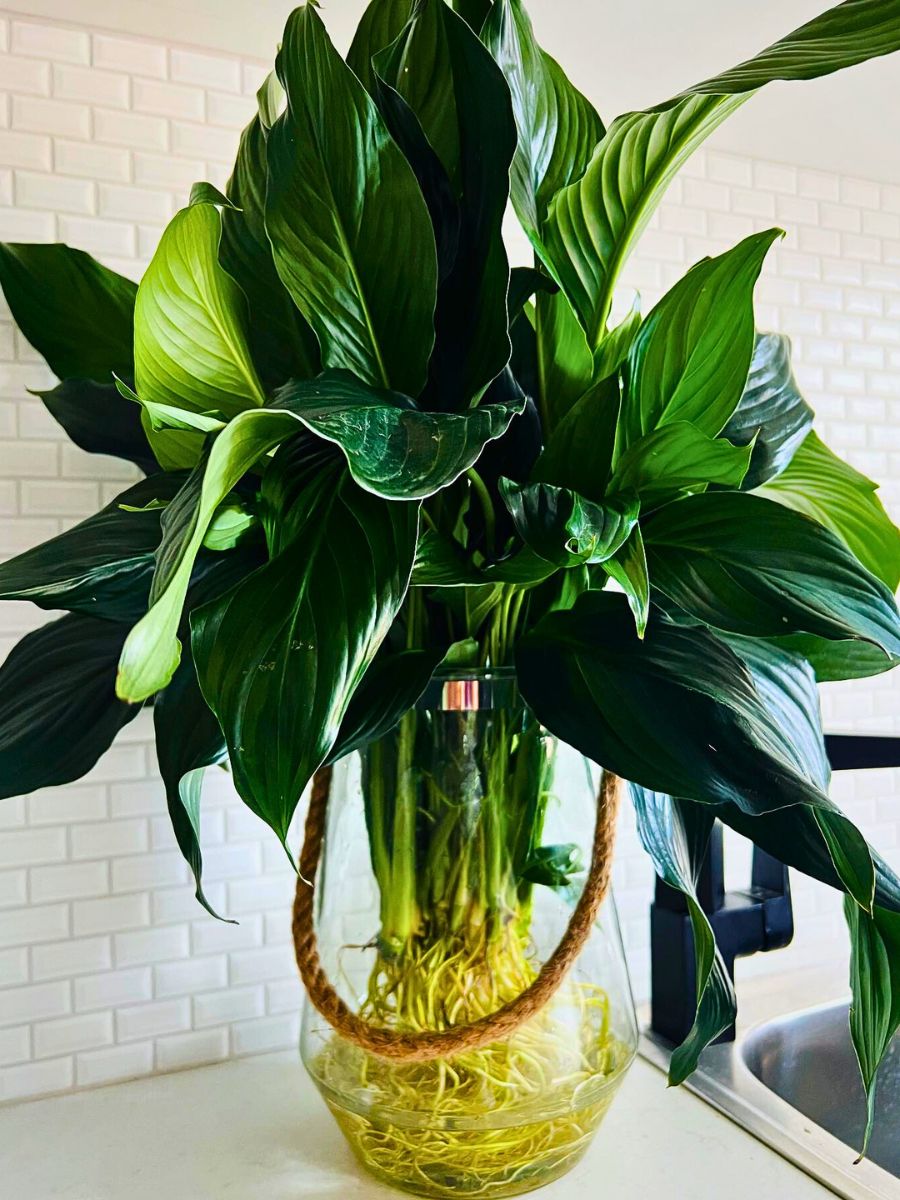
8. Peace Lily (Spathiphyllum)
Peace lily is one of the most popular choices for hydroponic growing. This tropical aroid is beloved as a classic hydroponic houseplant due to its easy care requirements and beautiful white flowers. When provided with bright indirect light and a weak dose of fertilizer, peace lilies keep flowering in water, often several times a year. Keep the crown above the water line. Only the roots should get wet. Curious about the symbolism? Read about the peace lily meaning.
9. Arrowhead Plant
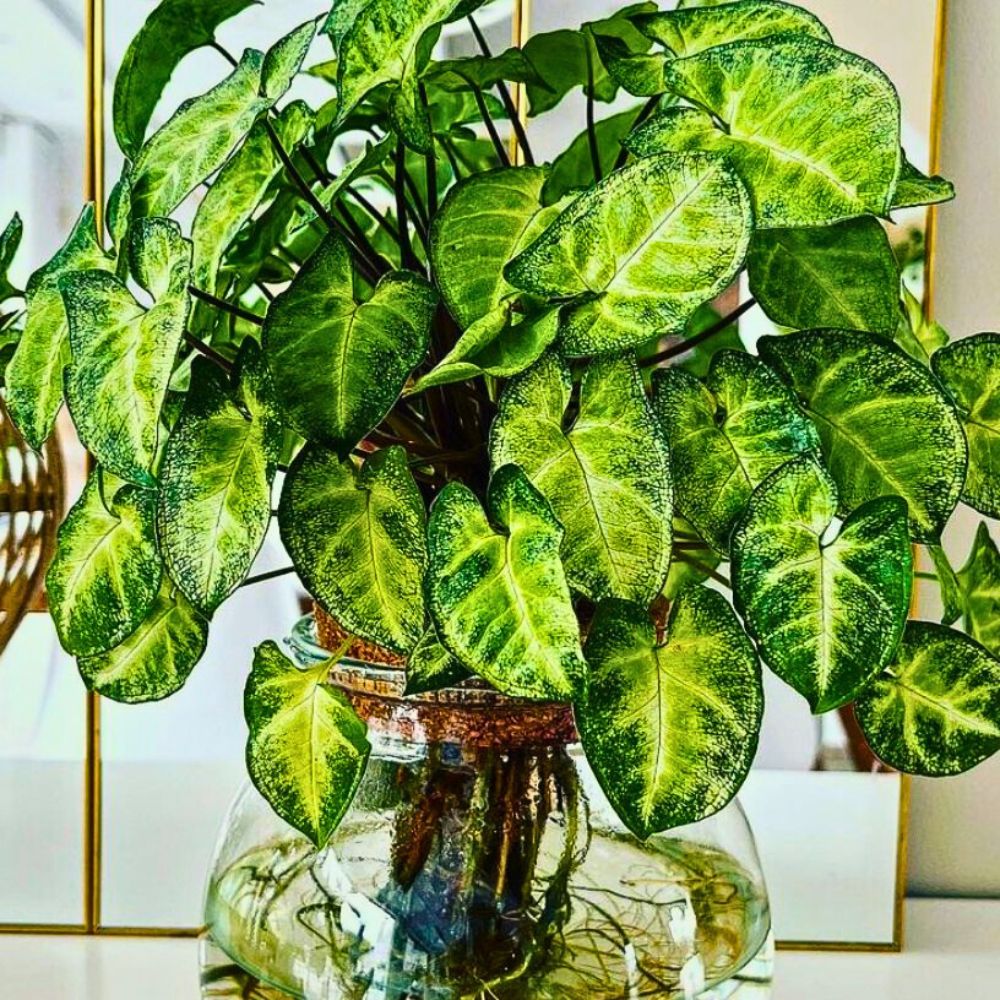
The Arrowhead plant is yet another popular hydroponic plant, of the genus Syngonium, bearing distinctive arrow-shaped leaves that grow in vining or bushy forms. These hydroponic houseplants come in various colors, including green, white, pink, and burgundy. To grow it in water, clip healthy stems with at least 2-3 nodes and place the lower nodes in clean water with bright, filtered sunlight. Aquarium keepers often hang a cutting on the rim with its roots in the tank, where it feeds on the nitrates the fish produce. The Arrowhead plant is an excellent decorative addition to any home decor style: a terrarium, a coffee table, a shelf, or a reading desk all suit it. More in the Syngonium care guide.
10. Geranium (Pelargonium)
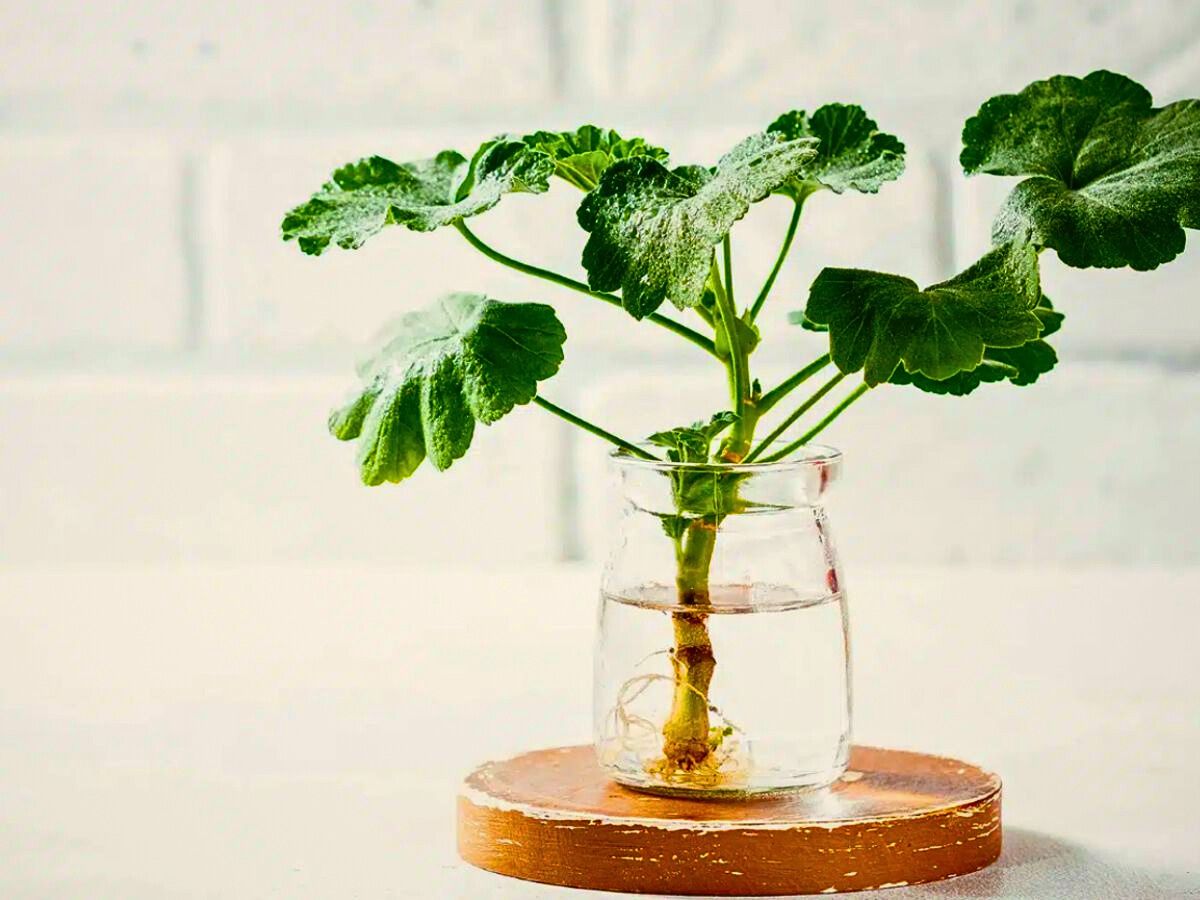
Geraniums are commonly grown as warm-weather annuals outside, but did you know they can also be grown as long-lived houseplants in water? They also make great houseplants for hydroponic cultivation. They offer colorful blooms as well as attractive foliage. These annuals blend well with water-based growing systems and can provide long-lasting beauty in hydroponic arrangements. To grow them hydroponically, clip a 6- to 8-inch piece of stem just below a leaf node to keep your Geraniums going through the colder months without the hassle of overwintering their container indoors. Place the stem in a glass of water to form roots. Most zonal Geraniums root readily this way; change the water every few weeks, or sooner when it begins to cloud.
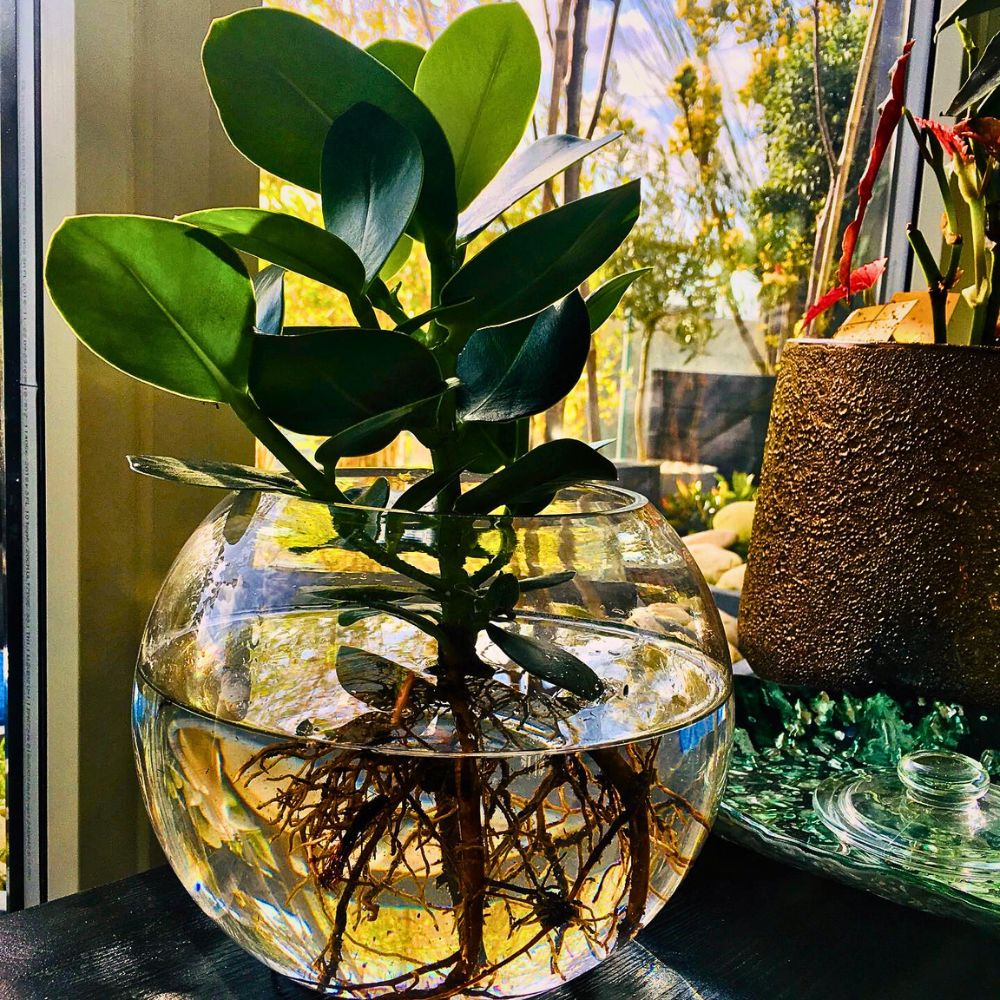
A bonus for patient growers: Clusia. It grows naturally in wet, coastal places and copes with water for years, as explained in the piece that called Clusia the perfect hydroponic houseplant. Look for Clusia Princess if you want a compact one. Chinese evergreen (Aglaonema), another tropical plant, roots in water too and puts up with the dim corner the others dislike.
Quick-Harvest Herbs for Your Indoor Hydroponic Garden
None of the ten plants above is edible. The same jar trick works in the kitchen, though, and herbs can be grown hydroponically too. If you are looking for fast-growing hydroponic plants that deliver quick satisfaction, leafy greens win: loose-leaf lettuce and watercress give you something to cut within weeks, because they put their energy into leaves rather than fruit or roots.
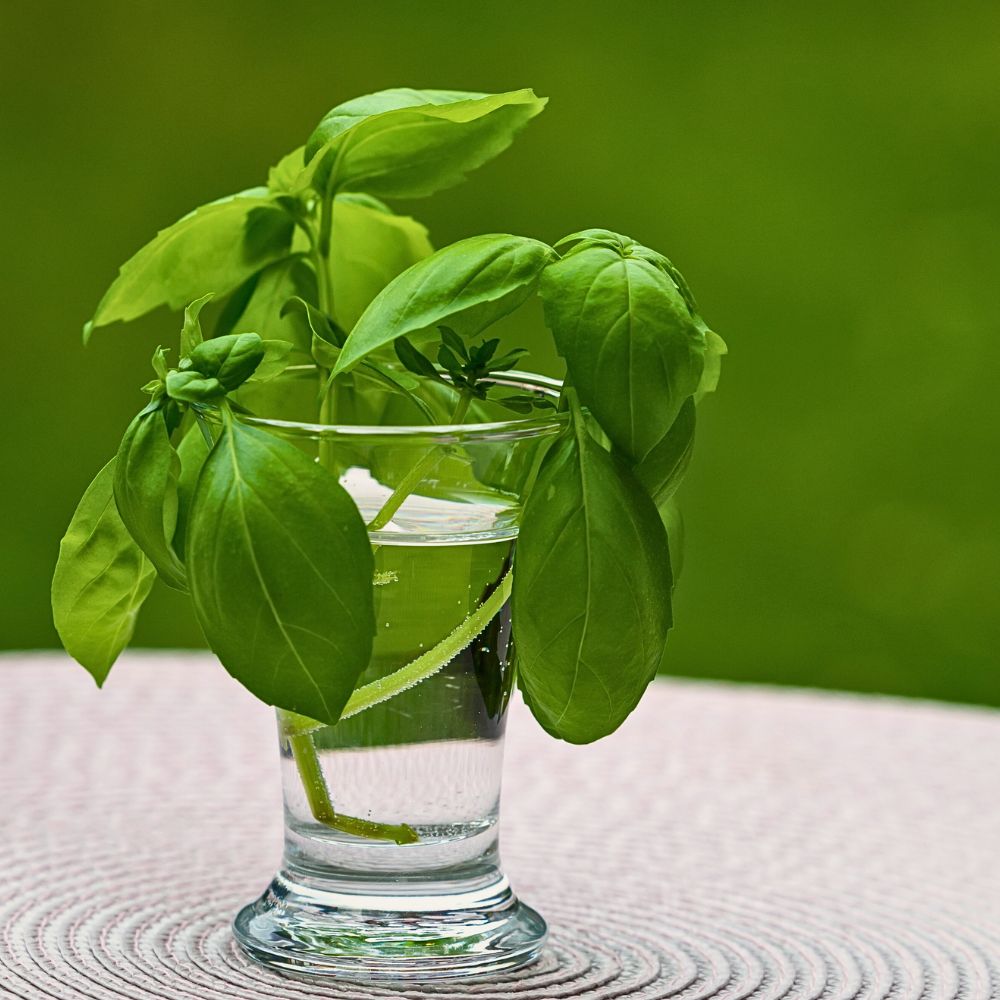
Basil is the classic first herb: a supermarket stem with the lower leaves stripped roots in a glass on the windowsill in about a week or two. Spinach works in an active system, though it prefers cool rooms and tends to bolt in a warm kitchen.
Must-Have Herbs for Any Hydroponic System
Herbs are some of the best hydroponic plants for beginners due to their minimal space requirements and ease of care. Basil, mint, cilantro, rosemary, sage, chives, and oregano all thrive as hydroponic houseplants. Mint is the most eager of them; it roots in days. Then it takes over the jar.
This makes them ideal for kitchen gardens where fresh herbs are always within reach. Mint, chives, oregano, sage, and rosemary are perennials that keep producing from the same roots; basil and cilantro are annuals, so start fresh cuttings or seeds every few months. These hydro plants indoors are particularly valuable because they provide fresh flavoring for cooking while requiring less fuss than a soil-based herb pot.
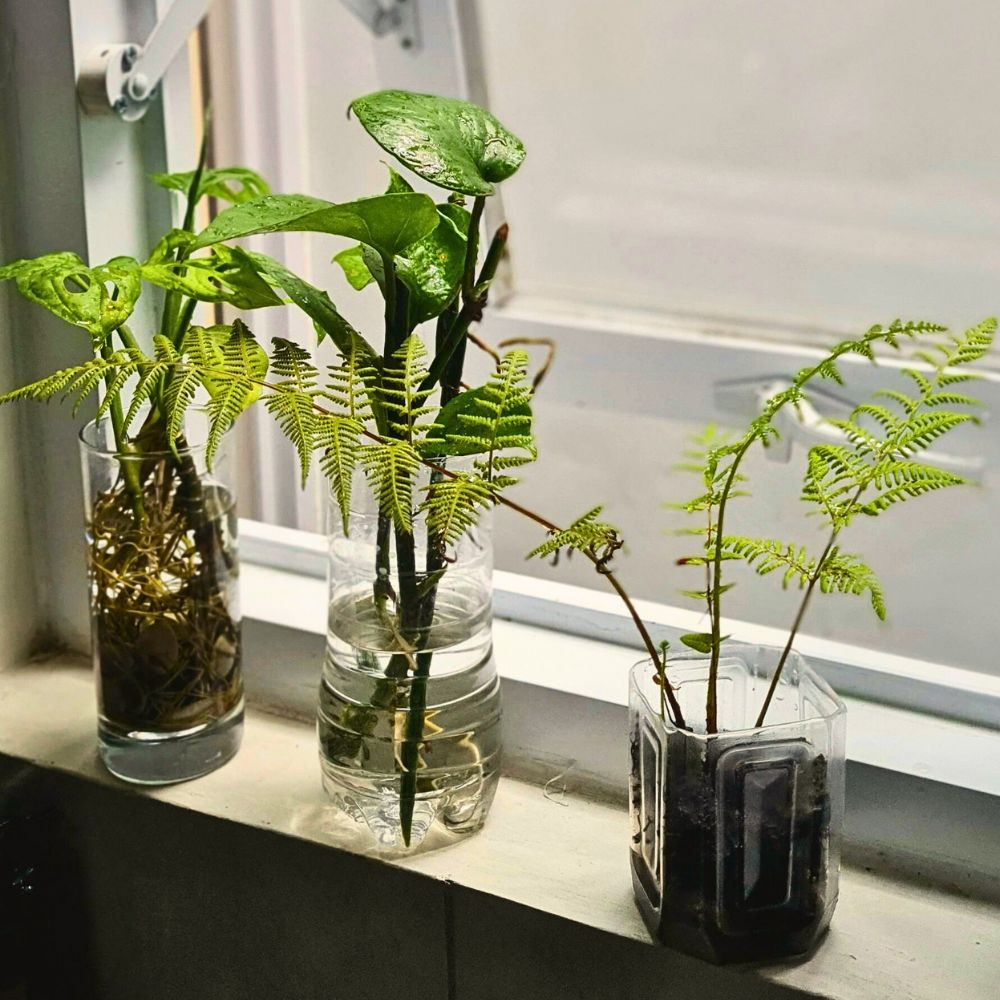
Setting Up a Beginner-Friendly Hydroponic System at Home
To successfully grow hydroponic plants, you need several key components:
- A clean glass container or vase, clear if you want to watch the root system, opaque if algae bothers you
- Clean, sharp pruning shears for taking cuttings
- Spring water or tap water with plant food
- Proper lighting (bright, indirect sunlight)
- Hydroponic plants or cuttings to be ready for water propagation
Step-by-Step Hydroponic Setup Guide
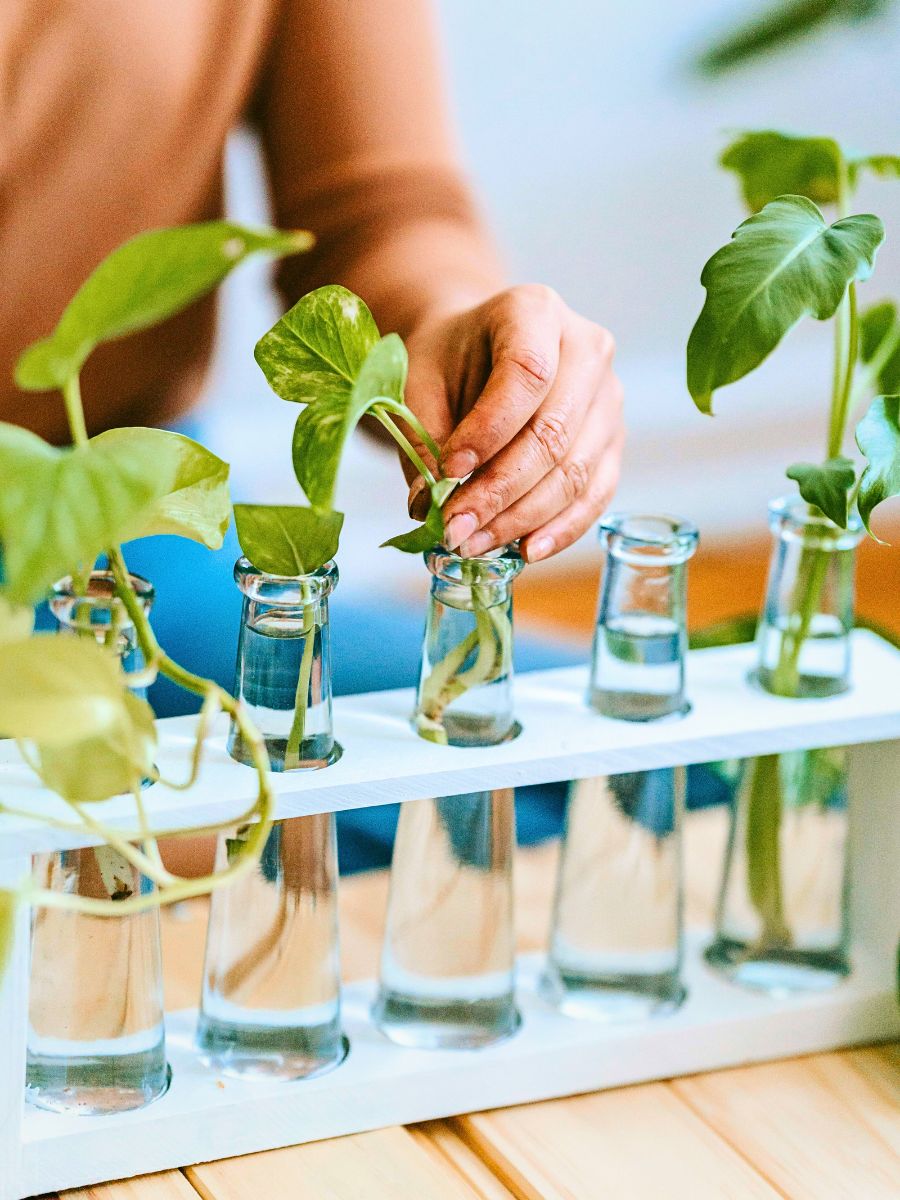
Choose a healthy stem without a flower bud and cut it to about 10 to 15 cm (4 to 6 inches), just below a node, the small bump where a leaf meets the stem. Roots grow from the node. At least one must sit under water. Remove the lower leaves and use clean scissors for every cut. Select a vase with a narrow top so only the bottom of the cutting remains in water.
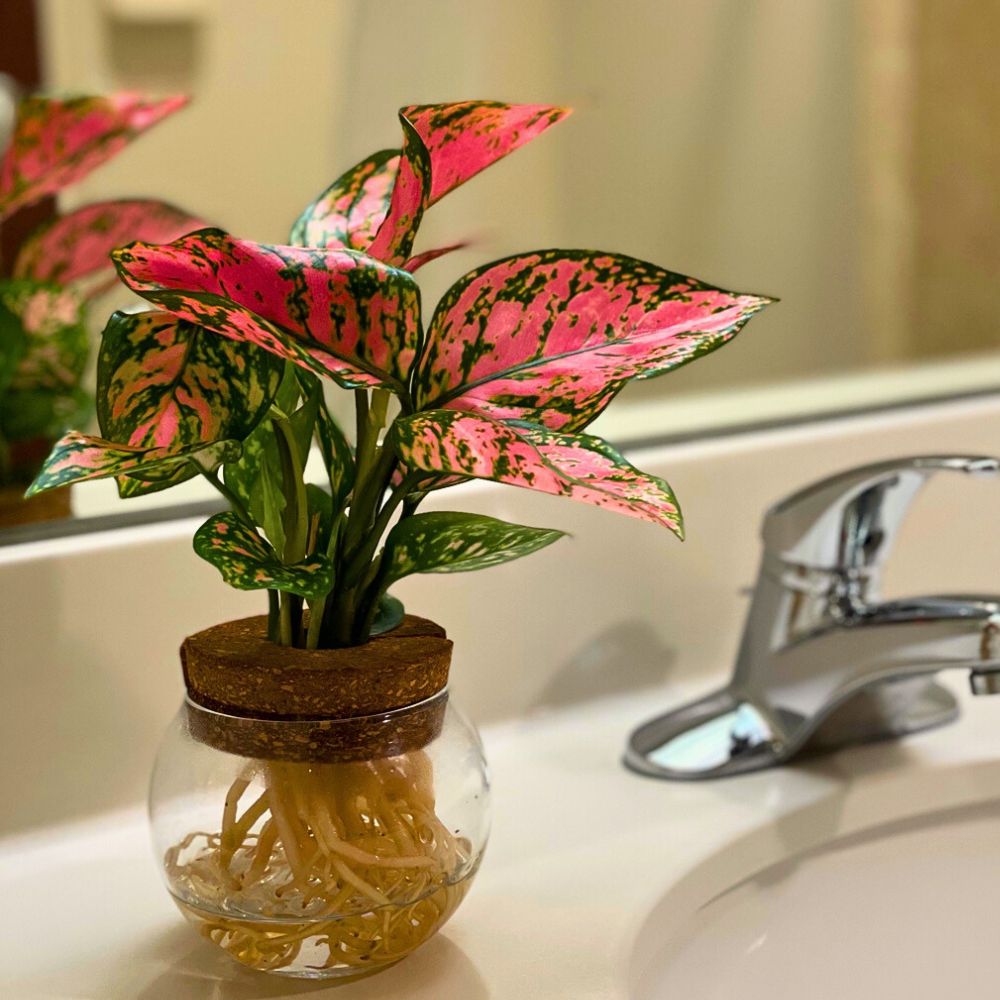
Fill your container with spring water at room temperature, which contains important minerals that promote growth. If spring water isn't available, use regular tap water with plant food. Place the cutting in the vase, ensuring only the bottom portion touches water, then position it in a bright location away from direct sunlight.
For those ready to explore beyond simple water propagation, several hydroponic systems can support larger hydroponic plants indoors. Deep Water Culture (DWC) systems submerge plant roots in oxygenated nutrient solutions, providing excellent conditions for the best hydroponic plants. Nutrient Film Technique (NFT) systems create a thin film of nutrient-rich water that constantly flows over roots. In between sits semi-hydro: move a rooted plant into clay pebbles in a pot with a water gauge, keep the water at the bottom third, and top up only when the gauge reads empty.
Daily Care Routine for Hydroponically Grown Plants
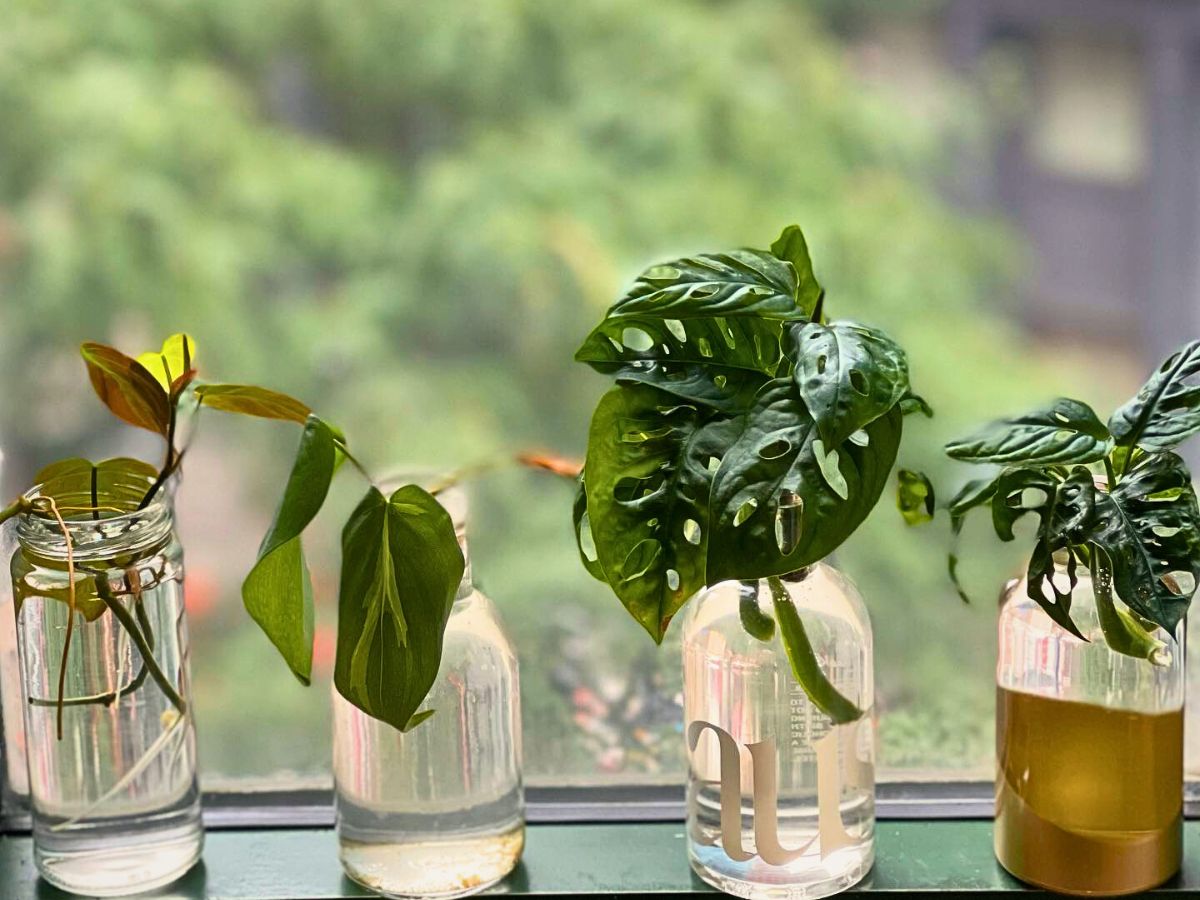
Hydroponic plant care centers around proper water management and nutrition. Change the water every two to four weeks; regular water changes prevent stagnation and the mineral buildup that leaves a white crust on the glass. Feed with hydroponic nutrients or any water-soluble fertilizer, diluted well. A strong nutrient solution burns plant roots faster than no food at all. Hydroponic plants require different nutrients from soil-based plants because they depend entirely on what you provide in their water solution.
Monitor pH levels regularly, as most hydroponic plants thrive with water pH between 5.5 and 6.5. The EC (electrical conductivity) level measures dissolved salts in water and should be monitored to ensure proper nutrient concentration. For a few jars on a windowsill, the simpler rule holds: if the roots stay white or cream and firm, all is well. Brown, mushy roots that smell mean rot. Cut them back to healthy tissue, wash the vase, and start with fresh water. Green film on the glass is algae, fed by light. An opaque or colored vase stops it.

Light Requirements
Hydroponic houseplants need adequate lighting to photosynthesize effectively. Place your hydro plants indoors near windows that receive plenty of bright, indirect sunlight. Many of the best indoor hydroponic plants tolerate lower light but perform better with more of it. In a dark room, a small grow light on an automatic timer does the job.
Monitoring Plant Health
Regular monitoring keeps your hydroponic plants healthy. Check for signs of pests, diseases, nutrient deficiencies, or wilting leaves. Growing indoor plants in water reduces many soil-borne pest and disease issues, but vigilant observation helps catch any problems early.
Why Water Beats Soil (Most of the Time)
Hydroponic plants have nutrients and water within reach at all times, so in a well-run system they spend less energy on roots and more on leaves. Growing indoor plants in water also eliminates the mess of soil: no spilled compost, no gnats, no soggy saucers. Pet owners should read the next part twice, though. There's no soil for a cat to dig in. But the plant's still the plant. The ASPCA lists pothos, peace lily, arrowhead vine, coleus, and Geranium as toxic to cats and dogs, while the spider plant is listed as non-toxic. Put the jars out of reach. You'll thank yourself.
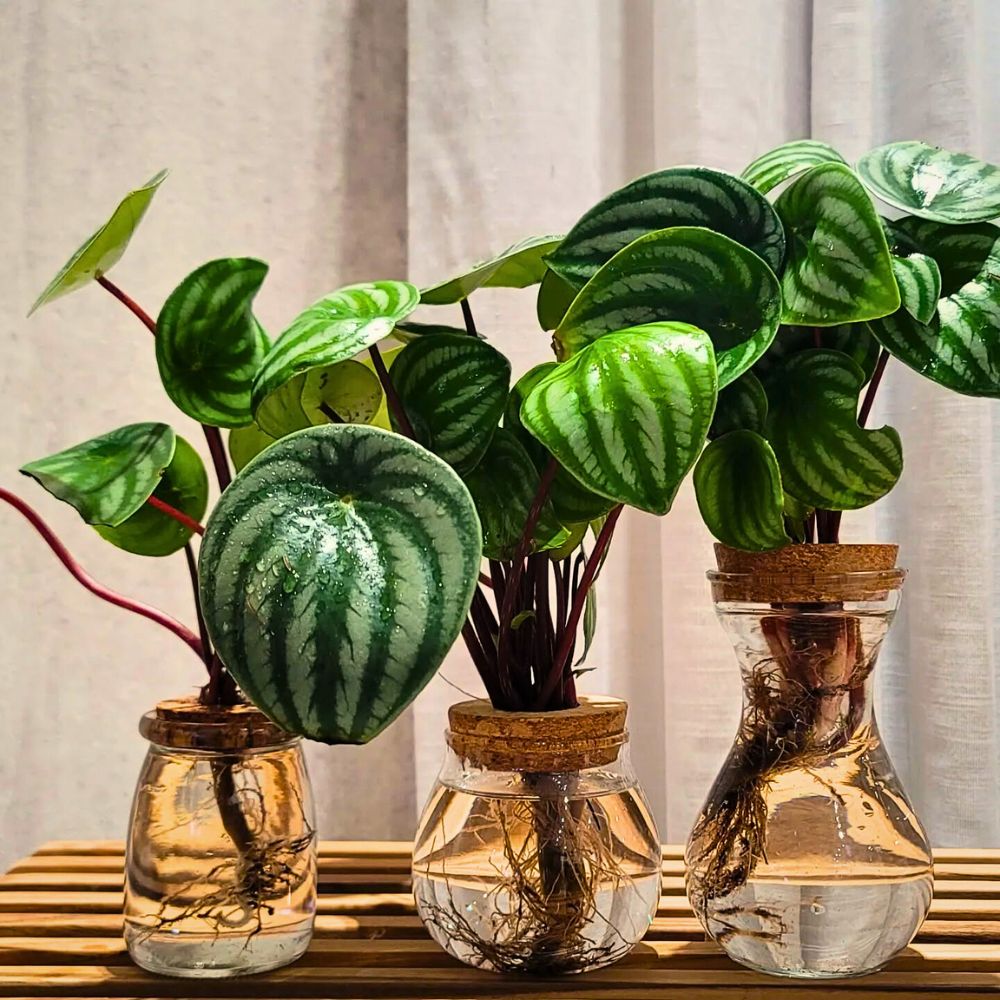
Furthermore, hydroponic plants indoors can be grown year round, whatever the weather. This consistent growing environment makes the best hydroponic plants a reliable source of foliage, and of herbs, regardless of season. Also, hydroponic plants require less space than traditional soil-based gardens, making them ideal for urban dwellers with limited space. The best indoor hydroponic plants can be grown in compact systems that make the most of every shelf.
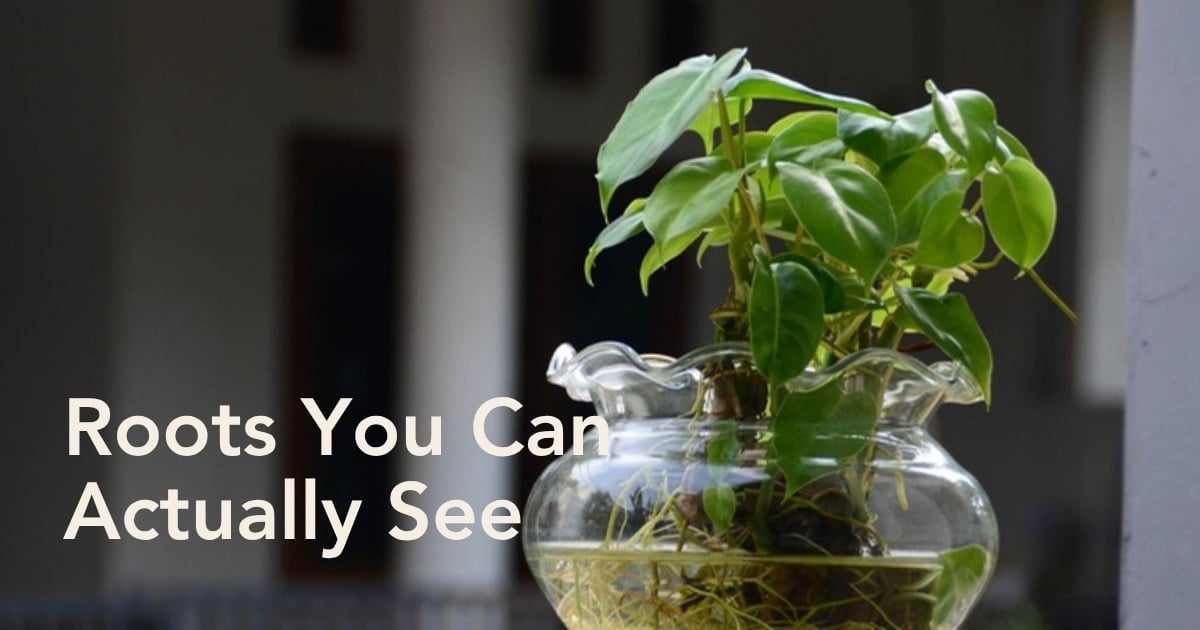
Roots You Can Actually See
Soil hides the most interesting half of a plant. A glass jar does the opposite, and that, indubitably, is the real charm of hydroponic houseplants: you stop guessing and start watching. Start with a pothos cutting this week. By the time the roots reach the bottom of the glass, you'll know whether the second jar is a spider plant or a peace lily.
Feature image by @alexis.in.green, header image by Donny Yularso.