Ask a wholesaler for blue flowers and you get a bucket that is mostly violet. That is not a trick. It is botany. Fewer than one in ten flowering plant species makes a blue flower at all, and the big commercial crops, roses, carnations, Chrysanthemums, lilies and Gerbera, cannot make it without help.
So this guide does two jobs. It names the types of blue flowers a florist can actually buy, by family, by season and by what each one does in a design. And it explains why true blue is so rare, what breeders have done about it, and how to tell a bred blue from a dyed one when both sit on the same shelf. What blue flowers mean is a different question, and Thursd answers it in blue flower meaning and symbolism. This is the buyer's page.
Why True Blue Is So Rare in Flowers
Blue is rare because it is chemically expensive. Most flower color comes from anthocyanins, a family of pigments that runs from orange-red to violet. The bluest member of the family is delphinidin, named after the Delphinium, and a plant can only make it if it carries a working copy of one enzyme, flavonoid 3',5'-hydroxylase. Roses, carnations and Chrysanthemums do not have it. As the Dutch genetic modification committee COGEM put it in a 2007 advice on a blue carnation, these crops "lack part of the anthocyanin biosynthetic pathway," so no amount of crossing will get you there.
Even delphinidin is not enough on its own. In acid cell sap it reads purple, not blue. A flower turns the pigment blue by stacking it with colorless co-pigments, tuning the pH inside the cell, or wrapping it around a metal ion. The cornflower is the famous case: its pigment is cyanidin, the same molecule that makes a red rose red, but the cornflower binds it with a flavone and with iron, magnesium and calcium into one large complex, and the result is the bluest blue in the meadow. Hydrangea does something similar with aluminum, which is why a Hydrangea is blue on acid soil, where the roots can take aluminum up, and pink on chalk, where they cannot.
A 2021 study in Frontiers in Plant Science put a number on the outcome: fewer than 10 percent of the roughly 300,000 flowering plant species produce blue flowers. Where they do turn up more often than expected, in the high Himalaya for instance, plants are competing hard for bees, and bees see blue very well. Florists have a similar reason to want it. Nothing else in the bucket does what blue does.
What Breeders Did About It: The Bred Blues
If a crop cannot make delphinidin, you can give it the gene. That is exactly what Florigene did, together with the Japanese group Suntory, starting in the late 1980s. Florigene was founded in Melbourne in 1986, has been a Suntory company since 2003, and grows its flowers in Colombia today. The first commercial result was a carnation. Moondust, the first of the Moon series, went on sale in Australia in 1996 and became the first genetically modified ornamental sold anywhere. Moondust was admitted to the European market in December 1997 and was even grown in the Netherlands and Spain for a few years. Today the Moon carnations, Moonaqua and Moonvista among them, are grown in Colombia and Ecuador and are authorized for import into the EU as cut flowers, with COGEM advising in 2026 that the Moonaqua and Moonvista authorizations be renewed. They are violet to purple rather than sky blue, which is what delphinidin looks like in a carnation petal.
The rose took longer. Florigene and Suntory announced a delphinidin rose in 2004 and put it on sale in Japan in November 2009 as Applause. Suntory sold about 10,000 stems in 2010 at 2,000 to 3,000 yen each, with North American sales announced for 2011. Applause is lavender-mauve, not blue, because the acid petal chemistry of a rose will not let the pigment go all the way. Thursd's blue roses explainer has the full story, and the honest conclusion: every deep-blue rose you meet has been dyed.
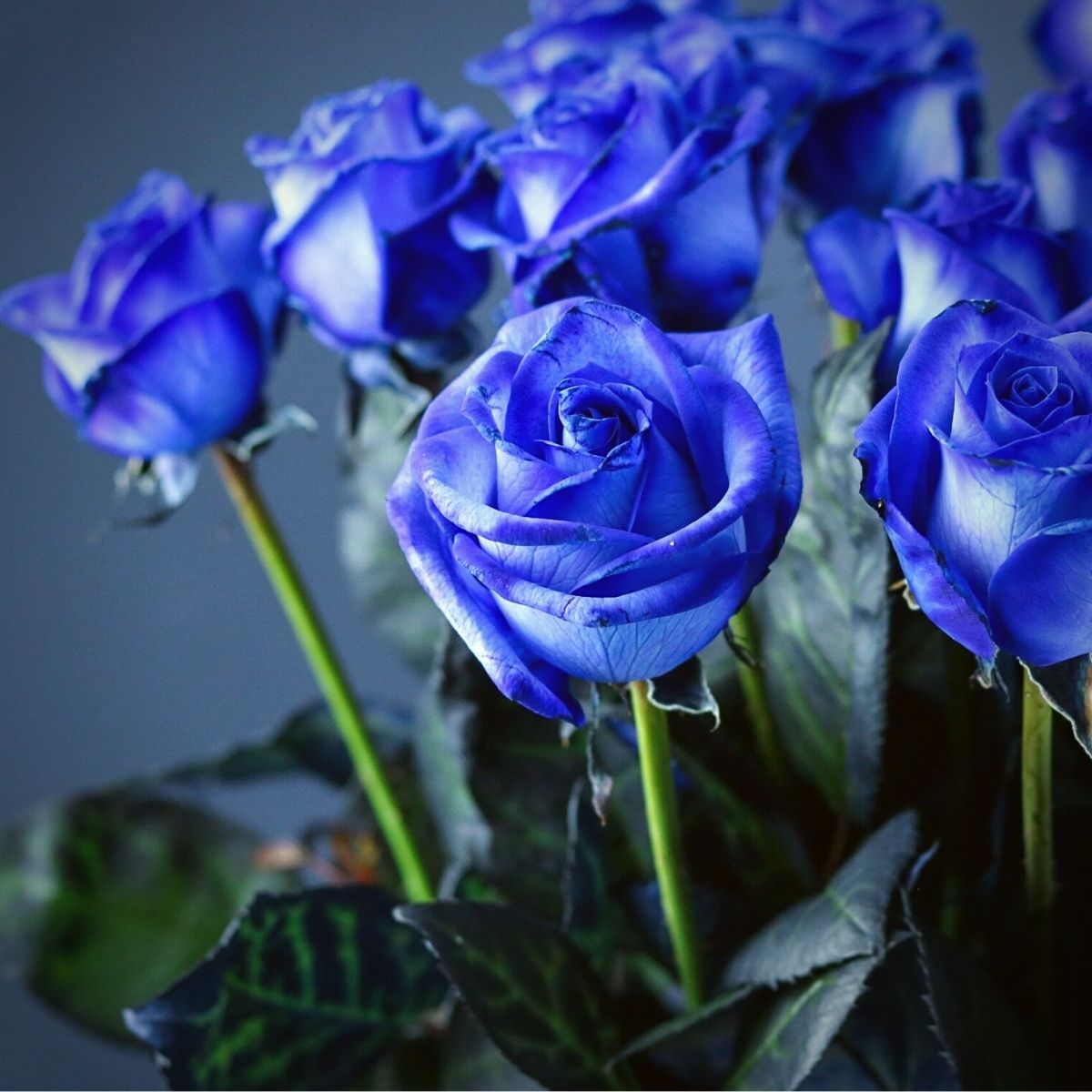
The Chrysanthemum is the one that came closest to true blue. In 2017, a team led by Naonobu Noda at Japan's National Agriculture and Food Research Organization, working with Suntory, added two genes to a Chrysanthemum: the hydroxylase from Canterbury bells (a Campanula, which matters later in this list) and a sugar-attaching enzyme from the butterfly pea. The new pigment stacked with the Chrysanthemum's own flavones and the flowers came out blue. That work became BluOcean, a series of five Chrysanthemums (Opal, Sapphire, Purple Sapphire, Coral and Jade) grown by Florigene in Colombia and sold in the United States, Canada and, since June 2025, Australia. Europe is not on that list, so a florist in Amsterdam will not see them. Thursd covered the Australian launch of BluOcean when the first boxes landed.

One pigment, and about thirty years of work to get it into three crops. That is what "breeding a blue flower" costs when the plant does not have the enzyme.
Dyed Blue, and How to Tell
Everything else that is electric blue and should not be has been colored. There are three ways it happens. Stem uptake: a white flower, classically the rose Vendela, drinks dye from the water, and the petals color from the veins outward. Injection: the pot orchid Phalaenopsis Royal Blue is a white Phalaenopsis whose flower stalk is injected with a blue dye solution during production, and the plant carries the color into the open flowers. And spray or dip, which Colombian specialists have turned into an art of its own, as Thursd showed with Flower Colors in Colombia.
The tells are simple. Dyed blue is uniform and pools in the veins and the lip. A bred or natural blue varies across the petal and almost always leans violet. A dyed orchid flowers white the next time around, because the dye is in that flush of flowers, not in the plant. And if the blue is more saturated than a Delphinium, it was not grown that way. Thursd's blue orchid guide walks through the injection mark to look for on the stem.
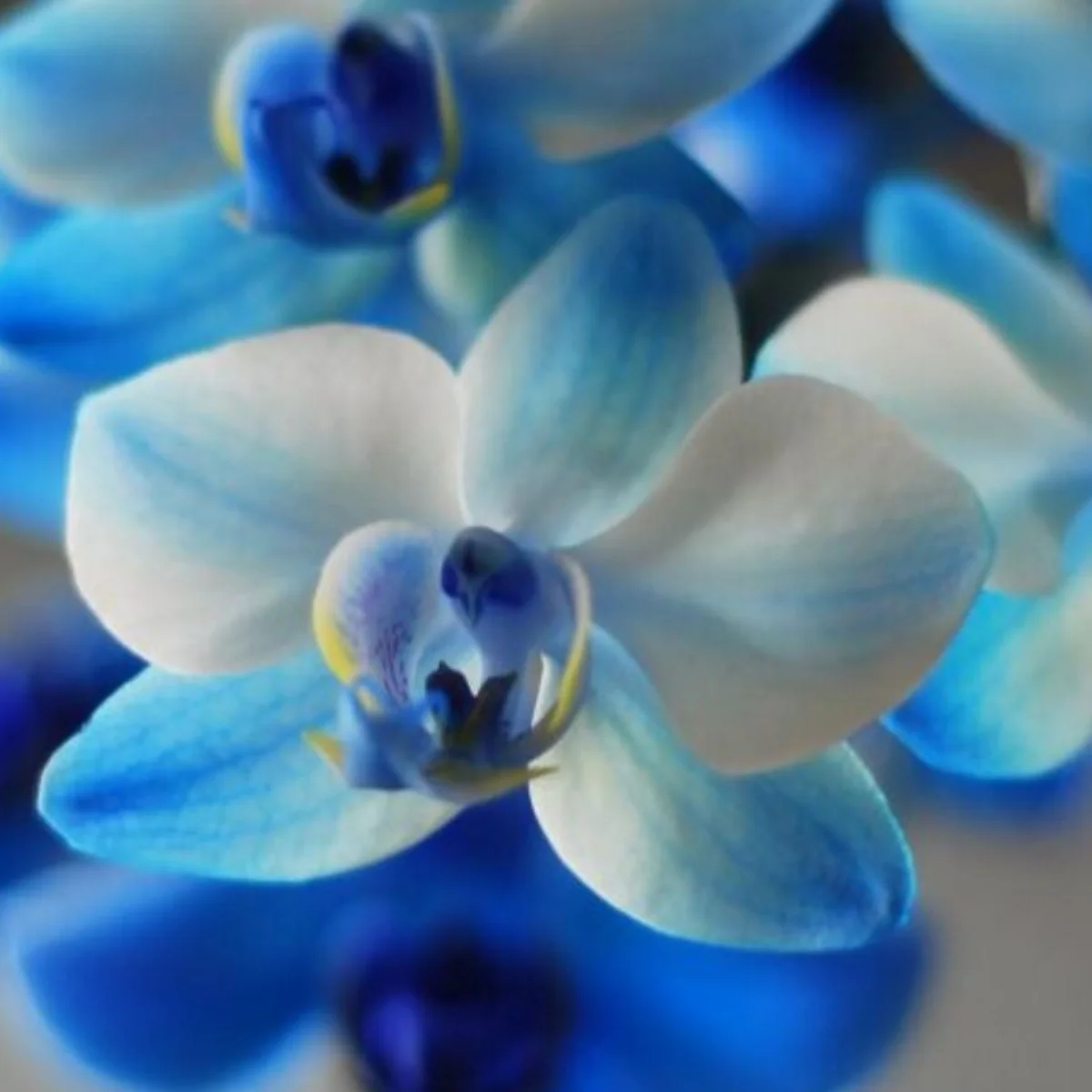
None of this makes dyed flowers a lesser product. A dyed Phalaenopsis is a best seller for a reason. It only means you should sell it as what it is.
Blue Cut Flowers by Name
The list below is the working range: the blue cut flowers a florist can order by name in the European trade, with the honest shade, the season, and the design job. Family names are there because they predict behavior. Two flowers from the buttercup family handle the same way. Two from the gentian family share a vase life.
Delphinium and Larkspur
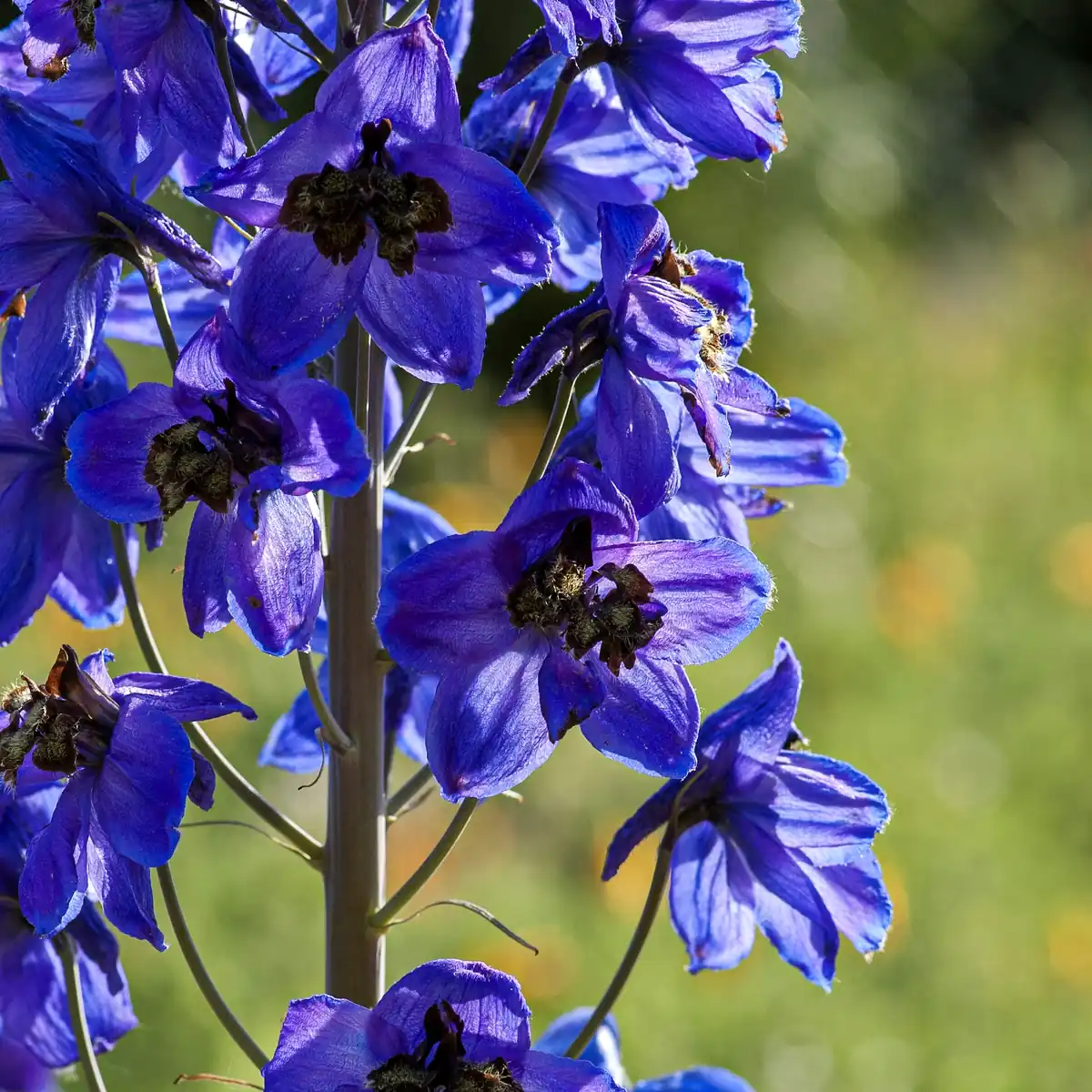
The benchmark. Delphinium (buttercup family, Ranunculaceae) is the tallest blue spike in the trade, with cut stems to 120 centimeters, and it comes in more true blues than any other crop: Sea Waltz Blue, Sky Blue with White Bee, the Belladonna group with its loose, airy florets, and the Kissi series from the Dutch grower Westendorp, where Kissi Ocean Blue is a soft light blue with a white heart, and Kissi Flash Blue carries a lot of purple. The "bee" is the small cluster of petals at the center of each floret, and a contrasting bee is a real buying attribute because it makes a spike read as detail rather than as a block of color.
Two production models feed the market. Highland farms in East Africa, such as Kisima at Timau on Mount Kenya at about 2,400 meters, cut year-round with the consistency of a greenhouse crop. Dutch outdoor growers give a summer window, from June into September, with the intense colors that only field light produces. André Westendorp harvests his in the dark: "In summer, we often go into the fields even earlier when many flowers are in bloom at the same time. It's hard work, but I wouldn't want to miss it," he told Thursd in slow summer flowers from Westendorp. Cutting at 4 in the morning keeps the stems full of water, and a Delphinium that was cut warm never recovers.
Larkspur has the same look on an annual plant, Consolida, with a finer, looser spike. Thursd untangles the two in larkspur versus Delphinium. In design, both are line flowers: they set the height of a piece, and they shatter if the bucket runs dry, so buy them turgid and keep them that way. Product pages: Delphinium Belladonna, grower page Westendorp.
Iris
The Dutch Iris (Iris family, Iridaceae) is the blue flower florists see most often in winter and spring, because it is forced from bulbs in the Netherlands almost year-round. Iris Prof Blaauw is the dark blue with the yellow stripe, Iris Blue Magic is the purple one that most shops call blue, and Iris Sapphire is a light blue that gets there by dye, which the product page says outright. Buy them in pencil bud with the color showing; they open in the vase within a day or two and last about a week. Their design job is the vertical accent in a spring mix, and they carry the fleur-de-lis story for anyone who asks, which Thursd tells in blue Iris meaning. For the garden, the Siberian Iris is the reliable perennial, with Caesar's Brother as the classic deep blue-purple since 1930.

Hydrangea
Hydrangea (Hydrangeaceae) is the only blue that a grower can switch on. Bigleaf Hydrangea (Hydrangea macrophylla) colors its sepals blue when the roots take up aluminum, which they can only do in acid soil, so growers of blue cut Hydrangea manage the soil and the water to keep the aluminum available. On neutral or chalky ground, the same variety is pink. The blue is a complex of delphinidin, aluminum, and a co-pigment inside the sepal, and it is in the sepals, not the true flowers, that a Hydrangea carries its color.
How the flower ages is a product in its own right. Fresh Hydrangea, cut early with clean open color, is strongest from March through October in Europe, with peak quality from May. Classic Hydrangea, left on the plant to age into slate blue, wine and antique green, runs from June through February. Thursd's seasonal guide to European cut Hydrangeas has the month-by-month table, and how to stop Hydrangeas drooping covers why the plant wilts and what to do about it. For the garden, Hydrangea Hilde Moorhof Blue from the Forever and Ever series flowers blue from July to September. Why designers keep reaching for it is a story on its own: why Hydrangeas are popular in floral design.

Agapanthus
Agapanthus, the African lily (Amaryllidaceae), is a summer flower from South Africa that has moved from the garden border into the florist's bucket in the last ten years. One stem is a whole design element: a straight stalk and a globe of dozens of small trumpet flowers that open over days, so the head keeps going after the first florets drop. Dr. Brouwer, a compact deep blue, is the workhorse of the Dutch growers Van Diepen in Heemskerk, with Davos as the other deep blue, Barcelona in white and Valencia in lilac, all brought to market under All I Am. Their season runs outdoors from mid-June to mid-August. Marginpar lists Agapanthus Mediterranee and Agapanthus Gletsjer on Thursd, and the name itself, from the Greek for love and flower, is explained in Agapanthus, the flower of love.
Eryngium, the Sea Holly
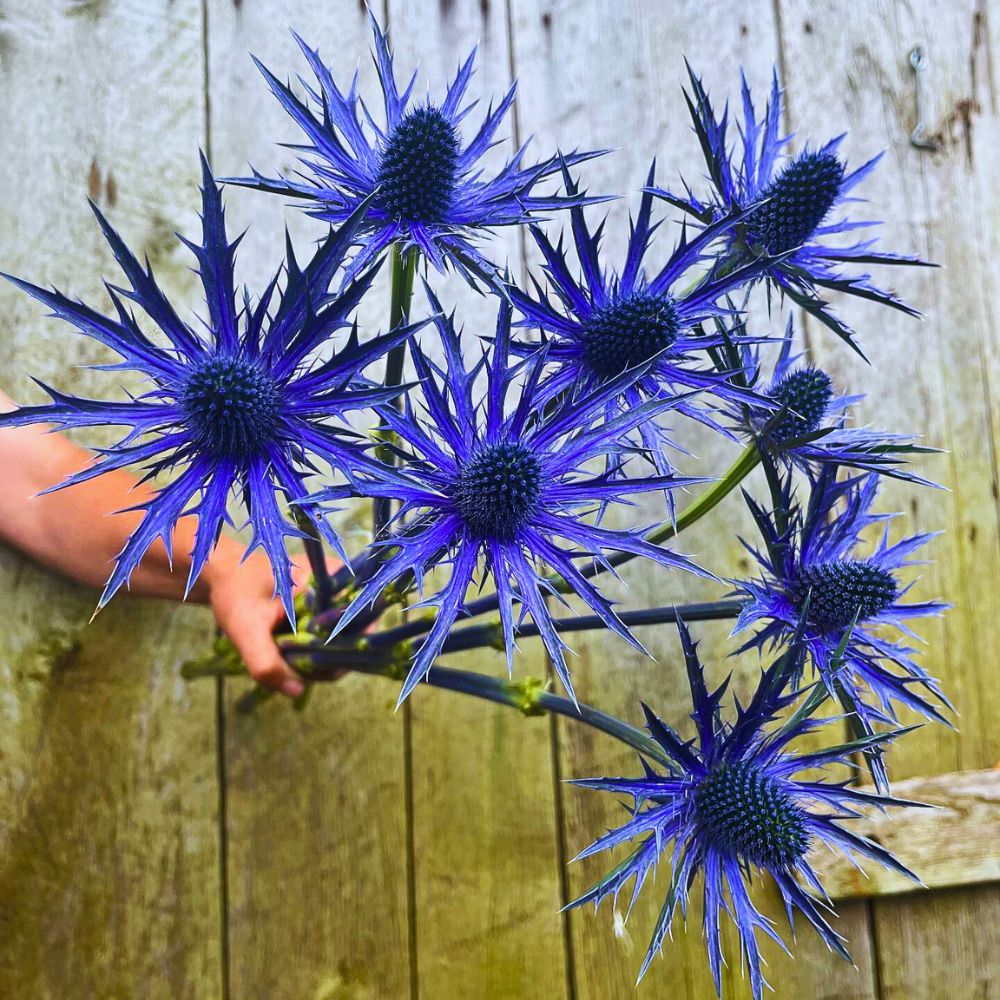
Eryngium is a carrot (Apiaceae), which surprises everyone, and it is the metallic blue in the trade: a cone of tiny flowers inside a ruff of spiny bracts, with the whole top of the stem washed steel blue. The Questar series from Marginpar, with Eryngium Magnetar Questar as the bright blue one, is what most florists buy; Eryngium planum Blue Cap is the garden and field type. It is the only blue on this list that dries as well as it sells fresh, and it holds its color when it does. Use it for texture next to soft flowers, for anything a man is meant to receive, and for winter work, because it is available well beyond the European summer, with Marginpar cutting it in Zimbabwe among other places. Thursd's complete guide to sea holly goes into the species and the growing.
Cornflower
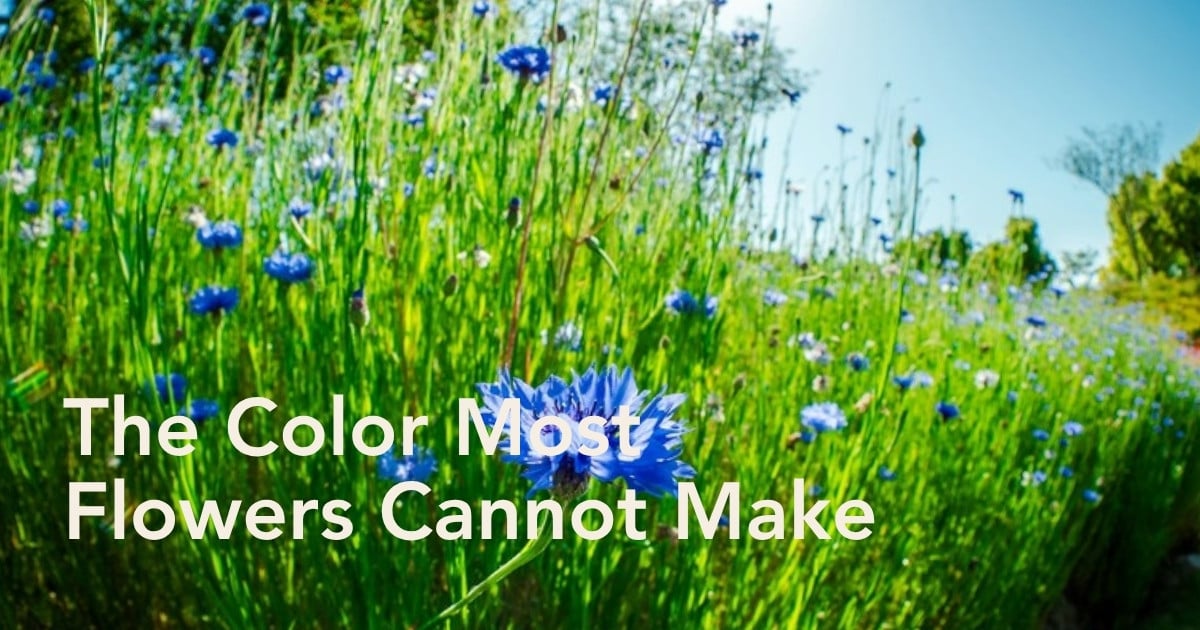
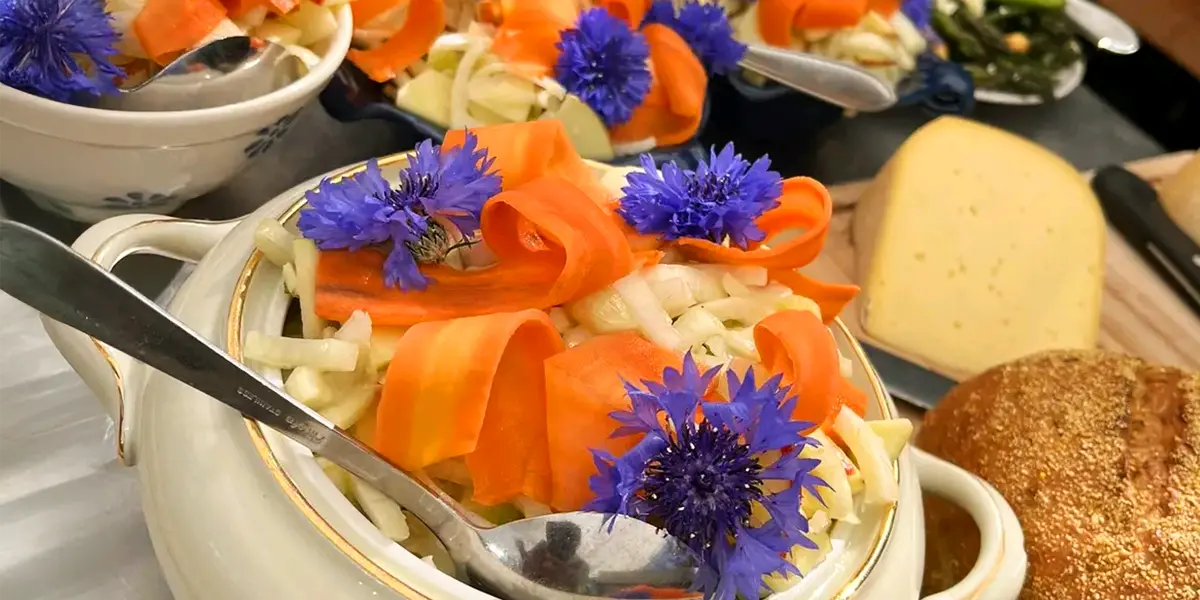
The cornflower, Centaurea cyanus (daisy family, Asteraceae), is the truest blue a European field produces, and the chemistry above is the reason: a red-rose pigment locked into a metal complex. It is an annual, cut from May to August, with a thin stem and a flower that opens fast and does not last long, so it is a farm-fresh and local product rather than an export one. Florists use it loose in meadow bouquets, in boutonnieres, and increasingly as an edible garnish, since the petals are safe to eat. The dried petals keep their blue, which is why they turn up in tea blends.
Nigella, Love-in-a-Mist
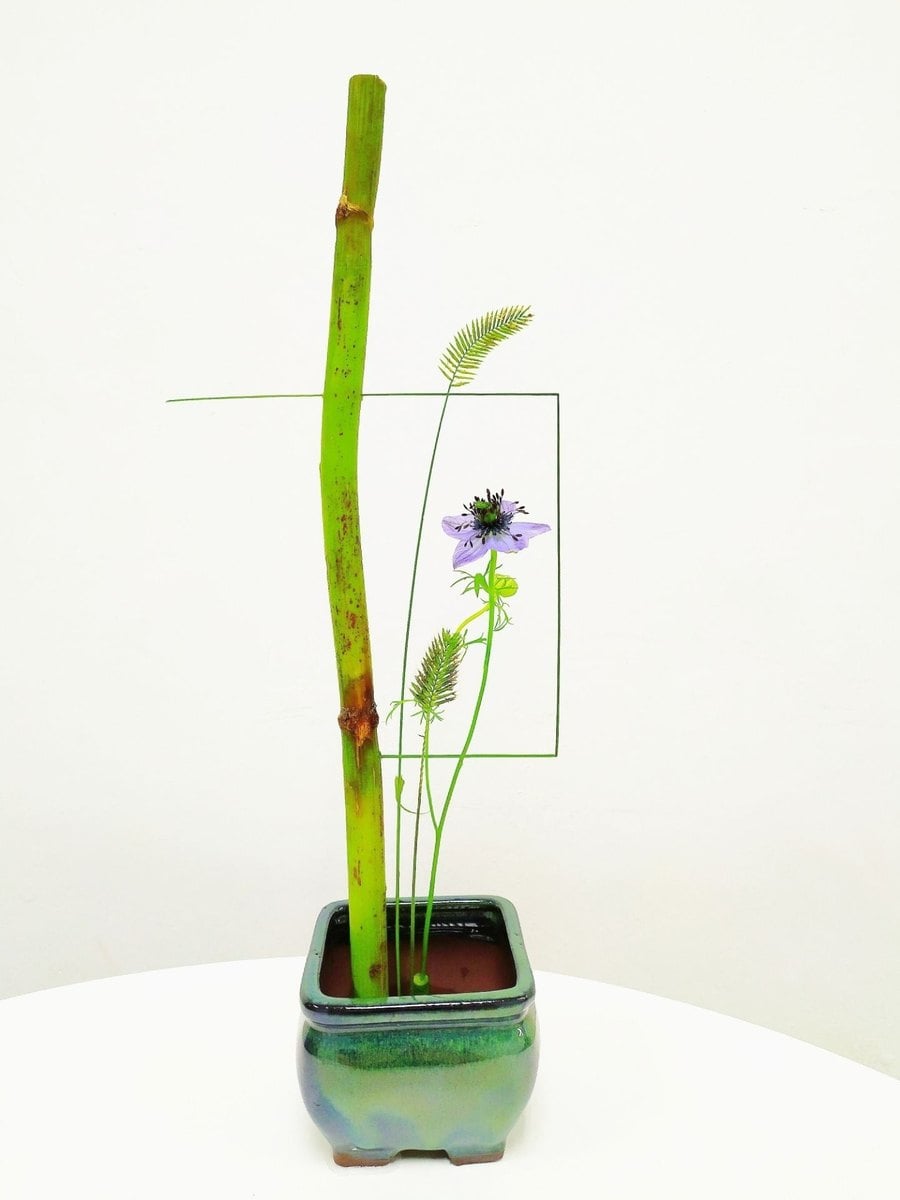
Nigella damascena (Ranunculaceae again) is a sky-blue annual with a collar of thread-fine bracts around each flower, hence the mist. It is a summer flower from the field, short-lived as a cut flower, and valued twice: once for the blue and once for the striped seed pods that follow, which dry beautifully and sell into autumn.
Scabiosa
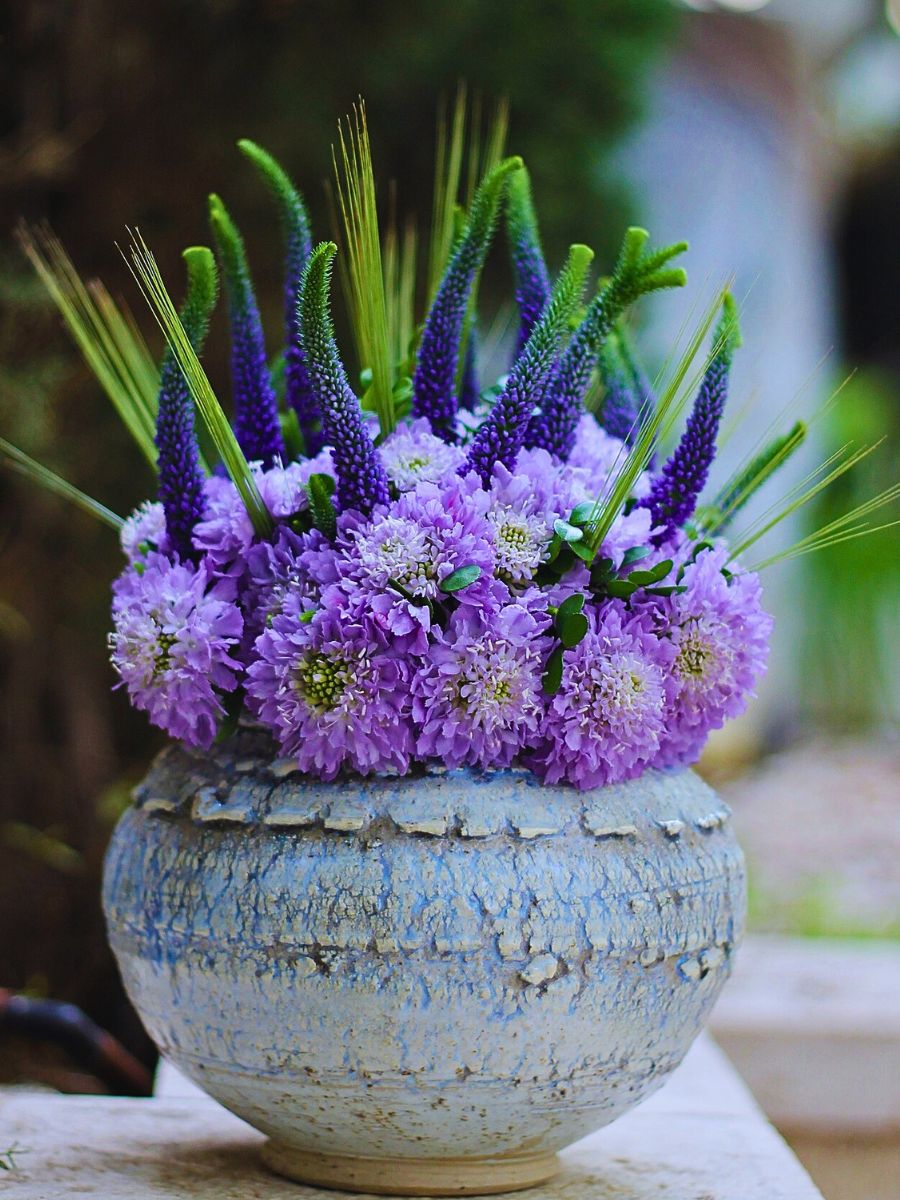
Scabiosa caucasica (honeysuckle family, Caprifoliaceae) is the pincushion flower, a flat lavender-blue head on a wiry stem that moves in a bouquet. It is a summer perennial from the field. The Scoop series that brought Scabiosa back into fashion runs in other colors, so for blue you ask for caucasica or the garden types. Thursd told the comeback story in Scabiosa, a forgotten flower.

Campanula
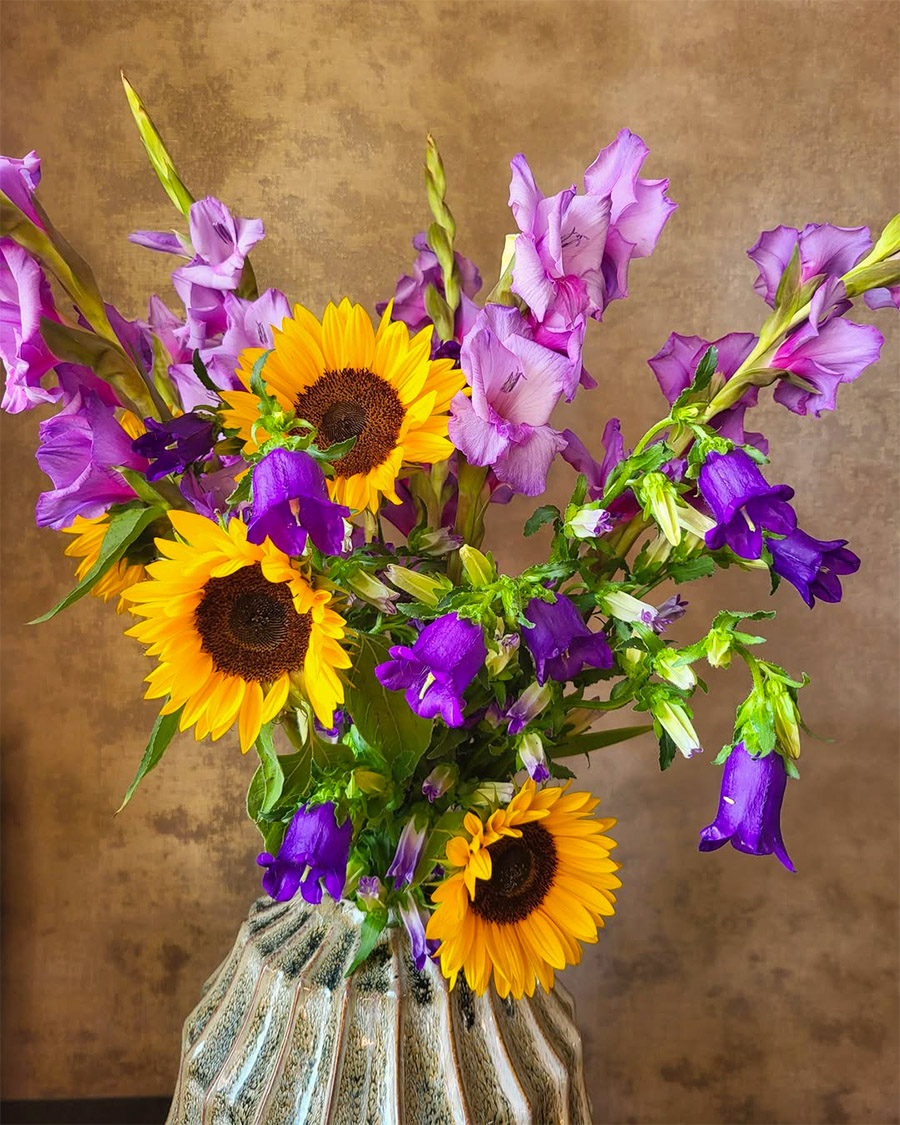
Campanula (bellflower family, Campanulaceae) is the blue that runs upward: rows of open bells along a tall straight stem. Campanula Champion Blue is the standard cut variety, a cool clear blue grown in Dutch greenhouses from spring into summer by Champion Westland, Luiten Flowers, Kwekerij Stammershoef and others. It works in that useful middle ground between delicate and dependable, which is the argument the Campanulove campaign makes to florists. And note the family connection: Canterbury bells, Campanula medium, donated the enzyme that made the blue Chrysanthemum possible.
Lisianthus
Lisianthus, botanically Eustoma, is a gentian (Gentianaceae), which explains both the blue and the vase life. It is the rose-shaped flower that lasts up to two weeks, and its blues are really deep violet-blues: Lisianthus Rosita Blue and Piccolo Blue Picotee from Sakata, Lisianthus Corelli Blue with its fringed double petals from Takii, and the picotee types with a blue rim on a white ground. Dutch specialists such as Montana Lisianthus and Lugt Lisianthus grow it in volume from spring through autumn. Thursd explains the F1 seed work behind it in how Lisianthus breeding works. The design job: the focal flower in a blue wedding palette that has to survive a long day.

Veronica
Veronica, the speedwell (Plantaginaceae), is a slim spike of tiny flowers that gives a bouquet its fine vertical lines. The blues are dark and lean purple; Veronica Smart Navy from the Smart series grown by Florius is the deep end. Summer is the season, and Thursd's Veronica guide covers the perennial for the garden as well.
Anemone
Anemone coronaria (Ranunculaceae) is the winter blue, from November into April, from Italy, France, Israel, and Dutch greenhouses. The blue ones in the Mistral and similar series are violet-blue with a black eye, and they keep moving in the vase, opening in warm rooms and closing at night. Short vase life, high impact, and one of the few blues you can put on a table in January that was not dyed.

Clematis
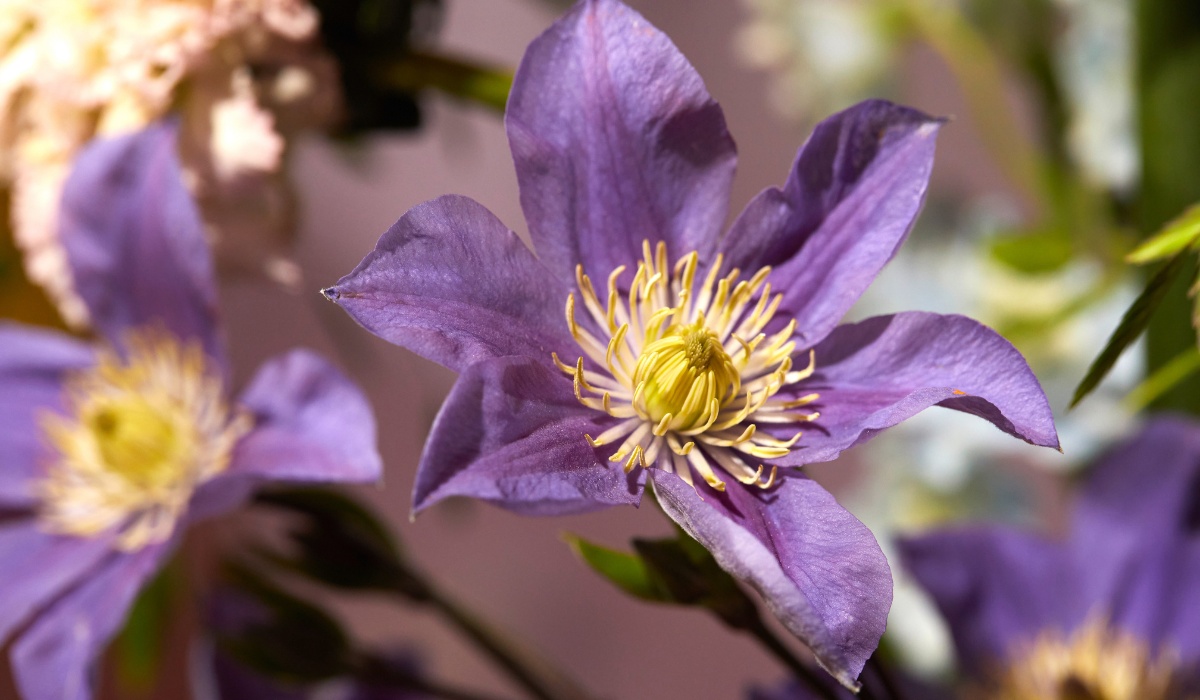
Clematis (Ranunculaceae, once more) as a cut flower is a Dutch specialty. The Amazing series grown by Marginpar puts four flowers on a stem and lasts far longer than anyone expects of a climber; Clematis Amazing Blue Pirouette is the purple-blue one. Thursd's Clematis guide covers the colors and the growing, and how Clematis breeding works, the selection behind the series.
Gentian
The gentian itself, Gentiana (Gentianaceae), is the purest blue in the alpine flora and an autumn cut flower with a long tradition in Japan, where it is grown for the September and October markets. In Europe, it appears in small volumes from late summer. The trumpet flowers open only in light, which is worth telling a customer before they take it home.

Tweedia
Tweedia, Oxypetalum caeruleum (Apocynaceae), is a small star-shaped flower in a powdery sky blue that almost nothing else in the trade matches. It is a summer filler with milky sap, so cut it and let the stem seal before it goes into the bucket, and keep it out of foam. It is the shade wedding florists mean when they say "dusty blue."
Limonium and Trachelium
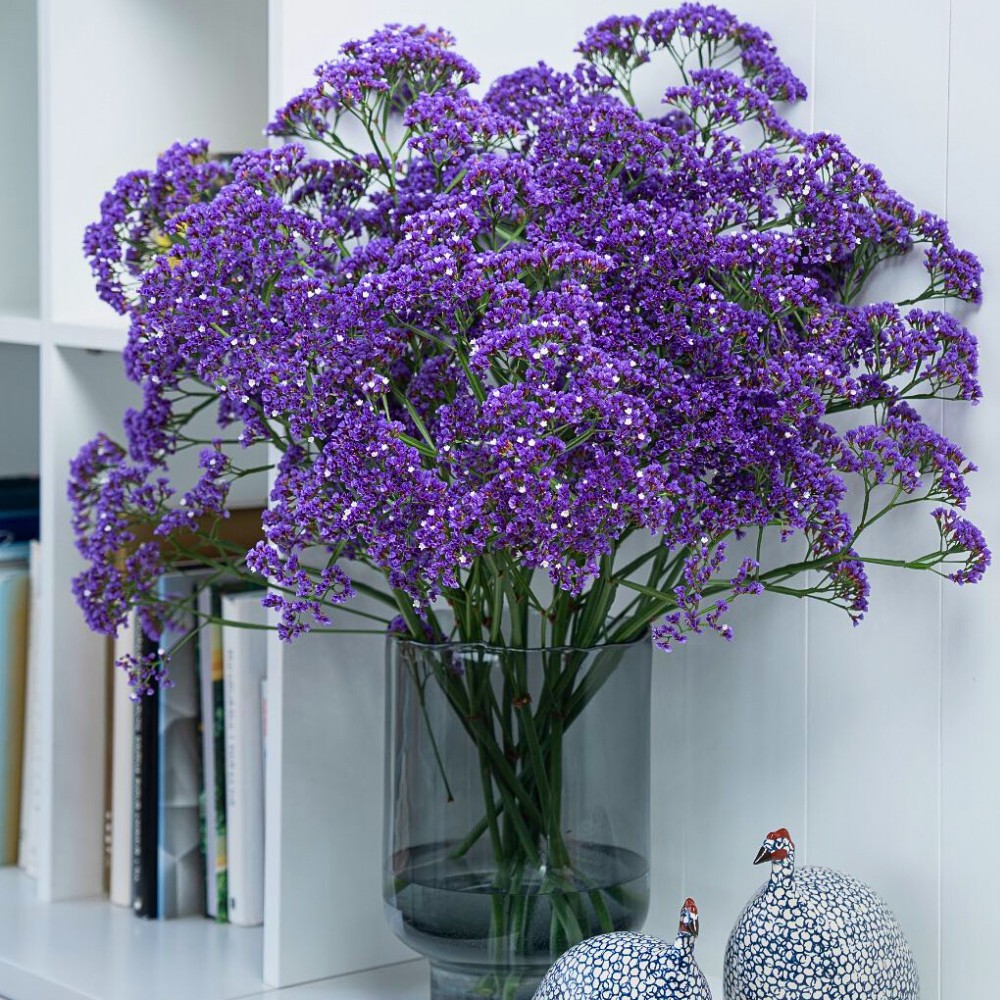
Two fillers sold under blue names that are honestly lavender. Limonium Safora Dark Blue is a fine, branching sea lavender with paper-like flowers in purple shades, and it dries well, which is why it is back in fashion. Trachelium Lake Michigan Blue is a flat umbel of tiny flowers on a 70 to 85 centimeter stem that fills volume in event work. Both are useful. Neither is blue in the Delphinium sense, and it saves a conversation later if you say so at the counter.
Muscari and Hyacinth
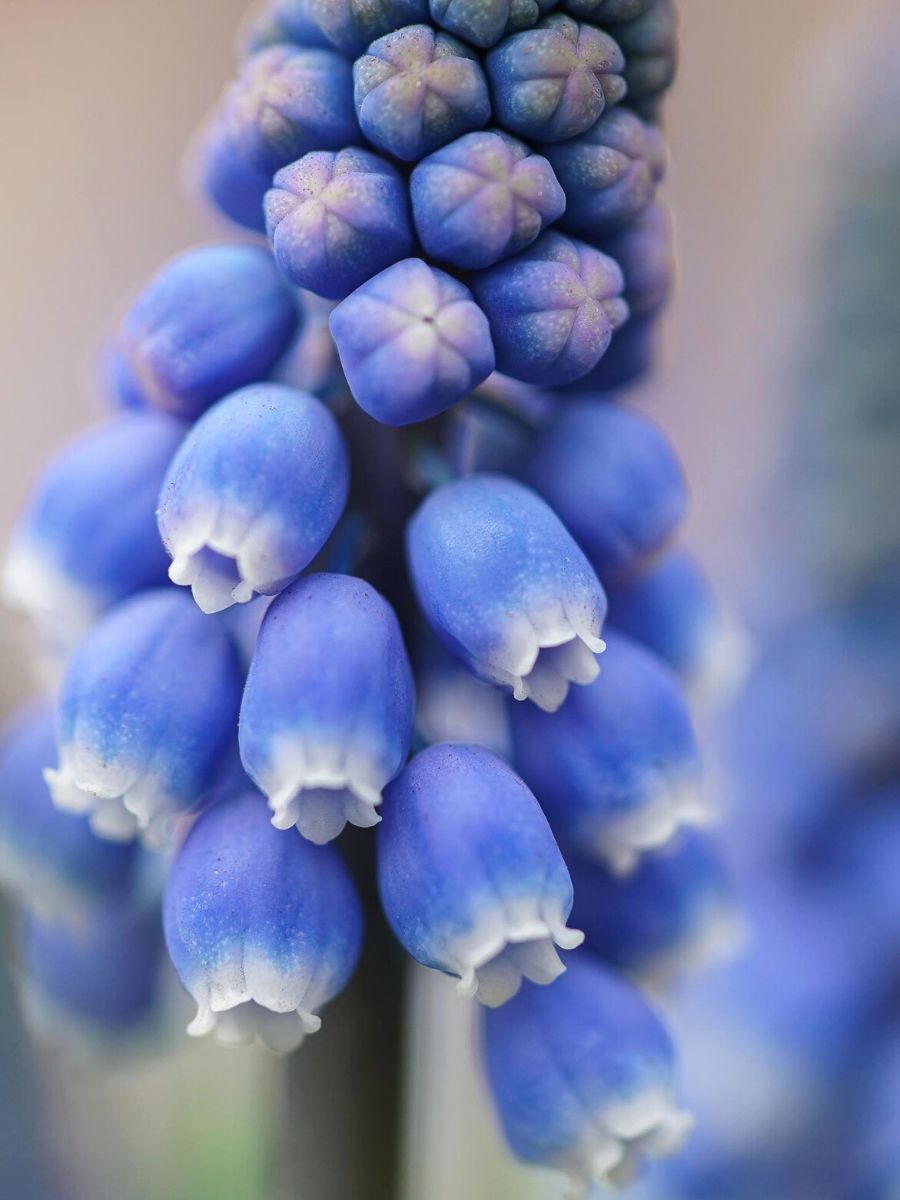
The spring bulbs. Muscari, the grape hyacinth (asparagus family, Asparagaceae), is a 15 to 20 centimeter stem topped with a cone of tiny cobalt beads, sold in bunches from February to April for small work and for planted arrangements. The hyacinth, Hyacinthus orientalis, is the scented one, with Delft Blue as the soft classic and Blue Jacket as the deep navy, forced from December through March. Thursd's hyacinth guide covers the varieties and the forcing.
Vanda, the Orchid That Is Really Blue
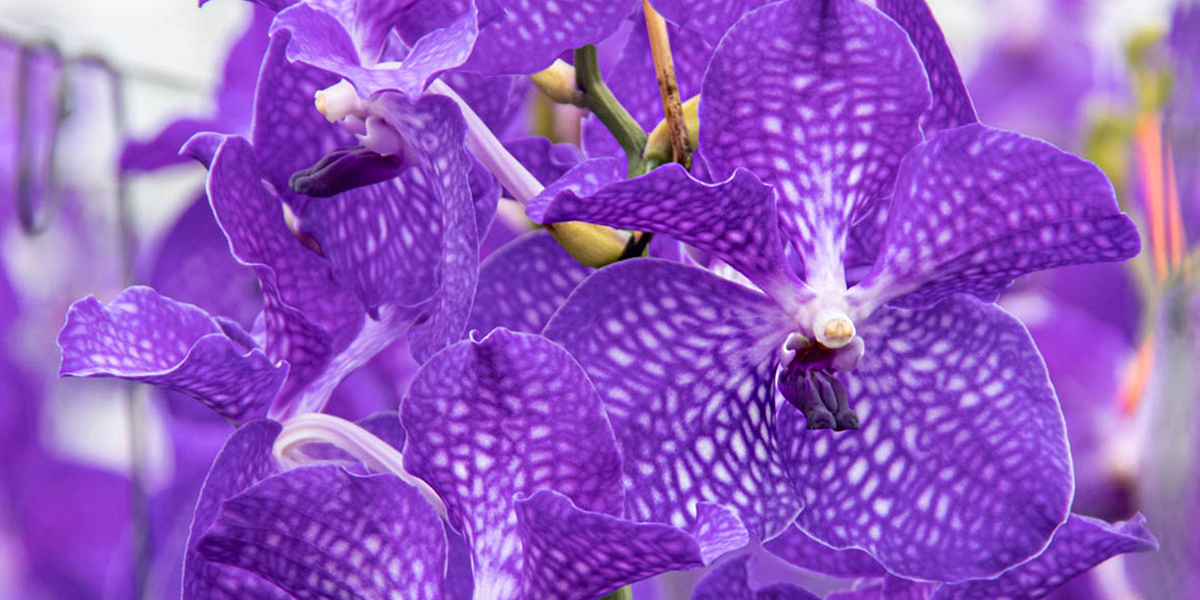
One orchid makes blue without dye. Vanda coerulea, from northeast India and Myanmar, carries a checkered lavender-blue that no other orchid matches, and it is the parent of the blue Vandas in the cut flower trade. Vanda Kanchana Magic Blue from the Dutch grower Ansu Vanda is the one to order: violet-blue, cold-tolerant for an orchid, with good availability from the greenhouse. The plants are a long investment. "If there are no more setbacks, these plants will still be working when I retire," Steef van Adrichem of Ansu told Thursd after the farm's restart in 2025, because a Magic Blue plant stays productive for up to ten years. Thursd's Vanda orchid guide covers the types and the care.
Blue Garden and Pot Plants
The potted and garden blues are where the true blues live, because a plant in a border does not have to survive a box to Miami. These are the ones a florist sells as plants, or a designer plants for a summer event.
Lavender. Lavandula is purple-blue rather than blue, and nobody minds. Lavandula Phenomenal is the hardy one, 70 centimeters high and wide with large purple-blue flowers from early summer into autumn, and Lavandula Sensational the follow-up with denser, more saturated spikes and the thickest stems of any lavender, which Thursd covered with grower Lloyd Traven ahead of its RHS Chelsea showing. What lavender says, and why it sells, is in lavender meaning.
Salvia. The sages hold some of the truest blues in the garden. Salvia patens, the gentian sage, is a clear deep blue; Salvia farinacea in its Victoria Blue form is the bedding standard; Salvia guaranitica Black and Blue is the tall one. Thursd's Salvia page covers the care.
Scaevola. The fan flower from Australia, sold as Stardiva Star Blue, trails from baskets and containers all summer with half-moon flowers in violet-blue and asks for almost nothing. Thursd introduced it in Stardiva, a new garden friend.
Forget-me-not and bluebell. The two spring blues everyone recognizes. Myosotis, the forget-me-not, is a sky-blue biennial with a yellow eye that seeds itself through a garden; Thursd's forget-me-not guide covers meaning and growing. The bluebell, Hyacinthoides, is the April woodland carpet of Britain and the Low Countries, and a plant to enjoy where it grows rather than to cut, as the bluebell guide explains.

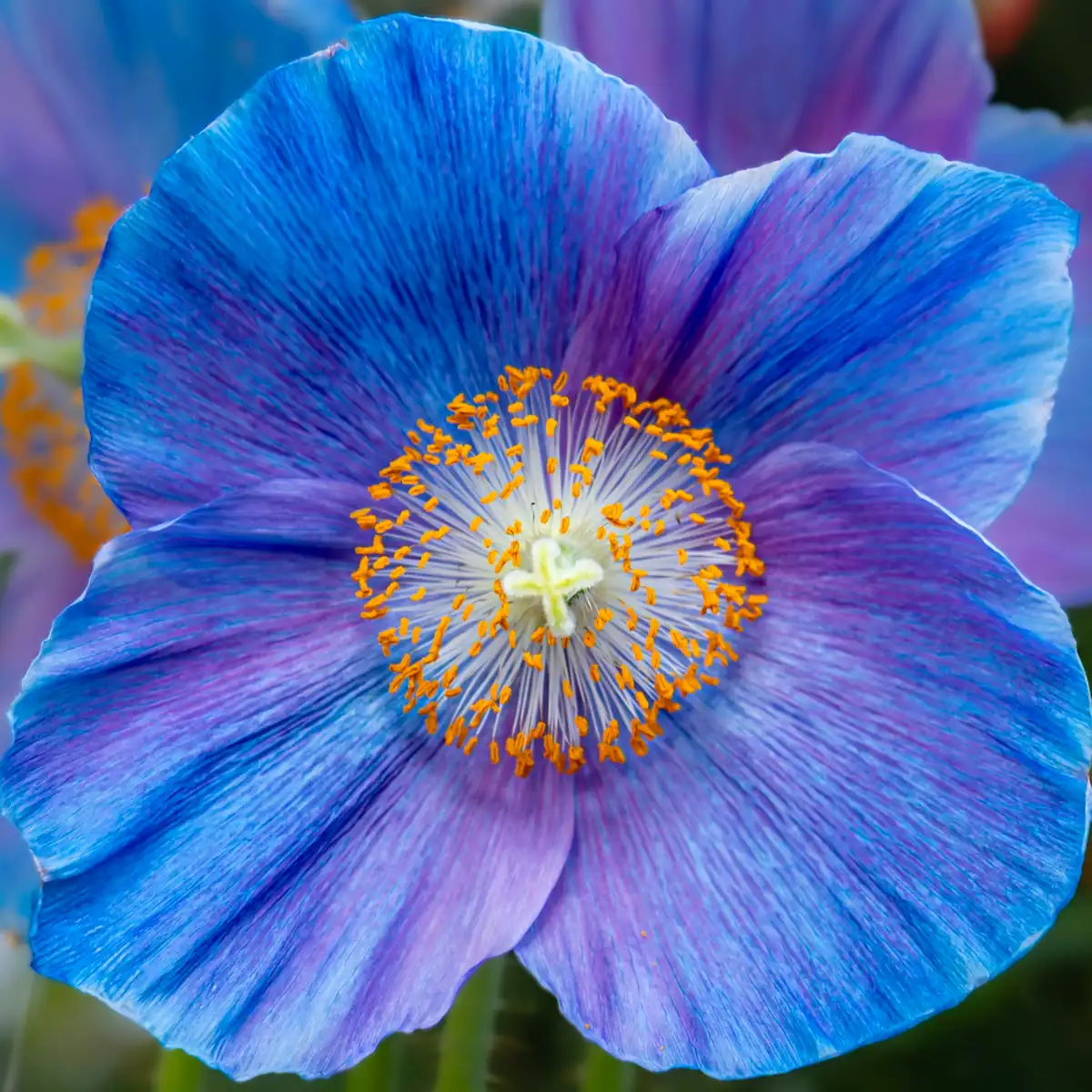
Morning glory, Plumbago and the Himalayan poppy. Ipomoea Heavenly Blue is the annual climber with the sky-blue trumpets that open at dawn and close by afternoon, covered in morning glory meaning and types. Plumbago auriculata is the pale blue shrub of every Mediterranean terrace. And Meconopsis, the Himalayan blue poppy, is the plant collectors travel for: a true sky blue that only grows in cool, damp, acid conditions, which is why you see it in Scotland and rarely in a Dutch garden center.
Smaller blues. Lobelia erinus in its trailing forms, Nemophila, the baby blue eyes that turn Hitachi Seaside Park in Japan into a blue hill every April, Brunnera for shade, Ceanothus for a Californian blue in a shrub, and the Texas bluebonnet, a lupine and the state flower of Texas. All true blues, all sold as plants or seed rather than as stems.
Blue Flowers by Season
The table gives the peak season of each blue in the European trade. Highland imports and greenhouse programs stretch most of them well past the months shown; Delphinium from Kenya, Vanda and Lisianthus from Dutch glass, and Eryngium in general are close to year-round.
| Season | Blue flowers at their peak | Note |
|---|---|---|
| Winter December to February |
Dutch Iris, Anemone, hyacinth, Vanda, Eryngium, classic Hydrangea, Phalaenopsis Royal Blue (dyed) | The forced bulbs carry the season; Anemone is the one natural blue for a January table |
| Spring March to May |
Dutch Iris, Muscari, hyacinth, forget-me-not, bluebell, Campanula, Anemone, fresh Hydrangea from March, cornflower from May | The widest choice of true blue in the year |
| Summer June to August |
Delphinium, Agapanthus, fresh Hydrangea, cornflower, Nigella, Scabiosa, Veronica, Lisianthus, Tweedia, Clematis, Campanula, lavender, Salvia, Limonium, Trachelium | Field-grown Dutch Delphinium and Agapanthus peak in July and August |
| Autumn September to November |
Classic Hydrangea, gentian, Eryngium, Lisianthus, Limonium, Nigella seed pods, dried cornflower | Classic Hydrangea is at its richest from late summer into winter |
How Florists Use Blue Flowers
Blue recedes. In a mixed bouquet, the eye goes to red, yellow, and white first and finds the blue afterward, which is exactly why designers use it: it gives a piece depth without noise. A few working rules from the pieces Thursd has covered over the years.
Pair it with white or with its own family. Blue Delphinium with white Hydrangea, blue Iris with cream tulips, Eryngium with white roses. Thursd made sky blue and bright white its Floral Trend Colors for 2024 and showed what the combination does across weddings, sympathy work, and corporate pieces. Blue on blue also works when the shades step: a dark Iris, a mid Delphinium, a pale Hydrangea.
Weddings want the shade, not the word. "Something blue" is a real request, and the answer is usually dusty: Tweedia, Nigella, pale Delphinium, Eryngium in the boutonnieres, a single blue Vanda in the bouquet. Thursd's 20 blue bouquets are the picture reference to hand a bride, and designers' favorite blue flowers for a boy's bouquet cover the other classic brief.
Know which blues are fragile. Delphinium, larkspur and cornflower shatter when they dry out; Anemone and Nigella are short. Hydrangea, Eryngium, Vanda and Lisianthus are the long-haul blues. Build the piece so the fragile ones can be pulled after three days without the whole design collapsing.
Sell the story that is true. A customer who hears that the blue Phalaenopsis was injected and the blue Chrysanthemum was bred with a gene from a bellflower does not walk away. They buy, and they come back to ask what else you know. Blue is the one color where the how is as interesting as the flower.

The Short Version
True blue comes from a handful of crops: Delphinium, cornflower, gentian, Tweedia, forget-me-not, Vanda, and Hydrangea when the soil allows. Most of what the trade sells as blue is violet, and that is fine as long as the label says so. The roses, carnations, and Chrysanthemums that are blue got there with a borrowed gene or a bottle of dye, and both are legitimate products with different stories. Keep the list and learn the seasons. Then tell the story straight. For what each of these flowers means, the flower meanings A to Z has every one of them.
Feature image by Photo by @peterbbryan. Header image by Declan Sun on Unsplash.