Every September the same two things arrive at the counter. A bride with a bouquet from Saturday and the question whether it can be kept, and a bucket of stock that did not sell over the weekend. Both have the same answer, and it starts with a piece of string.
This is the complete guide on how to dry flowers, at home or in the shop. Five methods, each with the honest timing rather than the one on the packaging: air drying, silica gel, pressing, the microwave and glycerin. Then the list that matters more than any method, the flowers that dry well and the ones that will disappoint you whatever you do, each linked to its own page on Thursd. And in between, the people who have built shops and installations on dried flowers, quoted from the pieces they wrote or contributed over the years, from Natalia Landaluce in Quito to a lavender farm in Kent.
One thing before the methods. Drying is not preserving. A dried flower has lost its water and stays that way; a preserved flower has had its water swapped for glycerin and stays soft. The difference, and how long each one lasts, is in the piece on dried versus preserved flowers. This guide is about the drying.

Before You Dry Anything: When to Cut and Where to Hang
Most failures happen before the string goes on. Three rules cover nearly all of them.
Cut early, not late. A flower keeps drying after it is cut, and it keeps opening too. Cut roses, peonies and Dahlias when they are between half and three-quarters open; a fully open flower drops its petals as it dries. Cut strawflowers and statice when the first ring of bracts has opened. Cut lavender when the bottom florets have opened and the top ones have not. Caroline Alexander, whose family grows about 40 hectares (100 acres) of lavender at Castle Farm in Kent, put the window this precisely in Lorna Roberts's blog on Thursd: "Lavender needs to be cut for bunches at a very specific time. If too early, the stems will droop, and if too late, the petals will have discolored and the buds will shred off the stems when dried. We often have only two or three weeks of prime bunch-cutting time, all weather dependent. Sometimes it's as specific as only cutting the side of the Lavender hedge which faces the sun, leaving the other side to 'ripen' for a few more days before it's at the perfect stage. It's quite a science!"
Cut dry. No dew, no rain, no flowers straight from the cooler with condensation on them. Water on the outside of a petal is where mold starts. Strip the leaves off the lower two-thirds of every stem; leaves hold moisture and shrivel into something nobody wants.
Dark, dry, moving air. Light bleaches, damp rots and still air does nothing. A warm attic, an airing cupboard with the door ajar, the back of the shop above the cooler compressor, a shed in August. Not the bathroom, not the kitchen, not a sunny window, however good it looks on Instagram. Small bunches, five to eight stems, so air reaches the middle. The stems shrink as they dry, so use rubber bands rather than string, or the bunch slides out of its knot in week two.
If you have a choice of flowers, choose the best. A bruised petal dries into a brown one. A stem that was already three days old in the bucket dries into a stem that was three days old.
How to Dry Flowers Five Ways, With Honest Timings
Ask the internet how to dry flowers and it says three days. Growers and the university extension services that have tested this for decades say otherwise, and so does everyone who has hung a bunch of Hydrangeas in a cool hallway and checked it after a week. The timings below are the realistic ones. Where a method is faster, the flowers pay for it somewhere else.
1. Air Drying: The Method That Does Most of the Work in the Trade
Time: one to five weeks. Lavender and grasses in a warm, airy space are done in about a week. Roses, statice, strawflowers, Delphinium and Celosia take two to three weeks. Big heads, such as Hydrangea and Protea, take three weeks and often more.
Tie the bunch, hang it upside down, wait. That is how to dry flowers upside down, and the upside down part matters for anything with a flower head: the stem dries straight and the head holds its shape instead of nodding. Grasses, Gypsophila and lavender can also be dried standing in an empty vase; they will curve a little, which some designers want.
How do you know it is done? The petals feel like paper and the stem snaps rather than bends. If it bends, give it another week. A stem that is taken down too early will mold inside a sealed box or a wrapped bouquet, weeks later, when you can no longer see it.
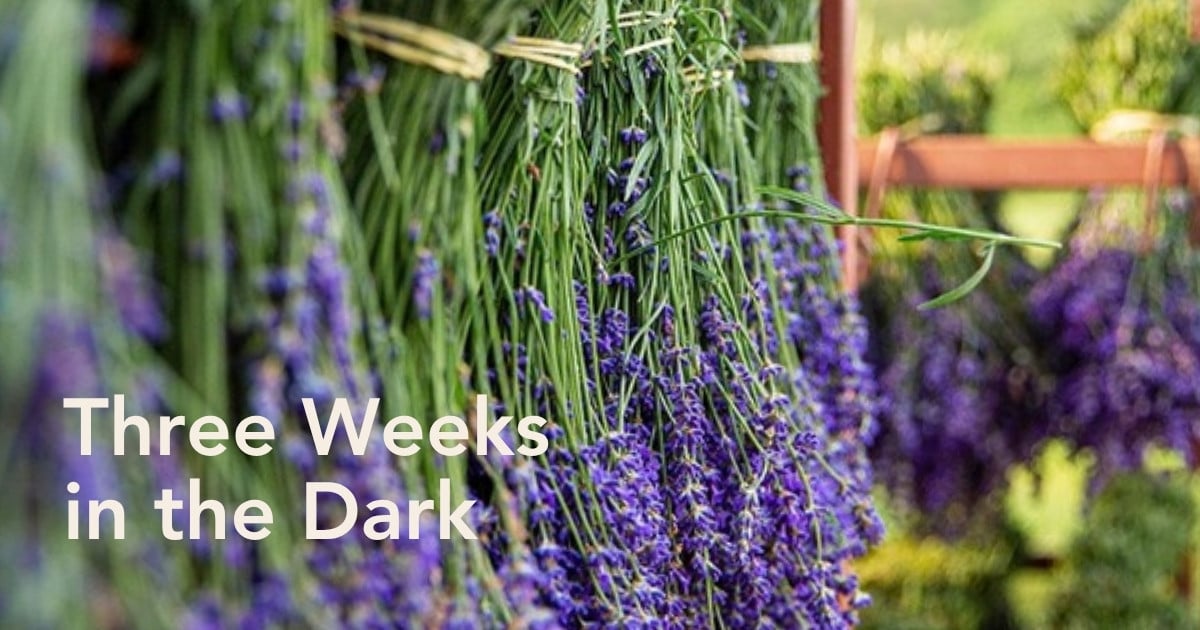
The lavender trade dries exactly this way, at scale. Marc de Graas, buyer at Dutch Masters in Dried Flowers, the dried-flower line of Greenflor, described the Provence harvest in a Thursd piece in 2022: the bunches go upside down in a huge drying shed, out of the bright sunlight, and with the warm summer wind the lavender is completely dry after about a week. Castle Farm in Kent uses hot air kilns for the same job, and Caroline Alexander's rule about the cutting window above is the reason their bunches keep their color and their buds.
What air drying costs you: color. Blues, purples, yellows and oranges hold well. Pinks fade toward beige. Whites go cream. Reds darken to burgundy, which is often better than the original. Anything with a lot of water in the petal, a tulip, a Dahlia, a Gerbera, shrinks to a fraction of itself. For those there is silica.
2. Silica Gel: The Closest to the Fresh Flower
Time: three to seven days for most flowers, up to two weeks for a big rose or peony. This is the method that keeps a flower looking like the flower. The silica pulls water out of the petals fast enough that they keep their shape and most of their color. It is also the only method that works well on the flowers in the disappointing list below: Dahlias, Gerberas, Ranunculus, Anemones, Zinnias, whole peonies.
You need a container with a lid and a bag of silica gel, the crystal kind from a florist's wholesaler or a hobby shop, not the little sachets from a shoebox. A kilo of crystals buries three or four rose heads at a time. Cut the stem to about 3 cm (1 inch), or wire the head first if you want a stem later. Put 2 to 3 cm of silica in the bottom, stand the flower in it face up, then pour the crystals gently around and between the petals until the flower is buried by about 2 cm. Tap the container so the silica settles between the petals rather than flattening them. Lid on. Leave it somewhere warm.
Check after three days. Delicate petals are done when they feel like paper; a full rose takes a week to ten days. Take the flowers out with a spoon, not your fingers, and brush the last grains off with a soft paintbrush. Overdried flowers shatter, so do not forget them in the box for a month.
Two notes from the extension handbooks. The Royal Horticultural Society advises against the blue-dyed indicator crystals, whose color comes from a copper compound, and against the plastic bead kind, which is not silica at all. And the silica is reusable: spread it on a baking tray at about 110°C (225°F) for a few hours until it is dry again, and it will dry another batch. A florist who runs a wedding-preservation service does this every week.
3. Pressing: A Week for a Pansy, a Month for a Bouquet
Time: one week for thin flowers, two to four weeks for a bouquet's worth, and paper changes in the first week. Pressing is the oldest method, the Japanese made an art of it as oshibana, and it is the one your customers already know from the book on the shelf.
Flat flowers press best: pansies, larkspur florets, Cosmos, single Dahlias, Hydrangea florets picked off the head, ferns, Eucalyptus leaves. A rose has to be cut in half lengthwise first. Lay the flowers on blotting paper or plain printer paper, never kitchen roll with a pattern, which prints itself onto the petals. Another sheet on top, then the weight: a stack of books, or a proper press with straps or wing nuts.
The step everyone skips is changing the paper. Rachel Parri and Keith Kralik of Flower Press Studio in Denver, who press wedding bouquets for a living, check their presses through the whole first week, going through every page, adjusting petals and swapping out all the paper and cardboard to get the moisture out. A bridal bouquet takes them about three hours to take apart, and then days, often weeks, before everything is properly dried and flat. That is the honest number. The seven-day version works for a violet, not for a bride's roses.
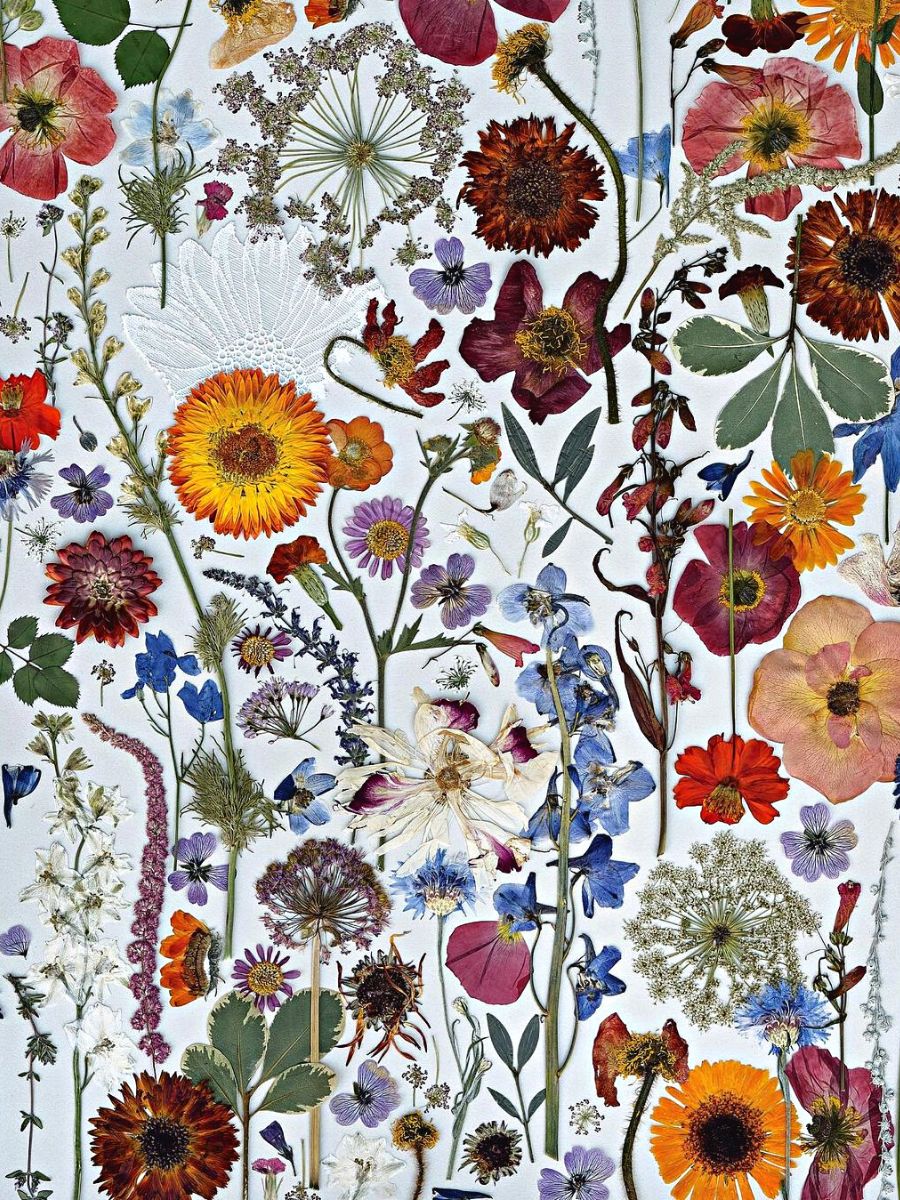
Tuba Oskan, a floral designer in Istanbul, wrote on Thursd about what happened when she started drying her leftover stock during the pandemic without much method: "I began to make experiments to dry any kind of flower by wrapping them with tissue papers and leaving them in a cardboard box. Some had rotten but some had dried well. Some turned very brown, but some just faded their colors." Her boxes of dried flowers became a fan-shaped construction that she used as a base for fresh tulips and roses. The rotten ones are the lesson: a box is not a press, and tissue paper is not a paper change.
4. The Microwave: Minutes in the Oven, a Day on the Counter
Time: one to seven minutes of heat, then 10 to 36 hours of standing. The fast method, and the one with the most ruined flowers behind it, because the first half of that sentence is the only half people read.
There are two versions of how to dry flowers in the microwave. The one that works for whole flowers is silica gel in a microwave-safe container without the lid: bury the flower as above, put a cup of water in beside it so the oven has something else to heat, and run it on a low setting, about 300 watts or defrost, in short bursts. Clemson University's extension service gives about two and a half minutes for a half pound (225 grams) of silica, aiming at a gel temperature of about 70°C (160°F). Then the part that matters: lid on, slightly cracked, and leave it alone for a day. The flower finishes drying in the cooling silica. Open it after ten minutes and you have a limp, hot rose.
The second version is microwave pressing: the flower between two sheets of paper, under a microwave-safe plate or a ceramic tile, in 30-second bursts with a check in between until it is dry and flat. It takes a few minutes and works for pansies, ferns and single petals. It does not work for anything thick.
What comes out well of the microwave: roses, Delphinium, larkspur, Hydrangea florets, Chrysanthemums, Zinnias, tulips. What does not: anything with thick petals such as Magnolia and hyacinth, and any fully open flower, which tends to drop its petals once the heat is off. Small batches, one or two flowers at a time, and a thermometer if you have one. A microwave that runs hot cooks the flower brown from the inside.
5. Glycerin: For Foliage, and for Flowers That Must Stay Soft
Time: two to three weeks for foliage, up to six weeks for whole stems. Glycerin does not dry a flower. It replaces the water in the stem with a mixture of glycerin and water, so the leaves stay supple and bend instead of shattering. This is the method behind preserved Eucalyptus, preserved Ruscus and the preserved roses in every airport gift shop, done industrially and often with dye. At home it is a method for foliage first.
Mix one part glycerin with two parts hot water for mature leaves; for young, soft leaves use equal parts and submerge the whole branch. Crush or split the bottom 5 cm of woody stems, stand them in about 8 cm of the mixture, and keep it topped up. The leaves change color as the glycerin travels up, usually darker, to bronze or deep green, and the job is finished when the color has changed all the way to the tips. Two to three weeks is normal. Some Eucalyptus takes longer.
What it costs: the color. Glycerin darkens, and after a while it fades, which is why commercial preserved flowers are dyed. Glycerined foliage also sweats in a humid room and can leave marks on furniture, so it goes on a tray, not straight onto a wooden sideboard. And glycerin is not cheap. For a shop that wants preserved stems by the box, buying them from a specialist is usually the cheaper route; Adomex runs a preserved greenery and moss range, and Ohchi in Japan has been preserving flowers since 1955.
Two that are not drying at all. Wax and resin. Dipping a flower in melted wax keeps it for a few months; casting it in resin keeps it for years. Both are keepsake methods rather than floristry, and both are in the five ways to preserve wedding flowers. And one variant that is drying: leaving Hydrangeas in their vase and simply not refilling the water, which is how classic Hydrangeas are usually dried. It works because the heads are cut late, when the flower has already stopped drinking.
Which Flowers Dry Well, and Which Ones Do Not
The rule of thumb: flowers with papery bracts, small florets or a lot of structure dry well. Flowers with thick, watery petals do not, or only in silica. The table is what to put in front of a customer who asks. Every flower links to its page on Thursd, where you find the growers who have it.
| Flower | Best method | What to expect |
|---|---|---|
| Strawflower Xerochrysum, sold as Helichrysum; Granvia as a plant |
Air, one to two weeks | The everlasting. Dries in the vase by itself; wire the heads, the stems go weak |
| Statice Limonium: Super Purple, Apricot Sun Birds, China Summer |
Air, one to two weeks | Holds its color almost completely; the papery calyx is what you see |
| Lavender Lavandula angustifolia |
Air, about a week | Cut at the right stage or the buds shred; keeps its scent for a year |
| Eucalyptus Cinerea, Baby Blue |
Glycerin, two to three weeks; air works too | Air-dried it goes gray-green and brittle; glycerined it stays soft and darkens |
| Plumosum Leucadendron plumosum, cone bush |
Air, two to three weeks | Dries to rust and straw tones; the cones are almost unbreakable |
| Ruscus Israeli, Racemosa |
Glycerin, two to three weeks | Air-dried it fades to khaki; the trade preserves it, usually dyed |
| Pampas grass Cortaderia selloana; dried brown |
Air, standing, one to two weeks | Sheds; a light coat of hairspray or floral sealant holds the plume |
| Bunny tails and grasses Lagurus, Panicum, beargrass |
Air, about a week | Hardly change at all; cut before the seed ripens or they shatter |
| Craspedia Billy buttons |
Air, one to two weeks | Yellow holds; looks the same dried as fresh |
| Gypsophila Baby's breath, Million Stars |
Air, standing or hanging, one to two weeks | Goes cream; takes dye well; the trade's most dried filler |
| Eryngium Sea holly, Questar series |
Air, two to three weeks | The blue and the steel-gray stay; one of the best |
| Achillea Yarrow, Paprika |
Air, two to three weeks | Yellows and reds hold; cut when the umbel is fully open and firm |
| Celosia Cockscomb and plume types, Act Dara Velvet |
Air, two to four weeks | Keeps the velvet and most of the red; the Celosia guide has the growing side |
| Delphinium and larkspur Belladonna, Guardian Lavender |
Air, two to three weeks; florets press well | The rare true blue that survives drying |
| Hydrangea Rodeo Purple, the classic antique types |
In the vase without water, or air, three to five weeks | Only the late-season, papery heads; a fresh summer head shrivels |
| Protea and Banksia King White, Blushing Bride, Banksia baueri |
Air, two to five weeks | Turns bronze and stays for years; the Protea guide has the step by step |
| Globe amaranth Gomphrena, and Ptilotus alongside it |
Air, one to two weeks | Papery bracts, like the strawflower; color holds for months |
| Roses Red Naomi, Toffee, any dark variety |
Air, two to three weeks; silica for the full shape | Dark reds go burgundy and look expensive; pale pinks go beige. Cut half open |
| Peonies Coral Charm, any double |
Silica, one to two weeks; air only at half open | Air-dried they shrink hard; in silica they keep the whole head |
| Dianthus Green Trick The green ball carnation |
Air, two to three weeks | Keeps its shape and a faded green; ordinary carnations shrivel |
| Seed heads Allium, poppy, lotus, Ammi |
Air, standing, two to three weeks | The flower is gone, the structure stays; Allium heads shatter if bumped |

Regine Motmans, Thursd's own floral connector, grew up with strawflowers and wrote about why they are the safest bet of all: "Even when used as a fresh flower, the paper stiffed petals will dry and retain form and color." And, after a visit to the Flower Cowboy's picking field nearby: "The crispy feel when you touch them makes it so special. And it's amazing to see how they evolve from fresh flower to dried flower and still retain form and color." Her whole piece is here. Dalia Bortolotti in Ottawa built a bridal bouquet on the same flower, Xerochrysum Silvery Rose, with Hydrangea Limelight and Gomphrena beside it, three of the best driers in one hand.
The Ones That Disappoint
Be straight with the customer about these. Tulips, even a Queen of Night, air-dry into twisted ribbons; press them or use silica. Dahlias, a Café au Lait included, lose two-thirds of their size in the air and only keep it in silica. Gerberas and sunflowers: the heads dry, the petals curl and drop; silica, or cut a sunflower before the pollen for a better chance. Lilies, Alstroemeria, Lisianthus, Anthurium, Amaryllis and most orchids have too much water and too little structure; they go brown and limp whatever you do, and pressing a Phalaenopsis is a week of effort for a stain. Ordinary carnations shrivel. A fully open peony drops every petal on the floor under the hook. And a summer Hydrangea cut while it is still drinking collapses within days; wait for the papery, late-season head.
The honest version for the counter: if the flower feels like paper when fresh, it will dry. If it feels like a grape, it will not.
What the Designers Do With Them
Knowing how to dry flowers is the easy part. What you do afterwards is where the dried-flower shops, the ones that came through 2020 and are still open, earn their margin. A few of them have told their story on Thursd.
Natalia Landaluce started Atix Home in Quito in the middle of the pandemic with videos of DIY bouquets from dried and preserved flowers, and now decorates stores and events in the city; in a 2022 profile her Instagram had passed 96,000 followers. Her whole business is built on giving flowers a second life, on noticing, as the 2022 piece put it, the number of flowers that could actually be dried or preserved. Her motto is four words: do, create, be and feel.
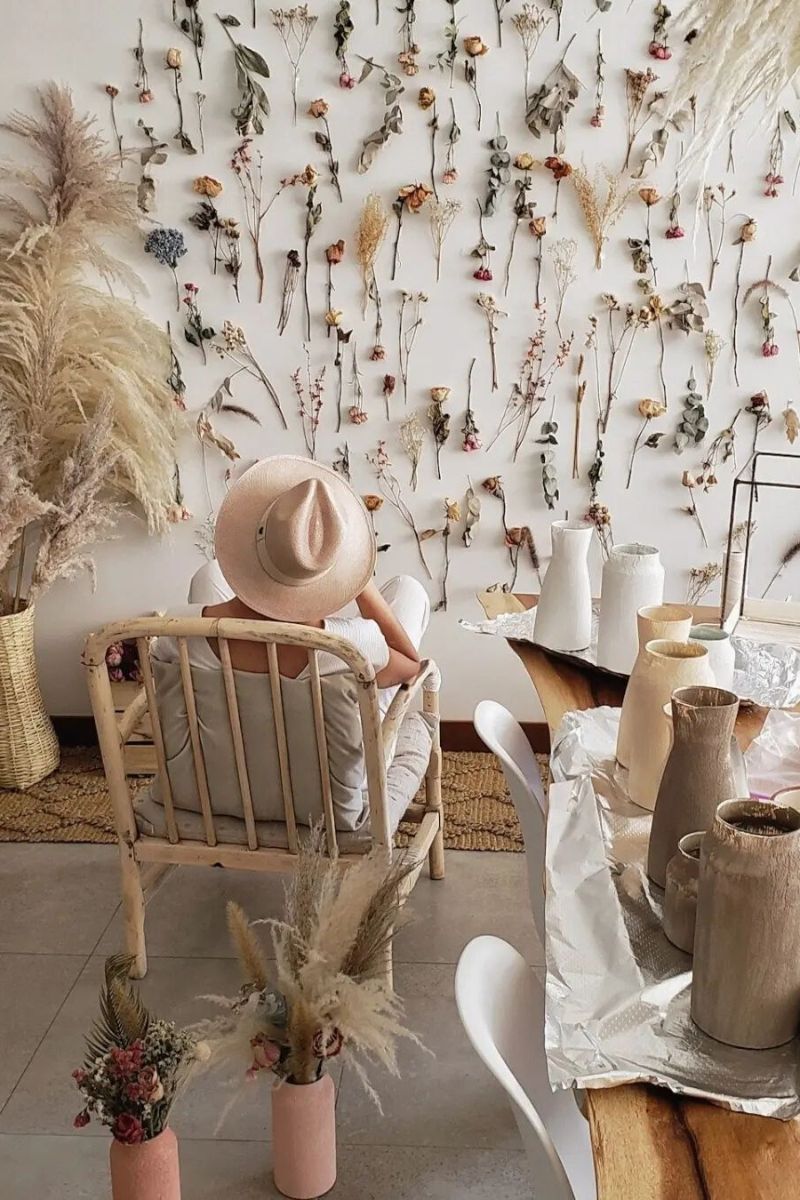
Sarah Dikker, master florist in Utrecht, was a skeptic first. Dried flowers to her were "that dusty triangular arrangement of dried palm leaves and a single coconut on a skewer." Then a wedding in India and a lockdown changed her mind, and in her 2020 blog she named the thing that makes dried flowers a different product rather than a worse one: "The big difference with fresh flowers is that you can bend dried flowers into whatever shapes you want and, important, that they don't need water to stay beautiful. And you can glue them very easily, for example." She also predicted the trend would be dead in two years. That was 2020. The rest of this section is people who kept going.
Loes van Look of Wildflowers & Wodka in Belgium builds installations with them, and she is clear about the design problem: "A design of dried flowers can often look disordered due to the lack of focus flowers." Her answer in the piece on her lockdown installation was texture, dried Bougainvillea against dried flax, and a strict palette: "With dried flowers, I usually choose a color palette of completely natural materials with their brownish tones and then one or two dyed materials that match the ambiance of the design."
Gaétan Jacquet of BotaBota, near the Swiss border, sold dried flowers in his shops long before the comeback, and gave the reason in one line: "I always had a soft spot for this eco-friendly and sustainable product." Mikala Forcellini in France dreamed a dried bouquet one night and made it the next morning, and wrote on Thursd that the sheer range now on offer at the wholesalers is what changed the work: "For sure the coming years I believe it is a great time for dried flowers." Thilde of Poppykalas in Denmark remembers the opposite reception at her wholesaler: "I remember when I found some old, dried flowers at Multiflora, they were like, what do you want with these, they are so ugly, haha." By 2020, she told us, almost half of that flower market was dried flowers, and her commissions for large dried installations came from museums, Michelin restaurants and flagship stores.

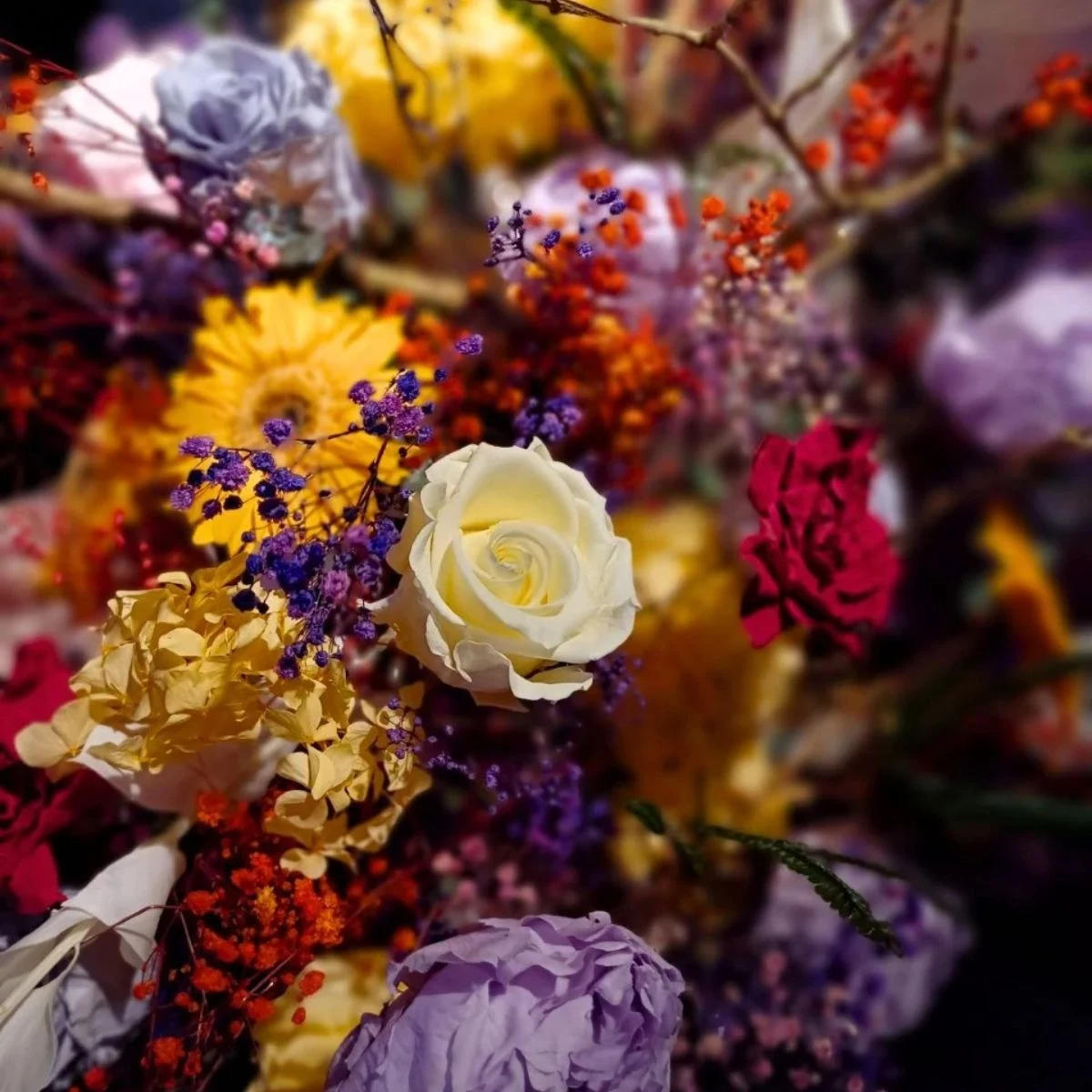
The design move that keeps coming back on Thursd is the mix. Tuba Oskan's dried construction under fresh tulips, Loes van Look's rust-colored pampas against natural browns, the fresh-and-dried bouquets in the florists' take on the vase life of dried flowers: a dried base that stays, and a handful of fresh stems that get swapped every week. The customer pays for the base once. At the far end of the scale is Rebecca Louise Law, whose installation The Womb at Meijer Gardens hung close to a million dried flowers, sewn one by one, and Shannon Clegg in London, who presses dried kangaroo paws into mesh vessels that last five years. Same string, same dark room, different ambition.
How to Keep Dried Flowers Looking Good
Knowing how to dry flowers is half the job; keeping them is the other half. Three enemies, the same three as during drying: light, damp and hands. Out of direct sun, or the colors go within a season. Out of the bathroom and away from the kettle, or they soften and mold. And handled as little as possible, because every touch costs a petal. Dust them with a hairdryer on its coolest setting from half a meter, never with a cloth.
Hairspray works, and every second tutorial says so, including the pampas video in the list of dried-flower tutorials. A light coat of unscented hairspray or a floral sealant holds pampas plumes, Gypsophila and shattering seed heads together. It also yellows over time and attracts dust, so spray once, from a distance, and not on anything pale you want to keep for years.
For storage, a cardboard box with tissue paper between the layers, a few silica sachets in the corners, in a dry cupboard. Not a plastic tub with a tight lid, unless you are certain every stem is bone dry; that is how a whole batch molds. Lavender in the wardrobe keeps moths away and keeps itself for a year or more. How long the rest lasts, and why preserved stems last longer, is covered in the dried versus preserved piece.
Why Florists Dry Their Leftovers
The business case is in the bucket that did not sell. In 2019 a group inside Parfum Flower Company at the Aalsmeer auction watched perfectly good garden roses being destroyed under the auction's leftover rules and started drying them instead; the result was Zero Waste Dried Flowers, now sourcing from one of the biggest wholesalers in Aalsmeer and testing unsold stock every week for what dries. Sarah Dikker's story above started with the same surplus, in the same spring. Six years on, Dutch Flower House ships Dutch dried concepts to hotels and retailers in Miami and Michigan, and Limonium China Summer from Imani Flowers in Kenya is marketed for both the fresh and the dried bucket at once.

For a shop that knows how to dry flowers, that translates into three things you can start this week. Dry the stock that is about to go over: dark roses, Eryngium, statice, Celosia, Hydrangea heads at the end of the season, every grass you have. Offer to dry the wedding bouquet, at a price, with silica for the roses and peonies and a frame or a cloche at the end; September to November is when the bouquets come in. And sell the base-plus-fresh design, so the same customer comes back for the fresh half.
The flowers will do most of it themselves. They only need a dark room, a rubber band and more time than the packet says.
Sources: Clemson University Home and Garden Information Center, Drying Flowers (silica gel, microwave and glycerin ratios and temperatures). Iowa State University Extension, Drying Flowers (air drying two to three weeks, silica three to seven days). Nebraska Extension in Lancaster County, Guide to Drying Flowers (microwave one to seven minutes plus 10 to 36 hours standing, air drying three to five weeks for large material). Royal Horticultural Society, How to dry flowers and foliage at home (copper-based indicator gel, pressing in a week, glycerine in equal parts). Quotes from Caroline Alexander, Marc de Graas, Rachel Parri and Keith Kralik, Tuba Oskan, Regine Motmans, Sarah Dikker, Loes van Look, Gaétan Jacquet, Mikala Forcellini, Natalia Landaluce and Thilde of Poppykalas are taken from their own pieces on Thursd, linked where they appear.
Feature image: dried King Proteas, Zero Waste Dried Flowers. Header image: dried lavender bunches at Castle Farm, photos courtesy of Farm Castle Kent. Body images by Castle Farm Kent, Flower Press Studio, Regine Motmans, Atix Home, Tuba Oskan and Zero Waste Dried Flowers, from their own pieces on Thursd.